Post-Election Letter to My Daughter

Dear Friends,

I’ve written a letter to my daughter that some of you might appreciate and posted it on my other blog, Matters of Conscience. Although what I have to say is ultimately hopeful–I think!–it’s dark enough that I don’t want it casting gloom here on A Napper’s Companion.

Please click here if you would like to read the letter.

Peace, love and best,

John

img_5186

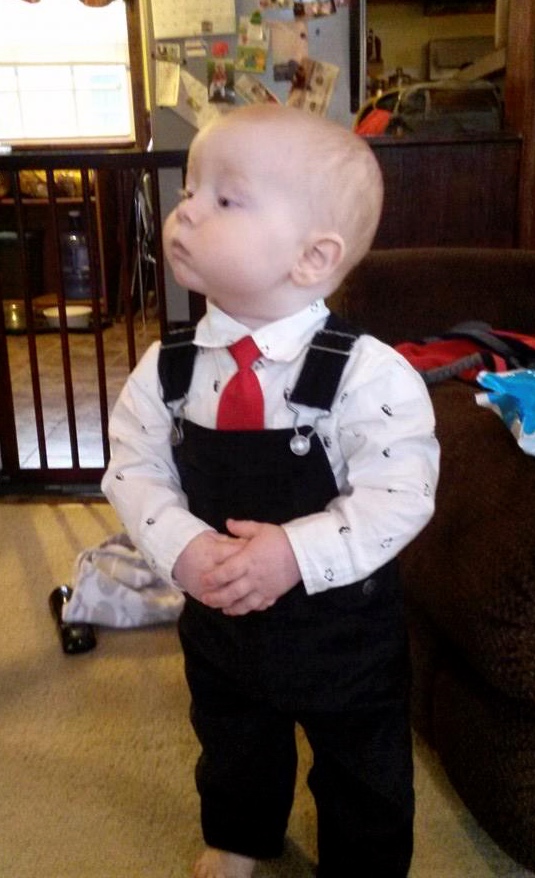
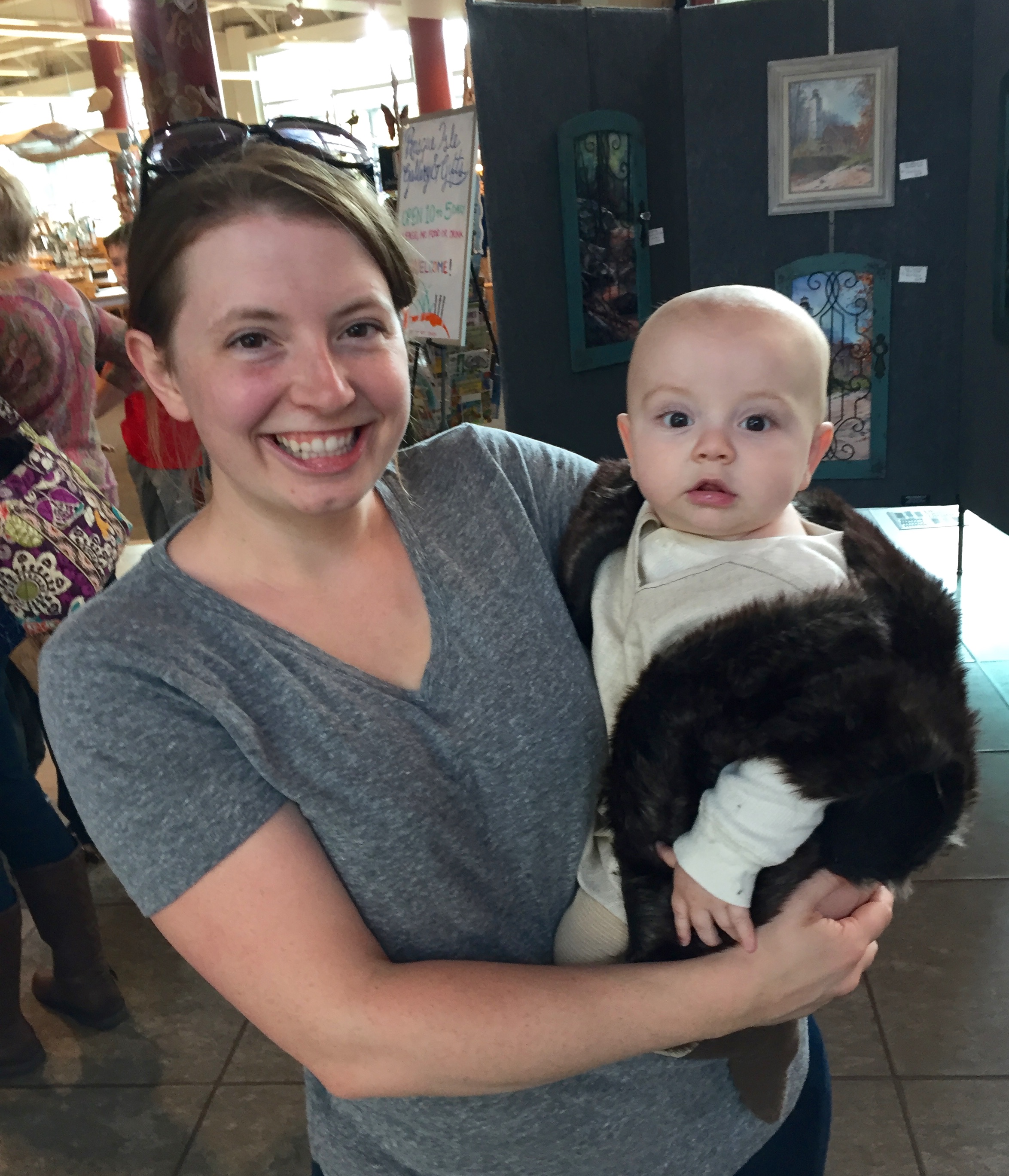
Elena and Killian–in his Halloween viking fur!

Here’s Your Sign: In Memory of Joe Burgert

Here’s Your Sign: In Memory of Joe Burgert

Image-23615_20160628

Joe Burgert

Organist and devout Christian Joe Burgert died in his sleep on June 25th at the Lay School of Theology, which was held at Thiel College in Greenville, Pennsylvania. His friends, my wife Kathy included, were devastated and knew they wouldn’t be able to continue attending class sessions, so they headed for Erie. Since Kathy had hitched a ride with Joe, she drove his car, the hatch filled with his luggage and laundry.

Traveling east on Route 322, the women in the two-car caravan had just started to grieve. Joe was a big presence, but sensitive and thoughtful. His laughter was thunderous and infective. Although health issues tired him out, he always seemed to be overflowing with life. How could he be gone so suddenly?

Kathy was hit particularly hard by Joe’s passing. They rode together, sat side by side at dinner, worshiped together, and then, pow, he was gone. But there was something else: I don’t think Kathy realized how much she loved Joe until he died. That was my experience, too. Let’s just say, Joe Burgert was a great soul.

So great, in fact, that he has helped a skeptic like me to believe in signs. For good or ill, much as I embrace miracles and the workings of the Holy Spirit, I resist explaining mysteries. “Leave them be” is my approach.

1024px-Haliaeetus_leucocephalus_in_flight_over_KSC

Joe! (Credit: NASA/Gary Rothstein on Wikimedia Commons)

But it’s hard not to think that Joe reached out to his stunned friends on the highway. A bald eagle flew right at them, down the middle of the road, just at the treetops. The way Kathy tells it, they all saw the wings spread wide, almost close enough to touch, and thought the same thing: “Joe!”

He was considerate that way. If, in the governance of eternity, the dead can reach out to the bereaved, Joe would have put in a request for an eagle flyover. For days Kathy couldn’t share the story without crying. She loves eagles, scans the sky for them all the time.

Joe gave me a sign, too, I think, but to appreciate this, you have to know that I drove him crazy. He was meticulous and, even he would have admitted, kind of fussy. I’m more improvisational theater, as pastors go. We loved each other, but I tested the poor man’s patience.

A few days after Joe passed, I was running errands, my mind doing its normal noodling. Walking across a parking lot, I remembered that eagle and thought, “Hey, Joe, how about a sign for me.” No misty eyes were involved here at all. I might as well have been musing, “Boy, an ice cream cone would sure be good right now.”

800px-Twin_Valu_Dave's_Market_Giant_Eagle_Maple_Heights,_Ohio

Good one, Joe. (Credit: Niceckhart on Wikimedia Commons)

Then I looked up at the storefront: GIANT EAGLE. There was my sign, and it was vintage Joe Burgert—exactly his sense of humor and sharp mind.

“Here’s your eagle, Pastor,” I imagined him saying, followed by his great laugh.

In Joe Burgert’s memory and honor, I’m choosing to believe not only that he staged my sign, but that the Communion of Saints conspired with him, joyful to the point of tears.

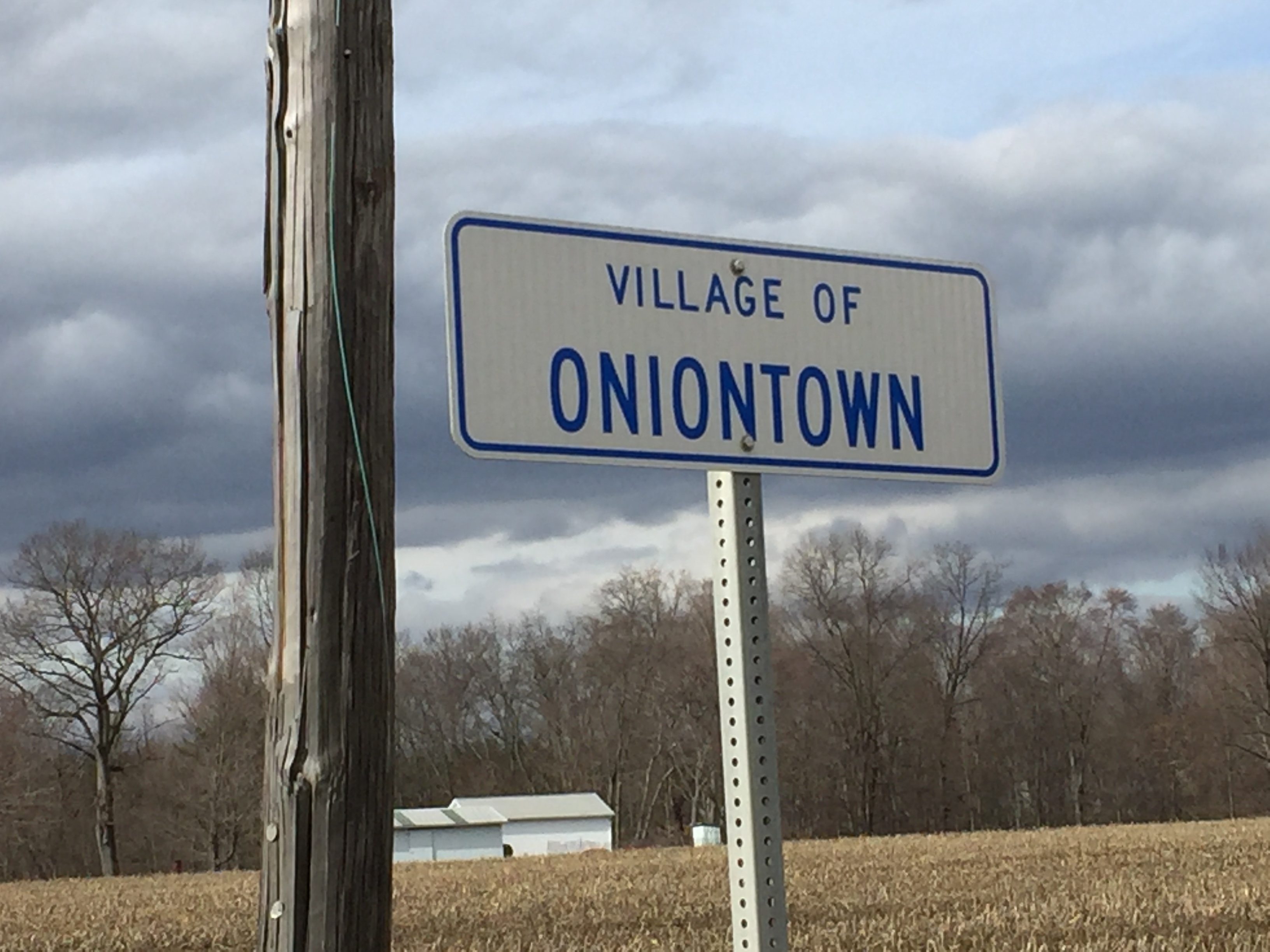
Oniontown Pastoral #6: Solace of the Red-Winged Blackbird

Oniontown Pastoral #6: Solace of the Red-Winged Blackbird

IMG_4284

The animals were out of sorts yesterday. I trust them to keep me company on Route 19 and District Road, the last third of my commute from Erie to Oniontown, but the cows and horses were standoffish—or maybe they didn’t want to be out and about.

The farmers may not have let them out of the barns. I don’t know. Having lived in cities all of my life, I’m still figuring out how things work in the country. The next time one of my farming parishioners is around, I’ll ask why no cows were eating breakfast at around 9:00 a.m. on Thursday, May 12, 2016—none. And why did I see only a few horses, and those a football field or more from District Road, which they normally hug?

I don’t know these animals personally, but they seem like neighbors. “Hey, there,” I sometimes say while speeding by. “Morning!”

IMG_4531

Lovely field . . . could use a few cows

With the windows rolled down and warm air rushing in, I couldn’t help wondering if my beloved companions weren’t shy, but bereaved. Did they somehow sense that my destination was the home of a woman who died much too young? Did they know that loved ones wheeled her to the porch the night before she died for ten last minutes of bird song? And did they see through some cosmic collective lens when her daughter held sweet lilacs up to her nose?

No, of course not. Such magical thinking is a little too flighty, even for me. Still, the congruence was irresistible. On a sad morning, the landscape itself seemed depressed.

And cows and horses weren’t the only ones behaving strangely. Other critters kept running across the road in front of my bulbous, orange Chevy. A brief inventory: a squirrel, rabbit, chipmunk, mole, scrawny white cat and a turtle as big around as a softball.

This last pilgrim was the only one I nearly hit. “No!” I hollered, realizing that turtles can’t hustle. Fortunately, a glance in the rearview mirror showed no turtle, squashed or sound—nothing but pavement.

Never have so many road kill candidates presented themselves to me in so short a span. My thought: “Has a portion of the small animal population gone bonkers?”

A metaphor shouted back at me: “Boy, if this isn’t life, I don’t know what is. Some ugly car is always barreling toward some man, woman or beast.” The roads around Oniontown prove that the vehicle often wins.”

Only one species on that choked up Thursday morning reached out to me: the red-winged blackbird, which is my favorite. Red can be sassy, a Joan Rivers in the family of colors, but this blackbird always makes me believe that the Great Mystery is singing hope.

This solace is only in my head, but I’m fine with that. A message doesn’t have to be factual to be true.

Red-winged_Blackbird_in_Flight_(8601173968)

Credit: USFWS Mountain-Prairie on Wikimedia Commons

Ten minutes before I reached my destination, four red-winged blackbirds passed just above my Chevy. I close my eyes now and see them again. Their red sashes at the shoulder are peace and gladness, maybe because their canvas is impossibly black. The yellow fringe is a smile and a wink.

How many of us gathered around the deathbed? Fifteen? And what exactly did we pray? I don’t remember. Words can do only so much when parents have to bury their child, short of fifty, and when a truck like cancer can be slowed down, but not stopped.

What do you say from a pitch-black heart-scape? The only prayer that makes sense is a promise. In the end, God will welcome us home.

This promise is a burst of color in the darkness, but that’s all it is, a promise. Why do we fold our hands for prayer? Because, let’s face it, what we have to hold onto sometimes feels slight—a hope that’s as humble as a kiss of red on a black bird. We weave our fingers together and hang on until our knuckles go white.

Or sometimes we join hands when we pray, borrowing bravery from each other.

On Thursday morning we neither folded nor clasped hands. Instead, we rested them on the body, touched the place every one of us has to go. The old promise was so vivid we cried.

Hope, thank God, doesn’t survive on facts. Seeing one red sash of it on a black wing brings on tears, an unlikely share of them joyful.

Oniontown Pastoral #3: Hope Is an Old Tractor

Oniontown Pastoral #3: Hope Is an Old Tractor*

A few Mondays ago my friend’s son, forty-four, overdosed on heroin. The next day I took her stunned grief with me to the pastor’s study at St. John’s Lutheran Church in Oniontown, Pennsylvania.

IMG_4327

Farm art near Oniontown

My commute from Erie has four legs: I-79 South to US-19 South to District Road to Mercer Road. For seventy minutes gray trees and rolling fields heal me, but on this day my mind was on iffy roads and my friend. She and her husband had long anticipated the knock at the door and the crushing news. My wife and I used to have the same nightmares about our son, now thankfully clean.

As I thought about the numb terror of fresh loss, a line from Philippians visited me: “Your citizenship is in heaven.” Good sermon theme! I started to flesh it out. When political candidates carpet bomb each other, when explosive vests cut down the innocent, when El Nino and Zika lead the news, and when nasty heroin is as cheap as beer, then heavenly citizenship sounds, well, heavenly. My point, of course, wouldn’t be to reject this life, but to remember that we have a home over the horizon. Not particularly uplifting, but not all sermons can be sunbeams and dandelions.

I looked forward to getting to church and putting the ideas on paper. Alas, a snowy parking lot stood in my way. But since secretary Jodi’s truck was in its spot, I bravely punched the accelerator. Turns out my burnt-orange, bulbous Chevy HHR can’t compete with four-wheel drive.

“Man, am I stuck,” I reported to Jodi, who didn’t know when the plow guy would get to St. John’s. Might be evening. “We’ll get you out somehow,” she assured me.

I sulked at my desk. Wait-and-see isn’t my best mode. The sermon I pecked away at would sound whiny, I could tell.

Within half-an-hour Jodi said, “Do I hear a tractor?”

“I hear something,” I said. “Don’t know what.” Then out my window passed a bundled up man with a long beard pushing snow with an old tractor. The blade was behind the driver, a configuration I had never seen, but he was blazing me a trail.

“He lives over there,” Jodi pointed. He had seen my problem and arrived unbidden. Shoving snow this way and that, he kept at it, like a man subduing a wooly mammoth with a straight razor.

Watching him ride into and out of view, I came to love that tractor, pale red, faded by decades of sun and squalls. It must have been shiny once, but endurance gave it a different beauty. Hope, I think, is the color of my Samaritan’s tractor.

I finally understood why Jodi wasn’t concerned. And the sermon in process took on a glad color. “Our citizenship may be heavenly,” I now plan to say, “but God resides in Oniontown, too.” Then I’ll tell the folks about our neighbor and his tractor. And I’ll tell them about hope.

IMG_4284

*This essay first appeared a few weeks ago in Greenville, Pennsylvania’s, newspaper, the Record-Argus. 

A Witness for Richard

I’m used to burying strangers. Plenty of deceased and their families believe in God, but the church not so much. That’s when pastors get a call from a funeral director. Not much explanation is necessary: “Are you available to do a service on such and such a date and time?”

If nothing is going, I’m in. Details are provided, name, next of kin, a phone number. From there I watch for an obituary and make the visitation if possible, talk to loved ones, gather some sense of the departed.

But my latest burial was a first: no name, no contacts, just when and where. I did reconnaissance in Section B of the paper and found one possibility, a man with a brother and a couple of nieces. Maybe the brother wanted a prayer and “ashes to ashes” at the grave. No fuss, just a man of the cloth and a few words. At the appointed hour I fishtailed to my commitment, confident I would find a seventy-something man in the casket.

Instead I found Richard, a fifty-something resident of a group home, where he lived with other adults in need of supervision and care. Some of them were sitting with their caregivers, waiting for an unfamiliar face to bring comfort and hope.

The funeral director pointed me toward Richard’s primary caregiver, who didn’t quite know what to tell me. Richard didn’t speak. He loved to look at artwork. “He loved to eat,” she said, raising her eyebrows and drawing out loved, making the vowel sound delicious. He expressed disapproval by screaming.

Others told me that he insisted on being called Richard and looked forward to his morning routine of chocolate milk.

Twenty minutes before the service, I stood with Richard: African-American guy about my age; chin drawn in; fingers showing some atrophy, I believe; passable suit jacket and tie; favorite afghan across his legs.

In certain situations I take it as my responsibility to witness, to pay attention and make a silent announcement to creation. Or maybe my job is to confess a belief consisting of equal parts tears, hope, and wonder. I don’t know.

But staring at an embalmed man whose life was nearly invisible, I put words in God’s mouth. Doing this has always felt dangerous. I don’t know the mind of God. I can’t even put together a sound argument that God exists. Anyway, words were in my mouth. I didn’t invite them. I heard them in my head as true beyond debate. It was as if I were not their author:

You’re as important as anybody in the world, Richard. Nobody is more loved than you are.

I imagined that Richard’s face, the lip puffed out over teeth that never got braces and his fingers bent at the last knuckle, were dear to God—as when a parent watches an infant sleep, each feature counted as a miracle. And to God’s ear, were Richard’s screams music?

I did my best with the service. Some lives make for scant eulogies, but that’s only if you forget that one person’s chocolate milk in the morning deserves mention as much as another’s Fulbright. “Richard was a charming, and funny man,” his obituary read. “He had a loving, caring soul and his smile would light up a room.” His friends, a dozen or so, cried for him. They wiped away tears, too, at the suggestion that God beheld Richard loving food and in him was well pleased.

A soul’s resume lists sacred trivia: knowing how to taste chocolate milk, getting lost in a painting, demanding to be called by name, caring for others with a smile or a scream. Richard’s accomplishments don’t shine up very well, but those who loved him in the world appreciated them and loved him to the end—from the group home to the funeral home to the cutting cold of the cemetery.

In under ten minutes, we had spoken the final amen and were back into our warm vehicles. Not many days later now, I sip routine coffee. Richard reminds me to taste it. His face, as clear in my eyes as when I stood by his body, doesn’t belong to a stranger. His features are fine the way they are. May God and all the quick and the dead remember to call him Richard.

Open Letter to a Muslim Woman

Open Letter to a Muslim Woman

Dear Dr. Quraishi-Landes:

My hometown newspaper, the Erie Times-News, trumpets harsh headlines today: Muslims face threats: U.S. WOMEN WARNED TO STOP WEARING SCARVES, VEILS. “On the night of the California shootings,” the Associated Press article begins, “Asiha Quraishi-Landes sat on her couch, her face in her hands, and thought about what was ahead for her and other Muslim women who wear a scarf or veil in public.”

Although I read on, the image of you in your home, troubled at the prospect of you and your Muslim sisters being harassed or worse will be plenty to think about for one day.

I know what it’s like to sit with my face in my hands, but not out of fear for my safety. As a white man in the United States, I’m mostly to blame for my own bouts of suffering—poor decisions, personal weakness. I didn’t think twice about heading out the front door this morning and relaxing here at Starbucks with a tall Americano. Nobody cares what is on my head.

But you do have to consider scarfs and veils. “To all my Muslim sisters who wear hijab,” you wrote on Facebook, “If you feel your life or safety is threatened in any way because of your dress, you have an Islamic allowance (darura/necessity) to adjust your clothing accordingly. Your life is more important than your dress.”

The compassion of that last sentence is the fragrance of my Christian-Lutheran faith. In the end, I have to look up from my sacred pages and into the eyes of fellow pilgrims, whose lives call me to study with my heart. As a parish pastor I’ve taught for years that I can’t obey God with rancor strangling my mind and fear torching my soul. The letter of any law is brittle without mercy.

Do we speak these same thoughts in our own ways? I’m guessing we do. And we’ve felt the rancor, fear, and merciless convictions of our most troubled brothers and sisters take our breath away. These are jolting times. Like you, I hold my face and read sadness behind closed eyes.

But you looked up and wrote mindful words to an anxious world. Thank you. I look up with you and remember what the Gospel of John says about losing hope: “The light shines in the darkness, and the darkness did not overcome it.”

A few weeks ago at another Starbucks I caught some light, and it had to do with hijab. A young woman was waiting for her companion to doctor his coffee. Holding her scarf in place was a pin, a striking burst of gold. I thought at once of a monstrance, which holds the host in Roman Catholic practice.

I walked over to her and said, “I’m not a creep, I promise. I just wanted to say I love that pin you’re wearing.”

220px-Monstrans

I can’t tell you how much the woman’s pin resembled this monstrance. (Credit: Wikipedia)

She responded with an oh, thank you and a smile. I probably could have skipped the creep preface, since I was sitting with my wife. Anyway, I returned to my table, where I looked up after a few seconds. She was still offering me her smile. I gave her another one of mine for the road. In our small pocket of the United States, two believers exchanged mercy.

This is my reason for writing, actually: I wanted to return to you a mercy. You told your sisters, “Your life is more important than your dress.” I say to you, “Your life is important to me, yours and those in your Muslim family, no matter what you wear. If we should happen to meet, I’ll recognize in your eyes my own spirit, longing for a world of welcoming arms and kind voices.”

Your brother,

John Coleman

An Unorthodox Peace

IMG_3646This past Sunday the church I serve, Abiding Hope Lutheran in Erie, Pennsylvania, held a groundbreaking ceremony at the site of our new church building, the foundation of which is already well underway. After morning worship at the old place, we all got into our cars and headed the mile or so to our future home.

For mundane reasons I had to drive son Micah’s car, which is always in unapologetic squalor. Almost to the end of the parking lot, I had to double back: the processional cross was still on its perch in the sanctuary. After fetching it, I looked at the backseat and paused: Should I put the cross down on that mess? Because I realized that entirely different questions were on my mind—ones I could answer right away—I rested the cross on my son’s work clipboard, toilet paper, hoody, etc., no food debris, thankfully.

The groundbreaking was meaningful and fun and didn’t seem at all redundant. No silver shovels for us. Everybody who wanted to turn some dirt brought a shovel from home, especially our kids. The ground was packed down by construction vehicle traffic and hard as the cinderblock foundation. We found a soft patch for the young ones with sandbox shovels and let them have at it, sang with gusto, and said our prayers and good intentions. The adults chipped loose teaspoons of gray crust.

When we finished, I lay the cross over the chaos for its ride to the Coleman house, where it leaned overnight in the dining room.

IMG_3650

Processional cross

“Ooh,” Micah said, spotting what he actually carried years ago as an acolyte. His question was implicit: “What’s the deal with the cross here?”

I explained.

He held it like a shovel—Christ at the top—and pretended to chip at the floor: “So did you dig with it?”

“It would have been fitting,” I said, “but, no, a couple of kids held it for the ceremony.”

As Micah has grown, we’ve developed an understanding. He gently teases me, but knows that my faith is spacious and merciful, blinding white with Mystery. And I take his searching seriously and don’t meddle with his atheism.

The purest image of my spirit’s posture is this: I don’t fear for my son. I don’t fear for anybody.

My Creator isn’t abstract. Often when I close my eyes and breathe, a love that feels bestowed rises in my throat—as when a parent watches a child disappear through the school doors. My chest is drawn toward a planetary embrace. The longing is physical.

It may be nothing more than my own middle-aged chemicals inducing some weird prayer-meditation high. I’m probably bat-crap crazy. I can’t offer a defense, only a description of the love that I bet my life on. God is what I call this love, but the older I get, the more I’m drawn to the ancient Jewish tradition of not vocalizing Yahweh. Shh. Only know and breathe compassion—for all, for self. I want to name the Holy One with my flawed heart and hands. My voice can’t be trusted entirely.

How far is the reach of Sacred Love? Whom and what does it rest upon? On Sunday, when I lay the cross on Micah’s slop in the backseat—nothing compared to the past squalor of heroin, arrest, and rage—I spoke my Christian answers to the questions behind my question. The universe is composed of beloved daughters and sons. Who am I to send anyone into exile? Helpless before grace as I am, how can I presume to stand in the way of Love?

IMG_3648

Christ’s metal blessing upon the chaos

This might not be the most convenient parking place for a pastor. Love’s current in the Bible is strong, but troubling blood flows there, too. I will only say that I’ve made an unorthodox peace with Egypt’s firstborn and Israel’s young women lacking evidence of their virginity, stoned to death on their family’s doorstep—we have a private understanding.

It’s enough, I guess, to admit that in resting a processional cross on the backseat of tired old Mazda sedan, I was confessing my belief: the risen Christ bestows a metal blessing on every mess in every land, on every soul aching with belief and disbelief.

Reconsidering 2014

“You humans. When’re you gonna learn that size doesn’t matter? Just ’cause something’s important, doesn’t mean it’s not very, very small” (Frank the Pug in the movie Men in Black).

Merry Christmas, 2014! Happy New Year, 2015! For months I’ve been stuck in sleep. The last time I felt this way was Christmas of 1998, six months after my mother died. I had no idea that my soul had been smothering until my lungs snapped full in late December, and I thought, “Oh, so that’s what grief is.” Mom had passed, but she would have asked me to keep living. And now, I’m granted an epiphany, something probably obvious to everybody else, but hidden from me.

10922551_801819956554861_553225707324982969_n

Grandson Cole: my expression for way too much of 2014. (Credit: Elena Thompson)

After a tough year, the Christmas story has awakened me, but not because it can be historically proven. Haggling over facts makes me want to take a nap. It’s the truth of a story that has roused me from sleep. If you’re not a Christian, please listen anyway. Play along. The Creator of All visits humanity as an infant, absolutely defenseless, not as a warrior and not majestic. “And so it was, that, while [Mary and Joseph] were [in Bethlehem], the days were accomplished that she should be delivered. And she brought forth her firstborn son, and wrapped him in swaddling clothes, and laid him in a manger; because there was no room for them in the inn.” These familiar details from the Gospel of Luke are small, so very, very small that they’re heartbreaking–a baby wrapped in rags and laid in a feed box. No room for him, except with the animals.

But Frank the Pug’s gravelly voice grabs the scruff of my neck and carries me away from sadness. “When’re you humans going to learn that size doesn’t matter?” (Yes, yes, go ahead and chuckle.) Size not only doesn’t matter, but it can be deceiving. Example: ants weigh as much as humans do. I can’t recall when I first learned this, but son Micah verified it for me: “When combined, all ants in the world taken together weigh about as much as all human beings.” And so, wake up, John! Sure, lousy, big, heavy stories have lots of us making Cole’s crying face, but when you place all the flecks of grace and good spirits on the scales, the world doesn’t look so bad. In fact, it shines.

Thank you, Infant Lowly, for restoring my hope, putting a little steam back in my stride, and updating the prescription for my spiritual glasses. Rubbing the bad news out of my waking eyes, I see beauty and fun clearly now.

Dear loved ones, please accept these holy, lowly flecks from my 2014. May they help you and me receive 2015’s ants of grace and good spirits.

IMG_2943

Wife Kathy and neighbor Patrick–a wise, Down’s boy who said, without even lifting his head, “I love you, Kathy Coleman.”

IMG_2790

My late mother’s Christmas cactus now blooms in early November, so I figured it would be bare come December 25th. Not so. A couple of flowers opened late, but they’re no less lovely for that.

IMG_2884

This one is probably an over-share: Over twenty years ago dentist friend Tom built a tooth for me out of filling material. Money was scarce at the time, so Tom worked his magic, which lasted until Advent of 2014. When I was in seminary, a dentist in Columbus said, “This one was made by a master.” Thanks for two decades of good service.

IMG_2841

In downtown Erie, an old gas street lamp still burns in front of Gannon University’s Gitnik Manse on West 6th Street. I have no idea why this gave me a sip of joy, but it did.

Screen Shot 2014-06-12 at 8.55.58 AM

My book came out in 2014 as an indie publication. People seem to find out about it a person at a time–kind of like A Napper’s Companion. No thousands of readers, but a kindred spirit here and there.

unnamed-2

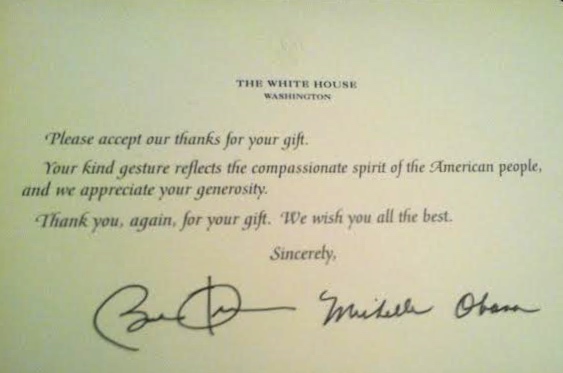
Oddball that I am, I sent a copy of “Your Grandmother Raised Monarchs” to the President and First Lady. What the hell? They sent a thank you note, though I’m sure the book itself was ground into a fine powder to be sure it wasn’t laced with anthrax.

I call myself a writer, yet my vocabulary is embarrassingly slim. When I encounter an unfamiliar word, I look it up. In 2014, I read carbuncle, which I knew is a precious stone from reading Sherlock Holmes stories, but the context told me there must be another meaning. A carbuncle, it turns out, “is [also] a red, swollen, and painful cluster of boils that are connected to each other under the skin.” Why, thank you for that update. I also stumbled on sycophant, who is a “servile self-seeking flatterer.” The synonyms tickle my teenage sense of humor: “apple-polisher, bootlicker, brownnoser, fawner, flunky, lickspittle, suckup, toady.” Lickspittle! I can’t wait to toss that one out in a conversation. I love words and consider them a blessing, though I don’t retain them very well.

I also love quotations, in part because I compiled 365 of them for a collection of daily meditations, Questions from Your Cosmic Dance, which came out in 1997. I jotted down one of my favorites from the past year on a scrap of paper and still have it. It voices wisdom I need to hear and follow.

IMG_2821

This quote comes courtesy of Belief.net’s “Jewish Wisdom,” which lands in my email-box each day. The older I get, the more I choose not to say. Thank you, Solomon Ibn Gabirol.

unnamed-1

Words are flecks of goodness, as are quotations. Laughter also places weight on the scale to counter despair. Daughter Elena and son-in-law Matt gave me a Jesus Pan for Christmas. Little do they know they’ll be eating Jesus French toast someday soon.

photo-23

No other small gift from 2014 comes close to my grandson Cole, shown here in his Wagnerian knit cap. He helps me to understand the Christmas story. Why would the Great Mystery visit humanity as a child? Behold! (Credit: Elena Thompson)

10891492_801819689888221_3465058071233830785_n

What does 2015 hold for you, me, and planet Earth? Cole looks at the horizon with wonder as do we all. (Credit: Elena Thompson)

One thing I know about the months ahead: unless I get lost completely, don’t expect me to repeat the tired grief of 2014. Sure, I’ll get sad and discouraged, but nothing can change the fact that ants weigh as much as humans. You have to look closely for very, very small flecks of grace and good spirits, but once your eyes learn to spot them, the size of the bad news doesn’t matter so much anymore.

IMG_2808

May this fortune be so for you in 2015, my loved ones.


A Case for Human Beings

A couple weeks ago an email from Mount Saint Benedict Monastery landed in the morning:

Sister Phyllis Weaver went to her Eternal Reward last night (Monday) around 9:00PM following a very brief illness. She was surrounded by her family and a number of Community members. S. Phyllis touched the lives and hearts of many through her years of ministry in education and hospitality.

IMG_1326

Posted on the wall of my room in the monastery’s guest wing.

Until a few years ago, Phyllis was the sister I called to reserve a room or hermitage. When my daughter and son, now grown, were going through terrible times, I crawled to the Mount for sanity. The place was—and still is—life! Phyllis was at the center for me, greeting me when I arrived and checking on me unobtrusively when we saw each other after worship or lunch. Near the end of her call as Hospitality Coordinator, Phyllis’ shuffle gave way to an electric scooter—no padding left on the soles of her feet, she explained, just bone and skin.

In retirement, Phyllis’ prayed for retreatants. I needed her petitions for their intention if nothing else and appreciated them as I rested like a crimson bruise in the light of the chapel’s stained-glass windows.

IMG_1339

A lamp in the chapel at Mount Saint Benedict Monastery.

Kids often outgrow problems. Most bruises fade. But Phyllis’ and her sisters’ gift during some raw years has grown in me and taken on more color than I can say: “Let my life be about loving people, one brother or sister at a time, moment by moment.”

If only I could be my own answer to this prayer. The best I can do some days is draw a meager smile from the deep well of mercy I’ve been granted. Still, Phyllis extended to me love based on the conviction that the Creator’s Spirit dwells within all people and nothing in daily life is more sacred than that moment when a person needs love in one of its countless forms and another person provides love gladly. “Let me recognize the Ultimate in you,” I say, “and may you find love in my eyes.” My namaste is ragged. If it gives warmth, it comes from a cold and broken hallelujah.

I do trust the Divine Mystery to lead us to security eventually, but for now, I feel the cold of a world order in which being human doesn’t count for much. As massacres and fiascos make a disturbing media racket, people–individual dwellings for the Ultimate–lose life quietly, invisibly. Society’s eye evaluates humans, and, increasingly, we are expected to defend our personal cog on the rim of an imposing, impersonal wheel.

I’m talking about progress. E. B. White first drew my attention to the crooked assumption that the best way to improve life is to nudge human beings out of the picture. In a 1955 New Yorker essay, White grumbled that the telephone company “saddled us with dials and deprived us of our beloved operators, who used to know where everybody was and just what to do about everything.” Good thing he passed in 1985, before call waiting and voice mail joined our cultural lexicon.

EB_White_and_his_dog_Minnie

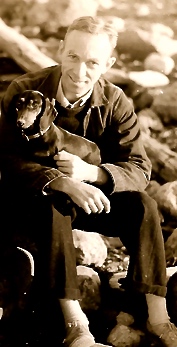
E. B. White holding his dachshund Minnie (Credit: Wikipedia).

I don’t think there was a religious bone in White’s body, but he and Sister Phyllis probably would have hit it off. She was all about taking care of pilgrims, and he wrote, “All that I hope to say in books, all that I ever hope to say, is that I love the world.” You can’t read one paragraph of E. B. White without recognizing that his world was human beings and animals. He was against whatever threatened either one.

In the last month I’ve heard stories that worry me. Andy, as White’s friends called him, would bristle. And I’m not sure, but Phyllis might have just shaken her head and returned to praying for retreatants.

–A December 14, 2014, New York Times article by Claire Cain Miller opens with a troubling trinity: “A machine that administers sedatives recently began treating patients at a Seattle hospital. At a Silicon Valley hotel, a bellhop robot delivers items to people’s rooms. Last spring, a software algorithm wrote a breaking news article about an earthquake that The Los Angeles Times published.” If somebody is going to sedate me, I want to look ‘em in the eye. And some of my friends are print journalists, a profession already in decline. I’m not sure what an algorithm is, but it’s a scab compared to Jennie, Gerry, and Erica.  

Vince_Plover,_working_as_a_bell_boy_at_Lennon's_Hotel,_Brisbane

A robot or young bellhop Vince Plover? I prefer the kid, even if I have to tip him. (Credit: Wikimedia Commons)

–Also from Miller’s article: “Ad sales agents and pilots are two jobs that the Bureau of Labor Statistics projects will decline in number over the next decade. Flying a plane is largely automated today and will become more so.” As a jittery flyer, I don’t want my plane piloted entirely by computers. They fail without warning, constantly leave the backdoor unlocked, and refuse to accept reason.

–NPR ran a story about computer chips being implanted in grape vines. This technology can take the guesswork—or artistry, depending on your point of view—out of watering and harvesting. When a commentator claimed that the chips’ grapes made better wine than the winemaker’s, I thought of poor Paul Bunyan being surpassed by a chainsaw.

unnamed

Cabernet Sauvignon at the Coleman dining room table: I would love to meet the winemaker.

–A couple of weeks ago NPR’s Marketplace reported on the sale of PetSmart to a private-equity firm. Amidst the chatter somebody commented that Walmart-type stores cut into PetSmart’s business by carrying lots of pet supplies. At once my White-ian fears took hold. How long will it be before you can accommodate all of life’s needs at a single destination? Get your Airedale bathed and groomed while your SUV gets snow tires put on. Pick up General Tso’s chicken for supper. Have cataracts removed and touch base with your life coach. Yes, I’m being silly, but a voice in the ear of my heart warns me that herding every specialty under one roof managed by one entity could make transactions more uniform and less personal.

Maybe I’m wrong, but for fun I just Googled “shoe repair erie pennsylvania” and discovered that in my hometown proper, one shoe repair shop survives. The idea to check came when I saw that Dom Bruno’s Shoe Repair in Little Italy had closed. Ten years ago I took a pair of black wingtips to Dom, who resoled them for $45. Sounds like a lot, but those refreshed throwbacks remain my only pair of black dress shoes.

IMG_2920

“Where have all Dom Brunos gone, long time passing?” The thin, corner shoe repair shop that healed my wingtips.

IMG_2919

The only grainy evidence that Dom Bruno ever had a shop on Brown Avenue–a cardboard poster.

According to Google, M. A. Krug and Son is now my only option, unless I want to drive fifteen miles west to Nick’s Shoe Repair in Girard. My wingtips need attention, and I wish for a redundancy of shoe repair shops in Erie, Pennsylvania–and at least one mom-and-pop corner store in every neighborhood.
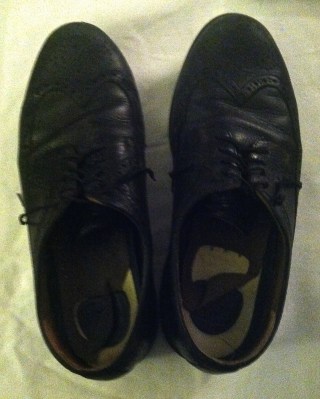
photo-24

Good and faithful servants: seams splitting in a few places, soles wearing, gnarly inserts

On the way to Sister Phyllis’ viewing, I made a sad discovery. Unless somebody is tending shoes beneath an inconspicuous shingle, Erie, home of around 200,000 feet, is bereft of cobblers.

IMG_2905

Google is wrong. Mr. Krug no longer repairs shoes. Stereo equipment, old albums, and silly signs now fill his shop.

IMG_2906

Posted by the entrance: Mr. Krug had a gruff sense of humor?
IMG_2910

Across Peach Street from Krug’s place, another dead shoe repair shop. Seriously?

IMG_2914

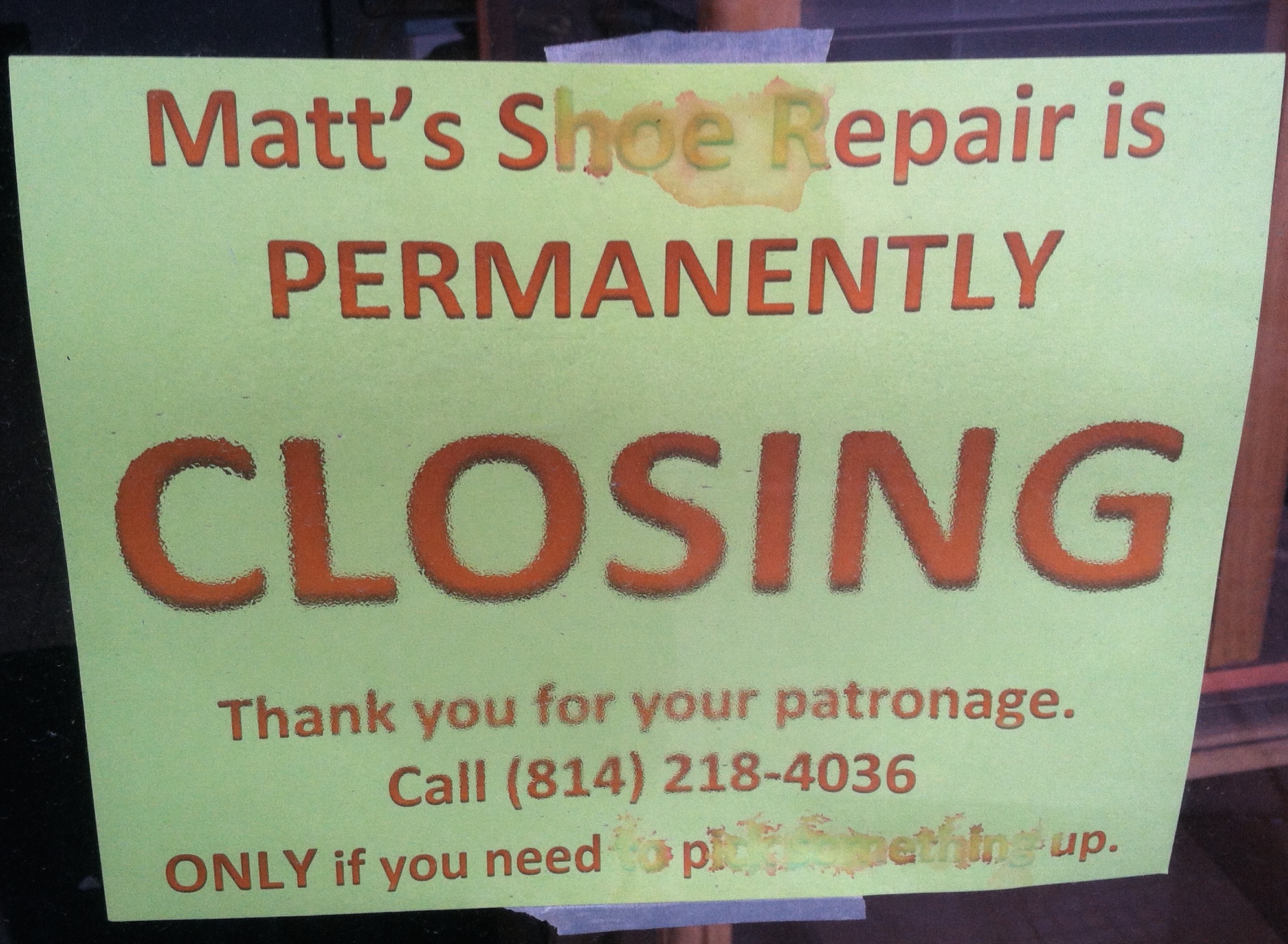
How long had the business been closed? Long enough for ink to run.

IMG_2917

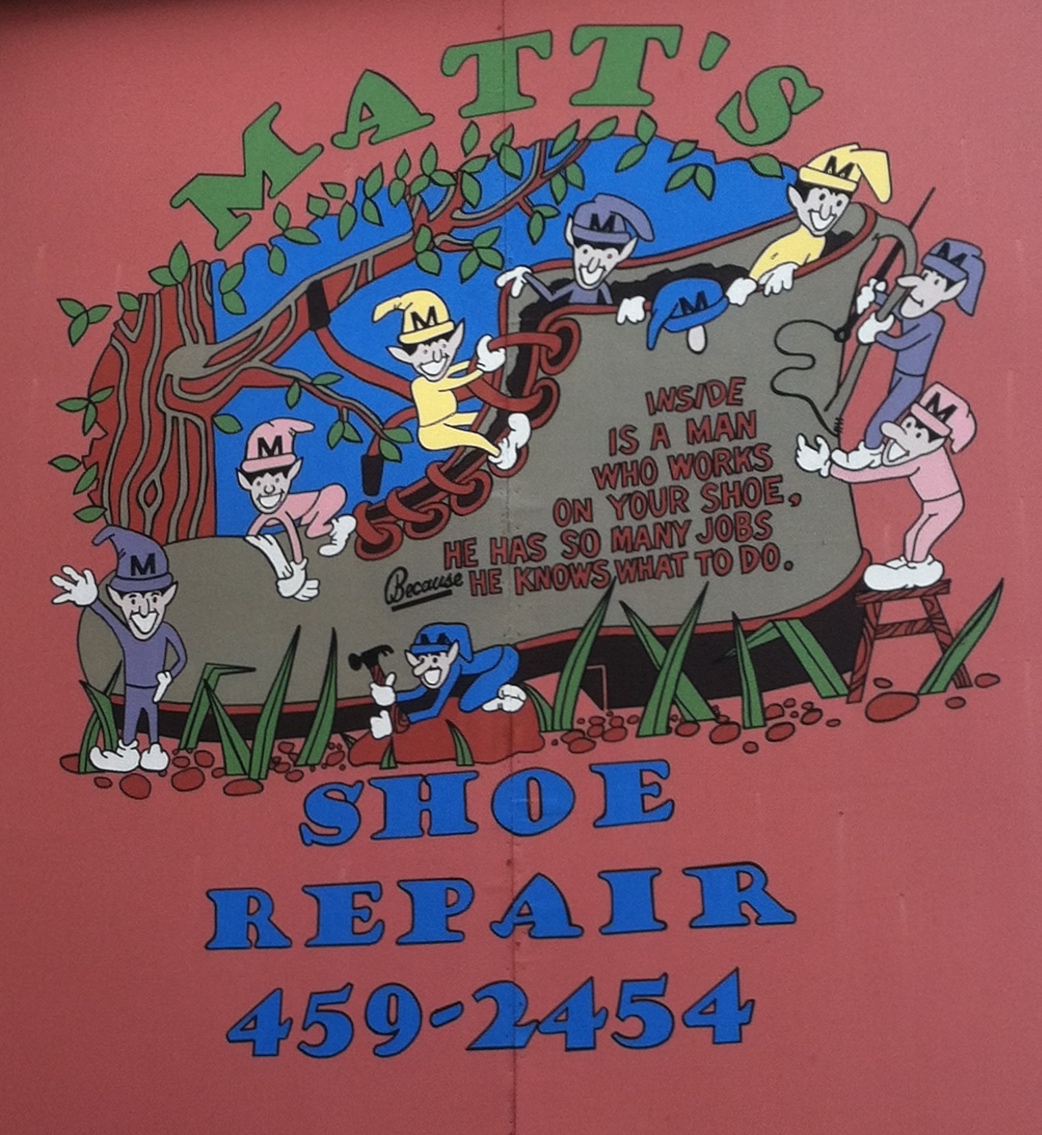
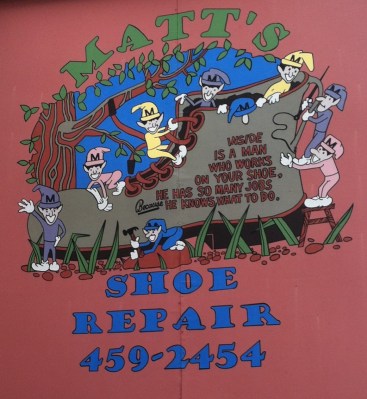
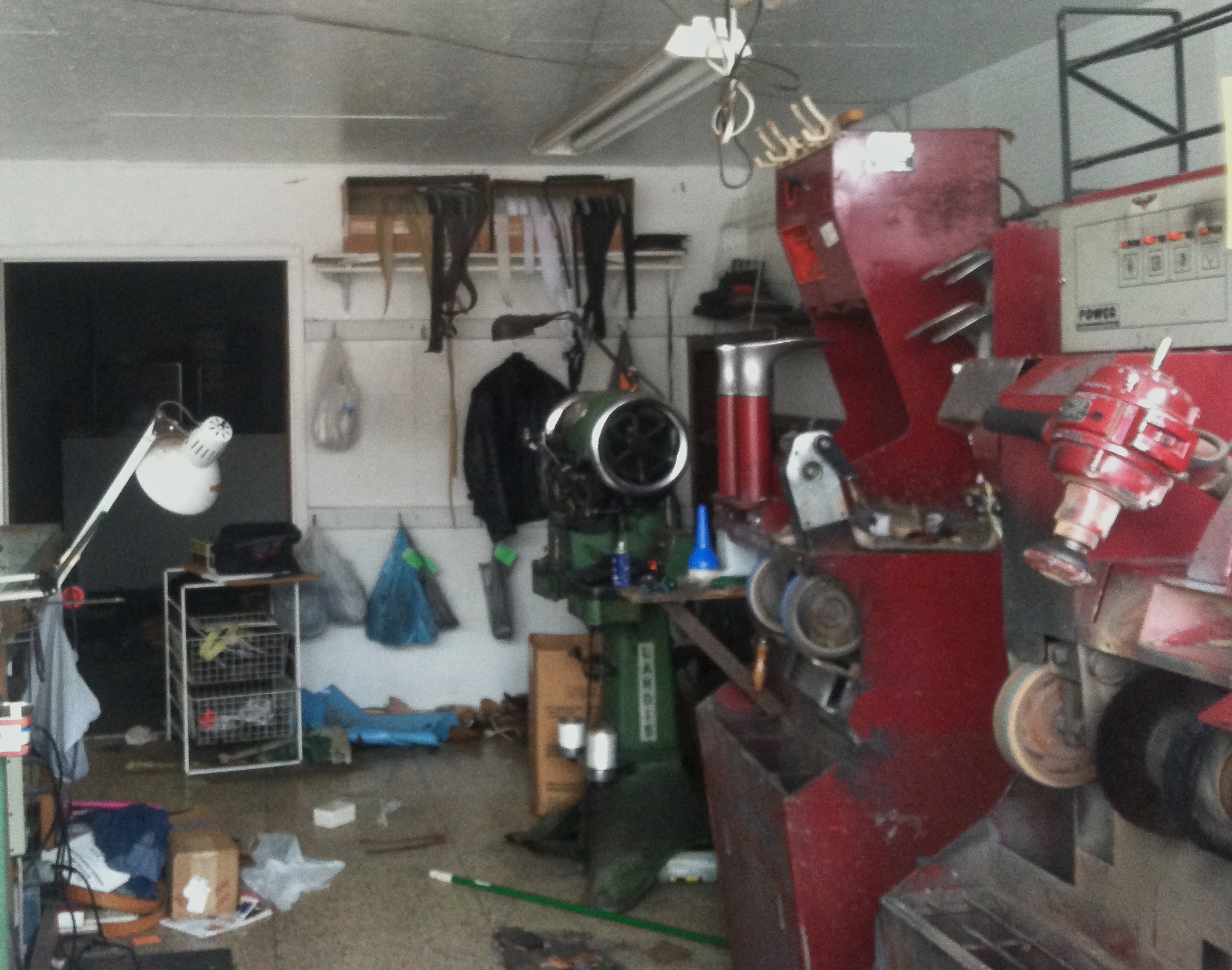
Matt’s machinery sleeps behind dusty windows. Goodbye to a vocation.

Actually, I’m not all that bugged about my wingtips being S.O.L. I’ll get a new pair. The trouble is, I’ve lost track of Dom Bruno, and it might have been nice to meet Mr. Krug and ask which kin started the shop in 1895. And anybody who makes a sign like Matt’s is bound to be good for a laugh or two.

Bottom line: the world’s best hope for health and gladness isn’t the robot, but the bellhop. There’s no way the former can look into a stranger’s eyes and recognize that a special word of kindness is needed. The latter not only carries luggage, but can also lighten a burden.

I might not be able to tell which wine was made by person or machine or which news story was written by an algorithm or a friend, but none of that matters. I want to be a Sister Phyllis receiving flawed, unpredictable, expensive human guests into the safety of my presence. I want to be an Andy White, betting my money and heart on women and men creating and mending the world over and over, messing up and starting again.

IMG_2698

Sanity: a nap in a monastery room as Sister Phyllis prays for you

When I reached the Mount and looked down at Phyllis, I was sobered. She didn’t look herself at all. Her face was oddly tanned, her hair flattened. But I’ve seen enough dear ones in coffins to give an interior shrug.

Before long Prioress Anne Wambach said hello and took my hand. At once I understood that my reason for paying respects to Phyllis wasn’t to honor the dead, but to receive life. Our conversation took less than a minute. I don’t remember what I said, but the idea was that Phyllis made me feel welcome. Clearly, Anne had heard this dozens of times already. She told me that Phyllis had done well until the end: a couple of falls, morphine, and confusion. Death came within a week.

IMG_1923

No Benedictine is forgotten. Every single sister matters.

Phyllis hadn’t suffered long; this gave me comfort. Anne took my hand and looked into my eyes; this gave me not only comfort, but a truth to live by. No software can estimate the value of a handshake or predict what healing and wisdom can result when two persons look into each others’ eyes.

Thanks, Anne. Thanks, Phyllis and Andy. I have my personal orders within the world order. I’m bound to mess it up, but I’ll try: take strangers by the hand, John, and see the Great Mystery in their eyes.


Dreaming My Way into an Old Lady House

In the early 1970s writer May Sarton moved from her beloved home in Nelson, New Hampshire, to The House by the Sea (her journal of those days). Like some lucky pilgrims, Sarton had ample time to make her move. “I had two years in which to dream myself into the change,” she writes, “sell Nelson, and pull up roots.”

Kathy and I are in the process of dreaming ourselves not into a spacious home on the coast of Maine, but into a 1,000 square foot house on Erie, Pennsylvania’s east side. Our zip code will go up six digits, but our space will shrink by over half. Downsizing, we’re calling it. We closed on the place a few days ago, but we’ve been picturing what will go where and what will disappear. Kathy is lobbying for an ambitious kitchen remodel; I’m smiling at the corner on the enclosed front porch where my desk and prayer/meditation chair will squat; both of us are imagining.

IMG_2814

A little light in the hallway–just enough

Last evening I said, “You know, we’re going to have to get used to the loss of space and no upstairs.” Kathy agreed, and as I’ve wandered about, distances seem abbreviated. I’m not concerned, though. The rooms are already endearing themselves to me, mainly because I see signs of the former owners everywhere. I’m guessing the husband and wife–the latter perhaps passing recently, the former having departed some years ago–were my parents age, born in the 1920s, shaped by the Great Depression and forged by World War II. Admittedly, all of this is guesswork.

I’ve been calling our new home, which the former owners purchased in 1949, an old lady house. She and her husband could easily have been curmudgeonly and strange, but signs of their thrift and good stewardship have me thinking they were upright folk. He–I’ll name him Ernest–nailed lids to the basement studs and kept screws and nuts in jars twisted secure. He also recycled cabinets, lining them up and keeping, what, half-used cans of paint and turpentine inside. One door near Ernest’s workbench was set up for a padlock, and a mirror strategically angled so he could see who was coming down the steps makes me wonder if he liked to keep a bottle of Gibson’s 8 handy for a secret pick-me-up on boring afternoons.
unnamed

Is this what Ernest kept locked up?

IMG_2824

Ernest didn’t have to venture more than five feet from his workbench if the “great whiskey” got to be too much for him.

She–Arlouine, let’s say–kept the well-worn carpets vacuumed. Grab bars in the bathroom suggest she tried to stay in her home as long as possible? But eventually raised toilet seats don’t help much. I imagine her, thin and brittle with iron gray hair, propped up in a nursing home bed, staring into the distance. Was she a fearful soul? I ask only because of something odd left behind in a hall closet.

IMG_2812

Sacred water in profane hands

So Arlouine was Roman Catholic. (We Lutherans don’t go in for Holy Water, our idea being that God has blessed that life source far above our poor power to add or detract.) For a couple days I laughed at the idea of Holy Water in a spray bottle, but Starbucks friend Sean, also a Catholic, gave me a compassionate nudge, probably without realizing it. I don’t remember his exact waords, but when I showed him the photograph he acknowledged the old practice of keeping Holy Water around the house. His take was kind, though, along the lines of “sometimes you’ll try anything that might help.” Point taken. Our fears hide in plain sight, like cobwebs near the ceiling or rust in the medicine cabinet; a spray of blessed water can do no harm.

Arlouine and Ernest’s bedrooms have tile that is so ugly it’s kind of charming.

IMG_2817

I’m not sure what all those tile plants are, but they look to be in pain.

Besides the Holy Water, the best find in the old lady house is the newspaper under the tile. I lifted up a corner to be sure the floors are hardwood–yes!–and found The Erie Daily Times (Night Final) dated November 8, 1949. My own parents’ firstborn, Cathy, was not yet a year old. Mom and Dad are both gone now, and my sister can retire any time she is ready.

unnamed-1

37-cent matinee

unnamed-4

Okay, so skinny depictions of women aren’t exactly new.

unnamed-2

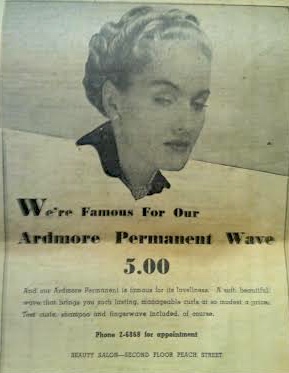
Liquors, a Hammond, and Hazel Lowry’s smooth vocals: 1949 Erie, Pennsylvania, at its most refined

unnamed-3

Captain von Trapp’s first fiancé? I’m not going to lie: I’m frightened.

Oh, Arlouine and Ernest! You put that paper down sixty-five years ago, a prudent layer between the tile and wood. I’ll grant you, there’s no pressing need to update that flooring. Of course, Kathy and I will refinish the hardwood, probably put down a faux Persian rug, something tasteful. If I’m the one who slices your old drab leaves down to trash-bag size with a drywall blade, part of me won’t be happy.

IMG_2815

Possibly more thermometers than electrical outlets in our new home; maybe Kathy and I will keep this one to remind us of Arlouine, Ernest, and all those who have sailed on to glory.

I believe your way is for the best and will try to remember it as I dream my way into your home: Be sure to finish those leftovers. Put that old metal table in the basement and fold laundry on it. Don’t pull up perfectly good tile. And–I confess it makes sense–keep Holy Water in a spray bottle. A mist is more than enough.

IMG_2819

Tabernacle for the Holy Water; all woodwork in the house is like this