In Defense of the M.F.A., M.A., or Whatever

Only at the end of Cecilia Capuzzi Simon’s New York Times essay “Why Writers Love to Hate the M.F.A.” did the truth hit me. 2015 marks the thirtieth anniversary of my M.A. from the Writing Seminars at Johns Hopkins University. The program was one year long at that time, and I spent one semester studying under John Barth and the other under Doris Grumbach. I also finessed my way into Elizabeth Spires’ undergraduate poetry workshop.

IMG_3203

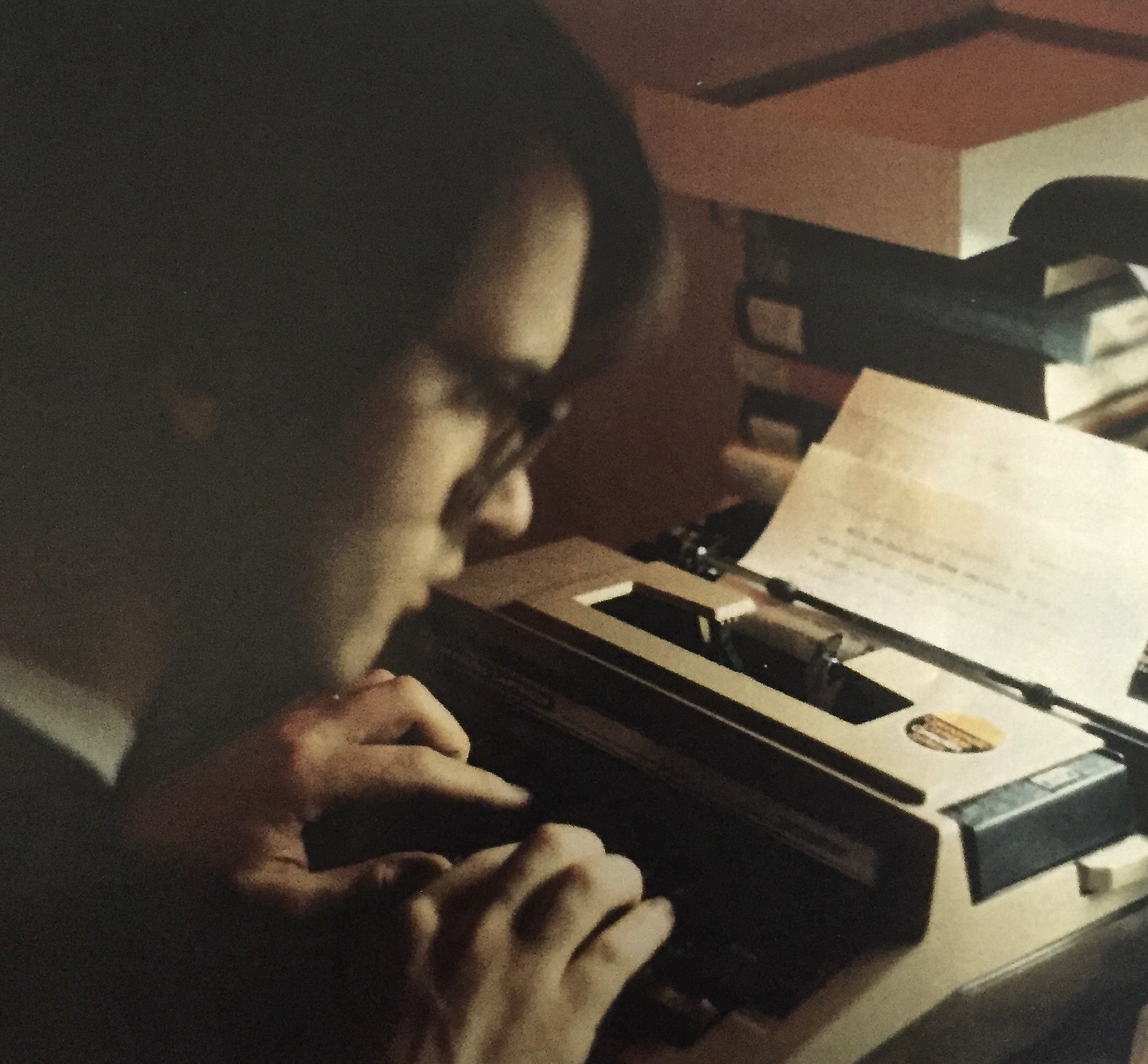
A twenty-three-year-old punk types out a draft at his desk in Baltimore.

I held up the rear of the mid-pack, turning out short stories and poems that were neither embarrassing nor accomplished. Actually, I was probably of most value as a critic, giving every manuscript an energetic round of copy editing and a lengthy summary comment. The greatest compliment I received at Hopkins came from one classmate who has gone on to nonfiction notoriety: “I always pay attention to your comments.”

But I was out of my league, and the nine months wife Kathy and I spent in Baltimore was a mostly unmerited privilege. My fellow fictionists came from Harvard, Yale, Sarah Lawrence, and so on. One already had his Ph.D., and another received a perfect score on the verbal section of Graduate Record Exam. One who has since gone on to glory was married to the actress who played Quincy’s (Jack Klugman) wife on television. One fought in Vietnam. So we’re talking smart, interesting people. And the alumni are distinguished: Frederick Barthelme, Louise Erdrich, Martha Grimes, Molly Peacock, John Barth himself, et. al.

I graduated from Penn State-Erie and scored in the 26th percentile on the GRE literature section. How the hell did I sneak in? I perched on the waiting list for some weeks, so at least a few applicants said “no, thanks” before my acceptance letter landed.

I appreciate the reservations some writers and scholars have about M.F.A.s and M.A.s. Capuzzi Simon points out the objections that tuition is steep and teaching opportunities—for those who want to pay the bills that way—are scarce compared to the number of graduates. And even in the mid 1980s harrumphs circulated about the gush of monochromatic work coming from apprentice writers who nurtured voice and vision in at best a comfortable terrarium and at worst a snarky thunderdome.

IMG_3207

The Coleman residence for a few seasons–on North Charles Street in Baltimore

My experience from September 1984 through May 1985 was in equal measure stressful and magnificent. The former was my fault. My lungs got punished by Vantage 100s, and I lost thirty pounds in my first two months. A little Zoloft would have helped. As I settled in, though, Kathy and I found C. C. Carry Out egg rolls one block away and the Graduate Club in the basement of our apartment building, an old hotel probably grand in its day. On Hump Night, dime Rolling Rock ponies washed down chicken fingers. Some weight returned. Gradually I understood my place and relaxed enough to avoid a nervous breakdown.

Portrait of John Barth

John Barth (Credit: Bettmann/Corbis)

And I learned. Jack Barth—yes, we called him Jack—was more skillful and generous than I can say. He was much concerned with story-telling technique. If you’re going to tell stories, you ought to know what’s under the hood, as it were. When your story was up for the workshop, you met with Jack for thirty minutes in the days beforehand for a private conference. I’ve said many times that my hour and a half with Jack Barth was worth the tuition. How astute he was, reading my young work and discerning what I most needed to hear at that moment to grow and develop—and not a hint of annoyance at my ignorance.

Doris Grumbach established a rule during her first appearance at the helm: criticize what you will, but the subject matter of the story or chapter is off limits. I appreciated this, since my stuff was about the mundane lives of blue-collar sorts from the rust belt. It was all I had. In her teaching, she emphasized the importance of line-by-line attention to our prose. In one session we compared an original Raymond Carver short story with a revision that appeared in a later collection. The late minimalist made but a handful of minor changes, and we dissected each one. The point: if you’re going to be serious about writing, every pen stroke matters, so pay attention. Doris also invited the fiction workshop to her row house on Capital Hill and let us have a look at her carriage house study. For years thereafter I longed for such a sprawling, dignified space for my desk.

When Kathy and I drove back north to Erie, Pennsylvania, with my M.A. in hand, we moved into an attic apartment in a sketchy part of town. I set up shop in a 4’ x 4’ turret and, oddly, turned out poems. I’ve now written dozens of them, as well as scores of essays and a couple of books about spirituality and religion and one memoir—but never another short story. The poetry I generated for Beth Spires’ workshops was eh, and she did me the great favor of treating my work with respect and care without ever giving me reason to dream big.

Still, verse took hold of me. Over the next five years I got my work into a handful of solid literary magazines and bet I would have eventually published a collection. In the late 1980s I squeezed in the nervous breakdown I put off in Baltimore.

Though I haven’t completed a poem or story for going on two decades, Hopkins still shines in my memory. Thirty years ago this month I typed the final copy of my thesis, a collection called Senior League. I drafted longhand and moved to a little Smith Corona electric for revision and submission. In the turret, it was poems put down on an 8.5” by 14” yellow tablet, followed by typing when things got serious. For a while, when I taught English at Penn State-Erie, Kathy and I lived in a freezing farmhouse. Steam rose from our knees when we bathed. My study was tucked under a set of steps. Revisions got pounded out on a rickety old manual; the print quality was about as good as the poetry. Eventually faculty members received IBM computers with a blessed, crappy, postcard-sized screen, and I started composing on the keyboard.

I mention these details to demonstrate that writing changed for me at Hopkins. It became something I sat down and did, scribbling or clacking or clicking, whether I was in the mood or not, whether I had anything to say or not. I showed up in Baltimore in 1984 to study writing. When I left in 1985, for good or ill, I was a writer. Why? I had seen what committing to a craft looked like, received guidance from masters, and spent time with peers on their own pilgrimage. In all this I learned a simple fact: writers sit or stand or recline, get out a pen and paper or prop a keyboard on their laps, and bloody well write. And they spend far more time writing than talking about writing or figuring out what clothes an author should wear. Thomas Merton wrote, “What I wear is pants.” Amen. Oh and if writers aren’t gluttonous readers, something is amiss.

One thing I didn’t learn at Hopkins was what I ought to write about. That was a good thing. As I’ve shown up at my writing desks and waited for words to find me, I’ve also been figuring out what’s worth saying at all. Cecilia Capuzzi Simon summarizes a common objection to the M.F.A.: “Detractors . . . say the degree is responsible for so-called program fiction—homogenized, over-workshopped writing void of literary tradition and overly influenced by the mostly upper- and middle-class values and experiences of its students.” Poetry workshops could be guilty of the same charges.

IMG_3205

Resting with son Micah at the seminary townhouse complex–four of the best years of my life

In fact, you could accuse plenty of graduate programs of over-workshopping students. In addition to an M.A., I have a Master of Divinity and a year of Ph.D. studies (a twenty-page paper on Sir Thomas Browne’s Urn Burial was enough to show me that a literature doctorate wasn’t for me) on the old curriculum vita, and each excellent, soul-shaping experience left its distinctive perfume—or stink, as I’ve occasionally said—on my thinking. I left Hopkins writing stories with nearly invisible endings. Twelve months at Indiana University of Pennsylvania was exhilarating, but nearly turned me into a Marxist. And Trinity Lutheran Seminary cracked me open and called me to believe like a grown up. In each case, over time, lessons that held up got integrated and those that didn’t got left beside the road.

The point: during grad school I immersed myself in the ideas being presented, welcomed them, lived with them, sometimes championed them. Sure, I got homogenized, but only for a while. Eventually my brain and identity returned. And isn’t this the educational experience: binge on learning, figure out what’s crap later, and grow?

When I was at Hopkins, I wrote about white, lower-middle-class folks whose lives were going nowhere. The resolution to my minimal conflicts was the moment when the reader understood that my characters were hopelessly stuck, even if they were oblivious. After covering the same territory in verse for a few years, I took up panic attacks, which led me in a direction I would have sniffed at in Baltimore: spirituality, and now, creative non-fiction that my younger self would have regarded as maudlin or trite.

In short, Hopkins was a critical stop on a thirty-year writing trip, but it was only one stop. Barth, Grumbach, and Spires were mentors, but so earlier on were Diana Hume George, J. Madison Davis, and the late Chet Wolford, who taught me to be merciless with a manuscript. I’m indebted to all of these guides, but none of them could help me with the most important questions to answer: What do I have to say? And what’s worth saying at all?

Here I admit a prejudice: if an M.F.A. graduate’s top answer to these questions ends up being, “Publish me!” then, well, yuck. Without something pressing to say, a writer produces literary hothouse tomatoes. And if M.F.A.s aren’t asking themselves about meaning and purpose each time they invoke the Muse, their degree isn’t to blame. Go ahead and throw a tomato at me, but I say the problem is poverty of artistic soul. Maybe this is an errant position.

Forgive. These are only the impressions of a middle-aged M.A. who, in the words of literary critic Anis Shivani, “[did] a degree” and nevertheless has been “condemned to obscurity.” Would I jamb a Chevette full of essentials and drive with my young wife from Erie to Baltimore all over again?

450px-CookbookEggrollOpen

C. C.’s egg rolls weren’t this crispy. They were a little soggy, in fact, but Kathy and I ate a hundred or more doused in soy or duck sauce. (Credit: Albert Cahalan on Wikimedia Commons)

You bet. Objections to graduate writing programs don’t factor in the need for those Jack Barth called “advanced apprentices” to get the hell out their own particular Dodges, drink and spar with classmates whose names they can’t forget, gather up the tricks of the trade, find a great egg roll, and rinse down memorable chicken fingers with Rolling Rock.

I learned from Jack about Chekov’s Gun: never hang a pistol (or egg roll, chicken finger, or Rolling Rock) on the wall in the first act without firing it by the third.
 

Ciao to Convention

I can’t hear mention of the good old days without grimacing. Golden days for some folks were hell for others. At the same time, some good-old-days conventions and assumptions come in handy. The unspoken agreement, say, to prevent blacks from moving into white neighborhoods, is/was crappy. The old boy system that has women earning 78% of what men make is intolerable (AAUW statistic). But what I think we’re seeing in 2015 America is the disappearance of useful conventions.

It’s hard to imagine people “somewhere ages and ages hence” telling their grandchildren about these days “with a sigh.” Maybe Americans are as happy as ever in their homes and relationships, but societal life is often a vexing pain in the ass. Why? Our conventions—shared beliefs about how the world works and how people ought to behave—are being put out to pasture one by one.

Schmoes like me watch the news and say, “Hey wait, I thought we had a deal!” Our pacts sometimes find words: “Don’t hit below the belt.” “Don’t stab a man in the back.” “Don’t run up the score.” LeBron James shouldn’t (and wouldn’t, of course) cream a teenager in one-on-one. That’s not how we operate. Have some class. We’re all in this together. Show a little mercy. Give the kid a break.

Sadly, such deals are collapsing, especially in politics. Each time a convention is smacked on the rump and told to start grazing, folks with manners and a sense of fair play slap their foreheads. When forty-six Senate Republicans signed Tom Cotton’s (R-AR) open letter to Iran about Obama’s nuclear talks, another Clydesdale clopped off with head hung low: “We Americans are all on one team, and in some matters we don’t undermine the Commander-in-chief.” Conservative columnist Michael Gerson puts a fine point on it: “Congress simply has no business conducting foreign policy with a foreign government, especially an adversarial one.”

1024px-United_States_Capitol_west_front_edit2

The United States Capitol: a setting that should inspire honor, or at least passable manners. (Credit: Wikipedia)

It’s no big deal that one greenhorn senator penned a letter meant to interfere with delicate negotiations. The problem is, forty-six of Cotton’s colleagues signed the letter and are now taking turns tussling his hair, if indeed they can reach that high. In other words, about half of the United States Senate thinks it’s not only okay, but laudatory, to reject a long-standing assumption about constructive and honorable political behavior.

The Republican objection, summarized by Rand Paul (R-KY), is that President Obama is undertaking negotiations with Iran without congressional participation. Well now gosh, I wonder why the President would do such a thing—which leads me to another convention standing out in a rainy field: bipartisan cooperation.

When former Tennessee Senator Howard Baker (R-TN) died in June of 2014, both Mitch McConnell (R-KY) and Harry Reid (D-NV) practically wet themselves on the Senate floor paying tribute to the “Great Conciliator.” Current Speaker of the House, John Boehner (R-OH), also praised Baker: “His service was marked by a courtly, civil, and respectful style that won him friends and admirers on both sides of the aisle. His example — his ability to fight for principle, and disagree without being disagreeable — will continue to inspire us as we honor his life and memory.”

Howard_baker_jr

The Great Conciliator in 1984 (Credit: Wikipedia)

Yeah, right. This from the Speaker who took the uncivil, disrespectful liberty of inviting a foreign head of state to address a joint session of Congress behind the President’s back. Has this ever happened before? No. And so, ciao to another understanding among the branches of government. Add to this Israeli Prime Minister Benjamin Netanyahu’s eagerness to accept such a shabby invitation, and convention takes another blow: of course Bibi knew that his speech would break with tradition. He just didn’t care. Let’s face it: all that Howard Baker stood for is now scorn fodder. Imagine the “Great Conciliator” and young Turk Tom Cotton brokering a deal in a present day cloakroom. The beloved Tennessean would be scorched earth.

Not because Baker would be outmatched, but because the rules he played by no longer apply. In a Washington Post essayThomas E. Mann and Norman J. Ornstein blame Republicans: “The GOP has become an insurgent outlier in American politics. It is ideologically extreme; scornful of compromise; unmoved by conventional understanding of facts, evidence and science; and dismissive of the legitimacy of its political opposition.”

Let’s pause for a little contrast. Consider the words about compromise from Senator John McCain (R-AZ): “The way you have bipartisan negotiations, you sit down across the table, as we did with Ted Kennedy, as I’ve done with many other members, and you say, ‘OK, here’s what I want, here’s what you want. We’ll adhere to your principles, but we’ll make concessions.'” Now let’s hear from John Boehner as he summarizes his goals for leading the House of Representatives (it refers to Obama’s agenda for a second term): “We’re going to do everything — and I mean everything we can do — to kill it, stop it, slow it down, whatever we can.”

For Boehner, “everything we can do” includes holding multiple votes on the Affordable Care Act, a recent one merely for the benefit of freshman Republicans who haven’t had the chance to record their ire at Obamacare. How many is multiple? TheAtlantic.com reports fifty-six. My head spins at the wasteful stupidity. According to MiamiCBSLocal.comthe estimated cost to taxpayers for each of these votes is $1.45 million.

I wish to God I could track down which politician said something like, “When I lost a vote, I walked across the aisle, shook hands, and said, ‘I hope I can count of your vote on the next bill.'” Was it Howard Baker? Bob Dole? Richard Lugar? (I really looked hard. If you know, please pull me aside!)

Oh for the days of debating, voting, and moving on. But this is yet another demoralized horse. “Go munch bramble, you mangy thing!” Votes, it seems, are meaningless anymore. Which returns me to a question I asked earlier: “Why would the President undertake nuclear negotiations with Iran without congressional participation?” Why bother? Colleagues who would spend $81.2 million on symbolic votes and have repeatedly made their subversive intentions clear aren’t looking to provide input. Their goal is to impede and frustrate. The evidence of this is indisputable. By any measure of productivity, argues Chris Cillizza, the 113th Congress is the worst in history.

This is what happens when a democracy is deprived of its long-standing working agreements. It’s also what happens when, as Mann and Ornstein suggest, facts and scientific evidence don’t matter. Example: according to Climate.NASA.gov, “Ninety-seven percent of climate scientists agree that climate-warming trends over the past century are very likely due to human activities.” I would call this a consensus, but not Rep. Dana Rohrabacher (R-CA), who said in 2012, “Just so you’ll know, global warming is a total fraud and it’s being designed because what you’ve got is you’ve got liberals who get elected at the local level want state government to do the work and let them make the decisions. Then, at the state level, they want the federal government to do it. And at the federal government, they want to create global government to control all of our lives.”

Believe it or not, my intention here isn’t to take Cotton, Boehner, et. al. to the woodshed, but to make observations that help keep me sane. Taking in the world, politics in particular, sometimes steals my peace, so I lay out my case as a way of regaining equilibrium. For the record, I’m a Democrat, but plan to forgo participation in future primaries by becoming an Independent. Why? Republicans are responsible for most of the demise of conventions, but I don’t despair about the possibility of them taking over America because, as I often say, “They eat their own young.” By disposition, theirs is a house divided. On the other hand, Democrats violate shared understandings when it suits them; they just don’t do it as often and with such glee as Republicans. When a politician of one party is indignant over the effrontery of a colleague from the other party, prepare to hear some hypocritical bull crap. They take turns being aghast. Awww, shaddup!

Which is probably what I should do. To the litany of conventional behaviors sent to the glue factory I’ll add two quick others from outside the beltway. Consider these me waving so long on a lighter note.

  • My son Micah watches Mixed Martial Arts matches, where the “don’t hit a man when he’s down” deal is off. When somebody gets knocked out, the victor keeps hammering the guy’s unconscious head until the referee steps in. I’m not a fan.
  • I’m all for earthy, sophomoric humor, but wasn’t sure what to do with a bumper sticker I saw yesterday. Irreverent, yes, but it seems like a minor violation of bumper sticker etiquette.
IMG_3167

Congratulations?

The next time I see a convention trotting into the sunset–an overshare or a politician being ill-mannered–I’ll say, “Nope, you’re not stealing my peace. Not today!”


I Found the Holy Ghost in Asheville

Were I to subscribe to omens, the family drive from Erie, Pennsylvania, to Candler, North Carolina, last week would have put me in a black mood. I’m not sure what formula Google Maps uses to estimate travel time, but I doubt it includes weather, bodily functions, and babies, all of which can add decades. My spunky iPhone 6 (not Plus!) predicted 9 hours and 49 minutes, or some such crap. When wife Kathy, daughter Elena, son-in-law Matt, grandson Cole, and I rolled up my sister Cindy’s long driveway, our constitutions were too battered for math. We squinted at each other and said, “Huh? Yeah, maybe like 17 hours?” Blowing snow, freezing rain, and West Virginia mountains occasionally had us down to 30 mph. Good thing I sit still and pray-meditate a lot. When I was younger, such a drive would have set my bowels into angry, claustrophobic spasms. Are we there yet?

The presumed reason for renting a Town and Country van and heading south was my sister-in-law Betsy Ann’s 80th birthday party. I should have known better. The actual purpose of travel, across town or to another hemisphere, doesn’t reveal itself unless I leave my soul’s door ajar and pay attention. Somewhere in the midst of eating spaghetti or getting lost in a Louis Armstrong song or walking into a coffee shop, I think, “Ah, so this is why I came here.” Tears are often involved.

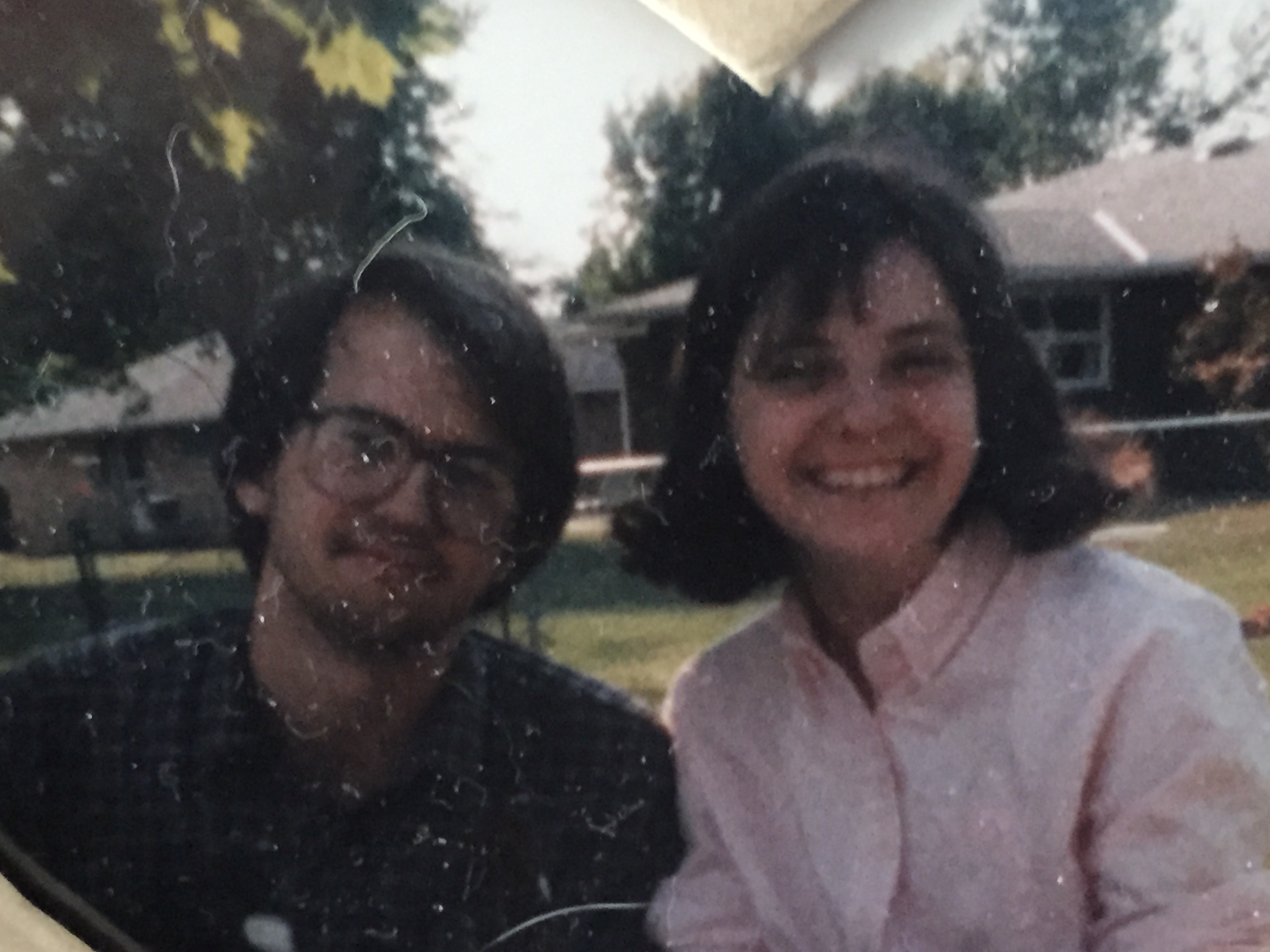
As soon as Kathy and I put our bags in Cindy and her spouse Linda’s guest room, I began to suspect the days ahead would be about love or life or wonder–something wide-eyed. On the dresser was a photograph of Kathy and me from close to thirty years ago in a frame that said, “Welcome, Kathy and John.”

IMG_3072

A pathetic attempt at a photograph of a photograph. Ah well. Blurriness and flecks don’t diminish my young Kathy’s beauty one bit, nor do they provide cover for those ridiculously large glasses of the mid 1980s.

Thoughtful, this gesture. Along with the photograph went a bag of on-the-road stuff, like toothpaste, shampoo, and travel guides. That’s Cindy for you. Goodness pours out of the woman. She made our mother’s spaghetti sauce for dinner the first evening because she knows it was one of my favorites. But that’s a small detail. Cindy and Linda’s whole household hums with joyful, affectionate chaos. Pets are always making a ruckus, and their grandson Liam’s toys constantly chirp out music.

IMG_3063

Destined to be paesanos from the start: Cole and Liam, the latter the son of Tina and Rebecca.

IMG_3078

Friendly old Harriet, named after my spirited grandmother. Notice the bent left foreleg? When she was a pup, Harriet’s, owner smacked her with a two-by-four, resulting in a permanent . . . well . . . dogleg. She was supposed to be beyond hope, but not so with Cindy and Linda, who took the girl in and loved her into gentleness.

As if the blessings I’ve mentioned weren’t enough, we energetic travelers got to sample Asheville. A couple of moments there tapped me on the shoulder and said, “Soul, awake!” Asheville! Man, what a town! What I saw moved me, softened me up, cleared my vision. Behold Asheville:

IMG_3081

“Can I take your picture?” I said. He smiled and raised his left thumb to the sky. The Holy Ghost is all about conserving energy.

IMG_3095

Pippa and Brody greeting admirers. I chatted with owner Mary Ann as if we were old buddies.

IMG_3101

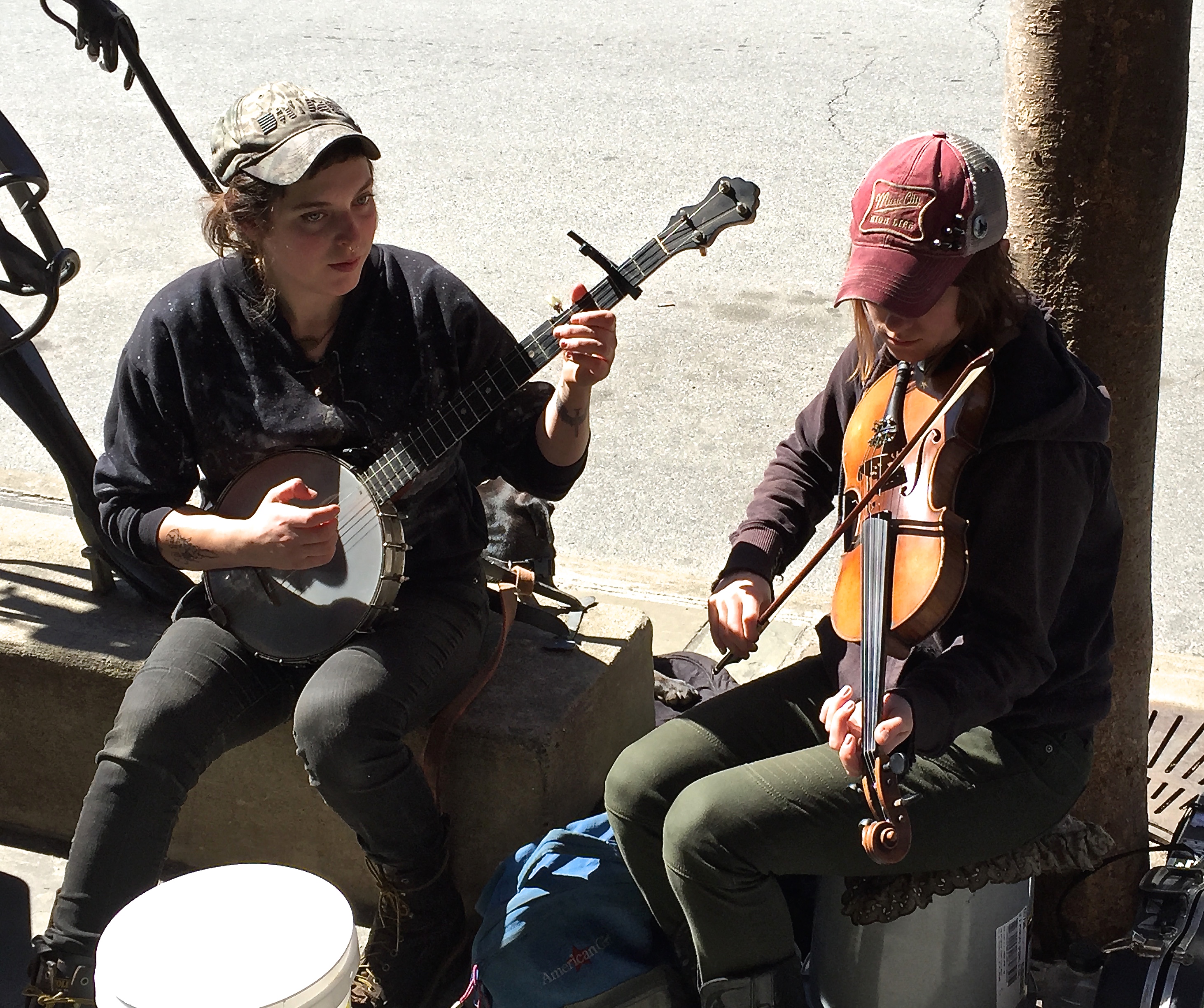
The Flat Pennies busking. Old Appalachian music. Great stuff.

Ah, to wander from beauty to beauty as a fiddle and banjo converse. The buoyant music made me buzz with gladness, and I wasn’t alone. Was I seeing the Holy Ghost in eyes of strangers, somehow no longer strangers? That’s how I felt.

But the moment, my harmonic convergence, arrived at Betsy Ann’s party. Taking advantage of free flowing pinot noir, I watched a photographic loop of the birthday girl’s life. One shot was an epiphany. I don’t consult omens, but do welcome a wave of inspiration, the sight, sound, or word that bestows an ah of recognition, a truth received.

Image01

My sister Cathy with her arm around Betsy Ann. Two pilgrims in love, come to a place of grace and peace.

As you can tell, both of my sisters are lesbians joined in marriage. For decades I’ve been fine with homosexuality–as if what I think matters anyway. But when I saw this photograph, all I knew was joy. Oh that everyone who wants to join hands and hearts with another could do so. The human race is doubled over by body blows. Venom is the new norm. And don’t even mention manners.

But look! An 80-year-old woman puts her head on my sister’s 66-year-old shoulder–my sister Cathy, one of the most kind and decent souls in circulation. Don’t most of us want to rest in the arms of a beloved? To lean into another, share the view of a bright land, and think, “I’m home, yes. My home is here, yes. With this one person, yes“?

I’m all about love: guilty as charged. Sentimental, too, I guess. We all have to be about something. I pick this: it’s a wish. If only we could all find love in the measure we need and have the inner freedom to make our way there without fear or shame, however we find ourselves bidden. For some folks, days are weary, desperate, lonely. Love can turn the walk into a jig. If only we could all reach old age and sing to our beloved, as Betsy Ann did.

IMG_3128

“I said to myself, ‘What a wonderful world.'” Betsy Ann looked at Cathy. I wiped away tears and hid my sniffles by sipping wine. And I knew why I had made the trip to North Carolina.

Turns out the Holy Ghost wasn’t only in Asheville. She was also in Candler, at a birthday party, and in every other place of tenderness and care. What is the Holy Ghost, after all, if not love?


A Man of Second Chances

The late Trappist monk Thomas Merton included the following confession in one of his famous prayers:

I have no idea where I am going. I do not see the road ahead of me. I cannot know for certain where it will end. Nor do I really know myself . . . .

IMG_0045

Optimism

Me, neither, especially the last part. If you want to know the truth about me, best ask somebody else. But one thing I have learned over the years is that I’m an optimist, occasionally to the point of foolishness. How I know this doesn’t matter. I just know.

At 6:20 this morning I woke up ahead of the alarm. This was a good waking, not the wretched sort when you would pay a $100 or sell one of your nostrils for just one more hour of sleep before heading off to work or chores. I was fresh, mulling over the fine possibilities on the horizon.

Before my twenty minutes of prayer, I listened to The Writer’s Almanac podcast, which concluded with a poem by Rita Dove entitled “Dawn Revisited.” The first lines had me:

Imagine you wake up

with a second chance

Heck, yeah! I believe in second chances, endless chances. (I would like to share the entire poem, but copyright blah blah blah.) The following made my soul’s lungs fill with new air:

The whole sky is yours

to write on, blown open

to a blank page. Come on,

shake a leg!

Preach it, Rita! Every once in a miraculous while, my spirit’s stirring converges with a friend’s innocent remark or an adagio or a poem. As soon as I finished pray-meditating, I actually wanted to “shake a leg,” and here a voice visited with encouragement: “Come on!”

The poet spoke about three hours ago, and I’m still rolling. Afternoon can be a slog because old wounds and griefs sometimes visit; breathing gets leaden. My past has strong hands, which it uses to grab my throat and back me up against a cinderblock wall. “Listen, little bitch,” the past says, “you’re not going anywhere.” It squeezes harder: “Just try to heal up and move on, punk!”

IMG_3032

Cold, bright day. A new blue page ready for words.

Sometimes, but not today. Sadly, I’m not a fighter, so I won’t be telling the old hurts to “go pound salt.” A story is told about Mahatma Gandhi being confronted by an angry man threatening violence against him. Gandhi embraced the man, who collapsed in tears. I’m no Gandhi, but this is my way. Today, if the past intrudes, I’ll kiss its lumpy head and say, “Not today. I’ll take care of you, but you’re not going to choke me.” In other words, I’ll breathe and keep shaking a leg.

Such mindfulness and discipline take a lot of energy. Still, the sun is bright, the sky is clear, and I have hope. Wednesday, February 25th is a second chance. Actually, I’ve lost count of what chance this day is. Above my desk at the church I have a drawing of a bald man sitting in meditation (in Desert Wisdom: Sayings from the Desert Fathers by Yushi Nomura). The caption in calligraphy goes,

Abba Poeman said about Abba Pior

that every single day he made a fresh beginning.

What luck! This morning must be my millionth chance, since I often start over a couple times during my waking hours. The present can be better than the past.

So, goodbye for now. I need to go write on the sky.

Joy Whispers to a Cracked Rib

Think the movie Home Alone. Think Joe Pesci’s character slipping on icy concrete, going airborne, and slamming down on his back.

That was me two Sundays ago, on my way to church, where I had to breathe and make sense. The difference was, Pesci’s stuntman actually took his fall. As a middle-class, middle-aged man, I personally came down on a step and cracked a rib. Before the echo of my shout died, I thought, “Wow, that was loud. Neighbors will come running.”

A couple of them did hear, I learned later, but thought nothing of it. I lay there, unaware that old #12, that southern most of ribs connected to the spine but not the cage, was compromised. “Did you puncture a lung, Mr. Wingtips?” I wondered. After thirty seconds, I said, “Well, I guess we’ll find out.” I rolled to my feet, staggered to my truck, and drove to clergy work, which included crouching to look toddlers in the eye and telling them that Jesus loves them just the way they are. Doesn’t matter if they’re autistic, hyper, or angelic. Whatever. Jesus loves them. (Don’t ask me how I know this. I just know!)

In the nearly two weeks since my slapstick, my cracked rib has led to a couple of insights.

1.) Yes, the stabbing pain is inconvenient, but I’ll take it over bronchitis, the flu, or even the common cold. Sitting still works wonders for rib pain but does nothing to stop coughing and sniffling.

2.) Cleansing breaths are a blessing. At no point did taking great lungs full of air hurt, so I figure I got off easy. Coughs, sneezes, laughs, yawns, and—of all things—burps were followed by yelps or arghs.

3.) Slow down and wise up! The icy step that got the better of me was clearly slippery. I could see as much and thought, “I’m going to text [wife] Kathy when I get to church and ask her to salt the steps.” I was in a hurry; even so, I put my left foot down with slow-motion, geriatric caution, like I was testing pool water with my toe. No matter: away I went. Starting with that moment I looked up at the leaden sky and wondered about the damage, I’ve been trying to pay attention. “Curl your fingers back when you chop celery, John.” “Take your time walking across that freshly mopped floor.” And even, “Slow down and taste your food.” If only I were half as much a gourmet as a gourmand!

4.) Losing a little weight would go a long way. I’m not sure whether my back fat cushioned my landing, but I know belly blubber makes me lumbering—not to mention I can hear carbon dioxide hissing from my lips when I tie my shoes.

Important as all these lessons are, I’m most grateful that my cracked rib continues to reinforce an observation I wrote about recently, one that has made me feel light and hopeful at least as often as bummed and brooding: Disaster and injury shout. Joy whispers. Crap shines a klieg light in your face. Blessing relies on stick matches.

On that Sunday of the fall, with my roar still sounding over Erie’s bayfront, the family (that would be Kathy, son Micah, daughter Elena, son-in-law Matt, and grandson Cole) had dinner at Cole’s house. When Kathy and I walked in the door, we found the little man asleep on the couch.

IMG_3021

This face wouldn’t be cherubic much longer.

Since it was around 5:30, Cole needed to get up so he would have some tired left for bedtime. Elena woke him up, which led to a case of the grumps and snivels. Grandma Kathy took a bullet for the unit and distracted Cole with her iPad—poor Kathy!

IMG_3023

I have no idea why Cole is naked. When I saw this, I thought, “So what if he goes.” That’s love, I guess.

When food time arrived, Micah took over, feeding Cole toddler friendly bits from his antipasto. They sat together for what seemed a long time to me, spaced out on the recliner as ibuprofen conversed with sassy #12. I remember thinking that at twenty-three, sharing my salad with a wee squirm-ster would have held zero interest. Micah gleefully babysits his nephew and plays with him until Cole squeals and Unka Mike is sagging.

image1

Cole, wearing the bathrobe Grandma Kathy made for him, poaching Uncle Micah’s salad.

Two days later, just as the ancillary sites I’d offended were registering their complaints, I received a short via text message from Julie, who recently moved with her husband and three daughters from Erie to Lexington, Kentucky. I had posted my antics on Facebook, and the girls had something to tell me.

It can be hard to hear the well wishes of children and a grandson who can now say please, baaaa, uh oh, bye, hi, and I you (I love you). Rage and rancor are such bigmouths. Blessing won’t bluster. I have to be mindful, listen, and refuse to let the world’s volume trick me. Peace and gladness thrive only if I take the trouble to look.

One more piece of evidence: late the other night as I was driving home after church work, the gravitational pull of 322 Shenley Drive made me want to lean on the gas pedal. I didn’t speed, but I wanted to. Why? My urgency was about going to bed. Kathy and I would get under the covers, maybe watch a little TV and talk for a while. Then we would sleep. Our skin would touch along our bodies. I would kiss her shoulder.

Now don’t start hearing “Brick House” in your head. No singing—and I quote—“Chicka bow chicka bow bow.” Think overweight, pasty man with cracked rib. Seriously, cut it out!

The tug I felt on I-79 was love. How quiet and blessed is this? I wanted to get home to be with my wife, fall asleep next to her, and draw her close. Creation’s groans never let up, but, I knew, grace would whisper us to sleep. I intended to listen.

In Gratitude for Annoyance

There’s no denying, over the last two years I’ve been out of sorts. A Napper’s Companion has often been a long-suffering sounding board as I’ve droned, waxed, and howled. Sure, joy has visited for long spells, but if life were a bar graph measuring months, more than a few of them would dip below emotional zero.

When feeling sorry for yourself becomes a habit, it’s actually refreshing to find yourself merely annoyed rather than crestfallen. Narcissus stared into a pool of water and beheld his beauty. I’ve only recently pulled my gaze away from my navel, which is a deepening pool of the unspeakable—I speak literally here. Weight loss is in my future. Anyway, events that would have reduced me to curses and sighs a few months ago now hardly register on my graph. In fact, I’ve been laughing.

220px-Narcissus-Caravaggio_(1594-96)_edited

Narcissus by Caravaggio (Credit: Wikipedia)

“Laughing? The hell you say, John!” Yes, from the belly right into the crevasses of existential paper cuts. Feels good.

I’ve mentioned in previous posts that wife Kathy and I bought a 1000 square foot house. Downsize and all that. Kathy loves me, but doesn’t fully trust me to do grown-up quality work on the new place. So far I’ve been cleared to wipe down shelves and cabinets with Murphy’s Oil Soap, prime old thirsty walls and our bedroom closet, and scrub and sweep the basement. Fans of physical comedy would pay up if I could produce a video of my efforts.

Painting a closet is like doing calisthenics in a phone booth. I got flat white prints everywhere on my person, not from my brush, but from bumping into what I just painted. The language was mild but repetitive, damn it after damn it plunking as if from a leaky faucet. The worst part was tapping all quarters of my head against wet shelves. (Former owners, Mr. and Mrs. Tyler, God rest them, were a shelf- and hook-happy Depression-era couple. Random hooks and shelves stick out from walls, woodwork, and crannies like Betty White flipping me the bird. How many items can you actually hang up? Used and washed Saran Wrap to dry? Lonely socks?)
When the job was finished, I expected to see in the mirror a balding man with ridiculous blotches of paint all over his head. The sad fact was, aside from an Ash Wednesday-level smudge on my forehead, nothing much had changed. Turns out flat-white primer is a good match for my hair. I can apply Just for Men Touch of Gray, paint another closet, or go natural? It’s good to have options. My policy is to refrain from laughing at my reflection, but in this case I gave in.

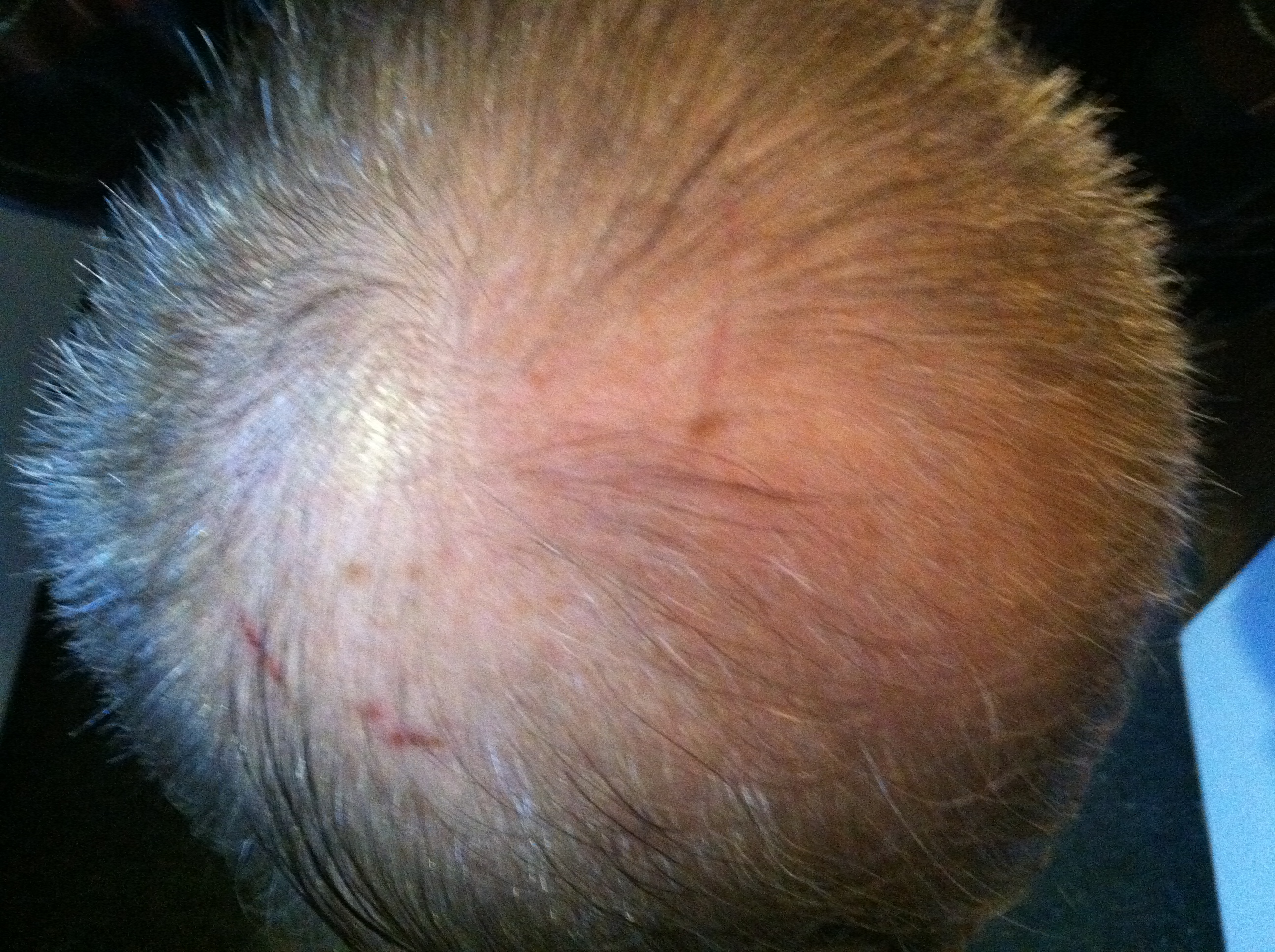
Video of basement duty would appeal to folks comfortable laughing at actual pain. The space is clean, dry, and stand-up-friendly, mostly. A couple of fixtures make this six-foot man dip, and one run of ductwork can be cleared only by a hobbit. Of course, units of especially dusty shelves ran parallel to the damn it ductwork. During the three hours I spent bobbing, weaving, push-brooming, scrubbing, and absorbing the perfume of Murphy’s Oil Soap, I forgot to limbo ten times. Ten matches of fathead versus galvanized steel. Two knocks resulted in language. A few got harrumphs, and the rest snorts. A week later, my head still looks like a wounded cantaloupe.

IMG_3016

Yes, this is my scalp. God help me. And, heck, why not an age spot or two?

Fortunately, I don’t have any goose eggs as big as our black Lab-terrier mix Watson’s. The fatty tumor on his left flank is so ridiculous we finally took him thirty minutes from Erie to a veterinarian who specializes in animal homeopathy and chiropractic. As I wrote recently, the old mutt is gimpy, and the present steroids and NSAIDs don’t seem to be helping much.

When the veterinarian entered the examination room, I liked him before he said a word—a skinny old guy wearing jeans, a craze of wiry gray hair, and a bushy mustache. He could have been Clem Kadiddlehopper’s brother. (I mean that as a compliment.)

459px-Skelton_clem_1970

Red Skelton (center) as Clem Kadiddlehopper. (Credit: NBC TV on Wikimedia Commons)

He talked rapidly and passionately, flitted in and out of the room to mix potions, and finally poured out on the counter bottles, an envelope, and a medicine dropper. With no other social segue than “okay, bye” he was back into his homeopathic sanctum. We paid, hoisted Watson into the truck, and headed for home.

On the way down, in the vet’s office, and on the way back to Erie, Watson was calm. As soon as we were in the door, Kathy administered the first dropper full of homeopathic pain relief. Did the new experience send a ripple along Watson’s bowel? Make him feel momentarily tipsy? I’m not sure what he felt, but I know squirtle when I smell it. That’s what we call doggy fear fluid in the Coleman household. I’m used to dogs squirtling in the car or at the vet’s office, but safe at home, the ordeal passed?

He lay beside me at the dining room table, dazed and wretched. His eyes said, “Yeah, yeah, I know. Sorry.”

Dear blogging friend naptimethoughts explained to me in a generous comment the anatomical cause for squirtle and described how the sacs in question sometimes have to be manually expressed. My grand-dog Layla occasionally gets plugged up, and her vet offered to show daughter Elena how to glove up and give relief right at home for free. “Ah, no.”

Last evening Kathy and I made a run to the new house and took Watson along. Was it that my lift into the truck squeezed his belly? Or has he acquired a hair trigger? Whatever the case, the cab hazed over with Eau de Sacs. Today in frigid Erie, Pennsylvania, the sun warmed the truck seats, normally a bonus. Obviously, nature toasted the spots where my old pal pressed his rumpus against the fabric, freeing up the squirtle for continued enjoyment.

Ah, if the day’s worst ambush is a dropper-full of Watson’s anxiety juice, I’m golden. Is it possible to find an elderly dog’s harmless infirmity endearing? I think so.

It’s at least as possible as enjoying the supreme annoyance that is football’s Super Bowl. The family was over, and we took in the Seattle Seahawks’ last offensive play, when team strategists squirtled away the game by passing from the one yard line rather than handing the ball to Media Day wag Marshawn Lynch.

The highlight of the game for me was halftime. Katy Perry rode a twinkling gold behemoth and ascended into artificial fog, but grandson Cole stole the show. Sitting in Kathy’s lap, he made the best possible use of the spectacle: his fine eyelids slipped, slipped, slipped.

As I watched Cole’s commentary, I thought something that might seem dark at first: if somehow we humans aren’t suited for eternity, if an arbitrary sac of years in the here and now is all we get, then I might be okay with that. I hope for forever, but I got to watch this boy in his grandmother’s lap, as treasured and lovely as can be. Katy Perry fell quiet, or may as well have, and I figured that witnessing such love was more than enough justification for a lifetime.

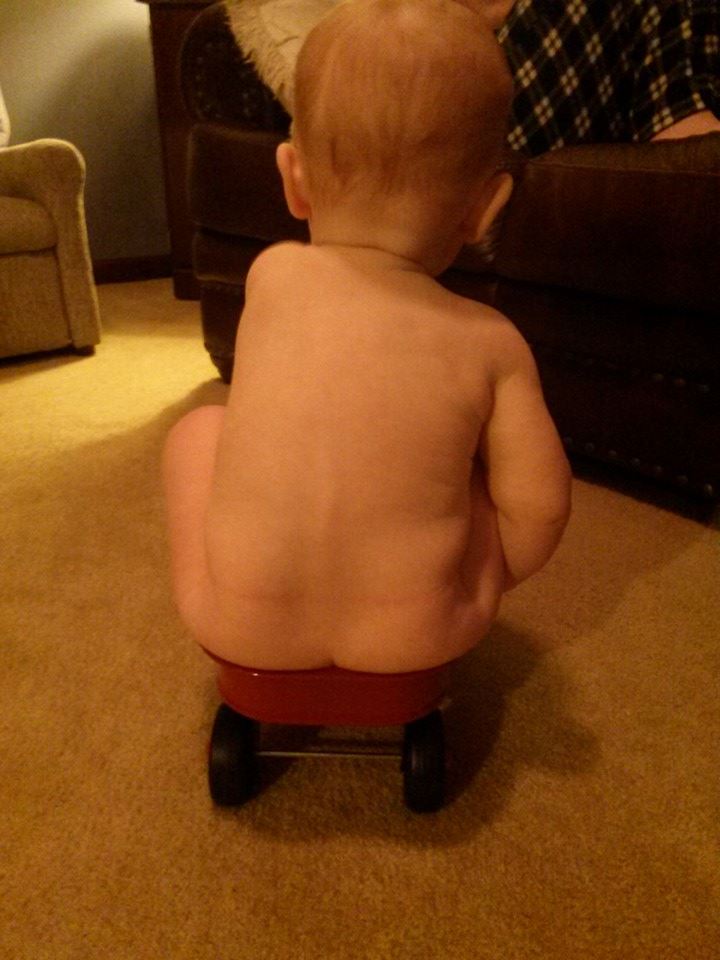
10923211_815321731871350_4158983250869382664_n

My grandson in his wagon: take that, Katy Perry! (Credit: Elena Thompson)

In the annoyance and blessing of recent days, I’m starting to feel whole again. I guess that’s what I’ve been trying to say. I could learn to like this.

The Wisdom of Fetch

The Coleman family’s black Lab-terrier mix Watson is getting to be more of a jalopy every day. It’s hard to believe he showed up at our house twelve years ago in the arms of a neighbor and slept peacefully and without piddles between wife Kathy and me his first night with us. Now he has fatty tumors everywhere (one the size of a Florida orange morphing into Nebraska on his flank), a gnarly-pink-jelly-beanish growth on his gums, arthritic shoulders and hips, two blown ACLs, and a metal rod in one leg.

He may also have hearing loss. He has never been tested, but he talks as though we can’t hear him. A noise outside or anybody’s arrival warrants hoops and hollers ascending in pitch and volume. His request for Senior Milk Bones is a single, soul-piercing bark. Most of the colorful language in the house is in response to Watson’s loud barking.

IMG_2269

Watson is convinced that every sound in and out of the house is one of this guy’s cousins. (Credit: John Coleman, taken at L. L. Bean’s big store in Maine)

I ought to be more disciplined about giving the old boy treats, for three reasons: 1.) More treats lead only to more barking. 2.) He is gaining weight. And 3.) Senior Milk Bones give him gas, which he most often shares during our afternoon nap.

We have a ritual. Watson hobbles after me to the bedroom, his nails dragging across the wooden part of the steps. I set my alarm for one hour in the future, put my head on the pillow, and he plops on the floor. After five or ten minutes, he walks around to the other side of the bed and stands there as if to say, “This is going to hurt.”

I say, “Come on up, Watty. Get your spot.” Kathy and I love him so much we removed the bed frame to make it easier for him to get up. “Come on,” I usually have to nudge. “You can do it.”

He hops up, presses his nose against mine, and looks me in the eye—no kidding.

I scratch his jowls, receive a lick on my snout, and tell him, “Okay, buddy, it’s nap time. Lie down.”

He spins twice or thrice and lands in a heap, usually with his bum inches from my face. Twice a week, I’d say, the fun begins right here. I’m not sure what it was about yesterday’s treat allotment, but that mutt stung my nostrils.

For fifteen minutes afterwards, Watson’s flatus molecules clung to my cilia. His oblivion spoke like film’s Rain Man to his brother in the phone booth: “I don’t mind it.”

IMG_2993

An old dog thing: a two-inch tuft of gray hair sprouting from Watson’s chest–a sequoia among saplings.


This coming Saturday morning, Kathy and I are taking our pal to Union City, Pennsylvania, thirty minutes from Erie. We hear a veterinarian there has unorthodox methods that restore broken-down pups. All Watty’s barks, infirmities, and air bagels aside, his death will knock the wind out of us. He is unconditional love in a loud, lumpy, smelly package.

A couple months ago Kathy and I closed on a house less than half the size of our current place. We want to hose the material excess and crud from our lives, but a benefit to having everything on one floor is that our gimp won’t have to climb stairs. We’ll move soon, but I looked at Watson the other day and thought, “Oh, buddy, I hope you get to spend some good time with us there.” You never know when.

IMG_2531

A small house will be home with beautiful Kathy, son Micah, the cats, and monarchs. Please let Watson enjoy it, too.

I’ve always said that Watson is as dumb as a turnip, but as I make my way toward needing senior biscuits, I’m learning that intelligence isn’t all about brain cells. In fact, I would argue that wisdom generally has to overcome gray matter. My dog taught me this a couple days ago. Here’s the chronology:

  • I got home from work, put down my satchel, slung my coat over a dining room chair, held a couple of Senior Milk Bones out to Watson, and put little kitty treats on the counter for Shadow Cat and Baby Crash, who were trying to hypnotize me with their stare.
  • I made a quick visit to the bathroom. As is his custom, Watson heard the flush and remembered where the coldest, most refreshing water bowl in the house was. Ugh.
  • I sat down in the living room for twenty minutes of prayer-meditation. My Zen bell had just sounded when I heard Watson labor upstairs. A few seconds later he thumped back down. My eyes were closed, but I could feel his doggy presence beside me.
  • He had retrieved his biscuit ball, a heavy rubber toy with holes on each end that you stuff broken bits of Milk Bones into to occupy your dog. For once he didn’t care about treats. He wanted to play fetch.

I’m not a fetch kind of guy. I enjoy a good laugh; beyond this I’m not much fun. Occasionally I’ve explained this to Watson: “Now look, you know I don’t play. I cuddle. Your mother plays, right?”

Two brown eyes can teach a lot, even if there’s not much between them. “Hey, Dad,” my dog said, “what’s your life worth if you can’t spare enough time to throw a ball ten times? You know that’s as much as I can handle these days.” Seriously, that moment with Watson, his eyes pup-clear and that purple toy sticking out of his dopey mouth, goes into my spirit’s photo album. My brain cells are always crowding out wisdom. My old friend clarified a lot for me.

Pray or play? A whisper came from inside: “Why not both, busy, neurotic, fragile man?”

“Okay,” I said and sat at the end of the dining room table. I threw the ball all the way to the kitchen counter, fifteen feet, if that—field enough for a twelve-year-old. He rumbled to fetch it and limped back. On maybe the fourth toss, he turned the wrong way and walloped his head against the refrigerator. After recalibrating, he got the ball and sat down beside me as if to say, “What the hey? What just happened?” Thankfully, his head is mostly bone.

But he was right. After a few more trips, he was done.

IMG_3010

Watson after fetch, catching his breath and getting his bearings

Replaying fetch in my head right now, I think, “Watson, who will remind to play when you’re gone? Who will look at me in love and help me say to myself, ‘John, stop living in compartments. Always pray. Always play’”? Maybe he’ll stick around long enough to teach me a few more times.

This morning Kathy got up before I did, so Watson took her place. For once getting out of bed wasn’t a chore, but I stayed a couple of minutes. I rested my face on his side and talked to him: “You know I love you, right? You know you’re a good boy? You know I love you?”

He stretched his head back, put his cheek against mine, and snorted—just the answer I was hoping for.

An Understanding of Prayer

7:39 a.m. at the downtown Starbucks. 7° with a wind chill factor of misery. A burly guy I’ll call Constance lumbered in ten minutes ago carrying his taut duffle bag. It looks like he’s lugging around a four-foot section of big telephone pole. Who knows what’s in there? The pockets of his fisherman’s vest are tumors of valuables.

After a trip to the restroom, Constance resumes his animated discussion with State Street, jabbing the table with his pointer finger and staring down the swirls of snow. His negotiations are urgent, relentless.

I see Constance a couple times a month. My daughter said years ago that he goes by a woman’s name and sometimes dresses in drag. I’ve only seen him dressed for weather, even in summer, but his name is none of my business. Only death will end his wandering and lonely arguments.

What locks await the cluster of keys hanging around his neck and resting on his gut? Mirage homes? And now, he is pissed: “No! No! You will not!” Silence, then, “I . . . didn’t . . . know! Why are we talking about this?”

IMG_1297

Oh, Constance, may one of those keys open up a home of warm color, a cat waiting for you, and loved ones who agree with your argument.

I pray for Constance. I also pray for the guy who picks up garbage and shovels snow outside my primary Starbucks haunt near the Millcreek Mall. Yesterday was nearly as severe as today. He was bundled beyond recognition when I drove by him on my way to work. I could make out a slit of flesh from his eyebrows to the bridge of his nose. That was it.

“God,” I said. More and more I’m finding that is prayer enough.

I pray all the time, and I mean all the time. This statement is frankly uncomfortable, not because I’m ashamed of prayer. As Constance just said, “No, no, no, no, no!” My squirming comes because I suspect folks would find my practice of prayer weird and pointless.

IMG_0384

The point of prayer: to be spirit still, to let light shine into and through me? (Balcony of chapel at the Abbey of Gethsemani)

In The New Seeds of Contemplation, Trappist monk Thomas Merton describes my context for prayer:

For the world and time are the dance of the Lord in emptiness. The silence of the spheres is the music of a wedding feast. The more we persist in misunderstanding the phenomena of life, the more we analyze them out into strange finalities and complex purposes of our own, the more we involve ourselves in sadness, absurdity and despair. But it does not matter much, because no despair of ours can alter the reality of things, or stain the joy of the cosmic dance which is always there. Indeed we are in the midst of it, and it is in the midst of us, for it beats in our very blood, whether we want it to or not.

Yet the fact remains that we are invited to forget ourselves on purpose, cast our awful solemnity to the wind and join in the general dance.

200px-TMertonStudy

Thomas Merton (Father Louis) (Credit: Wikipedia)

As a spiritual master, Merton dares speak of mysteries with certainty. I avoid that. Who am I? But Father Louis, as he was known at the Abbey of Gethsemani, comes up with words that work for me—as much as language can take hold of the Ultimate, anyway.

If “the world and time are the dance of the Lord in emptiness,” then prayer is my daring to join in. I’ve spent years “analyzing the phenomena of life out into strange finalities and complex purposes of [my] own” and have had enough of that absurdity. The best prayer I can offer, then, is impoverished and goes like this: “I don’t know anything. But please fill me. I’m here.”

Intercessions are important, of course, but I hold an unconventional view of them. My prayer for the garbage-snow removal guy was monosyllabic because of what I believe about God. Of course the Creator wants everybody to be sane, healthy, warm, fed, clothed, and loved. So saying anything more than the Sacred Name isn’t essential—like asking snow to make its way to the ground. It’s what snow wants to do!

800px-Snow_crystals_on_car

Dear Snow, Almighty and Everlasting, fall to earth, cover our cars and houses. Amen. (Credit: Barasoaindarra on Wikimedia Commons)

If God wants the whole world taken care of, then why the hell doesn’t God do it? We’re heading for the good old theodicy conundrum: If God is infinitely good, where does evil come from and why does it exist? My answer is the spiritual foundation of my prayer life: “I don’t know anything.”

Some believers might tap me on the shoulder with familiar answers: “God answers all prayer, but sometimes the answer is ‘no.’” Or “God knows what’s best for you, even when what’s happening is terrible.” Or “God is testing you.” Or “It’s all part of God’s plan.” Or, the one I find most irksome: “God never gives you more than you can bear.”

Tell that to the man I hugged whose father died a few months ago and whose mother was going into surgery—anesthesia when you’re sneaking up on ninety is sketchy. Imagine losing both your parents four months apart. Serving up a platitude might get you a well-deserved knuckle sandwich.

After a few thousand hugs like this, I refuse to reduce prayer to a crapshoot. “Dear Lord, please bring So and So through this surgery and grant a speedy recovery.” I might actually say something like this, but I would never do so with a what-the-heck-it-can’t-hurt attitude. And I would never think to myself, “Well, gosh, I’ve prayed like this over and over. Maybe God will hear me this time.” And I won’t try to explain the ways of the Eternal Mystery. The presumption!

IMG_0369

Prayer: whatever I am, whatever I wish, open and vulnerable with the Ultimate Truth? (Figure at the Abbey of Gethsemani)

But as I wait for my cell phone to ring, I pray for the woman in surgery and her son, not because I expect to influence the outcome. I say “help,” sigh, and look beyond these walls, windows, and patrons because my present reality is this: I wish for a dear old soul’s return to health, if nothing else so her son can catch his breath before adding another layer to his mourning. My prayer is, “Please, Lord, please.” At the moment, I am this prayer.

If I’m to join in the general dance, I can only do so as myself—a duffle bag fat with frailty and fear, longing and gladness.

Not surprisingly, most of my prayers are silent. Abide in what is, John. Swim in grace. Dance in peace. Every now and then, I’m aware that I’m praying for everybody who has ever lived, every creature. And though my hands rest in my lap, my spirit arms are open wide, lifting up all of our laughter and lament—yours, too—as if God doesn’t already see!

I’m quiet. My wordlessness says, “Here we are, God, right here in my arms. Beat in our blood. Fill us. We are yours.”

Earth_Western_Hemisphere

“Here we are–the Western Hemisphere, at least. Fill us. We are yours.” (Credit: Wikimedia Commons)


Reconsidering 2014

“You humans. When’re you gonna learn that size doesn’t matter? Just ’cause something’s important, doesn’t mean it’s not very, very small” (Frank the Pug in the movie Men in Black).

Merry Christmas, 2014! Happy New Year, 2015! For months I’ve been stuck in sleep. The last time I felt this way was Christmas of 1998, six months after my mother died. I had no idea that my soul had been smothering until my lungs snapped full in late December, and I thought, “Oh, so that’s what grief is.” Mom had passed, but she would have asked me to keep living. And now, I’m granted an epiphany, something probably obvious to everybody else, but hidden from me.

10922551_801819956554861_553225707324982969_n

Grandson Cole: my expression for way too much of 2014. (Credit: Elena Thompson)

After a tough year, the Christmas story has awakened me, but not because it can be historically proven. Haggling over facts makes me want to take a nap. It’s the truth of a story that has roused me from sleep. If you’re not a Christian, please listen anyway. Play along. The Creator of All visits humanity as an infant, absolutely defenseless, not as a warrior and not majestic. “And so it was, that, while [Mary and Joseph] were [in Bethlehem], the days were accomplished that she should be delivered. And she brought forth her firstborn son, and wrapped him in swaddling clothes, and laid him in a manger; because there was no room for them in the inn.” These familiar details from the Gospel of Luke are small, so very, very small that they’re heartbreaking–a baby wrapped in rags and laid in a feed box. No room for him, except with the animals.

But Frank the Pug’s gravelly voice grabs the scruff of my neck and carries me away from sadness. “When’re you humans going to learn that size doesn’t matter?” (Yes, yes, go ahead and chuckle.) Size not only doesn’t matter, but it can be deceiving. Example: ants weigh as much as humans do. I can’t recall when I first learned this, but son Micah verified it for me: “When combined, all ants in the world taken together weigh about as much as all human beings.” And so, wake up, John! Sure, lousy, big, heavy stories have lots of us making Cole’s crying face, but when you place all the flecks of grace and good spirits on the scales, the world doesn’t look so bad. In fact, it shines.

Thank you, Infant Lowly, for restoring my hope, putting a little steam back in my stride, and updating the prescription for my spiritual glasses. Rubbing the bad news out of my waking eyes, I see beauty and fun clearly now.

Dear loved ones, please accept these holy, lowly flecks from my 2014. May they help you and me receive 2015’s ants of grace and good spirits.

IMG_2943

Wife Kathy and neighbor Patrick–a wise, Down’s boy who said, without even lifting his head, “I love you, Kathy Coleman.”

IMG_2790

My late mother’s Christmas cactus now blooms in early November, so I figured it would be bare come December 25th. Not so. A couple of flowers opened late, but they’re no less lovely for that.

IMG_2884

This one is probably an over-share: Over twenty years ago dentist friend Tom built a tooth for me out of filling material. Money was scarce at the time, so Tom worked his magic, which lasted until Advent of 2014. When I was in seminary, a dentist in Columbus said, “This one was made by a master.” Thanks for two decades of good service.

IMG_2841

In downtown Erie, an old gas street lamp still burns in front of Gannon University’s Gitnik Manse on West 6th Street. I have no idea why this gave me a sip of joy, but it did.

Screen Shot 2014-06-12 at 8.55.58 AM

My book came out in 2014 as an indie publication. People seem to find out about it a person at a time–kind of like A Napper’s Companion. No thousands of readers, but a kindred spirit here and there.

unnamed-2

Oddball that I am, I sent a copy of “Your Grandmother Raised Monarchs” to the President and First Lady. What the hell? They sent a thank you note, though I’m sure the book itself was ground into a fine powder to be sure it wasn’t laced with anthrax.

I call myself a writer, yet my vocabulary is embarrassingly slim. When I encounter an unfamiliar word, I look it up. In 2014, I read carbuncle, which I knew is a precious stone from reading Sherlock Holmes stories, but the context told me there must be another meaning. A carbuncle, it turns out, “is [also] a red, swollen, and painful cluster of boils that are connected to each other under the skin.” Why, thank you for that update. I also stumbled on sycophant, who is a “servile self-seeking flatterer.” The synonyms tickle my teenage sense of humor: “apple-polisher, bootlicker, brownnoser, fawner, flunky, lickspittle, suckup, toady.” Lickspittle! I can’t wait to toss that one out in a conversation. I love words and consider them a blessing, though I don’t retain them very well.

I also love quotations, in part because I compiled 365 of them for a collection of daily meditations, Questions from Your Cosmic Dance, which came out in 1997. I jotted down one of my favorites from the past year on a scrap of paper and still have it. It voices wisdom I need to hear and follow.

IMG_2821

This quote comes courtesy of Belief.net’s “Jewish Wisdom,” which lands in my email-box each day. The older I get, the more I choose not to say. Thank you, Solomon Ibn Gabirol.

unnamed-1

Words are flecks of goodness, as are quotations. Laughter also places weight on the scale to counter despair. Daughter Elena and son-in-law Matt gave me a Jesus Pan for Christmas. Little do they know they’ll be eating Jesus French toast someday soon.

photo-23

No other small gift from 2014 comes close to my grandson Cole, shown here in his Wagnerian knit cap. He helps me to understand the Christmas story. Why would the Great Mystery visit humanity as a child? Behold! (Credit: Elena Thompson)

10891492_801819689888221_3465058071233830785_n

What does 2015 hold for you, me, and planet Earth? Cole looks at the horizon with wonder as do we all. (Credit: Elena Thompson)

One thing I know about the months ahead: unless I get lost completely, don’t expect me to repeat the tired grief of 2014. Sure, I’ll get sad and discouraged, but nothing can change the fact that ants weigh as much as humans. You have to look closely for very, very small flecks of grace and good spirits, but once your eyes learn to spot them, the size of the bad news doesn’t matter so much anymore.

IMG_2808

May this fortune be so for you in 2015, my loved ones.