I’ll Find You, Art, in the Sunset Dance

Art and I had a routine. He poked his head into my office doorway, checking to see if the coast was clear—a few times a week since Doris passed nine years ago.

“Thought I’d come in and bug you for a few minutes,” he said, then had a seat.

Image-20079_20150727

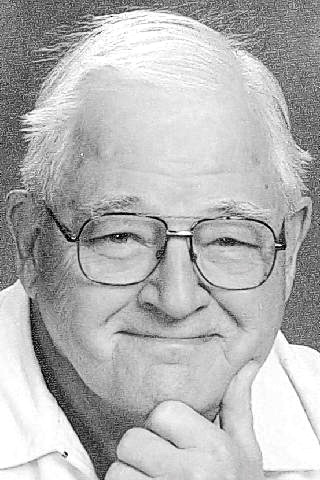
Friend Art

Half-hour by half-hour we picked through his life and pulled out stories as if from attic boxes: Korea, close enough to the action to hear the shells whistle; a garage-building crew in the old neighborhood and the keg they were bound to finish and the world spinning; Doris dying alone in the afternoon while he ran errands—he never quite forgave himself.

“Well,” Art said, standing up, “I’ll let you get back to work.”

“But, Art,” I always answered, “I have been working.”

He had to stop on the way home for something, maybe boloney. Samwiches every day for lunch get boring. After a while you forget to eat.

Art got to church first on Sunday mornings, unlocked the doors and set the bulletins out. But arthritis clamped down on his shoulders so badly that he gave in and got a crew cut. Combs and spoons weren’t his friends anymore. If I had a nickel for every time I fixed his collar or untwisted his suspenders . . . . Getting to worship became a project, weary and burdensome.

This past winter Erie, Pennsylvania, was cruel. Art’s car and many others at Niagara Village were snowbound, but the wind chills would have kept him inside anyway. He had time to dwell on the indignities of age: obstinate hearts, lungs, and bowels. And loneliness. He looked at Doris’ picture on the wall and told her, “Send me my ticket. I’m ready.” He lay in bed before dawn, anxious and hazy, and wondered if what he was feeling was death.

Kidney failure pushed him over the edge. I was there when a kind doctor leaned in close and with his manner as much as his words let Art know that forgoing dialysis was just fine. We prayed.

Oh, his poor arms, torn and purple.

Loved ones and nurses took in what was happening. Muffled tears. Compression devices off of his calves, the Velcro cackling. A tube or two removed. I don’t remember, exactly.

Art’s faithful son Mark went to make calls. Suddenly, Art and I were alone.

“What do you think Doris will say when you get there?” I said.

“Probably ‘What took you so long?’”

“Can I tell the [church] people what’s going on with you?”

“Yep, tell them I’m going home.”

I held his hand as he looked far off. Death wouldn’t arrive for a week or so, but he seemed to be peeking into another doorway, one where the coast is always clear—so I believe.

“Are you okay with this, Art?” I said. “Are you at peace?”

He was already on his way: “Yep, just help me through the door.”

Still holding his hand, I cried without him seeing.

IMG_0718

Church was home for Art. He always kept a prayer candle lit for Doris.

The sanctuary filled up for Art. We gave him a good send off—big choir, his boys sharp in uniform, loving words and a salute from his eldest, “How Great Thou Art” sung by one of his beloved church-grandchildren. We ended with our beautiful old prayer poem: “Into your hands, O merciful Savior, we commend your servant, Art. Acknowledge, we humbly beseech you, a sheep of your own fold, a lamb of your own flock, a sinner of your own redeeming. Receive him into the arms of your mercy, into the blessed rest of everlasting peace, and into the glorious company of the saints in light.”

The next morning I gathered with family at the cemetery. We said more words—“earth to earth, ashes to ashes, dust to dust”—and slid Art’s urn in next to Doris’. Some hugs later, I drove away through the deep, winding green of summer. I can’t recall what I did the rest of that day.

I sit now with coffee, keeping company with a few more tears that are still floating in my reservoir.

And I sit with an understanding: nothing can rush sadness through the door after a friend dies, especially one you’ve said to many times, “Here, let me fix your suspenders.” It was my privilege.

IMG_3583Last evening, knowing the best I can do is keep my own door open wide enough for grief to go in and out freely, I drove with wife Kathy to Presque Isle, to beaches that feel like home.

The Lake Erie sunset was on. Yes, a sunset, stunning cliché of the western sky, light everybody sails into eventually. Wind kept the landscape in motion, waves and light playing in the last few minutes of day.

Kathy and I stood at the water’s edge and held each other. The air moved over us—I want to say blew through us. As I breathed in and out, we seemed to be welcomed in by the sinking sun, the clouds mysteriously still, restless Lake Erie, and all the quick and the dead. We embraced each other, and creation embraced us.

It would be satisfying to say that I sensed Art’s presence, but that would be a slanted truth. Rather, resting my cheek against Kathy’s hair, receiving her cheek against my chest, my soul knew the hope of a gathering, a cosmic dance of sun, water, wind, sand, grass, and hearts. The song is of mercy.

IMG_3602

A pale vault opening

Just after the sun set, a pale vault opened in its place, glowing in the memory of the great light. I felt as though I was looking into the dance, moving with it as much as anyone can without joining it entirely.

What does death feel like? Art wondered, and so do I. Now he knows. I pray that it’s like losing yourself in a dance, completely embraced, yet free, too amazed by color, light, and love to straighten your collar or imagine that anybody has ever died alone.

An Anniversary Letter to My Wife

Dear Kathy,

Here we go again: Time to buy another used car.

Life is strange and, as we figure out how to celebrate the thirty-two years that have been our wedded casserole, so different from what I imagined it would be.

IMG_3539

121,000 miles and a blown clutch. Time to say goodbye.

I never thought that when we settled into our fifties, our vehicles would still be shitting the bed. We’ve never prayed, “Oh, Lord, won’t you buy me a Mercedes Benz?” Come to think of it, one of our neighbors does drive Porsches, but none of that’s for us. It would be nice, though, to own cars that don’t tremble and wheeze.

Tomorrow I’ll check out a bulbous orange Chevy priced at $5000, and, who knows, maybe we’ll get a couple of worry-free years out of it. Ah hell, it’s just that at this point in our lives, we shouldn’t be sweating bills every Saturday morning at the dining room table and lamenting a pile of dumb debt.

And, of course, there’s my old writing dream. I haven’t given up hope, but the picture has gotten more complicated. Could it be that what I need to say matters only to a small tribe? I’m an authority on precisely nothing except noticing the world and examining my own deepening naval. But the lurking question is, “Am I one of those writers who’s good, but not that good?”

IMG_3540

231,000 miles, tattered but holding up. The clock is ticking on this one, aye, Kath?

Basta! Looking out across decades of slipping transmissions and impulsive decisions and usurious interest and bulging files of sentences is like digging a ditch in mud, climbing in, and having a seat.

The good news is, we bought Schwinns. The other night when we went for a ride, I realized that it’s possible to be frustrated with you and treasure you in the same instant, to say, “You are such a pain in my ass” and “I couldn’t possibly love you more” in a single utterance.

You know that I like to take walks and rides the same way I shop for shoes. I’ve got a mission: Go to shoes. Try on a pair. Purchase. Return home.

Whether you know it or not, you like to take walks and rides the same way you shop for shoes. Go to shoes. Stop on the way at a bargain outlet, check out area rugs, and leave with cookie sprinkles and Swiffer accessories. Arrive at shoes, frown, and go to other shoes. Stop on the way at a fabric remnant store for no other reason than sewing’s gravitational pull. Arrive at other shoes. Ooh. Ahh. But not in your size, ma’am. And so on.

Bottom line: I’m focused on the destination. You’ve got your eyes peeled for Yeti and milkweed. I stick to the chosen route. You veer onto dirt roads and cul-de-sacs.

My dear, how is it that we’re still together?

IMG_3291

Look familiar? One of your favorite detours close to home.

On our bike ride, you took every available detour to get as close as possible to the lake, to receive whatever the waves and light might offer you. Close to home, when we stopped at a cliff for you to have a hundredth look at the water, I watched you—the new helmet making your head look like a shiny white mushroom, your lovely beak pointed north.

Swallowing a grr, I knew that if a Schwinn could fly, you would peddle to a great height, then bank and dive, pulling up just before a splashdown. Your eyes would be wide, and from shore I could hear you laugh.

Nothing has turned out for us like I figured. Used cars and thin wallets. My God, what our kids went through! What we witnessed and endured. And years of paragraphs stacked up like aging split wood in the garage.

But then, I never knew Elena and Micah and Matt would eventually swing open the gate to my weathered soul and come in and go out and find pasture. Such gladness.

unnamed-1

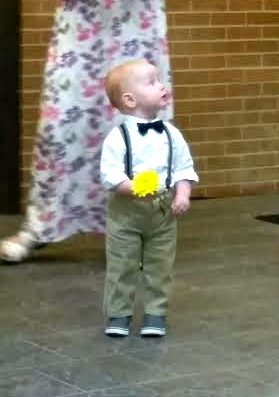
Joy catches in my throat. Our Cole!

Most of all, who could have predicted that a man who doesn’t get misty about babies would be so undone by a grandson?

The truth: If our possessions burned, I could warm my hands by the flames with not much regret as long as my own small tribe was whole and nearby.

Our tribe, Kathy, those we adore in a broken down, breathtaking world, and each other. That’s what matters.

That and what I’m going to tell you now, what I said inside as you enjoyed the view from the cliff: “Damn it, can we go home already?” and “Save me, my love. Don’t give up on me. Teach me to fly.”

Happy anniversary! Love,

John

Naps and Prayers in Ash

Church camp with forty-five teenagers and four fellow pastors is now a couple weeks in the rearview mirror. Every summer we spend six days together at Camp Lutherlyn (near Butler, Pennsylvania) covering Martin Luther’s Small Catechism. Pastor Jeff and I teach first year kids the Ten Commandments, which is an exercise I appreciate more as the summers pile up.

IMG_3451

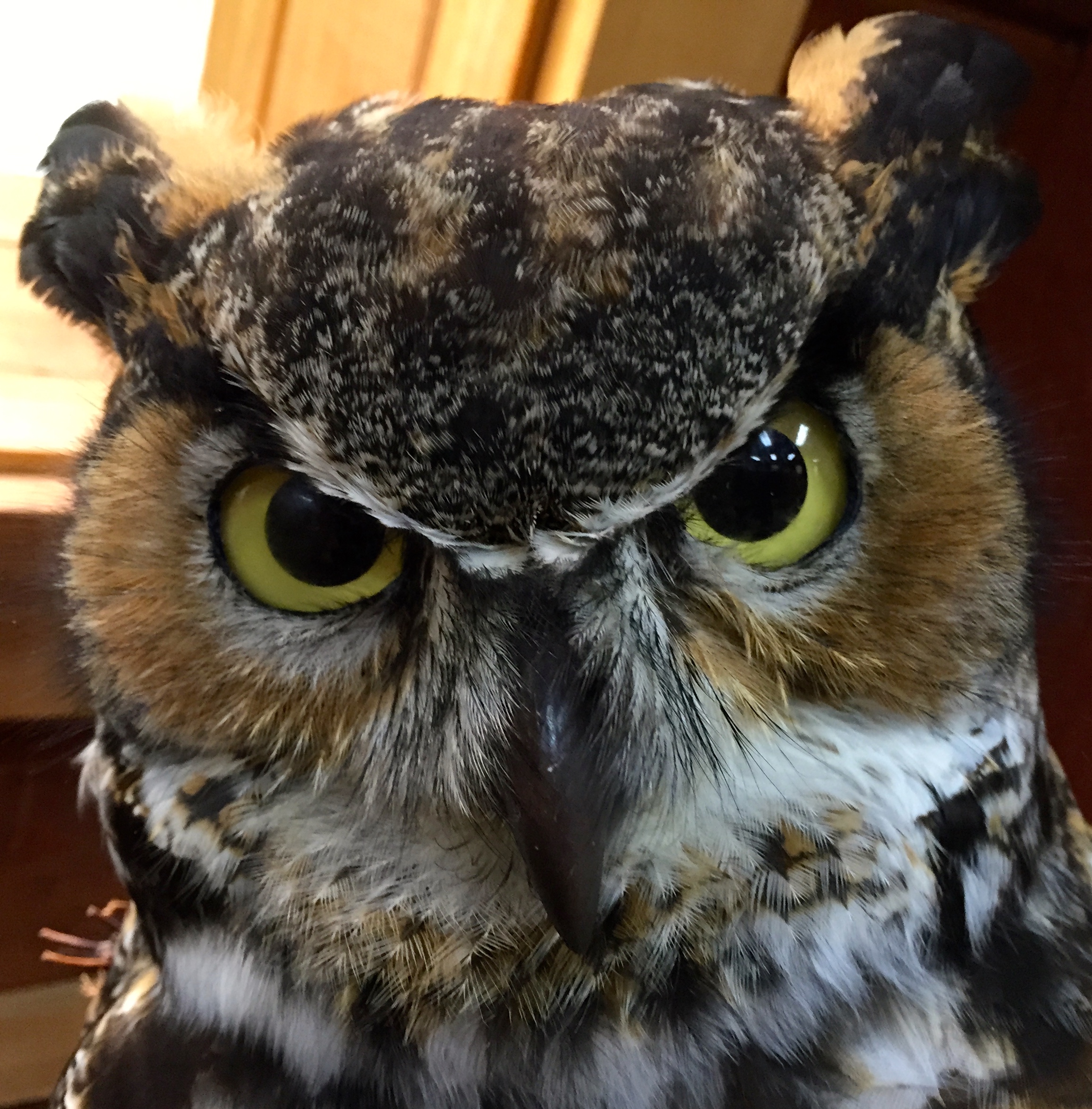
I’ve come to know the Ten Commandments not as scolding stares (as from this owl in the Lutherlyn Environmental Education Center) but as ways to love neighbor and world.

Spending a couple of hours per day talking about taking the Lord’s name in vain and multiple shalt nots probably sounds depressing, but not with Martin Luther’s explanations of what the commandments mean. Take number seven: “You shall not steal.” As long as you don’t break into a car and run off with somebody’s purse, you’re good, right? Luther pushes the idea open: “We should fear and love God that we do not take our neighbor’s money or property or get it by dishonest dealing, but help him to improve and protect his property and means of income.” Carry this too far, and you’ll be labeled a pinko radical.

1024px-Hans_and_Margarethe_Luther,_by_Lucas_Cranach_the_Elder

Martin Luther’s parents, Hans and Margarethe: Severe looking folk! (Credit: Wikimedia Commons, painting by Lucas Cranach the Elder)

With every prohibition Luther tacks on an exhortation. So not bearing false witness against your neighbor comes with the instruction to “defend him, speak well of him, and take his words and actions in the kindest possible way.” If you’ll forgive the gender specific language, Luther’s explanations blow the dust off of Moses’ tablets and shine justice’s light on them.

Peeling back the layers was joyful. It’s not enough to avoid strangling our neighbors; we are to “help and befriend” them. And not coveting your neighbor’s possessions includes actually helping her to keep them.

Beyond the classroom time, during which I gratefully hang on to master-teacher Jeff’s coattails, each installment of Camp Lutherlyn has its own personality and unveils its own lessons before this middle-aged novice.

June 14th through 19th had a trippy groove—trippy and drippy. This was certainly the rainiest week on record. My sneakers went into the trash as soon as I got home. But the weather was just a backdrop to the funkiness.

Photographs tell part of the story:

IMG_3471

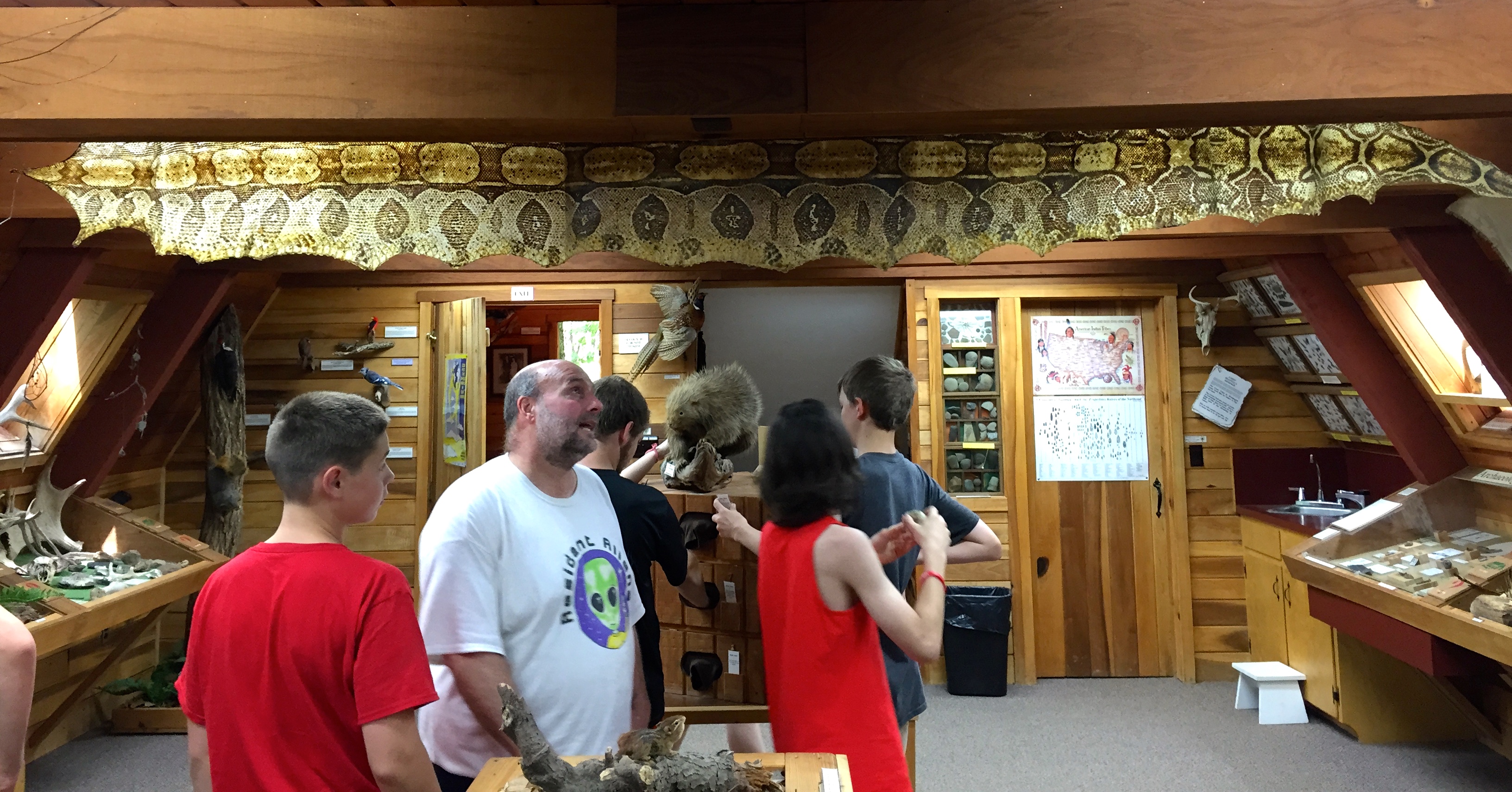
Lutherlyn’s Environmental Education Center has plenty of curiosities and stuffed animals that appear bemused.

IMG_3462

You’re welcome to pet this porcupine, but, as the signage suggests, go “from the head toward the tail only.” Copy that!

IMG_3458

Pastor Jeff examines a boa skin. If I ever see one of these in the Pennsylvania woods, I’m going home.

IMG_3464

A kid standing beside me said, “Is that poop on a stick?” Not poop, but “galls.” Check out the next slide.

IMG_3465

Church camp’s Harmonic Convergence shone on the next-to-last evening during the annual Snake Pit, when kids get to ask pastors any questions they want. One young lady said, “If you could add another commandment to the ten, what would it be?” I knew my answer right away, but let the other pastors go first while mulling over the risk. “Oh, damn the torpedoes,” I thought, then spoke: “I’d add a commandment that Anne Lamott included in one of her books [Plan B: Further Thoughts on Faith]. She said, “Rule 1: When all else fails, follow instructions. And Rule 2: Don’t be an asshole.” Gasp. Giggle. “I’d add that second rule.”

That was the message of camp writ coarsely: “For the love of God, be nice. Don’t be a jerk. Keep your promises. Share the buckets in the sandbox.” Or in Jesus’ words, “Love your neighbor as you love yourself.” I haven’t received any complaints yet, so maybe the colorful language was received as intended.

IMG_3483

The week’s oddest moment came on Wednesday evening, when the pastors usually go off campus for supper. This urinal was in an otherwise nice and tasteful brew pub. I’m still can’t figure out how this is supposed to be funny. “Thou shalt not piss on thy neighbors, regardless of their race, nation, creed, etc.”

Photographing a urinal with what looks like a 1970s funk band painted on the porcelain and saying asshole in front of a bunch of kids would have made any week at camp a stunner, but the way my spiritual doors got blown open by the slanting rain was a bigger surprise. Ten years ago Lutherlyn was all about running and writing. Between classes, while the kids were off mud whomping and zip-lining, I got in some great hill work and wrote a thousand words a day.

This time around I hadn’t planned on exercise, but did look forward to wide fields of writing. Last year yielded three blog posts, but from the moment I put my pillows and bags in Ash, the cabin I shared with the guys, naps and prayers were the rule. Sometimes the two wove themselves together, with quiet abiding trailing off into healing sleep. In the forty-five minutes between morning class and lunch, I returned to Ash and lay down for half an hour of breathing and letting go. Then when afternoon class wrapped up, I took a siesta with wise and loving arms—ninety minutes, two hours.

It didn’t take long to figure out the lesson church camp had in store for me: I was weary deep down in a place sleep only begins to refresh. In the past I would have denied myself the rest, the old mile- and word-counting impulses pressing harder than compassion for self. But for six days in June of 2015, I surrendered. Of course, the learning was about more than fatigue.

In May of 2013 I went on retreat at the Abbey of Gethsemani in Kentucky. The plan was to write, which is a pleasure, share a few meals with Brother John, and rest in the monks’ peace. Turned out I had more grieving to do over the ugliness of my father’s death. If I hadn’t known before I certainly discovered then that silence is an astute therapist. Wounded and injured parts of myself, often in hiding for months and years, visit and have their say.

Words are optional. In Kentucky I watched Dad obey Dylan Thomas’ villanelle. At Camp Lutherlyn my visitors didn’t need to speak. I know these injuries well and long ago accepted their teaching that forgiveness doesn’t cure everything. Absolution doesn’t get rid of a limp.

So I slept in Ash and took in long draughts of the Sacred Presence. And here what could have been nothing more than days overcast with ache was redeemed by hope. I’ve built my life on the probably foolish premise that interior silence is both invocation and petition. Come, Jesus. Welcome, Buddha. Heal and teach, Mysterious Love. There’s no proof that Holiness exists, let alone that it takes up residence in me when I put aside the smart phone, breathe, and wait. Still, I would hate to think of the person I would be today without the grace and mercy that have found me when I close my eyes and come to rest.

Though my visitors were tossing and turning on the next bunk, I understood that their paralyzing power was giving way to the creation of a new man—or the reclamation of an old one, I’m not sure which.

The_steeple_of_Emanuel_African_Methodist_Church,_Charleston,_SC

Steeple of Emanuel African Methodist Church in Charleston, South Carolina. News of the murders there reached me toward the end of camp week–the saddest moment. The shooter, it turns out, is a Lutheran who went to church camp as a kid. (Credit: Spencer Means on Wikimedia Commons)

We’re always becoming, aren’t we? Every last one of us. Refurbished souls with sutured hearts, crooked legs, and bruised skin. (Maybe this explains my weight gain and stretch marks! I’m new wine in an old wineskin.)

I’m grateful for a peculiar week at church camp, a crude commandment added to the usual Ten, and holy naps and prayers in Ash. At 9:05 a.m. on July 6th I’m a fifty-three-year-old novice with an inexplicable smile.

Wanting to Write about the Martyrs of Charleston

Dear Napper’s Companions,

Toward the end of May, kind and thoughtful Mary sent me an email that has stayed with me. I had posted a newspaper column I wrote over a decade ago about the prospect of the United States bombing Iraq. Here’s most of Mary’s response:

I came home from my job . . . here in Asheville where you and I briefly met and realized that I have not read A Napper’s Companion in a while. It was a treat to read your posts all at once in the silence of my living room while my husband flipped through The Mountain Express and my Pug snored contentedly.

I enjoyed all of them except the political one, but it got me thinking. I think the political system is broken, because we are. I think we should all step back and let go of our identifying with political parties so strongly and begin to really, actually listen to each other. Perhaps more healing could take place. Hmm. More for me to think about and try to do.

220px-Fra_Angelico_031

The first words of Benedict’s Rule for monastic life: “Listen to the ear of your heart.” (Credit: Wikipedia)

First, Mary’s setting for reading is enchanting. Would that we all could relax in living rooms with a spouse honoring the silence and a dog snoring to provide the necessary punctuation.

But “I enjoyed all of them except . . .” made me pull up short. A baseball player who bats .300 has reason to celebrate. Thin-skinned writers, on the other hand, get moody over a .900 average. A single clunker can make us sulk and whine, “Aw, to bloody hell with the whole writing thing!”

In fact, I don’t bruise so easily. My stay at the Johns Hopkins Writing Seminars thirty years ago gave me callouses, as did the fat file of rejection letters I’ve received from hundreds of magazines and book publishers. Mary’s except stung for an instant—a flu shot, a plucked eyebrow. The pinch was immediately followed by gratitude.

I wrote back, “I couldn’t agree with you more. I’m really grateful for your note because you’ve taught me something important.” Her lesson takes some explaining.

A week ago I savored the free Wi-Fi at a Panera Bread in Lyndora, Pennsylvania, and started a report about my week with kids and pastors at church camp. (You’ll get to read that soon enough if you want to.) Unfortunately, the joys of hanging out with fresh-faced teenagers and clergy friends intersected with receiving news of the nine martyrs of Charleston, South Carolina.

As I sipped mango iced tea and sighed, my intended report buckled under Dylann Roof’s scowl. Rather than staying in the woods of Camp Lutherlyn, I followed the thruway to Emanuel A.M.E. Church. Soon I was dissecting the latest installment in our national shame, and the kiddos and Martin Luther’s Small Catechism were hundreds of miles behind me.

IMG_3503

I should have stayed at camp, where a butterfly rested on my sneaker.

I had a morning after experience when reviewing what I had written: “What did I do?” Even as I was droning on about a racist, terrorist attack, Mary’s except cautioned me. I should have known. Sampling around 1500 words, I felt like a cook who had spent hours on a dish that turned out bland. Eh!

The fact is, writers need to be open to learning their gifts and limitations. At fifty-three I would have hoped to be confident in my wheelhouse, but since most days I squeeze in at most an hour at the writing table, awareness has been delayed.

Ah well, as Sherlock Holmes said, “It is better to learn wisdom late than never to learn it at all.” Did you know that both William Shatner and Sebastian Cabot covered Bob Dylan? “Mr. Tambourine Man” and “It Ain’t Me, Babe” respectively, and others, too. The results, spoken rather than sung, were embarrassing and have been justly consigned to, well, camp. Captain Kirk seems to have embraced his inner pink flamingo. I don’t know about Mr. French.

There’s nothing much sadder than writers and artists who are under the impression that their stuff screams when, in fact, it’s eh or worse, ridiculous. (Lack of self-awareness is hardly sadness at all, of course, compared to getting murdered in a Bible study.)

I’ve written a fair amount about societal cancers and governmental rancor and absurdity because of the effort’s therapeutic purging. But in sharing such work, I may sound like a baritone trying to tackle “Nessun Dorma.” Some measures work, but the entirety doesn’t sing.

The point: Mary’s except, so gently rendered, invited me to recognize my voice, which has more to do with singing about my wife, children, grandson, and dog–close to the end, I’m afraid–than with spelling out what we humans can do to keep our species from imploding. More to do with celebration and lamentation than explanation. I enjoy having my say, but folks don’t stop by A Napper’s Companion to pick up ways to save the world.

I imagine if you’ve hung around here for long, you’re like Mary from Asheville, reclined in a quiet room with a sleeping Pug. You’re looking for a few minutes of hope, a port of joy or comfort in all kinds of weather, or a love letter.

800px-Sad-pug

Like you, friend, I don’t have much other than questions? (Credit: Wikipedia)

Or maybe a song and a prayer, which are good places to end. As I hold our family members who welcomed in a young man concealing bullets and rage, I’ve got no answers, no fix. But I do have a song, not from church camp, but verses from an old hymn:

From ev’ry ailment flesh endures

our bodies clamor to be freed;

yet in our hearts we would confess

that wholeness is our deepest need.

In conflicts that destroy our health

we recognize the world’s disease;

our common life declares our ills.

Is there no cure, O Christ, for these?

And I have a prayer:

Let there be a cure, Eternal Love,

and lead us to it.

A song and a prayer aren’t much, I know, but they’re all I’ve got.

Peace and love,

John

Clouds Over Peach Street Starbucks

Erie, Pennsylvania, 9:05 a.m. This June 8, 2015, is gray, drizzly, close, still. If I accomplish anything worthy, it will come from without–a descending muse, a cloudburst of grace.

unnamed-2

Clouds over Peach Street Starbucks

When I looked at my watch just now to check the date, I remembered: my mom died seventeen years ago today. Another layer of humidity touches my skin. (I miss you as much as ever, Mom, but these waking hours are unfolding, and you would want me to do more than cradle the sadness pushing inside my chest.) Crying is therapeutic, but it reaches a point of diminishing returns.

I want to let wife Kathy’s words be my weather. Early this morning she borrowed a line from Jeff Goldblum’s character in Jurassic Park: “Life finds a way.” He was talking about a species of dinosaurs reproducing, even though they were all engineered to be females. Kathy had in mind a neglected amaryllis bulb. During the flurry of our recent move, it slept in a pot by our dining room window without soil or water.

unnamed

“You won’t plant me, so I’ll show you,” Kathy heard the flowers say.

Life finds a way. So does hope. At about the time I was recalling Mom’s face, a woman bought a tired, weathered guy coffee and a bagel. They were strangers. No fanfare. “Thank you.” “You’re welcome, sir.” Quiet hope, almost invisible. Not all flowers are stunning. Some just sigh.

unnamed-4

Parked by my truck, these say, “Shh. I’m only slightly lovely.”

All hope asks of me is that I watch for it–amazing how often I can’t even do that. But maybe I should honor Mom’s memory by opening my eyes.

unnamed-1

I come home regularly now to find that old gimp Watson has willed himself up on the bed. Here he joins cat Baby Crash for a siesta. For me, hope requires a climb.

unnamed-6

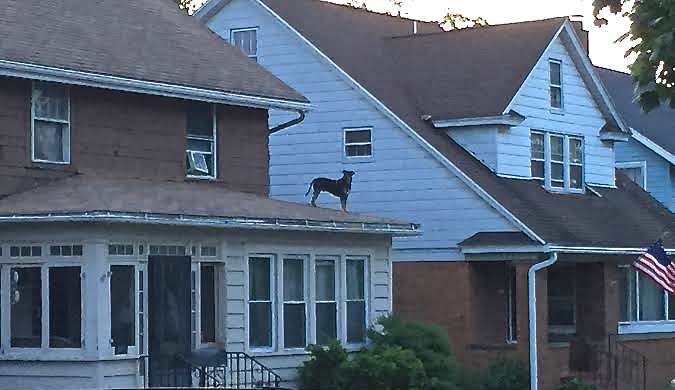
A couple blocks from our new house: this mutt clawed a window air conditioner out of the way and kept watch on the porch roof. On bad days, I also have to push some shit out of the way to get into open air, where hope resides.

unnamed-5

Then again, sometimes gorgeous life is hiding in what I consider inconvenience. A downpour delays my leaving Starbucks, but the splash invites me to look.

unnamed-7

Yeah, yeah, yeah, rainbows are cliches. So what. This one, outside of Abiding Hope Lutheran Church, had Kathy and me standing in the rain. Sing us a song, Kermit the Frog.

I can leave my Starbucks perch now without getting drenched, so off I go. Thanks for the good words, Kathy. And stay with me, Mom. Help me to find life and hope and to remember you with joy.

P.S. A note to friends: Please forgive me for falling behind on blog reading, commenting, and posting. In a few days I’ll be taking A Napper’s Companion on the road for a presentation at a regional church gathering. Combined with usual duties and moving the Coleman household, preparing for this talk has had me busy up to my nose. Hang in there with me and send some loving energy my way. I’ll see you again soon. Peace, John

TBT: So . . . Was I Right about Iraq?

I’m often slow on the uptake. Facebook friends keep posting photographs with the comment “TBT.” What the hey? Since my policy is not to put much thought into cryptic messages, ignorance has enjoyed its long day. I finally broke the code, but can’t remember how. If ever a brain needed a laxative, it’s mine. A cheap Cabernet may have cleared enough obstructions for the obvious to snap into focus, the way the Eiffel Tower or Sebastian Cabot appear in 3D glory after you zone out looking at one of those dizzying posters that used to populate restaurant waiting areas. (Mr. French may be available only through special order.)

Throwback Thursday! Of course. UrbanDictionary.com updates my revelation by noting that TBT may also indicate Throwback To . . . . So every day of the week we can gorge ourselves with impunity on grainy images of our unfortunate 1980s hairstyles. I love it.

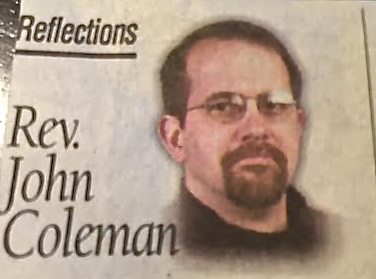
Since I got my hair cut roughly the same way today as I did thirty years ago, I don’t have much to add to TBT in the way of embarrassing photographs. In the process of junk sorting, however, I found an opinion piece I wrote for the Erie Times-News between 9/11/2001 and the U.S. attack on Iraq on 3/19/2003.

This particular TBT is short on humor, but it is interesting to revisit old convictions.

unnamed

Sad when your throwback photograph from a dozen years ago makes people say, “Geez, he’s let himself go.”

What would Jesus say about Iraq? (This title and the paragraphing are not mine.)

For the United States, September 11, 2001, was a series of unimaginable sucker punches. In a few hours, terrorists placed on our country’s hearthrug a new reality: the “gentleman’s agreement” as to the rules of war had been altered.

The “enemy” isn’t necessarily a specific country anymore, and rather than sticking their chins out for a retaliatory punch, attackers blow themselves up.

The question is, how should we respond to this new set of rules—or lack thereof? Or more to the point for me, what is a faithful way of responding to terrorism within our borders?

President Bush isn’t hiding his take on the matter. He thinks that the United States, either alone or in cooperation with other nations, should bomb Iraq with the goal of eliminating Saddam Hussein.

I haven’t heard any of television’s talking heads dispute the Bush administration’s claims that Iraq supports terrorism, so I guess if we’re going to wage war on terrorism, Iraq is as good a place to start as any.

My concern isn’t where the bombing should begin, but when it will (or won’t) end.

I don’t pretend to know what course of action will best protect our national interests or rid the world of the fanatical inclination to fly jets into skyscrapers.

Even as a pastor, I don’t know that I could win a theological argument for peace. Many intelligent, scripturally literate people believe that the time for seeking peace with terrorists has passed.

But I do feel increasingly sure about the voice of my own conscience, and the word I’ve been hearing lately is enough.

As I write this, my kids are close by. One is tying up the phone lines by gabbing on AOL, and the other is wearing a pair of goggles and pretending to swim across my study floor. My wife is at a class on home repair. I love these three.

Here’s the deal. If we start down the wrenching, potentially endless path of incinerating the world’s sucker punchers, people every bit as dear as my beloved three would also burn because they happen to be in the way.

Enough! Enough lives lost. Enough grieving. Enough violence.

Like I said, these are only the words of my own conscience. I’m probably wrong and simplistic, but I try to imagine Jesus standing beside me. What would he say? I can’t hear “bomb ‘em” or “acceptable collateral damage” coming from his lips.

What I hear is more like “figure out something else.”

IMG_3280

Grizzled and pudgy, I imagine my beloved grandson under the bomb. I guess I’m parked in the same spot I was years ago.

Burying Aunt Sue

I buried Aunt Sue yesterday morning. That’s what some pastors call funerals. We bury the dead, speaking the word with reverence.

It was ashes a dozen or so family and friends commended to the earth. Since Aunt Sue died in February, all had grieved for a couple of months, maybe spent their quota of tears.

I loved my aunt, but her passing hasn’t crushed me—the sad result of extended families drifting apart. I saw her once or twice a year. She was cheerful, loved china painting, made elegant sea-foam, and traveled a lot in her later years. A few loved ones shared such memories, and I tossed in a couple of my own: her twittering laugh and her faithful attention to my dad during his decline, punished by dementia. She never quite understood that a person whose brain has gone to pieces can’t read a book or assemble puzzles or in any other way snap out of it. But she was present to her brother in the best way she knew how, which is all any of us can do.

IMG_3292

When I buried Dad a few years ago, Aunt Sue stayed in the car. She couldn’t bear his passing.

An hour before the graveside service, images of poor, confused Dad went through my head, and I remembered something he said a few months before his death in January of 2012. His words were confused, but poetic.

At that time Dad and his wife Mary were in different care facilities, both having lost not only each other, but themselves. I arranged to take Dad from Independence Court (great facility, absurdly named) to Mary at Pleasant Ridge (well, that’s half right), hoping that seeing each other might bring them joy. When I wheeled him into her room, they were joyful, indeed: a kiss, a hug; then he took her hand as if he had found a fragile treasure and held it to his lips. “Come on, let’s get out of here,” he said, the old Dad surfacing for an instant, eyes narrowing into his old enough-of-this-bullshit expression.

“Oh, Dad,” I thought. Mary was mostly bedridden, her legs dead weight. But, of course, who doesn’t want to close his length of days at home, with his beloved? Does the longing for the warmth of familiar skin ever die?

During one visit to Dad, he thought I was his brother—he didn’t have a brother. He confided that he planned to ask Mary to be his wife, but was worried she wouldn’t say yes. He couldn’t remember her name.

“Mary,” I said.

“Yes, Mary.” He wiped away tears. “She’s my favorite.” They had been married for over thirty-five years.

When dementia or Alzheimer’s had stolen everything else, it granted Dad the slight mercy of leaving Mary’s face. When he said “let’s get out of here,” I imagine he just wanted to be close to his favorite.

IMG_3293

A view of Lake Erie that Dad and, eventually, Mary will share–sad they won’t see it.

Mary was silent, lucid enough in the moment to know that they had no place to go, no muscles or wit to get them anywhere.

“Well, then, maybe we can get together . . . .” Dad paused, searching his atrophied vocabulary. “Maybe we can get together at the other post.

“If only we could step out onto a cloud,” Mary said, still holding Dad’s hand. “But that can’t be.”

Dad’s enough-bullshit face returned. “Why not?”

I don’t remember anything else about the visit, but Dad’s suggestion has played again and again in my memory: “Maybe we can get together at the other post.”

So an hour before giving Aunt Sue a good send off, Dad gave me the right words. When the time came to speak them, the nightmare of his last days stopped me. I barely managed Dad’s longing, his wish: “Maybe we can get together at the other post.”

Sometimes tears make the most honest eulogy. I remember my Grandma Miller, her body stooped and gnarled with arthritis; my sedated mother on her death-bed with her left hand, scarlet and impossibly swollen, reaching for my hand as I thanked her for being a good mother; my father, howling and clawing through his final hours.

Oh, for the hope of another post—where minds are restored, where pain rises like fog at dawn and burns off, where wounds are healed, injuries forgiven.

Then I hear Mary: “But that can’t be.”

My lips purse, eyes narrow: “Why not?”

IMG_3309

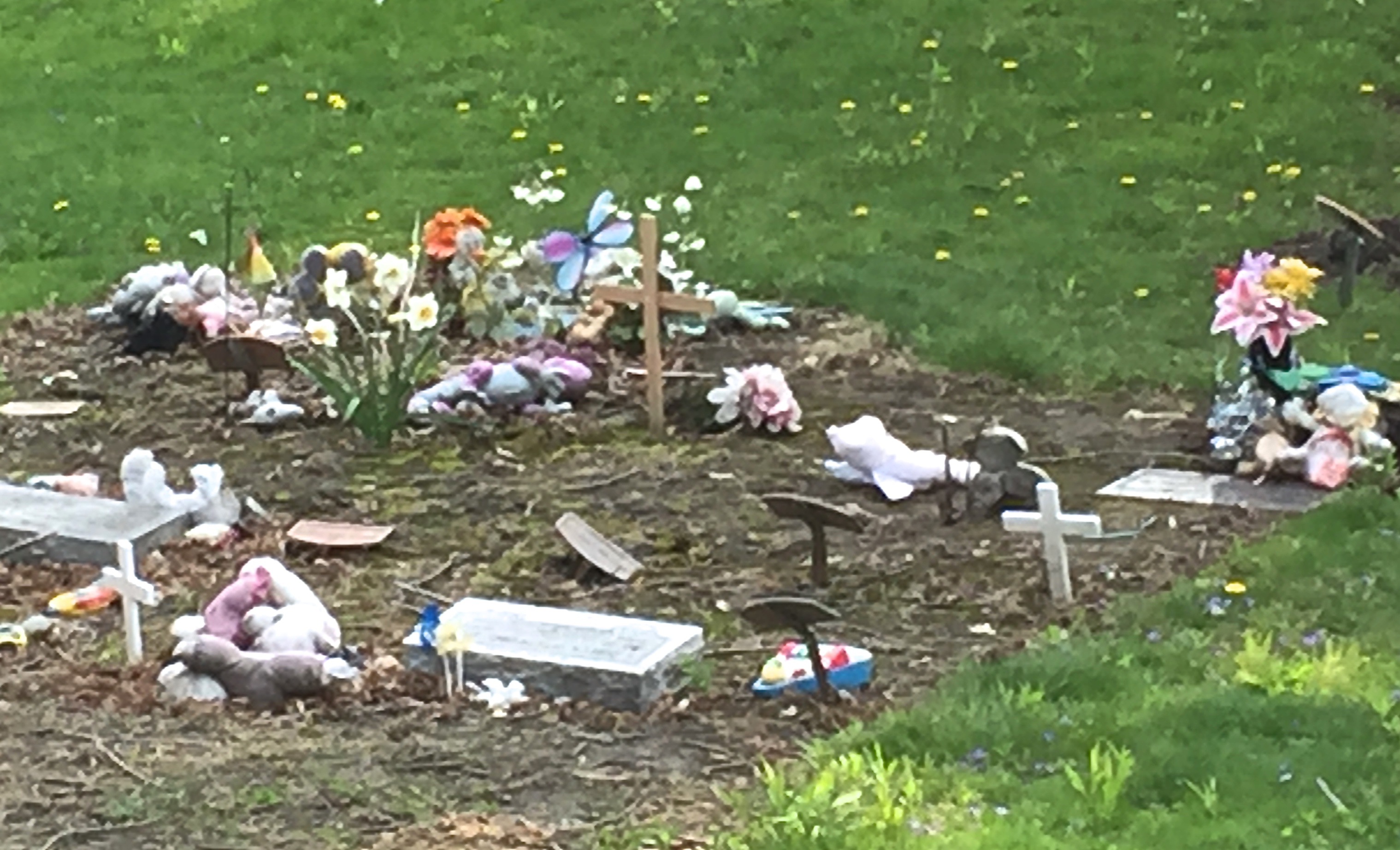
The closed children’s portion of Lakeside Cemetery, where Dad and his sisters, mother, and father are buried: soaked Teddy Bears and plastic flowers.

This morning I ached for the other post and knew that nothing but sitting still and silent with God would help, so I drove to Presque Isle and watched waves catch the sun. Honest-to-goodness shafts of heavenly light split iron-gray clouds and warmed Erie, Pennsylvania, across the bay. I had planned on burying my aunt yesterday. I hadn’t expected to bury my father again.

IMG_3295

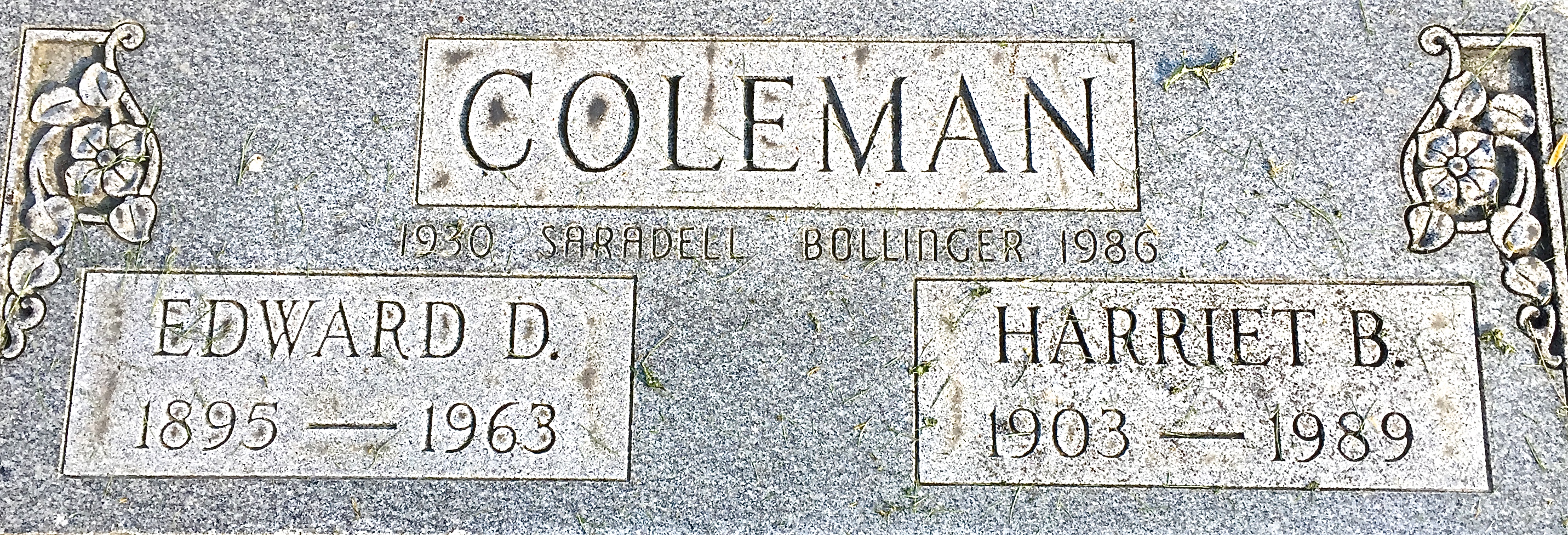
Aunt Sally’s (Saradell) resting place, a footnote on her parents’ gravestone. Her twin, Aunt Sue, will be somewhere nearby.

The weight of tears pressed from behind my eyes, but none came. Who knows why?

Eternal Love, prepare for us the other post. Gather us all there, our hurtful bullshit left behind. Our brains and bones wear out, so we return them to the earth. Give us what we need–only what we need–to know you at last.

I am crying now.

800px-Claude_Monet,_Le_Grand_Canal

Presque Isle Bay doesn’t shimmer like a Monet, but the waves are dear to my eyes. (Claude Monet, Grand Canal Venice, 1908. Credit: Wikipedia)

P. S. If you enjoyed this post, you might also like these (the first one is joyful, the other two not so much):

“A Letter to My Late Mother”:

https://anapperscompanion.com/2013/12/02/a-letter-to-my-late-mother/

“A Prayer for Philip Seymour Hoffman, Justin Bieber, and a Child in a Fire”:

https://anapperscompanion.com/2014/02/04/a-prayer-for-philip-seymour-hoffman-justin-bieber-and-a-child-in-a-fire/

“Viewing Dad’s Death Loop at Gethsemani”:

https://anapperscompanion.com/?s=Viewing+Dad%27s&submit=Search


Miracle Milk, Miracle Mothers

1560508_882546381815551_547569594810418436_n

Cole before his cold at a Mexican restaurant–looks like he is enjoying a mother’s milk buzz, sampling a tortilla chip, and watching out for the senoritas.

What’s more pathetic than sick toddlers? Living in the here and now, they know only that the present moment is plugged up or achy or poopy or yacky, as the case may be.

Grandson Cole is nearly over a head cold, which he has shared with mommy Elena, daddy Matt, and grandma Kathy. Adults get a pat on the back and a “hang in there,” but Cole had us all verklempt. Kiss him, walk him, monkeyshine him. His head was so packed with snot that it established its own gravitational field. Pantry moths, hummingbirds, and an occasional turkey buzzard got pulled into Cole’s orbit and circled a few times before flapping wildly to regain their freedom.

The worst part was my buddy couldn’t nurse. He got a tug or two in, tried to breathe, and had to veer off. Then came the tears, and not just for him. For a prolific producer like my daughter, the pain was threefold: lefty, righty, and the heart. Pumping took the edge off.

unnamed-2

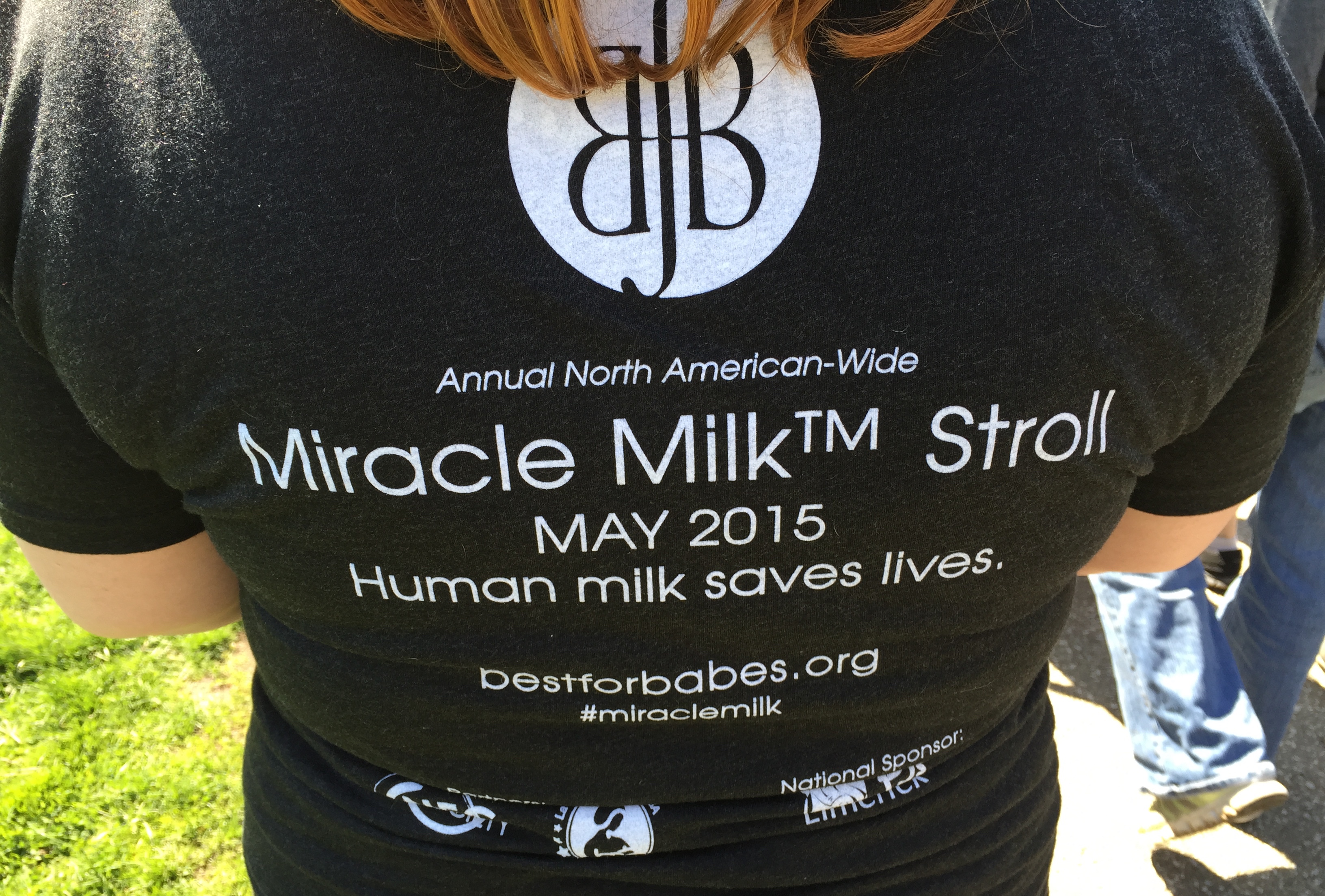
Miracle Milk Strollers (Credit: Penny Shaut)

Both Elena and son Micah nursed, so I’m comfortable at the nursing rodeo as well as a big fan. The more I learn about breastfeeding, the more I want to speak up as its champion. This past Saturday the whole family joined scores of others at our local Miracle Milk Stroll, an event to raise awareness about the benefits of breast milk as well as a few bucks for the cause.

IMG_3255

The author, hereby applying to be the Official Clown for Miracle Milk

And it is a worthy cause, though it struggles against a headwind of sophomoric nonsense disguised as decorum. I’m amazed afresh each time a humble breast—servant of life, means of comfort—is greeted with harrumph or ew. An infant is hungry, say in a restaurant, and Mom provides. “Eh,” someone at the next table whispers, “I don’t want to have to look at that while I’m eating”—that being one standard-issue, boilerplate breast, either whole or in part.

I say, “It’s time for the squeamish to take a please-grow-up-already pill.” Why? Because breast milk is liquid gold, and nursing—for those women able and inclined to practice it—is a picture of earthly goodness. I won’t go into the many marvels of human milk here. Authoritative sources have done the heavy informational lifting far more effectively than I ever could. Please check out these sources if you’re curious.

CAM00985

My son shouldering my sick grandson on the stroll

So plenty of good research trumpets the physical benefits of nursing. After the Miracle Milk Stroll, lactation consultant Cass even suggested that Elena put drops of breast milk into Cole’s ears and nose. Overhearing this, I said, “I have a wart on the bottom of my foot. Maybe I ought to put some breast milk on it.” Cass and Elena said together, “Well, it is an antiseptic.”

I would rub some on my sole. Why not? I would also try human milk as a treatment for pink eye, as one mother successfully did for her preschooler. Cheese made from breast milk wouldn’t scare me, either. A New York chef made some out of his wife’s surplus, but the Health Department frowned, as did one food critic. Oh well.

Compared to probably 95% of the population, I’m a weirdo. Sorry, but the science is convincing. Research isn’t conclusive yet, but there’s even evidence that a mother’s milk has analgesic properties. In the future will we mix liquid gold with other ingredients and use it like nasal spray to calm a headache? Go ahead and laugh. As Elena used to say, “I don’t give a care!”

IMG_3257

Two of the most wonderful breastfeeding veterans, Kathy and Elena–with son-in-law Matt providing an innocent photo bomb

Let’s say human milk was no more nourishing than tap water. Would I still stick up for nursing? Amen and Amen. Go to a Miracle Milk Stroll as I have for the past two years and hang around with a bunch of women committed to the cause. Watch your children and grandson nurse. You’ll witness something more compelling than science.

When Elena says, “You want some milk, Baby?” Cole’s answer is joy and light. He gives the usual yeah and nods, but I wish you could see his expression. It’s as if he is thinking, “Oh, that’s the best thing! The world is perfect when I’m nursing.” Imagine a face showing gladness mixed with relief.

We used to joke about Cole being boob drunk once his tank was full. Take away any negative connotation, and you’ve got it right: the relaxing buzz, the drooping eyelids, the silly grin. We should all be so intoxicated.

Am I getting carried away to think that a nursing baby is about as close to the Loving Mystery as a person can get? And Mom—her skin, breast, warmth, and agape—is the vessel in this trinity: Eternity, Life Bearer, and Life.

unnamed-3

“La Compassion de Christ” by the late, self-taught Milton Sontheimer (1982). A Mothering Christ? This hangs in my study at Abiding Hope Lutheran Church.

Granted, breastfeeding is not entirely sacred cuddles. Kids chomp down, women grow weary, ducts get plugged. But for a chronic worrier like myself, a mother feeding her baby is a gift of peace in a nerved-up world. Together they remind me that I believe in a gracious forever and assure me that once this life of wonder and woe has passed, my hope of being so comforted in the arms of a Mothering God isn’t foolish after all.

At the Miracle Milk Stroll, we walked less than a mile, slowly like the name says. Without much thought, mothers nursed their children, talked with friends, and kept walking. Would that we all could travel this way, leaving judgment at the side of the road, quietly celebrating love made visible.

IMG_3266

Human milk saves lives!


Marriage Along a Napper’s Way

unnamed-1

With Baby Crash, watching a gray day out the den window . . . small house.

Gray day. The air itself was wet.

One intersection from Starbucks and my appointment with the writing table, wife Kathy’s guitar ringtone strummed. “John Coleman, where is that Pampered Chef stuff?” She spoke of a baking sheet and hell-I-don’t-know-a spatula that her friend would be picking up soon. Due to a recent, understandable case of what we call ping brain, she forgets and occasionally slides off the rails. When you’re moving from big house to small, as we are now, the cranium can get crowded.

“Uh, here in the truck behind my seat.”

“Where are you?”

“Turning into Starbucks. But I can run it down to you.” (“And lose half my writing time,” I thought, but didn’t say.)

“Ooh, by Starbucks? Maybe you could bring me a venti chai tea latte?”

“Sure.” (“Make that 2/3 of my writing time.”)

“Okay, thank you, John Coleman!”

In I went, ordered the tea and talked to a couple of friends, then headed north on I-79 to the Regional Cancer Center.

640px-Rembrandt_Christ_in_the_Storm_on_the_Lake_of_Galilee-1

The Storm on the Sea of Galilee by Rembrandt, 1632 (Credit: Wikipedia)

And that’s when my napper’s way took over. A nap or siesta generally involves down time in the afternoon–pretty simple. But the napper’s way is round-the-clock: in the midst of activity, obligation, and distraction, you stop. “Peace, be still.”

The Mazda 4X4 was exceeding the speed limit, but the driver’s spirit-mind pulled to the berm. A couple nights ago I scratched loose one of Kathy’s old scabs (most wives and husbands have them, I suppose), and she forgave far more quickly than I did myself.

Breathe. Nap while fully awake. Oh, bars of my soul, open, open. What’s worth upset? What deserves anything other than a smile and no worries? And for those in love, what response is better than a kiss?

Salting old wounds or inflicting new ones calls for a cold shoulder, maybe worse, but losing a hundred words for my wife’s sake is of no account. The inconvenience is a single hiccough. It’s a sweat bee brushed out the car window.

So I delivered the tea, baking sheet, and whatever-the hell. One of Kathy’s officemates laughed: “She just wanted you to bring her a Starbucks.”

On the way to the exit, Kathy said, “I’m sorry. I put the stuff on the seat so I wouldn’t forget.”

“Oh, you mean the seat you were sitting on?”

“Yeah, that one.”

We smiled–at her ping brain and my frailty and at love on a cloudy day–and leaned into each other. “Be in touch,” I said.

unnamedThen I landed here at Starbucks, where Kathy’s email chimed: “Thank you, my dear. Love you.”

No, my dear. Thank you.


Home Is When I Come to Rest

IMG_3043

The wall of my Shenley Drive study

A couple evenings ago, while walking our beloved gimp Watson to the end of Shenley Drive, wife Kathy and I counted the number of times I’ve moved since my sophomore year of college, when I rented my first apartment. I narrated, and she revised here and there.

In twenty-three years, I’ve moved twenty times, with Kathy along for most of them. We married young (I was twenty-one, she was twenty) and amazingly we’re still together. Three bouts with graduate school, daunting challenges with our now-adult daughter Elena and son Micah, my nervous breakdown and struggle to be a good household helpmate: such realities beat up a marriage. We’ll celebrate our thirty-second anniversary this July because Kathy is forgiving. I’m a nice guy and patient to a fault, but we’re embarking on yet another move as husband and wife because the latter gives the former endless second chances.

My twenty-first move, Kathy’s twentieth. This one is from Erie, Pennsylvania’s west to east side, fifteen minutes, five or six miles. 2200 square feet to 1000. Two stories to one. Upper middleclass to middleclass. Shenley Drive to Parkway Drive. 16505 to 16511.

IMG_3014

Micah cut his hair at the dirty bathroom sink and unintentionally gave the faucet a generous mustache. 322 Shenley is crowded with such incidental joy.

Of course, there’s the emotional part of the move. Kathy is beyond ready, having spent countless hours painting, plastering, and planning the new place. Micah has fourteen years of testosterone, fury, and healing invested in his home; he sulks and sighs. I don’t get attached to dwellings much, but leaving Shenley Drive has me negotiating with a funk. Having gone through several episodes of hell there, I find the hardwood floors and views out the windows have taken on sweetness in these better times. And I came to rest at 322 Shenley. Lying in bed with Kathy and looking out at the boulevard’s old maples in all seasons, I thought many times, “I don’t need to be anyplace else. When my hour comes, I could die here, this woman beside me, my eyes on the trees.”

It’s easy to move when you’re ready, another when your heart won’t quite let you say goodbye: to a yard crowded with flowers and herbs, to neighbors as close as family, to walls you’ve leaned against and cried.

Dear as Shenley is to the Colemans, I know from the scars of leave-taking that bulbs and seeds grow in other gardens, friends appear on every avenue, and new walls can become trusted shoulders.

IMG_3212

A new route to the bathroom

Anyway, Shenley isn’t my home, nor will Parkway be. I remembered this the first night Kathy and I spent in our new bedroom. Flummoxed Watson clicked on the hardwood from my side of the bed to Kathy’s, back and forth, ad infinitum. The route to the bathroom was odd, short and direct. But I wasn’t sad. For me, home is saying “Kiss goodnight?” to Kathy and resting my hand on her warm belly as we fall asleep. Home is her saying “I love you, John Coleman” after the alarm goes off. (Yes, Kathy calls me by my first and last name.)

photo-5

Home is kibitzing with my son. The functional kitchen is a bonus.

Home is also standing with Micah as he tells me about a wrinkle in his day or about the mantis scrimp, which punches its prey. Before he goes to off to watch television, I say, “Spare a hug for the old man?” He does and means it. That’s home.

Home is Elena calling me Daddy and rescuing my bland refried beans and son-in-law Matt explaining that a truck’s clutch requires oil and toddler grandson Cole nodding and saying “yeah” when I ask if he wants to chew my watch.

Home is singing with my church family on a Sunday morning:

I ask no dream, no prophet ecstasies,

no sudden rending of the veil of clay,

no angel visitant, no opening skies;

but take the dimness of my soul away.

Home is when I close my eyes, sit still, and sense—no evidence other than longing—the presence of the Loving Mystery.

Home is when I come to rest, held close by infinite variations of mercy.

unnamed-1

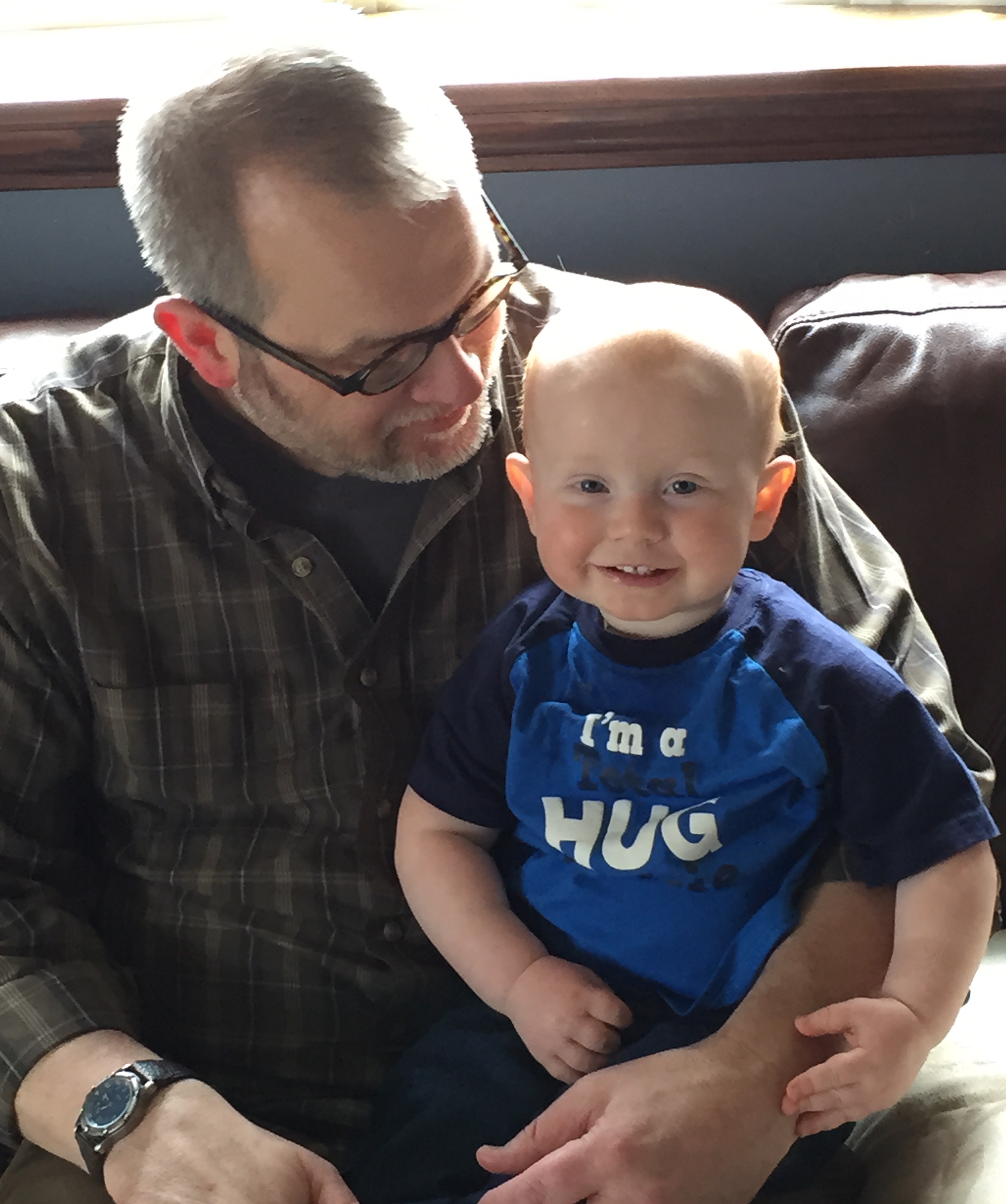
As long as my grandson is nearby, I’m home. The Loving Mystery looks at me with Cole’s eyes. His smile is mercy.