A Witness for Richard

I’m used to burying strangers. Plenty of deceased and their families believe in God, but the church not so much. That’s when pastors get a call from a funeral director. Not much explanation is necessary: “Are you available to do a service on such and such a date and time?”

If nothing is going, I’m in. Details are provided, name, next of kin, a phone number. From there I watch for an obituary and make the visitation if possible, talk to loved ones, gather some sense of the departed.

But my latest burial was a first: no name, no contacts, just when and where. I did reconnaissance in Section B of the paper and found one possibility, a man with a brother and a couple of nieces. Maybe the brother wanted a prayer and “ashes to ashes” at the grave. No fuss, just a man of the cloth and a few words. At the appointed hour I fishtailed to my commitment, confident I would find a seventy-something man in the casket.

Instead I found Richard, a fifty-something resident of a group home, where he lived with other adults in need of supervision and care. Some of them were sitting with their caregivers, waiting for an unfamiliar face to bring comfort and hope.

The funeral director pointed me toward Richard’s primary caregiver, who didn’t quite know what to tell me. Richard didn’t speak. He loved to look at artwork. “He loved to eat,” she said, raising her eyebrows and drawing out loved, making the vowel sound delicious. He expressed disapproval by screaming.

Others told me that he insisted on being called Richard and looked forward to his morning routine of chocolate milk.

Twenty minutes before the service, I stood with Richard: African-American guy about my age; chin drawn in; fingers showing some atrophy, I believe; passable suit jacket and tie; favorite afghan across his legs.

In certain situations I take it as my responsibility to witness, to pay attention and make a silent announcement to creation. Or maybe my job is to confess a belief consisting of equal parts tears, hope, and wonder. I don’t know.

But staring at an embalmed man whose life was nearly invisible, I put words in God’s mouth. Doing this has always felt dangerous. I don’t know the mind of God. I can’t even put together a sound argument that God exists. Anyway, words were in my mouth. I didn’t invite them. I heard them in my head as true beyond debate. It was as if I were not their author:

You’re as important as anybody in the world, Richard. Nobody is more loved than you are.

I imagined that Richard’s face, the lip puffed out over teeth that never got braces and his fingers bent at the last knuckle, were dear to God—as when a parent watches an infant sleep, each feature counted as a miracle. And to God’s ear, were Richard’s screams music?

I did my best with the service. Some lives make for scant eulogies, but that’s only if you forget that one person’s chocolate milk in the morning deserves mention as much as another’s Fulbright. “Richard was a charming, and funny man,” his obituary read. “He had a loving, caring soul and his smile would light up a room.” His friends, a dozen or so, cried for him. They wiped away tears, too, at the suggestion that God beheld Richard loving food and in him was well pleased.

A soul’s resume lists sacred trivia: knowing how to taste chocolate milk, getting lost in a painting, demanding to be called by name, caring for others with a smile or a scream. Richard’s accomplishments don’t shine up very well, but those who loved him in the world appreciated them and loved him to the end—from the group home to the funeral home to the cutting cold of the cemetery.

In under ten minutes, we had spoken the final amen and were back into our warm vehicles. Not many days later now, I sip routine coffee. Richard reminds me to taste it. His face, as clear in my eyes as when I stood by his body, doesn’t belong to a stranger. His features are fine the way they are. May God and all the quick and the dead remember to call him Richard.

A Dream Yields, A Blessing Takes Hold

IMG_3479

Field near Prospect, Pennsylvania: a dream view

Solitude, unmasked stars and planets, the shocking cold before dawn, generous draughts of silence: decades ago I wanted this world. Someday, for sure, I would own a house in the sticks with some acres. But—one season following another—age can plow old dreams under, let longing lay fallow, and call a soul to entertain wishes again at the right time or to give them up all together.

The catch is, living more than a holler away from the nearest neighbor is perfect for me. I should want to wind up in the country. I’ve had plenty of great neighbors, some of them like family, but population-density can be a nuisance, right? One former neighbor always fired up her leaf blower whenever I lay down for a nap. It sounded like Carol Channing trying to clear her sinuses. Another neighbor enhanced home security with a nuclear front-yard lamp—impossibly bright. In a step of first-string, All American effrontery, he installed a black shield on the panel facing his house. Why sear every retina on the boulevard, after all? One guy tried to save us by covering the light with a sombrero, only to find it returned to his stoop the next morning.

But such annoyances never drove me from Erie, Pennsylvania, with its 99,542 residents. Columbus and Baltimore, two real cities I’ve called home, were fantastic. So why the persistent sense that I should hear a creek running outside my window? I’ve been thinking in recent years that my dream of rural living was not, in fact, stirred by desire, but by obligation. As a writer who prays a lot, I should want to live a couple hours to the east in Potter County, where deer outnumber humans. Why wouldn’t I want the Coleman home to breathe like the hermitages of my many spiritual retreats in the woods?

This question has occupied me ever since I accepted a call to serve a rural congregation a couple of months ago. The hour’s drive from Erie, where I continue to live, to St. John’s Lutheran Church outside Greenville, Pennsylvania, provides time to sort things out. I listen to tenor arias or fingerstyle guitar or nothing, watch the gray land roll toward the horizon, and let my mind do anything but worry—its default mode.

Wouldn’t the horses I pass on Route 19 be a better routine for my eyes than the strip mall before me at the moment? Shouldn’t I want to move close to the Amish, whose black buggies on District Road tell me to slow down?

I don’t know where “Don’t should on yourself” came from, but the earthy advice points my way. Maybe my closest neighbors should be black bears, but my fifty-four-year-old joys and aches rest easy in a neighborhood, within a stone’s throw of a lady who uses electricity to herd leaves and a better-safe-than-sorry man whose light insults the stars. Being a few minutes away from a ripe avocado, a bottle of cheap red wine, and coffee in a clean, well-lighted place fits me.

Truth: As the days flow by, my old dream yields to a small house in Erie, where I regularly smack my head on the basement ductwork. Less than half the size of the house Kathy and I raised Elena and Micah in, this blue-collar hermitage a mile from my high school feels just right. I don’t want to be anywhere else.

IMG_4105

Out the Pastor’s Study window at St. John’s

But the story doesn’t end here. Even as Parkway Drive becomes home, a blessing takes hold when I head south to St. John’s. It fills me as I wonder why some horses wear blankets and others don’t. It abides with me as I work in the pastor’s study, try to offer the folks a good word on Sunday morning, and eat chicken pie with the seniors at the Stone Arch Restaurant: The land and its stewards reach out and pull me in, as if to rest against the bosom of the Lord.

Winter is being coy with us in northwestern Pennsylvania, but my view of the blonde corn stubble out my study window calms my heart. And the parishioners I’ve gotten to know wear their goodness without pretense.

The other day Parish Secretary Jodi got a call reporting that we have roof leaks dripping into the church lounge. She hadn’t finished passing along the news when Anne and Dave’s car pulled up in the parking lot. They had also received word and were coming to check things out.

The problem and temporary fix were quickly settled, but in a fifteen-minute crevice of the morning, Dave and I talked. More importantly, I listened. Amazing what you can learn in a quarter of an hour.

Dave is a retired veterinarian who restricted his practice to cows. He still has twenty of them, three of which are calving. You can take the veterinarian out of the cattle, but apparently you can’t take the cattle out of the veterinarian. I mention this detail because Dave had been overseeing developments before showing up at church and had work clothes on: think dusty Carhartt-type coat and a long-punished hat with earflaps aspiring to be wings. Anne tried unsuccessfully to smooth those flaps, but Dave said, “I like it this way.”

Confession #1: I want to be like this guy. If his hat looks poised for flight, so what. It feels right on his head. And, really, isn’t that what counts when you’re making sure cows get off to a good start in life?

Confession #2: It took me a few seconds to open up my ears. How long have I known that wisdom isn’t restricted to the monk’s cell or the desert hermit’s cave or the scholar’s podium? Riches for mind and soul can also germinate under a quirky lid. Fortunately, I forget easily, but remember with light speed.

Confession #3: The instructions I gave myself wouldn’t suit a sermon, so I’ll give the G (all ages admitted) version: “Listen up, pal,” I thought, “this man has something to teach you.” I caught two lessons in five minutes, not a bad return on the time investment.

Lesson #1: Dave said, “Everything is born to die.” I recalled at once some years ago asking farmer and author Joel Salatin about vegetarianism, and his response was similar. Dave brought me back again to the possibility that death’s inevitability is less important than how it’s attended. He described slaughterhouses he had visited where the cows walked a curved chute toward a pitch-black elevator. Cows will hug an outside wall following a curve—natural to them, I guess. And when they emerge from the darkness, their end comes immediately. No fear or trauma, no months of anxiety about diagnoses and treatments and the dying of the light.

Everything is born to die: not a callous statement or lazy rationalization, but a confession. Salatin pointed out to me the arrogant assumption that the death of a pig is necessarily more noteworthy than the cooking of a carrot. Sounds silly until you understand that the observation lies far down the anthropocentric path. Salatin didn’t use that fancy word, but that’s what he meant. Parishioner Dave can speak for himself, but I bet he knows more about life and death than I do. His days involve walking land I only visit and touching animals I know from a distance. Best to learn from him with an open, humble spirit.

Lesson #2: Dave cares about those twenty cows. His words, voice and manner had a tenderness about them. An animal’s suffering or an injury to the land would pain him. He doesn’t emote as I do, but I know love when I see it—not the love shown in a photograph of an infant in a boot, but the love visible in a retired veterinarian keeping vigil to be sure a calf gets on its feet. The calf will grow and be sold someday, but it’s loved no less for that.

I gathered all this from a man wearing a hat with wings and speaking softly. Acreage in counties close to St. John’s wouldn’t suit me, but traveling there a few times a week is healing my spirit in ways I’m only beginning to understand. And I didn’t count on being edified by folks like Dave and Anne, who would read this and probably tell me to quit fussing.

104badc4-0d57-4873-990b-71a4a76467fe

Rooftops and bare trees on Parkway Drive

But I’m going to fuss. Tonight I’ll fall asleep next to beloved Kathy in a blue-collar hermitage. And tomorrow morning I’ll drive an hour to tend my flock in a place where you can see the stars.

Right now, across Parkway Drive, a neighbor puts away fake garland. Kathy just lay down on the couch and mentioned that from her angle, all you can see is rooftops and bare trees.

I thought, “You could almost be in the country.”

A Dusty Syrian Boy Presents Me with Questions

Dear America,

My God, we’re all so sad, enraged, and perplexed, at least those of us not inclined to strap on explosive vests. I’m not talking about people directly traumatized in Paris or, on this morning of November 20, 2015, victims in Bamako, Mali. Their suffering is beyond our poor power to add or detract.

But I probably shouldn’t speak for you, only for myself, an American who will have to try not to eat too much for supper tonight. I’m not worried about bullets and bombs in my nonchalant town, though shrapnel is far more likely to come my way than lottery winnings. And nobody on the shores of Lake Erie has grumbled lately about a swarm of Syrian migrants.

In short, the Coleman family is viewing developments from the bleachers, which is plenty close. Last evening wife Kathy and I watched a video of a rubber boat full of refugees from Syria via Turkey landing on Greece’s Lesbos Island. Folks from Samaritans Purse, a Christian organization run by Franklin Graham, waited to receive them. Of course, like UNICEF and the Red Cross, SP will gladly take checks or credit cards, so I get that.

But you can’t stage the tears of cold, soaked toddlers. And they were lucky, unlike Aylan Kurdi and his brother and mother, whose boat overturned on September 2, 2015.

Sobbing live kids and dead ones facedown on the sand get my attention. I ache for the adults, but babies make me get real. You might be able to get pissed at Abdelhamid Abaaoud, but not at the boy I saw shouting, “Asma! Karima!” This dusty little Syrian wailing his dead sisters’ names presents me with questions. Maybe they’re your questions, too. My rants and lamentations are bottomless, but they call forth only anger and grief.

hqdefault

A dusty Syrian boy (Credit: YouTube)

Asma and Karima deserve more from this American in the stands. The least I can do is wonder about myself.

I wonder . . .

  • what it means to say that I’m a Christian. How high up in the nosebleed seats can a follower of Jesus sit? At what point am I compelled to move down closer to the action, to risk my own wellbeing for a child? When do little ones falling off of rubber rafts make me take the baby step of believing—not acting, mind you, only thinking—that imperiled foreigners have a claim on my safety?
  • if ISIS is my lion. The historical accuracy of Christians being torn apart by beasts is now in question, but the story remains instructive for contemporary believers. Certain moments in history decisive for followers of Jesus. For at least some early Christians, sacrificing to Jupiter and Juno was a line they refused to cross. German pastor and theologian Dietrich Bonhoeffer climbed the gallows because he realized that a church cooperating with Nazis was no church at all. He used the term status confessionis to label a situation that forces a Christian’s hand. On a personal level I summarize the discernment as a question: Can I call myself a Christian if I agree that it’s okay to refuse sanctuary to refugee children? From my safe seat, I acknowledge that my soul can be devoured even if my flesh is intact.
  • how long anger and fear should voice my convictions. On the evening of the Paris attacks I paced and said to Kathy, “I won’t think this tomorrow, but I can understand people who say we should bomb the hell out of terrorists. Tell them if anybody else gets killed, that’s on them.” But that was my reptile brain talking, the one that creates faint pilgrims and lonely brothers. What kind of American am I if negative human emotions clog my heart? Regardless of my beliefs, shouldn’t courage and compassion have my last word?
  • how to respond to a question from my son Micah, who actually is on my side. In just a few words, he took all remaining slack out of my deliberations. No way to finesse myself out of the bottom line. “You’re for letting in refugees,” he said, “but are you willing to risk [grandson] Cole’s life?” Well played, son. It took days to work out my answer—or rather, my question. I should say that in a week the Coleman family will celebrate Cole’s second birthday. He has turned me into a complete bore. He is practically all I talk and write about. I’d dive on a bucket of live grenades for the kid. So my question is devastating: “If I were a grandfather in a rubber boat, trying to comfort a soaked and sobbing Cole, wouldn’t I want a nation to risk welcoming me in for his sake?”
12191024_997992863604235_7681249614958317599_n

My grandson: Is he worth risking your life for? And if him, why not the dusty Syrian boy? (Credit: Rachel Kaye)

There’s no joy in my questions, much less my answers, which are probably clear enough to thoughtful fellow Americans. But a man in the bleachers eating his fill of ballpark franks and sipping draft beer shouldn’t complain.

Syrian refugees are only in my thoughts, not much of an inconvenience, really. As a spectator I am a passable American and a legitimate Christian.

Peace and love,

John

Waking from a Dream of Separateness

Waking from a Dream of Separateness*

In the midst of shamatha—calm abiding—lately, I’ve been having Fourth-and-Walnut moments. Thomas Merton (1915-1968) enthusiasts know what I’m talking about. One of the famous monk’s most beloved writings comes from Conjectures of a Guilty Bystander, which Thomas Moore calls a “mind-bending collection of short pieces”:

In Louisville, at the corner of Fourth and Walnut, in the center of the shopping district, I was suddenly overwhelmed with the realization that I loved all these people, that they were mine and I theirs, that we could not be alien to one another even though we were total strangers. It was like waking from a dream of separateness . . . .

As if the sorrows and stupidities of the human condition could overwhelm me, now I realize what we all are. And if only everybody could realize this! But it cannot be explained. There is no way of telling people that they are all walking around shining like the sun.

But even if it were possible to tell a friend or stranger, “You know, I see past your skin and know we’re family. Do you understand that you’re beautiful?” it wouldn’t be advisable. First, I would appear to be on an acid trip. And second, I would stomp all over the moment with my inadequate words.

It’s better to stay quiet, as I did last evening over a few Lucifer Belgian ales at the Tap House with old college teaching colleagues. One guy, who has been retired for over ten years but looks in better shape than I do, nursed his beer and held forth at length. But this wasn’t a self-indulgent, drunken monologue. Behind my friend’s animation I witnessed his soul’s lightening. He is engaged in a life-long lover’s quarrel with the world: what he loves, he loves recklessly; when he rails, he rails through clenched teeth. He has got the universe caught up in a fierce embrace.

Another shining spirit is a woman I saw at church this morning. I won’t name her because she would be embarrassed, but as she volunteers with more efforts than I probably realize, she gives off life. We had a belly laugh when she showed me a potless plant. Obviously somebody had broken the pot and put the dirt and root system back in the stand. There’s no way I can imagine being alien from this friend.

Yet another church friend hangs his paintings in the office. Parish Administrator Michelle and I love the work of this self-taught guy whose basement is full of decades of canvasses. He and his wife are getting on in years, but their gentleness glows. Being with them for ten minutes can bless a whole morning.

IMG_0846

Hanging on the church office at Abiding Hope

IMG_0850

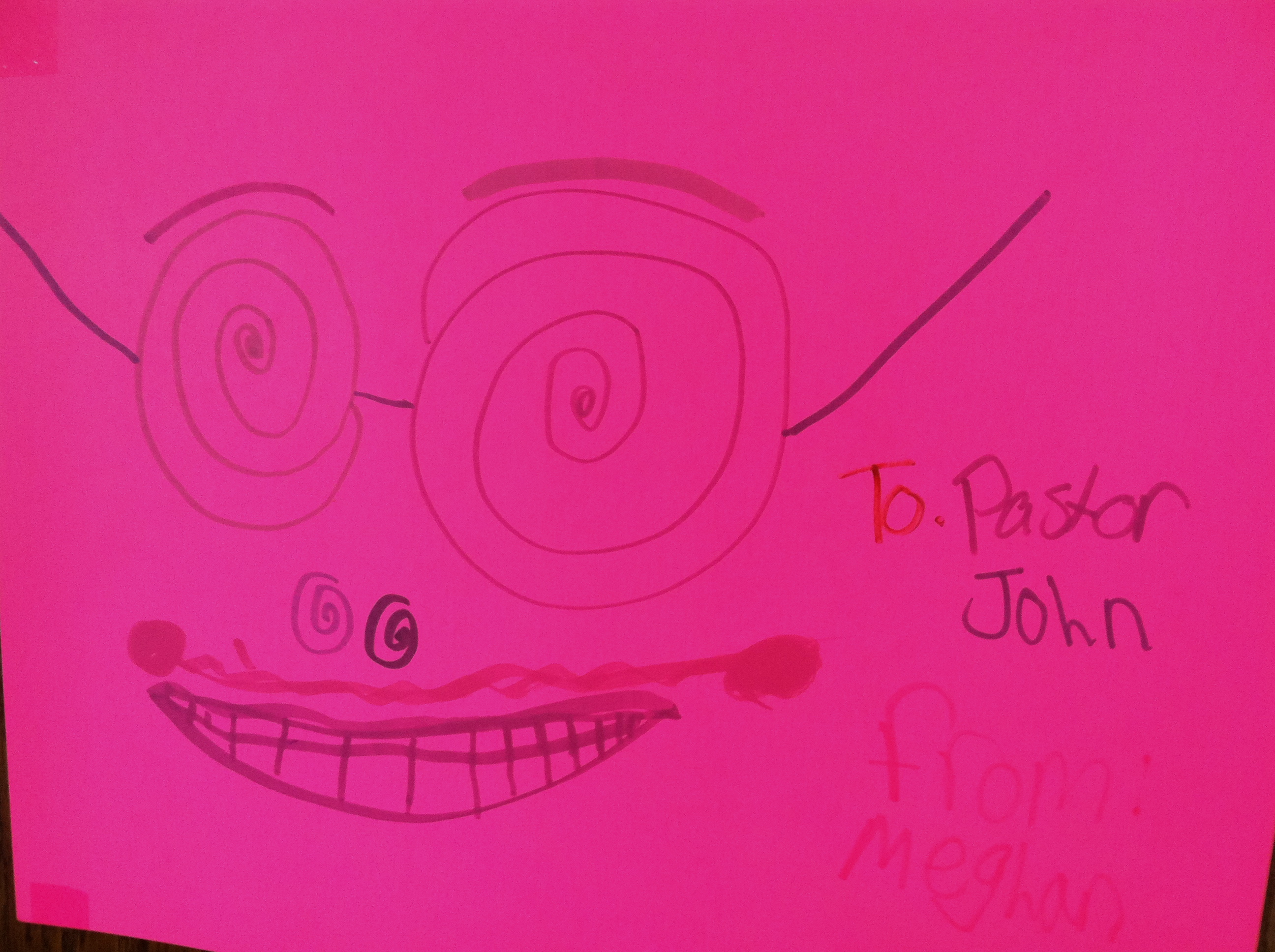
Taped to my office door, a portrait of me by Meghan, a kid who emits showers of sparks. I especially like my nostrils.

IMG_0729

Barista Abbey wearing a little girl’s crown

Of course, Thomas Merton was talking mostly about strangers in his Fourth-and-Walnut epiphany, and the more I’m able to give myself to the refreshment of siestas and the sanity of prayer, the more I notice great light all around me. Some time ago here at Starbucks, I saw barista Abbey knitting as a young friend made crowns. The kid was happy, proud of trying to fashion power and might out of construction paper. As I talked to them for a few seconds, we belonged to each other.

Unfortunately, sometimes shining people cause sunburn. A young woman here at Starbucks just had a lover’s quarrel of her own via cell phone. After a short, tearful fight, she retreated to the restroom, where I imagine she is crying some more. I’ve never seen her before, but have an empathetic pit in my stomach for her. And now she is gone, out into the 90-degree swelter with her puffy eyes, damp cheeks, and upset heart.

I’m still here in the air-conditioned shamatha of 4:02 p.m., glad that the sad girl was mine and I was hers (though she knew nothing about it). Most of all, I’m grateful not to suffer from the dream of separateness. I belong to everyone. Everyone belongs to me.

*This post first appeared in slightly different form on A Napper’s Companion in July of 2013.

If You Were My Daughter

By the time you took your first sip of coffee, a cop had already shown up, taken information from barista Tony, and loaded two pet carriers and bag of cat food into his cruiser. I didn’t see the woman pacing in the parking lot, trying to stay calm through a frantic phone call. I didn’t see her throw her arms up in the air, hop into her car, and speed off. Somebody else did, though, and got her license plate number. Now she is in trouble. You don’t leave a cat, dog, and Meow Mix in Starbucks’ parking lot and hope for the best.

If you were my daughter, I would have told you the whole story as soon as you sat down, ending with how sorry I felt not only for the pets, but also the woman. As if thinking out loud, I would ask what crisis led her to that moment and say as an aside, “Ah, hell, I guess we all do things we can’t take back.”

If you were my daughter, you would already know that I always want love and understanding to have the last word, which often makes my heart like a mutt the neighbors let bark outside hour after hour, the temperature sinking on a December night.

But you’re not my daughter. You spoke on your phone so quietly I could tell only that the language wasn’t English. The likelihood of my offspring randomly sitting down next to me and having a conversation in, say, French, is remote. And, of course, I wouldn’t have been stopped short at first by your beauty. I would know your birthday, where you are in your twenties.

You didn’t stay long, ten minutes and out the door. I watched and wondered. What car is yours? Where are you off to? But you walked so aimlessly, taking pictures of God-knows-what, I figured maybe you weren’t headed anywhere. Not to the bulky old Buick or maroon minivan, not to the Fox and Hound English Pub and Grille or Shoe Carnival or Ollie’s Bargain Outlet.

I stood to see you off. Your leather knapsack—almost empty?—was finally a black dot against your jean jacket. Then you were gone, and I couldn’t decide whether to be happy or worry. Going no place in particular can feel like grace if you know how to be alone and you’re not shouldering much weight.

If you were my daughter, I would be glad we didn’t talk about what you missed: the woman now rushing from suffering to punishment; the long-haired cat with eyes wide and still, waiting to slip from a carrier to the warm, bright sleeping spot on the back of the couch; the cop transporting animals, both trying not to be thrown by sharp turns, both able to remember and love.

If you were my daughter, you would probably say, “Damn, Daddy, lighten up.”

“Yeah,” I would say, “you’re right.”

But I might not be clueless about your next stop. Hopeful? Desolate? Either way, we could meet for lunch, and I would say, as if thinking out loud, “When a father loves his daughter, she always has at least one good place to be.”

A Pastor’s Goodbye Letter

Dear Abiding Hope Family:

If you’ve been by my office lately, I understand your amazement. You’ve taken in the clutter and generally said boy or wow. The pastor’s study can be like my late mother’s junk drawer. Any object without a clear, immediate destination goes in the junk drawer (a lonely C battery, a half-used packet of mini Kleenex, a ceramic hippopotamus from a box of teabags) or the pastor’s study (a floppy sunhat, an old bag of Swedish fish, an unopened pack of small Depends–someone might be able to use them). One of you winked and mentioned that a huddle formed recently over the need for an intervention.

And you see only part of the squalor. Yesterday I filled five trash bags by emptying out a filing cabinet hidden behind my closet door. Notes from seminary might be interesting as artifacts, but if their contents haven’t already been put in my heart and written on my mind, then I’m in trouble, as is anybody who would call me Pastor.

I’ve gone through hundreds of books and filled two boxes with keepers. Over the years a formidable theological library has happened my way, one collection from a studious pastor ready to retire and another from one who left behind an apartment groaning with bound ideas and counsel. The titles displayed on bookcases look learned, but as gray overcomes the final evidence of brown on my chin, the day has come to admit I’m much more writer than scholar (or theologian in residence, as parish pastors are supposed to be) and more fellow pilgrim than wise guide.

My mess and excess have let these realizations sink in and sharpen my awareness that most of what I’m moving out of the pastor’s study will be stored in my chest along with all I own in bliss and sadness, in the space that holds rants, laughter, and sighs.

IMG_3953

Baby Jesus, bless it all: the old candy canes, the banner, books I’ve never read, the mirror Elena looked into as she put on her wedding gown before I walked her down the aisle, then turned around and did the wedding.

Herbie was a bricklayer disabled young by heart disease. The whole time I knew him he had oxygen slung over this shoulder. Doctors tried everything, even a procedure that included poking holes in his heart. Weary, often in pain, he and his wife Loretta thought and prayed. We were visiting in their living room when she said that Herbie had decided to stop taking medication. The enough moment had arrived.

I sat beside him on his hospital bed, put my arm around his shoulder, and he let go. I’ll never forget the feeling. He cried and sagged against me, and I knew that his soul beheld a journey that starts with surrender. Surrender, that’s what we shared, the final human consent.

I held Herbie around a dozen years ago. When I leave my keys on the desk and walk out of Abiding Hope this coming Sunday, my arm will still be around his shoulder.

IMG_3957

The little key is for the thermostat.

On Sundays during Holy Communion, children come forward for a piece of bread and a blessing. I cheat. Some argue that little ones don’t understand the Sacrament, which may or may not be true, but I’m certain they know what it means not to share what everybody else receives with such reverence and devotion. So I break off a little piece, a foretaste.

I get down in their faces and say, “Now you need to remember, Jesus loves you exactly the way you are.” I don’t pretend to know the mind of God, but if this isn’t true, my ship is going down in boiling water. Anyway, the world devotes much time and effort convincing us to improve, so I figure hearing a word of unconditional love over and over can’t hurt.

When I stand back up from each blessing my knees crack, but I don’t feel a thing. The sacred space in my chest can’t forget the expectant eyes, the whispers of yeah or okay when I tell them to remember.

IMG_2605

“Go in peace! Serve the Lord!” I’ve had this photograph taped on my office door. These kiddos go with me.

Your life is coming in for a hot landing. There might be debris, flames and black smoke. Nothing to do but hang on, so you show up at my messy office, where you predict the devastation, anticipate the casualties. You need Kleenex.

Cancer. Betrayal. Death. Joy, too, babies and victories. But whether you’re in a free fall or glad flight, the pastor’s study is mainly a place to search through the box of answers you bring with you and to remember, always remember: In messes or atop mountains, we’re never alone. Our Unseen Guest, as my Grandpa Miller called Him in table grace, is with us, but when you and I hold hands and pray, we’re way beyond caring whether God is a boy or girl. We believe in the One in whom we live and move and have our being: God. Those three letters are plenty. The wreck may end up worse than you fear. We look at the cross and recall that Jesus crashed hard. With uncertainty scattered everywhere, we breathe in God’s old promise: “I will not leave you or forsake you.”

A promise and each other, that’s what we’ve got. When you walk out of my office, you leave me a gift that I’ll always hang on to: the image of your face as we crossed the valley of shadows and how it brightened when you felt the Unseen One traveling with us.

IMG_3954

Your chair, holding a box of keepers. It will still be waiting for you when the next pastor arrives.

Your face. Abiding Hope faces. I keep them all in a safe place. And I want you to know, I have the faces of those you love and have gone on to glory.

At the funeral home, after everybody passes by the body, I stay behind. The funeral directors close the doors, then lower your loved one into the coffin and fold in the fabric. I watch. I want to be the last person to see that face because love should consume the moment. I see to that. Before the lid clicks shut, I say inside, “I’m still here. You matter.”

IMG_0992

Beloved Abiding Hope faces, the quick and the dead. Old brother Earl (front row) has gone on to blessed rest.

Of course, I will carry with me some objects that bear weight. The two most important are t-shirts that have a story behind them. They came from you, though you may know nothing about them.

During my first few years at Abiding Hope we had a fair number of teenagers, my daughter Elena and son Micah among them. Our youth group was lively, and two adult advisors made t-shirts for everyone. The trouble was, Micah wasn’t much interested in participating, heading as he was down a dark path that involved black clothes and a volcanic temper.

One evening when I showed up for an activity, Karri handed me a white shirt with “Pastor John” embroidered under “Abiding Hope.” White was our color. But then she handed me a black one with “Micah” and “Abiding Hope” in a barely visible dark purple: “If he won’t wear white, maybe he’ll wear black.” Mary did the stitching, I believe, but I don’t know who came up with the idea.

Over the years I’ve grown to understand that all of Abiding Hope handed me those t-shirts. You have always said, each in your own way, “Show up in your own color. You might find love here, maybe grace and hope, too. And an arm around your shoulder.”

IMG_3945

All are welcome at the Table of the Lord! This is Abiding Hope.

My soul can no more leave you behind than my body can bury its own shadow. We belong to each other.

But now I’m off to another church family, where I’ll come to love more faces. I’ve got a couple days to finish boxing up the pastor’s mess. Thank God you and all we’ve shared are already packed in my safe place–no rust or moth there. For a while I’ll be putting some tears next to you, then sighs, and eventually, joy and gratitude.

Love, peace, thanks, and so long,

Pastor John

My Problem as a Parent

A couple of weeks ago daughter Elena and I lunched on Reubens while grandson Cole chipmunked curly fries.

“Cole,” she said, “swallow your food before you take another bite.”

10922551_801819956554861_553225707324982969_n

Sorry, buddy, but the answer is still “no.”

“My biggest problem as a parent,” I said, “was that I couldn’t watch you suffer.” I had complimented Elena a moment earlier on her heart of flint when Cole pitches fits over major and minor upsets. A distinctive strength is needed to stand clear and let a child, or any loved one for that matter, endure inevitable pain. Elena has got the moxie and nodded in agreement that I don’t.

I never have. There are good reasons, family dysfunction, blah blah blah. But as I stare down the barrel of fifty-four—one highlight of my birthday will be the delivery of new blades for my Panasonic wet/dry electric razor—rummaging through the dynamics of home over two score years ago isn’t on my agenda.

Still, I’ve been doing naval gazing in excess lately, mainly because I’m pulling up vocational roots, leaving the church family I’ve served for fourteen years, and assuming a part-time call starting November 1st. You name the emotion, I’ve got it going. My late father’s favorite song, “Feelings” by Morris Albert, plays in my head. “Feelings, whoa whoa whoa feelings.” Rats!

10177936_10154735974090384_8409962631402609596_n-1

Oh, Abiding Hope, I’ll miss you.

Sadness has the upper hand at the moment. During prayer this morning, a sob seemed to be building. When that baby cuts loose, all the handkerchiefs in my drawer won’t handle the tears and snot. Fatigue also has me by the collar. Having a projectile crying jag stuck in your throat is draining.

The point is, I’m raw, looking inward, giving thanks for peeks of goodness, lamenting valleys of deficit—which brings me back to watching loved ones suffer. My favorite quote from Hermann Hesse’s Siddhartha touches my feelings:

Do you think, my dear friend, that anybody is spared [the path of suffering]? Perhaps your little son, because you would like to see him spared sorrow and pain and disillusionment? But if you were to die ten times for him, you would not alter his destiny in the slightest.

Same goes for daughters, wives, friends, et. al. While swimming in the river of ambiguity is comfortable, agony plunges me under. I haven’t given up hope of knowing peace in currents of distress, but each passing birthday ups the odds against me.

IMG_3869

Joy visits in the form of lipstick flowers at the house wife Kathy and I are getting ready to sell.

In case you think I’m beating myself up, don’t worry. I just want to be truthful and authentic. No posturing, no rationalization. If I’m full of crap about myself, it won’t be intentional.

And in case you think John’s October days are nothing but whoa whoa whoa, don’t worry. Joy visits frequently, reminding me that my gifts keep pace with shortcomings.

Case study: It’s 7:54 p.m. in the Coleman house, and son Micah (23) and I have been talking about, well, feelings. The conversation consumed forty-five minutes, half of which consisted of his account of anger behind the wheel.

My boy was following a fogey from Wyoming, probably a poor soul for whom Erie may as well have been the D.C. beltway. Micah was pissed. Trying to get from one worksite to another, he could see only his nemesis’ gray hair.

“Breathe in anger,” Micah said. “Breathe out compassion.”

I was quiet. Where the hell did he get this?

He went on: “I was thinking that when you’re old, you’re probably not in a hurry. Maybe you’re alone and don’t really want to get home.”

I closed my eyes.

“You know, like, if I’ve been home all day and I think of getting a Gatorade, I’ll just say, ‘I’m going to go get a Gatorade.’ So I go, and I don’t give a shit about getting back.”

“Yes,” I thought, “this is what I’ve been trying to teaching you.” But I kept my mouth shut.

Turns out my son has been taking in some Thich Nhat Hanh talks on YouTube. Days ago he mentioned the name to one of his doctors, who replied, “How long have you been seeing him?”

Micah joked that the famous Buddhist monk isn’t covered by our insurance and is out of his price range anyway. He was trying to sit with his emotions, he explained, not run away from them, not deny them.

IMG_3324

You’ve learned. Micah. Now teach your father.

All these years! All the rages during which I despaired at my son’s future. Addiction. Arrest. Felony. Moving on. And somewhere in the crevasse, at the bottom of the bottomless ice that froze away twilight after twilight of my peace, he heard a word or two. Now he is looking down his fragile old man’s path. Maybe sanity will be there, maybe truth.

I’ll take every lump my weaknesses have earned, but a gentle soul is also due its compensation. Micah got the Zen business from me. My foolish enabling put Kathy, Elena, and Micah through hell, but my refusal to close compassion’s door made this evening possible.

The jerks who get in my boy’s way have their own stories, just like he does. He swears at them one day and expects that the next day somebody else will curse him. But before his sputters swell into rants, he breathes in and out. Compassion floats in his messy car along with the coconut vapor from his electronic cigarette. Maybe the driver in front of him is choking on grief or so lonely that any errand beats an apartment’s dim silence. At last he understands.

Birthday presents this year will be incidental blessings. I’ve already received extravagant gifts. My daughter is a stronger, wiser parent than her father. My son is falling in love with the world.

Report from California

Off and on over the years, I’ve thought travel writing would be a great gig: get expenses covered, see what’s on everybody’s bucket list, flirt with unfamiliar cuisine, generally live it up, and report on the whole experience.

As I sip an iced Americano at Starbucks, the truth is finally setting in that I wouldn’t make a good travel writer. First, I dislike flying. Xanax keeps my anxiety almost tolerable, but the only time I’m at ease on a plane is when I’m picking up my bags to disembark.

Second, adventure isn’t really my thing. Ah, to be a man’s man, to dig white-water rafting and wear t-shirts saying something like, “I kicked the OMG Rapids in the ass!” To own sinewy, tan, muscular arms sticking out from short sleeves, my whole image punctuated by a forearm tattoo that roars, “Testosterone!” Alas. Enjoying the burble of my immersion blender in an Alfredo sauce while kibitzing with friends, lifting a bit of wine, that’s my speed.

And third, the sites that stir this homebody’s heart don’t have much to do with popular vistas. For the most part, the views that make me say “ooh, ahh, wow” don’t depend on geography. The point: what follows is the least useful travel essay ever.

Wife Kathy and I are bunking at generous friends Karl and Jennifer’s place in Citrus Heights, a suburb of Sacramento. Their daughter Claire, coming up on three, is the blessed home’s center of gravity. After a couple of days at their place, we left for four days in San Francisco, a look at the ocean, a stroll through the redwoods, and now have returned to our friends’ base camp. Tomorrow we’ll fly home to Erie, Pennsylvania. This trip, funded mostly by a travel voucher we won at a fundraising Vegas night, has been more than worth our time and outlay of cash.

IMG_3696

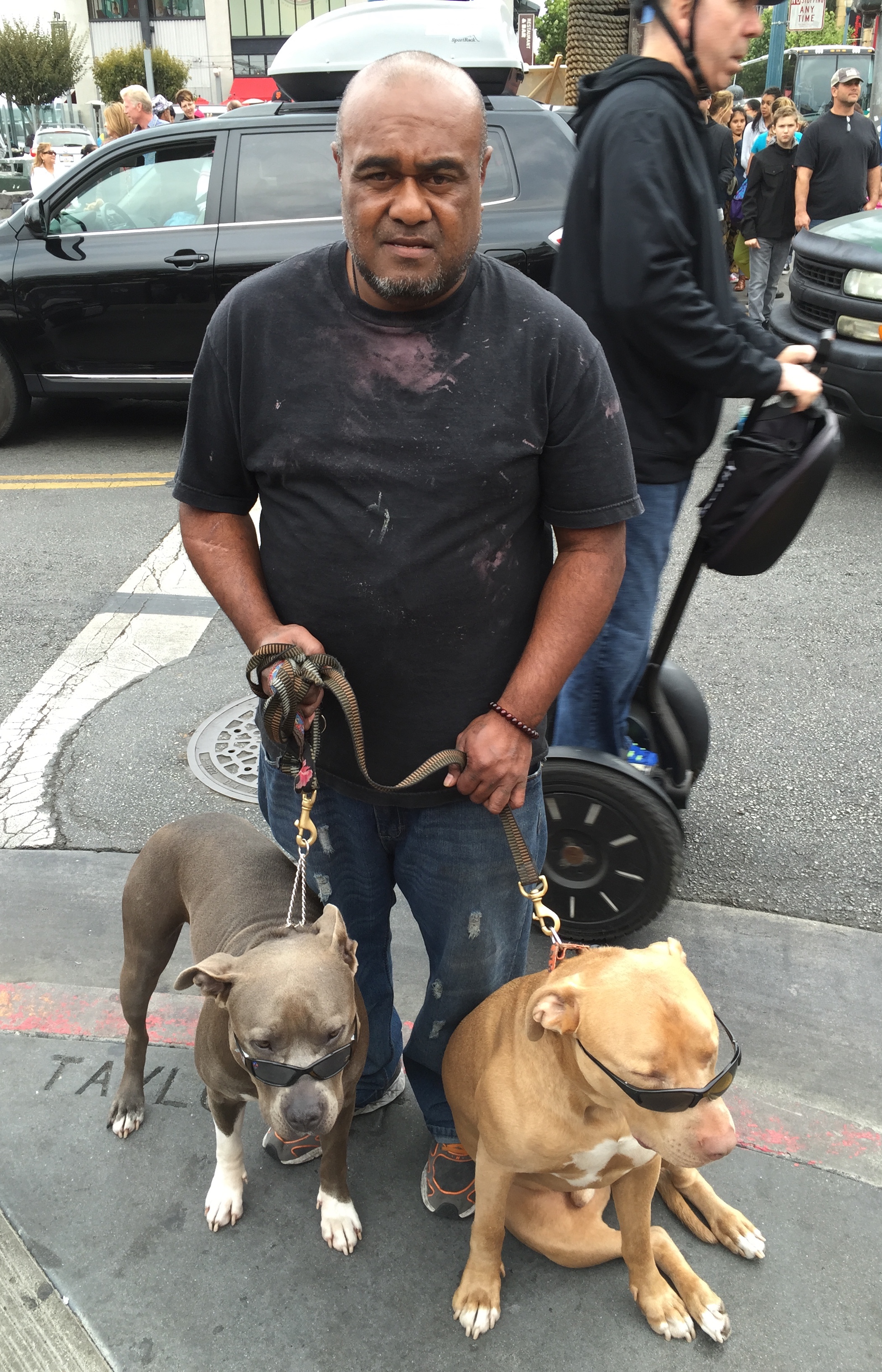
I asked this guy at San Francisco’s Fisherman’s Wharf if I could take his picture. He nodded at a sign to his right indicating he just got married and was charging $2. I felt both suckered and obliged.

IMG_3731

One of the senior sea lions at Fisherman’s Wharf. They fill the floating docks by the dozens, nap packed in cheek-to-jowl, crawl all over each other for no apparent reason, and constantly snort, bark, bare their teeth, and posture. Kathy stared at them for forty-five minutes. Five was enough for me.

IMG_3716

What’s a tour of San Francisco without paying homage to the Summer of Love? Strolling the streets, Kathy and I probably inhaled a joint just in second-hand smoke.

IMG_3750

Kathy ready to bike the Golden Gate Bridge.

IMG_3793

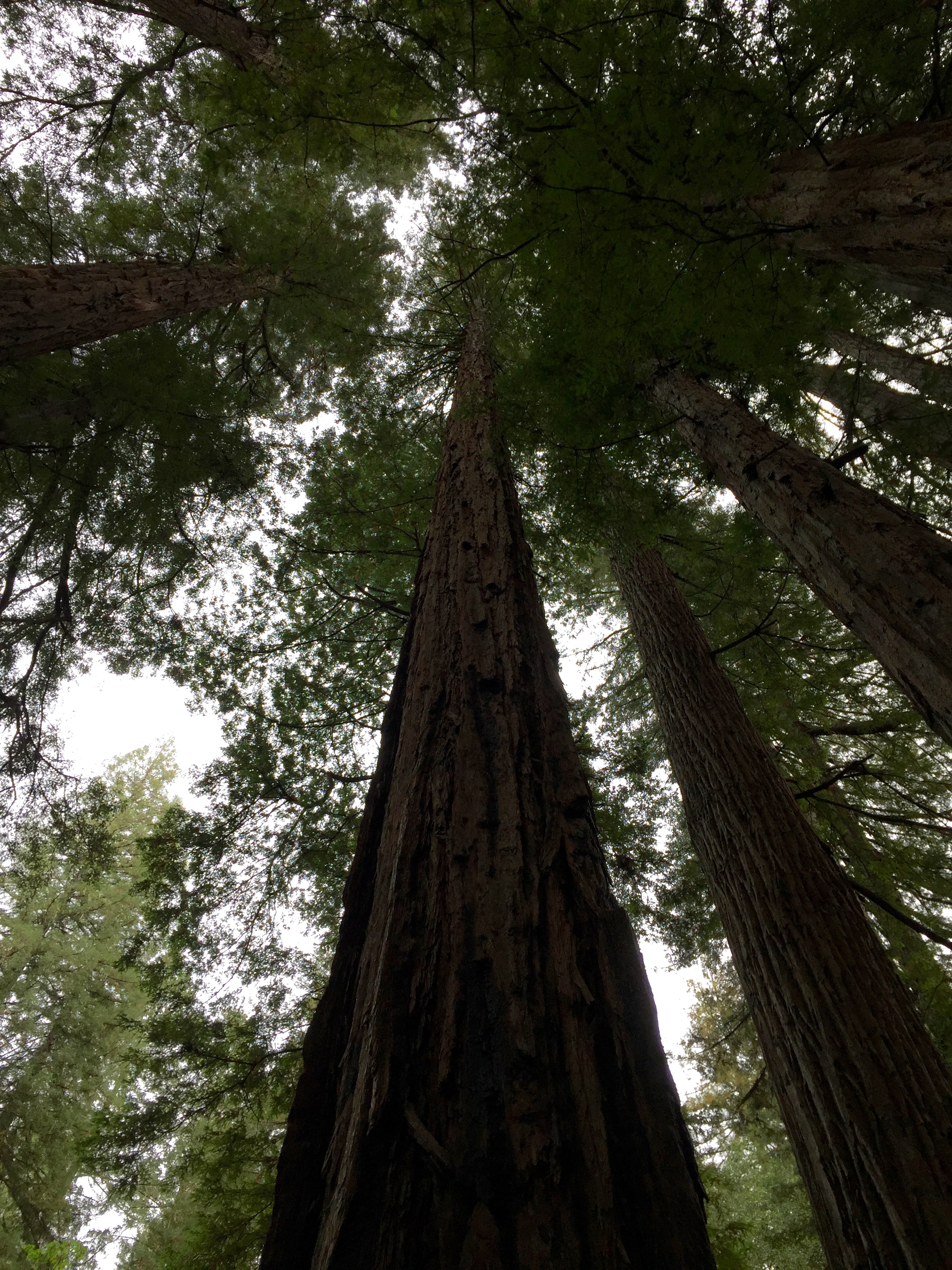
Redwoods at Armstrong Redwoods State Natural Reserve.

IMG_3789

Kathy in the hollow of a redwood.

No, we didn’t ride a trolley car or catch the ferry to Alcatraz, but we took in our fill of destinations. I have to confess, though, that none of them grabbed me by the lapels as much as several inconspicuous moments did–nonchalant and passing as a breeze.

IMG_3765

Light art on the ceiling of our room at the La Rose Hotel in Santa Rosa.

Moment: After a long last day in San Francisco, Kathy and I landed at a hotel in Santa Rosa. We had biked the Golden Gate Bridge and walked the city’s famous hills, so we were glad to flop for a while. As I dozed, Kathy talked to our son Micah, who was back home tending dog, cats, and a chrysalis nearly ready to unfold and make for Mexico. What Kathy said was obvious, but I could hear only Micah’s voice, not his words. But that was enough. Surrounded by West Coast walls, I took in a distinctive sound of home: my boy’s enthusiasm in telling a story, some humor or absurdity of his day. I wasn’t sad, but filled with gratitude that I look forward to being home, to seeing all of our beloved faces in one space.

IMG_3836

Claire

Moment: Karl and Jennifer took us horseback riding near Lake Tahoe, followed by chili and a walk around town and down by the water. When we returned to Citrus Heights, I was fit for red Zinfandel, a couch, and nothing else. But young Claire was ten kinds of psyched to have us back–spinning, sprinting, squealing psyched. Through my fog of fatigue I heard Kathy say, “Do you want to read, Claire?” I couldn’t muster the energy to burp, but my wife was game. In the middle of one book, Claire looked at Kathy with a grateful smile, full of peace and wonder. The big bridge is cool, but that kid’s face, shining and sacred, is eternal.

IMG_3786

Far from home and yet, suddenly, right at home.

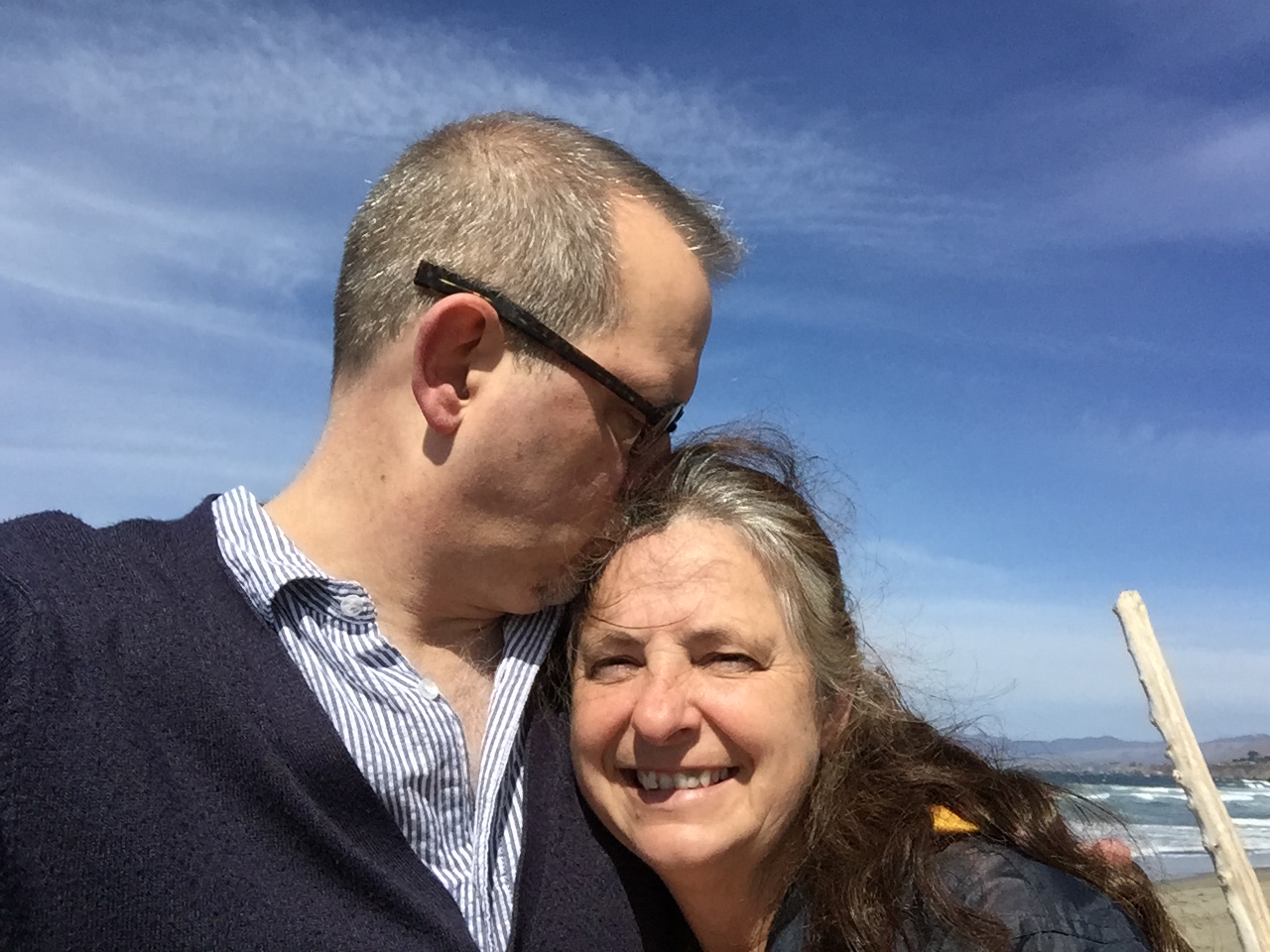
Moment: Kathy made it clear weeks ago that come what may on this vacation, she was going to put her feet in the Pacific. We wove along Route 1, found steps to the beach, and headed for the water. Cold. She was excited and giggly. Our stop was no more than fifteen minutes. My blessing came when I was facing away from the ocean with my eyes closed–kiss of the long-married, ahh of the soul’s landscape.

Moment: Anybody who loves me knows that I’m often struggling, even when there’s no particular stressor at hand. Joyful as recent days have been, waves of worry and sadness have also rolled over me. Always something, I guess. In response to particularly rough water yesterday, I took in a long draught of prayer and meditation, which I finished off with a contemplative walk in Karl and Jennifer’s backyard. For twenty minutes I looked closely and stopped often: lemon trees, herb garden, ripening tomatoes, trumpet vine, flowers with names I don’t know. Breathing, breathing. The place in my chest that fills up when I kiss Kathy’s graying hair is also a bilge for angst.

But the walk was healing, the air, the sage and oregano scent on my fingers. As I stood still behind a circle of flowers, a hummingbird hovered at my feet, inches away. It sipped nectar, then flew off to a pine branch. “You can come back,” I said. Apparently, I’m not a bird whisperer, but one visit, so kind and close, was plenty.

A friendly hummingbird, a kiss, a sweet young face: not content that makes readers restless for new journeys. With middle-age stretching out in front of me, my modest travels aren’t about a blood rush or a stunning expanse. For as long as I can remember, I’ve been on the lookout for peace. Always peace. The peace that passes all understanding.

All other attractions are incidental. For good or ill, I’m always moving toward spiritual destinations.

Lament for Aylan Kurdi

Sadness Alert! This post will be painful to read. 

He stood there biting his lower lip. “It is very difficult,” he said. “I cannot resign myself.”

He looked straight past me and out through the window. Then he began to cry. “I am utterly unable to resign myself.”

(from “In Another Country” by Ernest Hemingway)

IMG_3687

Citrus Photobomb of Pinot Noir

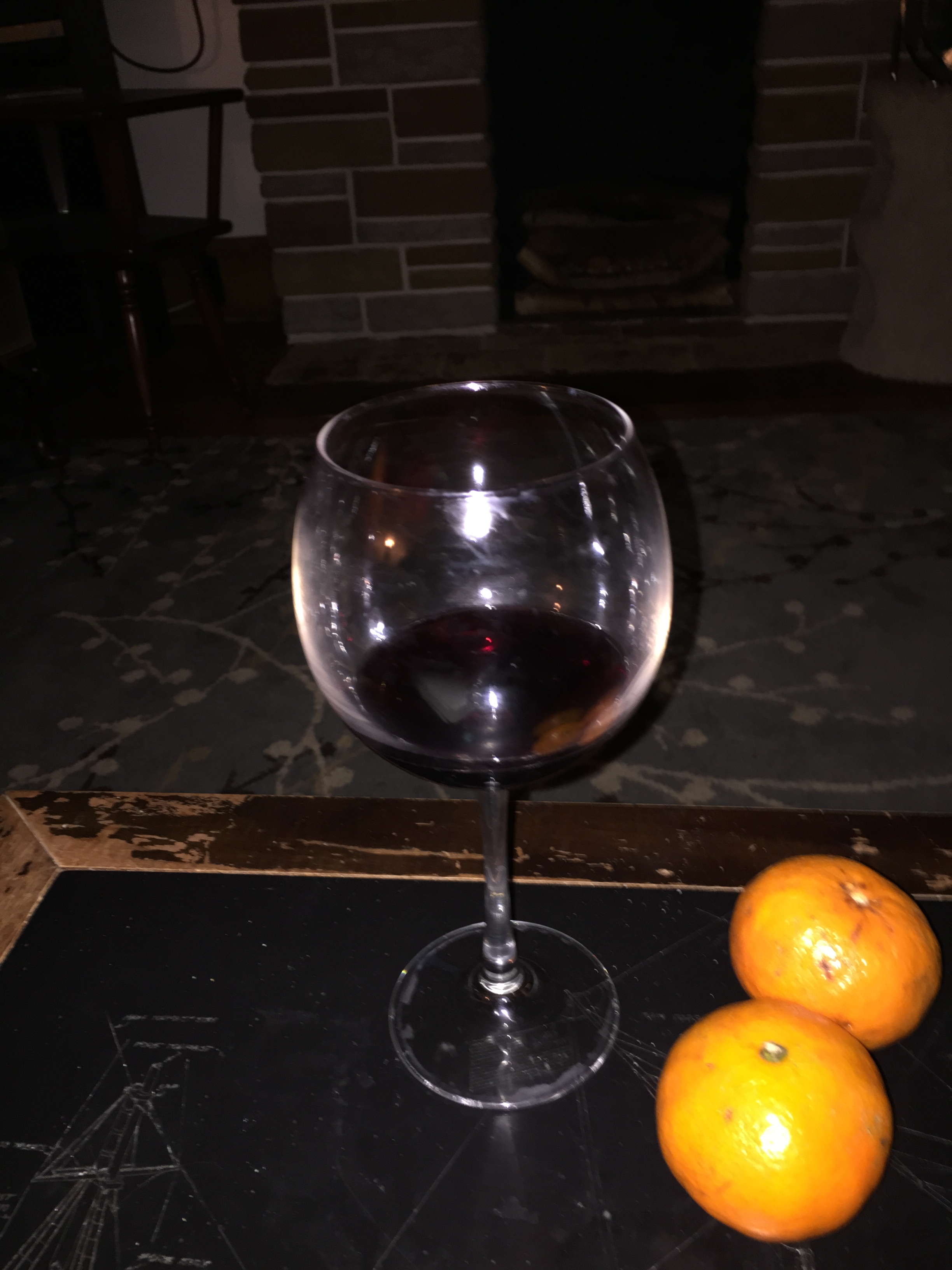
Close day in Erie, Pennsylvania, but central air pacifies me. So does a Smoking Loon pinot noir. A soprano (Callas, Sutherland, Caballe?) sings something from Madame Butterfly—I think. When hunger intrudes, I’ll walk a few feet to the kitchen, open the refrigerator, and decide what not to eat. That’s how stifling my life is. I have to eliminate meal options.

I’m inexcusably comfortable but for one trifle: Aylan Kurdi drowned. A photograph of a police officer carrying him from a Turkish beach appeared on the evening news. I recognized the boy immediately, his toddler legs. He was my grandson Cole. The tender calves, the tiny sneakers!

Two hours ago, he said, “Pop, come.” He had a tennis ball that he wanted me to toss high into the air. Into the humidity, above the young tree in his front yard, the yellow globe flew, then fell to the grass. Cole bounced. Or was it Aylan?

Unknown

Aylan Kurdi. Forgive me, friends, but can you make out your child here? Do you recognize the sneakers? (Credit: Reuters)

Now, as Jussi Bjorling kills some high notes from La Boheme, I comprehend: Aylan = Cole.

If my son-in-law fled bombs with my daughter and grandchildren and lost them to water, I would want nothing more than to join him, to sit beside their graves until merciful death arrived.

I cannot resign myself. I am utterly unable to resign myself.

Or as Aylan’s father Abdullah said, “I don’t want anything else from this world. Everything I was dreaming of is gone. I want to bury my children and sit beside them until I die.”

IMG_3640

Cole with Pop. Do you see Aylan’s hands? His little legs?

Hemingway’s Senior Maggiore grieved the unexpected death of his young wife from pneumonia after he had survived war, hand maimed but otherwise viable—the absurdity, the affront.

Syria is a hemisphere away, but geography is a rationalization. Aylan in the wet sand is Cole in the wet sand. To hell with similes. Any other conclusion is bullshit, for me and for the world. Our best hope is for Aylan to be my own grandson–and your very own, too. You feel this with me, don’t you?

I want to pick that boy up off the beach and love him back to life so badly my throat burns. You, too?

The Smoking Loon is gone, and I’m hungry.

Damn it!

An Unorthodox Peace

IMG_3646This past Sunday the church I serve, Abiding Hope Lutheran in Erie, Pennsylvania, held a groundbreaking ceremony at the site of our new church building, the foundation of which is already well underway. After morning worship at the old place, we all got into our cars and headed the mile or so to our future home.

For mundane reasons I had to drive son Micah’s car, which is always in unapologetic squalor. Almost to the end of the parking lot, I had to double back: the processional cross was still on its perch in the sanctuary. After fetching it, I looked at the backseat and paused: Should I put the cross down on that mess? Because I realized that entirely different questions were on my mind—ones I could answer right away—I rested the cross on my son’s work clipboard, toilet paper, hoody, etc., no food debris, thankfully.

The groundbreaking was meaningful and fun and didn’t seem at all redundant. No silver shovels for us. Everybody who wanted to turn some dirt brought a shovel from home, especially our kids. The ground was packed down by construction vehicle traffic and hard as the cinderblock foundation. We found a soft patch for the young ones with sandbox shovels and let them have at it, sang with gusto, and said our prayers and good intentions. The adults chipped loose teaspoons of gray crust.

When we finished, I lay the cross over the chaos for its ride to the Coleman house, where it leaned overnight in the dining room.

IMG_3650

Processional cross

“Ooh,” Micah said, spotting what he actually carried years ago as an acolyte. His question was implicit: “What’s the deal with the cross here?”

I explained.

He held it like a shovel—Christ at the top—and pretended to chip at the floor: “So did you dig with it?”

“It would have been fitting,” I said, “but, no, a couple of kids held it for the ceremony.”

As Micah has grown, we’ve developed an understanding. He gently teases me, but knows that my faith is spacious and merciful, blinding white with Mystery. And I take his searching seriously and don’t meddle with his atheism.

The purest image of my spirit’s posture is this: I don’t fear for my son. I don’t fear for anybody.

My Creator isn’t abstract. Often when I close my eyes and breathe, a love that feels bestowed rises in my throat—as when a parent watches a child disappear through the school doors. My chest is drawn toward a planetary embrace. The longing is physical.

It may be nothing more than my own middle-aged chemicals inducing some weird prayer-meditation high. I’m probably bat-crap crazy. I can’t offer a defense, only a description of the love that I bet my life on. God is what I call this love, but the older I get, the more I’m drawn to the ancient Jewish tradition of not vocalizing Yahweh. Shh. Only know and breathe compassion—for all, for self. I want to name the Holy One with my flawed heart and hands. My voice can’t be trusted entirely.

How far is the reach of Sacred Love? Whom and what does it rest upon? On Sunday, when I lay the cross on Micah’s slop in the backseat—nothing compared to the past squalor of heroin, arrest, and rage—I spoke my Christian answers to the questions behind my question. The universe is composed of beloved daughters and sons. Who am I to send anyone into exile? Helpless before grace as I am, how can I presume to stand in the way of Love?

IMG_3648

Christ’s metal blessing upon the chaos

This might not be the most convenient parking place for a pastor. Love’s current in the Bible is strong, but troubling blood flows there, too. I will only say that I’ve made an unorthodox peace with Egypt’s firstborn and Israel’s young women lacking evidence of their virginity, stoned to death on their family’s doorstep—we have a private understanding.

It’s enough, I guess, to admit that in resting a processional cross on the backseat of tired old Mazda sedan, I was confessing my belief: the risen Christ bestows a metal blessing on every mess in every land, on every soul aching with belief and disbelief.