Post-Election Letter to My Daughter

Dear Friends,

I’ve written a letter to my daughter that some of you might appreciate and posted it on my other blog, Matters of Conscience. Although what I have to say is ultimately hopeful–I think!–it’s dark enough that I don’t want it casting gloom here on A Napper’s Companion.

Please click here if you would like to read the letter.

Peace, love and best,

John

img_5186

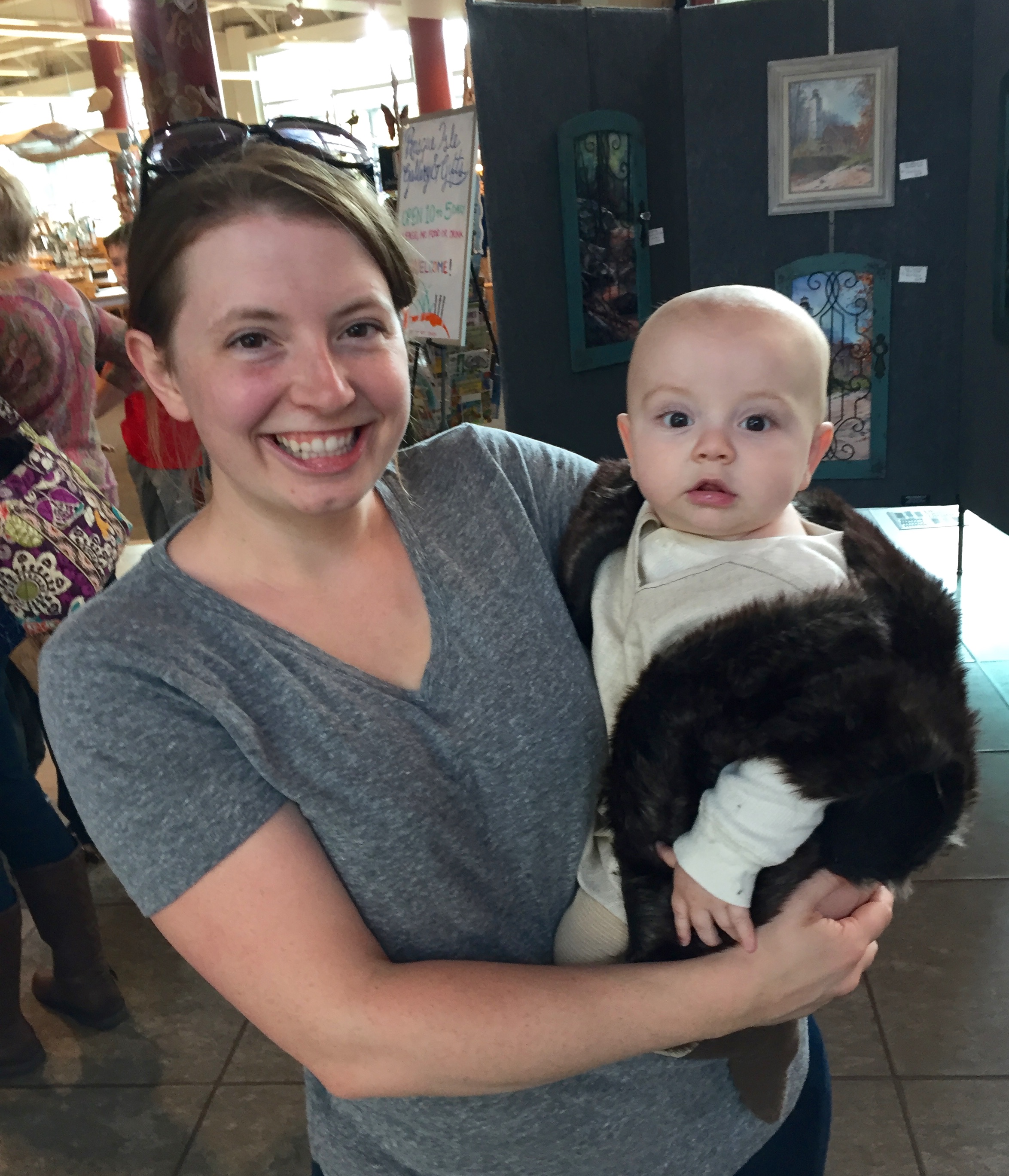
Elena and Killian–in his Halloween viking fur!

Election Eve: Standing with My Gay Sisters

unnamedThis evening before the dreaded presidential election, wife Kathy and I are heading back to Pennsylvania after visiting my sisters in North Carolina. Our objective was simple: relax!

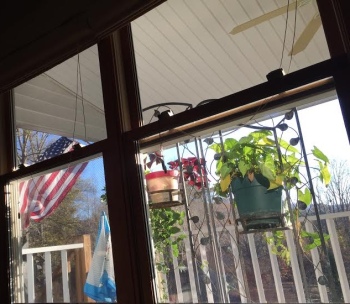
Yesterday we awoke in the joyful home of sister Cindy and her spouse Linda. We didn’t get out of bed right away, but breathed and gave thanks for the view out the guest room window: clear sky, hanging plants and American flag rising and falling with an occasional breeze.

We also gave thanks for other loved ones who stayed the night: eldest sister Cathy and her spouse Betsy Ann; and Linda’s daughter Tina, her spouse Rebecca, their toddler son Liam and infant daughter Renley. Four affectionate and slightly spastic dogs and a mellow cat named Hermione added diversity and commotion to the gathering.

As we talked off and on about what is consuming millions of Americans at the moment, I learned that one voter’s presidential election can be another’s painfully personal referendum.

Thus far my anxiety about our country’s future has been generalized. The women I listened to over breakfast yesterday share my concern about the economy, foreign relations, immigration and the planet, but they also fear the threat a Trump administration might pose to who they are as human beings.

image01

Cathy and Betsy Ann

With a Supreme Court fortified by judges favored by the Republican Party, will their marriages be under assault? Will the acceptance they’ve found recently as citizens be repealed? And what about the health insurance one married partner often provides for the other? Is there any way that same-sex couples could be denied that benefit all over again? After all, if Roe vs. Wade might be up for debate after forty-three years, why not the legality of gay marriage?

Kathy and I celebrated our thirty-third anniversary this year, and we’ve never had to contemplate our vows being cancelled by the Supreme Court.

My wife shares roughly the same profile as the Democratic Presidential nominee. If she wins, I imagine Kathy and other women will feel a burden lifted and an inexcusably overdue affirmation bestowed.

What will I feel? I’m a white, heterosexual male. My validation has been grandfathered in for centuries. I can’t remember ever being denied anything because of my packaging. Nobody has ever suggested that the person I understand myself to be is uniquely lacking, broken or abhorrent. Where social stability is concerned, I’m close to the top of the food chain.

But Cindy, Linda, Cathy, Betsy Ann, Tina and Rebecca face tomorrow with a fear I recognize but can never really know.

unnamed-2

A safe place

I can name beauty when I see it, though, and these women are among the kindest, smartest, most upright and beautiful people in my life. The warm North Carolina air was refreshing, but Kathy and I don’t drive ten hours for the southern climate. We take time to visit our unorthodox family because we find overflowing goodness and safety with them.

If you think that gay marriage is sinful and should be illegal, I wish you could meet my gay sisters and witness their tenderness and compassion. I wish you could hear how they struggled to find peace within themselves and how falling in love turned their landscapes into rich expanses of grace.

Their troubled sleep this night is difficult to bear for love’s sake. Of course, millions may lie awake in the small hours of this morning, wondering how many of the votes cast will say, “America is not your home. You have to leave. Your language is an annoyance. Your skin is ugly and so is your soul. You’re being checked out, and this we can tell you, we’re not impressed.”

unnamed-1

View from Guest Room Window . . . Gay Household.

When I vote tomorrow, I’ll be thinking of my family in North Carolina and every other sister and brother who want nothing more than to run into the open arms of a compassionate country.

Now, checked into a hotel in Summersville, West Virginia, I sip privileged wine. Kathy tells me the pizza just delivered is really good. And I make this promise: “Whatever happens tomorrow, the years ahead are sure to hurt, but you’re not alone. Plenty of Americans like me–especially those who don’t pretend to know what all you’ve gone through–love you and stand with you. When you were born, the cosmos rejoiced.”

Grandma Kathy Home

Grandma Kathy Home

So the Cleveland Indians hold a 3-2 edge over the Chicago Cubs as the World Series moves back to Cleveland for at least another game. One particularly sweet spot here is my sentiment that if the Tribe loses, I can be glad for the Cubbies. Both teams are long overdue for a championship.

Alas, the Fall Classic holds diminished interest for me this year. I’m in a space that is best described by a phrase my childhood friend Vince used a lot: tons of bummage.

Joy isn’t in short supply these days; in fact, I have a surplus, more than anybody deserves. The problem is my reaction to our present American season of bummage.

“Do not lose your inner peace for anything whatsoever,” Saint Francis de Sales said, “even if your whole world seems upset.”

Sorry, Francis, but my peace comes and goes. It goes when I assume my fears about the future are predestined. It comes when I forget myself long enough to be touched by grace.

“I want to go home,” grandson Cole said.

“But, Cole,” my daughter Elena answered, “you are home.”

“No, I want to go to Grandma Kathy home.”

img_4520

At Grandma Kathy Home. Cole checks Pop. (Credit: Kathleen Coleman)

Grandma Kathy and Pop have bored our friends slack-jawed with Cole’s words, but it’s hard to keep quiet. Sometimes a moment kisses your soul and brings hope within reach again.

Cole thinks of Grandma Kathy’s house as home. Do I care that he doesn’t include Pop on the deed? Actually, I like his name better. Kathy drops everything for Cole. They play in her garden and go to the basement and make repairs at her workbench. If she cooks dinner, he stands on a chair at the sink and does a few dishes with a whole bottle of soap.

He calls our den “my room,” and he and Grandma Kathy bunk there when he stays the night, as he did last Saturday. On church mornings, she sits beside him in the backseat for the hour drive to Oniontown.

Yesterday my sluggish sermon knocked the kid out, so he crawled under the pew and nodded off at her feet. After worship she let him sleep on, and friends stopped by to chat.

14910482_1285918731478312_5904596198397316899_n

Got insomnia? Come listen to one of my sermons. Bring a pillow, join Cole. (Credit: Kathleen Coleman)

Cole was safe. Grandma Kathy was there.

He didn’t say, “Grandma Kathy’s home.” He said, “Grandma Kathy home.” My wife is home to him. The dwelling and garden are incidental.

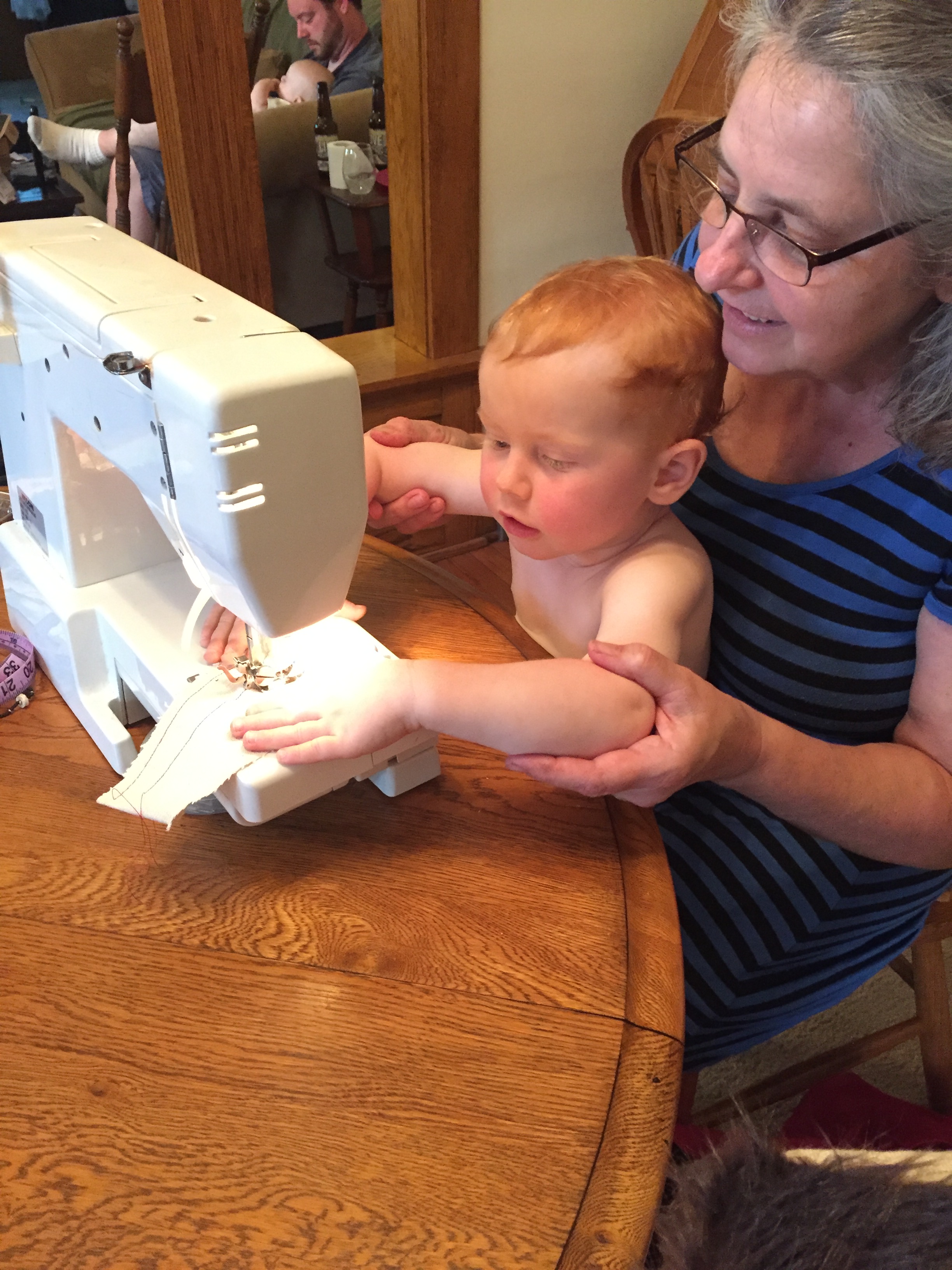
Kathy helps Cole sew. He leans against her, watches a movie and eats pretzels and dip. She hustles him off to use the potty like a big boy.

img_4858

Hope

Watching them together, I’m positive of at least one thing that’s right with the world.

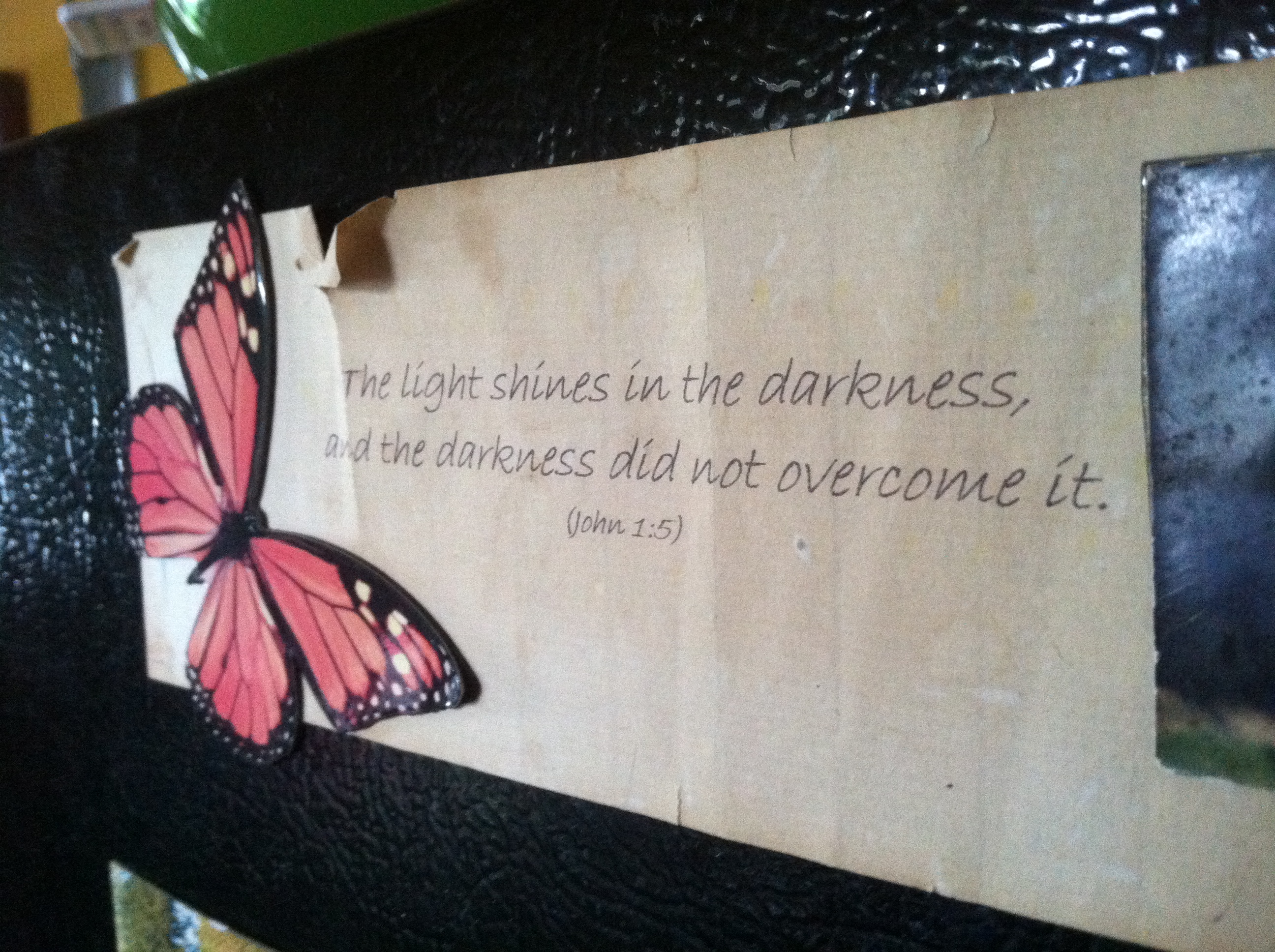
Fifteen years ago I copied a Bible verse on strips of paper and during a sermon suggested that parishioners put them on their refrigerators.

img_2236

The light shines in the darkness, and the darkness did not overcome it. (John 1:5)

The light is love. I bet my life that it will win in the end. That doesn’t mean, of course, that my Indians will whip the Cubs. And it especially doesn’t mean that my candidate will prevail.

I don’t for a moment believe that God gives us clean sheets when we’ve messed the bed.

What I do believe is this: love is the only way out of human bummage.

In 1968, during another ugly season, Thomas Merton asked, “Is the Christian message of love a pitiful delusion? Or must one ‘love’ in an impossible situation?”

When I watch a woman and a boy not yet three together, peace fills my lungs. The only way I know to abide in impossible situations is to love.

It seems like hour-by-hour I get hopeless and angry, then hear Saint Francis speaking and try to find my way back to love again. All signs are that I’m delusional.

I want to go to Grandma Kathy home, too, Cole. Let’s live there together.

Announcing a New Blog: Matters of Conscience

Dear Friends:

I’ve been thinking for a while of starting a second blog in order to keep my buzzkill social and political posts from skunking up A Napper’s Companion. Today I finally took the leap and set up Matters of Conscience.

It’s a work in progress, so if you’re interested in reading, please be patient as I work out the kinks. If you’re not interested, then please know that I value your opinions and made this move especially for you.

You may notice that I removed a couple of posts from this blog and sent them to the new digs. If you’ve been meaning to check out a post and can’t find it here, please try Matters of Conscience.

Peace and love,

John

img_4598

The “cover” photograph for Matters of Conscience

A Matter of Conscience: In Defense of Hillary Clinton

Dear Friend:

If you came here looking for my defense of Hillary Clinton, I’ve moved it to my new blog, Matters of Conscience. Please follow the link to get there.

Peace and best,

John

img_4595


American Pastoral

Dear Friend:

If you came here looking for “American Pastoral,” I’ve moved it to my new blog, Matters of Conscience. Please follow the link to get there.

Peace and best,

John

img_5158


Oniontown Pastoral: The Plain Old Here and Now

Oniontown Pastoral: The Plain Old Here and Now

“How do you perform an intervention for an entire society?”Author and film critic Marshall Fine asks this astute question in his essay “Fighting Our Addiction to Empty Stimulation.” He refers mostly to the way electronic devices compromise users’ ability to focus and concentrate, and “addiction” is the perfect descriptor. We’re hooked. Technology developed to simplify and enrich life dims our wits like an opiate.

Of course, some folks are clean. Many of my Oniontown parishioners couldn’t send a text message even if it meant saving the Titanic. In their landline-blessed homes, conversations complete with uninterrupted eye contact occur every day. Amazing!

IMG_4899

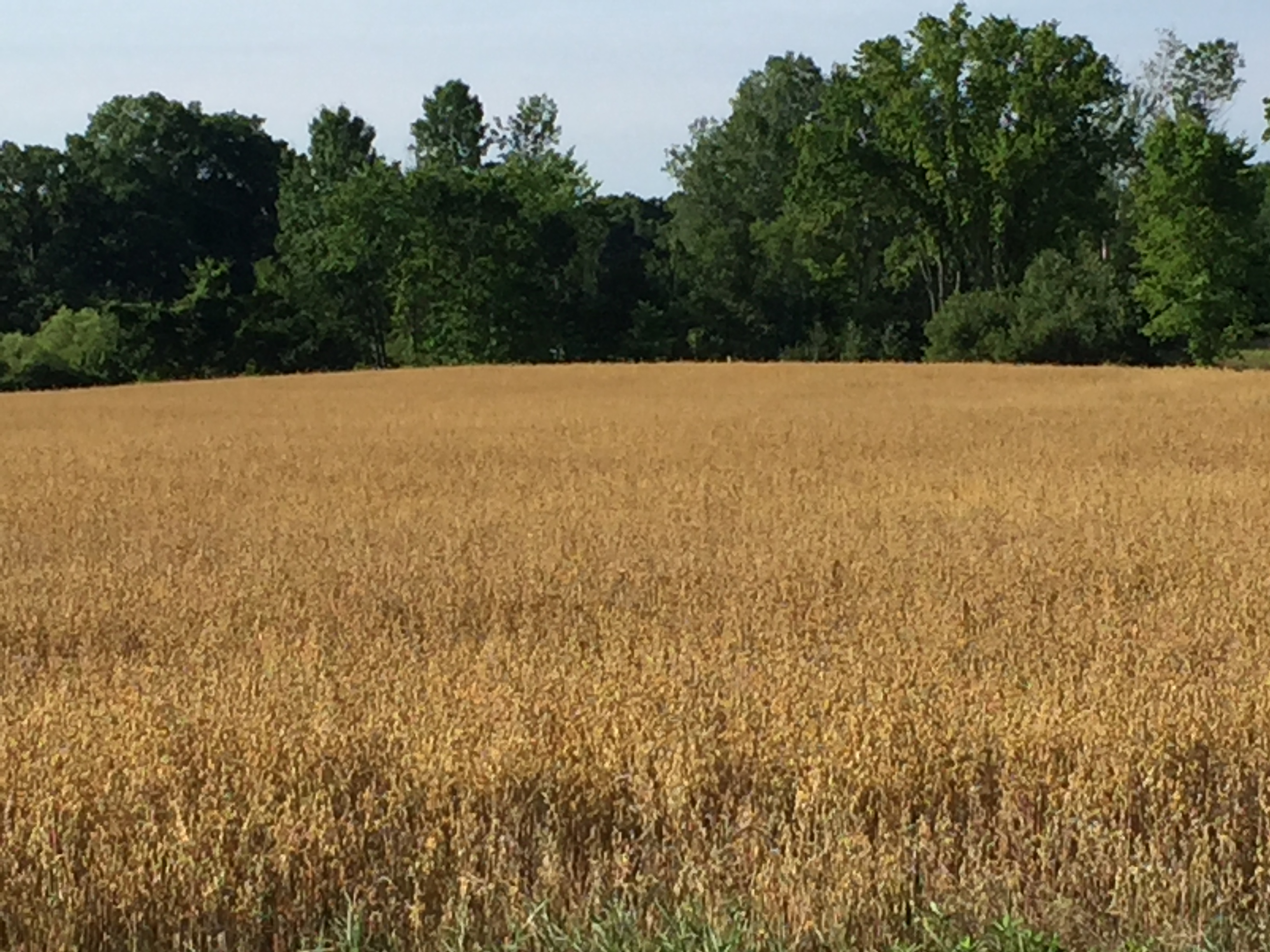
A field in Oniontown, right behind St. John’s Lutheran Church, that deserves undivided attention

Personally, I’m not guiltless. My addiction is mild, yet active enough that judgment from me would be hypocritical. Any societal invention getting my vote would have to show understanding and compassion and resist browbeating.

Why? Because addictions won’t be shamed away and don’t surrender to good sense. Smokers with pneumonia still light up. Slack-jawed drivers gaze at screens the size of playing cards while zigzagging through traffic. That’s being hooked—repeatedly engaging in a practice you pretend can’t get you killed.

Distraction isn’t as lethal as some drugs, but the contest is just getting started.

  • The National Institute on Drug Abuse puts cocaine’s death count for 2014 at around 5,500, but distracted driving wants to catch up. According to the CDC, approximately 3000 Americans, many of them teenagers, die each year as a result of drivers texting, grooming, or eating hoagies. 423,765 get injured—a trifle which I say gives distraction the edge.
  • “At any given daylight moment across America, approximately 660,000 drivers are using cell phones or manipulating electronic devices while driving, a number that has held steady since 2010” (Distraction.gov).
  • “75% of college students who walked across a campus square while talking on their cell phones did not notice a clown riding a unicycle nearby. The researchers call this ‘inattentional blindness,’ saying that even though the cell-phone talkers were technically looking at their surroundings, none of it was actually registering in their brains” (health.com).

This last figure sounds benign, but it provides the central insight about our societal addiction: You really cannot do two things at the same time.

Okay, chewing gum while walking is possible, but trying to watch the news and listen to your wife talk about her day insures you’ll do both tasks poorly. Read a text message as well, and you’ve hit a trifecta: flummoxed mind, angry spouse, and bad manners.

The trouble is, technology, especially the mighty capabilities of smart phones, has conned us into acting like just about anything is more needful than chatting with the friends across the table from us or noticing how a field of oats and the clear sky can put a gorgeous frame around the road.

IMG_4827

Framing the road to Oniontown

Our adrenal glands go wild over everything but the plain old here and now, where loved ones need to bend an ear and clowns on unicycles offer us a laugh.

Joan Chittister writes in Reading the Sacred in Everyday Life about a disciple who asks an elder, “Where shall I look for enlightenment?”

The elder explains that the disciple needs simply to look.

“But what do I need to look for?” he asks.

“Nothing,” the elders says, “just look.”

Finally the elder shares the reality that escapes not only the exasperated disciple but also many of us over-stimulated pilgrims these days: “To look you must be here. You are mostly somewhere else.”

Oniontown Pastoral: A County Tour

Oniontown Pastoral: A County Tour

unnamed

Prescription for discouragement: a look out at the soybean field behind St. John’s Lutheran Church and a dose of E. B. White’s wisdom

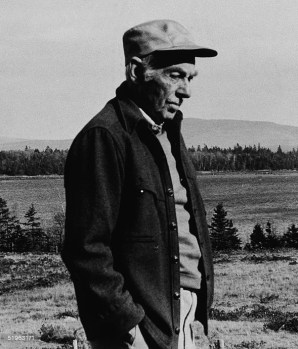
When I get discouraged about the civilized world, I often turn to E. B. “Andy” White, essayist for The New Yorker and Harper’s and author of Charlotte’s Web. White was not only a great prose stylist, but the last century’s most devoted naysayer to change.

51963171

E. B. White at his Maine farm in 1977 (Credit: Getty Images)

He frowned upon atomic energy: “I would feel more optimistic about a bright future for man if he spent less time proving he can outwit Nature and more time tasting her sweetness and respecting her seniority.”

He rejected conventional wisdom: “Many of the commonest assumptions, it seems to me, are arbitrary ones: that the new is better than the old, the untried superior to the tried, the complex more advantageous than the simple, the fast quicker than the slow, [and] the big greater than the small.”

And he challenged orthodoxy—and got my mind working just the other day: “Our whole economy hangs precariously on the assumption that the higher you go the better off you are, and that unless more stuff is produced in 1958 than was produced in 1957, . . . you are headed for trouble, living in danger and maybe in squalor.”

I agree, but wondered, “Is growth necessary for a healthy United States economy?” Actually, I hoped the investigation might lead to existential insights—my habitual trajectory of thought.

The Internet ambushed me with economic principles. Turns out experts disagree so diametrically that Andy could be heard laughing from the curmudgeons’ bleachers in heaven.

I also received a wave of nausea for my research efforts. In 2014, Forbes printed Peter Ferrara’s “Why Economic Growth Is Exponentially More Important Than Income Inequality,” which presents dizzying statistics and a blueprint for our technological future.

The author rhapsodizes over futuristic physicist Michio Kaku, who claims, “When you need to see a doctor, you’ll talk to a wall in your home, and an animated artificially intelligent doctor will appear. You’ll scan your body with a hand-held MRI machine, the ‘Robodoc’ will analyze the results, and you’ll receive a diagnosis that is 99% accurate.”

My AI doc better be more skillful than my smart phone. Siri, my allegedly intelligent assistant, can’t locate a Dunkin Donuts. Why should I trust a virtual endocrinologist with my pancreas?

More to the point, why would I ever confide in a wall? In 1955, White grumbled at his telephone company “for having saddled us with dials and deprived us of our beloved operators.” My misgivings about healthcare via hologram will seem similarly quaint in eighty years.

Still, I have a quick response for Ferrara and Kaku: “I’ll pass!”

Give me Andy instead. He was never a churchgoer, but he held a divining rod for the sacred. And he would have delighted in the county tour parishioner Dave, a retired cow veterinarian, took me on last week.

We wandered a 4-H Club show, where I visited Jocelyn and her prize-winning cows and greeted pigs, goats, a llama and an alpaca.

IMG_4841

St. John’s Lutheran Church’s very own Jocelyn with Dilly and Luci

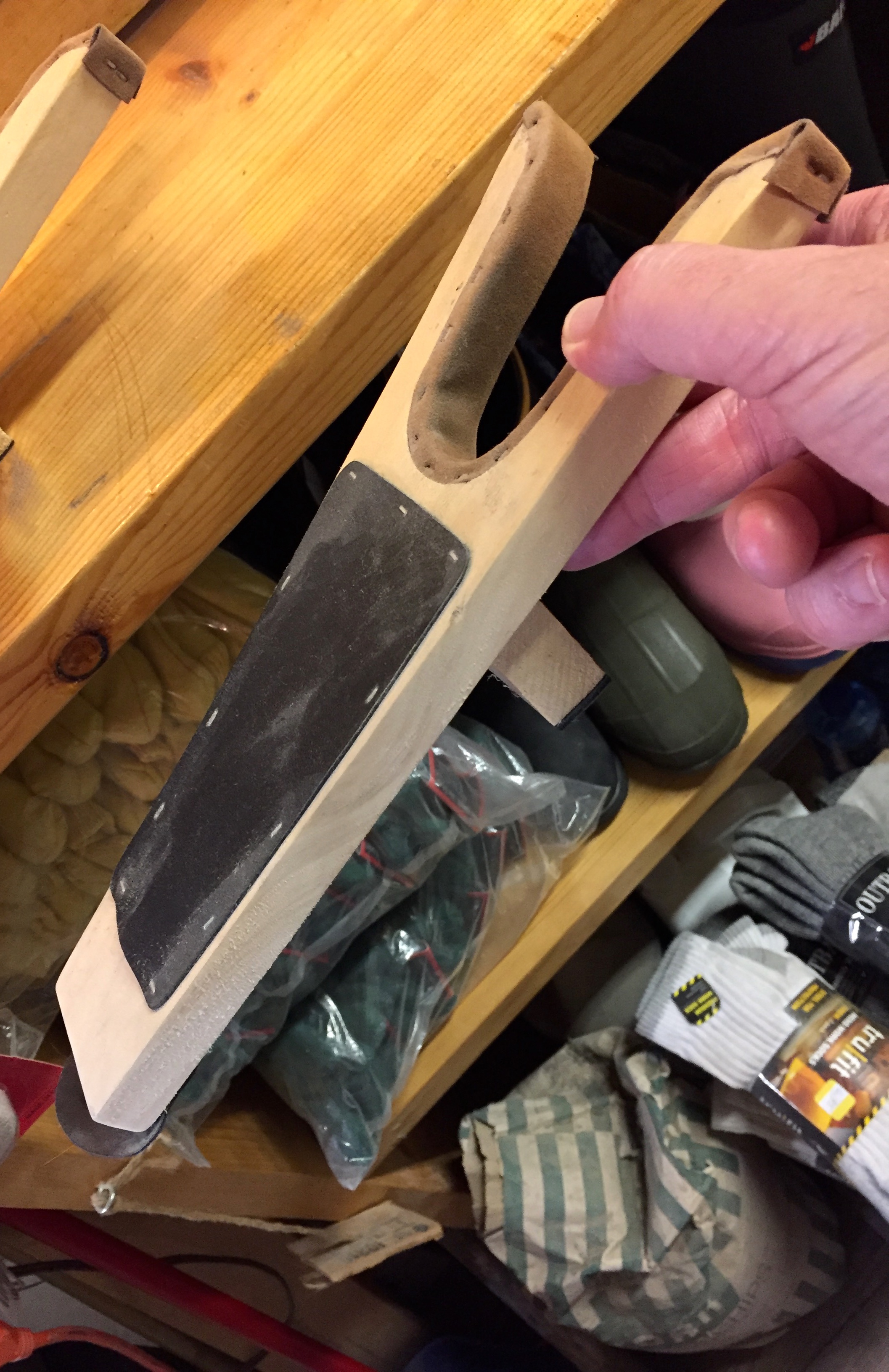
We browsed at McCartney’s Feed and Hardware, which is packed with implements exotic to my city eyes and operates without cash registers. The clerks make change directly out of their pockets.

IMG_4846

Exotic to my eyes, anyway: a “boot jack”

And Dave took me to the farmland he owns with wife Anne, where I got a primer on round bales and found out that cows can sleep out under the stars.

Andy would have pronounced the tour medicinal. Even now, his commentary on the wondrous land and skepticism about progress persist in my imagination. “A 99% accurate Robodoc might increase longevity,” he might ask, “but will the extra years hold any savor?”

While pastoring in my beloved Oniontown, I’ll honor E. B. White’s words and devote myself to “living itself, a task of such immediacy, variety, beauty, and excitement that one is powerless to resist its wild embrace.”

IMG_4286


Hope and Joy in a Roaring Wave

Hope and Joy in a Roaring Wave

Every year Erie, Pennsylvania, hosts Roar on the Shore, a gathering of approximately 165,000 motorcycle enthusiasts that makes my hometown rumble for a few days. According to the Roar’s website, its mission is “to raise money for a worthwhile charity while encouraging motorcycle riding, safety and fellowship.”

I’ll state directly that motorcycles aren’t my thing. Harley-Davidsons and their many cousins are like rollercoasters, lime Jell-o with chopped celery and carrots, romance novels and turtleneck sweaters. You can like them. I’m not against them, just parked in the eh category.

But hope and joy are my things, and generally they find me by surprise.

IMG_4776

Hi, kind of blurry Santa and Mrs. Claus

I was minding my own business, standing along Glenwood Park Avenue with wife Kathy and grandson Cole. The Roar’s parade of motorcycles was going by, the riders vroom vrooming—such delight in engine flexing.

Cole needed to get used to the volume, so he sat in the car, peering out the open window. My body fat, from arm bingo to wine gut to muffin tops to saddlebags, trembled in the racket. The bikes were interesting, a smorgasbord of shiny eccentricity and plain weirdness. The air was a brew of exhaust and grilled hot dogs from nearby picnic shelters.

Such sensory overload would normally have me looking for an escape route, but this loud, funky scene was rendered gorgeous—every smell, sound, and sight, I swear—by human faces.

IMG_4788

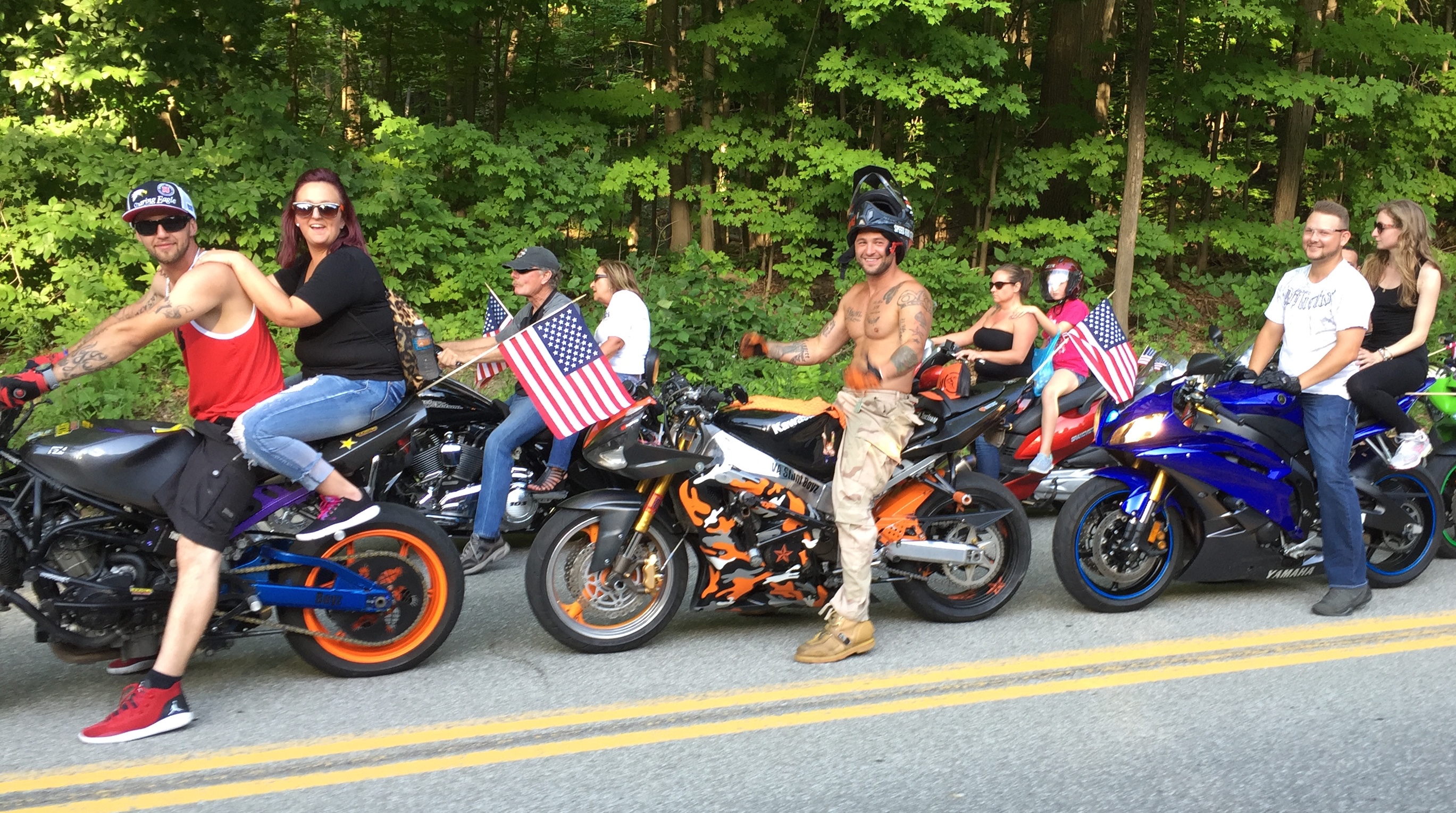
Happy dudes in a happy brood: one of these guys let out a vroom that sent Cole diving for cover.

Watching them rev by, I felt like crying. I should have cried. (Yes, I’m way too in touch with my tear ducts. Guilty as charged.) Face after face saw my face, and we waved at each other, human beings exchanging something pretty modest, if you stop and think about it.

What does a wave between strangers mean, after all? “You’re a person. Hey, I’m a person, too. And I see you.” That’s it.

But it wasn’t the waves alone that moved my old soul. The bikers’ dear faces were blissed out. And what an assortment: grizzly, metrosexual, young and fair, toothless, weathered, cherubic and gaunt; skin colors, check; genders, check; ages, check; orientations, check.

In other words, motorcycles marching to their guttural tunes presented me with a nice collection of humanity that, as near as I could tell, found a few miles of heaven rolling along together as a tribe.

“Why are you so choked up?” I asked myself.

“They’re so happy,” I said, out loud a couple times, almost in disbelief. “For as long as this ride lasts, they get to be happy.”

IMG_4792

Cole, the recipient of scores of smiles and waves

On the way home, Cole said, in as clear a sentence as his toddler tongue has yet uttered, “That was so much fun”—a perfect little word for what I’ve decided is a saving truth.

Why did 5000 bikers wave to over 20,000 spectators? Why did the eyes of those in motion shine like the sun? Why were those standing still so often laughing? Because when human beings see each other, smile and wave, some of the gladness each of us keeps inside comes out of hiding.

Lest you accuse me floating off into rosy clouds, I’ll acknowledge that a few beers and a conversation about politics and religion might ugly up lots of those silly parade grins. But then, Old Milwaukee and opinions can furrow brows in my very own family. Rancor and ridicule are always as close as our elbows.

But the joy of a smile and a wave lies in the truth that we are all more than our passions, righteous though they may be. My personhood begins with roots: I love; with luck, I am loved back; a woman gave birth to me; I can never put down my life, a heavy satchel of stories that could make you dance and cry; I’m afraid; I suffer; I have dreams.

IMG_4811

Tell me your dreams and stories.

I chatted this morning with Stacey, a Starbucks friend who rode and roared. She was moved, she said, by the flags and folks sometimes a dozen deep lining the route. Words couldn’t quite get at the power she felt in thousands waving.

I actually spotted Stacey and her wife in the procession and recognized their awe, which may be the best word to describe the simple, elusive hope I found in Roar on the Shore.

If only we could see each other! Not what we believe or whom we love or how genetics sculpt our bodies and color our skin.

Imagine the fragile world if our smiles and waves meant, “Hey, there, fellow person. I won’t hurt you. Let me hear all about your mother. Tell me a story to make me dance.”

Okay, I am in the clouds. But I believe in awe. Would you help me bring some clouds to earth, to where we’re standing?

Or maybe we can just look each other in the eyes. That’s not too much to ask. Good Lord, we can do that much, right?
In Defense of Justice Ruth Bader Ginsburg

In Defense of Justice Ruth Bader Ginsburg

Blogger’s Note: The scope of the opinion piece that follows is narrow. I have views about nearly every tangential topic imaginable, but I’m speaking here only to The New York Times‘ recent editorial board opinion about Ruth Bader Ginsburg’s statements about Donald Trump.

If you’re looking for the normal fare served by A Napper’s Companion, please feel free to order another entree. 

330px-Ruth_Bader_Ginsburg_official_SCOTUS_portrait

Justice Ruth Bader Ginsburg (Credit: Wikipedia)

Spirits of the coffee drinkers at Brew Ha Ha are merry this noontide, but I’m negotiating with a troubled heart. Former teaching colleagues Alice and Mary and I reacquainted and dissected one of our national obsessions, November’s presidential election. Since they left an hour ago, I’ve been palpating available Internet information and opinions in hopes of easing my suspicion of a terrible prognosis. The possibilities paralyze my brain and sour my gut.

The New York Times normally steadies me, but, oh, my precious, the editorial board has just poked at my gag reflex with this opinion: “Donald Trump Is Right About Justice Ruth Bader Ginsburg.” Whew! Pause. Breathe.

In a recent interview with Adam Liptak of the very newspaper that smacked her knuckles, Ginsburg had the impudence to say, “I can’t imagine what the country would be — with Donald Trump as our president.” A couple of other remarks added color to her opinions and probably set off editors’ subjectivity detectors.

Asked if she also thought that the Senate should act on Obama’s nomination of Merrick Garland to the Court, Ginsburg practically got hysterical: “That’s their job.” Please, somebody get this woman into a straightjacket.

The board’s assessment is terse: “Justice Ruth Bader Ginsburg needs to drop the political punditry and the name-calling.”

Okay, she did call Trump a faker. Bad Justice. Bad Justice. But punditry? Rising from my nausea are a litany of questions, summarized by one: “Where does punditry end and truth begin?”

Other words pose essentially the same question. “At what point does objective neutrality deny the obvious?” “When is bullshit given the full weight of fact?” And “When is denigration mistaken for discussion?”

Yes, these are dangerous questions. Whoever successfully lays claim to facts and truths has hold of power and moral high ground.

But these are perilous times. At least in politics, the historically accepted rules of engagement have been trodden under wingtips. I’m hardly the first to observe that even the pretense of civility and fair play in governmental chambers and circles is gone. And reality, fluid in the best of social climates, is now nothing but fog. Where are the brakes?

Americans who share Ruth Bader Ginsburg’s opinion about Donald Trump aren’t so much despondent about the candidate himself, but about the destination of “I, Donald John Trump, do solemnly swear that I will execute the Office of President of the United States.”

Trump will, indeed, execute the Office, and felled in the firing squad’s aim will be the languishing assumptions about how we Americans communicate with each other and come to agreements and define the world we live in. This is my dread, at least.

Adding insult to injury, the just, charitable identity we have struggled to embody—the “lamp [lifted] beside the golden door”—may give way to the hateful, fearful “angels of our nature.”

Our society has already taken many steps down a rancorous, violent path. Do we honestly suppose that we’ll find remedies to what ails America if we crown a man who delights in riling followers into stampede?

Pause. Breathe.

Am I being alarmist? Hyperbolic? Gosh, I hope so. But I don’t think so.

Ruth Bader Ginsburg knows that “the exception proves the rule.” Supreme Court Justices should keep their noses out of political controversies. Good rule. Good good rule.

But what Donald Trump says he would do as Commander in Chief—bluster though his every word may be—requires the assassination of what is most honorable in the people and the deportation of the Constitution Justice Ginsburg is sworn to interpret and uphold.

She was obliged to break a generally wise rule. She gets a pass.