
So, are you prepared to arrive at your polling places in November surrounded by pissed off masked men with weapons drawn? Continue reading
So, are you prepared to arrive at your polling places in November surrounded by pissed off masked men with weapons drawn? Continue reading
Trump and Musk’s Collateral Damage: Human Beings
This was 1984. My father was fifty-eight, five years younger than I am now. He sat on the couch and cried. He paced. He pulled himself together and made phone calls. The handshakes that guaranteed his return to American Meter’s tool room should his management position be eliminated turned out to be dead fish. A young Turk called Dad into his office and said, “You can run a drill press or retire.”
“But what about . . . ?”
“I’m sorry, Mr. Coleman.”
“No, thanks.”
No dishonor in running a drill press, but Denny Coleman, who had put in over thirty-five years, deserved better. He arrived at work early, drank black coffee at his desk and read the morning paper. He’d been a union steward. Everybody at the shop knew Coly. The place was in his bones.
But that’s how it goes. People lose jobs, get divorced, bury those they love. And sorrows greater than Dad’s befall millions the world over. Hopefully no litany of woe is necessary as evidence.
I thought of my late father a few hours ago while skimming The Washington Post. Headline: “President Donald Trump’s administration fired thousands of federal workers.” Bullet point: “Agency heads were told yesterday to terminate most trial and probationary staff.” The article estimates that the move “could affect as many as 200,000 employees.” That’s this particular move, with others to come that may kneecap a million or more. Who can say?
There are myriad complaints to register about this scorched earth campaign against governmental agencies and workers, but I want to stay focused on one consideration obscured by the consternation over Trump, Musk, and their operatives: human beings.

Denny Coleman was fortunate compared to the many employees who could be affected in this season’s purge-first-and-ask-questions-later ambush. He was within sight of retirement, had decades of valuable experience and easily secured employment for the homestretch. Twenty years of comfortable living awaited him. This said, nothing excuses the bum’s rush American Meter gave Dad at the end.
For two days he sat on the couch and cried. I never saw this myself; my stepmother told me. He wasn’t worried about money. No, he was cut to the quick. In my imagination he occupied his usual end of the couch, ran fingers through his wavy gray hair, went into his back pocket for the third handkerchief of the day, wiped his eyes and blew his nose. Maybe you would need to love someone who served long and faithfully get backhanded on his way out the door by some snot nose to appreciate the loss of self such treatment would cause. Please take my word for it.
Were there legitimate reasons for the Meter to trim Coly from the payroll? I have no idea. Are there great fat caps of waste in government spending? Probably so. The question is—and always has been—how can costs be controlled without exacting an undue human toll? We might up this reflection’s ante and ask, “Can’t changes be made without destroying lives?”
That the destruction of specific agencies is Trump-Musk’s goal complicates matters. Were the American house ablaze, the speed of closings and firings might be understandable, but the urgency is certainly stoked by a strike-while-the-iron-is-hot philosophy. Keep on the attack, let anxiety and outrage interfere with the opposition’s ability to mobilize. If a few million citizens in America are incommoded and millions more in countries desperate for our assistance languish, well, that’s acceptable collateral damage.
When I saw that number, 200,000, though, a distressing vision came to me: thousands and thousands of people crying on their couches. How many of the millions in Musk’s crosshairs are like my father was, devastated but on his feet?
I know of one person in the current upheaval who is not like Dad. This from The Washington Post:
One staffer who lost her job worked in the department’s office of special education, helping students with disabilities. In an interview, she said she had moved across the country with her partner to take the position last summer, spending all her savings in the process. She was working from home because of the snow when she got the email. She was removed from her position in the civil service that same day. Before she could process what had happened, her supervisor called,she said.He was surprised and devastated, he told her. He’d received the email at the same time she did.
“Do I need to finish work?” she recalled asking.
“No,” he told her.
When I read this account, I thought of my daughter Elena, a thirty-something spitfire who grabs life by the lapels, yet tears up out of sympathy for strangers in need. This staffer could be my daughter, set out thousands of miles from home to heal humanity one student at a time. I would have watched her drive away, fueled by dreams, my tears wishing, “Godspeed, my lovely.”
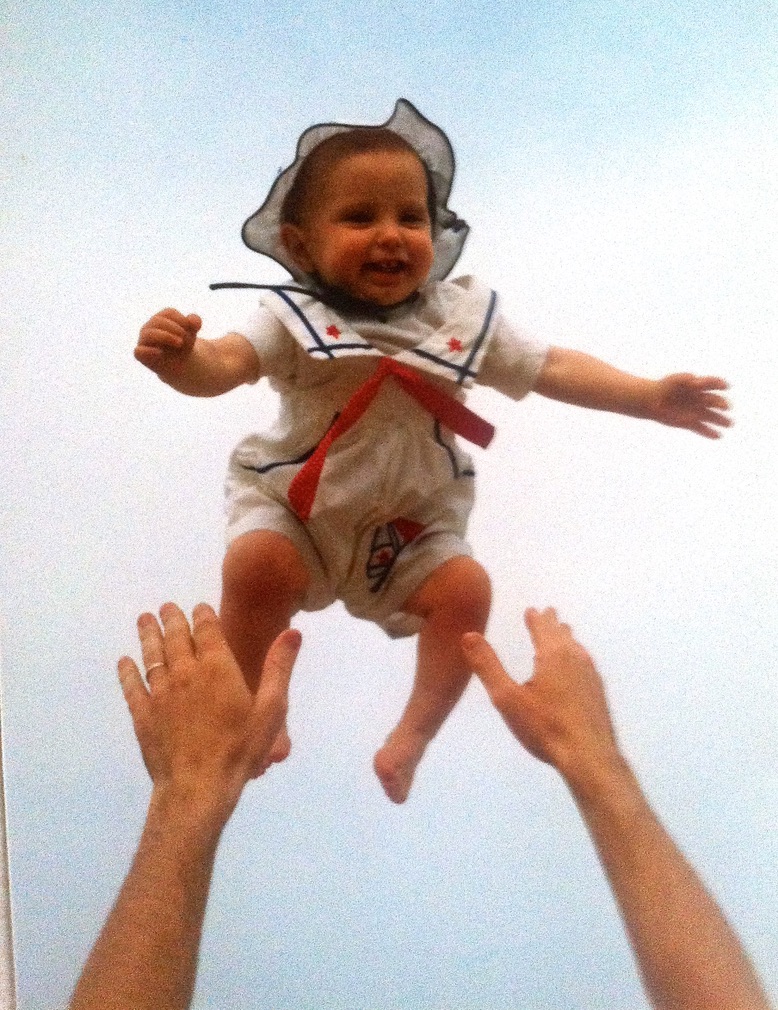
This civil servant may have reddish hair, like Elena’s. She’s on fire, I bet. I picture her taking in the admonition of planet earth’s wealthiest man: “We [Americans] have to reduce spending to live within our means. And, you know, that necessarily involves some temporary hardship, but it will ensure long-term prosperity.” Her cheeks flush at the hypocrisy.
So what has this young staffer—this grown offspring of my imagining—lost, exactly? Income, of course. But let’s not minimize other potential blows. Loss of esteem. Loss of purpose. Even loss of identity. Health itself unquestionably suffers when a vocation, perhaps long dreamed of and prepared for, is stolen by men who have lost count of how many dollars they’ve accumulated.
She and her partner drove across America, their piggy bank thereafter sighing like a seashell. Maybe they now cry on a futon, but they grieve all the same.
A ledger of the funds saved by gutting the United States government and dismissing millions of its servants is easy enough to compile, I suppose. Leaving aside concerns about the constitutionality of DOGE’s efforts, I ask citizens who witness what this department is doing and particularly how it’s accomplishing its goals, “Have you considered how people’s lives might be inadvertently upended or worse?”
Is there a column in your ledger for the price of one young staffer’s sojourn to Washington, D.C., accompanied by her parents’ longing and her own aspirations, only to be instructed, mid keystroke, “Your job ends now”? Can you spare the heart to multiply this cost by millions? And have you sufficient love within to sit on a couch or futon and, for their sake, reach for your handkerchief?

For America to be great, our Declaration of Independence and Constitution must not only be inscribed in documents but also written on our hearts. My point here is subtle, but critical. If Americans don’t snap to when the standards of good conduct envisioned by our founders and nurtured into normalcy by our three branches of government are trampled underfoot, then we should be alarmed.
Oniontown Pastoral: Why I Kiss My Wife’s Hand
I know what you’re expecting: Here comes another edition of “Now, Pastor John Will Warm the Cockles of My Heart.” Well, sisters and brothers, think again.
This morning as I drove Kathy to work, I did, indeed, kiss her hand, but what were once pecks meant to say, “Sure do love you” have evolved into lips reluctant to pull away, lips that would say, “Sure do need you.” My gesture used to be mostly an offering, a reminder, but in this season of civilization, I’m drawing succor and forbearance from the woman who has tried to understand and abide me for 36 years.
So, to the kiss in question: at a red light, I held her hand to my lips, closed my eyes and breathed in and out. A woman driving by apparently saw and smiled. An hour ago Kathy sent me a message: “You made her day.”
Maybe so, but I’d like to explain to this stranger that I am romantic, a real sweetie pie, but what she witnessed was much less an amorous husband and more a man crouched on his roof during a flash flood, tree branches and neighborhood “disjecta membra” swept away by the current.
The water punishing my home’s foundation at present is not only the erosion of the societal expectations Americans have historically honored—imperfectly and inconsistently, to be sure—but also the delight some of my fellow citizens seem to take in dancing on the grave of noble behavior.
I’m not talking about high-minded philosophy or fervent religious belief, but about the simple words that rolled off the tongues of my elders:
You can add dozens of sayings to my list, and, of course, there are exceptions to any adage. For example, some situations demand an unvarnished truth that isn’t nice, maybe quite stern, but no provocation warrants cruelty.
I’ve long ago stopped harrumphing about folks chewing with their mouths open and yawning with noisy abandon in public, two trifles that drove my father to distraction. Why bother fishing a plastic straw out of a tsunami?
What I can’t stop mourning, however, are the standards of thought, speech and conduct that I grew up with being moment by moment trodden under foot. Worse, when I see one person rejoicing in the misfortune of another or insisting that a clearly documented fact is actually false or constantly and proudly acting out in ways that would put a preschooler in timeout, I’m both pained and drained.
If you think I’ve got one public figure in mind, you can relax—or clench up, as you please. My scolding finger is pointed at millions, and I’m done apologizing for it. When our mothers told us to behave ourselves, who among them would have overlooked sucker punching a friend on the playground or equivocating with one arm elbow-deep in the cookie jar? Not mine, God rest her, that’s for sure. In her generation, actions that now don’t even raise an eyebrow might send children to bed without dinner.
Much merriment is had these days at the expense of sensitive souls like myself who aren’t ashamed of tears shed because the beliefs we embrace are sailing into the horizon of this flat earth.
Last night’s news reported that binge drinking among senior citizens is on the rise. Why? Nestled in the list of feeble theories was “social change.” Yeah, no kidding. Millions of people over 65—and many considerably under—no longer recognize their native land. I’m not referring to hot button issues, but simply the scurvy, sinister way folks treat and address each other.
Forgive me. I realize not a single heart cockle has been warmed, but an amiable Oniontown pastor must on rare occasion be given leave to share thoughts that let a chilly draft into the bed chamber.
Most days, kissing Kathy’s hand provides all the solace I need. Her skin, so familiar and dear after nearly 40 years as a couple, reminds me of how much grace and blessing crowd around me in this life.
Once in a great while, though, I have to pull my lips away and speak. Today is thus.
I Won’t Be Ashamed of Love
The 1993 movie Philadelphia teaches the powerful lesson that love is something to be proud of, even though folks may find certain expressions of it hard to honor at first. On the soundtrack, a Neil Young song, also named after the City of Brotherly Love, resonates with me, especially the line “I won’t be ashamed of love.” The protagonist is a gay lawyer dying of AIDS. My sister Cathy is married to Betsy Ann, and sister Cindy is married to Linda. Far from feeling shame, these kind and upright women ought to be proud.

One of my favorite photographs of all time: Cathy and Betsy Ann
But as moving as Neil Young’s words are in context, their message begs to be taken down from the screen and worn like a wedding ring. Love isn’t something you put on when it feels good and take off when it proves inconvenient.
Here in 2018 the temptation to compartmentalize love and all the rest of our emotions is great. Our tear ducts, for example, work overtime for YouTube videos of Christmas puppies and soldiers returning home to surprise loved ones, but an emotional voice in a political debate is often persona non grata. Two Facebook comments show what I’m getting at:
Awww did the bad man hurt ur feewings again
and
You need a safe pwace with a blanky
These responses landed in a sparring match over recent news developments, with one side expressing genuine concern and the other sticking with locker room towel snapping.
I don’t mention specifics here because I’m not looking for a fight. My point is directed to the whole sociopolitical spectrum. Not only won’t I be ashamed of love, I want to be its champion. Americans from many quarters insist that something essential to their identity is under attack, which may explain why we’re always putting up our dukes.

While my own rhetorical fists aren’t raised, my arms are crossed. I admit it, I need a safe pwace with a blanky. Some folks take pleasure in calling people like me a “snowflake.” Nothing new here. Those who drag kindness and compassion into the debate hall used be “pinkos” and “bleeding hearts.” Today, a merely descriptive term, “liberal,” is being wielded as a slur.
Such language is weaponry in what I believe is a war on love. Emotions, the reasoning goes, have no place in policy formation, and those who suggest otherwise deserve a good mansplaining.
I disagree, so with a blanky on my lap, I’ll speak only for myself. Tease the worried and teary-eyed if you like, but you’ll not shame this old softy for a few love-inspired convictions:
As you can imagine, my commitment to love reaches beyond the controversial issues of a given season. Love means putting my iPhone away when somebody is talking to me. It means thanking police officers and soldiers for their service. It means remembering that nothing makes me better than the guy at Erie’s State Street Starbucks who has loud arguments with himself. Nothing. I’m one chromosomal kink, chemical hiccup or bad decision from being in his shoes.
Come to think of it, he hasn’t been around in quite a while. I hope he is OK. He might not understand my concern for him, but I’m sure you can. I’m not ashamed to say that he is worthy of my love.

Dear Friends,
Just a note to let you know that I’ve posted a short essay on my second blog, Matters of Conscience, which has been happily inactive for some time now. If you’re interested in my thoughts on politics, please follow the link.
Peace,
John Coleman
We We We Could Hold Hands
I’ve been sad off and on for a month now, but let’s not dwell for long on why. Let’s just say that the land I love is different now. Values, principles and manners that ground life and give it sweetness have been flogged, and I’m confused. What rules will we live by from here on? And will these rules call forth our best, not our worst?
If you can’t imagine what’s got me down these days, reading further will be a waste of time. But if you sense where I’m coming from, please accept one premise: You don’t need to agree with the reasons for my grief to accept it as valid.
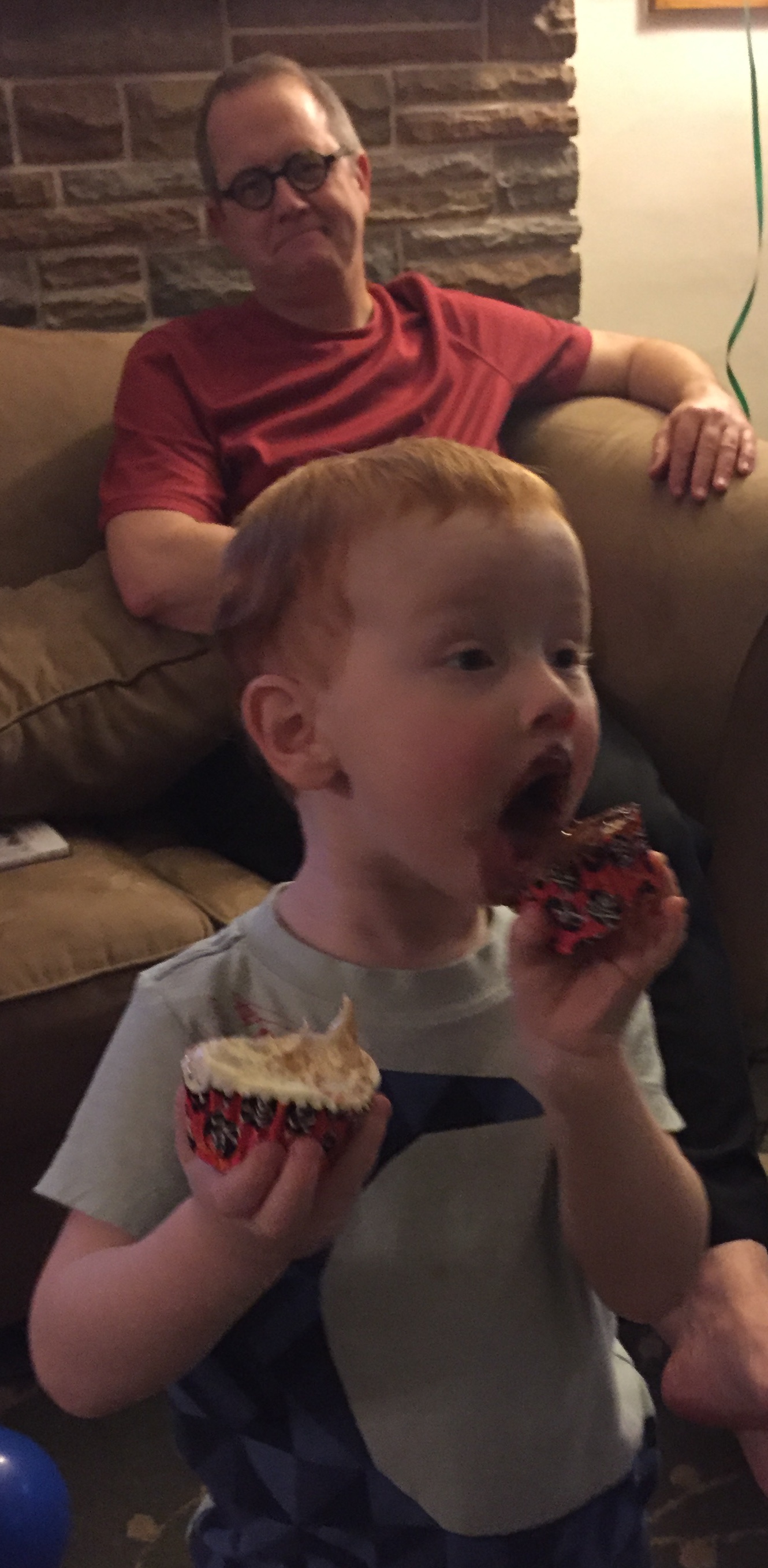
The master teaches the disciple. Lesson: Lick the frosting off first if that’s what you like.
If you can appreciate the distinction I’m making, you might also be interested in a chilly, rainy walk I took with my grandson Cole a couple weeks ago.
My mission was to occupy the three-year-old with sparks flying from under his sneakers so that Grandma Kathy and son-in-law Matt could do home repair and daughter Elena could mind grandson #2, Killian.
Cole and I were supposed to go to the corner and back, but when we got there, he pointed to the next corner and said, “I I I want to go to there.” (Cole’s speech can’t keep pace with his brain, so he repeats the subject until the rest of the sentence reaches his tongue.)
Sure, why not? When we reached the next corner, he pointed across the street and repeated his previous request. I could see his point. West 4th Street beyond Beverly Drive is missing some sidewalk, giving the passage a winding charm.
“But, Cole,” I said, “that’s across the street. We can’t go there.”
He thought for a few seconds, then looked at me: “But we we we could hold hands.”
“Ah ha,” I thought, “school is in session.” That’s how being a grandfather is for me. I’ve learned to recognize instantly when Cole has something to teach his lazy Pop, and his instruction is always edifying.
So off we went, looking both ways, his cold little hand in mine. He had tree climbing on his mind, but the neighborhood maples are matriarchs that haven’t had branches or footholds within reach for decades.
I explained and explained, the mist puffing from my mouth. “They’re too big, Cole. There’s nothing for you to hold on to.”
Finally, good sense caught up to me. “Okay, pal, give this one a try.”
He ran to the rooty base of a smooth-barked giant shiny from the weather. As he hugged the trunk, he was as confident in his ability to succeed as I am when approaching a cashier to pay for a loaf of bread. No sweat.
He rubbed around to check for some advantage and marched as if the wood might reach out to him as a staircase.

If there were nothing else in the world to behold, this face would teach me more than I need to know.
To Cole’s credit, no fussing he made. A concrete telephone pole fifty of his rapid mini-strides away provided another option. “I I I could climb that.”
“You think so?” I lilted.
“Yeah!” he said. I must say, my grandson makes that word into a one-syllable hoedown. His yee dances in the clouds, and his ahhhh takes its sweet time landing.
Alas, same result, followed by the same okey-dokey shrug.
Our next stop was a pile of pumpkins Cole insisted was a fire hydrant. I didn’t argue. What he proposed was fine with me.
Even validictorians get pooped out, though, so I tempted Cole to head back home with the prospect of spotting turkeys on South Shore drive, where hens and gobblers mill about the yards of Erie’s rich folk.
Not quite there yet, he spotted an old guy bundled within an inch of his life and riding a zero-turn mower. “I I I want to see.”
Well, certainly. We stood on the boulevard, Cole in awe over the machinery, me wondering about the enterprise of getting rained on, running over wet leaves and turning pirouettes. But maybe a man in layers of well-worn gray and earmuffs also had something to teach me.
He parked, hopped to the ground and walked our way, arms swinging akimbo.
Cole froze at the sight. I held his hand again.
“You can cut through my yard,” the man said, “and take my steps down to the lake.”
That was the last thing I expected to hear, as owners on South Shore have the reputation of being grouchy toward trespassers. I guess you just don’t know the truth about people until you know them.
We said thanks anyway and waved goodbye, off to find birds.
I used to understand that no journey from A to B with a little boy could ever be direct, but I had forgotten. Cole reminded me by insisting on bending through the undergrowth and shrubbery rather than sticking to the sidewalk.
He was having fun trespassing, and I didn’t really care if we got hollered at. (It’s taken me five decades to adopt such a criminal attitude.)
Of course, we didn’t get chased off. We didn’t see any turkeys, either, but Cole jumped off of low stonework a few times. His wide eyes told me he knew the miracle of flight.
I’m not going to lie, I was glad for class dismissal when we got back home. My cheap black sneakers with elastic at the instep were soaked.

Whenever you’re ready to teach me, Killian, I’ll be ready.
I want to be honest about something else, too. Years ago, as a young man, I wouldn’t have figured a walk with a red-headed boy could lead me to a better place. I would have considered the notion mushy.
Still, being a Pop will have everything to do with how I pass through this season’s mournful valley and grow as a man committed to kindness and compassion. Call this truth what you will.
My grandsons have the wisdom I need. I can feel it. Until their next lesson, I’ll use what Cole taught me on our walk in the rain.
I’ll I’ll I’ll remember that we can hold hands, climb even when the effort makes scant sense, and look for teachers who spin like fools.
Most of all, I I I won’t give up on love.
American Lament
Dear Friends,
I just posted an essay called “American Lament” on my buzzkill of a second blog, Matters of Conscience. This primary blog, A Napper’s Companion, will probably be quiet a little longer–until I can write about beauty again.
I alert my Nappers to this lament because I know some of you will be interested. But I’m not encouraging or asking anybody to read. This was something I felt compelled to write.
Peace and love,
John

Grandson Cole
 This evening before the dreaded presidential election, wife Kathy and I are heading back to Pennsylvania after visiting my sisters in North Carolina. Our objective was simple: relax!
Yesterday we awoke in the joyful home of sister Cindy and her spouse Linda. We didn’t get out of bed right away, but breathed and gave thanks for the view out the guest room window: clear sky, hanging plants and American flag rising and falling with an occasional breeze.
We also gave thanks for other loved ones who stayed the night: eldest sister Cathy and her spouse Betsy Ann; and Linda’s daughter Tina, her spouse Rebecca, their toddler son Liam and infant daughter Renley. Four affectionate and slightly spastic dogs and a mellow cat named Hermione added diversity and commotion to the gathering.
As we talked off and on about what is consuming millions of Americans at the moment, I learned that one voter’s presidential election can be another’s painfully personal referendum.
Thus far my anxiety about our country’s future has been generalized. The women I listened to over breakfast yesterday share my concern about the economy, foreign relations, immigration and the planet, but they also fear the threat a Trump administration might pose to who they are as human beings.

Cathy and Betsy Ann
With a Supreme Court fortified by judges favored by the Republican Party, will their marriages be under assault? Will the acceptance they’ve found recently as citizens be repealed? And what about the health insurance one married partner often provides for the other? Is there any way that same-sex couples could be denied that benefit all over again? After all, if Roe vs. Wade might be up for debate after forty-three years, why not the legality of gay marriage?
Kathy and I celebrated our thirty-third anniversary this year, and we’ve never had to contemplate our vows being cancelled by the Supreme Court.
My wife shares roughly the same profile as the Democratic Presidential nominee. If she wins, I imagine Kathy and other women will feel a burden lifted and an inexcusably overdue affirmation bestowed.
What will I feel? I’m a white, heterosexual male. My validation has been grandfathered in for centuries. I can’t remember ever being denied anything because of my packaging. Nobody has ever suggested that the person I understand myself to be is uniquely lacking, broken or abhorrent. Where social stability is concerned, I’m close to the top of the food chain.
But Cindy, Linda, Cathy, Betsy Ann, Tina and Rebecca face tomorrow with a fear I recognize but can never really know.

A safe place
I can name beauty when I see it, though, and these women are among the kindest, smartest, most upright and beautiful people in my life. The warm North Carolina air was refreshing, but Kathy and I don’t drive ten hours for the southern climate. We take time to visit our unorthodox family because we find overflowing goodness and safety with them.
If you think that gay marriage is sinful and should be illegal, I wish you could meet my gay sisters and witness their tenderness and compassion. I wish you could hear how they struggled to find peace within themselves and how falling in love turned their landscapes into rich expanses of grace.
Their troubled sleep this night is difficult to bear for love’s sake. Of course, millions may lie awake in the small hours of this morning, wondering how many of the votes cast will say, “America is not your home. You have to leave. Your language is an annoyance. Your skin is ugly and so is your soul. You’re being checked out, and this we can tell you, we’re not impressed.”
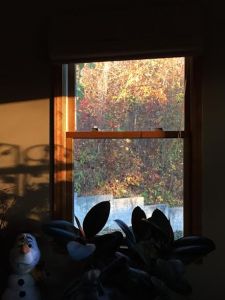
View from Guest Room Window . . . Gay Household.
When I vote tomorrow, I’ll be thinking of my family in North Carolina and every other sister and brother who want nothing more than to run into the open arms of a compassionate country.
Now, checked into a hotel in Summersville, West Virginia, I sip privileged wine. Kathy tells me the pizza just delivered is really good. And I make this promise: “Whatever happens tomorrow, the years ahead are sure to hurt, but you’re not alone. Plenty of Americans like me–especially those who don’t pretend to know what all you’ve gone through–love you and stand with you. When you were born, the cosmos rejoiced.”
Grandma Kathy Home
So the Cleveland Indians hold a 3-2 edge over the Chicago Cubs as the World Series moves back to Cleveland for at least another game. One particularly sweet spot here is my sentiment that if the Tribe loses, I can be glad for the Cubbies. Both teams are long overdue for a championship.
Alas, the Fall Classic holds diminished interest for me this year. I’m in a space that is best described by a phrase my childhood friend Vince used a lot: tons of bummage.
Joy isn’t in short supply these days; in fact, I have a surplus, more than anybody deserves. The problem is my reaction to our present American season of bummage.
“Do not lose your inner peace for anything whatsoever,” Saint Francis de Sales said, “even if your whole world seems upset.”
Sorry, Francis, but my peace comes and goes. It goes when I assume my fears about the future are predestined. It comes when I forget myself long enough to be touched by grace.
—
“I want to go home,” grandson Cole said.
“But, Cole,” my daughter Elena answered, “you are home.”
“No, I want to go to Grandma Kathy home.”

At Grandma Kathy Home. Cole checks Pop. (Credit: Kathleen Coleman)
—
Grandma Kathy and Pop have bored our friends slack-jawed with Cole’s words, but it’s hard to keep quiet. Sometimes a moment kisses your soul and brings hope within reach again.
Cole thinks of Grandma Kathy’s house as home. Do I care that he doesn’t include Pop on the deed? Actually, I like his name better. Kathy drops everything for Cole. They play in her garden and go to the basement and make repairs at her workbench. If she cooks dinner, he stands on a chair at the sink and does a few dishes with a whole bottle of soap.
He calls our den “my room,” and he and Grandma Kathy bunk there when he stays the night, as he did last Saturday. On church mornings, she sits beside him in the backseat for the hour drive to Oniontown.
Yesterday my sluggish sermon knocked the kid out, so he crawled under the pew and nodded off at her feet. After worship she let him sleep on, and friends stopped by to chat.

Got insomnia? Come listen to one of my sermons. Bring a pillow, join Cole. (Credit: Kathleen Coleman)
Cole was safe. Grandma Kathy was there.
He didn’t say, “Grandma Kathy’s home.” He said, “Grandma Kathy home.” My wife is home to him. The dwelling and garden are incidental.
Kathy helps Cole sew. He leans against her, watches a movie and eats pretzels and dip. She hustles him off to use the potty like a big boy.
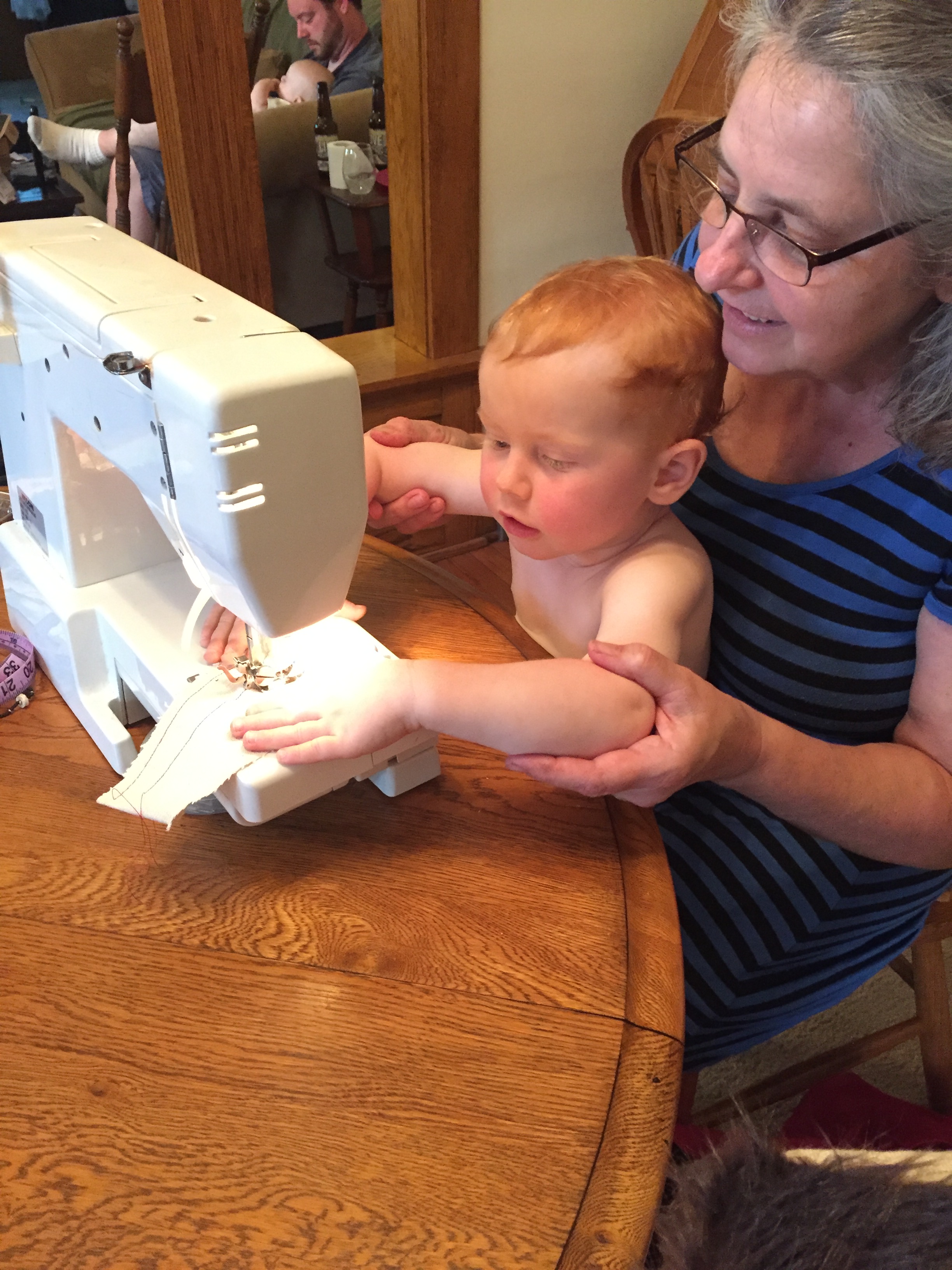
Hope
Watching them together, I’m positive of at least one thing that’s right with the world.
—
Fifteen years ago I copied a Bible verse on strips of paper and during a sermon suggested that parishioners put them on their refrigerators.
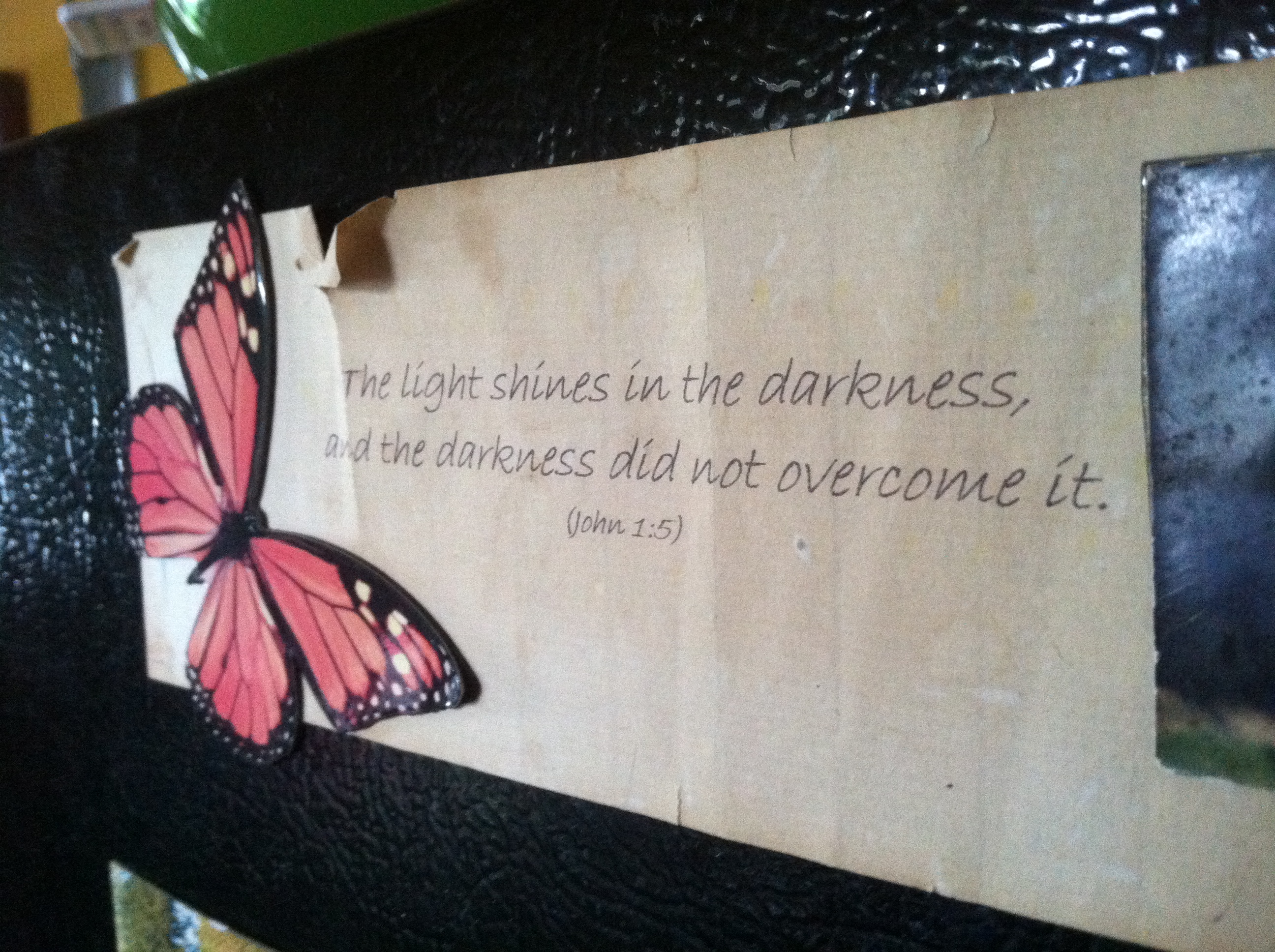
The light shines in the darkness, and the darkness did not overcome it. (John 1:5)
The light is love. I bet my life that it will win in the end. That doesn’t mean, of course, that my Indians will whip the Cubs. And it especially doesn’t mean that my candidate will prevail.
I don’t for a moment believe that God gives us clean sheets when we’ve messed the bed.
What I do believe is this: love is the only way out of human bummage.
In 1968, during another ugly season, Thomas Merton asked, “Is the Christian message of love a pitiful delusion? Or must one ‘love’ in an impossible situation?”
When I watch a woman and a boy not yet three together, peace fills my lungs. The only way I know to abide in impossible situations is to love.
It seems like hour-by-hour I get hopeless and angry, then hear Saint Francis speaking and try to find my way back to love again. All signs are that I’m delusional.
I want to go to Grandma Kathy home, too, Cole. Let’s live there together.
 A Napper's Companion