Oniontown Pastoral: What I’m Looking For

Oniontown Pastoral: What I’m Looking For

IMG_4286Cashiers at Wine and Spirits Stores always ask the same question before scanning my bottle: “Did you find everything you were looking for?”

I say a lazy “yes, thanks” because an honest answer requires a treatise. Rarely, when nobody else is in line, the thesis comes out: “Well, I didn’t know what I was looking for, so I’m good.”

After a polite chuckle, the cashier carries on with no idea that a confessional transaction has also taken place.

I seldom know what I’m looking for. Call me slack, but purposeful searching generally yields frustration. The quotation residing warmly in memory is elusive, impossible to verify. And never go hunting for epiphanies. Those gems hide in desert caves until the seeker has forgotten that they exist.

But when I look for nothing, wonder ends up finding me. Of course, sometimes we’re all assigned a specific mission. There’s no avoiding, for example, the Thanksgiving curse of tracking down nomadic French fried onions in the grocery store for the sake of green bean casserole.

Obligations aside, though, I live like my late dog Watson, who was clueless as to what he was sniffing for, but overjoyed to discover it. What am I after? I’ll know when I find it.

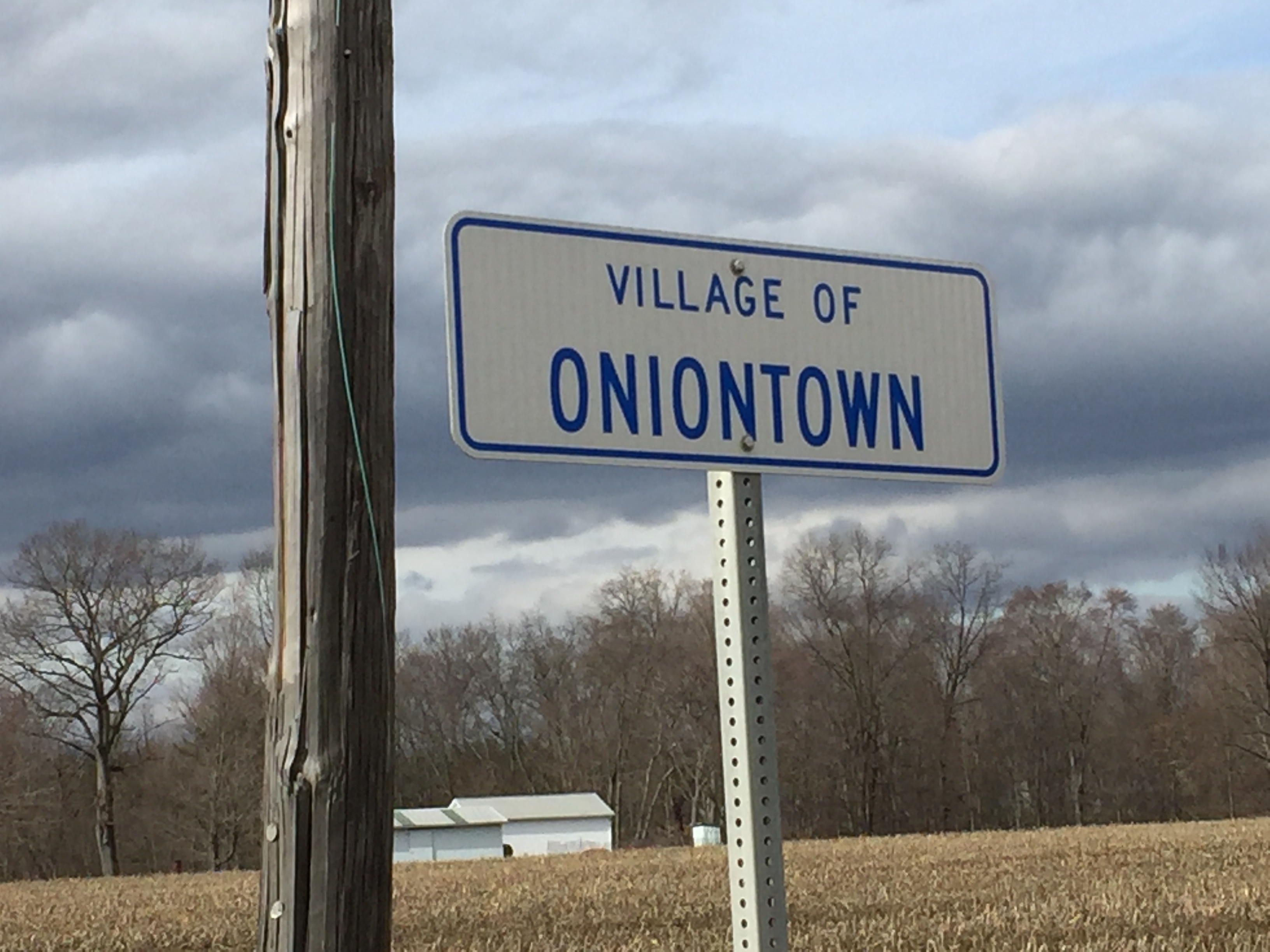
Case study: Parishioner Barb invited me to her neighborhood. About twenty minutes from Oniontown, her neighbors are Amish. She introduced me to a couple of young guys working in their family’s lumber mill and walked me to points of interest, which on dirt roads can be beautiful, but nonchalant: houses with curtains pulled to one side, a sugar shack tucked back in the woods, a one-room school house, and one thing I wasn’t expecting.

IMG_4907

Amish phone booth

A phone booth. The Amish, it turns out, have a nuanced relationship with telephones. They can use them, but they can’t own them. So in her front yard, Barb collaborates to provide them with phone service. The booth, built with their wood and running off of her lines, gets used six or eight times each day.

An obvious question occurred to me: “What sense does it make to use a phone, but be forbidden to own one?” But hush. My faith can’t stand up to logic, either.

When Barb and I returned from our walk, a horse and buggy was parked by the phone booth. The father indulged in technology while his kids waited. The horse worried its bit and nodded as we rubbed its long face.

Since the Amish don’t allow photographs, I snapped only a shot of the booth. It says something about caring for people you don’t quite understand and keeping a spare room open in your heart for guests.

This is why I love Oniontown so much: it always teaches me. A village an hour south of Erie has even helped me to look at home and everything nearby with fresh eyes.

Days ago at Starbucks, I chatted with a boy, maybe six or seven, and his mother. The kid was a whip, his mom cheerfully resigned to having a child able to talk the bark off a tree. His segue between topics was “by the way.”

Our conversation ballooned to ninety minutes and included his Gentleman Claptrap toy, requests for the family shopping list, and some kiddie movie. I was weary, but sensed the approach of wisdom.

As Mom loaded her purse, I said, “I’ve never heard of that movie before.”

He looked at me in disbelief and said, “You have a lot to learn.”

Mom gave him a tame rebuke, but I interrupted: “Well, actually, he’s right.”

And he was. As a lifelong novice, I learn best by opening my eyes and holding out my hands.
Oniontown Pastoral #8: When the Student Is Ready the Teacher Will Appear

Oniontown Pastoral #8: When the Student Is Ready the Teacher Will Appear

My title here is widely attributed to the Buddha, but Bodhipaksa, host of the blog Fake Buddha Quotes, traces the idea to the 1886 book Light on the Path by Mabel Collins: “For when the disciple is ready the Master is ready also.”

IMG_4284Like any writer I want to be accurate, but in this case I’m busy learning and can’t afford to dwell on scholarship. In recent months, calmed and awakened by the pastures of Oniontown, I’ve found unexpected teachers, probably because I’m finally ready to receive their wisdom.

My teachers—the homebound, mostly—don’t recognize the lessons they’re lavishing upon me. I’m their pastor, after all, with a direct line to the Man Upstairs. When I pay them a visit, they expect to be on the receiving end of whatever insight and solace our time together yields. If only they could see how their fortitude blesses me.

Hopefully I have plenty of vitality ahead, but my teachers make me wonder if I will be strong in my final seasons, when the world grows painfully small. Afternoons bleed into evenings within the same four walls. Aches and frailties invite despair. Boredom and loneliness blanket even those blessed with visitors.

Wallowing would be understandable, but my teachers joke and ask after me and the St. John’s family. “It’s got to get discouraging,” I said to one man. “Well, sure,” he smiled, shifting in his recliner to ease a stab of hip pain, “but once you head down that road you’re done for.”

“What did you have for lunch today?” a parishioner with declining short-term memory often gets asked. “I don’t know,” he answers, “but it was good!”

Caregivers lift and wash and soothe hour after weary hour, unaware that they’re instructing my spirit in grace. How would I roll out of bed each morning with the knowledge that today will be just like yesterday? My teachers are heroic, their faces cleansing breaths of gentleness.

If my beloved Kathy no longer remembered our lives together, how would I cope? “You’re a hero,” I told a man who shows up at a nursing home every day to visit and eat dinner with his wife. “It’s what you sign up for,” he answered. For better or worse, indeed.

And could I endure infirmity, eyes dead to novels, ears deaf to sonatas, muscles slack, lungs spent?

IMG_4337

Faded-red castaway

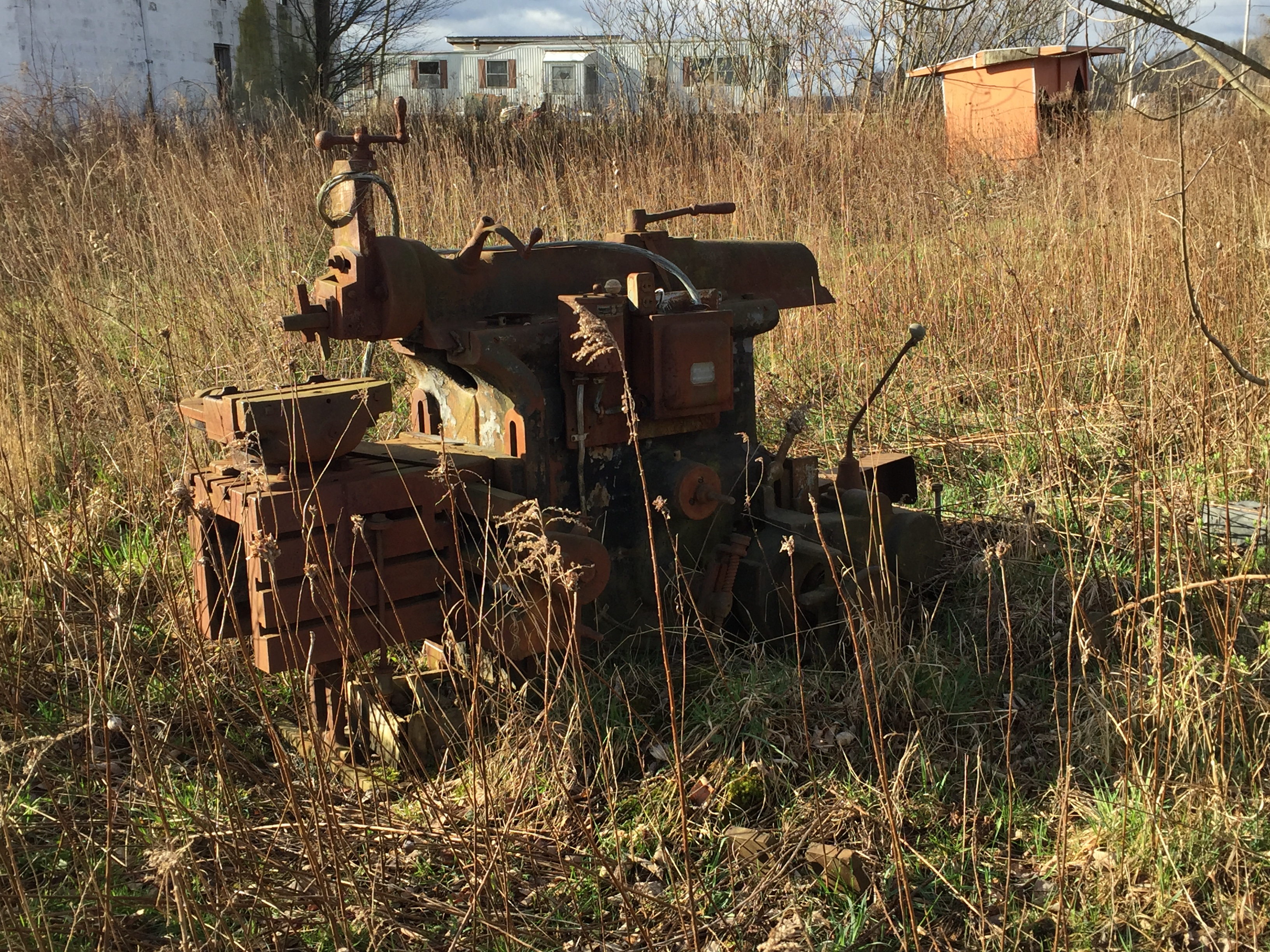
Some of my teachers, their bodies like the elderly farm equipment castaways in the fields surrounding Oniontown, find ways to move forward without traveling anywhere at all.

One has model train tracks on a table in front of a window overlooking squirrels stealing from bird feeders. Imagine finding life in a locomotive with no destination!

Or how about turning old, brittle pedal sewing machines into shining end tables? One of my sweetest teachers did just this. On the morning his young daughter died recently, he and I sat at his kitchen table. Cancer and grief had knocked the wind out of him, but he mustered the stamina to look with me out a window.

“My God,” I said, “is that a Baltimore oriole?” I had never seen one up close before.

“They’re only here a couple weeks,” he explained, “and then they’re gone. They like jelly.”

Every time I drive to the church I see this man’s house. Less than a month after his daughter passed, he got his wish and followed her into the rest of everlasting peace.

Can I be like him and my other teachers? Can I witness beauty until my last breath? Can I endure and soothe, laugh and learn even when the future is four walls?

And when death is near, can I remember that someone may visit my small world—a student who is finally ready to receive the quiet treasure I have left to share?

Love Poem on a Peninsula

Love Poem on a Peninsula

for Kathy, as always


On the way to a run

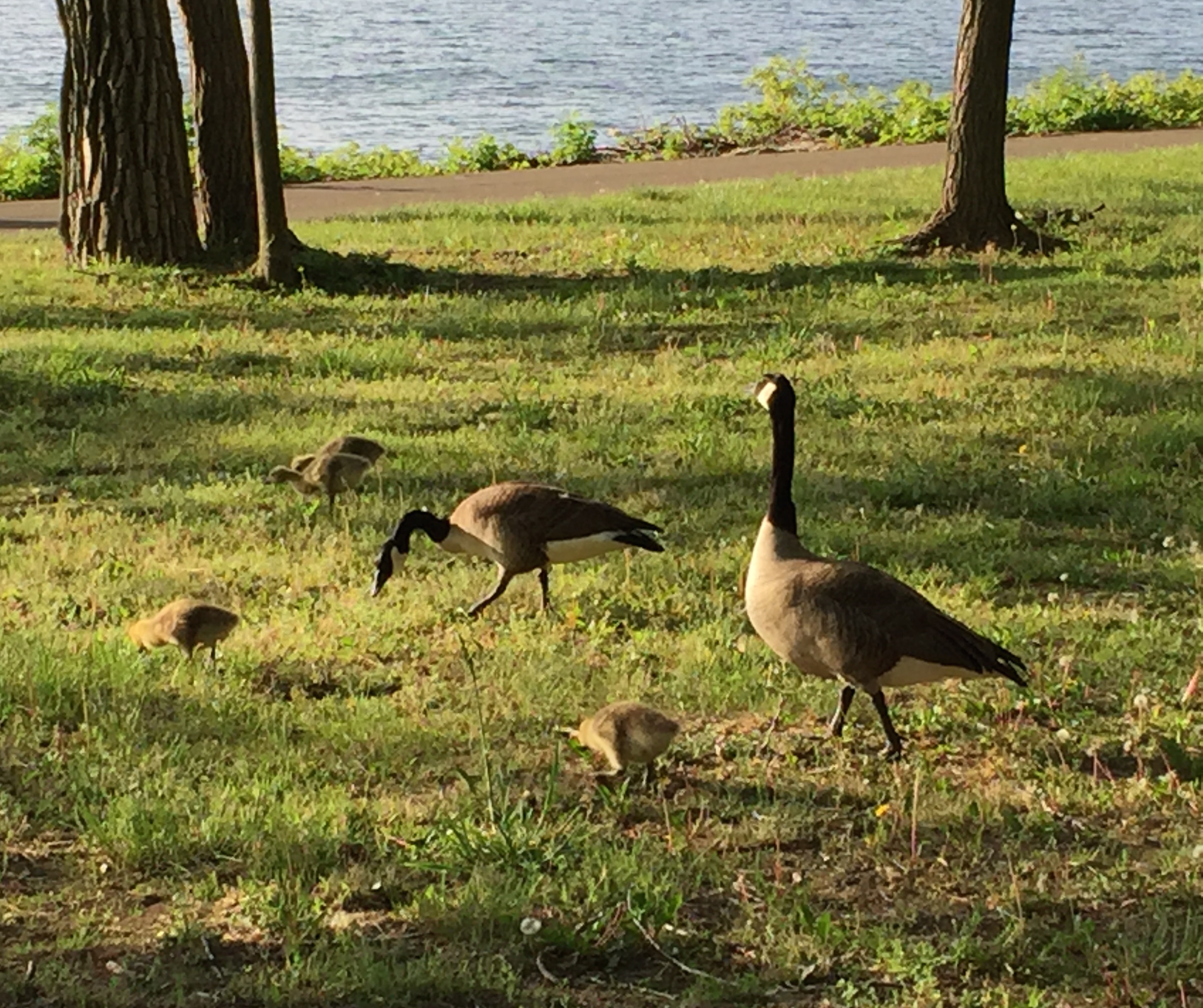
I pulled over to watch goslings,

around a dozen,

bent to tender grass.


IMG_4643


The adults let me get close,

maybe because I wanted

some pictures to show

Kathy when she got out of work.


“Oh, John,” she would have said,

my name at the top of her throat,

held for a full pleading measure

so the geese would take my soul.


IMG_4648


“Oh, Kathy,” I answered as light

off the lake blinded my first steps,

“these colors are for your eyes,

this perfect air is your blessing.”


And she would have told me

to receive every curiosity and dazzle,

sometimes stammering with joy,

our path a riot of hosannas.


IMG_4652


She was desk-bound during my run,

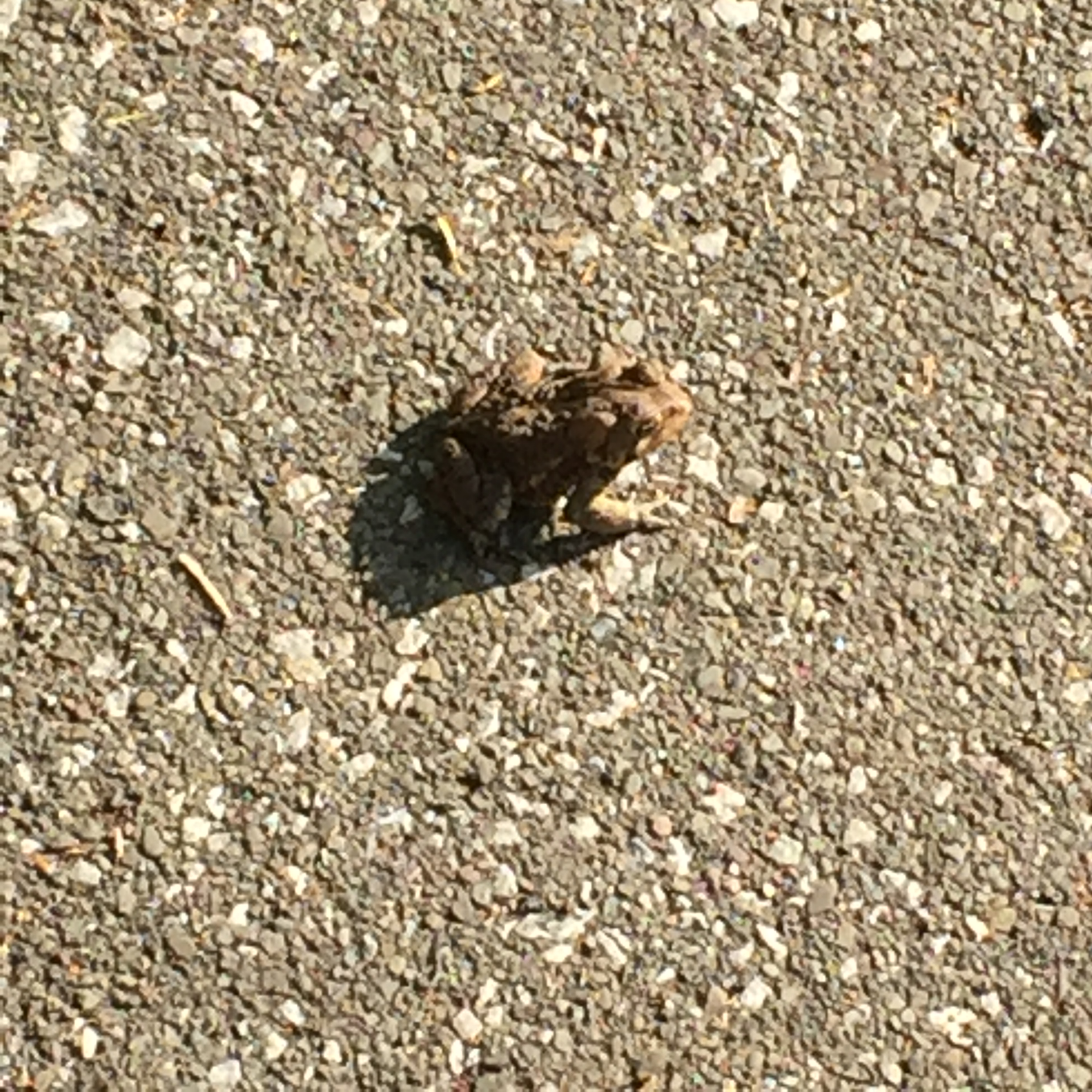
but still announced the toad—

or frog or whatever—I nearly crushed

and the bird dragging dead grass home.


It’s not as though I have a choice.

Kathy insists that I learn: Beauty is urgent.

“Hey, look.” She hopes to save me.

“Look,” she says. “Oh, John, look!”

Oniontown Pastoral #7: You Learn to Like It

Oniontown Pastoral #7: You Learn to Like It

“You learn to like it.” Grandma Coleman leaned hard into learn. She was talking about an instant mocha coffee powder, which she used at half strength. To me it tasted like stale water, but Gram, with her cherubic face, furrowed her brow and insisted. Raising children during the Great Depression taught her that she could decide what she wanted and needed. One teaspoon-full can taste better than two—but you have to work at it.

IMG_4552

Corn field: a great teacher if you work at listening

Gram’s wisdom echoes more with each passing year, mainly because what I want is often the opposite of what I need.

My latest lesson is, to tell the truth, plain silly. After fourteen years of ministry in Erie, I’ve settled nicely into the pulpit at St. John’s Lutheran Church in Oniontown. As I’ve said to parishioners and friends, “I’m having the time of my life. What a great place to be.” Since I showed up about six months ago, I’ve come to love the folks and the land—so much beauty.

But what’s embarrassing is this: although the scenery is soothing, I’m an impatient driver. The accelerator has a gravitational pull that I can’t resist. Come on, let’s go! On Route 19, District Road, and just about everywhere else, my brakes are getting a workout.

IMG_4358

No clue what purpose this old machine served, but its repose in a field is soothing to me

I’ve lived most of my life in medium to large cities where drivers don’t dillydally on turns. In these parts, abundant caution, reconnaissance and perhaps a little prayer precede pulling into each driveway or parking lot.

The other day at the Stone Arch, the St. John’s Seniors and I had a good laugh over the matter. “It’s as if,” I explained, “drivers are afraid a Tyrannosaurus rex is around each corner, waiting to chomp into the roof their car.”

“But there might be!” several said at once. “Or a cow or a dog or a . . . senior citizen!”

Thank God for their good humor. They already understand what I’m still trying to learn: slow down, what’s the rush?

I didn’t bother mentioning that on my way to the restaurant, a navy blue sedan in front of me inched fearfully into a lot that was so clear a Concorde could have come in for a hot landing. No tumbleweed, no crickets, just acres of glorious, barren blacktop.

“Why?” I cried out behind my closed windows. “What are you waiting for?”

Of course, I’m not proud of my frustration, but it does hold a truth: taking my time doesn’t come naturally. I’ve got to lean into liking second gear as much as fourth. My father would add his words to Gram’s: “Take it ease, disease,” he used to say, and “simmer down, bub.”

I have been making incremental progress. Last week an Amish guy sat stock still in his buggy in the middle of District Road as his horse swung his head this way and that, like a city dweller searching for a taxi. As I crawled past, my neighbor looked at me with a whimsical expression and waved, as if to say, “Thanks for not crashing into me.”

The exchange was pleasant. So, too, was my encounter with a wide piece of farm equipment—many circular blades—on my way to visit Ellen the other day. Both the farmer and I hugged our thin berms, and as we passed his eyes told me, “Yeah, we’re good. We’ve got this.”

I’ll simmer down eventually. My folks and the rolling fields are great teachers. Now I need to be patient with myself.

IMG_4284

A Dog Story, Nice Ending

A Dog Story, Nice Ending

Layla is a lunk—there’s no other way to put it. She is eighty akimbo pounds of yellow Lab who bounds onto your lap and noses her way past your face and into your soul. My grand-dog is frantic with affection.

Since April Fools’ Day, when our second grandson Killian was born, wife Kathy and I have been dog-sitting. Daughter Elena and son-in-law Matt are rightly afraid that Layla might lick the skin off our newborn’s hide, accidentally trample grandson one, toddler Cole, or bowl over Matt, who recently broke his leg. So with the exception of a couple of trips home for good behavior, Layla has lodged at the Coleman house.

1488069_770029026400621_5346441143956460071_n

Layla and Cole when the latter was one year old

Last night she flopped beside me in front of the television, spent after a day of urgent missions only she understood. I ran my hand over her closed eyes and soft ears and said, “You’re Pop’s good pup, aren’t you? You’re a good girl.”

She was at ease, but nobody can bliss her out like Matt. And if any dog needs some bliss, it’s Layla. All it takes to reduce her to hours of trembling is a balloon. A couple weeks ago Kathy and Cole were in the basement popping leftover birthday balloons, probably a dozen of them. Later I found Layla in our mudroom, quivering and cowering.

Lots of dogs get panicky on July 4th, but why would loud pops unhinge a pup for a whole day? That’s how long it sometimes takes for Layla to stop shaking.

We’re pretty sure of the answer. On August 19, 2013, her owner, Dean Haggerty, was shot to death in his Summit Township mobile home. Dean’s daughter and son were there, as was Layla. Dean’s fiancé Kristina had pulled the trigger.

As one of Dean’s childhood friends, Matt gathered with the Haggerty family. The dust hadn’t even begun to settle. What exactly happened? Good Lord, the kids! And, oh yeah, what about the dog?

One room can contain only so much shock and uncertainty. Numb silence. Could anyone take in Layla? More silence.

Matt hadn’t seen much of Dean in the months before the shooting and had never laid eyes on Layla. But when he realized that his dead buddy’s dog might be homeless, Matt’s yes came out by its own volition. He hadn’t consulted Elena, who was seven months pregnant with Cole, or thought things through. In that moment, his love was like Layla’s, reckless and snout-first.

How old was Layla? Nobody knew, but she was clearly in the mad dash of puppyhood. That first night with Matt and Elena, she paced and whimpered. In the small hours of the morning, she finally fell asleep on the couch at Matt’s feet.

Over the last couple of years, Layla has become family. Early on, she ducked when I reached out to pet her. Was she fearful by nature or treated harshly? Again, nobody knew.

Today, Layla doesn’t look over her shoulder much. Family and friends have nosed into her vulnerable spirit and earned her trust. If the world would quit popping, her peace would be complete.

Layla must be at least four, but she hasn’t received the memo that she’s not a puppy anymore. The relentless K-9 energy sparking in Matt and Elena’s house can be overwhelming. When visitors get welcomed within an inch of their lives, Elena makes fists, squeezes her eyes shut, growls “Layla,” and then laughs and shakes her head. Charged with minding a toddler, an infant, a temporarily gimping husband, and a joyfully insane Lab, Elena deserves sainthood.

And Layla deserves her home and most of all Matt, a patient, insightful man. When she pins him down with kisses and army-crawls into his soul, he welcomes her in.

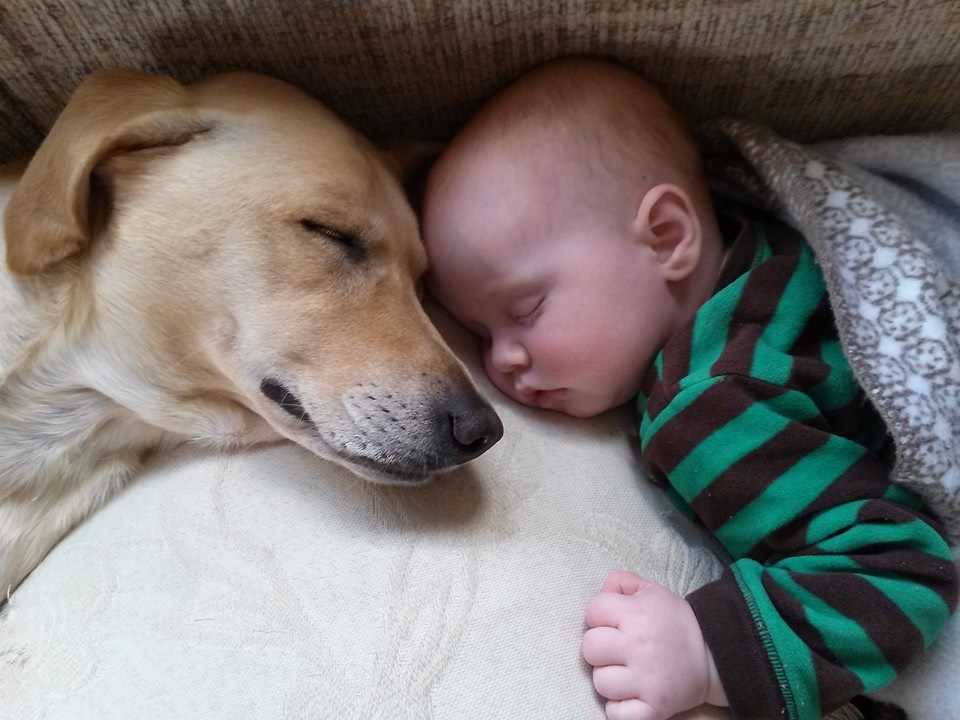
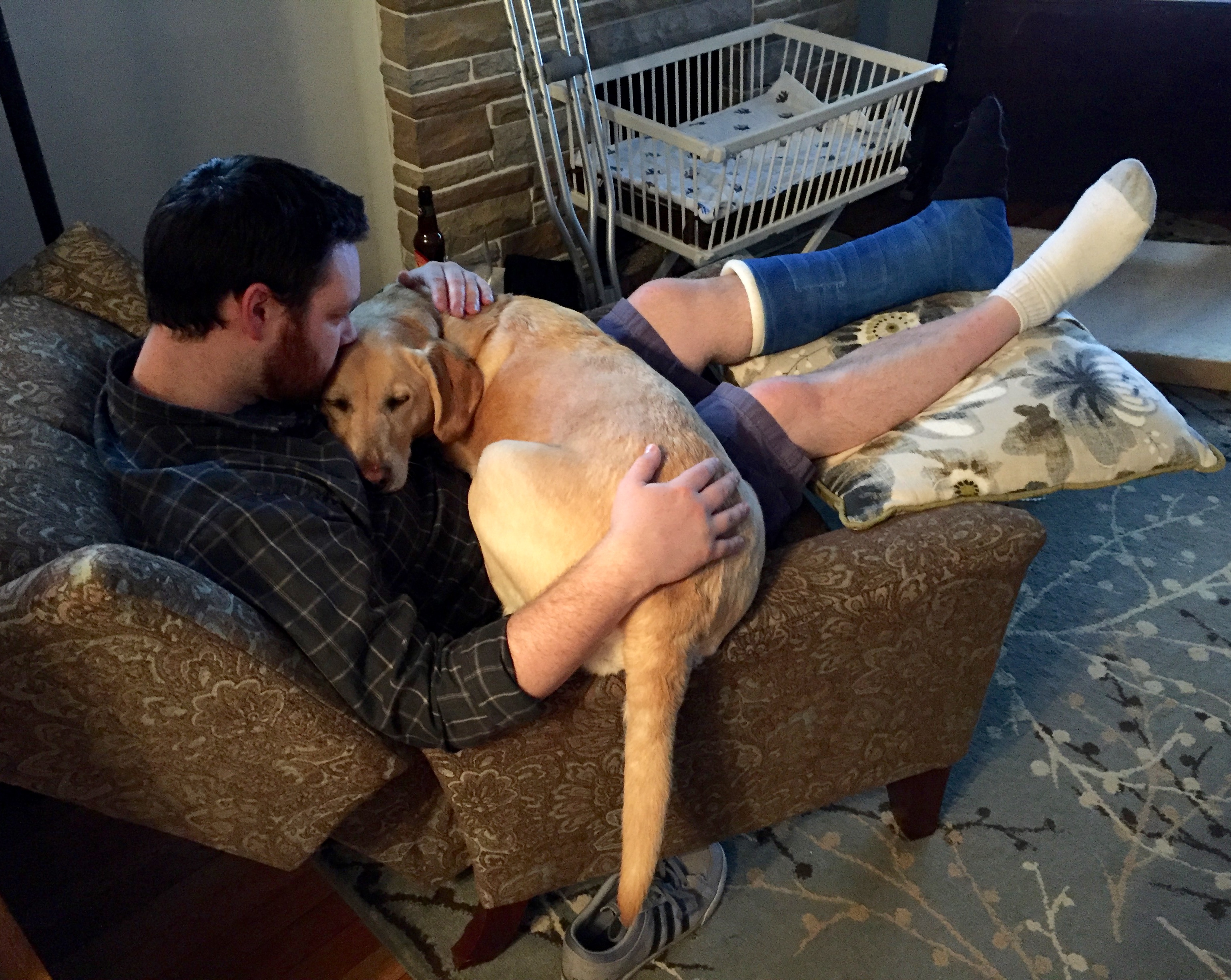
I never realized how much Layla loves Matt until recently. Pop will do in a pinch, but only one lap is home. Before family dinner one evening, Matt sat in my recliner, his cast resting on a pillow. Layla climbed aboard and settled in.

She hadn’t seen her master in two weeks and was finally home. No gunshots. Just a goofy dog and a man who said yes.

IMG_4545

Man and dog: home

I couldn’t help taking pictures. Such good feels. Honest stories have flawed endings. Friends die. Balloons explode. But once in a while a last page sings out the possibilities of reckless love. It convinced Layla that she’s a good girl, and maybe, one dog and human at a time, it can also heal the world.

Belated Happy National Napping Day!

Belated Happy National Napping Day!

Blogger’s Note: I had this post almost ready to go yesterday. Events conspired against me, though. Since A Napper’s Companion is thus far a gratis gig, the scrumptious words that follow had to wait until this morning. Enjoy a day late. Peace, John

IMG_3021

Grandson Cole practicing sanity and wisdom . . . before his red hair came in

Thirty-five years ago at Behrend College in Erie, Pennsylvania, Mr. Michael Tkach did me a life-changing service. His persuasive writing class convinced me to become an English major. I was a milquetoast Business Management student, but once Tkach—pronounced tack—made me wrestle with fallacies, my major took a hairpin left–English it would be.

My former professor is now a friend, and today I owe him a second, albeit more quiet, thank you. The following Facebook message from Mike just landed in my box: “National Napping Day! I didn’t know about this, but I thought you might.”

A.Cortina_El_sueño

“Joven Dormida” (Sleeping Girl) by Antonio Cortina Farinos on Wikimedia Commons

I do, in fact, know about today’s sane and gentle observance, always the day after our clocks spring forward an hour, but without fail I forget. According to wowktv.com, “William Anthony, Ph.D., a Boston University Professor and his wife, Camille Anthony, created National Napping Day in 1999 as an effort to spotlight the health benefits to catching up on quality sleep. ‘We chose this particular Monday because Americans are more ‘nap-ready’ than usual after losing an hour of sleep to daylight saving time,’” said Dr. Anthony, also known as the Napmaster General, in a BU press release.

The host of a blog called A Napper’s Companion should have this date circled in red on the calendar. I have one defense: for me, every day is National Napping Day. Thanks, Mike, not only for giving me a great steer decades ago, but also for sounding the alarm about this holiday.

“National Napping Day is probably for amateurs anyway,” Mike concluded. “You’re a pro.” I wish, old friend. Dedicated volunteer is more like.

When I started www.ANappersCompanion.com almost three years ago, I shared piles of information to defend and encourage napping. If you’re intolerably bored, you can dial back many months and find more benefits of the blessed oblivion of midday than any reader could wish for.

800px-Andrea_Mantegna_022

Jesus pleads. His disciples nap. “Christus am Olberge” (Christ on the Mount of Olives) by Andrea Mantegna (Wikimedia Commons)

But I don’t write much about napping anymore. First, the practice no longer needs any defense. Research rendered in snappy graphics are all over the Internet. Facebook crackles with exhortations and celebrations. Big business has slowly caught on to the wisdom of not only allowing naps but also dedicating space to them. Bill and Camille Anthony have served us well.

To date I’ve posted 179 essays on A Napper’s Companion, and one entitled “Napping Pods for $12,985: A Commentary” has been visited more than any other. By far! And much to my chagrin. I wish a couple of my other posts had attracted such numbers. WordPress sent me an alert yesterday that my stats were soaring. Cool beans, but nearly all the interest was in napping pods.

I’ve never even seen a pod in person, by the way. I remain a garden-variety napper who finds that a couch or bed works fine. A floor is okay, too, as long as I have a fluffy pillow. My siesta strategies haven’t changed over the years.

Nap-Strydonck

“The Nap” by Guillaume Van Strydonck. Time was I could relate, sister. (Wikimedia Commons)

But circumstances have eased. Pitiful as it sounds, napping used to be serious. The last fifteen years or so have included intense, excruciating stretches, some of which regular visitors to this blog know about. During the worst times, knocking off for an hour in the middle of the day was essential. I either stepped off the planet into oblivion or imploded. Heck, I almost broke down anyway.

It would be nice to say that I’ve grown or gotten stronger, but I’m as vulnerable as ever, unequal to many gauntlets humans must run. But for whatever reason, swords and clubs are fewer these days, challenges that slash at my spirit mostly disarmed.

the-siesta_med

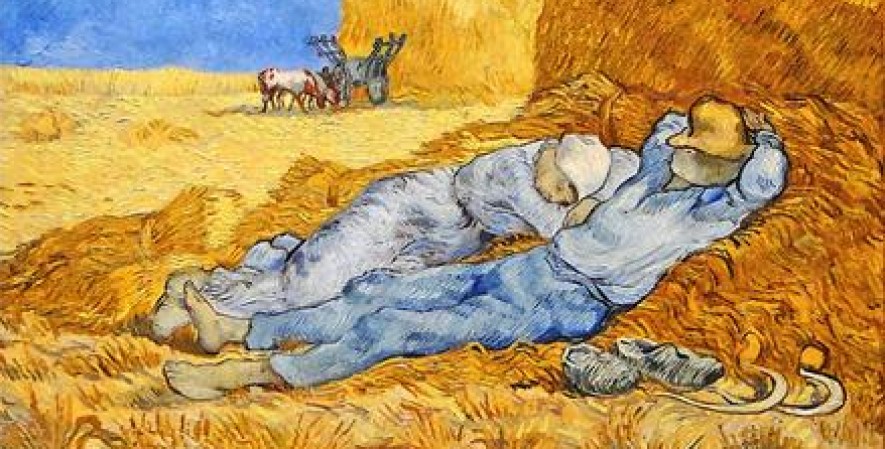
Van Gogh’s “Mittagsrast (nach Millet)” (Wikimedia Commons)

I’m still devoted to naps not because I’ll fall apart without them but because they’re good for me. Some folks do well sleeping in one long session over twenty-four hours. I’m happy for them—really. Others’ schedules don’t allow a siesta, which is a shame if they’re tired.

National Napping Day has plenty of scientific support. I’m buoyed by the fact that my daily rest is blessed by research, but I’ll close my eyes in an hour mostly for subjective reasons. Napping is my way of kissing myself on the forehead and saying, “You’re trying to be a good man, John. Lie down and breathe.”

Happy National Napping Day and love to you all.

Oniontown Pastoral #2: Visitation

IMG_4284

I don’t know anything sadder than a summer’s day.

(“The Geese” by E. B. White)

Who doesn’t love summer? Millions of northerners flock south each year in hopes of denying winter its due.

I accept the migration’s logic, but my attraction to summer or any mild weather is complicated. If the sky is flawless blue, I remember that for some folks, clouds block the light.

E. B. White’s summer sadness descended as he watched an old gander on his farm defeated by a young male. The Charlotte’s Web author, in his early seventies, sympathized with the displaced bird.

My ambivalence toward nice weather has its own causes. When I was a teenager my grandparents tried to outrun Gram’s arthritis by moving to Sun City, Arizona. While the dry climate was physically medicinal, the miles from children and grandchildren punished her heart.

My mother died in June of 1998 while I was doing chaplaincy training. At the end of each day of caring for others, I floated a city block to my car through a hot haze of grief.

So memories and disposition keep the unbridled joy of a beautiful day in check. I wouldn’t call my mood sad, though. Mindful is more accurate. I pray for people for whom getting from stoop to car is herculean or impossible. I dream them with me into the light.

Last week I visited homebound parishioners. Ah, the weather! Driving was a pleasure, windows down a couple of inches. Walking across parking lots was all Julie Andrews spinning and singing from the lively hills.

But it never takes long to recall that beauty depends on your perch. If walls and a non-compliant body keep you from taking in deep draughts of outside air and picking tomatoes with your own two hands, then whatever breeze sneaks in through the screen might bring out a sigh of resignation rather than delight.

IMG_4308

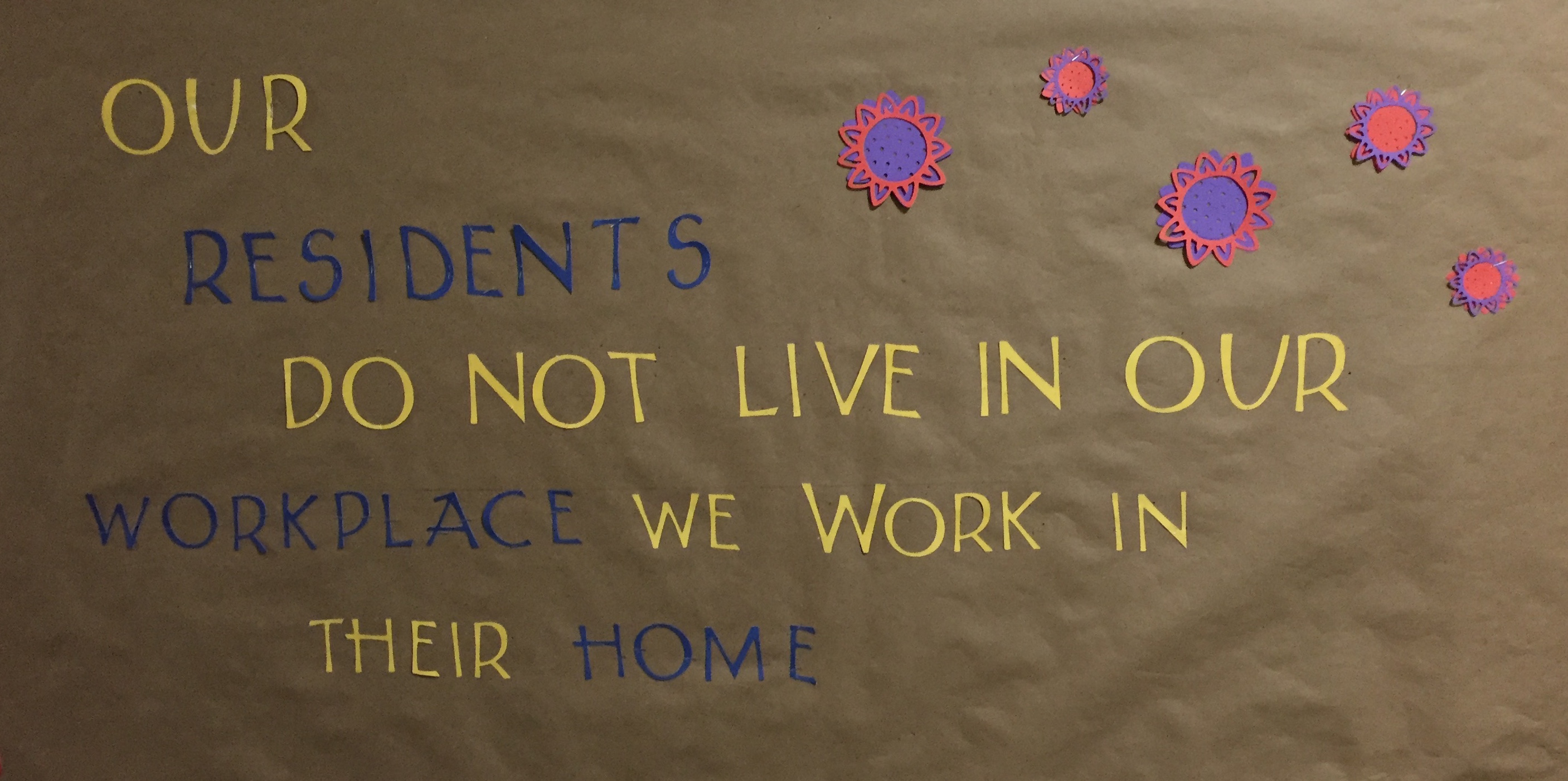
Bulletin board in an old folks’ home near Oniontown

This evening while enduring the television news, I’ll have a splash of pinot noir—just to gladden my human heart. What does a long-stem wine glass look like to an elderly child of God who shakes unpredictably? Or a chalice full of Sacred Presence? Spills waiting to happen?

Such questions should depress me, but they don’t. Seeing through homebound eyes is a lighter prayer than you might think. Anyway, I won’t dishonor them with sorrow. Maybe God can use my gratitude—for the filling of lungs, lifting a spoonful of broth, finding the Big Dipper—to bless my friends, to grant them an hour’s gladness.

My own joy is tender to the touch—only selfish joy isn’t bruised. I miss Mom now more than eighteen years ago when summer hung on me like wool.

But this March day is stunning, brilliant, 60 degrees. Chores are next on the list, then a walk. I’ll bring Mom and gather everyone I can remember as I go.

Dear God, please take the saints I forget by the hand and lead the way.

Oniontown Pastoral #1: My Wife Sleeping

Oniontown Pastoral #1: My Wife Sleeping

IMG_4284I’ve been going to bed by 9:00 p.m. lately and waking up several times during the night–changes in established rhythms. Wife Kathy and I have pruned home to 1000 square feet. My pastor work has slimmed to part-time to make room for writing. And Kathy cries out whenever she rolls over.

As our friends know, Kathy climbed to unfurl the royals on Brig Niagara. She put a new roof on our old house, remodeled the bathroom, fashioned a patio out of salvaged brick, and planted flowers I could never name.

When we bought our little house, which I call the hermitage, Kathy willed the dingy place into fresh order with elbow grease and doggedness. She has big plans: a vegetable and herb garden with raised beds; a deck cobbled together with wood from a backdoor ramp she will saw into pieces; and, of course, flowers.

Kathy has plans, but as we found out a few weeks ago, she also has rheumatoid arthritis. Questions still outnumber answers. Will medication help? Diet? Exercise? Can the condition be coaxed into remission?

She has swollen joints, particularly at the fingers and wrists, and pain all around. A steroid helps for now, but it’s not a long-term solution. Her spirit still sings. Just now she sent me this message: “I hope you are enjoying your morning writing time. You should try to get out for a walk today. What a lovely day. Love you.”

Lovely day, indeed. Lovely human being!

This morning at 1:48 I woke up, sipped some water, and watched Kathy sleep. She should win awards for the dexterity and variety of her snoring. A couple of exhales in a row, her throat sounded like a playing card being flip-flip-flipped by bicycle spokes.

When I smoothed hair away from her forehead, she started. “Oh, I’m sorry,” I said. For the first time in my life, I heard a complete, discernible sentence uttered in mmms. Cadence alone provided the words: “Oh, that’s okay. You can put your hand on my head.”

So I held her hair between the fingers of one hand, rested the other on her puffed out knuckles, and prayed—sort of. If wanting to draw pain out of my wife by touch, to take it upon myself, counts as prayer, then I prayed.

And if “Oh, my dear” counts, then I prayed without ceasing. How many times did moving a little bring rapid breaths and four or five ows out of her sleep?

“Your hands?” I asked.

“My leg,” she answered.

“Oh, my dear.”

She returned to snoring. I looked at her face and longed for a miracle, but I’m eccentric, a pastoral black sheep. You would expect articulate petitions from a trained theologian, but I pray best by breathing.

Each time Kathy resumed snoring, I drew close again and kept vigil. In our shadowy bedroom, we lay bathed in holy light.

One belief granted me sleep: every cry ripples in the waters of Eternal Love.

P. S. Please stay tuned for further Oniontown Pastoral posts and other explanations and solutions.

Thus Spake the Rabbi

My stride has been ragged lately, my groove flummoxed. As the poet said, “Nothing is plumb, level, or square.” Or the politician: “What a terrible thing it is to lose one’s mind. Or not to have a mind at all. How true that is.”

f503eb5a-2d90-44f2-ba21-32f9914a488a

Old buddy Watson, twelve years of family joy

Joy is largely to blame. Wife Kathy and I had friends over the other night to catch up. When eyes turned toward me, I said, “I’m happy,” which took some explaining. During the last couple of years, though surrounded by more love and support than anyone deserves, I have been tired and stressed. Maybe burnout is the word. Against all worldly good sense, Kathy and I raided my retirement funds and bought a hermit-sized home. (“You might come to regret that,” an old colleague said, and I couldn’t disagree.) I left a fourteen-year, full-time pastorate and accepted a part-time call seventy miles south of Erie, right through the region’s snow belt. Oh, and we haven’t sold our big house yet.

We Colemans have either lost our minds or found them. It could be that you have to lose one mind to find another. Since gladness and good sense seldom form right angles, I’m not surprised that my stride and groove—constructs of a neurotic brain—are stepping lightly these days.

I didn’t use these words exactly to unpack “I’m happy” for my friends, but they understood. Forced to choose between weary, anxious circumstances standing in crisp formation or calm ambiguity weaving like a drunkard, I’ll take the latter.

That is to say, I have taken the latter and am learning to embrace uncertainty and surprises. Lately sleep has been whimsical. A new work schedule has taken issue with my long-standing afternoon habit of napping. Like an AARP veteran, I’m reading in bed at 8:30 p.m. and surrendering by 9:00 or 9:30. The result: I wake up at 2:00 a.m., float to the bathroom, return to bed, and abide in a space that is to sleep what free association is to therapy.

Neither refreshed enough to get up nor drowsy enough to disappear, I breathe. Deep breaths, yes, but not those of my past, taken to lift a burden just enough to endure another hour or hush a remark that can’t be retrieved. If insomnia is an enemy, my peculiar wakefulness is a bearer of gifts.

60ab5db4-5da1-4824-95fc-0fde4cc86b6d

A bulge on the forehead: “soon and very soon,” Watson

Darkness is upsetting if you’re trying to find something, but it’s a gentle companion if you’re waiting to be found. A few nights ago snoring found me, not my own, but wife’s and dog’s. The sounds, joining for a moment then going their own ways, were blessings. Kathy has been swollen, weak, and achy for the last couple of months, and neither we nor the doctors know why. No matter what noise it makes, her sleep is medicinal. I welcome it. And Watson has weeks rather than months to live. The fatty tumor on his flank is getting hard. The growth on his forehead pains him more by the day. I now hope to come home and find that he has slipped away while dreaming that he and I are going for a run like we did years ago. His snore means that we don’t have to say goodbye quite yet. God bless his kind soul, even our walls and floors will miss him. I think now of his eyes, alive and expectant when Kathy and I left him this morning, and am close to undone.

The first decoration I nailed up in the Coleman’s new home is wisdom from a rabbi, Abraham Joshua Heschel.

7cc731dd-b219-4700-b2ee-3f9cdca525b4

Thus spake the rabbi

“Just to be” in a warm bed next to Kathy; “just to live” one more day with Watson: these are the teachings of wakefulness. My chest rises and falls, each in-breath a blessing, each out-breath sacred.

But my darkness isn’t deceptive. It would never say to a lost soul, “Just to be is a blessing.”

Instead I hear, “One corner of your joy will always be uneven, cracked with grief. Whatever mind you possess, it will never be satisfied.”

In this moment, I close my eyes to learn, invite the 2:00 a.m. wakefulness, and hear the rabbi more clearly. Breathing is grace. I survive on love. And I pray: “When my dog dies, Holy One, please help him not to be afraid.”

Fats Waller and the Frosted Trees

Fats_Waller_edit

Fats Waller (Credit: Alan Fisher on Wikimedia Commons)

Fats Waller and the Frosted Trees

Jelly Roll Morton, Scott Joplin, and Fats Waller make me grateful. As Steve Martin said decades ago, “You just can’t sing a depressing song when you’re playing the banjo.” Same with driving in the country and listening to piano rolls, rags, and strides.

This past week Fats, the color white, and gratitude owned my commute from Erie to St. John’s Lutheran Church in Oniontown, Pennsylvania. The hour south on I-79, Route 19, and District Road was a hot damn of thanksgiving–“Handful of Keys,” “Lulu’s Back in Town,” “When Someone Thinks You’re Wonderful.”

d8ab0138-1236-43ad-a8dc-a930a0642a7f

Grandson Cole, wonderful kid with a new lid

Why did pianos and frosted branches make me take inventory? I don’t understand myself all that well, so who knows? My list wrote itself slowly and silently.

  • I have a surplus of love. One step in any direction, there it is. Wife, grown kids, one grandson and another on the way, more family and a ton of friends. An absolute wonder of wonderful souls.
  • Those closest to me are holding together okay. No crises going down or chops busting in process.
  • I have a home, warm or cool as desired, so much food that possibilities have to be eliminated, and a king’s ransom of clean water.
  • My closet holds wardrobes for varying weight classes with acquisitions I’ve forgotten.
  • Bill collectors are not breaking down the door.
  • I dig the bookends of my commute—solace to the north and good purpose to the south.

As the miles clicked away, as Fats sparkled, as the snowy trees formed cathedrals surreal with beauty, Gershwin lyrics came to me: “Got my gal, got my Lawd, got my song.”

IMG_4148

Beloved Watson with the mother of fatty tumors

“No use complaining,” Porgy says as an aside, though he didn’t know about the Coleman family’s dog Watson, weary, arthritic, laden with tumors. He is our hobbling source of agape—unconditional love. A month ago, a lump appeared in the middle of his forehead. Its rapid growth foreshadows his absence, even as he manages a fetch or two. He snorts constantly, trying to clear a mass that won’t budge.

Nearing the end of my commute, I allowed that happiness isn’t a prerequisite for gratitude. Twelve years of Watson’s mild presence has been extravagant by any measure.

IMG_4150I would say that my inventory was a prayer, but Fats alone was that, as were the frosted trees and a line from a musical. I received the wide mercy—alpha to omega—of giving thanks for miles with my eyes, ears, and lungs and not once calling God by name.