
So, are you prepared to arrive at your polling places in November surrounded by pissed off masked men with weapons drawn? Continue reading
So, are you prepared to arrive at your polling places in November surrounded by pissed off masked men with weapons drawn? Continue reading

Dear Fellow Nappers, For some time now I’ve tried to keep A Napper’s Companion clear of controversy. The trouble is, our American system of government is in peril. As a writer I feel obligated to share ideas that may be … Continue reading

For America to be great, our Declaration of Independence and Constitution must not only be inscribed in documents but also written on our hearts. My point here is subtle, but critical. If Americans don’t snap to when the standards of good conduct envisioned by our founders and nurtured into normalcy by our three branches of government are trampled underfoot, then we should be alarmed.
If only folks would pay as much attention to what they say and how they say it—whatever the medium—as yesteryear’s kids did mastering the stubborn capital “G” or lowercase “z,” how much better off humanity would be. Continue reading

This gallery contains 2 photos.
Oniontown Pastoral The Orphan’s Question: Where Is Love? Kathy’s breaths of sleep come and go. Awake at dawn, I’m in a high school choir concert 45 years ago, a musical’s lyrics forming behind my closed lips: Where is love? Does … Continue reading

I’ve seen him before: a hulking man probably younger than he looks, dressed in stained layers, even in the summer. He paces outside a convenience store, stops and turns as if a shadow has called his name. His countenance is rage, barely mastered.
I always figure he is going to roar at me or ask for spare change. His base is in one of Erie’s rough areas, so being panhandled or hassled wouldn’t be unexpected. His bench is at the intersection 30 yards away. He sleeps on his side.
My mother raised me to avoid such neighborhoods. In fact, there’s one street in Erie that she refused to travel, and that’s where I was this morning, buying my newspaper and iced tea.
Getting back in my car, I glanced his way and thought, “Just like me.” Not the homelessness, thankfully. Not the dirty clothes, not what I take to be the fury on simmer. I’ve lost some weight recently, but remain hulking.
Still, I’m a lot like this guy. I want to be loved and understood. I want to be comfortable, sheltered, clothed and fed. I want a mind that functions, friends to laugh with and a decent portion of gladness.
The American Tibetan Buddhist nun Pema Chodron deserves credit for “just like me.” She told Oprah Winfrey about it, and I overheard. Admittedly, you probably don’t need to engage in this contemplative practice with folks you love, though it can’t hurt. No, realistically, Chodron’s phrase has to do with those you find objectionable, often strangers.

But even the first woman ordained a Buddhist monk in the United States didn’t come up with “just like me.” In the novel To Kill a Mockingbird, novelist Harper Lee famously put an echo of the notion into Atticus Finch’s mouth. His daughter has had a rough first day of elementary school and disapproves of her teacher. “Well, maybe she was just nervous,” Gregory Peck explains in the film adaptation. “After all, it’s her first day, too, teaching school and being new here.” Then comes Lee’s gem: “Just learn a single trick, Scout, and you’ll get along better with all kinds of folks. You never really understand a person until you consider things from his point of view, until you climb into his skin and walk around in it.”
In the novel’s last chapter, Scout recalls the lesson: “Atticus was right. One time he said you never really know a man until you stand in his shoes and walk around in them.”
Delivered in Peck’s legendary baritone, empathy comes across as warm and folksy, but American poet Walt Whitman knew better. Of his experience nursing Civil War soldiers, he writes in Leaves of Grass, “I do not ask the wounded person how he feels, I myself become the wounded person.”
All of this imagery points toward pain. Saying “just like me” demands that I set aside the fine appointments of my days and recognize that but for bad luck, an unfortunate decision or the curse of mental illness, I might have no roof to call my own. Climbing into another person’s skin implies that I first peel off my own. To become the wounded soldier—or the person I’m inclined to hate—means that I receive another’s gut shot, that I dare to trade places with a broken soul, that I claim a sister or brother’s graceless desert as my own.
Empathy is easy on occasion, but most often it’s exasperating, like a riddle that’s beyond my patience or capacity. Anyway, stewing in ill will is easier than reflection and over time gets to be addictive. And prior to my self-explication, the person who has triggered my brain stem is nothing like me, damn it.
 Northern Mockingbird (Credit: Wikipedia)
Walking for a time in someone’s stilettos or loafers doesn’t mean that I condone a single chapter of her or his story. On the other hand, until I put into practice the raw, chafing wisdom of Chodron, Lee and Whitman, I’ve no business peddling criticism. In fact, if I review other people’s lives while still abiding in my own skin, I’m apt to kill a mockingbird.
“Mockingbirds don’t do one thing but make music for us to enjoy,” Atticus Finch says. “They don’t eat up people’s gardens, don’t nest in corncribs. They don’t do one thing but sing their hearts out for us.”
The older I get, the more I’m convinced that most people just want to be mockingbirds, in a fashion: To do no harm and sing their hearts out. Of course, if my supposition is true only of folks I love, then it isn’t true at all.
Oniontown Pastoral: Why I Kiss My Wife’s Hand
I know what you’re expecting: Here comes another edition of “Now, Pastor John Will Warm the Cockles of My Heart.” Well, sisters and brothers, think again.
This morning as I drove Kathy to work, I did, indeed, kiss her hand, but what were once pecks meant to say, “Sure do love you” have evolved into lips reluctant to pull away, lips that would say, “Sure do need you.” My gesture used to be mostly an offering, a reminder, but in this season of civilization, I’m drawing succor and forbearance from the woman who has tried to understand and abide me for 36 years.
So, to the kiss in question: at a red light, I held her hand to my lips, closed my eyes and breathed in and out. A woman driving by apparently saw and smiled. An hour ago Kathy sent me a message: “You made her day.”
Maybe so, but I’d like to explain to this stranger that I am romantic, a real sweetie pie, but what she witnessed was much less an amorous husband and more a man crouched on his roof during a flash flood, tree branches and neighborhood “disjecta membra” swept away by the current.
The water punishing my home’s foundation at present is not only the erosion of the societal expectations Americans have historically honored—imperfectly and inconsistently, to be sure—but also the delight some of my fellow citizens seem to take in dancing on the grave of noble behavior.
I’m not talking about high-minded philosophy or fervent religious belief, but about the simple words that rolled off the tongues of my elders:
You can add dozens of sayings to my list, and, of course, there are exceptions to any adage. For example, some situations demand an unvarnished truth that isn’t nice, maybe quite stern, but no provocation warrants cruelty.
I’ve long ago stopped harrumphing about folks chewing with their mouths open and yawning with noisy abandon in public, two trifles that drove my father to distraction. Why bother fishing a plastic straw out of a tsunami?
What I can’t stop mourning, however, are the standards of thought, speech and conduct that I grew up with being moment by moment trodden under foot. Worse, when I see one person rejoicing in the misfortune of another or insisting that a clearly documented fact is actually false or constantly and proudly acting out in ways that would put a preschooler in timeout, I’m both pained and drained.
If you think I’ve got one public figure in mind, you can relax—or clench up, as you please. My scolding finger is pointed at millions, and I’m done apologizing for it. When our mothers told us to behave ourselves, who among them would have overlooked sucker punching a friend on the playground or equivocating with one arm elbow-deep in the cookie jar? Not mine, God rest her, that’s for sure. In her generation, actions that now don’t even raise an eyebrow might send children to bed without dinner.
Much merriment is had these days at the expense of sensitive souls like myself who aren’t ashamed of tears shed because the beliefs we embrace are sailing into the horizon of this flat earth.
Last night’s news reported that binge drinking among senior citizens is on the rise. Why? Nestled in the list of feeble theories was “social change.” Yeah, no kidding. Millions of people over 65—and many considerably under—no longer recognize their native land. I’m not referring to hot button issues, but simply the scurvy, sinister way folks treat and address each other.
Forgive me. I realize not a single heart cockle has been warmed, but an amiable Oniontown pastor must on rare occasion be given leave to share thoughts that let a chilly draft into the bed chamber.
Most days, kissing Kathy’s hand provides all the solace I need. Her skin, so familiar and dear after nearly 40 years as a couple, reminds me of how much grace and blessing crowd around me in this life.
Once in a great while, though, I have to pull my lips away and speak. Today is thus.
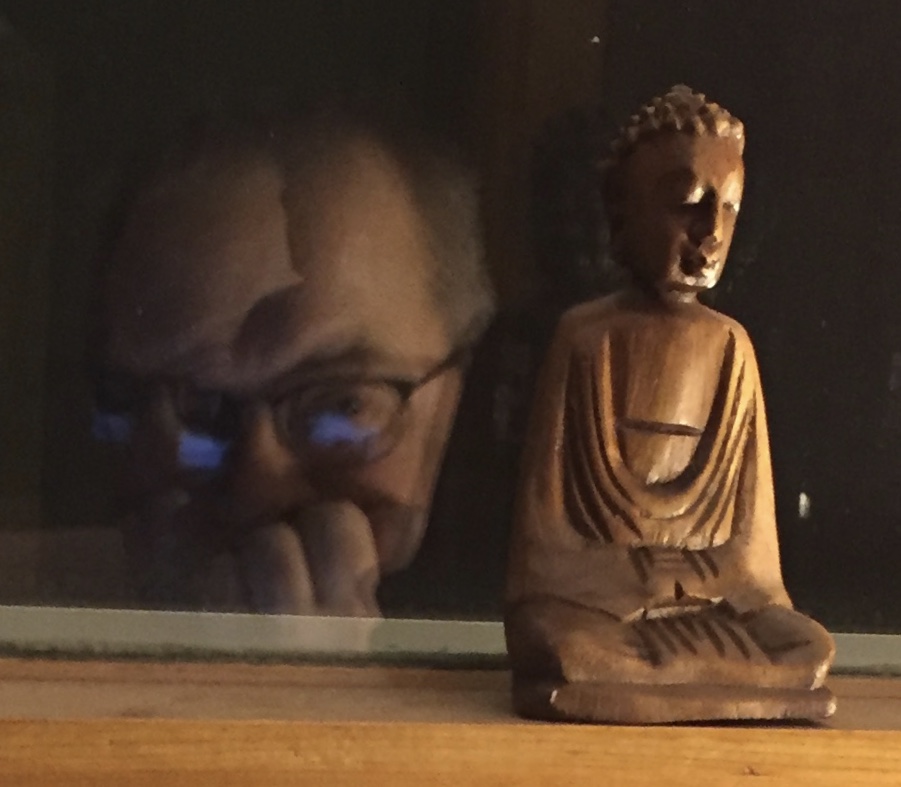
The Trouble with Love
“Our job is to love others without stopping to inquire whether or not they are worthy.” (Thomas Merton in Disputed Questions).
Most often breathtaking is used figuratively, but in recent days I’ve said to myself, “John, you’re not breathing. Stop and breathe.” Mass murders, hatred, relentless falsehoods and absurdities arrive in torrents.
Saturday, October 27th: Tree of Life Synagogue in Pittsburgh, eleven dead. Tuesday, November 6th: The scorched earth of midterm elections. Wednesday, November 7th: Thirteen dead—most of them younger than my own children—in Thousand Oaks, California. To these news items add that state’s wildfires, which according to latest reports are 35% contained.

Credit: skeeze on Pixabay
But let’s set aside Mother Nature for the moment. Disasters of human agency take everyone’s breath away, and many Americans are further deflated by the likelihood that governmental leaders won’t lift a finger to prevent further loss of life.
Political motivations are legion, the bottom-line being that innocents’ safety ranks far below constituents’ hobbies and proclivities. Transparent lies, lame as a crumb-dusted child denying raiding the cookie jar, are piled so high that responsible citizens grow disoriented and exhausted.
Any spare energy may well be absorbed by hatred, which is eager to throw off its gloves and start swinging. Present circumstances are practically designed to bring out the fighters in everybody. Some of us struggle to hold rage against the ropes while others gleefully talk trash and punch below the belt.
Sad to say, you can sometimes find me in the ring, too. In my mind I heap insults and ridicule on my fellow citizens’ heads before remembering Thomas Merton’s instruction: “Our job is to love others without stopping to inquire whether or not they are worthy.”
As I pause over these words, anger rises in my chest. The exhortation to love is Pollyannaish. The task is difficult. Who can accept it? There’s a physiological response when you look at folks you really want to punch in the face and remember you’re supposed to love them.
My mother, God rest her, took her upset out on doors. As a teenager I once made her so mad that she slammed the basement door, took two steps away, then returned for seconds.

Mom could have used this room when I was growing up. (Credit: Arek Socha–“qimono”–on Pixabay)
Even in the closest of relationships, love is trying. It can be like digging a pointless ditch with a swizzle stick when all you want to do is put said ditch to good purpose by shoving the person you can’t stand into it and shoveling in wet dirt?
Yet we know that this isn’t the Christian way. Actually, millions across the belief spectrum would say that they are called by conscience to love of neighbor and rejection of hatred. The problem is, anyone who has walked the path of understanding and compassion for long knows that confusion dominates comfort, deprivation overwhelms fulfillment. Being steadfast takes stamina.
This is why my gait appears drunken. Every fork tempts me toward a destination that rolls out the red carpet for my worst impulses: “Nobody deserves your consideration. They’re not really your neighbors. Put yourself first, others can pound salt. Let your tongue be barbed wire.”
All that keeps me from staggering hopelessly far in the wrong direction is one crucial insight and a whisper of grace. Love is a roomy term. Contrary to popular thought, “love” and “affectionate regard” aren’t attached at the hip. The latter simply can’t be commanded, which is convenient, since the love humanity now starves for has nothing to do with cuddling or playing footsie.
In Conjectures of a Guilty Bystander, Merton has a revelation about his earthly brothers and sisters while visiting Louisville, Kentucky: “At the corner of Fourth and Walnut, in the center of the shopping district, I was suddenly overwhelmed with the realization that I loved all these people, that they were mine and I theirs, that we could not be alien to one another even though we were total strangers.”

A plaque in Louisville to mark the spot of Merton’s revelation. (Credit: Wikipedia)
Merton recognized in the city’s shoppers “the secret beauty of their hearts.” He knew that they were children of the same Creator, beloved of the same God, and wanted to tell them that they were “all walking around shining like the sun.” They could also be monumental pains in the neck or far worse.
I occasionally want to give Thomas Merton’s hermitage door a few slams, but a quiet grace visits, filling me with belief: God calls me to love without reservation, especially when the effort seems foolish, even embarrassing—a little like supposing that some good might come from a man hanging on a cross.

Thomas Merton in his cinderblock hermitage. (Credit: Wikipedia)
Sowing What Our Children Will Reap
(8 minute read)
As I sit safely in my living room a couple of blocks from Lake Erie, Florida’s panhandle is still trying to get its bearings after Hurricane Michael. The death count now stands at thirty-five. An old high school classmate of mine had his cars crushed and home severely damaged. There’s no way to ignore such massive, breathtaking destruction.
But some destruction is stealthy, gaining ferocity while nobody is paying much attention and ravaging one life at a time. Public awareness is slow to account for souls who suffer mostly under the radar—the bullied youth, haunted survivor, beaten wife or displaced worker—not to mention the homeless, addicted or mentally ill.
In his October 12, 2018, New York Times editorial, David Brooks shares a statistic that should trouble sane Americans: “According to the Centers for Disease Control and Prevention, between 2006 and 2016 youth suicide rates rose 70 percent for white adolescents ages 10 through 17, and 77 percent for black ones.”
Meanwhile, The Washington Post gleaned additional bitter food for thought from the same CDC report: “Suicide rates [in America] rose in all but one state between 1999 and 2016, with increases seen across age, gender, race and ethnicity.”
Such statistics make an alarming statement: Americans of all stripes are lining up at the existential Customer Service Desk to return a gift—their life.
“Is there anything wrong with this item?” the clerk asks.
“This was supposed to be a gift,” the American says. “This is terrible. It hurts too much.”
Of course, most citizens are happy enough. Even folks down in the dumps generally plug along, playing the hands they’ve been dealt, praying for smoother roads and greener grass. Regarding suicides, experts rightly point out the usual suspects: poor economy, foreclosures, stressful jobs, broken relationships, etc.
But surely something else is bending backs and furrowing brows. The aforementioned CDC report indicates that around half of all suicides have no history of mental illness. It’s as if something snaps, the proverbial straw that broke the camel’s back. Seriously, then, what’s going on?
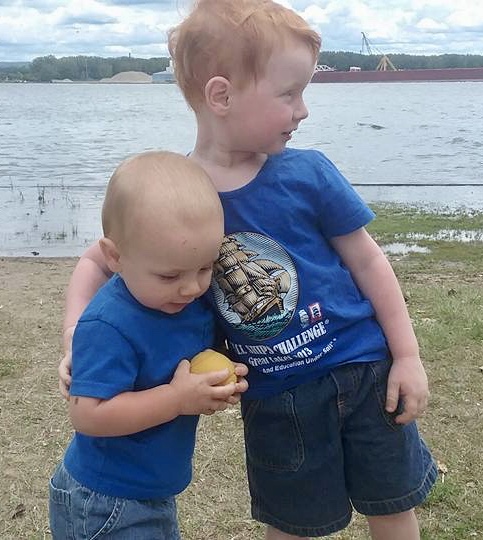
Two of my grandchildren. I have millions.
I have no credentials to respect, but from my armchair the case is clear. Contemporary vernacular includes an adage that surfaced recently: “What goes around comes around!” Wisdom from the Bible teaches, “Whatsoever a man soweth, that shall he also reap” (Galatians 6:7b). Then we have the vignette, so intentionally poignant as to verge on annoying, of the Cherokee (or Navajo) man who tells his grandson about two wolves at war within himself. The wide-eyed boy asks which wolf will win. After a dramatic pause, the grandfather says, “The one which I feed.”
The moral is obvious: your violent behavior will recoil upon you; if you plant poison ivy, raspberries won’t grow; if you rejoice in evil, count on evil to win both battle and war.
I turned fifty-seven recently, so I’m not worried about societal recoil for myself or wife Kathy or even my adult children, Elena and Micah. We can respond mindfully to the ebb and flow of today’s absurdity, aggression and cruelty.
But what about my grandsons, Cole and Killian? And because every other child in the world is inescapably my very own, what about the innocent and vulnerable everywhere?
Alan Kurdi was my grandson. May God rest him.

One of my boys named Jesse. Sweet face! Soul full of music.
Two young men, both named Jesse, both teenagers, both loved abundantly by families and friends, found this life too much to bear. Both were my sons. May God grant them endless comfort and joy.
The young woman I know who suffered a racial slur on a school bus recently is my daughter. May God strengthen her.
If by some miracle planet Earth has any sweetness and succor left for today’s children, I’m still left to wonder what seeds we grown ups are planting in humanity itself, the governments that will shape the lives of future adults, the communities that will cradle their days, the cultures that will make their spirits either sing or weep.
A recent USA Today article reveals that the rare instance of kids under eleven years old taking their own lives has doubled between 2008 and 2016. Life is exhausting and painful for millions, especially for children. From television screens to social media to classrooms to living rooms, hostility, deception and ignorance have been welcomed in and embraced as kin.
If you believe that kids are immune to what they see and hear day by day, please consider the bit of preaching I now do to a congregation of one, in the mirror. Am I speaking the truth?
Most of all, I guess, I can hold fast to love for God, neighbor and self, even when doing so feels for all the world like defeat.

Dear Lord, Let all children feel this safe and peaceful in my presence. Amen
Johnny, We Don’t Say Things Like That
Over forty years ago the Erie Thunderbirds Drum and Bugle Corps was working on a routine when the music abruptly stopped. After a murmur from within the ranks, the drum major called out, “Would you kiss your mother with those lips?” Obviously somebody had fouled up and let slip some colorful language. Marchers and spectators alike laughed long and loud, and I tucked that jocular question into my mental chest of superb comebacks.
As Mom has been on my mind lately—and Dad, too—the drum major’s words have emerged from mothballs and nagged me. Specifically, I’ve been thinking about manners. I don’t remember first learning them, but the four Coleman kids knew the drill. Some rules were about appearance, like not holding your spoon like a shovel, but most focused on how we treated other people. Only recently have I begun to appreciate “mind your manners” and what that expression implied at 2225 Wagner Avenue. People matter. Their feelings matter. Their well-being matters. Their time matters.

Nerdy Museum Cardigan (Credit: Wikipedia)
My mother was a curriculum of care and tenderness unto herself. I fell asleep with my head in her lap. She tucked my 1970s hair behind my ear, which annoyed me back then. I miss that now. My father was also loving, but with a no-nonsense edge. If you wanted to see him scowl, boo from the bleachers. Not even a lousy performance deserved that. At one Thunderbirds practice, the soloist who played “Brian’s Song” was absent, so another horn stumbled through the piece. As Dad and I walked to the car afterwards, I said too loudly for his taste, “Boy, they sound like crap without Ronnie.” I can’t recall the verbiage, but his message was clear: My remark was not only impolite, but hurtful.
People matter. So when they ask how you’re doing, you ask about them, too. Please and thank you. Hold the door. Leave things better than you found them.
.jpg)
Awkward Museum Sneakers (Credit: Wikimedia Commons)
Name-calling was unacceptable. Once while shooting hoops in a neighbor’s driveway, my buddies and I spotted old Louie walking to the bus stop. He was grieving the passing of his partner of many years, but we hid in some bushes and roared a slur that begins with “f” and ends with “aggot.” Mr. Snell was out his back door before the echo died: “Johnny, we don’t say things like that.” In my fifty-seventh year, the shame still sits heavy in my throat.
Such schooling was bruising, but the diploma has been a blessing. When kindness reigns, peace like a river attendeth my way. It follows, then, that rancor and distain dam up my soul. This reality visited me a couple weeks ago as I watched “Won’t You Be My Neighbor?” a profile of Mister Rogers on public television. He is my hero, which may suggest to you my definition of wisdom and bravery.
The man’s voice alone sent me into a crying jag. Wondering what Fred Rogers would say about how folks treat each other in 2018 got me teary. Picturing him bent low, comforting an immigrant child who had been separated from her family brought me to my knees. I was undone.
Images of terrified toddlers are more than sob-worthy, but my upset runs deeper still. With each passing day, with each cackling, growling news cycle, the land I love becomes more a hostile stranger and less a trusted friend.
What’s gotten into us? Have those of us fortunate enough to grow up in healthy homes forgotten where we came from? Is it acceptable to treat our fellow citizens with disdain and shout vulgarities at each other as I did at Louie, hiding like a punk behind shrubbery? What about the trash babbled within the cowardly foliage of social media? And is shabby behavior, no matter the provocation, respectable as long as our parents have gone on to glory or aren’t watching?

Extinct Bronze Hero? (Credit: Wikipedia)
Finally, should we feast on fearful and scurvy impulses just because our elected officials routinely do so, turning their backs on values they ought to champion? Of course not! It’s easy to dismiss the drum major’s question as silly, but half-truths are often spoken in jest. The point, after all, isn’t about kissing our parents, but conducting ourselves in ways that would break their hearts.
Or maybe our upbringing is best seen in a rearview mirror. Maybe dear Mister Rogers is not only dead, but extinct. Or maybe the manners we’ve left behind and the love once shown us are exactly what the world needs, as my father used to say, “immediately if not sooner.”

What the World Needs
 A Napper's Companion