We We We Could Hold Hands

We We We Could Hold Hands

I’ve been sad off and on for a month now, but let’s not dwell for long on why. Let’s just say that the land I love is different now. Values, principles and manners that ground life and give it sweetness have been flogged, and I’m confused. What rules will we live by from here on? And will these rules call forth our best, not our worst?

If you can’t imagine what’s got me down these days, reading further will be a waste of time. But if you sense where I’m coming from, please accept one premise: You don’t need to agree with the reasons for my grief to accept it as valid.

img_5468

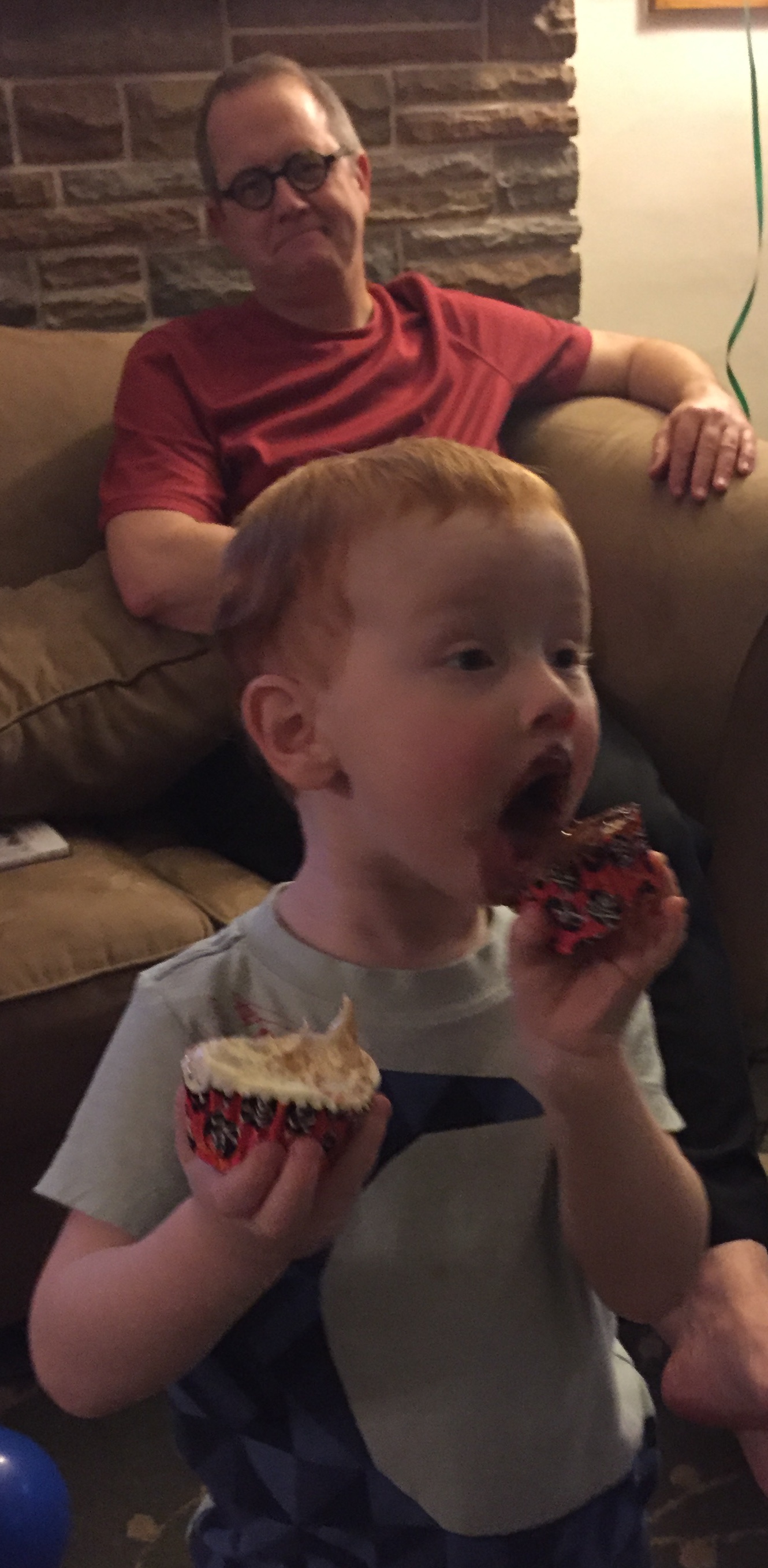
The master teaches the disciple. Lesson: Lick the frosting off first if that’s what you like.

If you can appreciate the distinction I’m making, you might also be interested in a chilly, rainy walk I took with my grandson Cole a couple weeks ago.

My mission was to occupy the three-year-old with sparks flying from under his sneakers so that Grandma Kathy and son-in-law Matt could do home repair and daughter Elena could mind grandson #2, Killian.

Cole and I were supposed to go to the corner and back, but when we got there, he pointed to the next corner and said, “I I I want to go to there.” (Cole’s speech can’t keep pace with his brain, so he repeats the subject until the rest of the sentence reaches his tongue.)

Sure, why not? When we reached the next corner, he pointed across the street and repeated his previous request. I could see his point. West 4th Street beyond Beverly Drive is missing some sidewalk, giving the passage a winding charm.

“But, Cole,” I said, “that’s across the street. We can’t go there.”

He thought for a few seconds, then looked at me: “But we we we could hold hands.”

“Ah ha,” I thought, “school is in session.” That’s how being a grandfather is for me. I’ve learned to recognize instantly when Cole has something to teach his lazy Pop, and his instruction is always edifying.

So off we went, looking both ways, his cold little hand in mine. He had tree climbing on his mind, but the neighborhood maples are matriarchs that haven’t had branches or footholds within reach for decades.

I explained and explained, the mist puffing from my mouth. “They’re too big, Cole. There’s nothing for you to hold on to.”

Finally, good sense caught up to me. “Okay, pal, give this one a try.”

He ran to the rooty base of a smooth-barked giant shiny from the weather. As he hugged the trunk, he was as confident in his ability to succeed as I am when approaching a cashier to pay for a loaf of bread. No sweat.

He rubbed around to check for some advantage and marched as if the wood might reach out to him as a staircase.

img_5345

If there were nothing else in the world to behold, this face would teach me more than I need to know.

To Cole’s credit, no fussing he made. A concrete telephone pole fifty of his rapid mini-strides away provided another option. “I I I could climb that.”

“You think so?” I lilted.

“Yeah!” he said. I must say, my grandson makes that word into a one-syllable hoedown. His yee dances in the clouds, and his ahhhh takes its sweet time landing.

Alas, same result, followed by the same okey-dokey shrug.

Our next stop was a pile of pumpkins Cole insisted was a fire hydrant. I didn’t argue. What he proposed was fine with me.

Even validictorians get pooped out, though, so I tempted Cole to head back home with the prospect of spotting turkeys on South Shore drive, where hens and gobblers mill about the yards of Erie’s rich folk.

Not quite there yet, he spotted an old guy bundled within an inch of his life and riding a zero-turn mower. “I I I want to see.”

Well, certainly. We stood on the boulevard, Cole in awe over the machinery, me wondering about the enterprise of getting rained on, running over wet leaves and turning pirouettes. But maybe a man in layers of well-worn gray and earmuffs also had something to teach me.

He parked, hopped to the ground and walked our way, arms swinging akimbo.

Cole froze at the sight. I held his hand again.

“You can cut through my yard,” the man said, “and take my steps down to the lake.”

That was the last thing I expected to hear, as owners on South Shore have the reputation of being grouchy toward trespassers. I guess you just don’t know the truth about people until you know them.

We said thanks anyway and waved goodbye, off to find birds.

I used to understand that no journey from A to B with a little boy could ever be direct, but I had forgotten. Cole reminded me by insisting on bending through the undergrowth and shrubbery rather than sticking to the sidewalk.

He was having fun trespassing, and I didn’t really care if we got hollered at. (It’s taken me five decades to adopt such a criminal attitude.)

Of course, we didn’t get chased off. We didn’t see any turkeys, either, but Cole jumped off of low stonework a few times. His wide eyes told me he knew the miracle of flight.

I’m not going to lie, I was glad for class dismissal when we got back home. My cheap black sneakers with elastic at the instep were soaked.

img_5351

Whenever you’re ready to teach me, Killian, I’ll be ready.

I want to be honest about something else, too. Years ago, as a young man, I wouldn’t have figured a walk with a red-headed boy could lead me to a better place. I would have considered the notion mushy.

Still, being a Pop will have everything to do with how I pass through this season’s mournful valley and grow as a man committed to kindness and compassion. Call this truth what you will.

My grandsons have the wisdom I need. I can feel it. Until their next lesson, I’ll use what Cole taught me on our walk in the rain.

I’ll I’ll I’ll remember that we can hold hands, climb even when the effort makes scant sense, and look for teachers who spin like fools.

Most of all, I I I won’t give up on love.

American Lament

American Lament

Dear Friends,

I just posted an essay called “American Lament” on my buzzkill of a second blog, Matters of Conscience. This primary blog, A Napper’s Companion, will probably be quiet a little longer–until I can write about beauty again.

I alert my Nappers to this lament because I know some of you will be interested. But I’m not encouraging or asking anybody to read. This was something I felt compelled to write.

Peace and love,

John

img_4616

Grandson Cole

Post-Election Letter to My Daughter

Dear Friends,

I’ve written a letter to my daughter that some of you might appreciate and posted it on my other blog, Matters of Conscience. Although what I have to say is ultimately hopeful–I think!–it’s dark enough that I don’t want it casting gloom here on A Napper’s Companion.

Please click here if you would like to read the letter.

Peace, love and best,

John

img_5186

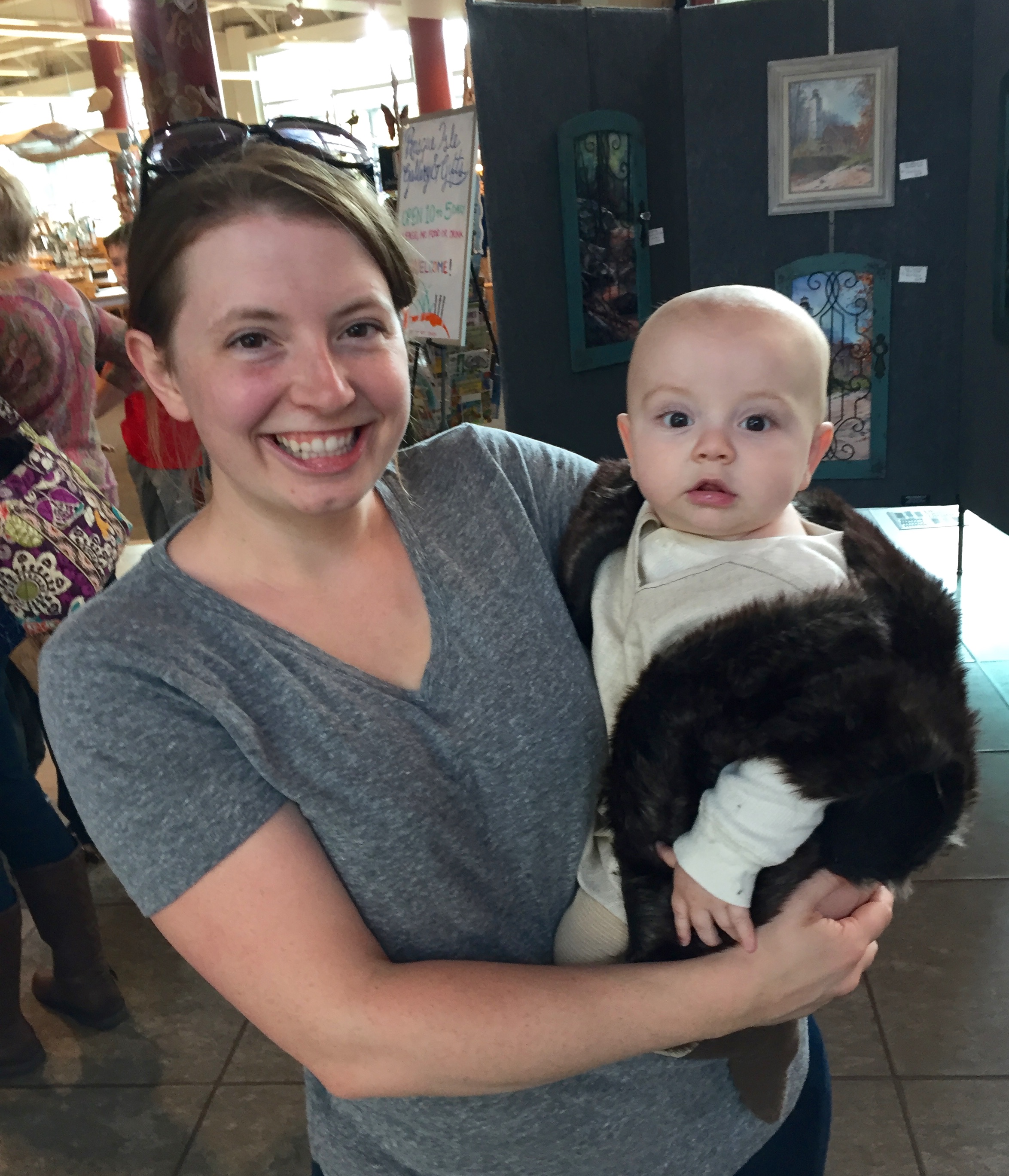
Elena and Killian–in his Halloween viking fur!

Election Eve: Standing with My Gay Sisters

unnamedThis evening before the dreaded presidential election, wife Kathy and I are heading back to Pennsylvania after visiting my sisters in North Carolina. Our objective was simple: relax!

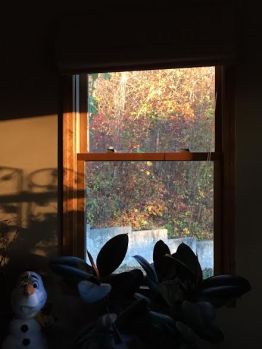
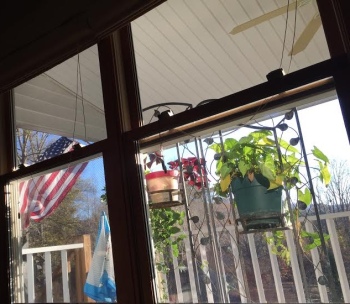
Yesterday we awoke in the joyful home of sister Cindy and her spouse Linda. We didn’t get out of bed right away, but breathed and gave thanks for the view out the guest room window: clear sky, hanging plants and American flag rising and falling with an occasional breeze.

We also gave thanks for other loved ones who stayed the night: eldest sister Cathy and her spouse Betsy Ann; and Linda’s daughter Tina, her spouse Rebecca, their toddler son Liam and infant daughter Renley. Four affectionate and slightly spastic dogs and a mellow cat named Hermione added diversity and commotion to the gathering.

As we talked off and on about what is consuming millions of Americans at the moment, I learned that one voter’s presidential election can be another’s painfully personal referendum.

Thus far my anxiety about our country’s future has been generalized. The women I listened to over breakfast yesterday share my concern about the economy, foreign relations, immigration and the planet, but they also fear the threat a Trump administration might pose to who they are as human beings.

image01

Cathy and Betsy Ann

With a Supreme Court fortified by judges favored by the Republican Party, will their marriages be under assault? Will the acceptance they’ve found recently as citizens be repealed? And what about the health insurance one married partner often provides for the other? Is there any way that same-sex couples could be denied that benefit all over again? After all, if Roe vs. Wade might be up for debate after forty-three years, why not the legality of gay marriage?

Kathy and I celebrated our thirty-third anniversary this year, and we’ve never had to contemplate our vows being cancelled by the Supreme Court.

My wife shares roughly the same profile as the Democratic Presidential nominee. If she wins, I imagine Kathy and other women will feel a burden lifted and an inexcusably overdue affirmation bestowed.

What will I feel? I’m a white, heterosexual male. My validation has been grandfathered in for centuries. I can’t remember ever being denied anything because of my packaging. Nobody has ever suggested that the person I understand myself to be is uniquely lacking, broken or abhorrent. Where social stability is concerned, I’m close to the top of the food chain.

But Cindy, Linda, Cathy, Betsy Ann, Tina and Rebecca face tomorrow with a fear I recognize but can never really know.

unnamed-2

A safe place

I can name beauty when I see it, though, and these women are among the kindest, smartest, most upright and beautiful people in my life. The warm North Carolina air was refreshing, but Kathy and I don’t drive ten hours for the southern climate. We take time to visit our unorthodox family because we find overflowing goodness and safety with them.

If you think that gay marriage is sinful and should be illegal, I wish you could meet my gay sisters and witness their tenderness and compassion. I wish you could hear how they struggled to find peace within themselves and how falling in love turned their landscapes into rich expanses of grace.

Their troubled sleep this night is difficult to bear for love’s sake. Of course, millions may lie awake in the small hours of this morning, wondering how many of the votes cast will say, “America is not your home. You have to leave. Your language is an annoyance. Your skin is ugly and so is your soul. You’re being checked out, and this we can tell you, we’re not impressed.”

unnamed-1

View from Guest Room Window . . . Gay Household.

When I vote tomorrow, I’ll be thinking of my family in North Carolina and every other sister and brother who want nothing more than to run into the open arms of a compassionate country.

Now, checked into a hotel in Summersville, West Virginia, I sip privileged wine. Kathy tells me the pizza just delivered is really good. And I make this promise: “Whatever happens tomorrow, the years ahead are sure to hurt, but you’re not alone. Plenty of Americans like me–especially those who don’t pretend to know what all you’ve gone through–love you and stand with you. When you were born, the cosmos rejoiced.”

Grandma Kathy Home

Grandma Kathy Home

So the Cleveland Indians hold a 3-2 edge over the Chicago Cubs as the World Series moves back to Cleveland for at least another game. One particularly sweet spot here is my sentiment that if the Tribe loses, I can be glad for the Cubbies. Both teams are long overdue for a championship.

Alas, the Fall Classic holds diminished interest for me this year. I’m in a space that is best described by a phrase my childhood friend Vince used a lot: tons of bummage.

Joy isn’t in short supply these days; in fact, I have a surplus, more than anybody deserves. The problem is my reaction to our present American season of bummage.

“Do not lose your inner peace for anything whatsoever,” Saint Francis de Sales said, “even if your whole world seems upset.”

Sorry, Francis, but my peace comes and goes. It goes when I assume my fears about the future are predestined. It comes when I forget myself long enough to be touched by grace.

“I want to go home,” grandson Cole said.

“But, Cole,” my daughter Elena answered, “you are home.”

“No, I want to go to Grandma Kathy home.”

img_4520

At Grandma Kathy Home. Cole checks Pop. (Credit: Kathleen Coleman)

Grandma Kathy and Pop have bored our friends slack-jawed with Cole’s words, but it’s hard to keep quiet. Sometimes a moment kisses your soul and brings hope within reach again.

Cole thinks of Grandma Kathy’s house as home. Do I care that he doesn’t include Pop on the deed? Actually, I like his name better. Kathy drops everything for Cole. They play in her garden and go to the basement and make repairs at her workbench. If she cooks dinner, he stands on a chair at the sink and does a few dishes with a whole bottle of soap.

He calls our den “my room,” and he and Grandma Kathy bunk there when he stays the night, as he did last Saturday. On church mornings, she sits beside him in the backseat for the hour drive to Oniontown.

Yesterday my sluggish sermon knocked the kid out, so he crawled under the pew and nodded off at her feet. After worship she let him sleep on, and friends stopped by to chat.

14910482_1285918731478312_5904596198397316899_n

Got insomnia? Come listen to one of my sermons. Bring a pillow, join Cole. (Credit: Kathleen Coleman)

Cole was safe. Grandma Kathy was there.

He didn’t say, “Grandma Kathy’s home.” He said, “Grandma Kathy home.” My wife is home to him. The dwelling and garden are incidental.

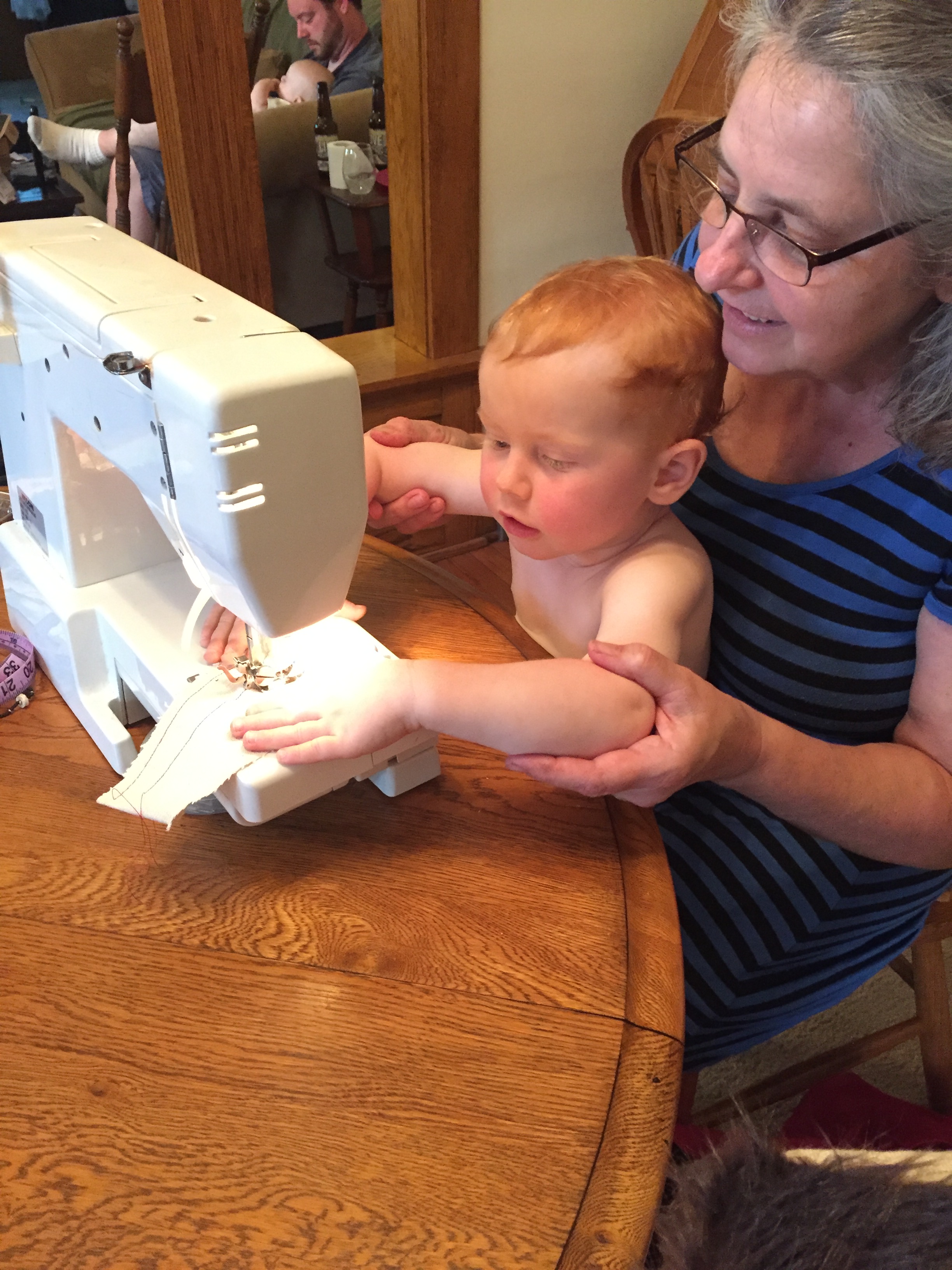
Kathy helps Cole sew. He leans against her, watches a movie and eats pretzels and dip. She hustles him off to use the potty like a big boy.

img_4858

Hope

Watching them together, I’m positive of at least one thing that’s right with the world.

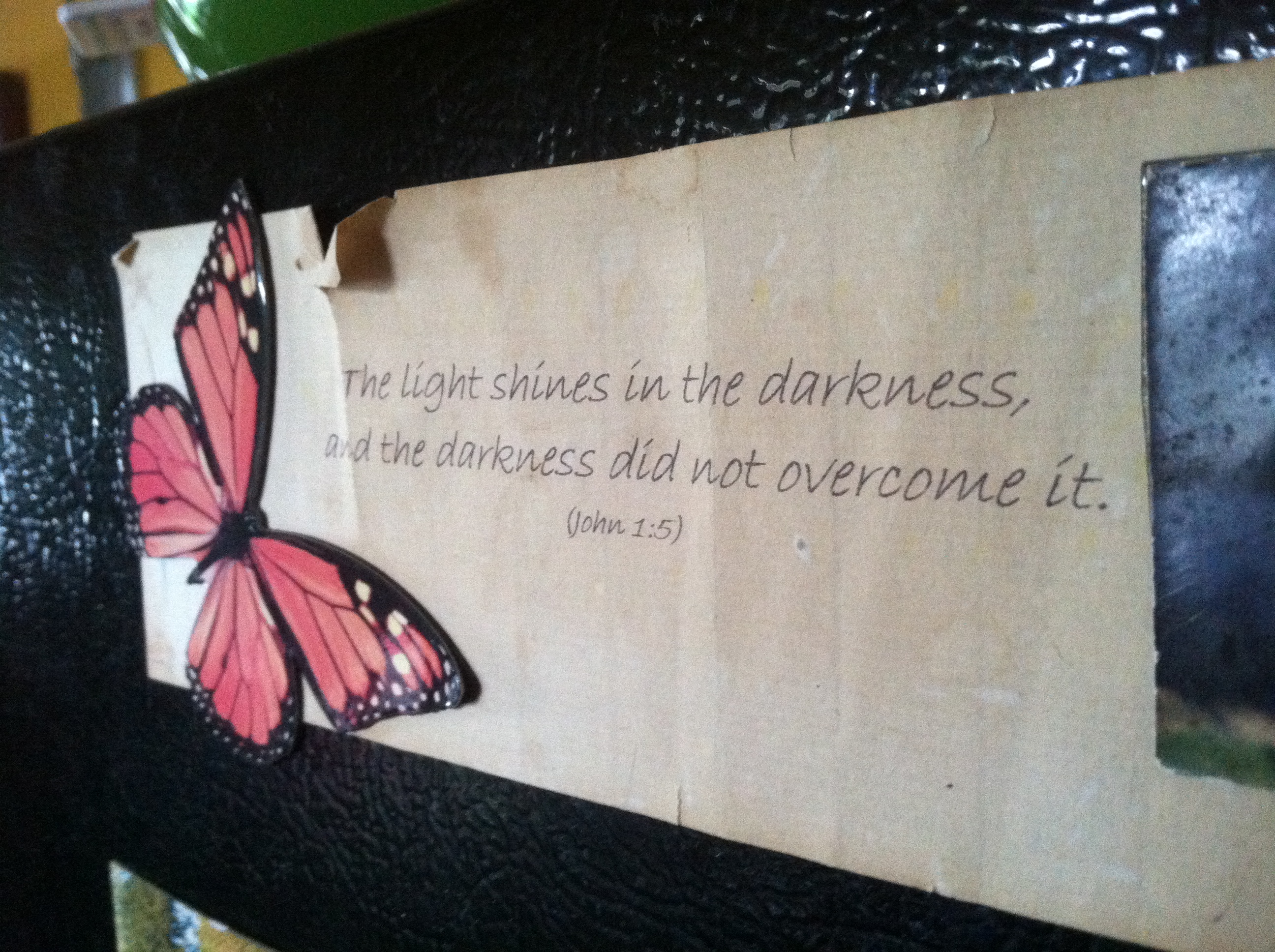
Fifteen years ago I copied a Bible verse on strips of paper and during a sermon suggested that parishioners put them on their refrigerators.

img_2236

The light shines in the darkness, and the darkness did not overcome it. (John 1:5)

The light is love. I bet my life that it will win in the end. That doesn’t mean, of course, that my Indians will whip the Cubs. And it especially doesn’t mean that my candidate will prevail.

I don’t for a moment believe that God gives us clean sheets when we’ve messed the bed.

What I do believe is this: love is the only way out of human bummage.

In 1968, during another ugly season, Thomas Merton asked, “Is the Christian message of love a pitiful delusion? Or must one ‘love’ in an impossible situation?”

When I watch a woman and a boy not yet three together, peace fills my lungs. The only way I know to abide in impossible situations is to love.

It seems like hour-by-hour I get hopeless and angry, then hear Saint Francis speaking and try to find my way back to love again. All signs are that I’m delusional.

I want to go to Grandma Kathy home, too, Cole. Let’s live there together.

American Pastoral

Dear Friend:

If you came here looking for “American Pastoral,” I’ve moved it to my new blog, Matters of Conscience. Please follow the link to get there.

Peace and best,

John

img_5158


Oniontown Pastoral: A County Tour

Oniontown Pastoral: A County Tour

unnamed

Prescription for discouragement: a look out at the soybean field behind St. John’s Lutheran Church and a dose of E. B. White’s wisdom

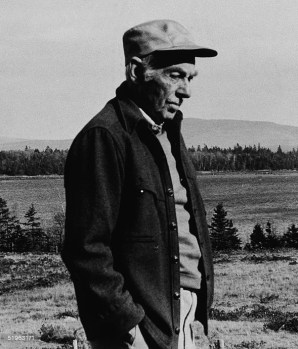
When I get discouraged about the civilized world, I often turn to E. B. “Andy” White, essayist for The New Yorker and Harper’s and author of Charlotte’s Web. White was not only a great prose stylist, but the last century’s most devoted naysayer to change.

51963171

E. B. White at his Maine farm in 1977 (Credit: Getty Images)

He frowned upon atomic energy: “I would feel more optimistic about a bright future for man if he spent less time proving he can outwit Nature and more time tasting her sweetness and respecting her seniority.”

He rejected conventional wisdom: “Many of the commonest assumptions, it seems to me, are arbitrary ones: that the new is better than the old, the untried superior to the tried, the complex more advantageous than the simple, the fast quicker than the slow, [and] the big greater than the small.”

And he challenged orthodoxy—and got my mind working just the other day: “Our whole economy hangs precariously on the assumption that the higher you go the better off you are, and that unless more stuff is produced in 1958 than was produced in 1957, . . . you are headed for trouble, living in danger and maybe in squalor.”

I agree, but wondered, “Is growth necessary for a healthy United States economy?” Actually, I hoped the investigation might lead to existential insights—my habitual trajectory of thought.

The Internet ambushed me with economic principles. Turns out experts disagree so diametrically that Andy could be heard laughing from the curmudgeons’ bleachers in heaven.

I also received a wave of nausea for my research efforts. In 2014, Forbes printed Peter Ferrara’s “Why Economic Growth Is Exponentially More Important Than Income Inequality,” which presents dizzying statistics and a blueprint for our technological future.

The author rhapsodizes over futuristic physicist Michio Kaku, who claims, “When you need to see a doctor, you’ll talk to a wall in your home, and an animated artificially intelligent doctor will appear. You’ll scan your body with a hand-held MRI machine, the ‘Robodoc’ will analyze the results, and you’ll receive a diagnosis that is 99% accurate.”

My AI doc better be more skillful than my smart phone. Siri, my allegedly intelligent assistant, can’t locate a Dunkin Donuts. Why should I trust a virtual endocrinologist with my pancreas?

More to the point, why would I ever confide in a wall? In 1955, White grumbled at his telephone company “for having saddled us with dials and deprived us of our beloved operators.” My misgivings about healthcare via hologram will seem similarly quaint in eighty years.

Still, I have a quick response for Ferrara and Kaku: “I’ll pass!”

Give me Andy instead. He was never a churchgoer, but he held a divining rod for the sacred. And he would have delighted in the county tour parishioner Dave, a retired cow veterinarian, took me on last week.

We wandered a 4-H Club show, where I visited Jocelyn and her prize-winning cows and greeted pigs, goats, a llama and an alpaca.

IMG_4841

St. John’s Lutheran Church’s very own Jocelyn with Dilly and Luci

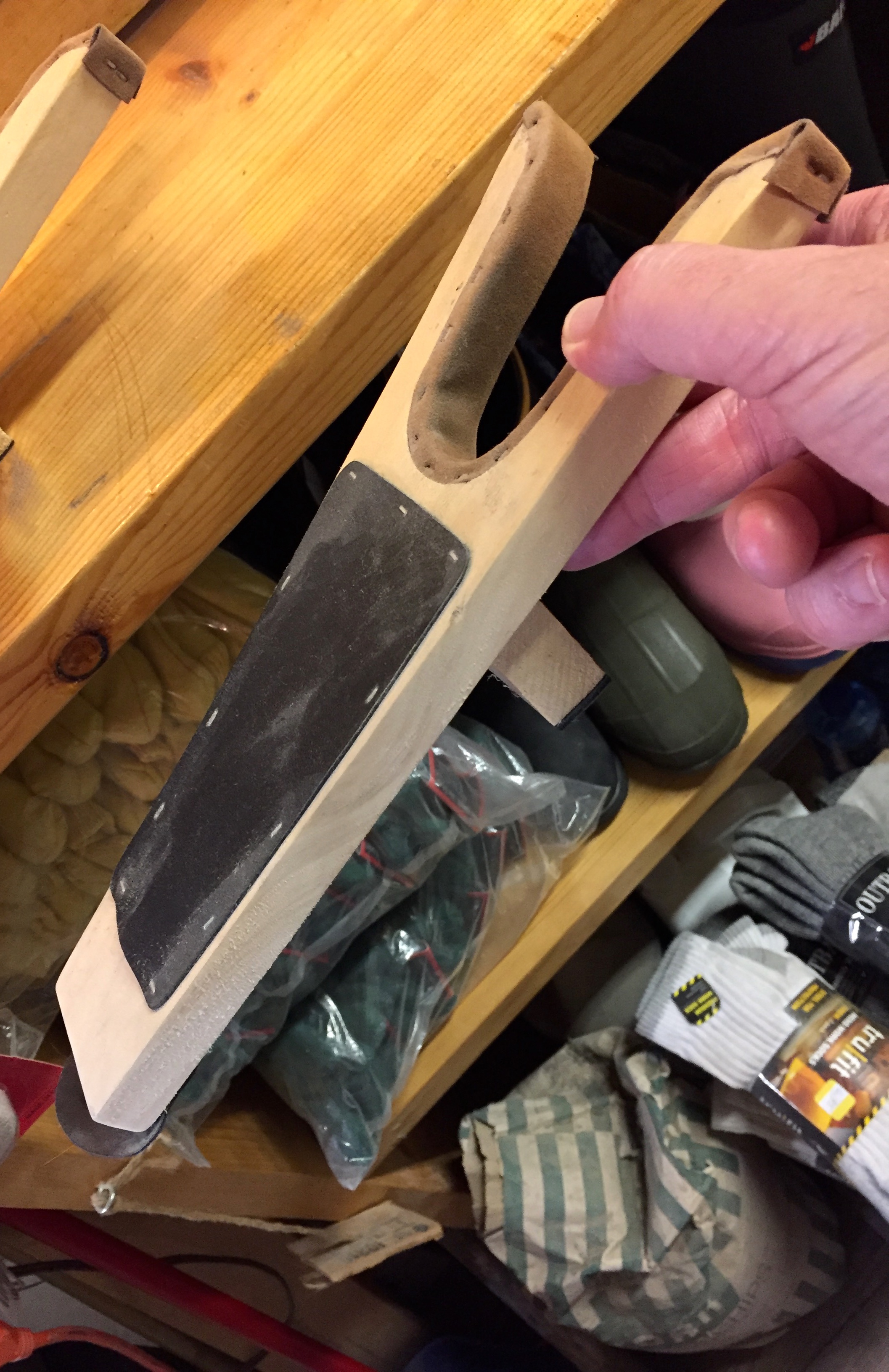
We browsed at McCartney’s Feed and Hardware, which is packed with implements exotic to my city eyes and operates without cash registers. The clerks make change directly out of their pockets.

IMG_4846

Exotic to my eyes, anyway: a “boot jack”

And Dave took me to the farmland he owns with wife Anne, where I got a primer on round bales and found out that cows can sleep out under the stars.

Andy would have pronounced the tour medicinal. Even now, his commentary on the wondrous land and skepticism about progress persist in my imagination. “A 99% accurate Robodoc might increase longevity,” he might ask, “but will the extra years hold any savor?”

While pastoring in my beloved Oniontown, I’ll honor E. B. White’s words and devote myself to “living itself, a task of such immediacy, variety, beauty, and excitement that one is powerless to resist its wild embrace.”

IMG_4286


In Defense of Justice Ruth Bader Ginsburg

In Defense of Justice Ruth Bader Ginsburg

Blogger’s Note: The scope of the opinion piece that follows is narrow. I have views about nearly every tangential topic imaginable, but I’m speaking here only to The New York Times‘ recent editorial board opinion about Ruth Bader Ginsburg’s statements about Donald Trump.

If you’re looking for the normal fare served by A Napper’s Companion, please feel free to order another entree. 

330px-Ruth_Bader_Ginsburg_official_SCOTUS_portrait

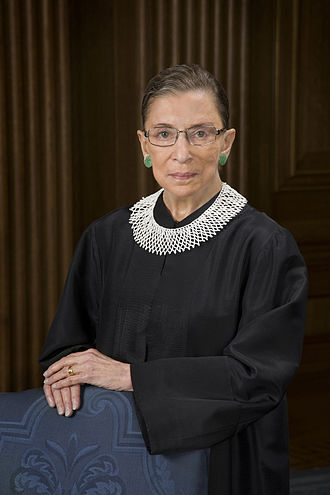
Justice Ruth Bader Ginsburg (Credit: Wikipedia)

Spirits of the coffee drinkers at Brew Ha Ha are merry this noontide, but I’m negotiating with a troubled heart. Former teaching colleagues Alice and Mary and I reacquainted and dissected one of our national obsessions, November’s presidential election. Since they left an hour ago, I’ve been palpating available Internet information and opinions in hopes of easing my suspicion of a terrible prognosis. The possibilities paralyze my brain and sour my gut.

The New York Times normally steadies me, but, oh, my precious, the editorial board has just poked at my gag reflex with this opinion: “Donald Trump Is Right About Justice Ruth Bader Ginsburg.” Whew! Pause. Breathe.

In a recent interview with Adam Liptak of the very newspaper that smacked her knuckles, Ginsburg had the impudence to say, “I can’t imagine what the country would be — with Donald Trump as our president.” A couple of other remarks added color to her opinions and probably set off editors’ subjectivity detectors.

Asked if she also thought that the Senate should act on Obama’s nomination of Merrick Garland to the Court, Ginsburg practically got hysterical: “That’s their job.” Please, somebody get this woman into a straightjacket.

The board’s assessment is terse: “Justice Ruth Bader Ginsburg needs to drop the political punditry and the name-calling.”

Okay, she did call Trump a faker. Bad Justice. Bad Justice. But punditry? Rising from my nausea are a litany of questions, summarized by one: “Where does punditry end and truth begin?”

Other words pose essentially the same question. “At what point does objective neutrality deny the obvious?” “When is bullshit given the full weight of fact?” And “When is denigration mistaken for discussion?”

Yes, these are dangerous questions. Whoever successfully lays claim to facts and truths has hold of power and moral high ground.

But these are perilous times. At least in politics, the historically accepted rules of engagement have been trodden under wingtips. I’m hardly the first to observe that even the pretense of civility and fair play in governmental chambers and circles is gone. And reality, fluid in the best of social climates, is now nothing but fog. Where are the brakes?

Americans who share Ruth Bader Ginsburg’s opinion about Donald Trump aren’t so much despondent about the candidate himself, but about the destination of “I, Donald John Trump, do solemnly swear that I will execute the Office of President of the United States.”

Trump will, indeed, execute the Office, and felled in the firing squad’s aim will be the languishing assumptions about how we Americans communicate with each other and come to agreements and define the world we live in. This is my dread, at least.

Adding insult to injury, the just, charitable identity we have struggled to embody—the “lamp [lifted] beside the golden door”—may give way to the hateful, fearful “angels of our nature.”

Our society has already taken many steps down a rancorous, violent path. Do we honestly suppose that we’ll find remedies to what ails America if we crown a man who delights in riling followers into stampede?

Pause. Breathe.

Am I being alarmist? Hyperbolic? Gosh, I hope so. But I don’t think so.

Ruth Bader Ginsburg knows that “the exception proves the rule.” Supreme Court Justices should keep their noses out of political controversies. Good rule. Good good rule.

But what Donald Trump says he would do as Commander in Chief—bluster though his every word may be—requires the assassination of what is most honorable in the people and the deportation of the Constitution Justice Ginsburg is sworn to interpret and uphold.

She was obliged to break a generally wise rule. She gets a pass.

The Counterintuitive Truth About Violence: The Day After Dallas

The Counterintuitive Truth About Violence: The Day After Dallas

Begin with speculation: Why do mass murderers often finish their missions by committing suicide, either by cop or their own hand? Various sources suggest self-loathing, hopelessness, a weird attempt at revenge, and a refusal to endure the consequences of their actions.

All of those reasons make sense, more or less, but this morning, riding out the dismay of yet another mass shooting, another explanation occurred to me.

After you kill people, you are in great measure dead already. Suicide is the end punctuation of the truth.

This basic idea—the violence you do to others returns home to you—is hardly new, but it is so unpalatable, abstract, and counterintuitive that we reject it, if we acknowledge it at all.

The Psalmist writes of his enemy, but speaks a universal reality: “He made a pit, and digged it, and is fallen into the ditch which he made. His mischief shall return upon his own head, and his violent dealing shall come down upon his own pate”(Psalm 7:15-16).

Arthur Conan Doyle certainly borrows from Psalm 7 when his Sherlock Holmes observes, “Violence does, in truth, recoil upon the violent, and the schemer falls into the pit which he digs for another” (“The Adventure of the Speckled Band”).

Buddhist teachings also acknowledge the result of letting yourself be consumed by anger and violence: “By doing [violence] you are like a man who wants to hit another and picks up a burning ember or excrement in his hand and so first burns himself or makes himself stink” (Visuddhimagga IX, 23).

The temptation is to domesticate such wisdom by restricting it only to terrorists and crazies. But anger is wild, violence a delinquent student. And, no revelation here, we human beings can all get pissed and throw haymakers. Who among us doesn’t take life from others, blood cell by blood cell, hour by hour? The unkind word recoils upon the speaker as surely as the shooter is wounded in his own crossfire.

Of course, not all violence is driven by anger. A soldier, for example, might wish to do anything rather than kill. Unfortunately, taking another person’s life, even for a just cause, can still be lethal for the most stable of soldiers. Some in military service die in battle, obviously. Others return home with beating hearts and tortured spirits. From 1999 to 2010, one veteran committed suicide every 65 minutes, 22 of them each day. In 2012, active-duty suicides ever-so-slightly outpaced deaths in engagement (177 to 176).

I regard members of the United States armed forces as heroes. They risk life and limb out of a deep, difficult calling. They carry out orders they may not like in conflicts perhaps troubling to them in hopes of defending their country.

It’s unfair that a noble person can survive a battle only to discover in the aftermath invisible, self-inflicted wounds. A glowing coal doesn’t care whether the hand about to throw it is right or wrong, good or evil. It burns whatever it touches.

I’m prepared to be corrected in my speculations. I’ve never taken a human life. But why did many veterans of my father’s generation remain silent about what they saw and did in World War II? Why was the scorn Vietnam vets endured so personally and spiritually devastating? Why are those serving in today’s military taking their own lives in record numbers?

Because killing kills. Failing that, it maims. The recoil of violence is so strong that even those of us who lash out only in insults and dirty looks bruise ourselves.

The sniper who murdered five police officers in Dallas was killed by a robot reaching toward him with an explosive—the fruit of his evening’s labors. But he was dead already.

And what about the rest of us? Is there any hope of stopping what has become our planetary routine of violence?

My kingdom for selfless love pandemic! But that wish amounts to whistling into the wind. What we have right now is rage, which, though understandable, is not inclined toward the Golden Rule.

Any suggestion these days ends up sounding impotent, but I’ll offer mine just the same: We ought to teach our children right from the start that any blood they shed in this life will generally include an equal share of their own.

Oniontown Pastoral #7: You Learn to Like It

Oniontown Pastoral #7: You Learn to Like It

“You learn to like it.” Grandma Coleman leaned hard into learn. She was talking about an instant mocha coffee powder, which she used at half strength. To me it tasted like stale water, but Gram, with her cherubic face, furrowed her brow and insisted. Raising children during the Great Depression taught her that she could decide what she wanted and needed. One teaspoon-full can taste better than two—but you have to work at it.

IMG_4552

Corn field: a great teacher if you work at listening

Gram’s wisdom echoes more with each passing year, mainly because what I want is often the opposite of what I need.

My latest lesson is, to tell the truth, plain silly. After fourteen years of ministry in Erie, I’ve settled nicely into the pulpit at St. John’s Lutheran Church in Oniontown. As I’ve said to parishioners and friends, “I’m having the time of my life. What a great place to be.” Since I showed up about six months ago, I’ve come to love the folks and the land—so much beauty.

But what’s embarrassing is this: although the scenery is soothing, I’m an impatient driver. The accelerator has a gravitational pull that I can’t resist. Come on, let’s go! On Route 19, District Road, and just about everywhere else, my brakes are getting a workout.

IMG_4358

No clue what purpose this old machine served, but its repose in a field is soothing to me

I’ve lived most of my life in medium to large cities where drivers don’t dillydally on turns. In these parts, abundant caution, reconnaissance and perhaps a little prayer precede pulling into each driveway or parking lot.

The other day at the Stone Arch, the St. John’s Seniors and I had a good laugh over the matter. “It’s as if,” I explained, “drivers are afraid a Tyrannosaurus rex is around each corner, waiting to chomp into the roof their car.”

“But there might be!” several said at once. “Or a cow or a dog or a . . . senior citizen!”

Thank God for their good humor. They already understand what I’m still trying to learn: slow down, what’s the rush?

I didn’t bother mentioning that on my way to the restaurant, a navy blue sedan in front of me inched fearfully into a lot that was so clear a Concorde could have come in for a hot landing. No tumbleweed, no crickets, just acres of glorious, barren blacktop.

“Why?” I cried out behind my closed windows. “What are you waiting for?”

Of course, I’m not proud of my frustration, but it does hold a truth: taking my time doesn’t come naturally. I’ve got to lean into liking second gear as much as fourth. My father would add his words to Gram’s: “Take it ease, disease,” he used to say, and “simmer down, bub.”

I have been making incremental progress. Last week an Amish guy sat stock still in his buggy in the middle of District Road as his horse swung his head this way and that, like a city dweller searching for a taxi. As I crawled past, my neighbor looked at me with a whimsical expression and waved, as if to say, “Thanks for not crashing into me.”

The exchange was pleasant. So, too, was my encounter with a wide piece of farm equipment—many circular blades—on my way to visit Ellen the other day. Both the farmer and I hugged our thin berms, and as we passed his eyes told me, “Yeah, we’re good. We’ve got this.”

I’ll simmer down eventually. My folks and the rolling fields are great teachers. Now I need to be patient with myself.

IMG_4284