Variation on a Theme by William Carlos Williams

“The Red Wheelbarrow” by William Carlos Williams


So much depends

upon


a red wheel

barrow


glazed with rain

water


beside the white

chickens.

566px-William_Carlos_Williams_passport_photograph

William Carlos Williams, physician by day . . . (Credit: Wikimedia Commons)

Literary critic John Hollander writes, “Williams ‘etymologizes’ his compounds into their prior phenomena, and his verbal act represents, and makes the reader carry out, a meditative one.”

In other words, meditative phenomena. Shamatha. Breathe. Receive.

unnamed

So much depends . . .

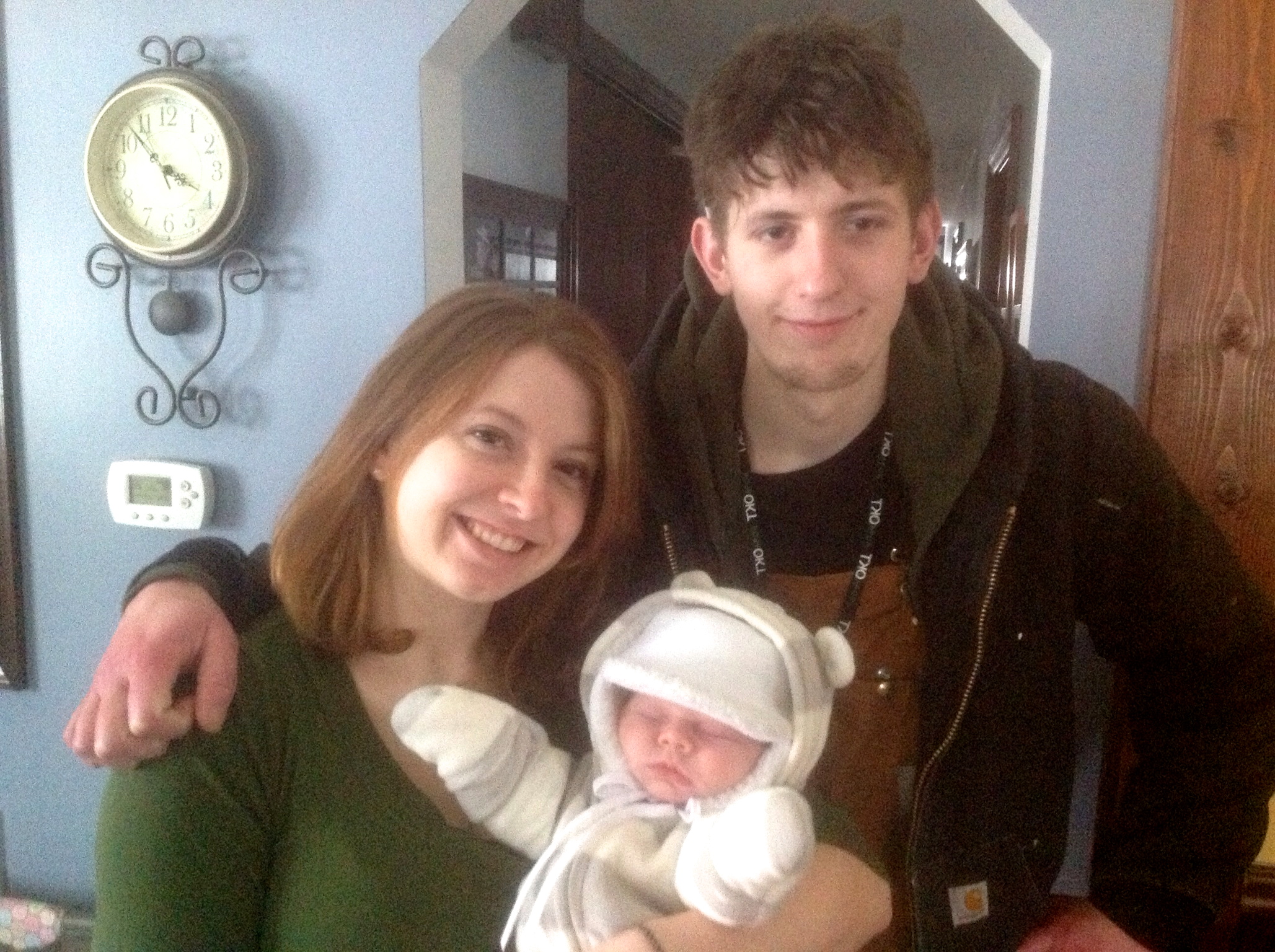
Kathy, Elena, and Cole drive seven hours to Virginia for a baby shower. They also visit Polyface Farms, where Joel Salatin and family love creation, collaborate with it. Elena sits on a swing and nurses Cole. She’s not ashamed. Kathy brings home a pound of bacon from a pig joyful until its last moment. Salt and earth. We taste the earth.

799px-Coriandrum_sativum_004

A friend showed me . . . (Credit: H Zell / Wikimedia Commons)

For Sunday family dinner, we have purple potato salad and wraps: real, northwestern Pennsylvania tomatoes; avocado; feta; dill sauce; red bell pepper; chicken thighs sautéed in ground coriander seeds.

(I once saw coriander in Mary’s mortar. That’s why I thought to buy coriander, grind it, and put it with the chicken. My friend showed me.)

IMG_2592

I’m busy, Gramps . . .

Before Sunday family dinner, Cole works in his playhouse in the backyard. He pounds with his hammer. He examines plastic nails and a sink and makes comments about them into the perfect air. Suddenly I realize / That if I stepped out of my body I would break / Into blossom (James Wright).

1606857_685479224855602_1249260779706027143_n

Matt and Layla

Before Sunday family dinner, Elena says, “We were going to plant flowers beside the house, but Matt says he wants to keep that space open. Layla likes to run there.”

IMG_0532

Boulevard altos . . .

This morning, breezes lift the bedroom curtains. Kathy and I lay together, my arm around her shoulder, her head on my chest. We say nothing, listen to the trees, receive Earth’s cool hymnody on our faces and arms.

Finally: “I love you, Kathy Coleman.”

And: “I love you, too, John Coleman.”

Strange: we call each other by our full names.


Beheadings, Exploited Children, Uzis, Nudies, and the Hope of Garage Light

A tame one from a Blue Mountain Brewery growler was just right for last night, Tuesday, September 2nd, with its high dew point. Wife Kathy and daughter Elena picked it up for me when they were in Virginia for a baby shower. As son Micah and Kathy used power tools in the garage, I stood in front of the Kmart box fan in boxers—try to get that picture out of your head!—grateful that the neighbors can’t spot me when I’m in the kitchen. ABC’s David Muir anchored yet another day of withering news, and I sipped toward buzzdom, which was a wise course of action, considering the state of affairs.

472px-George_Gabby_Hayes

George “Gabby” Hayes, an actor in old westerns (Credit: Wikimedia Commons)

I should note that I really get up in the face of the evening news, my eyes twelve to eighteen inches from the screen. My jaw probably hangs open, too. Such a bizarre relationship we have, the news and I. Just when I decide to retreat from current events, take up residence in a media-free desert cave, and start to look like a Zen-Christian-hermit Gabby Hayes, another story grabs me by the beard. Check that: it’s not the story that takes hold of me, but the people. Maybe that’s why I’m nose to nose with what’s happening. I see faces and feel obligated to witness on their behalf, as if it’s my calling to stand with them in the only way I can: watch, don’t turn away.

Yesterday was heartbreaking. A brief recap:

ISIS militants followed through with their threat and hacked off journalist Steven J. Sotloff’s head. “I’m back, Obama,” the executioner said. Yeah, no kidding, tough guy. The victim was thirty-one. His mother begged for his release. I would have done the same. Worth a shot.


800px-120410-N-3069F-018_(6963441448)

Kiddos just like these are forced to work the fields to support their families. (Credit: Wikimedia Commons)

Refugee children in Syria have to work in the fields to support their families. Parents, many of them professionals, can’t work because kids are a cheaper pay-date. So they get up at the crack and fill bags of potatoes so full they can hardly lift them. We’re talking seven-, eight-year-olds. Babies! They have lovely, sweet faces that for some time now haven’t been in schoolrooms.

A nine-year-old girl lost control of an Uzi at a shooting range and shot her instructor in the head, killing him. The gun was too much for her, she said. The report went on to show other little kids under adult supervision firing big-ass moxie weapons.

Finally, photographs of naked celebrities are being hacked and made public. This, of course, is wrong as wrong can be. The surprise for me is how many people take nude pictures of themselves or let somebody else do so. Out of consideration for public safety, I would never be undressed around a camera or smartphone.

© Copyright 2013 CorbisCorporation

The best work for a child in a field . . . pretending to fly (Credit: Radius Images / Corbis)

These stories, a whiplash crash of barbaric and absurd, put me in a fog that the beer didn’t create: another beheading, babies the age of my church kiddos rushing to get potatoes into sacks to their overseer’s satisfaction, a girl who will have to live with malignant guilt forever, and nudies. The result was malaise and paralysis: a chunky guy in boxers with a nice beer in his hand, slack-face glowing in the television’s light. With a fat cigar, I would have been a poor man’s Winston Churchill. I stood there for the longest time, a blob of middle-age wishing there were a way to take those refugee children into my arms, tell them that they’re beloved, tuck them between clean sheets, and sit with them for breakfast before walking them to school. Children, damn it! I didn’t have any prayer in that moment other than sorrowful curses, weary four-letter words.

Of course, sad or pissed or ennui-drunk as you can be, there comes a point when continuing to stand around in your underwear is letting the %$&*@! with the knife win. I had done due diligence as a witness to my sisters’ and brothers’ realities, but was powerless to move on. Then, a whine rescued me.

IMG_2571

All it takes is two people and a drawer, and you can find hope for the world.

Out in the garage, Kathy and Micah were running sanders over our kitchen cabinet doors, getting them ready for a fresh coat. The Coleman family kitchen has seen lots of action in the last thirteen years. Ah, if cabinetry could tell stories: daughter Elena’s rants and twilight escapes and slashes on the wrists; Micah’s howling girlfriend dramas and heroin and felony and house arrest; Kathy’s toil in nursing school and glad landing as a chemotherapy nurse; my own wrestling with anxiety and depression and hours of joyful, messy cooking. The kitchen was there for it all.

So the sanders’ whine took me to the back window, where I watched my wife and son working in the garage, the light spilling out over the silhouettes of sunflowers. During one tough stretch, they went months without speaking. Micah’s hands were perpetual fists, the veins in his forearms popping. Kathy and I just tried to make it through each day.

IMG_2568

Love made visible an hour before dusk.

“Work is love made visible,” Khalil Gibran said. As I received the anointing of Kathy and Micah working away happily together and talking over the whine, joy sat down beside my malaise. No, my spirit wasn’t all better, but hope had taken paralysis in its arms.

I wasn’t moved by a woman and man sanding cabinet doors in a garage. My son had worked his painting job all day. He takes his responsibilities seriously and comes home tired. But he was out with his mom, not because he wanted to put shoulder to wheel for a couple more hours, but because he loves her. That was what I saw: love made visible.

When I went to bed, I kept watching in my mind Kathy and Micah in the garage under gentle light. I have a well in my chest where tears come from, and I could feel my wife and son’s love filling it with peace.

722px-Candle4

Dear Light, please comfort your people. (Credit: Sigurdas / Wikimedia Commons)

The older I get, the more flummoxed I am in the face of evil. If the world is always going to have rancor and brutality, maybe the best I can do is make sure that one tipsy man in boxers in one house in one neighborhood in one city will never—by God!—hold the knife or make children gather potatoes. That light from the garage, fragile, delicate as a candle flame: if I could just lift it up high enough for the world to see.

P. S. At lunch today Kathy called me. She was having a crazy, frustrating day, but she knew hearing my voice would make her feel better. That’s love for you. A glance at its light, a whisper from its lips, and the world is mysteriously fit for habitation again.

A Fifty-Two-Year-Old Galoot’s Take on Mother’s Milk

Photo on 8-29-14 at 1.46 PM

Last person in the world who should be holding forth about breastfeeding: a fifty-two-year-old, grizzled galoot

I’m not looking to make trouble, but I’ve been thinking a lot about breastfeeding since grandson Cole was born on November 30, 2013. Granted, this subject falls into the None-of-Your-Damned-Business Department, but that’s never stopped me from having my say. I’ll preface my list of points with a few acknowledgements: Nursing is wonderful for women who want to do so and are able. Still, twenty-five years ago wife Kathy, breast-milk fed baby daughter Elena, and I were on a long car trip, and Elena was practically crying herself into a hemorrhage. She was hungry. We couldn’t stop, so we gave her formula. Needs must. So I’m not personally militant about breastfeeding. And while I dig the Earth mother groove, I wouldn’t bury the placenta and plant a tree over it.

All that said, on with the none-of-my-business points. From here on I won’t say I think or I believe or for me. The whole thing is coming out of my neurotic head.

IMG_2116

Elena and Cole: uber mom and well-fed little bucko

Point #1: I gush with pride in Elena. When Cole was a newborn, she spent a month or so figuring out how to nurse in public, gauging her comfort level, working out strategies for minimizing exposure. Since then, Elena has settled into her ways of being discreet without doubling over in fear that somebody might catch a glimpse of her nipple. When she is over at Mom and Dad’s house, she issues a two-word alert: boob out. This is a perfect approach to every nursing situation because it places the responsibility where it belongs. The woman’s job is to nourish her child. Everybody else’s role is to look away if they don’t want to see. It’s simple. And this leads to . . .

800px-Breastfeeding_baby

Something right about the world. (Credit: Irene / Wikimedia Commons)

Point #2: For pity’s sake, it’s a breast! Let’s be grown ups. Sure, breasts can be wonderfully erotic. If we took a vote, I would check the “in favor of breasts” box. They get my support. I’m a fan. Golly, breasts are fun. But, come on! I’m writing this in Starbucks, and by my count there are twenty breasts here, not counting men’s poor excuses for them. (Oops, make that twenty-two.) They’re all over the place. I can’t look in any direction and not see boobs in, and, conveniently, they serve a purpose much more important than making men randy. So let’s all work on our ability to distinguish one situation from another. Nursing women are giving their babies not only nutritional gold, but a helping of comfort and intimacy; therefore, if any of us happen to see a kiddo happily tugging away, we ought to give thanks. Something great is happening on our rancorous planet. Bottoms up—as it were.

IMG_1845

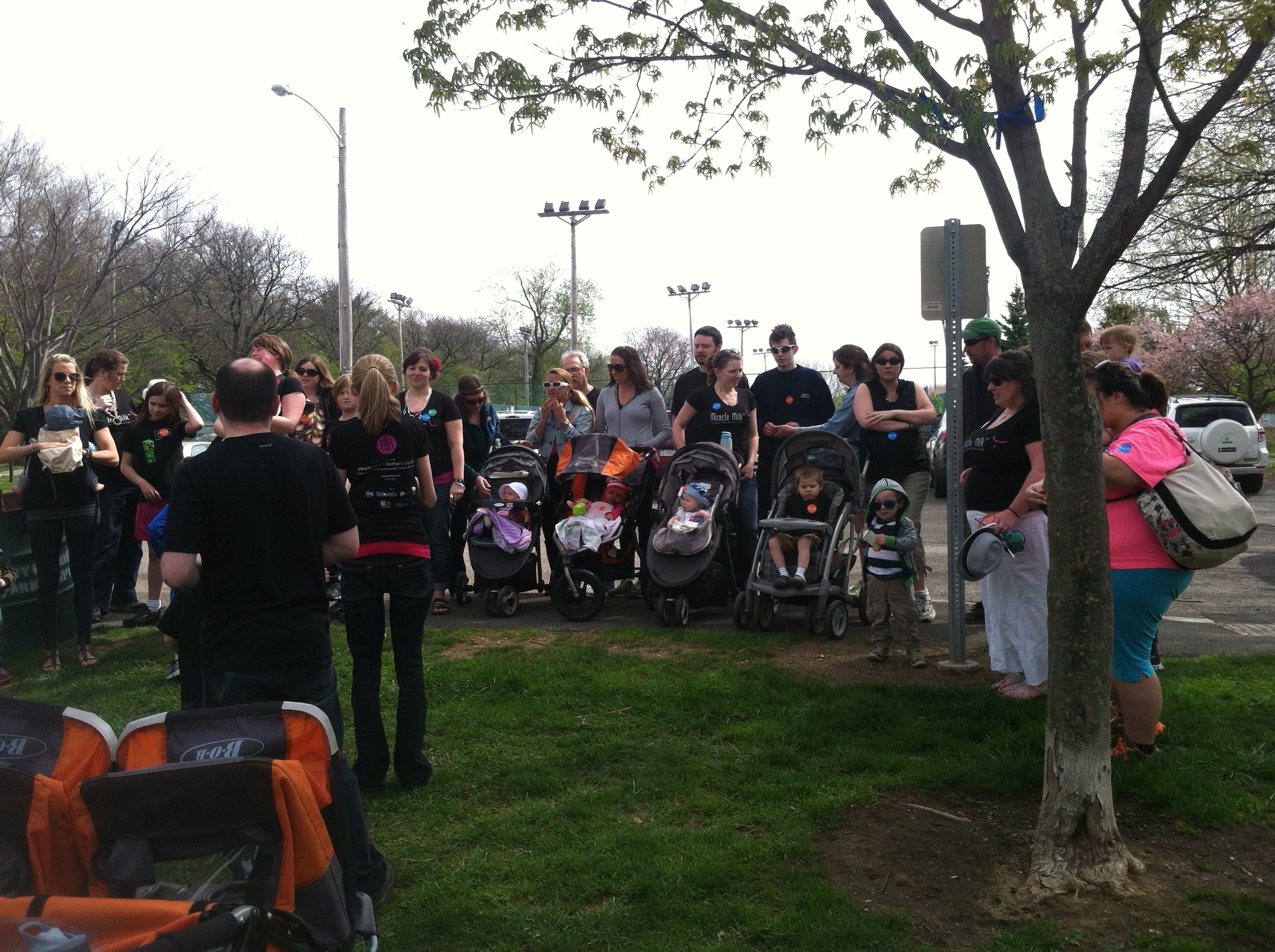
The La Leche League walkers, with Matt, Elena, Cole, Micah, and Kathy in the mix. Kids nursed as needed along the way.

Point #3: There’s a really cool community formed around the practice of breastfeeding. Elena has found friendship and support in the La Leche League, and I’m moved by the members’ warmth and commitment. A few months ago Kathy, son Micah, and I joined Elena, Cole, and son-in-law Matt for a walk to benefit the League. That’s when my head really started filling with hippie-type information and opinions. Turns out that—big surprise—some women have trouble nursing or can’t produce enough milk to sustain a child. Other women could feed the Waltons and Brady Bunch combined. So the high producers freeze their expressed milk and give it to mothers who need it or to neonatal intensive care units willing to accept it. (Illinois mother of four Amelia Boomker, 36, has donated 16,321 oz. between 2008 and 2013. That’s 816 venti Starbucks drinks. That’s also a world record.)

And if a woman wants to nurse but is having trouble getting the hang of it, a La Leche League member will come to her home and try to help. Evidence of breast milk’s turbo nutrition is compelling, and here’s a community of people willing to give time and energy to making kids healthy. This is good stuff.

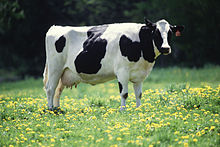
Cow_female_black_white

What makes this Holstein’s milk better than a woman’s. Son-in-law Matt tells me humans are the only creatures that drink the milk of another species.

Point #4: Okay, this one might push some of you over the edge, but get past your case of the willies and stay with me. If women want to, they should go ahead and use their expressed milk in recipes. You heard me! We ought to have no problem eating—I dunno—lady macaroni and cheese or brownies with woman-milk frosting. Here’s a little perspective. We think nothing of drinking cow’s milk. A cow spends most of its day lolling its own prairie puke around in its mouth. And don’t read this next excerpt from an article on foodmatterstv.com if you’re a milk lover:

It turns out that standard dairy cows are medicated with recombinant bovine growth hormone (rBGH) to stimulate a much higher than normal milk production. This causes severe stress that results in mastitis, an infection of the udders of sick and stressed cows. This infection is, of course, treated with antibiotics, helping to breed more antibiotic resistant organisms. It is literally unbelievable that one liter (a little over a quart) of Californian milk contained 298 million pus cells in 2003, 11 million more pus cells than it contained in 2002.

640px-ForkLutefisk

Lutefisk: fish soaked in lye. Yeah, boy! (Credit: Wikipedia)

Mmmm! Make mine a double. But I’m not finished yet. A couple months ago I made a delicious pizza with goat cheese—from a goat, an ornery coot that gives head butts and dines on tin cans and tumbleweed. We eat cheese that’s got veins of mold. We eat Rocky Mountain oysters and lutefisk, which means lye fish. And hot dogs, which are said to contain gonads and snout and whatever-the-hell. And head cheese, which isn’t dairy at all, but scraps from a pig’s head held together with gelatin. And in other arenas of life, we let some genuine nastiness pass our lips—I’ll leave that pasture of ew to your imagination.

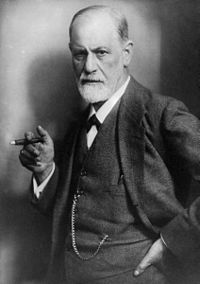
200px-Sigmund_Freud_LIFE

Let’s not overthink the whole nursing thing, kids. Sigmund Freud in 1921 (Credit: Max Halberstadt / Wikipedia)

So what’s the discomfort with adults consuming a woman’s milk? The problem isn’t with our amiable old buddy the breast, but with three pounds of goo between our ears. Here I’ll break my rule: I believe three thoughts mess with our heads. First, some might associate consuming a woman’s milk with sucking her boob, which leads to a perceived line being crossed. To this I would say, “You don’t associate drinking cow’s milk with sucking its udder. What’s the difference?” Second, we might think drinking a woman’s milk is in a teensy weensy way like cannibalism. Today we’re licking a woman’s-milk ice cream cone, next thing you know we’ll be feeding ourselves like the starving soldiers in Candide. And third, I have to note an ambivalent cultural attitude toward women’s bodies. For some, women are either libido fuel or kind of yucky. Breast milk falls in the latter category. What a shame. To borrow an image from Freud critics, “Sometimes a boob is just a boob.”

I think you’ll agree that we’ve all had about enough of John Coleman’s say for one day. As far as I know, I’ve never had any food made with human dairy, but I’m game. And when a mother is nursing her child, I’m not afraid of seeing too much. Please! I’m reminded that grace is alive and well.

unnamed

Bottom line: my little monster getting his nourishment when he needs it is more important than anybody’s twitchy sensibility. And no, don’t tell my daughter to go nurse in the restroom unless you’re willing to eat your own dinner sitting on the can.

Talking to God about Jim Foley and the World

Dear Love:

He’s Jim, not James, not Foley. Jim because that’s what his mom calls him. I’m not a journalist, just a schmo who never heard of the man before yesterday. To me, he’s a terrified guy reading a coerced last statement with remarkable grace. To me, just a dude, a human being, a fellow pilgrim with a handsome head, which, kneeling in his orange get-up, he’s about to lose.

Are you suffering over his end? I’m not even sure an answer would help. I’m doing my morning thing, sipping away at Starbucks, scanning the horizon of another day, already feeling a bit low, trying to get a few words down before heading to the church. I’d planned to write about baking and nursing—happy thoughts—but I can’t breathe right.

“I wish I had more time,” Jim said. “I wish I could have the hope of freedom and seeing my family once again, but that ship has sailed. I guess all in all, I wish I wasn’t American.”

Then a man in a black mask killed him, not with a sympathetic bullet, but with a knife. A six-inch blade? Eight-inch? I can’t tell. Sharp, hopefully. I guess compassion is relative. The ISIS militant could have used a soupspoon or vegetable peeler.

“I wish I wasn’t American.” Jim’s last words. What did the militants do to get the man they had held captive since Thanksgiving Day of 2012 to say that? “Read this statement, or I’ll start with your toes, work up to your balls, and then really hurt you”? Or “Say this, or as soon as I’m finished with you, I’ll bring out your colleague and send him to hell right behind you”? Whatever. An answer here wouldn’t help, either. I don’t care whether he was forced or, after all those months, had Stockholm syndrome.

By don’t care I mean when your children are about to die an extremely shitty death, they get a pass. I think of Dietrich Bonhoeffer climbing the gallows naked, having said his last words: “This is the end—for me, the beginning of life.” He was thirty-nine.

Forty-year-old Jim didn’t get to pick his last words, which pisses me off. It’s one thing to get your head whittled off, another not to get your final say. Such a complete murder! Before losing your life, you must hand over your self.

Breathtaking evil—literally. Like I said, God, I can’t breathe right. Cleansing breaths aren’t working. I won’t go through all the ways your children here are being absolute craps to each other. You know, Lord. So much of your loving touch all around, but the world over, we’re having small-group riots with brass knuckles, switchblades, tear gas, missiles, and fury. We’re killing in the same way we munch potato chips at midnight: we can’t stop.

Folks are putting their hands in air lately: Don’t shoot! Others are pleading: Don’t loot! I’ve got my hands in the air, too, but they’re raised to you. I don’t expect you to do anything. I’m just reaching out for you because, well, I want you to hold me. Your creation hurts in me today.

In a movie I love, a priest says, “If might is right, then love has no place in the world. It may be so, it may be so. But I don’t have the strength to live in a world like that.” The might of a bomb, the might of one blade. Don’t worry, Lord, I’m not suicidal. I’ll have a couple glasses of wine tonight; that’s as bad as it will get.

It’s just that I can’t breathe because I keep seeing Jim’s set jaw and pursed lips, steadying himself for when the militant ends his statement. And Jim’s family, so proud of him. Good Lord!

Please tell Jim we all understand. If he needs his head, put it back on for him. And sit with everybody who loves Jim and kiss their despair with what looks at the moment like absurdity: your peace.

Love, John

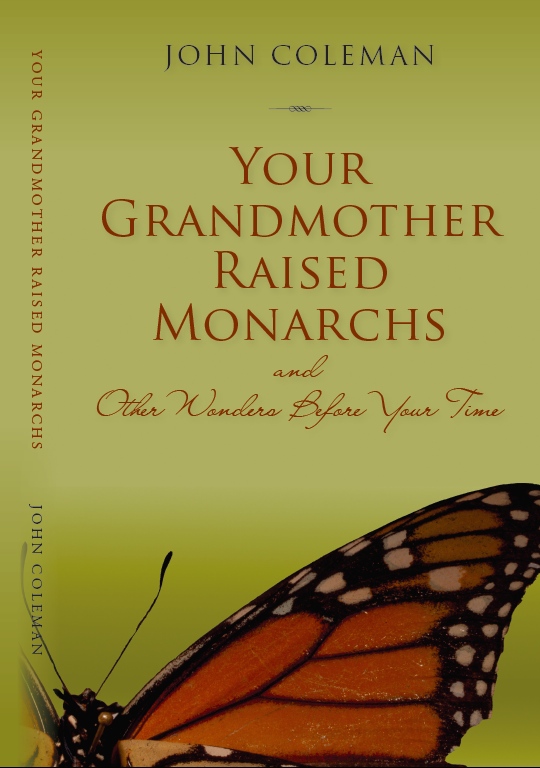
“Your Grandmother Raised Monarchs” Release This Week

To My Dear Blogging Friends:

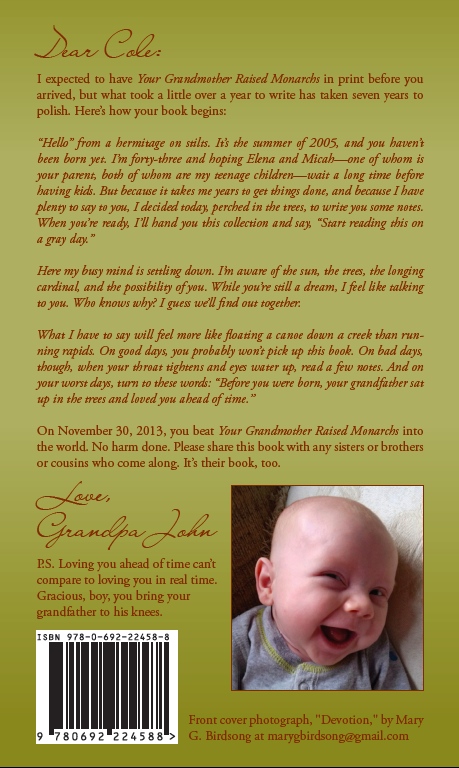
Well, it’s only taken eight years and countless drafts, but “Your Grandmother Raised Monarchs” will finally be available on Amazon sometime this week, followed by a Kindle version maybe a week later. I’m really in photographer and writer Mary Birdsong‘s debt for the nuanced cover shot of a butterfly and a couple of observations that helped focus my thoughts–and to wife Kathy for reading the manuscript probably thirty or forty times. A word about spending your hard-earned dollars: of course I want people to buy the book, but understand it won’t keep you on the edge of your seat. If you wouldn’t enjoy page after page of random thoughts a middle-aged man wants to share with his future grandchildren, then . . . well . . . buy “Your Grandmother Raised Monarchs” for somebody who would. (Insert smiley face here!) Peace and love, John

P.S. I admit the process of pushing this rock up the mountain has been consuming lately. It’s slowed down my blogging and reading/responding. Thanks for your patience. I look forward to being on the grid in the days ahead.

Screen Shot 2014-06-09 at 9.55.05 AM


Screen Shot 2014-06-09 at 9.55.05 AM

Beholding Maine

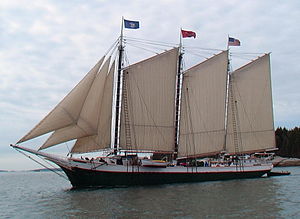
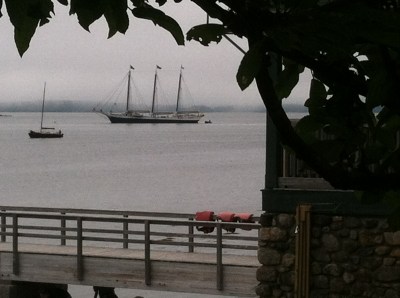
A week ago wife Kathy and I returned home to Erie, Pennsylvania, after nine days in Maine. A few thunder storms in no way choked the cleansing breath of such a generous stretch of open time. We floated from attraction to junk shop. Sometimes we held hands, in what poet Galway Kinnell called the “familiar touch of the long married.” We celebrated our thirty-first wedding anniversary on board the Victory Chimes, a three-masted schooner sailing out of Rockland. And not once in well over thirty hours of driving did we turn on the radio or pop in a CD. We either talked or kept silent. Riding along with each other was music enough. I did snip at my wife over the Internet, know it all that I can be, but the moment passed like a few drops from the sky that never really turn to rain.
IMG_2449

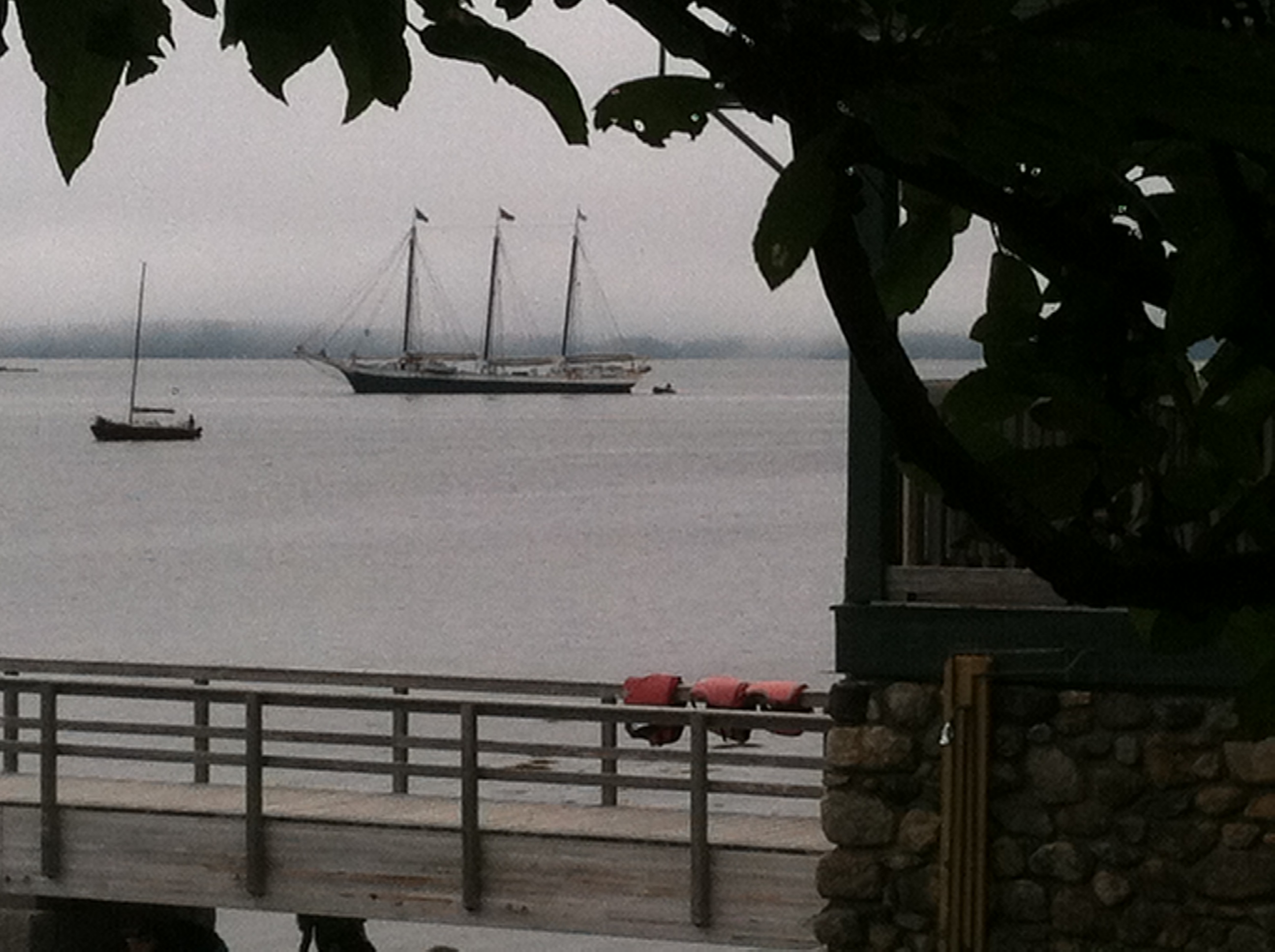
The Victory Chimes at anchor, waiting for us to return from an island walk

Vacation in beautiful Maine is an eye of the beholder situation. Did you ever ask a friend, “So how was your vacation?” And did you ever regret that question after sixty seconds? After five minutes, as your friend gushed about the charming print on the sheets at a bed and breakfast, did you ever watch her or his mouth, know sound was coming out but could no longer make out words, and think to yourself, “I’m turning to stone”? Me, too. But luckily, you can walk away now, before I get started. If you decide to stay, I’ll offer this concise observation about Maine: “Boy, I sure can be a bummer.” Do you suppose I could go on vacation and just experience the thrill of seeing whales? Or just sit on a ship deck in a quiet cove, watching the sunset with my arm around my wife? Or just take in the stunning Maine countryside from a slow chugging train?

IMG_2421

Kathy, watching for whales, dolphins, and seals, hair at the mercy of ocean breezes

In other words, could I just have uncomplicated, $#%&! fun? Ah . . . no! I have to notice that what disappears from the earth shines before it goes black and that death often makes me grateful—or at least gets my mind going. Still, sumus quod sumus. We are what we are. I am what I am. And I see what I see, think what I think. In Maine, a healing tension had me by the heart and head over and over. Of course, the worthy stock images—sun touching the waves, layer upon layer of hills and islands, an eagle perched hundreds of yards away on a dead tree—made the trip a bargain at any price, but what echoed in my chest’s sacred cavern and invited me to stop and breathe was the long goodbyes of beauty shining before it goes out.

Our first mission in Maine was a stop at L. L. Bean, where Kathy had already picked out binoculars from a catalog. As she waffled and kibitzed and tested at the counter with the clerk, I browsed. Anybody who has been to Freeport’s L. L. Bean knows how massive the store is; that is, stores. Lots of merchandise! We were in the hunting and fishing department. I was interested in none of it, though a slim old guy in a gabardine suit and fedora caught my attention as he studied a .20 gauge shotgun by waving its business end in every face around him. Obviously, he never took a hunter safety course as I did forty years ago: NEVER POINT A GUN, EVEN AN EMPTY GUN, AT A PERSON! Once the mindless gun handling subsided, my eyes wandered. And when I survey any setting, a bummer can’t be far away. At L. L. Bean, it was taxidermy—stuffed death. Kathy wasn’t about to drop $160.00 on binoculars without a leisurely test drive, so I took pictures.

IMG_2262

Varnish on the bear’s nose?

IMG_2269

This javalina would have been fun to pal around with–an India pale ale, Calamata olives, summer sausage, and a few bawdy jokes!

IMG_2274

L. L. Bean’s instruction to taxidermist: “Playful! Playful! Give us frolicking raccoons!”

IMG_2277

A couple of old moose at L. L. Bean, one stuffed by the taxidermist, the other by himself.

Hunting isn’t for me, but I have nothing against it. Displaying dead game is okay, too. As I wandered among the trophies, though, I hoped that the tremendous moose and white tail buck had been granted the dignity of landing on a dinner plate before assuming their position and the tribe of raccoons was on display not simply because somebody thought shooting them would be fun.

On the long-married’s first full day in Maine, we rode the aforementioned train from Brunswick to Rockland and back, two hours each way. Yes, by the fourth hour I was bored, but for most of the trip I appreciated sitting next to Kathy, sharing a turkey sandwich with avocado, and watching small towns, swamps, inlets, and green hills go by. Lining the track for miles at a time were telegraph poles in various stages of decay. I couldn’t take my eyes off them. Some were in decent shape, others were listing badly, still others were in repose. All of them were pencils that outlived their language. “How long will it be,” I wondered, “before train tracks join telegraph poles?” We’re talking about patient transportation in an inpatient land. Amtrak is supposedly making a comeback, but I’ll wager by the time grandson Cole is my age, all people riding the rails will do so out of nostalgia.

IMG_2286

Telegraph pole: a pencil that outlived its language

My thoughts were sad, but wistful. It’s too bad that our current perception of time is pressurized, that unless movement from where we are to where we want to be involves g-forces, useable life is being wasted. Fortunately, despite my regrets about our cultural stampede, my spirit was light. I was, and am, glad that taking twenty-four hours to get from Pittsburgh to Orlando—as I did a couple of times on Amtrak’s Pennsylvanian and Silver Bullet—was once acceptable. And those wireless poles gave me hope that maybe one day the messages people take trouble to post won’t be insulting, combative, or bullying.

IMG_2284

Beloved Kathy and I shared lunch on a car bearing our hometown’s name as a younger couple a few rows up alternated between tonsil hockey and cuddling.

IMG_2336

Buddha at the Monroe Inn bed and breakfast.

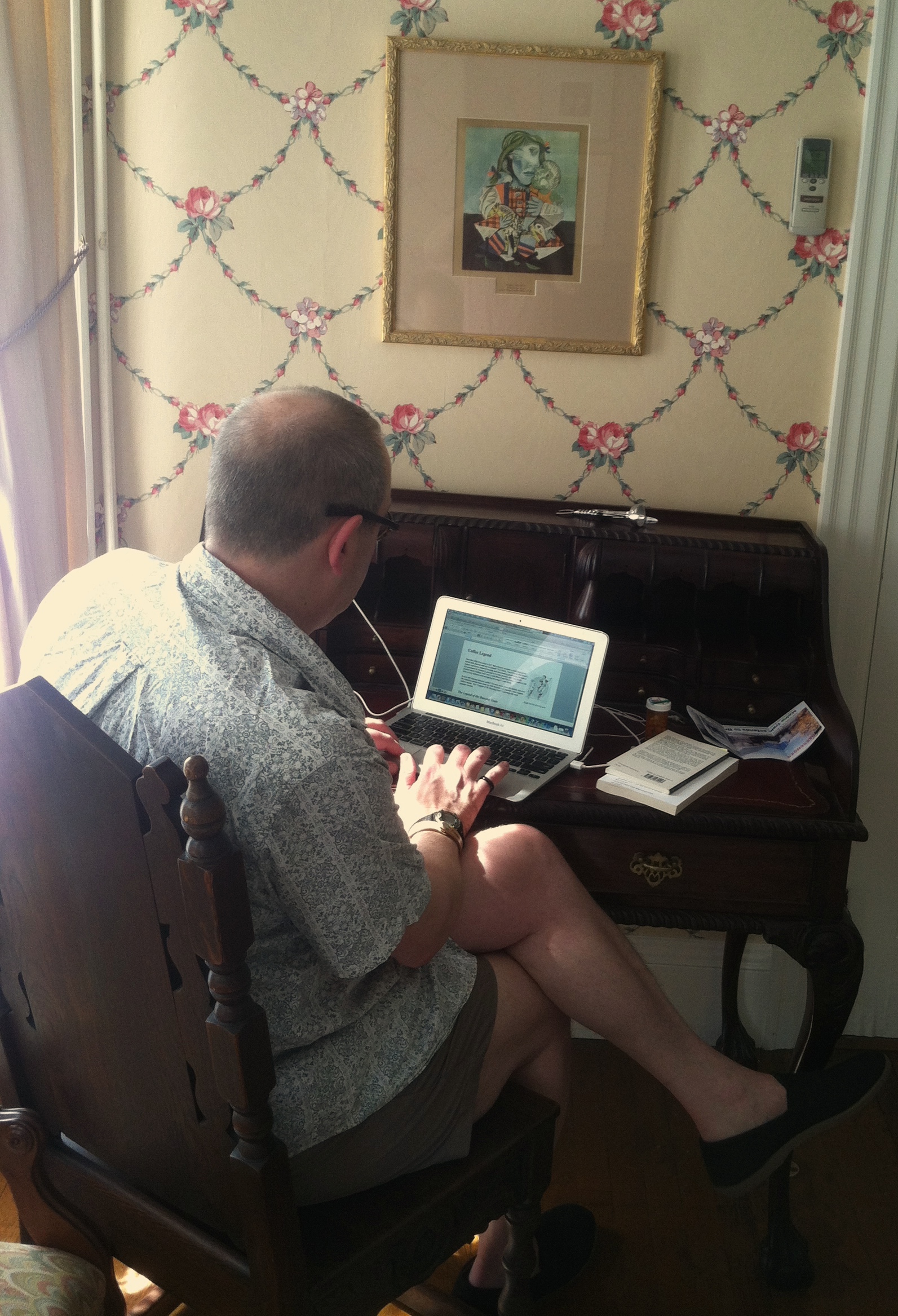
Far from dying out, bed and breakfasts in Maine are like corner bars in Erie. What’s curious is the idea behind a bed and breakfast: sleep the night in a beautiful old house and wake up for a meal prepared by one or two people in an actual kitchen; or let’s pretend it’s 1900—up to a point. Kathy’s favorite B&B was Auburn’s the Munroe Inn, where we stayed in the Noble Suite. “I could live in this house,” she kept saying. “I love this house.” Well, sure, you could be skanky after a day’s travel, have breath sour enough, as George Carlin once said, to “knock a buzzard off a shit-wagon,” but walk around the spacious living and dining rooms, and you feel stately and elegant. If you’ve been saying for years, “Oh, my life, I’ll tell you what, I could write a book,” the handsome roll-top desk in our suite would have given you the urge—by Jove!—to dip your pen in an inkwell and tell your story. Titles would run through your head: My Way (no wait, that’s been used); The Road Less Traveled (dang it, that’s taken, too; Frost, some guy named Peck; can’t remember). Your musings would be interrupted because you have to use the bathroom, where old-style faucets and goats-milk hand soap make what goes on in that euphemism of a room seem dignified.

IMG_2342

The roll top desk was a great place to get a few words down, though not with a dip pen and inkwell. The framed print above is a Picasso.

IMG_2325

Stately mantle and hearth

IMG_2343

We slept deeply, as if embraced by a sane and gentle past.

IMG_2351

We awoke to sun translated by stained-glass windows.

In short, B&Bs are great because they offer something that doesn’t exist anymore. And if guests had to pump their own water and use chamber pots, I bet Super 8 and Motel 6 would smile broadly. Whatever. I loved the Munroe Inn and took more pictures there than at Sabbathday Lake, the Shaker village (stay tuned). It was a special treat to meet the owner, Olga, originally from Russia, who spent years in New York City before doing something her friends considered kooky: move to Maine and run a B&B. But she has got a fantastic gig going, made distinctive by eclectic choices in art.

IMG_2339

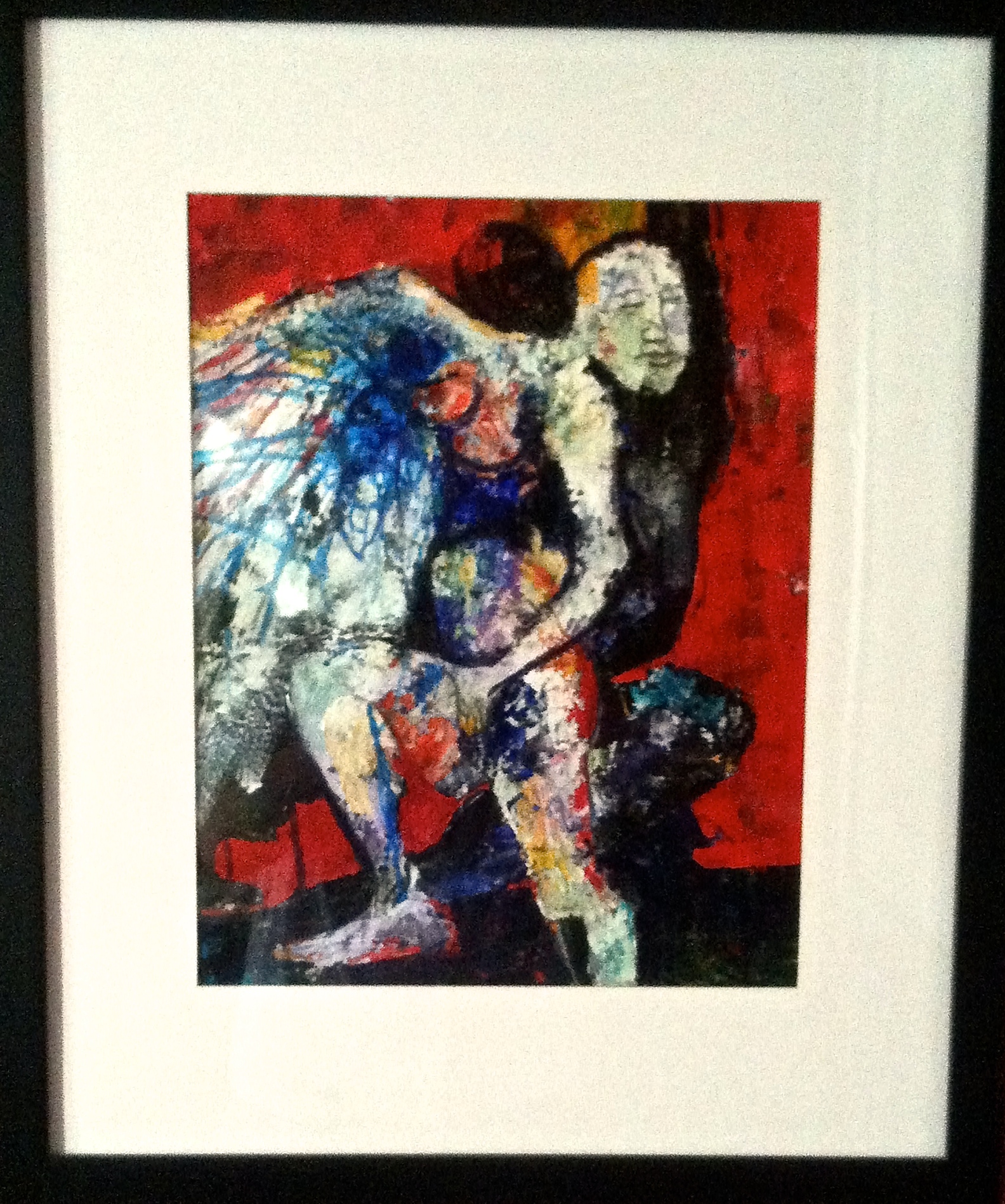
For some reason, old and dignified marry contemporary and playful with pleasing results at the Munroe Inn.

IMG_2358

This faces guests as they descend a spacious staircase. Where, I would like to know, did Olga find this recent photograph of me naked on a rock, throwing a discus?

       Still savoring Olga’s inn, Kathy and I headed to Sabbathday Lake, 1800 acres of woods and rolling fields, free-ranging livestock, a dozen or so buildings, a faithful support crew of paid staff and devoted volunteers, a rich history in art and architecture, several reliable sources of income, and . . . three Shakers. A baseball enthusiast would immediately diagnose at least one reason for the shortage: no farm system for developing new talent. Shakers are celibate.

IMG_2369

The Shaker herb garden, which provides income for the community, is managed by a paid staff member. I brought home for daughter Elena a dried flower sometimes called “poor man’s saffron.”

A month ago I met the last two monks at a Byzantine monastery near Butler, Pennsylvania. I thought of them, Fathers Michael and Leo, as Kathy and I walked around the Shaker village in the rain. There are still Byzantine Fathers in other monasteries, but the trinity at Sabbathday Lake is it. At best, all other Shaker communities are museums or libraries. At worst, they’re malls or tumbleweed. Sister Francis (the community’s mother), Sister June, and Brother Arnold are a religion of three, with a great cloud of witnesses. I may have glimpsed Arnold as Kathy and I were hopping on a wagon for a hayride. Wayne, a brother until 2006, left Sabbathday Lake after falling in love with a reporter who visited to write a story–with, in my opinion, a faithful and glad ending. I didn’t see Francis and June.

IMG_2385

“Tis a gift to be simple.” The Shaker Meeting House, where Francis, June, and Arnold worship, along with visitors. Women enter through one door, men through the other. I peeked in. The inside is as plain as the outside.

IMG_2377

The Meeting House’s wooden siding: how much longer will fresh paint make the sacred dwelling “come round right”?

IMG_2364

These rules were posted in a barn where Shaker-friendly items were being sold. An exacting way that embraces goodness may die, but let’s hope its fervor lives.

Short of a miracle, the Shakers will be no more during this century—that is unless Arnold, fifty-seven, breaks longevity records. Francis is eighty-seven, June seventy-six. The likelihood of their extinction made me feel blue, but also grateful. The Shaker practice isn’t for me, but I admire their devotion to a life centered in goodness. The article by the reporter Wayne eventually married noted that after the American Civil War the Shakers numbered about 5000. At Sabbathday Lake, where visitors are asked not to take photographs inside the buildings, I learned that Shaker communities were once de facto orphanages and foster homes. Poor folks turned their children over to the Shakers rather than let them starve. (Francis arrived at Sabbathday Lake at age ten.) In old portraits Shakers often wore severe expressions, but underneath their regimentation and austerity was a well of radical love.
IMG_2395

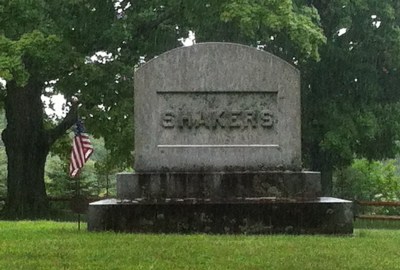
Over 150 graves, but only one marker. With Shakers, I read somewhere, there is no “mine” or “yours”; only “ours.”

As much as anything, I appreciate not only Shaker history, but also Francis, June, and Arnold for carrying on a practice that seems right to them and for making heroic sacrifices to be the last of a family that still has much to teach the world.

300px-Victory_Chimes

The Victory Chimes (Credit: Wikipedia)

The official reason for our Maine trip was to sail on the Victory Chimes. If you’re not for sailing on mostly calm waters, taking naps whenever you please, going for walks on islands and in small coastal towns, and winding down by watching darkness descend on a horizon of pine trees, don’t board this vessel. And the food! Chef Pammy is phenomenal—a word I use sparingly—especially when you consider that she cooks on a propane stove that has two settings: simmer or hell. She makes the best chili and macaroni and cheese I’ve ever tasted, though these dishes don’t represent the menu. Think lobster with drawn butter, haddock in a dill sauce, curried greens soup, and smoked salmon with capers. Kathy and I were fortunate to sail this season with Pammy, since 2014 is her last. When we return, we’ll miss her presence even more than her spatula. She shares stories generously and listens without interrupting. I’ll consider myself blessed if we can catch up with her some day near her winter job at Sugarloaf Ski Resort.
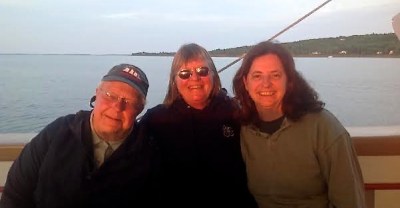
unnamed

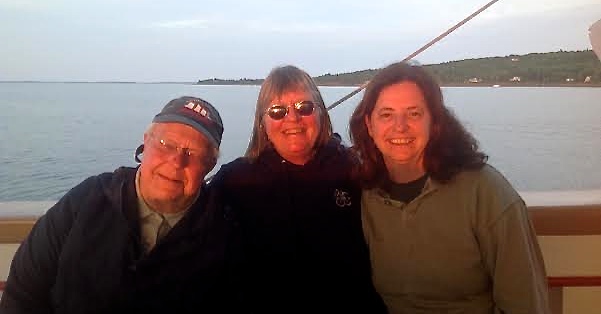
Relaxing after a day of sailing: Margaret, bridge expert from Ohio; chef Pammy; Kathy

There are a couple of minor drawbacks: the cabins are tight, and the heads are communal. I slept the hell out of my bunk and have no complaints. And about sharing three toilets amongst twenty or so passengers—some sprang for a cabin upgrade that includes a private privy—my attitude was, “Aw, look, get over it.” If there were a way of transporting the Victory Chimes routine to Erie, Pennsylvania, I’d vote for it. Breakfast at 8:00 a.m., lunch at 12:00 p.m., appetizers on deck at 5:00, and supper at 6:00. Between food, I wrote in the salon (mess hall), napped myself delirious, enjoyed deep draughts of prayer/meditation, and read. Nearly every day the boat anchored somewhere and conveyed passengers to shore for an hour or so. Of course, this is a vacation schedule, not to be expected when you’re back on company time.
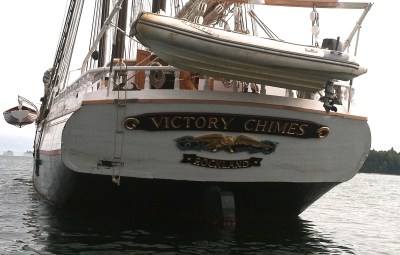
IMG_2456

From the yawl boat Enoch, returning us to the ship after an hour on North Haven
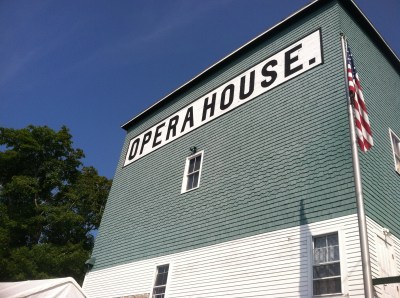
IMG_2461

The Stonington Opera House. A little cultural venue on North Haven–who’d have thought?

Lots of travelers share Kathy’s and my love for a Victory Chimes cruise. Profitable as the enterprise is, Captains Kip and Paul have been hoping to sell the schooner for years. During sailing season, the work is consuming, and they purchased the vessel mainly to prevent it being sold to a Japanese interest that intended to transport it overseas and convert it into a restaurant. The last of her generation of Maine schooners, the Victory Chimes has the distinction of gracing the tails side of the Maine quarter.

150px-2003_ME_Proof

Congratulations, Victory Chimes! You know you’ve made it when you’re on currency. (Credit: Wikipedia)

The problem is, buyers aren’t coming forward. When Kip and Paul need to call it a career, I can only hope that somebody has the means and skill to take the helm. For now, the Victory Chimes is shining and delicious, and there’s no reason to assume that someone with a thick wallet and a spacious heart won’t make sure the Maine quarter doesn’t need to be revised. A final note on the boat: sailing with strangers for a few days has a way of inviting human authenticity. Kathy and I offered and received some personal stories that the waves and wind held in holiness, as if the water and air made themselves a cathedral. We told one couple a few years our senior about son Micah’s struggles with addiction and they responded with the wrenching account of their own daughter’s passing at twenty-six from the same lying thief. There was no judgment, no idiotic fixing. Just humans meeting each other in a nave and breathing in and out what is and what has been.

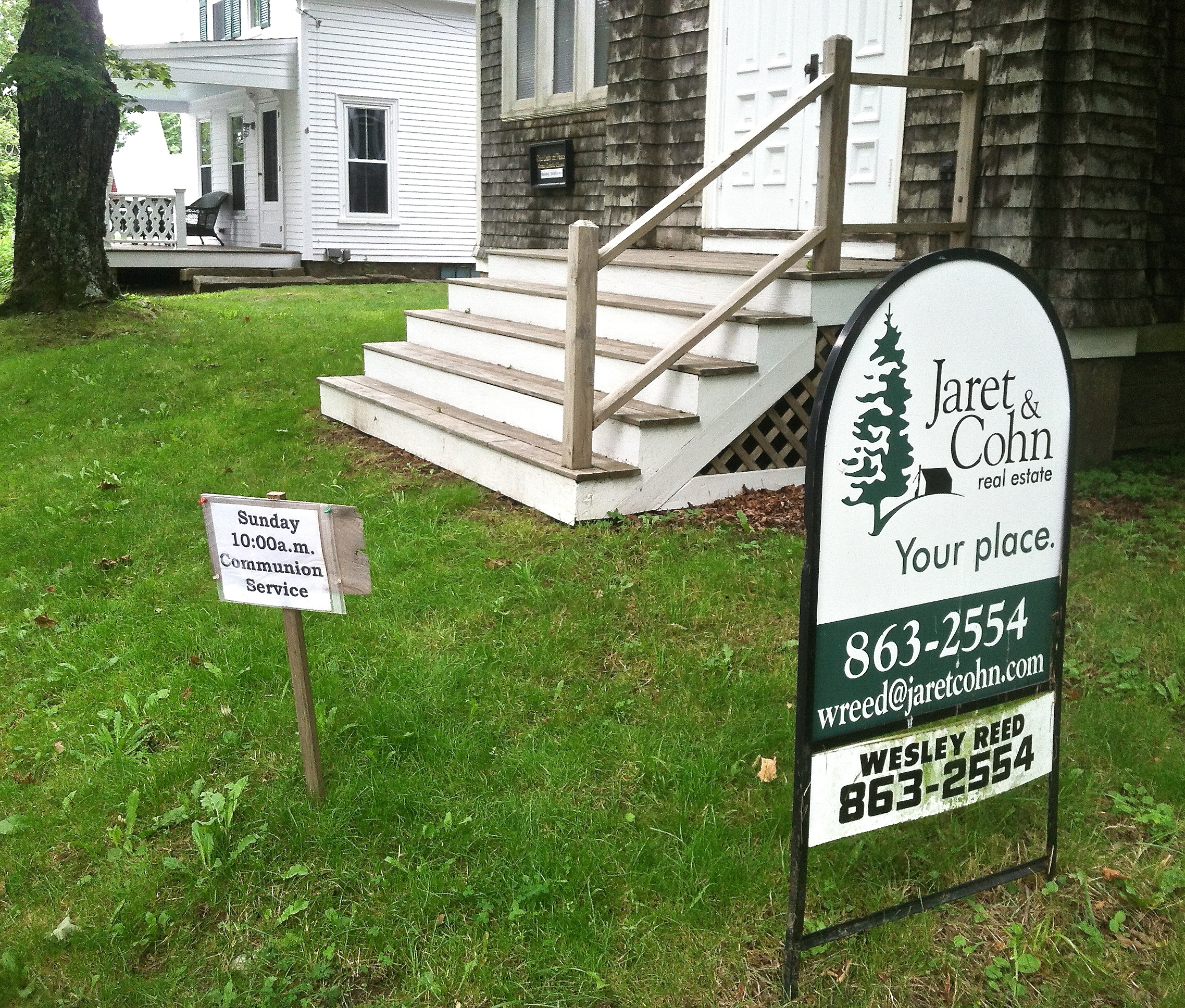
       A walk with Kathy on North Haven included two surprises. First, I’m pretty sure we saw author Susan Minot—no biggie, but neat. Second, we passed Our Lady of Peace Roman Catholic Church, which is for sale, a sign that the pews are anything but full on Sunday at 10:00 a.m. I took pictures of the exterior and was joined by two other Victory Chimes passengers, all of us staring up at the rust and rot. On a whim, I tried the door. Surprise! Unlocked.
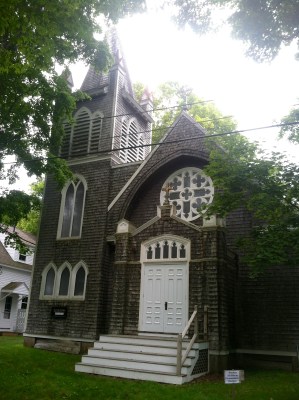
IMG_2470

Our Lady of Peace

IMG_2469

I don’t imagine Our Lady of Peace will have a forwarding address.

IMG_2506

The nave from the balcony

IMG_2498

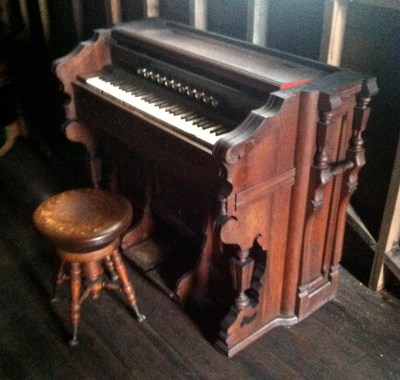
Organ in the balcony–an instrument deprived of its liturgy?

IMG_2511

One of the Stations of the Cross, hanging on an uninsulated wall.

This may sound odd coming from a Lutheran pastor, but I don’t particularly care if individuals go to church. Non-churchgoers meet me, look at the ground, and get stumbly and awkward. My attitude: I’m in no position to judge your beliefs. I do admit to being concerned, though. If human beings lose the longing to know the Ultimate and the impulse to gather with other pilgrims for adoration—of anything!—our race has a collective case of spiritual anemia. Of all the lights shining before going out in Maine, the rusty lamp of Our Lady of Peace on North Haven left me with a simple prayer.

IMG_2476

“Lamps will rust. Please don’t let the flame go out.”

       Some goodbyes, while serious, are also funny. On the way home, Kathy took a picture at a rest area on I-90 west in New York State, not far from home.

unnamed-1

Observation of an novice curmudgeon: Why not, “No littering”?

       I’m confident the written word has a few more generations of vitality before it takes on the shine of a long goodbye. That possibility is so far off that I laughed in our tune-less truck at the drawing of an arm hanging out a car window, its hand letting go of litter. Even a bummer has to lighten up once in a while.
An Incidental Monastery and Other Siblings from the Community of Mystery

Blogger’s Note: This post is nearly 2000 words long. I’ll understand if you can’t spare the time. Peace and love, John

I try to nap an hour each afternoon and pray so often lots of people would consider me lazy. Breathe in, breathe out. Be mindful. Let go, John. Let go. I’m coming up on twenty-five years of practicing contemplative prayer. When I started I was in terrible shape: depression, panic attacks, and a constant buzz of anxiety in my body. In contemplative prayer, I sit in the quiet dark with the Loving Mystery, who saves me. Not saves as in are you saved? I mean saves me from despair and gives me hope and just enough sanity to get by. Just.

Axentowicz_The_Anchorite

Axentowicz the Anchorite. I look nothing like him when I pray, except maybe in heart and spirit. (Artist: Teodor Axentowicz. Source: Wikimedia Commons)

Contemplative prayer has also birthed in me a paradoxical spirit, which songwriter Don Henley describes pretty well in “Heart of the Matter”:

The more I know, the less I understand.

All the things I thought I figured out, I have to learn again.

The truth is, I don’t know or understand much, nor have I figured out much. The wonderful Lutheran folks I serve as pastor might find this confession troubling. Sorry about that. Each day begins with a foundational proposal: Okay, let’s try this again. This, of course, is life. I often feel embarrassingly inadequate to its great gift. I’m driftwood in the presence of Gracious Light. What little I have figured out, I have to keep learning again. I say a constant, wordless prayer: Have mercy. Teach me one more time.

Last Wednesday was a case study in all that I’m haltingly articulating here. The day proper began at Starbucks with me sipping my summer usual, an iced decaf coffee with a decaf shot of espresso (a.k.a. a redeye or a tall iced what’s the point?). The agenda was light, no troubles on the horizon, no stressful deadlines lurking, but I had a surplus of nervous energy. I was either going to blow soothing kisses to my adrenal glands or spend the hours ahead rushing toward no place in particular.

379px-Eustachi_nervous_system

Hope for the day: identify the sparking nerves and make them behave. (Artist: Bartolomeo Eustachi. Source: Wikimedia Commons)

A chance chat with Starbucks regulars Rick and Noreen helped. They had just returned from a cruise—their destination escapes me at the moment—still tan and fresh. Noreen wore a fedora, a stylish cancer accessory. She looked great, but was in the midst of treatments, sixteen or eighteen more to go. “But who’s counting?” they said. I told them Abiding Hope, the congregation I serve as pastor, would pray for them. (After thirteen years in a collar, you’d think I would have some understanding of how prayer works, but I’m as clueless as a toddler trying to figure out a good reason for kale. If nothing else, I think it must please God to hear “touch Noreen with your healing hand” rather than “grant me a true aim as I launch a missile at that 777.”) Be welcome to join me in a loving word to the Creator for Noreen and Rick.

The determined, vulnerable eyes of people looking into the mortal abyss made me slow down. I can think of no better way to honor what fellow human beings are going through than to sit still with them, receive as much of their reality as possible, walk mindfully across the parking lot to my crappy truck—watching along the way for traffic and appreciating the pilgrimage of clouds—and dance and bicker with my path and what lines it.

IMG_2250

A gaggle of geese was on my path. They took over five minutes to cross from their morning bath to the sunning yard. They taught me patience on my way to run clean socks to painter son Micah, who had spilled bleach on his shoe, sock, and athlete’s foot. Ouch!

At the church, before settling in at the standing desk, I made a trip to the mailbox, and that’s when I really began learning again what I had already figured out. The lesson, of course, was (and is) to live in the moment. The cliché is “stop and smell the roses.” The blessings as morning turned to afternoon and to evening reminded me of such wisdom, but also granted me joyful humility. Each time I encountered another wonder, I was convinced anew that I have no idea where I’m going in this life and why. I’m vertical, ambulatory, taking nourishment, blah-blah-blahing, and gaining weight, but somehow or other I don’t feel in charge of my travels. It’s as if a great community of mystery appears one lovely sister or brother at a time to greet me: “You thought you were going to the mailbox, but you were also sent out to meet me, to hear my teaching, to receive my anointing.”

On the way to the mailbox and back:

IMG_2200

Delicate, almost the size of a Canadian dime

IMG_2196

Right by the church door: I don’t know their name, but they seemed to know mine

After work I went to Radio Shack.


IMG_2201

Okay, John, go ahead and think you were after a power cable. You came to see me, a nest above a beauty shop sign. I’m glad my birds sang to you.

On the way home from Sally’s nest, an old powder blue Mustang was riding my tail, and annoyance almost blinded me. When I pulled over to let the guy pass, a sibling greeted me.

IMG_2214

Thank you, brother from the community of mystery, for walking a block with me! Live well and long.

Late in the afternoon I went for a run on the sidewalk trail at Presque Isle, northwestern Pennsylvania’s treasure which juts out into Lake Erie.

800px-Agelaius_phoeniceus_-standing_on_wood-8

Was I exercising, or did I put my running shoes on to go see a red-winged blackbird swoop across my path? (Credit: Bob Jagendorf. Source: Wikimedia Commons)

Wednesday’s spirit has continued to give me blessings beyond its allotted hours. On Friday I went to the bank to pour what turned out to be $138 into a coin counter. At least that’s what I thought. Turns out my mission wasn’t about turning change into bills, but something else.

IMG_2226

I had forgotten how to wash my hands. Thank goodness for PNC’s foresight. (Heavens, what have we come to?)

On Saturday wife Kathy and I had a yard sale presumably to get rid of some excess and make a few bucks. As a steady rain splashed our event, two surprises taught me again what I thought I had learned:

IMG_2239

Kathy found in a dark closet corner the keys to my late mother’s Mercury Lynx on the leather Jesus fish keychain I made as a kid at summer camp. I drove the Lynx after Mom died and used that keychain into my thirties. “Hi, Mom!” “Hi, Camp Lutherlyn!”

IMG_2227

I met a woman–the only person I’ve seen–who wears my round John Lennon glasses. “Blessings, sister!”

Actually, I confess that literal brothers prepared my heart a couple weeks ago to receive Wednesday’s wisdom. I had driven two hours to Saxonburg, Pennsylvania, to officiate at Caity and Ian’s wedding, and lovely Kathy was kind enough to come along. A few hours before the nuptials we saw a small sign along Route 8: Holy Trinity Byzantine Monastery. I drove past the turn off, but Kathy said, “John, you know you want to go see it.” So we did a u-ey, wound through four or five rolling miles of corn fields, saw that the monastery had a book and icon store, and decided to ring the bell.

Father Leo and sweet incense greeted us. I asked about the store hours. “Oh, we don’t have any hours,” Father Leo said. “Whenever anybody rings, we open up.”

We followed him down a hall to a 15′ x 20′ room which looked like it hadn’t seen business for some time. He turned on the lights and said, “Father Michael will be here in a minute. He’s just finishing lunch.”

Father Michael showed up immediately–he must have run. Gentle voice, gentle man–lonely man. After ten minutes of back and forth, he laughed: “I love to talk. We don’t get many visitors.”

Showing us shelves of icons, he wiped the dust off of one with a fingertip: “Father James took care of the store. He worked on this almost full time. He died in . . . ,” Michael said, looking somewhere past us for the year, “. . . in 2012. Abbot Leo and I are the last ones left.”

IMG_2218

Kathy and I brought this icon home. It will hang in my little chapel to remind me of my brothers near Butler, Pennsylvania, and of the joyful humility in never being sure where I’m going.

I knew at once that Kathy and I had driven nearly to Pittsburgh for two reasons: to join a hundred people at a wedding and to bear witness to Father Leo and Father Michael. If you’ve never visited a monastery, you might not be able to imagine the love, kindness, wholeness, and warmth of a place where silence and patience are profound.

Untitled

I wish I had met you, Father James. I’m told you loved animals. So do I. (Credit: The Byzantine Catholic World)

“I don’t know if your abbot would permit it,” I said to Michael, “but could I take a picture of the two of you?”

After another twenty minutes of talk, Leo and Michael lead Kathy and me to their chapel and, in a gesture of hospitality that nearly moved me to tears, Leo opened the gate to the Holy of Holies. And, of course, we talked some more: about the celebrant facing away from the congregation not to disregard them, but to lead them to heaven; about the hand-carved wooden tabernacle that took seven years to make. Eventually, Leo closed the gates, and I took their picture.

IMG_2131

The last two monks of Holy Trinity Byzantine Monastery: Father Leo (Abbot) and Father Michael.

I plan to write Michael soon. He told me earlier in the store that he is beyond ecumenical. “We’re all one,” he said. I bet he and Abbot Leo would welcome me to enter their quiet sometime soon, for a couple of days. In my letter I’ll ask. And I have a feeling my friend Mark would like to join me and meet these two monks with long beards and agape hearts.

Two nights ago I sat in the Coleman front yard in my favorite lawn chair, stared at the sky, and thought of Michael, seventy-six years old, and Leo, six years his senior. I toasted them, thought of them alone in the corn fields, wondered how much longer quiet and sacrificial welcome will call this planet home, and asked God to remind Michael and Leo that they’re not forgotten.

IMG_2238

My observatory, from which I saw one speck of light. That was plenty.

Dead overhead I saw a single star. The glow of Erie, Pennsylvania, dimmed all but one. How many lifetimes would it take to get there? And was it even a star? Maybe it was a planet. No matter. As it happened, I hadn’t sipped wine in the darkness only to sing the day’s fuss to sleep. I had sat still and looked heavenward to receive a slight kiss of light and an invitation: Let go, John. Let go. The community of mystery will save you. Amen

A Prayer for God’s Children Falling from the Sky

Dear God,

I heard first that 295 of your daughters and sons were killed on the Malaysian Airlines flight shot down over Ukraine today. Now the number is 298. Ah well, three more souls, no big deal.

Gracious One, what’s happening to us? We can’t seem to stop blowing each other up. Let’s see: Amish school girls, Connecticut first graders and teachers, Colorado folks out to catch a movie, and just yesterday, four boys playing soccer on a Gaza beach.

And now, almost three hundred of your children fall from the sky. I confess, their descent haunts me. You know, I hate flying. While in flight, I imagine the plane nose down, spiraling toward the earth. On impact, my face and chest smash into the seat in front of me. It would happen so fast I wouldn’t experience any pain, but in my nightmare I feel it all.

And I’ve dreamed—many times, even safe on the ground—something like what happened today in Ukraine: the plane in pieces and me stunned in the frigid air, the ground rushing toward me. At 33,000 feet, would you pass out on your way down and die before landing? It doesn’t matter, God, I’m awake for everything, including the instant crush of death.

In an odd way, this prayer is selfish. Not everybody on that plane out of Amsterdam was blessed to die when the missile hit the plane, blessed to pass from this world to you as they slept, one head resting on a beloved shoulder or held hands or said, “You know, in Kuala Lumpur we’ll have to . . . .” Some must have shot out into the open air and at least for a couple of seconds reckoned, traveling through cloud-blindness to the sight of green fields, the immediate future.

It’s these brothers and sisters I’m praying for. I have no clue how you work and whether it’s possible to ask you for a grace whose time has already passed. Well, I’m asking anyway. This is crazy, but may it be so that you touched the wicked shock of your children’s last moments. I dream this prayer:

They soared above oxygen, but you gave them the breath of peace. They spun and somersaulted, but you spoke into the ear of their hearts: “Laugh and love the view. I’ll catch you on the ground.” They didn’t grieve what they never said to those they loved because you comforted them: “I’ve prepared a place for you—all of you.” Most of all, you helped them stay awake, free from fear, and they said, “Mercy, so this is what it’s like to fly!” Then they woke up, and you were cradling them, looking into their eyes.

“What was that place?” they asked you. “I remember loving and crying. Why were we always hurting each other?”

But since you were holding them, they forgot the question. They had flown, and you had caught them. What bomb or bullet could touch them now?

In eternity, God, may needful answers descend slowly upon all of us. And may our arms be used only for embracing.

Amen

A Letter to Noah, Gone on to Glory

Dear Noah:

On December 6, 2007, you passed from your mother to the womb of glory, forgoing planetary existence entirely. On April 2, 2008, which would have been your birthday, your mom, dad, and I prayed, reminded the universe that you were, and stood in a cemetery. We needed to let grief have its way with us—your mom, Liz, especially—out in the open air, before heaven and earth.

Only this morning did her sadness settle upon me, the breadth and depth of it. She and I talked for a few minutes last night after a meeting, and what she said woke me up at 5:30 this morning. Right away I felt the need to thank you. Because your life kissed Liz’s en route to mercy, I’ve been granted a truth. This isn’t a maxim, like “a penny saved is a penny earned,” but a truth that’s part of eternity’s cosmic dance.

Milky_Way_Galaxy

Your truth is as big as the Milky Way, Noah. (Credit: Rick Risinger. Source: Wikimedia Commons)

So . . . the truth your mother spoke, not with words but with her eyes: we are loved into the world. Why did it take me fifty-two years to realize this? Even a dullard can detect pregnancy: swelly belly; the third-trimester waddle; puffy feet; pink cheeks. And women generally know not to smoke, drink, and do drugs while carrying a baby. During labor, breathing through contractions is common knowledge, so much so that it’s become a joke: Whew! Whew! Whew! Whew! Whew!

But what you and your mother have taught me, Noah, isn’t a lesson of body, but spirit. Mothers and fathers, grandmothers and grandfathers, and aunts and uncles don’t just get excited about a new arrival; they fall in love. While your digits were still forming, you were loved. Hundreds of times while you were kicking and shadow boxing in your mother’s womb, she held you in her soul, rested her lips against your sweet face, breathed in your newborn scent, still carrying whispers from God. And her love—so you and she have shown me—collaborated with biology to nurse you toward life.

Stomach of Pregnant Woman

Your earthly home looked something like this, Noah, and though you were hidden, many people loved you ahead of time. (Credit: Turbo / Corbis)

Now you would be six years old. This morning as I lay awake before dawn, I dreamed you. You would have the full face of your brothers Mitch and Gabriel and fine, blonde hair. Pretty soon, I would pull a chair up to the altar, and you would help me set the Communion table. You would raise your hands with the other Abiding Hope kids to bless the people. Your father, Shawn, would chase you around the church, maybe telling you to slow down. In this dream, love for you catches in my throat.

But my dream can’t compare to your mother’s. She dreams you all the time, and while I imagine clowning around and making you laugh, she dreams you with her body. Biology failed you, but your mom still feels the space in her arms where you should now find comfort. I’ll also bet the love that willed you toward birth still dwells in her womb. “Push,” it pleads, “push!” The longing is so profound it doesn’t stop, even though you are gone.

The_Thinker_(Le_Penseur)_copy_at_Kyoto_National_Museum_(side_view)

Would you have been a “thinker” or a “stinker”? Probably some of both. It would have been a joy to find out. (Credit: Franks Valli. Source: Wikimedia Commons)

Oh, Noah! Do you understand from the lap of glory how you are loved? Still, I have to tell you, your beauty comes at a price. When you died, your mom, dad, and others who counted on your arrival could hardly bear it. “God,” they cried, “why would you take Noah from us?” Sometimes they shook their fists and swore at God, which I believe is the best possible prayer when that’s all you’ve got. Maybe you could check on this for me: God loves us beyond our doubts and rage, right? You could also ask if I’m right that God didn’t take you as part of a divine plan and doesn’t constantly make folks climb through barbed wire to test them.

But I shouldn’t be greedy. You and your mother have already blessed me with one answer: We are loved into life. Gracias, little senor! I’m also grateful that you have opened me up to other lessons about love that grow from the soil of your teaching. That’s how my mind works: I dig for truth and find species of it gathered in one small garden.

 —

We live on love. Friends of mine are serving as foster parents to a toddler they plan to adopt. Also parents to an infant son, they are Mommy and Daddy, enfolding both boys with the blessings of home and family. By chance, the biological father learned that he had a son and hopes to be awarded custody. For now, he has visitation rights. The boy returns from each visit shaken and upset and cries in the night: “Mommy, Mommy, Mommy!”

Just as Liz and Shawn loved you toward life, Noah, my friends’ love for their sons—no distinction in their hearts between biological and adopted—has left fingerprints on their souls. The four of them belong to each other, and they survive not only on food and water, but on the wholeness they find in each other’s arms. Even the possibility of being separated is shattering. The parents imagine the boy who is now part of them afraid and confused, calling out for them from a strange bed in a strange house. They pray, “Why would your plan demand a toddler’s despair?”

IMG_2157

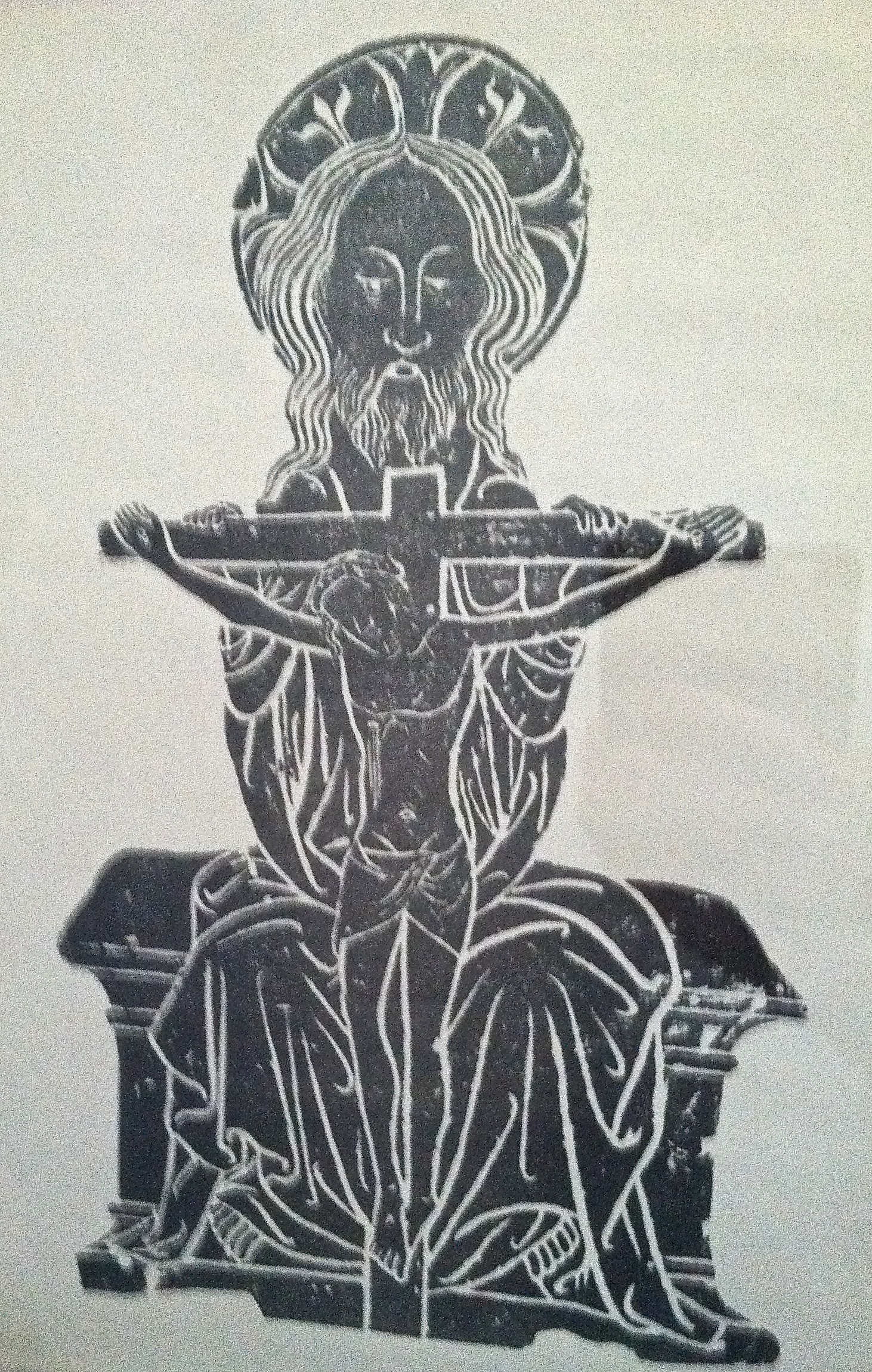
My friend Diana gave me this rubbing a long time ago. Looking at it makes me wonder about the face of God. Please ask God to smile upon us and be merciful.

Some lessons are necessary, but damned difficult. You’ve taught me that I would rather have my loved ones safe beside me and suffer all other scarcity than know material abundance and empty arms. Love is as necessary as clothing and shelter. Intercede for all of us, Noah. Hold God’s hand as we—our boy’s parents and all who love him—throw haymakers at heaven and demand answers.

Love longs to be spent. I think lots of us are formed and fired to be vessels for love. If enough of it builds up without finding a good recipient, we show cracks. In recent years I’ve spoken with a couple of women who wanted to bear children. One told me after drinking an iced-bourbon truth serum that she regrets not having children. “I think I could have been a good mother,” she said through tears. And she would have been—nervous, worried, but as attentive and understanding as any mother in circulation. In her sixties now, she looks across the expanse of years and holds open hands that would have always touched daughters and sons with gentleness. Another friend tried for years to get pregnant, without success. She heard stories of unwanted babies cruelly discarded and thought, “I’m right here! I’ll love your baby. Just bring him here and leave. Nobody has to know.” For both these women dear to me, adoption wasn’t an option.

Potter Crafting Pot

Did the Potter of Eternity shape us to carry love, to pour it out generously? That’s what I believe. (Credit: Richard Gross / Corbis)

Noah, you’ve never known the weary joy of comforting a crying baby, but your passing through my life has helped me to recognize that many of us feel starved for the love that completely and recklessly embraces another life, a fragile life that can’t survive without us. A baby falls asleep because you have surrounded her with your tender presence. The unfulfilled longing for such a connection chants a mantra: “Push!”

 —

Love lands where it pleases. An old friend of mine is selling his house and moving into a senior apartment complex that doesn’t allow pets. He gave his dog to a kind friend, and on the first night in her new home she dug a hole under the fence and escaped. Sleepless hours passed until the next morning, when my friend stopped by my office with good news. The dog returned and was sleeping in the laundry room of her new home at daybreak.

“Last night I did something I haven’t done in a long time,” he reported. “I got on my knees and prayed.” The thought of his beloved dog confused and afraid in woods and fields was torture. I bet for a while my friend will go to pet his dog and feel grief when he remembers she lives with someone else now.

We love what we love, I guess: dogs, meadows, goldfish, blue heron, homes, clematis vines, neighborhoods. Noah, you might ask me, “How can you love me, John? You never even met me.” Because that’s how love works, buddy. It writes its own rules, in its own time and at its own pleasure. And it’s under no obligation to make sense.

800px-Great_Blue_Heron_0887

Can you love a blue heron, Noah? That’s for love to decide. (Credit: Dori. Source: Wikimedia Commons)

 —

“I got on my knees and prayed.” That’s it! Love brings us to our knees. That’s what you and your mother taught me, along with leaving me a question. I wonder if great minds over the centuries have uncovered only the scientific truth about the origin of universe. Maybe there’s a second truth. What do you think, Noah? Were the suns and planets and beating hearts of each galaxy loved into space? And is that love still sending us out for billions of years until it calls all that exists together again to be embraced—blood, bones, fire, and stardust?

You’ve got me wondering, kid, wondering and believing. Who could have imagined that a boy who never held his parents’ hands and walked barefoot on wet grass or woke up in the middle of the night afraid would be wise enough to grant a grateful man truths to live on.

Thanks, Noah. Give God a kiss for us.

Love,

John

Breathing the Moments of Buoyant Flowers

The late May Sarton loved flowers and kept vases of them all over her house. On page one of Journal of a Solitude she explains why:

When I am alone the flowers are really seen; I can pay attention to them. They are felt presences. Without them I would die. Why do I say that? Partly because they change before my eyes. They live and die in a few days; they keep me closely in touch with process, with growth, and also with dying. I am floated on their moments.

IMG_0856

Kathy’s trumpet vine, last year’s edition

These days wife Kathy’s stargazer lilies, clematis, and plenty of others make the yard a happy riot, and a couple times a day, I stop, look for a few seconds at some bright spot, and float. The trouble is, my favorite activity in life is floating: find beauty, breathe it in and out, and float. Maybe this is because, like Sarton, “I feel too much, sense too much, am exhausted by the reverberations after even the simplest conversation. But the deep collision is and has been with my unregenerate, tormenting, and tormented self.”

220px-May_Sarton

May Sarton

Well, that’s a little overstated for me–I’m not unregenerate–but Sarton captures the main idea: I often feel as though I’m swimming upstream. I need beauty to help me float, even if the buoyancy takes me back downstream.

A few days ago I had an evening to think back over some of the flowers that have lined my path lately. The free time, I should point out, surfaced because while schlepping around the grocery store in my old Birkenstocks, I caught my piggy toe on one of the cart’s wheels. It’s curious how several ideas can come to mind in an instant:

  • Heavens to Murgatroyd, I just broke my toe!
  • Don’t pass out.
  • Wait, it’s sticking out at a 45° angle. Is it possible to jerk a toe out of joint?
  • Jiminy Cricket!
  • They don’t do anything for a broken toe anyway. 

“What have I got to lose?” I thought, then bent over, made a mental note to lose weight, and pressed piggy back toward its siblings: click! I didn’t hear it, but felt it. Had I just lucked out? We would have to see.

Trying not to limp too tragically up and down the aisles, I covered the rest of the list. The sweat that comes with a freak injury flowed, and occasionally I sounded like Yosemite Sam walking on hot coals. But I made it through the checkout, to the truck, and once home told Kathy and son Micah my tale.

I wouldn’t be preparing salmon and a Boston lettuce and avocado salad for supper. With foot elevated, I took four ibuprofen with two glasses of water, then sipped some Primal Roots red blend. As Kathy and I sat together, I looked out at the sun making the boulevard maples glow. Every few minutes my toe felt like it was inhabited by a tiny troll who, furious at being held captive, was using a pick ax to escape. Then, out of nowhere, a certainty settled on me.

“My God,” I said to myself and Kathy, “we’re so lucky.” I thought out loud our litany of blessings: home, food, clothing, loved ones, and more. Once in a while you remember that, although some sad spot inside sounds its chronic ache, you generally abide in Eden—a lush garden of breathing and floating. So on the porch my flummoxed toe and I floated. Breathing in, breathing out, I gave thanks for flowers that have lined my path lately.

IMG_1958

Conventional and cat flowers in the Coleman kitchen

Confession: until grandson Cole was born on November 30, 2013, I wasn’t a baby guy. Sure, little ones struck me as cute and good-smelling mostly, but I was never one to squeal and beg to hold them. But now my fifty-two-year-old heart has been cracked open.

IMG_2091

One of Starbucks’ baristas brought in her newborn. I was having a rough morning, then I found myself floating. Thanks, kiddo!

IMG_2127

Mary Anne holds great-granddaughter Alexis in my office at church. When mom Vanessa handed me her daughter, I told the little one she was lucky. Her mom and dad had waited a long time for her to arrive–much spoiling lies ahead.

Last week, twice in one day, I had occasion to visit Cole: first to drop off a key to my 1999 Mazda 626 so son-in-law Renaissance man Matt could fix the power-steering, which had crapped the bed, and second, to drop off a little treat for Elena.

IMG_2111

Joy at 9:30 a.m.

IMG_2116

Joy on a summer evening: daughter Elena holding Cole, rocking a new fedora.

For a while now I’ve been negotiating with myself, trying to overcome private struggles. Every few years Thich Nhat Hanh comes along with a dandelion of hope and encouragement. The opening of his Peace Is Every Step reminds me that today doesn’t have to be yesterday: “Every morning, when we wake up, we have twenty-four brand-new hours to live. What a precious gift! We have the capacity to live in a way that these twenty-four hours will bring peace, joy, and happiness to ourselves and others.” I have to keep in mind that change is possible.

800px-Dandelion_and_Ocean

Thank you, Thich Nhat Hanh. (Credit: Paul Davidson from Prince George, Canada. Source: Wikimedia Commons)

In the midst of struggles and weakness, I have the mindfulness to invite the smallest of flowers to set me afloat. At Starbucks baristas come around with samples, and the taste of a croissant—two bites—brought me to the present moment, to the gifts of tasting and breathing.

IMG_2122

Food flower

Stories sometimes come to me as flowers and help me to float. A dear friend recently sent me a message that evoked equal parts joy and sadness. I’ve made a couple of changes for the sake of privacy.

After a long nap this afternoon on my own bed . . . ahhh . . . I took my bride out to supper. It was very fancy. Hoagies and a clam strip basket at the ice cream place. I said, do you want to take a ride, and we did. We went out around the lake.

On the way out, we went past the county home. In the drive way was an old woman standing with a mug of coffee. As we approached in the truck, she began to dance around like a little girl. My wife said, “She lives in the home, but waits every day for her husband to come. He’s dead. But she stands outside every day waiting with a cup of coffee for him.”

I was really struck by the sight of an old lady with beautiful long silver hair dancing as if she was ten. Maybe one day she’ll be able to give him that cup of joe.

800px-Café_au_lait

My prayer: in eternity, may our beloved arrive as expected, may we dance until we’re dizzy with laughter, and may we give each other strong cups of gladness. (Credit: Tim Boyd from Brooklyn. Source: Wikimedia Commons)

I guess even a sad story can be beautiful as long as it tells some kind of truth. When it comes to floating, I’m not fussy. Anything buoyant will do: a baby, a few words to correct my course, a piece of bread, the image of a woman waiting for her dead husband–and a sore toe. After all, if I didn’t have to sit with my leg raised, I wouldn’t have noticed Shenley Drive’s shimmering trees or let go as the current took me downstream.

P.S. The day after my toe lost to the shopping cart, I was black and blue, but without pain. The next day, even the bruise was gone. I just checked with the Toe Doctor, and you can dislocate your toe. Well turn me over your knee and spank me with a wet fish!