Review of “Your Grandmother Raised Monarchs”

Your Grandmother Raised Monarchs-Review

Author introduces his yet-to-be-conceived grandchild to the world

(Blogger’s Note: Dear Friends, the review that follows appeared in my hometown newspaper yesterday. I appreciate not only Doug Rieder’s generosity, but also his sincere attempt to understand and communicate my book’s purpose and audience. I also thank Erie writer and photographer Mary Birdsong for her great cover photograph, thoughtful advice, and support.)

By DOUG RIEDER, Erie Times-News
Contributing writer

“Your Grandmother Raised Monarchs, And Other Wonders Before Your Time”

By John Coleman

Shamatha House, 201 pages, $11 paperback

IMG_1931

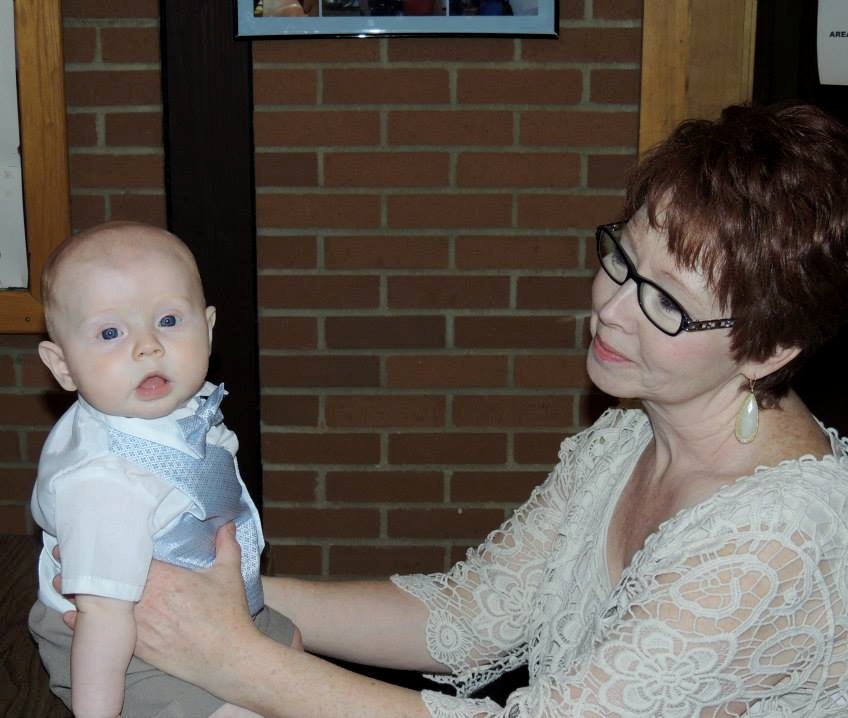
This photograph of my daughter Elena in 2006 accompanies the review.

Over the course of his new book of essays, “Your Grandmother Raised Monarchs,” John Coleman often stops to smell the roses, and he’s got a pretty good nose for it.

You’d expect as much from Coleman, pastor of Erie’s Abiding Hope Lutheran Church. But this is no preacher consoling his flock, nor one communing with a higher power. The word “God,” in fact, is rarely used.

No, Coleman addresses each of these 11 short essays to someone who doesn’t exist yet — or at least didn’t at the time of his writing. That someone turns out to be his grandson, Cole, born to his daughter, Elena, and her husband, Matt, on Nov. 30, 2013.

Coleman explains all this on the back cover, but inside the book, Cole isn’t Cole yet, but a mysterious, magical being filled with promise and potential.

“I’m aware of the sun, the trees, the longing cardinal and the possibility of you,” Coleman writes from his stilt-cabin retreat in the woods at Mount Saint Benedict.

“While you’re still a dream, I feel like talking to you. … What I have to say will feel more like floating a canoe down a creek than running rapids.”

He suggests optimal times for his grandchild to read his jottings: On bad days, “read a few notes.” On good days, don’t bother. “And on your worst days, turn to these words: Before you were born, your grandfather sat up in the trees and loved you ahead of time.”

That’s typical of Coleman, a gentle soul guided by other gentle souls: Gandhi, Kahlil Gibran, Buddhist Thich Nhat Hanh and Erie’s Sister Joan Chittister.

As he promises, Coleman writes of life’s everyday occurrences, his “floating canoes” –Harriet the squirrel, the dogs and cats of his Shenley Drive neighborhood, disturbing newspaper headlines, family history, mini-essays on the Elephant Man and the Gettysburg Address, the changing face of Erie and the coming — but mostly going — of favorite coffeehouses and writing haunts like Moonsense and Aromas.

His life is full to bursting. His wife, Kathy, really does raise monarch butterflies, but also assembles furniture out of town and crews aboard the U.S. Brig Niagara. In one essay, she departs on a three-week Niagara sail. Coleman bristles over her absence but notes that her time aboard ship has given her a “longer fuse.”

At the time of this writing, the Colemans are parents of teenagers — 15-year-old Micah and 17-year-old Elena. They bring joy into his life: “I miss giving you shoulder rides,” Coleman tells his son. “I miss that, too,” says Micah. “But I can’t do that anymore. I’d crush you.”

At times, he must hold his tongue with them.

“Many lessons people have to teach themselves,” he writes.

It took Coleman a year to write “Your Grandmother Raised Monarchs” and seven years of “intermittent slashing away,” as he wrote me in a letter. He did it in coffeehouses and in cabins on stilts, but he also did it within time zones that created themselves: waiting rooms, hospital rooms, the World of Music basement as Micah hammered away at his drum lessons.

Coleman’s main conceit is that he’s writing to a grandbaby that’s not even a glimmer yet, but of course, he’s not really — he’s writing to us. There’s a sweetness to these observations, mundane as they might be, and a comfort to turn back to them.

“I suppose this is why I’ve written to you so much about the commonplace,” Coleman writes near the end. “Leaves going red, a squirrel laughing at a dog, a dad playing catch with his son, a husband taking a walk with his wife: I’ve no right to ask for more.”

But where the book starts Thoreau-like at a cabin in the woods, it ends with the running of at least one set of dangerous rapids: troubling news about Elena.

“She has a story to tell you,” Coleman writes. “She’ll sit you down and fill you in when you’re ready; only she can decide on the right time.”

Developments like this help ground “Your Grandmother Raised Monarchs.” Coleman has a wide, gentle streak, yes, but he’s as fully immersed in life’s stickiness and unpleasantries as the rest of us.

Happily, the town’s got a lot more coffeehouses now — Hortons and the omnipresent Starbucks — for him to duck into and open his writing journal.

DOUG RIEDER is the former editor of the book page.

To My Grandson, Who “Settles in My Low Places”

Blogger’s warning: yes, this is another schmaltzy letter to my grandson. If you’ve had enough of the sentimental grandpa schtick, get away from here, quickly.

1911787_747463488657175_963611319142870065_n

Cole and Layla: nappers’ companions!

Dear Cole:

In the first chapter of the book I wrote for you I included a quote by Kahlil Gibran: “Joy and sorrow are inseparable. Together they come and when one sits alone with you, remember that the other is asleep on your bed.” Well, joyful boy, you have come to sit alone with me this morning.

Sister Joan Chittister shares the right words from the Tao to describe what your ten-month-old self has done for me:

The best people are like water

They benefit all things,

And do not compete with them.

They settle in low places,

One with nature, one with Tao.

That’s it, Cole. You “settle in [my] low places.” You’re way too young to live out the fullness of the Tao, but you’re off to a good start. Months before pronunciation fully descends upon your lips, you find your Gramps’ dry river beds and parched earth and make them live again.

10698488_750392131697644_123312992581475485_n

Cole, you don’t have to smile or get a gold medal in the Cute Olympics. Just stand there and be yourself. That’s more than enough for me.

Blame your mother for this observation and sentimental letter, which I trust her to print and slip into your memory book. (Copy that, Elena?) She sends your photographs out to family and friends, and the world gushes. This morning your face caught me at a vulnerable moment and ran into a place in my soul that must have gone cracked and sunbaked. At once, leaves and blossoms spread wide and tall.

10409001_750392061697651_386142547316354957_n

Hey, Cole, thanks for showing up this morning.

The thought that came to me after I swallowed back tears was how much I’m looking forward to talking with you. These days I’m mostly talking to you. I love saying pretty much what’s on my mind in the moment. But, little paisano, when you get a bit older, you and I are going to do some talking together. When I was writing your book I got into the habit of saving things up to chat with you about–that’s what the whole thing was about. Now that you’ve shown up and we’re having lots of preliminary, mostly one-sided, conversations, I find myself stumbling on things we’ll have to chew on in the future. (Just a note: you and I growling at each other is a hoot for now, but there’s room for growth.) Here are a couple of thoughts we can fuss with:

unnamed

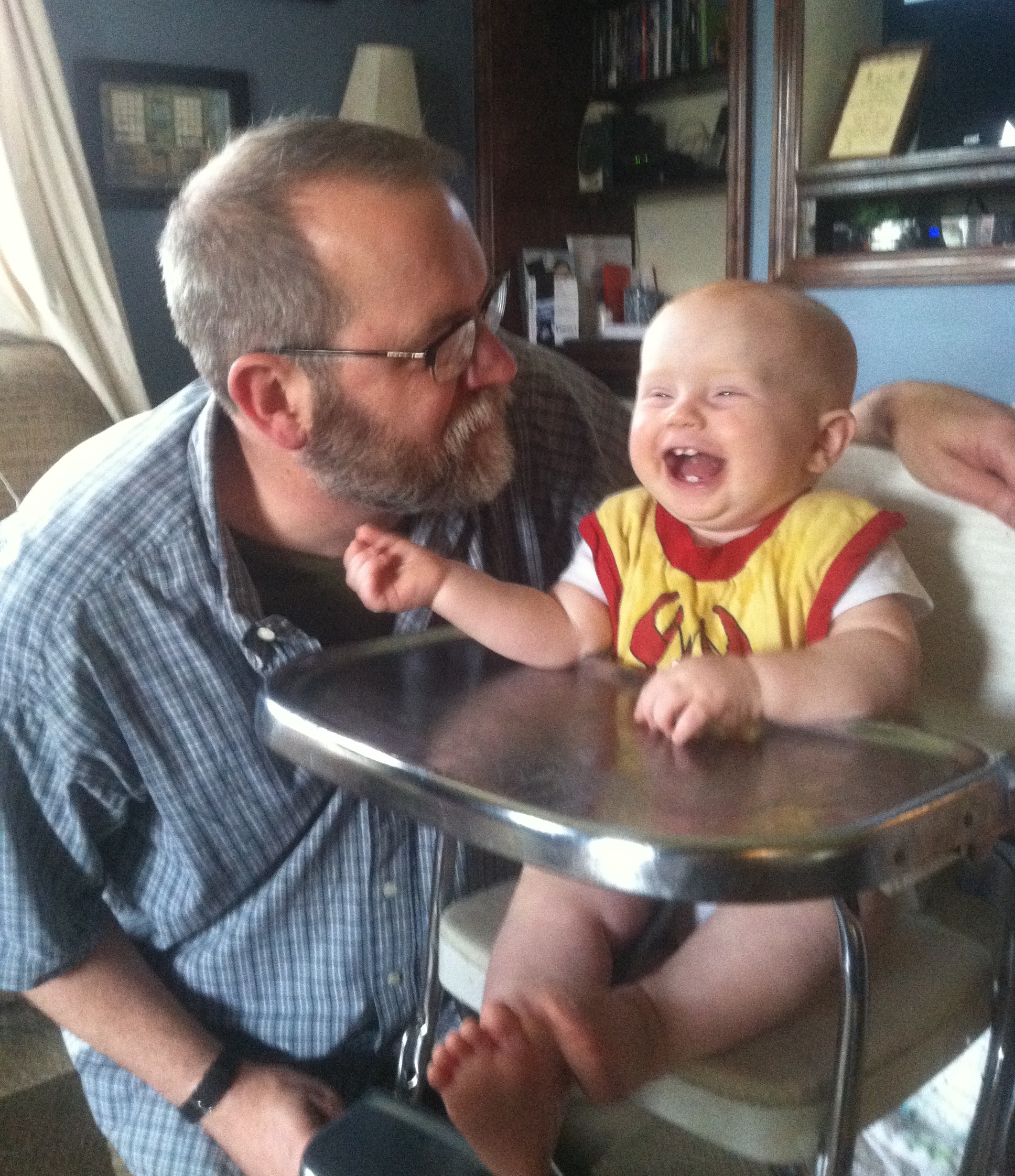
Dear Reader, pick the caption: “Dag nabbit, they forgot my extra side of chipotle mayo.” “What you talkin bout, Willis?” Or “I’m going to audition for the role of Wilford Brimley’s Mini Me, and I’d like to talk to you about diabeetus. Wait, where did I put my walrus mustache?”

1. This first one is more a find than a discussion topic, but I have to share. Preface: I make it a habit not to use my smart phone while in the bathroom, but there are exceptions to every rule. A few days ago I attended a clergy meeting at the Riverside Inn in Cambridge Springs, Pennsylvania. It’s a charming, rambling old place, so I shouldn’t have been surprised at the sophistication of the scribblings on the bathroom stall. Be prepared, Cole, most of the time men’s room literature begins with “Here I sit, brokenhearted . . . ” or “For a good time call . . . .” Riverside Inn patrons are a thoughtful lot–evidence provided below as captured by my iPhone:

IMG_2627

Lousy quality photograph: “Today is another day where [sic] we can sit back and reflect on what happens in life.” I presume the sitting doesn’t refer to the throne at hand.

IMG_2631

No clue what these shapes are about, but below them is a riddle: “Everyone has it. What does everyone have but nobody can lose it?” Read to the end, Cole, and I’ll tell you.

2. After washing my hands, I headed back to that meeting and enjoyed a lecture by one of my old seminary professors, Dr. Brad Binau. He mentioned that he resists the assumption that multitasking is good. I’m really looking forward to thinking this one over with you because in a dozen years tending to multiple tasks simultaneously will not only be normal, but expected. I agree with Dr. Binau, but this is probably just me being an old fart. You might have the chance to teach me and open my mind. Can’t wait.

10437516_750392531697604_5156946027900629272_n

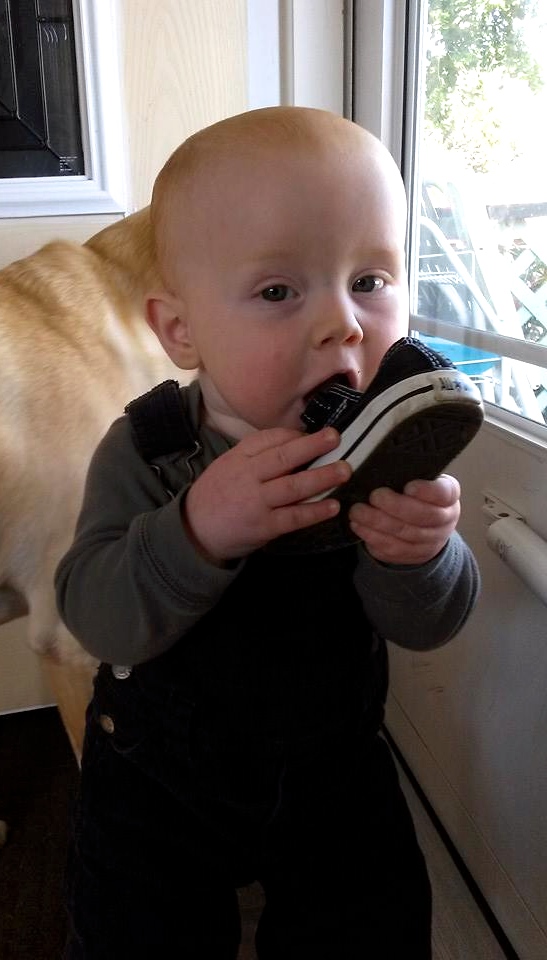
You know what grown ups have forgotten: sweaty, little boy sneakers are yummy! Help me to be young again, buster.

3. Some smart adults are saying that school children should no longer be taught cursive handwriting. By the time you read this, you might not even know what I’m talking about. Old fart thinking out loud again: lots of times I don’t really know what I’ve learned until years after somebody teaches me the lesson.

1469790_612795465444792_387385091_n

Learning to write cursive taught me how to practice, slow down, and be patient. If you want, we could work on cursive together. Mine is rusty. (Photograph courtesy of Mark Fischer’s Facebook page)

4. I’m busy today. I have to drive to Columbiana, Ohio, about two hours away, for a wedding rehearsal, then turn around and drive two hours back home. Tomorrow I have to officiate at the wedding, so I’ll do the same thing. Why not stay over night? The road time makes sense, but it’s a long story. Trust me. Anyway, as I was walking into Starbucks this morning, I said, “Hey, how’s it going?” to the guy emptying the trash. (The least we human beings can do is lay a smile and a “hello” on each other.) The trash guy–I should know his name–took my question seriously and told me about almost throwing up this morning and being late for work. His description went on for a while, and the gravity of coffee and writing pulled me away from him. That’s when I caught myself. This guy has bosses and co-workers chomping on his ass, and his job is emptying trash cans and picking up litter and slop. No dishonor in this work whatsoever, but I imagine his childhood dreams didn’t involve him wearing a rain suit and tending garbage. So, could I quit stepping away from him as if to say, “I don’t have time for you”? Could I face him for five minutes, give him my full attention as he has his say with the world, and witness this life? He’s one of God’s beloved, after all. So, I stood there and listened until he turned away from me to get back to work.

IMG_1436

One of the few photographs of you crying, Cole. Some people do lots of this for their whole lives. If you look at them and smile, they might feel a little bit better.

Please listen, Cole, because this is very important. I didn’t share this story so you would think Gramps is a swell guy. The thing is, some people walk through this life without a grandchild who will “settle in their low places” or without anybody at all. I don’t know that this is true of the trash guy, but since it could be, maybe for a couple of pitiful minutes I could offer a little rain for his cracked earth. I hope we get the chance to talk about this. Better yet, when you get a little older, we’ll go “out and about,” as your Grandma Kathy says, and “settle in low places” wherever we find them.

5. A couple days ago I stopped at your house for lunch. We talked as we always do. Layla looked so longingly at my sandwich she may have been trying to hypnotize it. I fed you bite after tiny bite of noodles in an Alfredo sauce.

IMG_2665

“Sandwich, you are getting very sleepy. Come to Layla.”

Hugging you goodbye, I thought of how your mother used to fall asleep in my lap and how, on rare occasion, I managed to carry her gently to bed without her waking up and lie down next to her for a nap. She fit into a low place of sorts, the hollow of my body curled around her. Oh, best buddy, I hope once or twice to know again with you that joy of a siesta. I wouldn’t even have to fall asleep. Listening to you breath and watching your assertive little nostrils and fine eyelashes would grow hyacinths and sunflowers in the thirsty places of your Gramps’ soul.

IMG_2652

No low places here, Cole, only mountaintops.

I have more ideas but no more time today. Should I write you another book?

Love,

Gramps

P. S. The answer to the riddle is supposedly “your shadow.” I thought of this but disregarded it because in the dark or on a cloudy day, you might not have a shadow. Reminder: some riddles are lousy.

Micro-Post: A Birthday Postcard to Loved Ones

Dear Blog and Regular-Old Loved Ones:

Yesterday, October 9th, was my fifty-third birthday. At 8:30 a.m., as I was sipping at Starbucks, I received an inconspicuous present that I want to share with you.

Photo on 10-10-14 at 10.02 AM

This is what fifty-three looks like–beard probably six months away from eliminating any need for a collar or necktie.

I had just finished a refreshing, philosophical discussion with Star-buddy John about goodness, forgiveness, and consequences and was getting back to polishing a depressing blog post when an unsteady, elderly woman shuffled past my perch with a hot beverage. She must have given her cup a random squeeze because the lid popped off and hot whatever it was started spilling over her trembling hand. I love Starbucks, but if they make their lids any more flimsy, they may just as well go with Kleenex or phyllo dough. She looked like her car just crapped the bed at 2:00 a.m. in rural Wyoming (redundant?). Anyway, I did what all of you reading this would have done. I stood up, said, “Let me take that for you,” pressed the lid on, and carried the cup to her table. She thanked me, and I made a remark on those darned lids and went back to writing.

IMG_2623

No, young lady and old lady . . . thank you!

As I sat there, though, my insides were calm and blessed. It felt like a gentle spirit breeze or a hug held for three extra seconds. Ah! In half-a-minute’s time, a young woman, maybe twenty-five, tapped me on the arm and handed me a gift card. “I saw what you did,” she said. “There’s $5 on this. We’re just not nice enough to each other in this world. Thank you.”

Hey, friends, this is not about me. I’m sitting guess where again this morning and thinking about the reason my soul knew healing after doing what all of us would have done: maybe we were built to look out for each other, so when we actually manage to do so, it feels like Eden–the place we were intended to be all along. Plenty of shade. Food enough for everybody. Kind faces everywhere you look.

Did the Loving Creator make us for grace and mercy? I hope so. I think so. That would mean there’s good hope for the world.

Love,
John

Coming to Myself from a Distant Country

Then Jesus said, “There was a man who had two sons. The younger of them said to his father, ‘Father, give me the share of the property that will belong to me.’ So he divided his property between them. A few days later the younger son gathered all he had and traveled to a distant country, and there he squandered his property in dissolute living. When he had spent everything, a severe famine took place throughout that country, and he began to be in need. So he went and hired himself out to one of the citizens of that country, who sent him to his fields to feed the pigs. He would gladly have filled himself with the pods that the pigs were eating; and no one gave him anything. But when he came to himself he said, ‘How many of my father’s hired hands have bread enough and to spare, but here I am dying of hunger! I will get up and go to my father, and I will say to him, “Father, I have sinned against heaven and before you; I am no longer worthy to be called your son; treat me like one of your hired hands.”’ So he set off and went to his father. But while he was still far off, his father saw him and was filled with compassion; he ran and put his arms around him and kissed him. Then the son said to him, ‘Father, I have sinned against heaven and before you; I am no longer worthy to be called your son.’ But the father said to his slaves, ‘Quickly, bring out a robe—the best one—and put it on him; put a ring on his finger and sandals on his feet. And get the fatted calf and kill it, and let us eat and celebrate; for this son of mine was dead and is alive again; he was lost and is found!’ And they began to celebrate. (The Gospel of Luke 15:11-24)

220px-Pompeo_Batoni_003

The Return of the Prodigal Son (1773) by Pompeo Batoni (Credit: Wikipedia)

Most Christians I know read this Parable of the Prodigal Son from the perspective of the faithful son, whose verses I didn’t include. He worked hard for his father “all these years” and stomps off, resentful that his narcissistic punk brother is about to enjoy some “fatted calf.”

I understand the faithful son, but more often I feel sympathy for the Prodigal son. Now let’s be clear: for the first part of the parable, he is—to employ a theological term—an asshole. Imagine proposing to your folks that they hand over your inheritance before they die. It’s amazing that the father doesn’t simply have his son flogged or thrown off a cliff. But he doesn’t, and off the kid goes to get sozzled and satisfied.

800px-Johann_Wolfgang_Baumgartner_-_The_Prodigal_Son_Living_with_Harlots_-_Google_Art_Project

The Prodigal Son Living with Harlots by Johann Wolfgang Baumgartner (1712-1761) (Credit: Wikimedia Commons)

Having missed any early-adult period of drunkenness, debauchery, and licentiousness, I don’t relate to that side of the Prodigal son. Instead, I find myself standing with the hungry kid and the pigs at that moment “when he came to himself.” What gorgeous phrasing! The New International Version of the Bible says, “when he came to his senses,” but “came to himself” more accurately describes a universal human experience. At least it resonates with me.

Here’s my prodigal process. In the parable, the son, wanting to party and get horizontal, leaves behind his best self, the self he comes to recognize only by getting his face rubbed in pig sludge. He also happens to travel to a different country. My story works differently, but ends the same. I stay right where I am and come to understanding not dallying with prostitutes—I do drink some wine—but frittering away my inheritance by succumbing to stressors that seem perfectly matched to my weaknesses.

Anxiety

If I looked this good anxious, I might not complain. (Credit: Wikimedia Commons)

I don’t know what the Prodigal’s household was like. (Yes, it’s a parable, so there’s no real background, but work with me here.) Maybe he was pampered. Maybe he got away with everything. His big brother probably hated him from the start. And since nothing was ever good enough for the Prodigal, the second he passed puberty a hedonistic frenzy was inevitable.

The Coleman household for me, the youngest of four children, was full of love, but like so many families of my generation, we panicked at any rocking of the boat. Many people my age know exactly what I’m talking about, and whole disciplines and vocabularies have evolved to explicate and heal family systems and all the frazzled, wounded boomers they’ve produced.

Don’t rock the boat: the colloquial mantra of 2225 Wagner Avenue. Of course, I didn’t have the maturity to realize it at the time, but being outwardly upset or angry was not acceptable. When it happened, everyone’s guts turned to water. A top priority, then, wasn’t to be happy and well-adjusted (who knew what that meant back then?). Just let the waters be calm! As long as we were acting okay, then everything was okay. Yeah, sure.

2011-03-03-pano

Ah, still waters! Might be Three Mile Island, Love Canal, and Vesuvius underneath, but as long as there aren’t any whitecaps, we’re solid. (Credit: Thomas Bresson on Wikimedia Commons)

I can’t speak for my siblings, but this fallacy has followed me into adulthood and climbed the walls of my psyche like ivy. Over the last thirty years, this plant has been ferocious. Whereas the Prodigal got lost in harlots, booze, and hunger, I’ve found myself lost dozens of times over the years when people don’t act okay. Nothing different than back home. When someone isn’t being normal, then do something to get ‘em normal again! Don’t fix the problem, mind you, but get ‘em normal. (Let me state, again, my home when I was growing up had much to praise. Everyday wasn’t a dysentery epidemic. And on a different subject, I’ll also toss out, if you’re going to get lost in something bad, reckless sex and drunkenness might be more fun than crippling anxiety and paralysis, but I can only speculate here.)

Live_in_an_ivy_tower_(8059746783)_(2)

Sometimes ivy takes over so it seems like there’s more plant than stone. (Credit: Psyberartist on Wikimedia Commons)

So the Prodigal “comes to himself” standing in a field with pigs and staring longingly at what one blogger says are carob pods. Hunger has granted him an epiphany: “What in God’s name are you doing? Go back to yourself. Whatever is good and wise within you, return to that. Now!” I envision him taking those first steps back toward himself. The parable teaches that the young man is going back to his father (God), but I choose to hang onto those words, “when he came to himself,” and let God and the son marry. The long walk toward God is the walk toward himself.

800px-Ceratonia_siliqua_MHNT.BOT.2011.3.89

Mmm! An overripe, dehydrated banana? A used, sunbaked . . . ? Oh, never mind? Carob pods. (Credit: Roger Culos on Wikimedia Commons)

A few twilights ago at 4:10 a.m., my walk began, not away from squandering inherited wealth, but from squandering myself. I awoke content. For the most part, this isn’t how things have been going over the last couple of years. I’ve been feeling the crack, sting, and ache of ivy digging into my brick and mortar. So what do you do when you’ve been hurting lately, and contentment shows up a couple hours before the alarm goes off?

Pee. That was my first decision. My second was to prop myself up in bed next to sleeping Kathy and pray. And breathe. And enjoy. Then, like the Prodigal, I came to myself. I have no clue why. All I know is that I somehow saw clearly the fallacy I’ve been living under for far too long. Weakened by the pull and weight of my personal ivy, I’ve gotten lost. Prayer, running, and dietary sanity—outward signs of the inner John—have shrunk or ceased altogether. I used to get up before dawn to pray and write, then jump into company time. Most days included four or five miles on the track. Meals weren’t perfect, but they were generally mindful.

Well, in recent months you can forget all that shit. So why, as I sat straight up with the cool, dark air touching my arms, did I come to myself? “What in God’s name are you doing? Go back to yourself. Whatever is good and wise within you, return to that. Now!”

IMG_2610

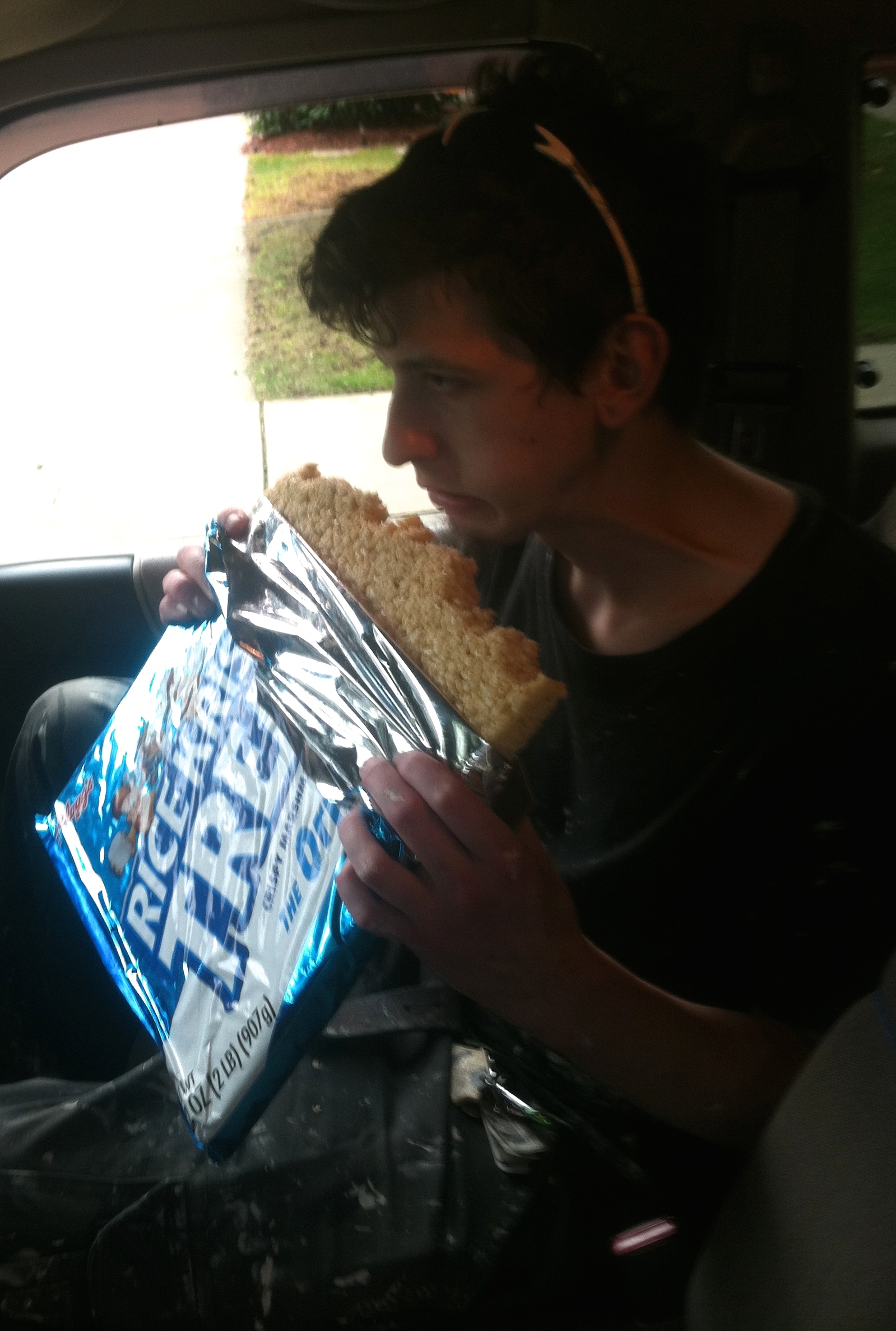
Son Micah working on a two-pound Rice Crispy Treat after a hard day of painting. Laughter comes more easily after I find myself

I guess the timing of my Prodigal moment doesn’t matter. Nor do I need a reason that I felt welcomed and embraced, as if I had left myself for a distant country and returned. An embrace. My body received it, as when your chest meets another chest and you rest your cheek on a beloved shoulder and know you’re not lost anymore.

In the parable, the father sees his son in the distance and runs out to hug and kiss him. Then they finish the walk home. I got hugged and kissed, too. Maybe it didn’t come from God, but it sure seemed like a greater “Welcome home, son!” than I could have given myself.

This home isn’t on Wagner Avenue or Shenley Drive. It’s the home I believe we all have to find for ourselves over and over again. For me, it’s about “coming to myself”: held close by One who rejoices that I’m found, sitting next to my sleeping wife, putting my soul’s arms around all those I love, and believing that Mystery has ways of making weak brick and mortar strong again.

IMG_2564

My soul’s arms hold Cole when I come to myself

An Overcast Sky Sings My Revelation

Note: All photographs in this post appear courtesy of Giuseppe Colarusso. Mr. Colarusso, I’m in your debt. Thank you.

395-074

Have you ever had a morning when the environment collaborated with your spirit to yield a revelation?

A gentle rain persists out Starbucks’ window—looks like all-day. The Neil Young songs playing are mostly unfamiliar, but his voice, mournful and easy, soothes me. Milan, the manager of a tuxedo store in the Millcreek Mall, just showed me some absurd photographs by Giuseppe Colarusso, and laughs poured out of my tears reservoir. Damn, it felt good! (I’m convinced, by the way, that sorrow and joy swim in the same waters.)

253-040

Inside my fifty-two-year-old soul, rain also falls, a voice that sounds a bit like crying sings, and here and there, cleansing laughter comes out, inappropriately loud, and turns heads toward me. I’m having a revelation, at once comforting, sad, and playful.

There’s a popular saying these days: It is what it is. Like all maxims it will fall out of favor soon enough, but I plan to appreciate It is what it is (IIWII: pronounced eye-why) while it’s around. IIWII says, “Okay, everybody, the time for acceptance has arrived. We can talk lots more about the situation at hand, complain, dissect, laugh, kvetch, wrestle, curse, and so on. But we should understand that, despite our best efforts, some things aren’t going to change. So let’s just deal. Let’s move on.”

264-051

In this same spirit, a voice like Neil Young’s sings loving words into the ear of my heart. They sound like this overcast sky looks—pale gray pillows: “John, you are who you are.”

Has your life run like mine? Do you struggle to change characteristics that seem, as the years unfold, like matters of wiring? Do you promise yourself that the next time such and so happens, you’ll do better? You’ll be stronger, calmer, smarter, more centered, less sensitive, or whatever more or less you need to be? If your life hasn’t gone this way, you may want to escape and read something more in line with your reality. But if my questions resonate with you, I have one more for the list: At what point in the progression of decades is it best to say, “I am who I am. It’s time to make decisions based on the person I am, not on the person I would like to be”?

191-031

In March of 2006, I wrote in my book Your Grandmother Raised Monarchs to my future children’s—Elena’s and Micah’s—children about identity:

Be warned: the blood in your veins will predispose you to Coleman attributes, some of which you’ll like, and some you won’t. I would like to pick which of my qualities you’ll inherit and which ones will pass you by, but we both know fate doesn’t work that way.

Elena and Micah got your grandmother’s strong, crooked teeth rather than my straight, weak ones, which is to their advantage. Braces can align smiles, but the only cure for rotten teeth is pliers. Micah, who at fourteen brushes his teeth only when I remind him, had zero cavities at his checkup a couple weeks ago. Elena, who at seventeen brushes like a grown up, had two puny cavities. By the time I was their age, I had a couple dozen fillings. If your teeth fall apart, blame me.

Elena inherited my hips, which were wide even when I was running forty miles a week, but Micah got a skinny frame. If you carry extra pounds from the waist down and end up with pants tight at the hips but baggy at the waist, blame me.

When you glance at your reflection in a storefront window and wonder how you got to be who you are, you’ll have plenty to blame me for.

254-041

Mark Twain was supposed to have said, “I’ve had lots of worries in my life, most of which never happened.” If you squander days fretting about problems that never materialize, blame me. If you have bottomless patience, too much patience, occasionally stupid patience, blame me. If you’re smart enough to spot brilliance in others, but aren’t brilliant yourself, blame me. If you endure inexplicable anxiety and depression, blame me. If arguments leave you weary and shaken, blame me. If anything gorgeous makes your spirit ache, blame me. Blame me and forgive me.

506-04

In the eight years that have passed, little has changed. If anything, I may have lost ground where inner-strength and tranquility are concerned, and I’m just as vulnerable in relationships as ever. I am what I am. So, in this moment, Neil Young sings me a question: “Is it time shape your circumstances around the person you are rather than force the person you are to strain and stretch around your circumstances?”

212-001

Does that make any sense? Does there come a point in the maturation process at which you decide to stop trying to muscle your way again and again through situations you weren’t designed to endure? Can there come a revelation when you see clearly that loving and embracing the person you know yourself to be requires that you say goodbye to the person you would prefer to be?

271-059

Such a moment descended on me with this morning’s precipitation. For most of my adult life, I’ve been trying to transcend troubles like a levitating bodhisattva or Jesus asleep in the stern during the storm. Turns out I’m as loving and compassionate as they come, but I’m in equal measure fragile and nervous. I’m not enlightened. And a mustard seed is a boulder next to my faith—if, indeed, faith means an abiding sense of peaceful trust.

I’m a guy sitting in a coffee shop full of pilgrims on a gray day—a guy with more years behind than ahead who has finally, mercifully, gently realized that I am who I am needs to prune IIWII, plant fresh manure around its roots, and dance prayers for rain and sunlight.

267-055

This damp Monday is nurse-wife Kathy’s day off from trying to kick cancer’s butt. Obituaries of her patients say day-by-day, “IIWII.” She loves me in spite of my snoring, recognizes that IIWII is spanking me good, and agrees that it’s time to dance and pray. We’ve made an offer on a fixer-upper, 854 square feet, on the other side of town. Maybe we’ll hear something this week. Boy oh boy, will we have to trim away at what our present 2,100-square-foot house holds—if our bid tops the flipper we’re up against.

282-070

No matter. Who cares if the clouds sprinkle me on the way to the truck? I’ll head for church work, knowing that IIWII often has the last word, but not today. (Does IIWII have you by the throat? I’m thinking strength your way!) Lovely Kathy and I may move into a puny house–or not. Either way, I will toast the bodhisattva Jesus I would prefer to be, give him a kiss, and tell him it’s time to move along.

P.S. The flipper won this round.

1-immagine-02-b

Giuseppe Colarusso

A Study of Justice

I have to clean my room,

I’m saying, “Not fair!”

Even though I make the mess,

That’s neither here not there,

Because I’m talking about justice,

I’m going to make you aware,

When you’re five years old,

Well, it’s just not fair!

(“Not Fair” by Joe Scruggs from the CD Ants)

640px-Tears_

“Just not fair”: sometimes imagined, sometimes real. (Credit: Reji Jacob on Wikimedia Commons)

Wife Kathy’s been downsizing lately. Children’s books and CDs from when our own kids, Elena and Micah, were young are migrating toward grandson Cole, nine months old and already getting ears-full of songs and stories. He’s heard over and over “I Been Workin’ on the Railroad,” including the “Someone’s in the Kitchen with Dinah” part, “Nessun Dorma,” and another tenor aria I can never remember. Pavarotti calms him down in the car. Soon he’ll be ready for the lessons and play of Rafi and Joe Scruggs, whose music Micah was singing (poor “Joshua Giraffe,” “stuck in a zoo with buffalo poo”) on Saturday as he helped his mother put in a new basement window and I considered justice.

Giraffa_camelopardalis_rothschildi_(young)

A little guy like Joshua. Micah’s singing about him was a blessing. (Credit: Chrumps on Wikimedia Commons)

The Gospel yesterday from Matthew was Jesus’ “Parable of the Householder Who Hired the Laborers.” Summary: the householder pays those who worked only one hour the same as those who toiled in the sun all day. As the children’s song repeats, “Not fair, not fair, not fair.” If I had busted my hump all day, the householder’s lapels would have been wrinkled and torn. I would have yanked his beard right out of his loving, generous, foolish, unfair head.

Benedict_of_Nursia_(painting)

Some beard on Benedict of Nursia. If the houseowner had such a beard and paid me the same as people who worked an hour, he might have come out of the tussle with a Fu Manchu and not much else. (Credit: photograph by Eugenio Hansen, OFS, on Wikipedia)

In the parable, the householder obviously represents God, and the teaching is that God isn’t fair. God is loving. But I don’t intend to talk about God. The world is so full of beauty that I get verklempt occasionally, but its blood-ugliness has the same effect on me, too. God for me is above all Mystery. I have neither the nerve nor desire to explain or even speculate much about how God dwells in the here and now. God is first-string in my heart, but I’m letting God ride the bench for a thousand words or so today. All I want to do is think about justice (or as Joe Scruggs puts it, fairness).

I got in a fender-bender this morning. (Nobody hurt, both vehicles just fine. Thanks for asking.) I was merging into traffic, checked to be sure the coast was clear, and hit the accelerator. Sadly, the woman in front of me was carefully assessing the traffic—waiting for her embossed invitation to arrive—so I gave her a stout “good morning.” It took her a long time to pull to the berm, and when I looked in her window, she was crying, face in hands. She rolled down the back window, got her bearings, then rolled down the front. No, she didn’t hit her head. No, I hadn’t given her whiplash. She may change her mind about that tomorrow.

After we exchanged information, I numbly drove to Starbucks, where I’m licking this immediate wound, speculating on the rise in my premium, and tending a couple of other bumps and bruises. I really couldn’t see any damage to my truck, but her bumper, made of that wonderfully durable plastic that ripples if somebody in the backseat farts, sports a horizontal crack down the middle.

IMG_2604

Ah, a dimple on the chrome to the left. A 1998 with over 200,000 miles on it. Think I’ll pass on repairs.

The morning’s gravity is pulling toward the blues. Poor John! Actually, poor driver in her seventies with an Eastern Bloc name sorely in need of a vowel or two and an unfair jolt of adrenaline to work off. I’ve got no worthy complaints against fairness. Although I’ve been something of a mess lately, that’s my own problem. I like to say that I’ve got a great life, but sometimes I suck at it.

Where fairness is concerned, I’m the defendant, not the plaintiff. The evidence against me is damning:

1.) I have four weeks of vacation each year, and I’m taking one day today. Two Xanax will soon have my jittery soul calmed down. I’m on my third free refill of deliciously bitter iced decaf. Nobody’s got a knife to my throat. I don’t live, in the words of Thich Nhat Hanh, “under the bomb.”

2.) When I head home, I’ll have to decide what not to have for lunch. The house is dry and warm or cool as necessary. Bills paid.

IMG_2170

Too much clutter at 322 Shenley Drive, but never too many flowers.

3.) The perils I face are mostly my own doing. Too much debt. Health risks to be brought under control. All this, so far as I know, is on me.

4.) My family has come through tough times I’ve already chronicled to death. Saying more about the past here would be tiresome, but last evening is worth a comment. Kathy, Micah, and I took family dinner to Elena and Matt’s: sauerkraut and pork and cream of cucumber and avocado soup with pearl onions. We sat in their postage stamp back yard and talked as Micah pushed grandson Cole around in his play car. The soup was savory, garnished with cherry tomatoes, raw cucumber, and avocado. Nobody but Matt had any, but down to my last culinary bone, I didn’t care. I tasted the hint of cheyenne and cilantro, sipped red wine, and received the cool air and love around me. When rain blew in, I didn’t give a thousandth of a solitary damn. I stood where it was sheltered and breathed, by now shoveling in kraut and mashed potatoes. Soon, Cole needed a bath, which he entered joyfully and immediately gave his business a tug. Atta boy, just don’t be too much of an overachiever here. Dinner, holding grandson, rain, peace, and laughter. Mercy within mercy within mercy.

IMG_2596

Cole playing Grrrrrr with Gramps. What did I do to deserve this love? Not fair.

5.) At 5:30 this morning, Kathy said, “You’re snoring.” I rolled this way and that for ten minutes, trying to comply, but finally was informed, “Your snoring is incessant!” It takes brains to say incessant before 6:00 a.m. What to do? I wanted to stay in bed with my wife and feel the healing breezes through the screens, but the rattling of my glottis was messing with her last hour of life. So I decided to remain and let myself get only to the edge of sleep. I don’t remember ever doing this before, but it’s what I wanted. This isn’t about me, but about Kathy. She deserves such love. Until just before 7:00, then, we lay together, me keeping vigil over myself and rising to consciousness at the first sound of sleep and wet head-flesh’s gargly duet. Just before she got up, I issued a last, faint caw. She touched my cheek and said, “I’ve got to get up.” She wasn’t mad. Where’s the justice?

IMG_2601

Lovely Kathy’s approach to life: don’t hold a grudge; let’s get on board and get going!

6.) I emailed Kathy at work about my accident this morning. Her response landed an hour later: “Oh John Coleman, what am I gonna do with you? I might have to ground you from Starbucks. Glad you are ok. Bet little old lady gonna be sore tomorrow. Love you.” No annoyance, even though she has warned me about that stupid merge many times before. When the insurance premium goes up, Kathy will frown, shrug her shoulders, and kiss me.

IMG_2600

My Starbucks? No, anything but my Starbucks!

There’s more, but the prosecution has gone on long enough. Fairness has a litany of complaints against me. My only statement is this: Justice or the world or the universe owes me nothing, so I’ll try to receive indulgent love and all family dinners in the rain with a humble and grateful heart.

IMG_0904

Not fair that I live in such a house, but I’ll take it.

“Talking to God about Jim Foley and the World” on YouTube

Hello, Friends:

Here’s another installment on my very slowly developing vlog (video blog). It’s kind of a bummer, so pass on this if you want to focus on sunny thoughts today. And faithful blogging friends, chances are you’ve already read this, so don’t feel obligated.

Peace and love,

John


An Apology to President George W. Bush

Dear President Bush:

I write to apologize. Your presidency was an awfully long eight years for me, but I read a newspaper column today that made me stop, think, and admit something to myself: From 2001 to 2009, I seldom looked at you with compassionate eyes. Instead, I allowed myself to sink into the mud of political frustration and rancor that has only gotten worse since you left office.

George_W._Bush_being_told_about_second_plane_hitting_WTC

“A second plane has hit the second tower. America is under attack.” Still, you read The Pet Goat to the children so they wouldn’t be alarmed. Thank you. (Credit: Wikipedia)

The column that prompts my letter is by Cokie and Steve Roberts, “What Clinton, Bush can teach us about leadership.” You and President Clinton, the Roberts report, are starting the Presidential Leadership Scholars Program, and “part of [your] mission is to demonstrate that Washington does not have to be a cesspool of toxic partisanship.” I get the impression that you and President Clinton are comparing the political climate of your presidencies with that of President Obama and trying to push us out of the muddy cesspool that is only getting more toxic. And, the Roberts note, the libraries of Lyndon Johnson and your father are joining with you in this effort.

220px-Obama,_Bush,_and_Clinton_discuss_the_2010_Haiti_earthquake

What would our country look like if your faces in this photograph reflected Washington’s modus operandi: good spirits and mutual kind regard and respect? Please help us to get there. (Credit: Wikipedia)

A photograph from the program’s launch shows you and President Clinton sharing a hearty laugh. More from the column: “By [Bush’s and Clinton’s] presence and performance, they embodied a key dimension of effective leadership. They showed that political rivals do not have to be personal enemies. In fact, they can actually like each other, trust each other, cooperate with each other. And they can do so while disagreeing on basic issues.” Oh, my Lord, may it be so. Please know that I’m sending prayers and every good wish your way for success.

220px-President_Bush_Biloxi_after_Katrina

You look like a man giving a genuine hug–to hurricane victims in Biloxi on September 2, 2005. (Credit: Wikipedia)

I’m pretty sure this spirit of collegiality and cooperation was alive and well in you during your presidency, and occasionally it would occur to me that your job was daunting, your challenges staggering. The trouble is, that sympathetic sentiment never made the southward journey from my head to my heart. Of course, now I watch the guy I voted for trying to get anything at all done, and sadness rests in my chest. I get it. For some time now, governing has been exceedingly difficult and often impossible. We’re stuck in mud. So I feel sad for you retroactively. Forgive me for being late.

Bush_at_podium_20050428

Lots of us didn’t care much for what we considered too much grin and swagger. I’ll speak only for myself: I was being petty. (Credit: Wikimedia Commons)

I should mention that during your years in office my next-door-neighbor and I agreed you would be a great guy to have a beer with. It’s strange, even with my passionate opinions about all that occurred on your watch, I would rather talk to you about incidentals. For example, your gaffs are legendary. My favorite is from 2002: “There’s an old saying in Tennessee I know it’s in Texas, probably in Tennessee that says, fool me once, shame on shame on you. Fool me you can’t get fooled again.” As I read this, I laugh, but honestly, there’s no edge to it. My old frustration has softened. George W. Bush was President, but he was also a guy with a microphone in his face for hours each day. So I probably should cut him a break.

32PMZtT

Express yourself, Mr. President. Why not? (Credit: LyleLanley99 on reddit.com)

I also recently saw one of your paintings, the one with your feet—those are your feet, correct?—sticking out of bathwater. Again, I’m laughing, but if you were here with me this morning, you would understand at once that it comes from a loving place. You’re a fellow human being, and when you were in the Oval Office, I routinely forgot that.

The Roberts mentioned something about you in their report that I wish I had known years ago. “And during Bush’s tenure, Clinton revealed, the president would call his predecessor on a regular basis and ask for his advice.” I can see now your humanity more clearly. A man who would paint his feet in the bathtub would have no qualms about calling the guy who worked the previous shift for help.

So, Mr. President, please accept my apology. It’s not fair to bemoan the intolerance and anger in Washington when I’m a willing participant. This letter may never reach you. If by chance it does, receive my good wishes for your Presidential Leadership Scholars Program and my thanks for what I now believe to be your sincere efforts to do what you thought best for our country.

Peace and blessings,

John Coleman

“A Napper’s Companion” on YouTube

Dear Friends,

I decided to have a go at reading some of my blog posts on YouTube. I’m still learning, but I’ve posted my first attempt. It’s a love letter to my wife Kathy: “I Kiss Your Shoulder at First Light.” Unless complete ineptitude takes over, you should be able to watch/listen below.

Peace and love, John


My Parental Gland

One morning in mid March, my parental gland sounded its mysterious longing in my chest. Of course, there’s no evidence such a gland exists, but I’ve got one. Made visible it would resemble a translucent almond situated behind my sternum, right where you get the wind knocked out of you.

I was pray-meditating at 7:30 a.m., propped up in bed, wife Kathy sleeping next to me. The only sound in the house was twenty-two-year-old son Micah whirling around downstairs like Looney Tunes’ Tasmanian Devil. (He could slow down his routine and still get to his painting job on time, but he makes coffee, finds clothes, throws a nutritionally hollow lunch into his knapsack, and puts on his coat in a barely-managed frenzy.) I listened and breathed. The front door creaked open and banged shut, and thud thud thud he went down the front steps; car door; engine; drove away, at a reasonable pace, thank God.

IMG_1234

Micah smoking his e-cig after a hard day’s work. How can you not love a twenty-two year-old who lounges in onesie jam-jams and tiger slippers?

That’s when my parental gland fired, as the car’s whir became a sigh that became silence. Kathy slept. The neighborhood was reverent. Deep breaths embraced the longing in my chest. Longing. Or call it whatever. That contradiction, that lush tundra parents inhabit as we watch our children move into the distance. Pride blossoms against apprehension’s frost.

42-21914121

Frost on an orange flower–a father’s spirit watching his child drive away. (Credit: Image Source / Corbis)

Daughter walks from the car to the school building. Please. After you kiss your son’s forehead, he gets wheeled away for an appendectomy. Please. Daughter and son speed off with friends for some destination you’ll never find out about. Please. Each departure turns me, at least, into a beggar: God on high, hear my prayer.

Lesmiserables_1900_valjean_rescues_Marius

“God on high, hear my prayer.” Jean Valjean rescues Marius–“like the son he might have known.” (Les Miserables, Credit: Mead Schaeffer / Wikimedia Commons)

If only my parental gland had dissolved once daughter Elena and Micah reached legal drinking age. When they were teenagers I peeked between my fingers like a child as they stumbled out of sight into their respective barbed wire and razor blades: flirting with death, dancing with heroin. I’d figured on landing in a deep blue expanse of peace if they grew up and straightened out.

Both of my children are healthy and sane at the moment, but sadly, no blue expanse. Turns out my heart worries even when my head can’t name the threat. It’s that shimmering parental gland. Mine is more active than ever, gaining potency as the years call me to honesty. I love Elena and Micah so much it hurts sometimes, especially when they’re traveling alone, fading from view.

42-25270219

Someone’s daughter disappears. Someone’s parental gland sounds. (Credit: Hans Berggren / Johner Images / Corbis)

My conclusion: a father’s and a mother’s hurt and sorrow reside in the same dwelling with a love that makes us want to take off after our adult children, pick them up in our arms, and rock them to sleep. That’s what my gland does, anyway. I’m not kidding. I would gladly put Elena or Micah in my lap, rest their head against my shoulder, and listen for sleep’s slow, even breathing. Ah well. Pain and longing are in love’s fine print. Deal accepted.

Now Elena is married to Matt, and they’ve given us all Cole. Judging from what a mush bucket I am already, I’m thinking the parental gland working so abundantly these days will be promoted and given grandparental duties as well. The raise in compensation so far has more than covered the increased workload. Each time my grandson cries, I’m in that lush tundra. Please.

800px-Tundra_wetland_with_plants_reflected_in_water

I pray from this place each time my children leave. (Credit: John and Karen Hollingsworth / Wikimedia Commons)

That’s what happened today when Elena, Cole, and I met at Presque Isle for a walk. The wind was chilled by snow and icy Lake Erie, and Cole was plenty warm, but in no mood for the stroller. Half a mile in, we pulled off the path for a drink. The kid’s amazing. He managed to nurse and make those calming-down snivels infants do after a crying jag. His tank full, we headed back to the car, taking turns carrying him. For a couple minutes, as I faced him forward and held him close, I whispered Grandpa foolishness against his bald head and listed in a chant everybody who loves him. But then he started blubbering again, which told me that his appetite for affection is bottomless. No problem. My grandparental gland, unlike my pancreas, is invincible.

IMG_1435

“Take me out of this stroller and tell me you love me! Right now!

When we got back to the parking lot, Elena changed Cole’s diaper, got him in his car seat, and we all kissed goodbye. I started my truck, but waited as they drove off. Please.

I thought about my favorite passage from Hermann Hesse’s novel Siddhartha. The main character is in anguish as his son walks away into the bliss and suffering life holds for him. A sage speaks to the father:

Do you then really think that you have committed your follies in order to spare your son them? Can you then protect your son from Samsara? How? Through instruction, through prayers, through exhortation? My dear friend, have you forgotten that instructive story about Siddhartha, the Brahmin’s son, which you once told me here? Who protected Siddhartha the Samana from Samsara, from sin, greed and folly? Could his father’s piety, his teacher’s exhortations, his own knowledge, his own seeking, protect him? Which father, which teacher, could prevent him from living his own life, from soiling himself with life, from loading himself with sin, from swallowing the bitter drink himself, from finding his own path? Do you think, my dear friend, that anybody is spared this path? Perhaps your little son, because you would like to see him spared sorrow and pain and disillusionment? But if you were to die ten times for him, you would not alter his destiny in the slightest.

This is the hardest part of possessing my peculiar gland: as Elena, Micah, and Cole walk away from me, “finding their own path,” I wonder when my chest will finally crack open from wanting to spare them. But there is no sparing them—or forcing them.

IMG_1319

They could toddle, sprint, or “walker” away from me. No matter. Joy and longing kiss.

Now, in my fifty-third year, I understand the covenant: a father’s and grandfather’s love breathes, honors the silence when the beloved is out of sight, and prays from a lush tundra.

Note: “My Parental Gland” originally appeared as a guest post this past March on a great blog, Kerry’s Winding Road.