It Is a Wonderful Life

It Is a Wonderful Life

Clarance and George (Credit: Wikipedia)

Jimmy Stewart made his annual visit to the Coleman house this past week. “I’m maxed out on Christmas music,” wife Kathy said. “Let’s put on It’s a Wonderful Life.”

Funny thing, she intended to sew at the dining room table and wouldn’t actually be watching. No matter. Like millions of Americans, she has the movie memorized.

As my official evening hour of loafing had arrived, I hit the play button, planning to watch for a while then move on to another diversion.

Alas, the sewing machine added its voice to George Bailey’s dreams of adventure and achievement, and I fell under a joyful spell. Some might call the fullness in my chest “the Christmas spirit.”

Although George and Clarence’s story always brings tears, the sewing machine’s song, with its long hums and short rests, was mostly responsible for my heart finding its Advent sweet spot.

Kathy owns a twenty-year-old Necchi, which she refuses to part with because it’s made out of metal and, unlike the newer plastic models, doesn’t slide all over the dining room table when running. My late mother used a Singer that emerged from a wooden table with wings. My wife steps on a floor peddle, while Mom sent the needle into motion by leaning her knee against a bar that swung down.

What I wouldn’t give to have that old cherry-stained warhorse close by. (I refer to the Singer, of course, not Mom.)

How many nights have I fallen asleep to the low vibrato of Kathy making a baby blanket or Mom churning out one of her scooter skirts? Why do I find such comfort in the music of a sewing machine?

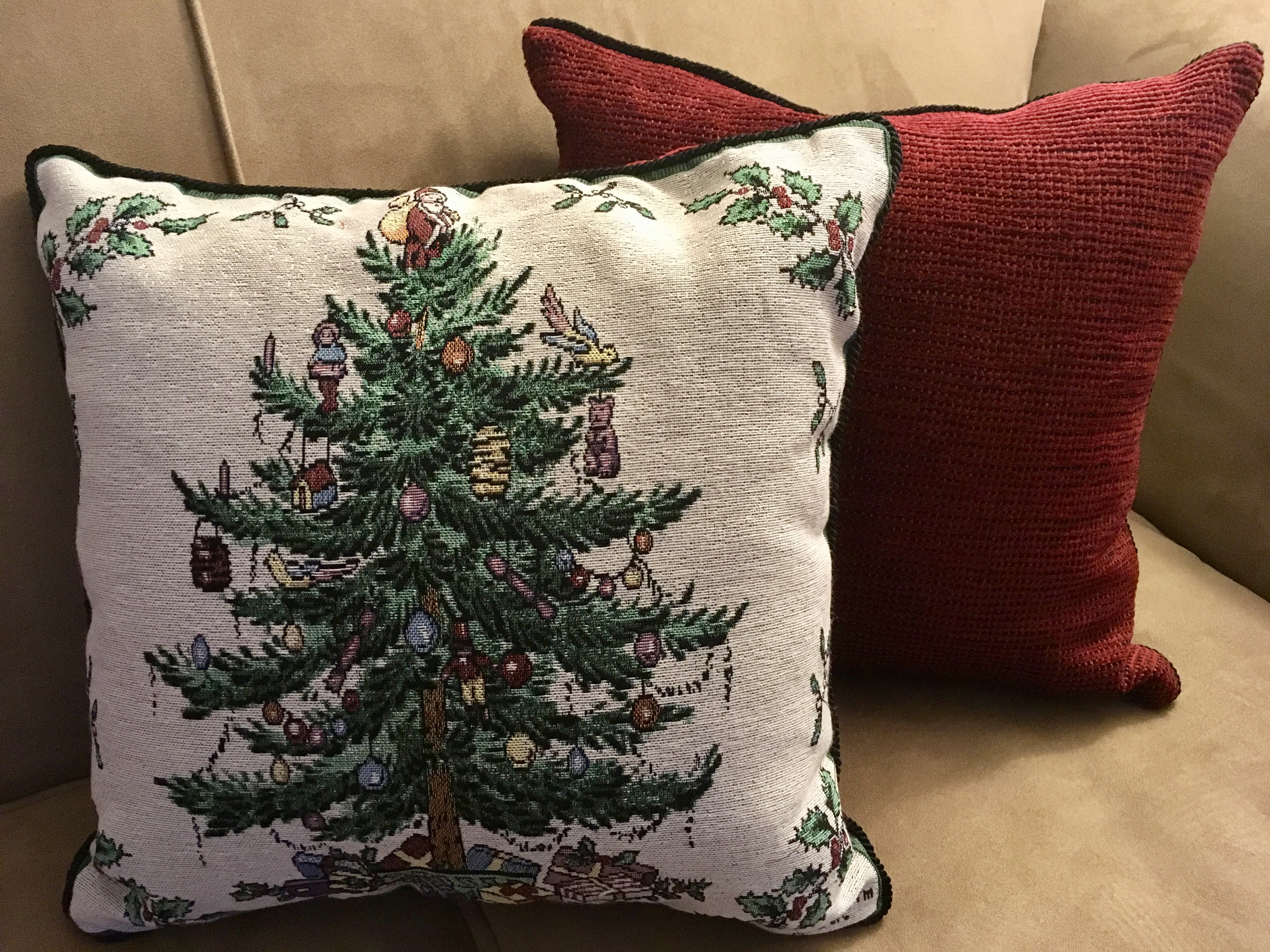
Kathy’s handiwork

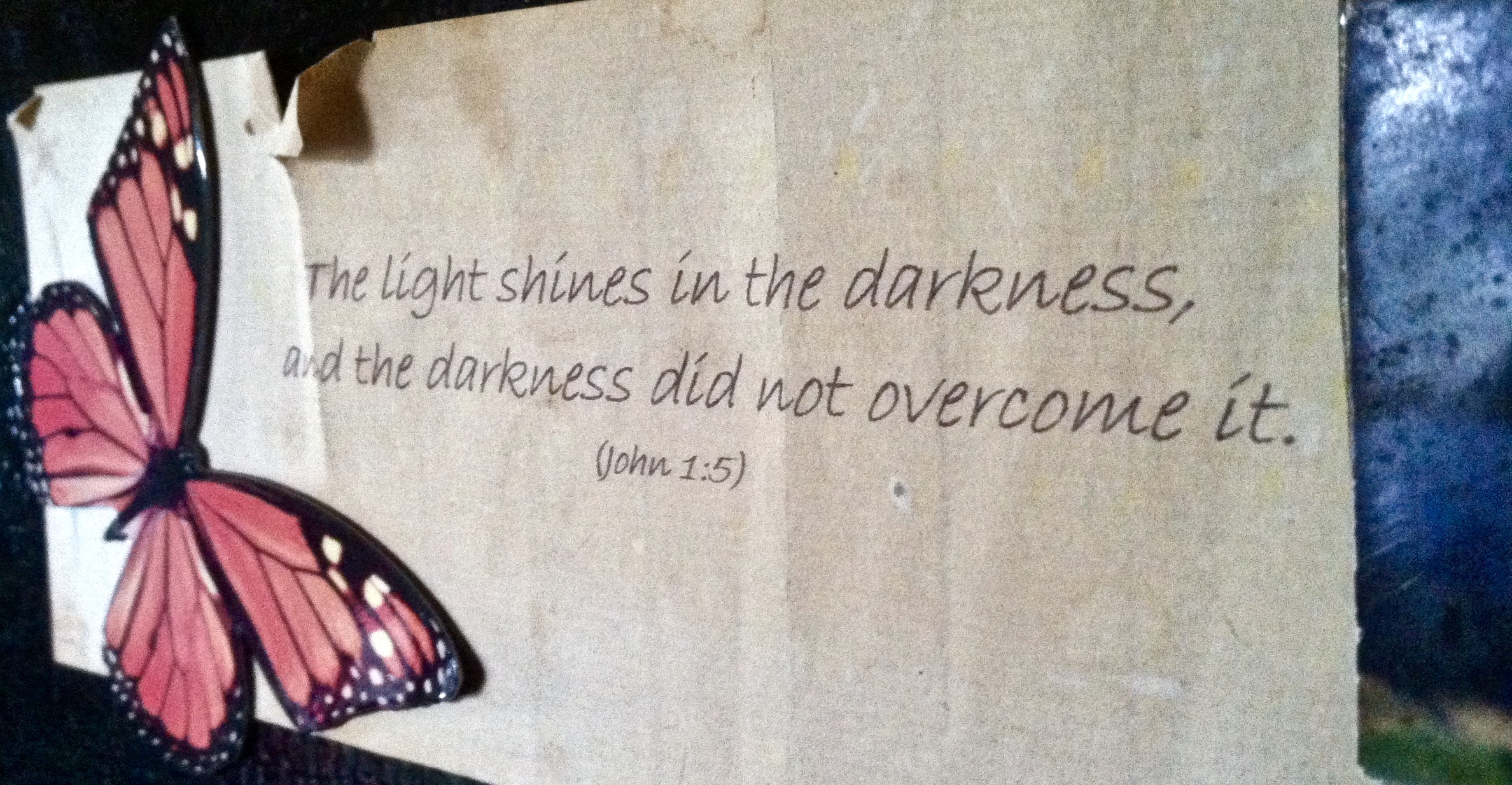
Probably for the same reason that breathing in the scent of pizzelles polishes smooth a day’s rough edges. The same reason a square of Mom’s homemade cinnamon candy forty years ago could make me forget how awkward I was with girls. Or running my fingers over the Christmas pillows Kathy made for a coworker just last night reminded me that light shines in the darkness.

I still can’t hold a sheet of red or green construction paper without seeing “MERRY CHRISTMAS” cutout letters taped to the balusters at 2225 Wagner Avenue. Nor can I look at a decorated mantle without finding myself sitting beside sister Cindy on one of our beds in the small hours of Christmas morning and pulling balled-up socks and Tootsie Rolls out of our knit stockings.

The sound of a sewing machine on a December evening—the Frazier fir’s scent a blessing—retrieves from memory’s attic a box of scratched and smudged albums: Johnny Mathis, Barbra Streisand, Andy Williams and Arthur Fiedler and the Boston Pops. Oh, and Ella Fitzgerald and Bing Crosby.

Christmases past and the timeless sewing machine, together with Jimmy Stewart and Donna Reed and the whole cast singing “Auld Lang Syne,” even brought a generous snow on Christmas Eve from the sky of my imagination.

I won’t lie, Bedford Falls showering George Bailey with affection and cash got me choked up—never fails.

“It is a wonderful life,” I thought, winking toward heaven with George to congratulate Clarence on his wings.

Plenty of light for a living room in the evening

From my chair in the living room, lit only by tree lights and movie credits, I watched my beautiful wife making presents out of fabric and thread and could honestly say that life is wonderful.

Still, 2017 marks my fifty-seventh winter, and I’ve heard over the decades a dark carol that I ought to sing right now. Wonderful doesn’t mean perfect. Wonderful has no choice but to harmonize with sorrowful.

I miss my folks more each year. My family is far flung. In my work, some loved one is always $8000 short or far worse. And much of what I hold most dear about humanity is up against a legion of Mr. Potters.

It is a wonderful life–not easy, though. (Credit: Wikimedia Commons)

But if you ask me, any Christmas Spirit worth listening for has a bass line heavy with hurt. Saying “it’s a wonderful life” without longing in your heart sounds thin and contrived.

This is why every “Merry Christmas” I say is both a greeting and a prayer. Merriment is scarce for some folks—maybe even for you this year.

If the season is a burden or your grief is raw, this “Merry Christmas” is for you: “God, please lay the Christ Child in a manger under my troubled friend’s tree.”

Oniontown Pastoral: Gladness and the Irish Jackdaw

Oniontown Pastoral:

Gladness and the Irish Jackdaw

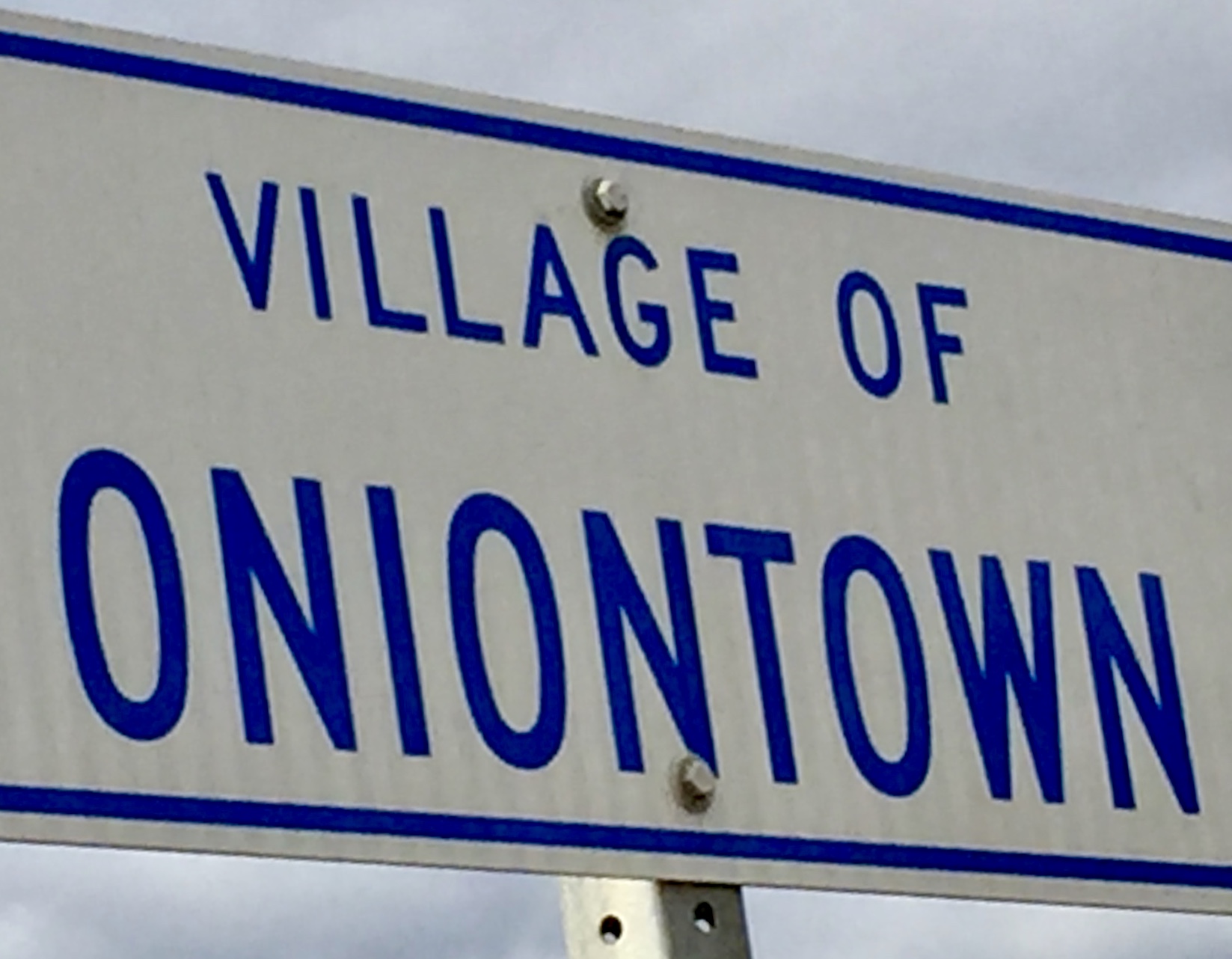
The last thing I expected to enjoy two years ago when I started serving as St. John’s Lutheran Church’s part-time pastor was my seventy-mile commute from Erie to Oniontown, Pennsylvania.

I was smitten immediately. The scenery calms me down, and the livestock munching their breakfast as I speed by now seem like distant relatives. One blonde horse on Route 19 is on my mind so often that I may request a meeting. I call him Onslow. What would the farmer say when I knock and ask, “Do you mind if I make your horse’s acquaintance”? Hopefully he suffers fools well.

I’m not altogether surprised to discover that my time behind the wheel is joyful. Experience has proven that gladness finds me and not the other way around. Beauty, wisdom and bliss don’t yield to force or expectation. They obey their own fancies.

I received such lessons anew in October when Kathy and I traveled to Ireland, a country aptly called the “Emerald Isle.” Everywhere you look, intoxicating greens and ancient grays cast a reverent spell.

Reverence

Leave it to me, though, to be delighted most by chance human encounters. One beer into my first pub visit, a lean, leathery-faced old stranger took a look at my gut, leaned in close and asked, “When’s the last time you saw your own feet, mate?” Tipsy Irishmen say the darndest things.

Gladness also showed up in the commonplace, especially along the island’s narrow, harrowing roads. My brother Ed drove, his wife Debby navigated, and Kathy and I sat in the back seat and let our eyes wander.

I never tired of watching livestock grazing in fields framed by stone walls. It was as if a painter arranged the cows for the greatest artistic affect.

“Why,” I later asked St. John’s friend and cow-whisperer Dave, “do Irish cows stand together and strike the same gracious pose while ours are scattered hither and yon?”

“That’s because,” Dave shot back, “American cows are free spirits.” Well played!

Two acquaintances in the mist at the Cliffs of Moher

Almost as numerous as cows, the sheep had an attitude, and with good reason. I would smirk, too, if somebody had branded my wool with fluorescent spray paint. One looked me right in the eyes. “Well,” his expression said, “are we going to stare at each other or go lift a Guinness?”

Must say, I’d be a little put out, too. (Credit: Dave Fergusson on Wikimedia Commons. A Scottish sheep.)

My keenest, most unlikely pleasure was granted by a crow, or so I assumed. Birder friend Mary saw a photograph I had posted on ANappersCompanion.com weeks later and informed me that my bird was a Jackdaw.

So it was “Jack”—or “Jackie,” I don’t know—who met me outside a pub in Blarney. As I sipped Cabernet Sauvignon, this corvid had me under surveillance. Townsfolk and tourists were seated all around, but Jack was most enamored of me.

The feeling was mutual. He landed one table over and hopped about. What was he up to?

Since my glass was empty, I got a refill for me and a scone for Jack. After kissing Blarney’s famous stone and wandering the castle’s gardens, I wasn’t hungry myself, but content to rest, gladden my heart and treat a fellow planetary citizen to lunch.

A fellow planetary citizen

I set a few chunks of scone on Jack’s table and waited for him to return. He took my offerings one by one, flew away, then came back for more.

Hoping he would join me, I put pieces on my table. He came and went, several times staking me out from the roof of Blarney Woolen Mills. Alas, the closest he got was the chair opposite me.

Jack considers my invitation.

When I returned from getting a last refill, Jack and his friends had cleaned up the portions I’d left behind. Before long I ripped up the sad remnants and headed back to the hotel for a siesta.

Walking along, I wondered why I had spent the better part of an afternoon in the company of an understandably skittish bird. (Lord knows why such conundrums interest me.)

My only intention was to call Jack “brother,” but how could he (or she) have known? Two creatures crossing paths, that’s what we were. Yes, I know Jack was all about the scone, but I’m eccentric enough to believe we connected in a mysterious, elemental way.

The possibility alone makes me glad. When humans, corvids, cows and sheep of good will trust each other, a silent language is spoken. Its name is Hope.

Jackdaw about to take flight at the Blarney Castle’s Poison Garden

Oniontown Pastoral: Meanwhile, on a Perfect Day

Oniontown Pastoral: Meanwhile, on a Perfect Day*

For Birdy

Have you ever spent hours on roller skates, then put on your shoes and felt as though your feet belonged to somebody else?

Have you ever gone to a matinee and walked from the darkened theater out into a shock of summer day?

If so, you can imagine my reaction to a message I received last Thursday: “Jack just passed.”

He was thirty-five, and a ravenous cancer was the thief. He had little kids. Jack and my friend Birdy had been married a few short months—I never even had the chance to meet the man.

What knocked the wind out of me was this: Birdy’s father, Fran, succumbed to cancer on Monday. So the father of the bride and her groom passed away three days apart on the same hospice hallway.

I learned of Jack’s death after a lunch of beef noodle soup at Cathy and Ed’s house. I savored buttered croissants dipped in broth, cheesecake for dessert, and stories with twists and turns. The visit refreshed and blessed me.

An impossibly blue sky in Oniontown

Then came the matinee moment. As I walked outside, a stunning afternoon was waiting. The chilly morning air had warmed. The sky was cloudless and impossibly blue, a color created for welcoming souls.

I paused in the driveway, looked up and took in a draught of fine air. If Cathy and Ed were watching, they probably wondered what in the heck their pastor was doing.

Pastor John was thinking, “My God, what a perfect day” and at the same time, “Oh, Birdy.” Heading over Methodist and Mercer Roads to the church, I couldn’t get the beauty around me to harmonize with what my friend must have been feeling.

Under normal circumstances Birdy’s smile ought to be shipped in bubble wrap to sad folks everywhere. Her laugh is medicinal, but recent years have delivered more than her share of trouble. Thinking of her shining spirit, I’ve often said to myself, “All right, Life! Birdy has endured enough, okay?”

Last week wasn’t my first time traveling through light while contemplating darkness. Back in seminary I spent one summer as a hospital chaplain. Most days, the trip from the revolving doors to the parking lot after work was five weary minutes of humidity and dissonance.

As citizens zoomed around Columbus on their errands, scores with IVs in their veins either got well enough to go home or prepared for the move everyone is required to make eventually. The sidewalk outside belonged to a different universe from the one with tile floors and elevators.

Author’s confession: I was a mama’s boy.

On day one as a chaplain, I should add, my mother died of sepsis in Erie, Pennsylvania. That thirty-six-year-old future pastor who prayed with the ailing and comforted the fearful was grieving hard, falling apart himself.

In worse shape than me was Lou, whose best and only friend Sally—my chaplaincy patient—had fallen backward while carrying groceries up slippery steps. He had no family.

“Come on, Sal,” Lou said over and over, patting her clammy forearm. “Wake up. Don’t leave me all alone.”

“Did you see that?” he would say. “She moved! Did you see?” Each incidental twitch held the hope of Sally getting well so they could pass evenings watching Jeopardy and playing Gin Rummy.

Lou came up to my nose and wore a confused expression, eyes squinting, lips forming the tail end of “why.” The world was an inside joke he didn’t get.

A couple of weeks into Sally’s coma, the end was inevitable. Saying the Lord’s Prayer, we came to “thy will be done,” and Lou sagged in surrender. With his forehead resting on the bedrail, his shoulders rose and fell with hoarse sobs.

(For the record, I don’t believe Sally hit her head on concrete because God willed it, but we’ll save that distinction for sometime later.)

Nothing sadder than round bales on a summer day.

Lou told Sally goodbye in 1998. That July, with my mother’s passing still fresh and patients’ worries following me home, I understood why E. B. White once wrote, “I don’t know anything sadder than a summer’s day.”

“When you roll down the window,” you might say, “why not just enjoy the air rushing across your arm? Why not put Lou on God’s bus and rather than having him ride with you?”

Because I still care about Lou. And I love Birdy.

“Dude,” she said as we hugged at her father’s wake. That one word was plenty to say, “I’m in pieces” or “What am I supposed to do now?”

A blue worthy of singing

I’m not about to forget friends so my spirit can sing along with blue skies. Besides, I would rather trudge through sleet with them than lounge at sunset and lift a champagne toast without them.

There’s no such thing as a perfect day, I suppose. Give me a truthful day instead, with joy and sorrow rubbing elbows. Best of all, give me a glorious afternoon with Fran, Jack and Sally sitting in the back seat and Birdy and Lou up front with me. Let my car be a convertible with enough room for my mother to come along, too.

The wind will blow on our faces and dry our tears.

*Lou and Sally are not real names.

Oniontown Pastoral: A Neighbor Shows Me How to Figure Out Ireland

Oniontown Pastoral:

A Neighbor Shows Me How to Figure Out Ireland

The site was comical. On my way to St. John’s Lutheran Church recently, I drove past a neighbor who was poking leaves with a litter stick and sliding them into a big white bucket. The odd part was, there weren’t enough leaves to rake, maybe a hundred scattered over his yard.

“Why bother?” I thought. On the other hand, what a senior citizen does on a windy morning is none of my business.

We exchanged glances, me offering a smile, he raising his eyebrows and chomping on the last inch of a stogie.

I knew instantly that the man was trying to advise me. But about what? Cigar smoking wouldn’t suit my temperamental lungs, and gnawing on a cheroot would result in wife Kathy hesitating to kiss me.

No, the counsel had to do with leaves. A few days went by before I understood that my neighbor wanted to help me figure out Ireland.

The author with two new friends at the Cliffs of Moher. No, I don’t normally wear a scarf with a cardigan. There was a chilly mist coming off the ocean.

Since Kathy and I returned from the Emerald Isle a couple weeks ago, my spirit has been overflowing. Kind brother Ed and his wife Debby drove us all over southern Ireland to sites both popular and inconspicuous. I gave the Blarney stone a peck, communed with two cows at the Cliffs of Moher, knelt in prayer at St. Colman’s Cathedral, and at St. Michan’s Church let my hands hover over the keyboard Handel used to compose his “Messiah.”

Then there was the countryside, where cattle and sheep grazed within stone walls, and church and castle ruins gave the land gray benedictions, as they have for centuries.

The inexorable passing of time

You can’t roam Ireland without feeling the inexorable passing of time. I’m home at the moment on an afternoon with intermittent drizzle—very Irish weather—but even now time’s gentle, but calloused, hands hold my face.

Part of me is in Erie, but part remains at Kilmainham Gaol, where architects of the 1916 Easter Rising awaited the firing squad. Joseph Plunkett, who married Grace Gifford in the prison chapel hours before his execution, was not yet thirty. After the ceremony in his cell, the bride and groom were permitted to spend ten awkward minutes together in the presence of guards. According to the tour guide, they sat quietly.

Another part of me reverences miles of stone walls. The only way to farm the island’s fields was to pry the limestone rocks out and pile them into long lines. During the Potato Famine (1845-1849), starving men were fed in exchange for clearing land and building walls that led nowhere. “Famine walls,” they were called. If grassy pastures were poetry, Ireland would be sonnets, beautiful but melancholy.

My great-great grandfather, Timothy Coleman, most likely sailed from County Cork to America before the historic blight that turned the country’s main food source to smelly mush. A million to starved to death and about as many emigrated elsewhere. Ireland’s population has never recovered the loss.

Stones, everywhere stones. Church ruins next door to apartments. Stone shape the landscape.

A dozen times each day, as I brushed ancient cathedrals with fingertips and tried to read eroded gravestones, Timothy’s absence haunted me. He was a farm laborer. I dreamt his face and imagined his voice.

Debby, who has dug into the Coleman family history, records the following about Timothy’s son, Edward: “[He] moved his family 31 times. . . .The family lived on mashed potatoes, gravy and hamburg.”

Part of me grieves for these ancestors I’ve never met and wonders with unfeigned love about their days and decades, their toils and joys.

Ireland rests in my spirit like the fallen leaves I’m studying, just a scattering this fall in Erie, Pennsylvania. I can only gather them one at a time, like my Oniontown neighbor did.

Timothy is but one leaf. Another is his wife Helen Salsman, who bore seven children. Someday Kathy and I will drive to Norwich, New York, and pay respects at her grave (1836-1918). We don’t know where Timothy is buried, which pains me a little.

A gleeful Kathy peeking out of the Witch’s Kitchen on the grounds of the Blarney Castle.

Leaf by stunning leaf I’ll sort through Ireland, maybe figure out why I was so moved by the walls and ruins, cows and sheep, friendly folks and all those starving spirits who built walls that now look like random adornment, innocent alleluias stretching toward the horizon.

If you see me these days with my eyes closed, I’ll be imagining Timothy Coleman and remembering the island he left behind. And if you catch me chewing on a stogie, pray that Kathy will kiss me anyway.

Bonus Photographs

One of the best parts of Ireland was hanging out with Ed and Debby in interesting places, like this pub originally built in the thirteen century.

A crow perched on a stone wall in Blarney Castle’s Poison Garden. Stay tuned for a future post on the crows of Ireland.

Mummies in a crypt at St. Michan’s Church. Again, stay tuned.

Oniontown Pastoral: A Mercer Road Love Story

Oniontown Pastoral: A Mercer Road Love Story

This past Tuesday was one for the books. The morning was fine. I worked in the church office until 12:30, then headed to the Stone Arch to pick up a lemon meringue pie I had ordered for an Erie neighbor who kept our sidewalk clear all winter while our own snow blower was laid up.

Since I was on that errand, it seemed foolish not to slide into a booth for a Reuben with extra thousand island and fries. On the way back to St. John’s Lutheran, wife Kathy’s 2006 Chevy HHR that goes by Bubba gradually lost steam and finally clattered to a halt right across Mercer Road from Frank Crash Auto Wrecking—one day after a new inspection.

The 89 degree humidity made sure I didn’t grin at the great gobs of irony. Friend Jodi was kind enough to fetch me back to church, where I chucked the pie in the refrigerator, waited for wife Kathy to return my call and sulked about every vehicle in my life betraying me. I had driven Bubba to Oniontown, after all, because my own 2006 Hyundai has the croup thanks to a failing fuel pump.

Long story short: Kathy’s work as a radiation therapy nurse and a sundry or two kept her in Erie until 7:00 p.m., which means she picked me up after dark, which also means she and I slouched in a borrowed mini-van with our lights shining on poor, comatose Bubba and beleaguered spirits waiting on word from AAA.

Actually I was managing okay. Kathy’s already challenging workday went an hour over, after which she had to scrounge a trustworthy vehicle and slog seventy miles south to schlep her husband home. My afternoon consisted of tasks handled at a stately pace in an air conditioned pastor’s study, a siesta and thirty minutes of silent prayer.

By the time Kathy picked me up and we reached Bubba, the quiet had reminded me that broken cars and endangered meringue are mosquitos hovering over a lifetime’s standing water. Most inconveniences are reduced to laughing matters, somewhere ages and ages hence.

Still, something about waiting on a berm, headlights glowing and darkness beyond, opens up your heart, if nothing else out of reverence for the hush of night accompanied only by gravel crunching under foot.

My heart received a blessing. I won’t lie, it wasn’t at the roadside, but as Kathy and I were at last rolling on Mercer Road toward Greenville.

The hand I kiss also raises up flowers

The words came out without my having to decide on them first. Glancing over at my wife, who hadn’t eaten since breakfast, whose eyes were glazed with the enough-ness of the day, I said, “You know, I’d rather be with you right now than with any other wife on the best evening ever.” Then I took her hand—which comforts those staring down their mortality—and kissed it, as I always do.

Was I speaking the truth or just trying to be romantic? At 3:27 this morning, I lay awake on purpose, listened to Kathy breathe, and knew that my Mercer Road love story was honest to goodness.

When days are burdened by soul-testing challenges and generic bother, sleep is oasis and balm. Kathy’s slow, deep breaths, even the odd snuffle or two, gave me joy.

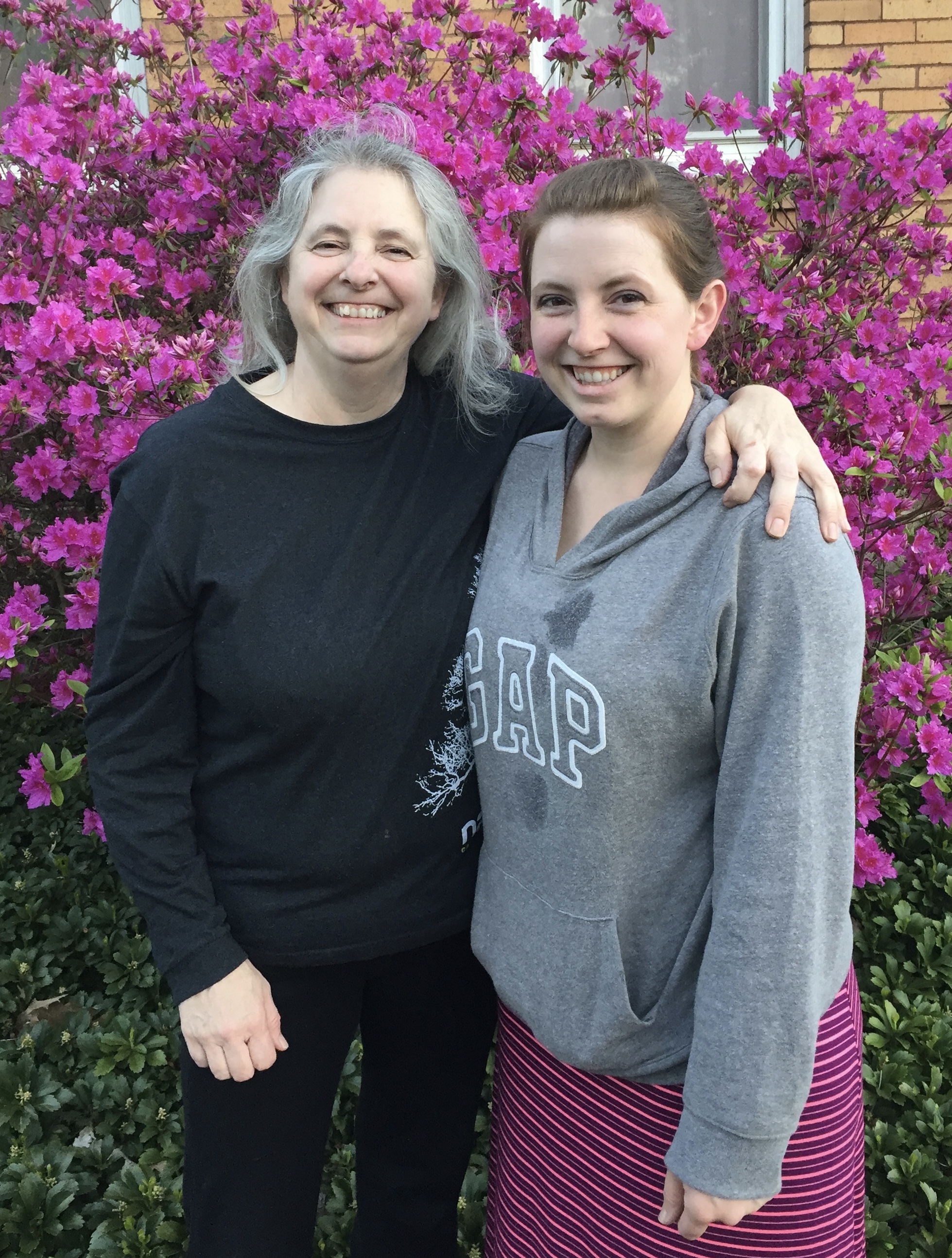
Kathy, with unapologetic gray hair, and our daughter Elena

As always the morning would bring us fresh gladness and upset, but in the familiar darkness of home, I touched my wife’s hair, now unapologetically gray, kept glad vigil and reckoned blessings that turn a cracked engine block and a brand-spanking new car payment into trifles.

This evening we’ll start in on that lemon meringue pie that we couldn’t give to our neighbor, who, it turns out, is away on vacation.

As long as Kathy and I are together, that pie will taste great.


A Post on “Matters of Conscience”

Dear Friends,

Just a note to let you know that I’ve posted a short essay on my second blog, Matters of Conscience, which has been happily inactive for some time now. If you’re interested in my thoughts on politics, please follow the link.

Peace,

John Coleman

Oniontown Pastoral: Wondering Where All the Places Are

Report from Oniontown: Wondering Where All the Places Are

In The Prophet, Khalil Gibran writes of joy and sorrow: “Together they come, and when one sits alone with you at your board, remember that the other is asleep upon your bed.”

Gibran’s words visit me every time I’m wandering the valley between gladness and grief—which is to say, much of the time. I should probably give the late Lebanese poet his own loft in my soul.

Anybody who knows me can name my joys these days: wife Kathy and children and family and an embarrassment of friends; the village of Oniontown, Pennsylvania, and my sisters and brothers at St. John’s Lutheran Church; the silence of contemplative prayer; improvisation in the kitchen; and the cultivation of good words.

Killian and Cole (Credit: Elena Thompson)

Most of all, grandsons Cole and Killian bless me so often that I’ve become a bore. A pop who drones on about his boys “ad nauseam” has everybody in his sphere searching for escape routes. I get it.

But stay with me a moment. The eventide of kindness and cooperation everywhere is fast falling. When apocalyptic weather isn’t laying waste to the human enterprise, people compensate by wreaking havoc on each other. Sweetness and light are close to extinction, while civility is an endangered species.

Cole knows nothing of such gloom. The evening news hasn’t yet tripped up his giddy groove, and he comes out with thoughts that lift my fog of pessimism. It happened just the other day.

I wasn’t present for this gem. My daughter Elena found Cole in his room, lying on his bed with fingers laced behind his head and staring up at the world map tacked to his ceiling.

“What are you doing?” she asked.

“I’m just looking at all these places,” he said, “and wondering where they are.”

Elena couldn’t remember how she answered, but she’ll never forget the next line: “Where is the playground with the sand?”

Cole wanted his mother to point out, on a world map, the location of the jungle gym and swing set where his Grandma Kathy takes him to play.

Why does this little slip of dialogue leave me stunned with pleasure? After all, his statement is nonsensical, his question naïve.

I’ve spent hours rubbing my temples and concluded that there’s no logic in my response, only emotion. Cole’s thoughts about our big planet make me want to scoop up the little master and hang on tight.

Just imagining the embrace pierces me with joy, but sorrow, ever dutiful, also waits on my board and peers at me over its reading glasses: “Ahem. You realize, of course, that the future might scourge thoughtful souls. Even now, dreamers are having nightmares.”

Point taken. How will tomorrow greet gentle folks who ask where all the places are? And what will become of the pure in heart who need directions to the playground with sand?

Dear World, if it wouldn’t be too much trouble, could you please take it easy on this dreamer. (Credit: Elena Thompson)

Even as I rejoice that one innocent child rests on his bed, looks toward the sky and speaks the language of wonder, I grieve that kindred spirits of his generation may one day hold their tongues, bullied exiles in their own land.

The arms I wrap around my grandsons long to protect as much as love. Unless humanity has a change of heart, the world they inherit will be selfish, ignorant and brutish.

“Will be?” some would say. “Aren’t we already there?”

Not so fast. As far as I know, Khalil Gibran didn’t account for hope. Joy is light enough to ride the mildest breeze. Sorrow surges and gusts. Hope, on the other hand, comes without watches or warnings. Its news comes from redheaded boys.

Most of all, hope is announced by children who have been tossed into the air, caught safely and drawn in close.

As long as my muscles hold out, I’ll pick up Cole and Killian and ask, “What are you doing? What’s on your mind, kid?” If my heart is without guile, their answers will heal and sustain me. I promise to keep you posted.

Joy and sorrow, meanwhile, will live as neighbors on a floodplain, the former assuring the latter that love always has the last word.

Oniontown Pastoral: Babysitting Ray’s Tobacco

Oniontown Pastoral: Babysitting Ray’s Tobacco

My buddy Ray called last night. “Hey, Pastor, could you drop off my tobacco on your way to church tomorrow? Would it be out of your way?”

Actually, the detour cost me fifteen minutes, but no worries. We have an arrangement: Ray is constantly trying to quit smoking, but he always goes back. To keep temptation at bay, he tosses a bag full of loose tobacco and rolling papers in my trunk, where it keeps my lawn chair and fleece blanket company.

For a couple years I silently stewed about babysitting Ray’s tobacco. Our little routine is exquisitely stupid, but not as bonkers as throwing away thousands of dollars worth of tar and nicotine, only to show up sagging and defeated at Smoker Friendly to buy some more. And that’s exactly what Ray did for years.

So I hang onto what I’m sure is the crummiest of crummy tobacco, $11 a bag. The label says, “Pipe tobacco,” but Ray insists it’s for cigarettes.

“Brother,” I tease him, “you’re smoking shaved, dried out cabbage.”

Whether it ought to be tamped into a pipe or stirred into coleslaw, I’ve driven tobacco to St. John’s Lutheran in Oniontown and back home to Erie, to hospitals in Greenville, Farrell and Sharon, to McCartney’s to pick up birdseed and along Route 19 to the check on a horse I’ve named Onslow. I bet Ray’s smokes have traveled more than he has.

Within a week or two, my friend “yields”—that’s what he calls it—and I swing by his house. This morning I left the goods on his pack porch. He called later and thanked me for the delivery.

Ray is nothing if not grateful, which is one reason I’m not frustrated over my babysitting duties anymore. Of course, I could tell him this foolishness has gone on long enough, and I should never have signed on for such a lost cause in the first place.

Anyway, ire on my part is far less important than this truth: Ray’s smoking cause is probably lost, but my buddy is not. The trouble is, the man’s soul and his addiction are tangled together.

For most smokers, quitting is about trying to stay alive. Ray, whose health has been distressing for years, says, “I love tobacco. I don’t care if I get cancer. I have to die of something.” Snuff, long-cut chew, pipe, cigars, cigarettes, he does them all by turns. These days, he and his old Laredo cigarette roller are fast friends.

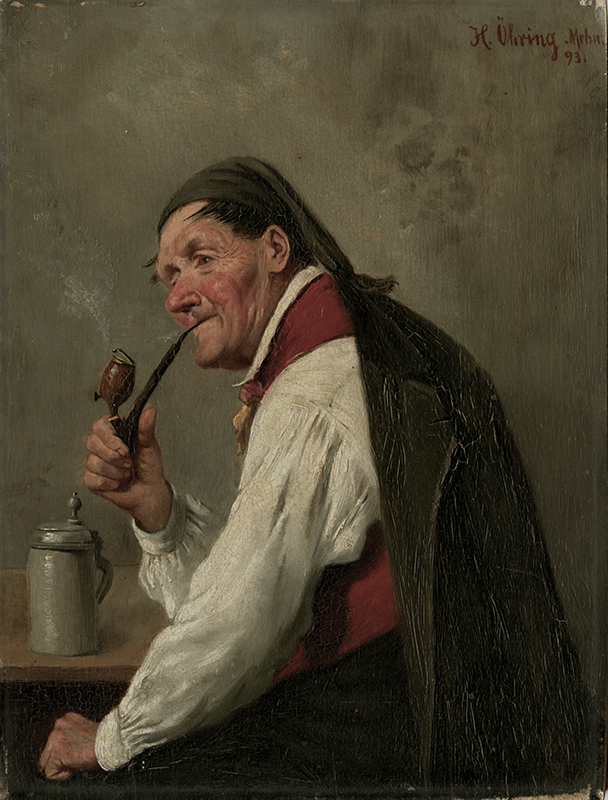
Be this happy, Ray. (Credit: Hedwig Ohring on Wikimedia Commons)

I’m not fan of tobacco, but I wish Ray could indulge his addiction in peace. Unfortunately, the vice he adores also torments him. He was raised to believe in a wrathful God who keeps a long list of damnable offenses. Now in his sixties, he can’t stop believing that smoking in this life guarantees burning in the next.

Ray’s many medications leave his body depleted, but what really saps his strength is the withering sense of condemnation he carries around.

My Lord, how we’ve talked. If addictions earn people eternal punishment, then the line into hell is going to reach almost to heaven.

“If you want to improve your health,” I say, “quit tobacco. But if you’re trying to earn God’s love, my advice would be to roll yourself another.” I also tell Ray, “But what do I know?”

Lost cause on my way to Oniontown: an old thresher.

I don’t know the mind of God or claim any particular wisdom. In many ways I’m a lost cause myself. At least I have a nice collection of them. And I spend increasing amounts of time holding hands with folks whose lost causes bring them to their knees or knock them flat.

Does this sound hopeless? Not to me. Sitting cheek to jowl with the unsolvable, inescapable and terminal isn’t about hoping for miracles, but making sure that when a cause is lost, its owner is safe and sound.

So I tell Ray that I’m pretty sure God loves him just the way he is, right down to his smoke-stained fingertips. If he and you and I can believe this, then plenty of causes don’t matter much as long as we remember that our souls can never be lost.

An old, stained, torn message from the Coleman family refrigerator. Only believe, Ray.

Author’s Notes: This post originally appeared in slightly different form in Greenville’s newspaper, the Record Argus. And Ray says I can write about him any time I want.

Vacation with My Father

Vacation with My Father

Everybody else on Victory Chimes is on deck savoring tame waves and the sun, calling out to seals who peek up, then disappear under the surface.

Victory Chimes

A bushy-bearded crew member just sent me below, not by command but by speculating that an island in the distance might be “Hell’s Half Acre,” which was one of my father’s favorite expressions. I sit outside the galley and stare at his life: a yellowing 8½” by 11” sheet of lined paper; Dad’s printing in pencil, his unmistakable all-capitals hand strangely shifting to lowercase for each h, d, and g.

Children. Grandchildren. Births and weights. Marriages and divorce. Graduations. Navy service. Jobs, first to last. Residence after residence.

Dad’s slender memoir is a stowaway in my leather man purse. Wife Kathy and I are sailing on Maine’s last surviving three-masted schooner from the great windjammer generation of the early 1900s. While she scans sea and sky for osprey and porpoises, I perch at the end of a long table in the salon and wonder why I decided to bring Denny Coleman along with me on vacation.

Dad has been gone for over five years, and his comings and goings, his beers and stories come to me through lines like “AMERICAN METER 3 SEPT. 46 – 15 NOV. 82.” He sat on the couch and cried for two days after new owners hauled him in and said he could run a drill press or retire. No, he couldn’t bump back to his job in the tool room, as he had been promised. Forget the years and handshakes.

How many times can one man’s length of days withstand being folded and unfolded? Dad’s record has diamond gaps down the middle, like the Shroud of Turin. It’s so vulnerable that somebody, maybe the author himself, put it in a plastic sleeve.

On what date did Dad sit down at the kitchen table, prop open his memory and make a list with no title, only an incomplete first line, “GRAd 28th MAY 1944”? He would never forget, I suppose, that he was a Wesleyville Bulldog.

I imagine him pulling the paper from his wallet and printing one last entry, my son’s birth in a disciplined strand of caps: MICAH WALTER COLEMAN – 1/18/92 – 8# 6OZ.

What am I supposed to do with my father’s fading table of contents? It doesn’t belong in the trash. Until I figure out why he kept such a determined record and why the names and dates put a lump in my throat, I’ll hold it gently, like an artifact that even loving care can’t keep from someday going to pieces.

Early this morning Kathy told me that we were anchored by Hell’s Half Acre and might be able to ride the yawl boat Enoch over for a visit.

Alas, we made for Stonington instead. It would have been nice to tell my siblings that I visited the locale Dad so often referenced, generally in annoyance. “Don’t take I-90 to Buffalo,” he might have said. “They’ve got road work all over Hell’s Half Acre.”

One of the things I loved most about my father was his use of language. Your nose was a snot locker, your hands meat hooks, your hind end a fan-danny. When he wanted you to calm down, he said, “Take it ease, disease.” Another father might have said “kiddo” or “pal,” but my dad preferred what I always heard as “Bubba Louie.” My older brother Ed tells me that Dad was saying, “Babalu Aye,” from a rambunctious Ricky Ricardo song?

When Dad wanted to let you know you were really on the wrong track, he puckered up and practically sang, “Oooh, nooo nooo hell nooo.”

Dad’s lingo, the way he leaned into his phrases, captured the man at his best: clowning around, amiable, a good sort. On board this schooner, he would be on deck cracking cans of Schlitz and “batting the breeze” with new friends. Closing my eyes, I call to mind his forearm tattoo, a fading heart with a gaudy MOTHER banner unfurled across it. I pass my hand over his wavy gray hair, as I did standing over the coffin.

Picturing my father is still easy. His voice, its rising and falling, is familiar, too, but exact words come back to me only unbidden, as if they have a will of their own.

I should have made a list like Dad did, but he hated forgetfulness more than I do. He kept everything—tools, utility bills, scrapbooks—in good order. “Coly,” as his work friends called him, didn’t misplace things.

Three years before his passing, Dad stood in the hallway of his Florida condominium, staring at framed photographs of his children and saying our names.

“I do this every day,” he confessed, aware his mind was giving out. “I don’t want to lose you.”

“Idiot light.” That was something else my father said. This gem came to me after Kathy and I left Victory Chimes and were making our way south through Maine. Only an idiot would need a dashboard light to tell him to check the oil.

That’s how on the ball Denny Coleman was, but dementia turned remembering anything into a shell game. He even forgot being a Bulldog. One bright afternoon I took him for a drive down Willow Street. “Hey, Dad,” I said, “that’s where you went to high school.”

He barely glanced up. “If you say so,” he mumbled, looking back down at his Velcro sneakers.

In his last year my father faught to retrieve himself. Each time he saw me coming his way at the nursing home, he reached out to me as if he were about to drown.

Only back home again can I name what was caught in my chest on Victory Chimes. Dad believed I could take him by the hand and lead him out of Hell’s Half Acre. The best I could do was remind him that his mother was long dead and his wife’s name was Mary.

“Yes, Mary,” he once said. “She’s my favorite.”

Now at my desk, I slide a biography free from its plastic sleeve and hold it close. One crease gives way. Another will, too, at the lightest touch.

No matter. Whether we like it or not, time will fold and unfold our pages of births, loves and labors until they go to pieces.

This truth ought to smother me, but it doesn’t. I feel a sure and certain hope: Eternal Love cradles all that we have ever been.

Nothing is lost, no happy home, no wandering, no fleeting peace, no devastation. I’m going to frame Dad’s shroud to help me remember.

Roar on the Shore 2017: The Parade

Roar on the Shore 2017: The Parade

I’ve said it before and I’ll say it again: I’m not a motorcycle guy. Where wind rushing through what’s left of my hair is concerned, my Hyundai Elantra’s sunroof is more than enough.

What I can’t get enough of, though, is witnessing bliss, so for the second year in a row, wife Kathy, grandson Cole and I stood on Glenwood Park Avenue to wave at the motorcyclists in parade as part of Erie’s Roar on the Shore celebration. My sister Cathy and her wife Betsy Ann joined us on the berm for half an hour of rumbling, infectious joy.

Last year Cole watched in stunned silence, but yesterday he about lost his little ginger head. “Oh my goodness,” he said, wiggling in Kathy arms and adding his rosy-cheeked glory to the evening’s pageantry. Hearing that three year old chirp over and over “Grandma Kathy, look!” and “Pop, hey Pop, did you see that?” was reason enough to take in the parade.

Grandma Kathy and Cole

But to tell the truth, hanging out beside a road in soul smothering humidity as thousands of riders slowly process by, revving the ever-loving crap out of their engines is not this pop’s scene. Picture artist-fartist. Think staring at a Jackson Pollock and wondering what he was getting at or savoring the hush of appreciation after Mary Oliver reads a poem. If anything is going to make a lot of noise, let it be crowd-pleasing end of Rachmaninoff’s 2nd Piano Concerto.

And then there’s adventure. My idea of risk-taking is sailing on the Victory Chimes, which slips along calmly off the coast of New England, protected from serious waves by the islands, and serves smoked salmon, cream cheese and capers on deck at 4:00 p.m. In two weeks, when Kathy and I board this schooner that graces the back of the Maine quarter, the only splash I expect is that of a decent Chardonnay making a whitecap in my long-stemmed glass.

Part of me would love to love downhill skiing or bungee jumping or straddling a Harley, but the one thing worse than being sedate by nature is pretending to be wild and crazy. Besides, the spectacle of bikers can’t be a hit without non-bikers lining the route. We need each other.

We really do—at least I do. This fact wasn’t clear to me until the roaring began in earnest and giddy faces passed by and suckers and Tootsie Rolls landed at the children’s feet.

The hundreds of riders getting a rush from their vroom vrooming probably had no clue that they were blessing me. I don’t think I’ve ever seen so many people raising peace signs toward the sky in thirty minutes’ time. As that universal symbol of two fingers forming an amiable V greeted me again and again, I found myself praying, “Oh, my Lord, let it be so. Let there be peace—in my heart, between people.”

I also found myself looking my fellow human beings rumbling by in the eye. Their transportation may as well have disappeared. The close air and racket, too. Honest to goodness, it was just me and them. My wave said to them, “I see your bliss. Get all you can. Never let it end. I’m glad for you.”

Oh, those faces. Some of them got my message. I could tell. When I laid one of my big sloppy smiles on them, they often sent one back, and it was as if we two strangers recognized each other. The whole deal got me choked up, probably because right then and there the word stranger exited the English language.

The traffic never stopped this year for a good photograph, so these smiling faces are from last year. I still remember them all, like old friends.

Taking its place, I now understand, was a sweet word: hope. Am I waxing poetic? Don’t you believe it. We human inhabitants of planet Earth are increasingly cranky, thinking and acting from our reptile brains, and our venom is crazy lethal.

Where is our hope? I saw it at the Roar on the Shore’s motorcycle parade. I saw it most of all on one man’s face. He was nothing remarkable, just a gray-haired dude with a wide smile rolling north on Glenwood Park Avenue.

I caught his eye and waved, and he nodded to me and mouthed, “Thank you.” Moving on, he nodded to others, as if the reason thousands of Erie-ites showed up was to see him and him alone pass by. “Thank you. Thank you very much.”

Of course, this guy wasn’t having delusions of grandeur. I think his nod and thanks were, in prosaic fact, the hope of the world: “Thank you for noticing me. Thank you for smiling back.”

And thanks to Roar on the Shore. If we keep nodding to each other, then the adventurous, sedate and all those in between can be sure that our parade doesn’t have to end as long we refuse to be strangers.

No strangers