Oniontown Pastoral: The Hope of the World

Oniontown Pastoral: The Hope of the World

Events have conspired lately to make me emotional. In addition to the world’s brutish, rude, ignorant disposition, several situations have left my heartstrings frayed—and given me hope.

First of all, grandson Cole started kindergarten after Labor Day. Most went well, but one factor has befouled his new adventure. His bus driver has been—Lord, preserve me from cursing—insensitive. The maiden voyage was great, but on the second day, Cole cried on the bus, upset about not being with his mother and brother. The driver said that he needed to stop crying, that hers wasn’t a sad bus but a happy bus. Whether she elaborated I don’t know, but the rookie student thought that she was going to pull over and kick him off the bus. He was terrified. How would he get home? He would be lost.

Leaving for school, Cole said, “I have to get on the bus. Bye!”

Who knows what really happened? The point is, any adult with a splash of empathy can imagine a beloved five-year-old in such an inexcusable situation. Something in the bus driver’s delivery or manner conveyed the opposite of comfort and encouragement. Thankfully embarking this morning was more calm. A fifth grade girl has buddied up with him. Also, as he explained to Mom, “If I don’t cry, the driver won’t holler at me.” There must be a growth lesson somewhere in this kerfuffle, but at the moment I can’t help wanting to fix a wagon or two.

Cole’s bus woes have nothing to do with hope, except for that sport of a fifth-grader who took my little Red under wing. No, aches, pains and bullies come along, and we have to learn to shuck, jive and endure even as we dab our cheeks.

But two other vignettes soothe my spirit and speak of possibilities. The first is a picture of—surprise—Cole, who heard his mother’s smartphone chime with an Amber alert. She explained that a child in northwestern Pennsylvania was missing and in danger. Son Micah, who was visiting at the time, sent me a photograph of Cole’s response. He headed to the backyard, climbed his fort and scanned the landscape for any sign of a lost girl. Looking in one direction, then another, he believed the kid might be nearby, within reach. Maybe he could find her. Maybe he could help.

Scanning the landscape for a lost girl. (Credit: Micah Coleman)

And so he did! My kindergartener’s chances were slim, but from my perch his effort was in the service of hope. What if we all ascended our forts and glanced around? Who knows? Anyway, my grandson’s odds of succeeding were certainly greater than mine of hitting the Powerball Jackpot, which wife Kathy and I give an occasional go.

I thought of Cole this past week while visiting one of St. John’s eldest members in a nursing home. Lloyd is in his nineties and all but deaf. Conversation requires nose to nose shouting, and even then he is often lost. Each time I show up, more time passes before he recognizes me.

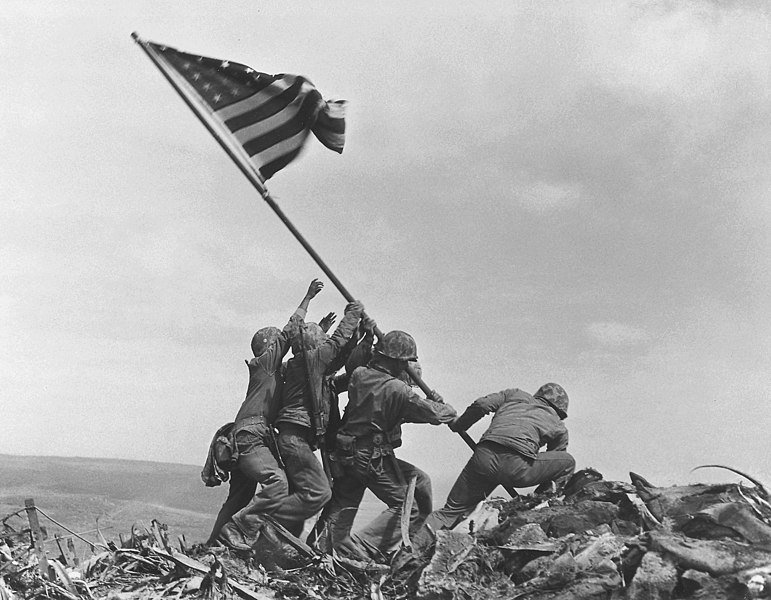
“Lloyd has a great story,” I hollered, looking back at wife Kathy, who had come to Oniontown with me that day. “He actually saw the flag go up on Iwo Jima.”

The flag goes up on Iwo Jima. (Credit: Wikimedia Commons)

His expression was blank. Then, as I stood to leave, he said, “I’ve got a story.”

Ahoy! I sat back down and leaned in, anticipating his beloved World War II tale. But for the first time ever, he needed my help. As we looked into each other’s eyes, I wished the old plot out of him. Boatswain on a landing craft, he conveyed soldiers to that costly assault. When Lloyd faded, I drew close and fixed on his pupils, as if to say, “Push, brother! I’m listening.” And it was a birthing of sorts.

He stared back at me and rummaged for the essentials: soldiers getting shot in the water; the captain telling everyone back on the staging ship to point binoculars toward Mount Suribachi; Marines putting shoulders to the flagpole; the stars and stripes snapping out into the wind.

Then and there I remembered that Cole also searched for a lost soul. His was young, mine was old and full of days, both were adrift.

Hope makes its home on perilous seas, where the mere prospect of safe harbor is enough to give a tenderhearted kindergartener and his grandfather cause to cry. In fact, wherever one set of eyes looks out for others desperate for rescue and communion, hope survives.

Nothing can drown hope, and honest to God, that brings me to tears.

Oniontown Pastoral: Tomatoes and Corn

Oniontown Pastoral: Tomatoes and Corn

Late this August afternoon I have an appointment at the kitchen counter and stove with a basket of homegrown tomatoes. Preservation is my assignment. Wife Kathy’s crop is coming in hot and heavy, and we have an agreement. She sows, weeds, frets and reaps, and I cook up and put up. I get the better end of the deal. “Boy, there’s nothing as satisfying and medicinal as getting my hands in the soil,” is something I’ve never come close to thinking, let alone saying. But put a ripe northwestern Pennsylvania tomato in front of me, and nothing short of love rises in my chest.

The taste alone is swoon-worthy, but together with corn on the cob, tomatoes grown in local dirt feed this pastor’s soul more than his body. For the past few weeks, since Kathy walked through the back door with the first glossy red-orange jewel of the season nestled in the setting of her fingers, I’ve mulled over the meaning of tomatoes and corn.

That garden gem my wife held was petite, of the plum variety. We split four humble slices, and I honestly can’t remember what else we had for dinner that evening. The flavor made me feel as though I was enjoying once again the meals and picnics that now live only in family albums, the photographs black and white or the unearthly tones of Instamatics.

The tomatoes of my childhood were sliced and adorned with a dollop of Hellman’s mayonnaise. A frequent accompaniment included corn on the cob and boiled potatoes. The salt and butter we laid on would have present-day nutritionists staging interventions.

Mom cut her corn off the cob and ate it over smashed potatoes—polite and tidy. Dad contended with his right out of the pot, and decades later I can summon the spectacle, the wonder of the sight. He seemed annoyed with the corn, as though it had done something that rubbed him the wrong way, and he meant to show those kernels in no uncertain terms who was boss.

Manners were observed around the Coleman table and on relatives’ patios, so there were never smacking sounds or slack-mouthed chomping. Ah, but Dad’s singleness of purpose, eyebrows drawn down as if his whole face were lending force to the chewing, and the crimson glimmer of his lips from all that butter and salt fill me with a son’s quirky pride: “Look at my dad have a go at that cob of corn!” I want to say. “Isn’t that something to behold?”

Kathy’s small corn crop

Within a few weeks I’ll be cheering Kathy when her first ready corn comes marching through the back door. She planted a raised bed of it on a whim, and the growth has been steady. We’ll get at least a few meals out of the experiment.

My wife’s crop won’t taste like the stuff Dad attacked and Mom mixed with her potatoes. The family palate of my youth called for what I now realize were plump, starchy kernels that owed most of their savor to what got slathered and sprinkled on them. Over time Kathy has converted me to sweet corn, which doesn’t demand the full, heart-clogging, blood pressure raising treatment, though that doesn’t make me cut back. In my case, excess in its many expressions is hereditary.

Some things last forever, but I try to relax about what doesn’t. “The grass withereth, the flower fadeth.” I left tomato and mayonnaise on white bread behind at my childhood home on Wagner Avenue. Now whole grain and sharp cheddar cheese join what’s always been the same: fat slices of a Big Boy and Hellman’s and too much salt. And the ears I shuck for Sunday dinners aren’t deep yellow like they used to be.

But no worries. As long as tomatoes and corn are on the table, the past is preserved. I can stop and appreciate my dad’s enthusiasm. I can see—as in this moment—Mom in her sleeveless blouse, sitting beside me. She had a large vaccination scar on her shoulder. I had almost forgotten.

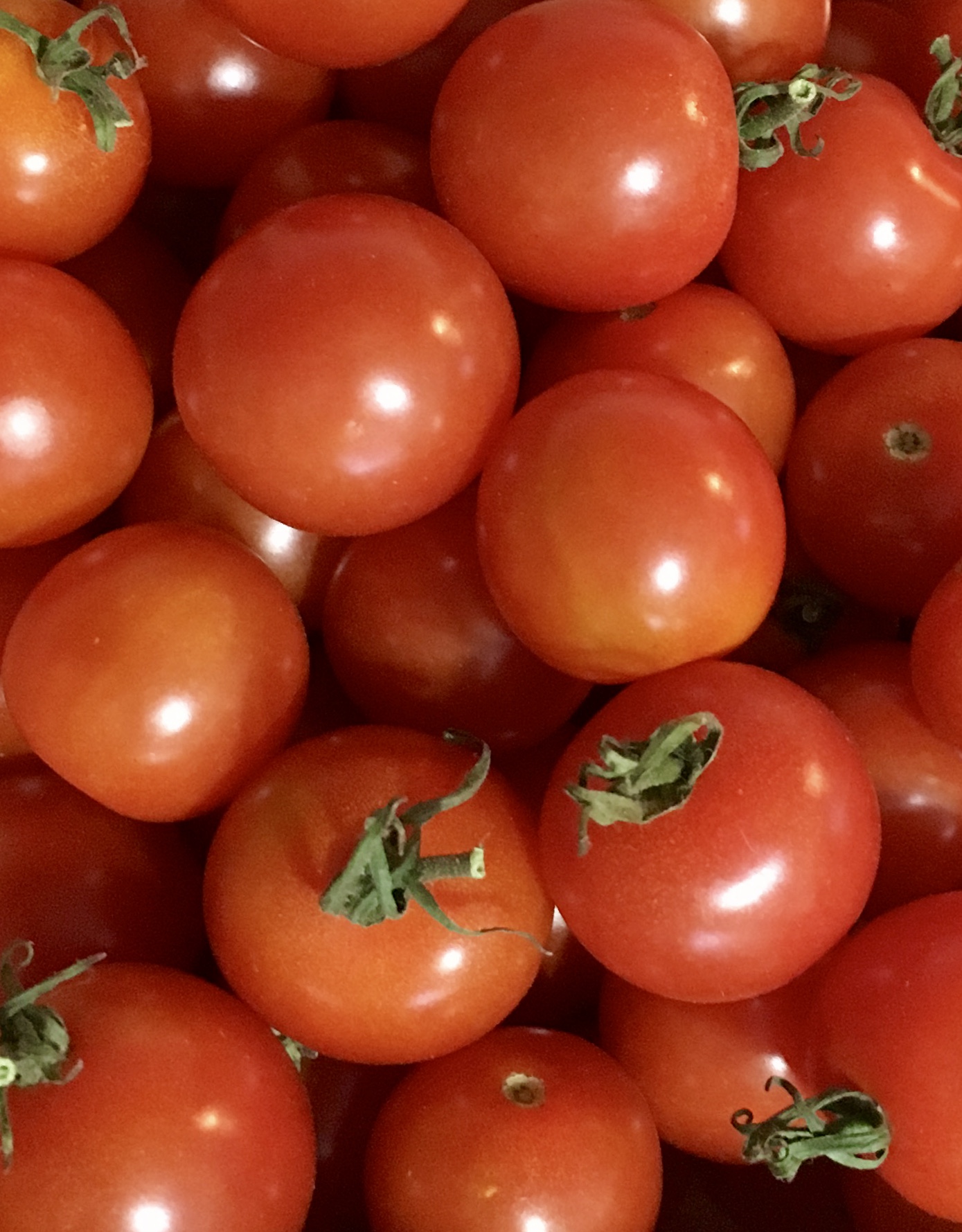
Tomatoes just as Mom would have eaten them

As far as I know, Mom never cooked down tomatoes and froze them in plastic bags, which is what I’ll be doing soon. She was a canner who considered stewed tomatoes vegetable enough for any meal.

Before leaving for work this morning, Kathy said that she expects to smell tomatoes bubbling away when she gets home. The steam, rich and sweet, will cloud my glasses and set me to dreaming of a table with a place for every family at a feast that has no end.

Oniontown Pastoral: An Old Friend with a New Name

Oniontown Pastoral: An Old Friend with a New Name

Over two years ago I decided to call the blonde stallion on Route 19 Onslow. Each time I drove by, he seemed disheveled, like maybe he had recently enjoyed a roll in the dirt.

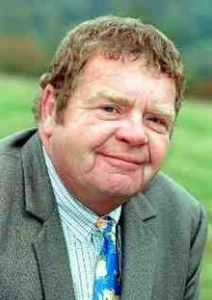
The late actor Geoffrey Hughes, who played Onslow (Credit: Wikipedia)

His namesake was from the old British comedy television show “Keeping Up Appearances.” This Onslow wore a sleeveless woolen vest with nothing underneath and a baseball cap. Other characters described him as bone idle, but he was amiable, if lazy, neither judging others nor doing much other than swilling beer and eating crisps. The fictional Onslow and his equestrian counterpart seemed to be kindred spirits, easy in their own hides and tranquil about their lot in life.

I figured that one day I would stop and meet Onslow. But what reason could I give for knocking on a stranger’s door and asking permission to introduce myself to one of the barnyard horses? If a good excuse ever came along, I would find the hutzpah necessary to make my request.

Last week Garage Sale signs in front of Onslow’s house gave me an opening. Even then I drove a quarter mile past before turning around. “Dog gone it, Coleman,” I thought, “get back there.”

The St. John’s Lutheran folks and I once laughed it up when I confessed that I was trying to muster the courage to make a cold call not on a man but a beast. No doubt about it, Pastor John was going to look silly.

A one-buck electric can opener in the drab olive green of the 1970s caught my eye. I carried it to the card-table sales counter and introduced myself: John Coleman, pastor of St. John’s Lutheran over on Mercer Road.

The friendly proprietor was Darlene, and as soon as I mentioned writing about her horse in The Record Argus, she had me. A friend had put one of my Oniontown reports under her nose and said, “Hey, is this about you?”

“What was it you called my horse?” she asked.

“Onslow,” I answered. “I made up the name.”

“That’s right, Onslow.”

“But what’s his name really?”

“Trigger.”

Trigger? Trigger. I tried to take it in. Sure, the name had a fine pedigree, pared as it was with Roy Rogers, but it would require effort to let go of Onslow. The name glowed in my imagination, and no kidding, when wife Kathy and I brought our grandsons to church, we would all wave and shout, “Hi, Onslow.”

“Would it be OK if I said hi to Trigger?”

“Sure,” Darlene said. “He’s the friendliest horse in the world. He might even come over to you.” Every morning, she explained, she goes outside to feed a duck named Clyde and says hello to Trigger.

So my old friend with a new name isn’t a grouch. He occupies his own yard because—and I was the last to figure this out—impure masculine thoughts and impulses take possession of him when he spends too much time with the ladies.

My loafers got covered with dew on my way across the yard. In a modest stall beside the stallion formerly known as Onslow was Sandy, a mare who by genetics or modification doesn’t awaken his inner Don Juan. I still don’t quite understand this wrinkle.

“Trigger,” I said, holding out my hand, palm up, “I want to say hi. Come here.”

He stomped a few times, shook his head to shoo away flies, but didn’t budge. Sandy arrived for tufts of grass and strokes on her nose.

Trigger (the stallion formerly known as Onslow)

To folks who live in Oniontown and thereabouts, getting close to horses might be commonplace, but to me, magnificent is not too strong a word to describe the experience of running fingers between those flaring nostrils, watching those great lips open to receive grass and listening to the deep, guttural crunch as they chew.

I stayed for half an hour, communing with Sandy and calling out to Trigger, but finally had to leave for another day in the pastor’s saddle at St. John’s.

So now I know Trigger’s real name and must say godspeed to Onslow. On Sunday mornings we grandparents and grandkids will say, “Hi, Trigger! Hi, Sandy!” I’ll keep an eye open for Clyde.

And I’ll check with Darlene to make sure it’s OK to visit Trigger again. He’ll come to me eventually. I’ll brush away flies and offer him grass or an apple if I’m allowed. Hopefully he’ll know I’m perfectly serious when I call him my friend.

Oniontown Pastoral: The Human Moment

Oniontown Pastoral: The Human Moment

I was peeved. Pittsburgh Avenue in Erie was bustling on Saturday afternoon, and Mr. Pokey Joe had no business jaywalking while cars, including mine, bore down on him.

Then I recognized his predicament. He had a bum leg and, like me, was past his prime. Each step made him wince. The trek to a legal crosswalk would have been an ordeal, especially with a jammed knapsack thudding against his back.

My peevishness slunk away, tail between its legs. Of course, I was relieved not to have run the fellow over, but grateful as well for a human moment. That is, a connection with another person’s reality, a chance to remember in the midst of a day’s jostle and distraction that the faces I encounter belong to pilgrims worthy of my consideration.

Credit: Michael McCartney

My life is mostly a pilgrimage from one human moment to the next. This past week, for example, I found myself at McCartney Feed and Hardware in Fredonia. I paid for 25 pounds of deluxe birdseed—call me extravagant—and took my receipt across the way to a huge barn.

As I waited, a machine reaching from floor to ceiling growled, rattled and rumbled. What was this behemoth all about? Thankfully, it hushed up as a young man arrived with my purchase.

I said thanks and turned to leave, but felt like I was ending a sentence with a preposition out of mere laziness.

“Hey, what does that thing do?” I asked.

“Oh, that’s a grinder,” he said.

Another member of the McCartney crew arrived and told me they would be putting oats in soon, but first they had to get residue out of the machine.

“Ah,” I said, “so you have to let the grinder clear its throat?”

They both nodded and laughed. I thanked them and drove off. That was about it.

I can’t swear to the specifics of what those McCartney’s guys explained to me, but here’s what I know. Carrying birdseed through the sunshine from barn to car, I was glad. All was well with my soul. The world seemed right, except for the odor of fresh manure, which my city nostrils haven’t yet learned to savor.

I had showed up with dollars, but the transaction was about people being together in harmony, however briefly.

“Oh, there you go again, John,” you’re thinking, “always with your head up in the clouds.”

Hardly! This is probably a good time to mention a caveat. If you want to collect human moments, prepare to be served joy and dismay in equal helpings.

Syrian boy Omran Daqneesh comes to mind. Pulled stunned and bloody from building rubble and set alone in an ambulance, he stares at me still, three years after a bombing raid ravaged his neighborhood. Maybe you saw his face on television.

Sad to say, for a sympathetic conscience, human moments arrive without permission. Go ahead, close your eyes. It won’t matter. Like light, love comprehendeth the darkness.

Lovely valley, kind of lonesome (Credit: Dreamy Pixel on Wikimedia Commons)

My wife Kathy is an oncology nurse, and she brings home impressions of folks passing through cancer’s lonesome shadows. Never names, ever, but plenty of heartache, including her own.

Sipping pinot noir as the evening news recounts inhumane moments, I embrace souls in Kathy’s care whose ends are near. One of them weighs next to nothing. Eternity is barreling toward her. She said through tears, “I don’t feel good.” The understatement catches in my throat.

I can see her. She wears a sleeveless summer dress like the ones my Aunt Mart loved, flowery prints. The poor lady’s hands, all scarlet bruises and torn skin, tremble in mine. She is weary, afraid, not ready to die.

Oh, yes, I can hear you thinking to yourself again. “John, stop dwelling on other people’s problems!”

No, I won’t. The fact is, you can’t have human moments all one way or all the other. If I didn’t appreciate a nameless patient’s suffering, then I wouldn’t have spotted bliss at a recent wedding. The couple made promises, and I pronounced them husband and wife. Minutes later the bride leaned into the groom, her smile as close to heaven as I expect to witness this side of glory.

So I receive Omran and the bride as both package deal and personal obligation. The foreign boy and domestic woman and the McCartney guys and wincing stranger abide under my watch.

That’s how human moments work. When I neglect any neighbor near or far, I turn my back on the Creator who made this Oniontown pastor a human being in the first place.

Love Begets Love

Love Begets Love

Dogs have occupied my thoughts lately, mostly because foxhound Sherlock Holmes, who moved in last December, finally reached a milestone that his predecessor Watson had licked from day one. Our lanky detective hopped up on our queen-sized bed, curled into a big boney oval at my feet and slept there all night long. His first night with us, black lab-terrier mix Watson yipped and yiped in his crate until Kathy and I relented and nestled him between us.

Oh, Watson, dear old buddy!

This was adorable, but risky. He wasn’t housebroken. Whether by miracle or fate, Watson leaked not a drop. I suppose he knew that he had found room in the safest of inns. There wasn’t more than a handful of nights from 2004 to 2016 that Watson didn’t snore in the crook of Kathy’s leg or under the shelter my arm, his head pressing my nose flat.

His stay with us was sickeningly affectionate from the start. Sherlock Holmes, on the other hand, has been sizing us up at his own cautious pace. I don’t blame him. He endured trauma of some sort during his three years before landing at the shelter where we found him.

The nerved up guy becomes a maelstrom of fang and claw whenever we try to administer medicine. No malice is intended. He’ll let me dig deep into his ears for some heavenly itching—my fingertips nearly meet at the center of his skull—but let me sneak a dab of ointment into the transaction, and he beats a retreat and says, “Et tu, Brute!

Our veterinarian prescribed a sedative should we need to bring our leggy pal in for treatment. Sherlock’s initial checkup was bananas. Imagine subduing a creature wildly swinging four fur-covered shillelaghs tipped with little spikes. Again, it’s nothing personal, only no injections or palpating permitted.

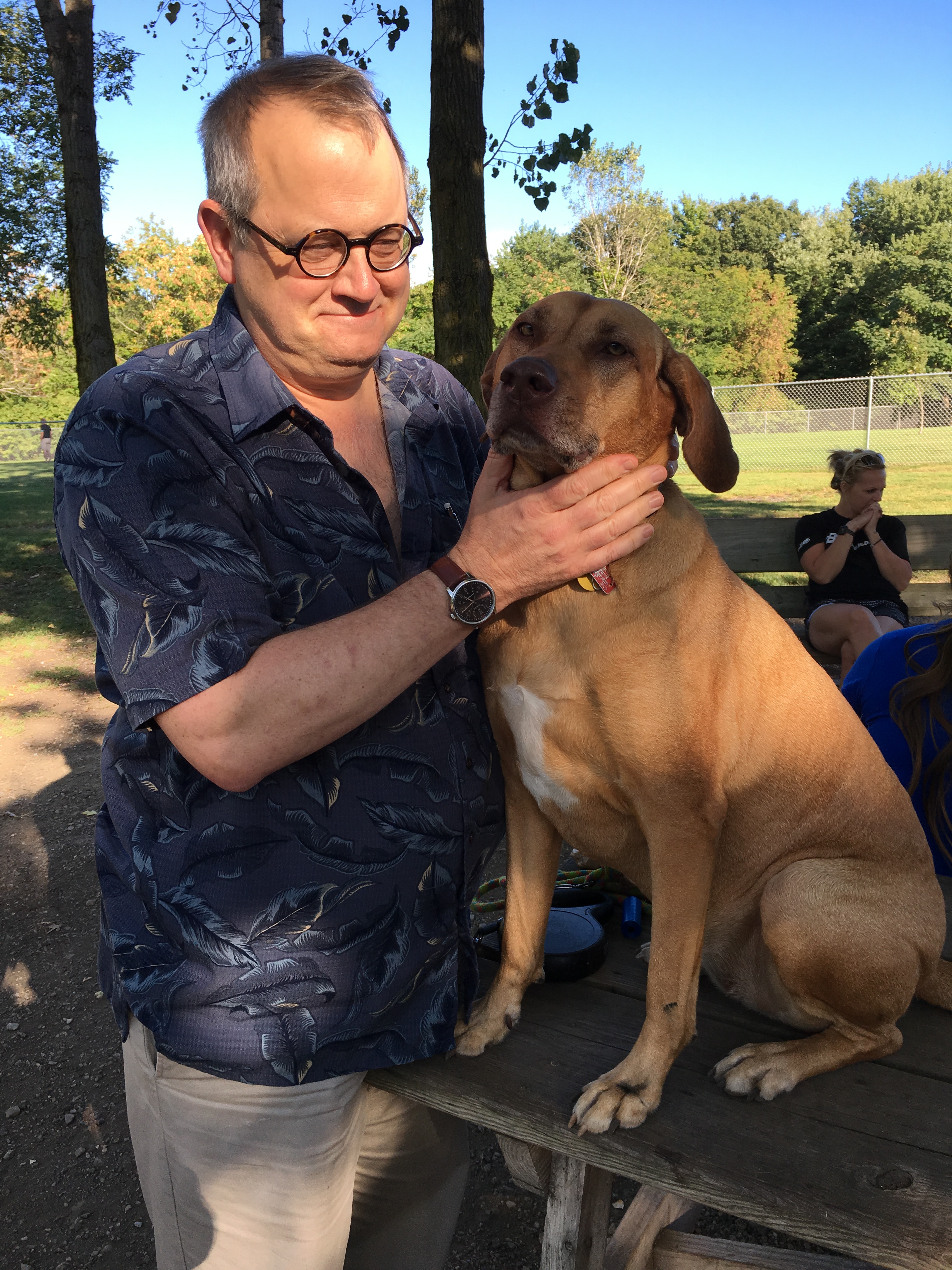
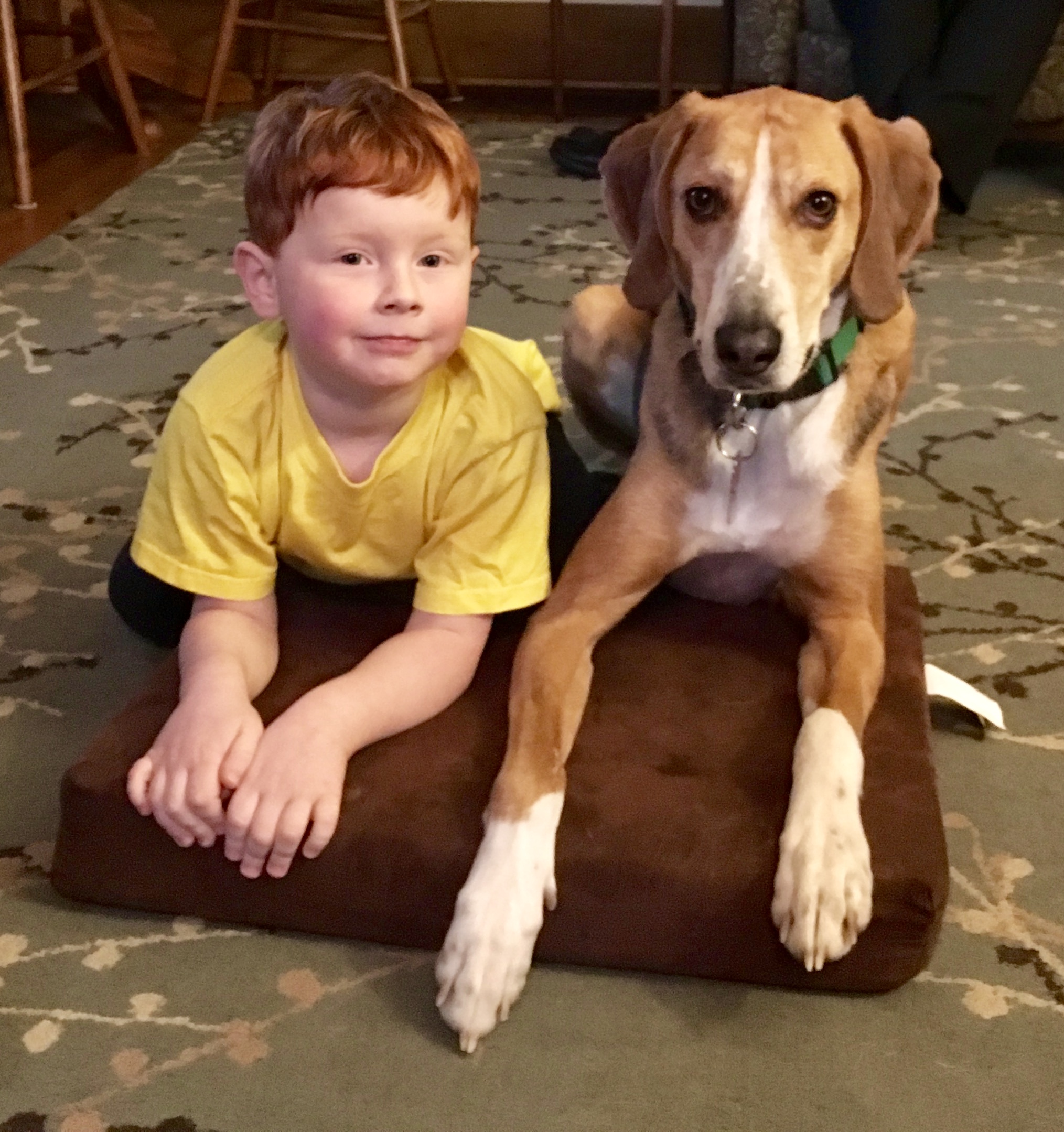
Grandson Cole with Sherlock Holmes. Those fur-covered shillelaghs are really something!

So the intimacy between dog and human that profoundly nourishes both has been slow to take hold. Son Micah smears peanut butter on his nose to invite a kiss. Meanwhile, Kathy and I have patted our mattress and pleaded ourselves hoarse: “Come on, buddy. Come up with us.”

As so often happens in my life, the milestone passed quietly and unbidden. The other day Sherlock was suddenly up on the bed, sleeping as if engaged in a routine. Same thing happened the following night, but since then he has occupied the couch.

We’re not complaining, though. When his doggy synapses so compel him, he’ll arrive to hog our legroom and give both of us a reassuring pat on the spirit. Meanwhile, the Colemans have decided to let Watson of blessed memory be Watson and let Holmes, here among the quick, be Holmes.

Not that there’s any alternative. What’s true of dogs is true of humans and anybody else with hearts and eyeballs. During a recent session of chin wagging, friend Judi put the matter perfectly. As we lamented folks with disputatious personalities, she tapped a verbal gavel: “Sometimes you have to accept people the way they are.”

The late Fred Rogers would agree, and so do I. Obviously the path of acceptance shouldn’t lead to staying in an abusive relationship, hobnobbing with a psychopath or spooning with a king cobra, whose venom the Encyclopaedia Britannica claims can “kill an elephant in just a few hours.”

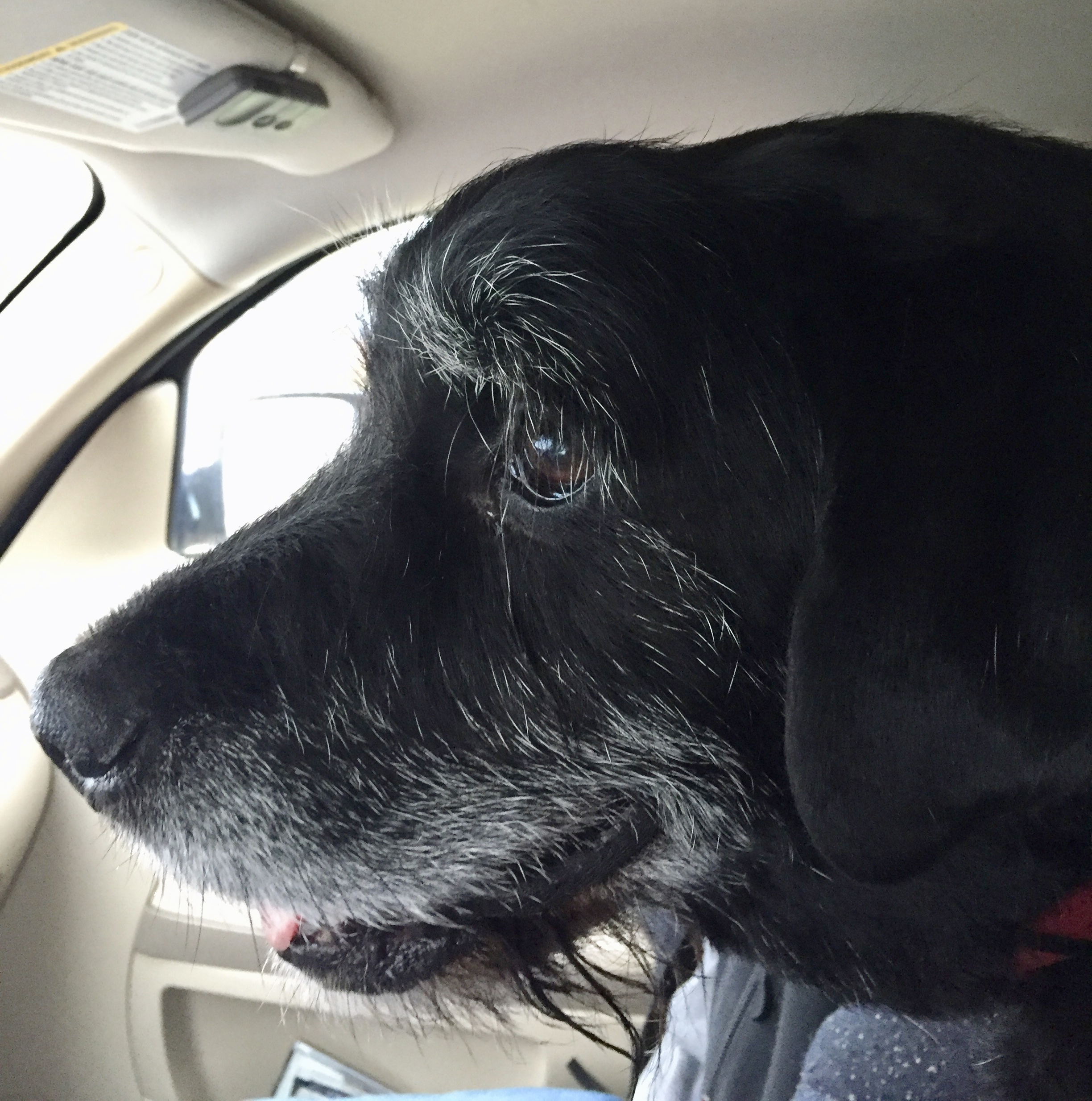
In the car on the way to the vet’s office. An hour later, Watson was gone.

Old pal Watson’s worst offense was sudden crystal-shattering barks for no discernible reason. We learned to live with it. Sherlock’s baying is equally loud, but we know exactly what he’s fussing about.

When I get home in an hour, he’ll be jonesing to run. I mean, he sprints with such abandon that his back legs can’t keep up with his front. The result: those back legs dangle behind his body, momentarily swaying carefree until they touch down again.

Until I drive Sherlock to the dog park’s glorious acres, he’ll hoop and whine and wander about the house, clicking his nails on the hardwood floor. There’s no changing this foxhound’s stripes or taming what his Creator intended for him.

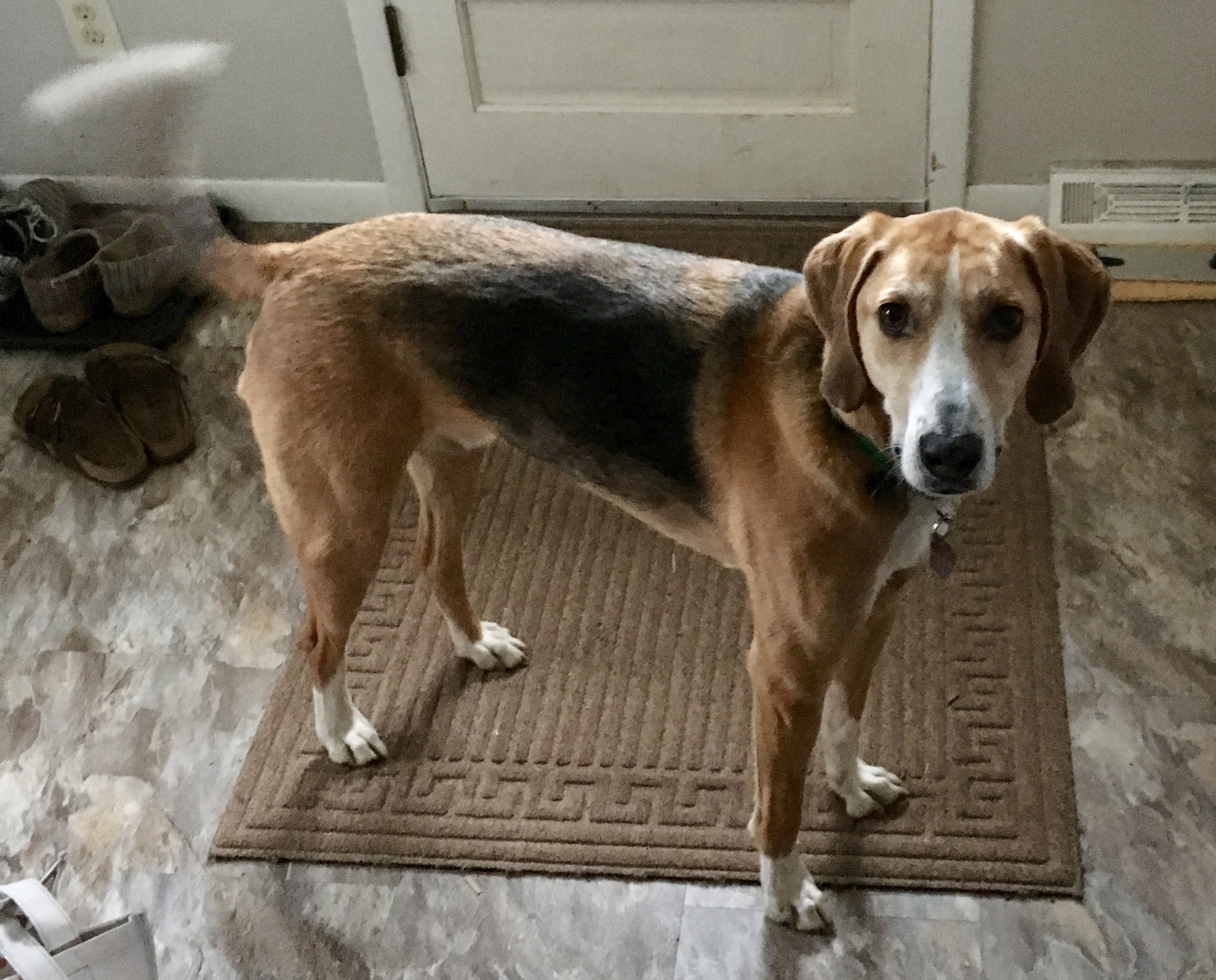
Sherlock Holmes this very day, tail a blur of waggery, his heart at home.

Funny thing is, I’ve come to love our goofy dog exactly as he is. With each passing day, his place in the family grows more sweet and easy. And this is the moral, if you ask me. Acceptance begets acceptance. Love begets love.

I can see this truth in Sherlock’s face—I swear. We let him be who he is, and he understands somehow or other, “These people love me. I think I’m going to like it here.”

Oniontown Pastoral: Riding a Pony on a Boat

Oniontown Pastoral: Riding a Pony on a Boat

(May 30, 2019)

And if I had a boat
I’d go out on the ocean
And if I had a pony
I’d ride him on my boat
And we could all together
Go out on the ocean
I said me upon my pony on my boat.

(Lyle Lovett)

Lyle Lovett, whose frizzy pompadour was once a natural wonder, wrote “If I Had a Boat” while skipping a college class. Unable to figure out what he wanted to be when he grew up, he said, “It’s a song about possibility . . . a song about being a cowboy out west and the captain of a great ship.”

Lyle Lovett, whose pompadour used to be twice this high. (Credit: Forest L. Smith, III, on Wikimedia Commons)

Well, it’s Lovett’s song to explain, but I hear in its whimsy an impulse to leave behind the stifling and disappointing. In one verse, the country crooner has Tonto, who does the Lone Ranger’s “dirty work for free,” saying, “Kemo Sabe, kiss my ass, I bought a boat, I’m going out to sea.” The delicious hutzpah elicits whoops and applause.

Lately the song has become a hymn to me, in part because of the legendary sidekick’s impertinence. From time to time—and I ask this in a sincere pastoral tone—don’t you want to bare your bum to civilization and “go out on the ocean”? To ride a pony toward a horizon of possibilities? I sure do, and saying so constitutes a confession that the good Lord would probably understand.

I’m not indulging in a rant or snivel here. The truth is, we’ve all had weeks that deserve to be hauled out into open air and shared, for the sake of commiseration if nothing else. The truth also is, a village preacher can either succumb to despair or maintain a cargo hold stocked with hope. The latter has stood me in good stead, and I’m not about to change course now.

So, about this past week.

For starters, I visited an old friend who has been in declining health. He couldn’t rouse himself from an awful dream, the highlights of which he narrated between groans and shouts. “I want to get the hell out of here.” “I need a place.” “There’s nothing I can do.” “Help me.” His manner was delirious, but, in fact, he captured the plot perfectly.

A woman in the next wheelchair patted my friend’s arm, mouthed a prayer, then pulled her fleece sweater up over her head in turtle fashion.

So I prayed them both a boat out on the ocean. This was their fervent wish. Why should they be moored for one minute longer in such troubled waters?

This painful visit was followed by news that hit like a rogue wave. Wife Kathy and I were settling into bed for a bout of reading when she learned that a dear friend’s ex-husband had died in a tragic accident.

I first heard Lyle Lovett’s playful song on a recording this friend had made for Kathy and me. I wish we lived on the same continent so that we could shoot misery the moon and sing a hymn about riding a pony on deck.

A sail boat just big enough for a pony ride. (Credit: Serge Melki on Wikimedia Commons)

I never met our friend’s ex, but did get to know recently one of their adult children. And, of course, a divorce doesn’t sever all ties of affection. There’s plenty of pain to go around. In this moment, the hope in my cargo hold looks meager next to unexpected death. I have little to offer. But what else is there besides hope that a capsized vessel–or a life overturned–will right itself and remain seaworthy?

In the week’s final glancing blow, The New York Times notes this morning the death of Leon Redbone at age 69. According to his death announcement, the quirky, secretive troubadour “crossed the delta for that beautiful shore at age 127.”

Leon Redbone in 2010. (Credit: Wikipedia)

“Oh behave yourselves,” he said in a prepared sign off. “Thank you . . . and good evening everybody.”

No doubt Redbone wanted fans like me to keep our chins up, which is wise counsel. (Of course, when death has stolen a loved one, your chin and all the rest of you can certainly droop for a while.)

I still haven’t grown up yet, but as my collection of bad weeks becomes a flotilla, singing helps me to gaze across the delta at that beautiful shore.

One day we will “all together go out on the ocean,” not to give Kemo Sabe what for, but to point our pony’s face into the spray and gallop for joy.

Oniontown Pastoral: A Foxhound’s Grievances with the Polar Vortex

Oniontown Pastoral: A Foxhound’s Grievances with the Polar Vortex

The Coleman’s foxhound Sherlock Holmes didn’t care much for the polar vortex that punched millions of Americans in the throat recently. I’ll get to his complaints shortly, but first the national news, which was no laughing matter.

ABC’s David Muir put the weather’s death toll at 26. Among them was University of Iowa freshman Gerald Belz, who was found unconscious not far from his dormitory in the middle of the night and later passed in the hospital.

A simple walk to my car the other day now makes my heart break for the kid. I was underdressed, shame on me. Panic rushed through my chest when I thought for an instant that my keys were on the kitchen table in the locked house. Imagine Gerald’s fear.

Of course, America’s unwelcomed guest punished most folks less severely. Cameron, Wisconsin, Fire Department Chief Mitch Hansen’s face was all over the media, his beard sporting icicles from fighting a house fire in winds that felt like minus 50. God bless all professions that demand such grit as well as unfortunates who lack a permanent address.

Fire Chief Mitch Hansen (Credit: Bimbo Gifford on Facebook)

Before starting pastoral work in Oniontown three-plus years ago I wouldn’t have given much thought to how farmers fare in sub-zero temperatures. Now I have parishioners who have no choice but to bundle up and stride into the gale. Dave, for example, spends many hours out in the elements tending his cattle and got knocked flat during the cold spell by an overprotective cow for trying to put a coat on her newborn calf—some thanks! St. John’s members also include a dairy farmer and a handful of others whose horses and chickens don’t distinguish between shirtsleeve and Carhartt seasons.

My Oniontown license plate before the polar vortex tested its toughness

The animals themselves appear stoic enough as I drive past their fields, but not so my dog, whose temperature-related grievances are trifles compared to loss of life. Still, I’ve long believed that any undeserved pain merits loving regard. And Sherlock, after all, can’t be comforted by the knowledge that some humans and beasts have it worse than he does.

  • The Coleman foxhound’s overarching problem is his breeding. Functionally, Sherlock is a lean, 70-pound snout with heart and lungs. He is engineered to dash about maniacally, registering all comings and goings—especially the goings—of the local animal population.
  • Sadly, the polar vortex complicates giving his nature free reign. Turns out Sherlock’s paws are sensitive to the cold. Within a minute of stomping about in the snow, he is on eggshells, favoring first one paw, then another. He looks around, flummoxed and defeated. Sniffing expeditions and mad dashes at the two-acre dog park near our house are out of the question.
  • Even if Mr. Holmes’ podiatric constitution were rugged, his humans would be idiotic to go hypothermic just so he can receive communiqués from the neighborhood’s critters and run off surplus energy. In any case, he howls and flings himself about when wife Kathy tries to put numbing salve on his paws. His brilliance in olfactory matters is cancelled out by his anemic powers of deduction. “Mother loves me,” Sherlock doesn’t stop to think. “Mother is taking me outside. Mother wants to put goop on my paws. The goop will probably help. I should sit still.” Oh well.

Sherlock Holmes, waiting patiently for his breakfast

I’m giving my dog’s burdens light-hearted treatment here, but his breed combined with his weakness may have led to his arrival in the Coleman house.

He and I were out for a walk some weeks ago when a man in a pickup truck stopped and rolled down his window: “Is that a foxhound?”

“Yes,” I said, “he sure is.”

“He looks really good,” he said, “I have 25 of them. Where did you get him? A shelter?”

“Right. He was a stray, but somebody worked with him. He can sit, stay, all that.”

“You know,” the guy speculated, “he might not have been a good hunter. The owner might have just dumped him at the side of the road.”

I’ve returned to the stranger’s words again and again ever since, my heart breaking each time, even at the possibility.

My pal is a great hunter, he just can’t stand the cold: Bred for a great purpose, but foiled by one flaw. Throw in human cruelty, and you’ve got tragedy.

Yes, somebody is always lost in the cold. Some perish. The only remedy is to throw open our doors when we can for love’s sake and say, “Come on in. It’s warm in here. You can call this place ‘home.’”

Home. A place to sleep. A warm blanket.

Oniontown Pastoral: Introducing Foxhound Sherlock Holmes

Oniontown Pastoral: Introducing Foxhound Sherlock Holmes

Why do people welcome dogs into their homes? As you might imagine, I already have my answer to this question, but it’s worth asking out loud anyway.

God bless my St. John’s family in Oniontown for asking me to bring Sherlock for a visit–and bless friend Bill for the license plate.

In fact, I knew well in advance why the Coleman family adopted Sherlock Holmes, a three-year-old foxhound, on December 17, 2018. Not for an instant have wife Kathy and I regretted our decision, but as the honeymoon period of sharing 900 square feet with this hooping, nose-to-earth sleuth wanes, the consequences of rescuing a stray snap into focus.

Today’s tame reckoning takes me back to 1988, the year daughter Elena was born. “Everything is an ordeal,” I groaned. “We can’t even run to the store without holding a strategy session.” Pros and cons had to be listed. The toil of wrestling a surprisingly strong, howling infant into a car seat had to be weighed against other exertions scheduled for the day.

Daily life, though joyful, was also a snarling pack of unintended consequences. There was no end to what needed to be reconsidered in the light of parenting a fresh baby.

Dear old Watson–may God rest him–went on to glory before his partner Sherlock Holmes arrived.

Three decades later, adapting to Sherlock Holmes is child’s play by comparison. His food-in to food-out ratio is owner-friendly, thank goodness. I’ve lived with German shepherd Dutch and black-lab mix Watson before, so I know what it’s like to wander about with a shovel and hold my gag reflex at bay.

The bigger aesthetic issue is mud, which Mr. Holmes generates with a Midas touch. The chap is all leg and paw. At a sprint on level terrain, he appears to be careening down a steep hill. Bone, lean muscle and fur swing in all directions. Yard slurry flies like in a macho truck commercial.

No worries, though, as a rag by the backdoor and grass seed come spring will put matters right. Even Sherlock’s scavenging for treats can be managed with a toddler’s gate across the kitchen doorway, which has so far fooled him into doubting his steeplechase skills. Good thing, for no corner of the countertops is out of his reach. The other night Kathy spent three hours baking healthy treats for “Holmes”—her preferred handle—but left two cookie sheets of them unguarded. He consumed 2/3 of the batch, which means he’ll be lively and regular for days to come.

At the shelter our new family member was called Ollie, but the name didn’t stick.

Mr. Holmes’ need for stimulation and activity has certainly been an adjustment, but since this benefits our sedentary family, we can only thank him for three-mile walks and bracing excursions to the dog park.

In fact, our gratitude for this overgrown beagle has more to do with spiritual than physical wellbeing. I figured this would be the case.

No newsflash here. Dog owners share an understanding that living with animals taps into a deep reservoir of human emotion. If you own a computer, check out “puppy surprise” videos on YouTube. Just have Kleenex nearby. Thousands like me watch as a golden retriever or pug or dachshund gets handed to an unsuspecting person of any age or gender. First there’s a gasp, then a squeal, scream or “aw,” and, of course, tears.

Kisses on the snout follow, along with blissed out petting and hugging. Some folks go to pieces, rocking from side to side with their foreheads resting on the floor.

I myself have never cried over adopting a dog, but I’ve been undone by saying goodbye and know exactly why this Oniontown pastor bothered to take in a frightened, confused stray.

When I get home later, I’ll sit on the couch and pull his face toward mine, breathe in the earthy smell of dog and run my face over his head for as long as he’ll stay still.

If you’ve ever done something like this with your dog—or cat or whatever—you know that time stops as you take in draughts of blessing.

The end of the honeymoon–Sherlock had to be corrected for being a little too touchy about his food and intolerant of family cat, Baby Crash.

You’ll never hear me put “just” before “a dog.” The sweet nothings we whisper in our foundling’s ear can never compensate him enough for what he gives.

And what he gives is an invitation to love, especially when nothing else can draw us outside of our personal cages or stop us from chewing the cud of sad memories.

You and I were born to love. Every word or action suggesting otherwise is a bad translation of what we were created to be.

Dogs like Sherlock Holmes return us to our fundamental truth. His eyes tell me, “If you forget how to love, don’t worry. I’ll be here to remind you.”

The Trouble with Love

The Trouble with Love

Our job is to love others without stopping to inquire whether or not they are worthy.” (Thomas Merton in Disputed Questions).

Most often breathtaking is used figuratively, but in recent days I’ve said to myself, “John, you’re not breathing. Stop and breathe.” Mass murders, hatred, relentless falsehoods and absurdities arrive in torrents.

Saturday, October 27th: Tree of Life Synagogue in Pittsburgh, eleven dead. Tuesday, November 6th: The scorched earth of midterm elections. Wednesday, November 7th: Thirteen dead—most of them younger than my own children—in Thousand Oaks, California. To these news items add that state’s wildfires, which according to latest reports are 35% contained.

Credit: skeeze on Pixabay

But let’s set aside Mother Nature for the moment. Disasters of human agency take everyone’s breath away, and many Americans are further deflated by the likelihood that governmental leaders won’t lift a finger to prevent further loss of life.

Political motivations are legion, the bottom-line being that innocents’ safety ranks far below constituents’ hobbies and proclivities. Transparent lies, lame as a crumb-dusted child denying raiding the cookie jar, are piled so high that responsible citizens grow disoriented and exhausted.

Any spare energy may well be absorbed by hatred, which is eager to throw off its gloves and start swinging. Present circumstances are practically designed to bring out the fighters in everybody. Some of us struggle to hold rage against the ropes while others gleefully talk trash and punch below the belt.

Sad to say, you can sometimes find me in the ring, too. In my mind I heap insults and ridicule on my fellow citizens’ heads before remembering Thomas Merton’s instruction: “Our job is to love others without stopping to inquire whether or not they are worthy.”

As I pause over these words, anger rises in my chest. The exhortation to love is Pollyannaish. The task is difficult. Who can accept it? There’s a physiological response when you look at folks you really want to punch in the face and remember you’re supposed to love them.

My mother, God rest her, took her upset out on doors. As a teenager I once made her so mad that she slammed the basement door, took two steps away, then returned for seconds.

Mom could have used this room when I was growing up. (Credit: Arek Socha–“qimono”–on Pixabay)

Even in the closest of relationships, love is trying. It can be like digging a pointless ditch with a swizzle stick when all you want to do is put said ditch to good purpose by shoving the person you can’t stand into it and shoveling in wet dirt?

Yet we know that this isn’t the Christian way. Actually, millions across the belief spectrum would say that they are called by conscience to love of neighbor and rejection of hatred. The problem is, anyone who has walked the path of understanding and compassion for long knows that confusion dominates comfort, deprivation overwhelms fulfillment. Being steadfast takes stamina.

This is why my gait appears drunken. Every fork tempts me toward a destination that rolls out the red carpet for my worst impulses: “Nobody deserves your consideration. They’re not really your neighbors. Put yourself first, others can pound salt. Let your tongue be barbed wire.”

All that keeps me from staggering hopelessly far in the wrong direction is one crucial insight and a whisper of grace. Love is a roomy term. Contrary to popular thought, “love” and “affectionate regard” aren’t attached at the hip. The latter simply can’t be commanded, which is convenient, since the love humanity now starves for has nothing to do with cuddling or playing footsie.

In Conjectures of a Guilty Bystander, Merton has a revelation about his earthly brothers and sisters while visiting Louisville, Kentucky: “At the corner of Fourth and Walnut, in the center of the shopping district, I was suddenly overwhelmed with the realization that I loved all these people, that they were mine and I theirs, that we could not be alien to one another even though we were total strangers.”

A plaque in Louisville to mark the spot of Merton’s revelation. (Credit: Wikipedia)

Merton recognized in the city’s shoppers “the secret beauty of their hearts.” He knew that they were children of the same Creator, beloved of the same God, and wanted to tell them that they were “all walking around shining like the sun.” They could also be monumental pains in the neck or far worse.

I occasionally want to give Thomas Merton’s hermitage door a few slams, but a quiet grace visits, filling me with belief: God calls me to love without reservation, especially when the effort seems foolish, even embarrassing—a little like supposing that some good might come from a man hanging on a cross.

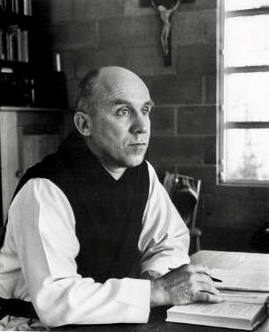
Thomas Merton in his cinderblock hermitage. (Credit: Wikipedia)


Oniontown Pastoral: Bartleby, the Faded Black Horse

Oniontown Pastoral: Bartleby, the Faded Black Horse

The truth arrived at dawn as I enjoyed the calm before facing another day: I see myself in a horse on the way to Oniontown.

My usual commute includes Route 19 South through the borough of Sheakleyville, but occasionally convenience sends me down Route 18 South through Adamsville, which with a population of 70 is too small to be called a village. According to the website “PA Home Town Locator,” it’s classified as a “Census Designated Place” (CDP)—a sterile title not even Norman Rockwell could warm up.

Of course, neither Adamsville nor any other spot on 18 requires charm from a New England artist. Amish homesteads dignify the land, with their clean white paint and good order. And a Presbyterian church, tall and well kept, keeps vigil over the CDP’s humble population. Most important for this spiritual traveler, I’ve found a soul brother on 18: a horse that is visible for a slim second or two as I pass by.

I’ve mentioned before in “Oniontown Pastoral” the blonde horse Onslow who lives along Route 19. Every trip to the St. John’s I check on him and think about him often, especially in winter when he wears a dusting of snow on his back. He doesn’t need me to worry about him nor do any of the farm animals. Our creator is present to us all in needful ways. I take that on faith.

But on 18 this faded black horse I named Bartleby just this morning draws me powerfully toward him. See, Onslow generally stands still when I drive by, but he chooses a variety of places in his yard to do so. Bartleby, on the other hand, is parked in the same spot 9 times out of 10. And a boring spot it is, beside a weathered gray barn with his muzzle an inch from the door. He is an evocative portrait.

I don’t know what Bartleby is thinking and can’t tell whether he is bored or depressed or tired. What I can say for certain is this: I’m generally happy, but sometimes if you could see my soul, it would resemble Bartleby.

Ah, Oniontown! Your fields bring me the peace that surpasses all understanding.

Both of us are in a daze lately, or so it appears. The horse’s gaze is fixed on the barn door, while the man’s is purposely averted from goings on in all quarters. The other day at St. John’s Lutheran Church I sat behind my desk and surrendered to the spell of the pine trees, soybean field and bright red barn out my window. The confession of Stephen King’s character John Coffey came to me as a prayer: “I’m tired, Boss. I’m tired of people being ugly to each other. I’m tired of all the pain I feel and hear in the world every day. There’s too much of it.”

I monitor the television news, read newspapers and permit myself snatches of social media. Society at present is a slugfest in a bar smelling of spilled beer and overflowing ashtrays. It’s a playground where bullies dispirit classmates with relentless name-calling. Or to set metaphors aside, it seems like what small claim gentleness, patience, compassion and simple honesty ever had on human behavior is being slapped away with a laugh and a sneer.

I’m talking about more than the drunken brawl that is government and the jousting match of international relations. A couple weeks ago, a friend’s daughter was riding on the school bus when some kid tossed a racial slur at her, prefaced with a predictable adjective.

“Why didn’t you speak up at the time?” a law enforcement officer later asked.

“Because I was afraid it would make it worse,” she answered. “And I was ashamed because I was black.”

When her father told me this story, anger was white-hot in my chest. Today, I’m mostly tired, Boss. This young woman’s sweet face shines in my imagination, and her words are too much to bear.

Still on the refrigerator in the Coleman house

Don’t misunderstand, I kindle hope within myself that kindness and wisdom may someday overcome violence and ignorance. But for now I have to look away, take a deep breath, reclaim the peace that surpasses all understanding and cling to the love that has claimed my life.

Tomorrow I’ll take Route 18 to Oniontown. Ah, Bartleby! If only I could stop and join you by the barn door, slide my arm around your long head and rest my face against yours. Maybe being together would comfort us, as only communion can do in a season beset with fury and rot.