Poem: “The Myth of Embracing”

Woman Lying Curled Up On Floor, Holding Head, B&w

“Like pines and doves unable to hug completely.” (Credit: Laurent Hamel / PhotoAlto / Corbis)

The Myth of Embracing*

Even in this furious sunlight,

the pine’s long arms form the promises

of circles, incomplete and longing for the sky,

where a mourning dove leaves curve trails

as its wings suggest huggings of the world

that just keep coming up with air—travel

is incidental. Our bodies curve, too.

The longest laugh, like pain, eventually

bends chest to knees, everything surrounding the heart.

When my daughter was born, her shocked eyes,

smeared face, jerking arms wanted something,

one perfect thing to calm the frigid light.

She screamed, like pines and doves unable to hug

completely. Embracing is a myth:

our arms grow strong for all we cannot hold.

42-23072140

“Our arms grow strong for all we cannot hold.” (Credit: Stewart Cohen / Blend Images / Corbis)

*Between 1986 and 1995 I published mostly poems. This one appeared in slightly different form in The Hampden-Sydney Poetry Review (Winter, 1991).

A House with Shaman Doorknobs

For over thirteen years the Coleman family has lived in a white house in Erie, Pennsylvania. If ever there were a house with soul, it’s 322 Shenley Drive. In its rooms wife Kathy, daughter Elena (twenty-five, now a married mother ten minute’s away), son Micah (twenty-two, working full-time and living at home), and I have known joy that wouldn’t let us stop laughing and sadness that had me, at least, looking at the bedroom ceiling at bedtime and praying: “I’d never take the life you gave me, God, but if you’re merciful, I’d be okay with not waking up in the morning.”

IMG_0904

A house with soul

This is a vulnerable admission, but as a pastor I’ve talked to so many people who have thought the same thing that I’m prepared to cut the crap. Some stretches in life are wretched enough to make you hope for a personal appointment with the One who promises to wipe away all tears. You can quote me on that.

But lately days are many stories above despair. (Did you just hear a rapping sound? That’s me knocking on every wooden surface within reach, including my own head.) As the blessing of being a rookie grandfather keeps pulling my lips into a smile, I’m finding it possible to glance backward without feeling a leaden weight in my chest or anticipating an ambush.

This morning–I’ve no clue why–I thought about doorknobs and what a rickety, inadequate collection we have in the Coleman house. I’m betting that among you indulgent folks reading this, nobody has such a crummy home full of doorknobs. What an impotent group! But as I went through the house studying doorknobs, I found myself visiting the last dozen Coleman years–tough years, but not without gladness. It was like looking at the jewelry of a loved one long gone. There was a fullness in the moment. That’s what the doorknobs were for me.

Front Door

IMG_1383

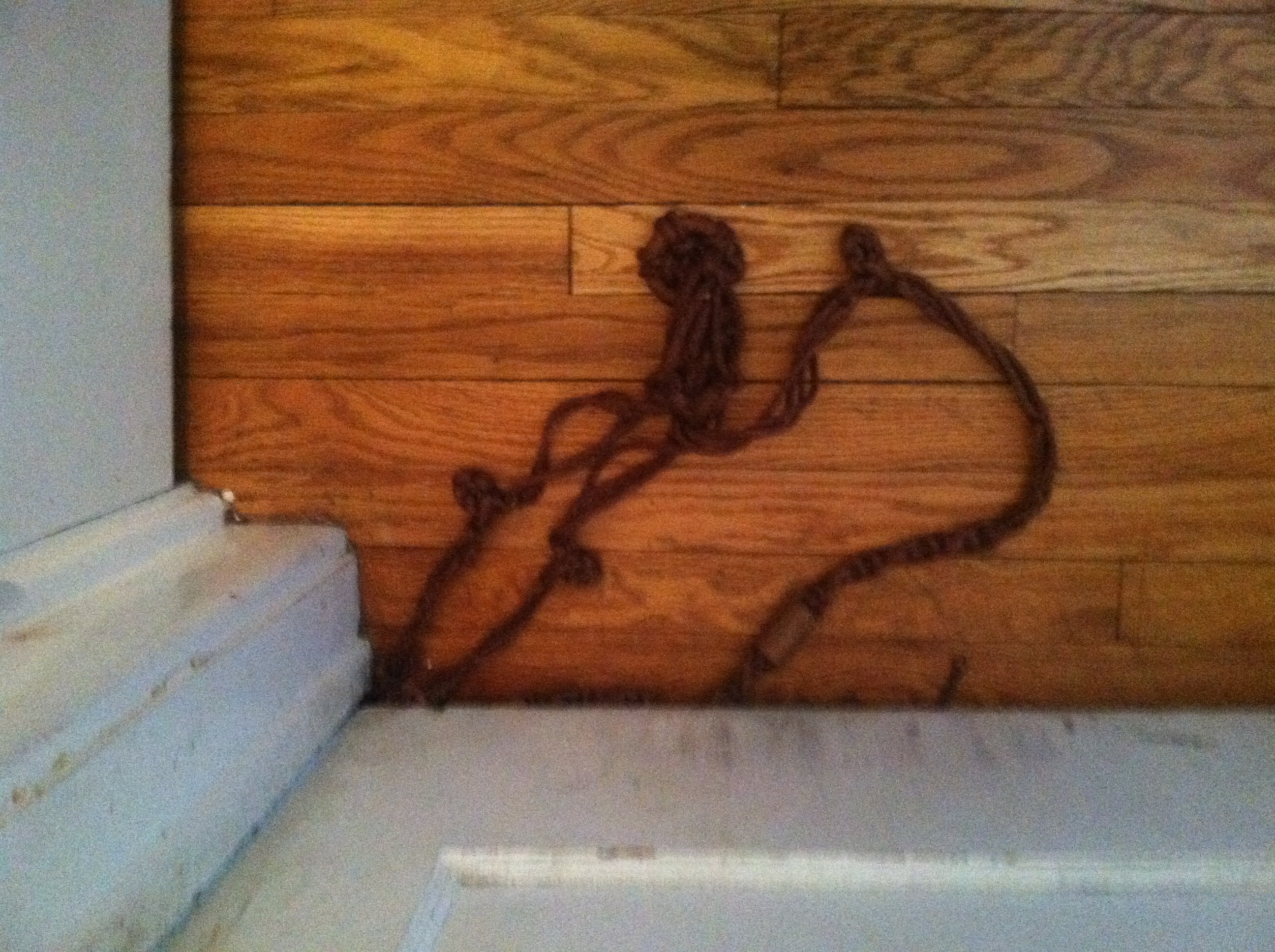
I don’t remember when the actual knob fell off, but for reasons I’ll never understand, we’ve never actually corrected the deficiency. Sure, we could get a whole new knob assembly, but that would make too much sense. Fortunately, this stump does allow you to exit, but there’s a technique involved. Years ago, it occurred to me that getting out required the exact movement used in giving somebody a counterclockwise purple nurple. Once during a particularly sophomoric evening, a guest looked at the stump and wondered what to do. I said, “Look, you want to get out, you have to pinch the nipple.” I said this without guessing that in our inappropriate home, my instruction would become a mantra. 

I’ve stopped hoping for a fix. In the Coleman story, the front door reminds me that some problems never go away, some simple inconveniences become squatters. I can live with this.

Bathroom Door 

IMG_1385

Ah, yes, one of those good, old-fashioned glass doorknobs. Let me tell you, they’re hotdog water. I’ve lost count of how many replacements I’ve installed, only to have them go to pieces in a month. I don’t even know where the model shown here came from. It just appeared up one day, and so far it has held together. Long after the house is gone, this doorknob may still be intact. It’s so tight a few days ago I heard Kathy shout after a shower, “Help! I’m trapped!” She’d put on lotion and couldn’t get any traction.

At various times we’ve stuck a pair of scissors in the empty hole, a slick solution, but understandably pathetic to visitors. I looked at this knob this morning and thought, “Yeah, well, you do what you can and laugh along the way.”

Upstairs Closet Door 

IMG_1389

I love this one. It works perfectly–no shimmying. And it’s the doorknob equivalent to power steering. Mmm. It’s also attached to one of the least used doors in the house. I suppose that’s Murphy’s Law of Doorknobs.

One of our cats, Baby Crash, is fond of sneaking in this closet when the door’s left ajar and then gets marooned inside. The teaching: a tool can be fantastic, but if I don’t make use of it, what’s the point?

Dining Room Double Door 

IMG_1388

Natural wood. Man oh man, am I a natural wood guy. Varnish, stain, polyurethane, oil: do whatever you want, just don’t slap white paint on every wooden surface in the house like my dad did. The only drawback to this door is that it’s nearly impossible to keep it closed. You hear it click, think it’s good, but next time you check the door has yawned open by its own will. This door and its knob remind me of having an easy-on-the-eye chef who overcooks your salmon. We have a couple other doorknobs that don’t do their jobs either, without the merit of being pleasing to look at.

Too many times over the years I’ve been cowardly and said, “Just let it be. Maybe the problem will get up and leave on its own.” At least in the case of the dining room double doors, I’m right. The door won’t close because the floor has heaved slightly, and I’m not about to fuss with it. The solution: the door and knob are attractive, even if they don’t work. Guess I can love them the way they are.

My Study Door 

IMG_1377

I come from a family of door slammers. When I was ten years old, my mother got really pissed, walked over to the basement, opened the door, and slammed it shut. Then she walked a few steps away, turned around, stomped back, opened the door again, and slammed it shut again. When Micah’s bedroom was in my present study, he did something to piss me off, but I didn’t engage in slamming. I just rammed the door open with my forearm. Who knows what set me off? All I can say is my study door won’t close until I do surgery with wood putty.

When I take responsibility for the damage, I’m quietly grateful. Who am I to scold somebody for poor choices or a destructive temper? I’ve got no business looking down on anybody.

Micah’s Bedroom Door 

IMG_1386

When son Micah was hooked on heroin, I refused to condemn him. I stood at his bedroom door as he slept this morning and remembered that in the shitland of active addiction, he was still quick witted, hilarious, and decent. I still crack up when I walk by Wilfred Brimley, “official sponsor of diabetis.” In my worst moments I despaired of Micah’s healing, but I always knew that if he came around, an exceptional young man would rise from the ashes. His doorknob is altogether missing these days, but who cares?

IMG_1380

Micah closes his bedroom door with a rope tied to a twenty-pound dumbbell. He’s content with this arrangement, and in our present doorknob context, so am I.

Kathy and John’s Bedroom and Closet Door 

IMG_1375

Bedroom and closet doorknobs put to good use

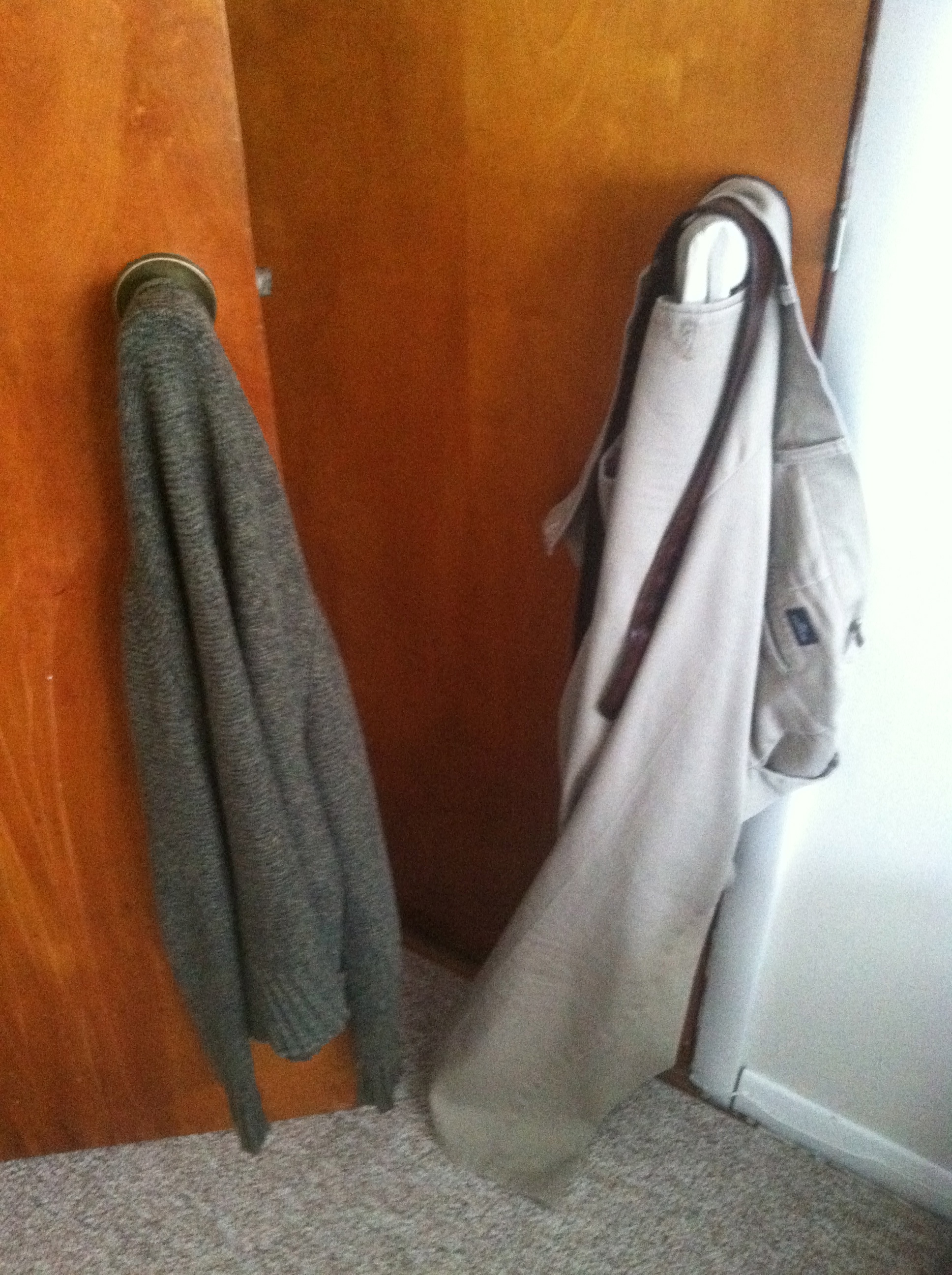
Elena and son-in-law Matt have now given Kathy and me a grandson, Cole. Micah, still under our roof, has his own life. We rarely close our bedroom door, so we hang clothes on our doorknobs.

In the end, I don’t give a rat’s rump about doorknobs. I care that loved ones can open needful doors and aching stories can be told.

Charles Darwin and Abraham Lincoln: Appreciations on Their Birthday

February 12, 2014: If Darwin and Lincoln were among the quick, they’d celebrate their 205th birthday today. I have a special love for both men and share these appreciations. This post is long, so you might need to consume it in two sittings. Hope it’s worth your time.

Happy Birthday, Charles Darwin, My Brother in Complaints and Conflict!

448px-Charles_Darwin's_grave_at_Westminster_Abbey

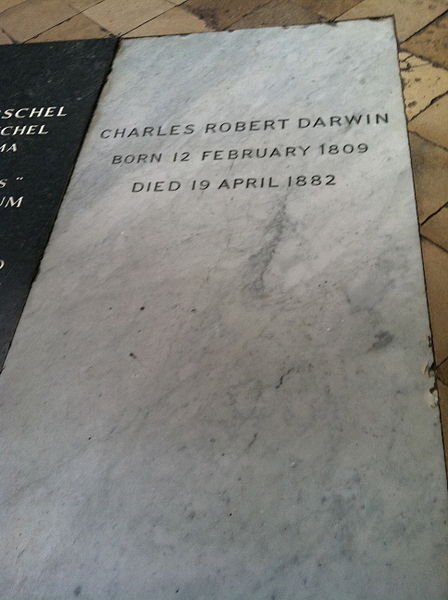
Charles Darwin’s grave: a little less grand than I would have thought (Credit: Wikimedia Commons)

David Quammen’s excellent biography, The Reluctant Mr. Darwin, notes that when the father of natural selection died, “the world . . . swooped in and claimed his body for history and posterity and the glory of British culture.” And the world “decreed that Charles Darwin be buried in Westminster Abbey,” which was ironic, since he was an atheist.

Biblical literalists would like to exhume Darwin and hose down his bones with holy water, but I consider him a planetary brother. Quammen describes the parallel development of Darwin’s transmutation of species and the onset of his health issues:

Darwin’s work on the transmutation notebooks coincided with his early complaints about what became chronic bad health. The symptoms were mysterious—jumpy heart, nausea, vomiting, headaches, nervous excitement, inordinate flatulence—but real enough to make him miserable and to slow his work. Was he a hypochondriac? A neurasthenic? Had he been bitten and infected by some nasty disease-bearing bug during a Beagle [the ship Darwin sailed on from 1831-36] stopover in Argentina? Many guesses have been made but nobody knows, to this day, what ailed him.

Inordinate flatulence–bummer. Fabienne Smith immediately and dryly states her theory about Darwin’s deal in her article “Charles Darwin’s Health Problems: the Allergy Hypothesis”: “The purpose of this paper is to buttress the evidence given in ‘Charles Darwin’s Ill Health’ [a previous article by the same author] for the theory that Darwin suffered from multiple allergy arising from a dysfunctioning immune system.” Sounds plausible, but I’m not about the read the whole thing. History.com presents its own list of guesses along with a few attempted remedies:

During Darwin’s lifetime, England’s most prominent physicians failed to decode the ailing naturalist’s jumble of symptoms. Their diagnoses ran the gamut from gout to appendicitis to hepatitis to mental exhaustion to schizophrenia, while the remedies they prescribed—lemons, Indian ale, hydrotherapy, arsenic, strychnine and codeine, among countless others—provided little relief.

An admirably researched Wikipedia article, “Charles Darwin’s Health,” lists “many hypotheses” for the man’s agony, including Crohn’s disease, panic disorder, Chagas’ disease, Meniere’s disease, lactose intolerance, lupus erythematosus, arsenic poisoning, hypochondria, migraine, cyclic vomiting syndrome, and chronic fatigue syndrome. That Darwin might have been cursed with even a couple of these conditions is frightening to imagine.

Editorial_cartoon_depicting_Charles_Darwin_as_an_ape_(1871)-1

Editorial cartoon of Darwin, 1871 (Credit: Wikimedia Commons)

The winner of my Scary Darwin Scholarship Award goes to Jerry Bergman, Ph.D., for his article “Was Charles Darwin Psychotic? A Study of His Mental Health,” which appears on the Institute for Creation Research website (icr.org). Bergman’s thesis is that mental health issues not only ruined the scientist’s body, but also led him to develop wacky theories. The article is part legitimate catalog of Darwin’s complaints and part smear job ala Lee Atwater and Karl Rowe. “Some speculate,” the author writes, “that part of Darwin’s mental problems were due to his nagging, gnawing fear that he had devoted his ‘life to a fantasy’—and a ‘dangerous one’ at that (Desmond and Moore, 1991, p. 477). This fear was that his theory was false and there was, in fact, a divine Creator.” (No, I’m not going to read the cited work, Darwin: the Life of a Tormented Evolutionist by Adrian Desmond and James Moore, but I did check the Publishers Weekly and Library Journal review excerpts on Amazon.com, and both sing that biography’s praises. I might be wrong, but I bet Desmond and Moore wouldn’t appreciate the use Bergman makes of their words.)

Bergman also hits below the belt when he implies that Darwin’s scientific conclusions are flawed because he passionately loved shooting birds as a kid, which points to a “sadistic streak” that “may have, in part, motivated his ruthless ‘survival of the fittest’ tooth and claw theory of natural selection”; because he referred to committing suicide when writing to fellow scientist Robert Hooker about his upset over the writing quality of one of his books; because author Clifford Picover wrote that Darwin treated his wife and adult daughters like children; because “Darwin exhibited the obsessional’s trait of having everything ‘just so’; he kept meticulous records of his health and symptoms like many obsessional hypochondriacs. Everything had to be in its place; he even had a special drawer for the sponge which he used in bathing.”

Charles_Darwin_by_Barraud_c1881-crop-1

Darwin’s wife wrote him a letter in 1839 expressing her fear that they wouldn’t spend eternity together. After his death, the following addition was found at the bottom of her letter–a loving atheist’s attempt at comfort? “When I am dead, know that many times, I have kissed & cryed over this. C. D.” (Credit: Wikimedia Commons)

The article’s final sentence nails down what the author has been getting at all along: “To understand Darwin as a person and his motivations, one must consider his mental condition and how it affected his work and conclusions.” Bergman’s claim that Darwin’s scientific conclusions are flawed because he had mental and physical issues is like saying that a singer has an unappealing voice because he sleeps around: non sequitur. What singers do with their junk has nothing to do with their vocal cords and breath control; and the fact that a scientist needs therapy and meds doesn’t mean he’ll do biased research. If anything, in Darwin’s case I’m betting Bergman has the situation backwards. Darwin’s troubled constitution and psyche didn’t skew his scholarly work; rather, his health went into the chamber pot in part because his thinking was so contrary to the assumptions of his day, not to mention deeply troubling to his wife, a devout Christian; Quammen’s speculations, in fact, head in this direction without coming across like a conspiracy theory.    

Charles_Darwin

Charles Darwin at 45 years old. (Credit: Wikimedia Commons)

In the end, as Quammen writes, “nobody knows . . . what ailed him.” I’m looking at a photograph of Darwin at around age forty-five, seven years my junior, and feeling a connection. If only he could have picked up Atenolol, Prilosec, Zoloft, Xanax, Beano, and other modern medications at the apothecary, his suffering might have been manageable.

And if only Darwin could have enjoyed a daily siesta rather than taking to his bed for months at a time. Illness leeched years of work off of what was already an amazingly productive life. What’s worse, more profound discomfort still resided in a place microscopes can’t get at. Employing quotations from Darwin’s letters, Quammen playfully describes the scientist’s fragility—and mine:

[Darwin’s] doctors had advised him to quit work and get a country vacation, he added, and he was taking their advice. ‘I feel I must have a little rest, else I shall break down.’  After a few weeks home in Shrewsbury, with his father and sisters [in the fall of 1837], he reported again . . . that ‘anything which flurries me completely knocks me up afterwards and brings on a bad palpitation of the heart.’ Social gatherings flurried him. Intense conversations flurried him. Conflict, or the very idea of it, was highly flurrisome.

The last part makes Darwin my kin: the slightest prospect of conflict is nearly incapacitating, flurrisome—spot-on for both of us. Flurrisome Charles had the brains. Flurisome John has the meds and the afternoon nap.

200px-Charles_Darwin_01

The Darwin we all know and love. (Credit: Wikipedia)

The part of Darwin’s story I love best takes place when he was near death. As he suffered through the final stages of heart disease, he continued to work as his body permitted. Quammen explained that a colleague who knew of Darwin’s interest in the migration of plants and animals discovered a clam attached to a beetle and wondered if this oddity might indicate that a sea creature could migrate by attaching itself to a bird. The colleague mailed the beetle/clam to Darwin so that he could look for himself. By the time he received the box, the clam and beetle had separated, and the former was dead, the latter languishing. As Darwin wrote the sender, he placed the dying beetle in a jar with torn up laurel leaves, which exuded a chemical that would help the poor thing relax and die in peace. Darwin himself followed the beetle into eternity about two weeks later. So even as one of the most brilliant minds in history was dying, he took time to ease the suffering of a beetle. Darwin considered himself an atheist. So be it. I call him “brother.”

Happy Birthday, Abraham Lincoln, My Weary, Burdened Brother!

170px-Abraham_Lincoln_O-116_by_Gardner,_1865-crop

Abraham Lincoln about two months before his assassination–such tired eyes. (Credit: Wikipedia)

A couple years ago on this day’s A Writer’s Almanac, Garrison Keillor told me a couple facts I didn’t know about Abraham Lincoln—facts that make me doubly grateful for his stay in the White House.

The first has to do with Lincoln’s “Gettysburg Address,” which is one of the most beautiful pieces of prose in the English language. Since it’s short—only 272 words—I’ll include it here:

Four score and seven years ago our fathers brought forth on this continent, a new nation, conceived in Liberty, and dedicated to the proposition that all men are created equal. Now we are engaged in a great civil war, testing whether that nation, or any nation so conceived and so dedicated, can long endure. We are met on a great battle-field of that war. We have come to dedicate a portion of that field, as a final resting place for those who here gave their lives that that nation might live. It is altogether fitting and proper that we should do this.

But, in a larger sense, we can not dedicate—we can not consecrate—we can not hallow—this ground. The brave men, living and dead, who struggled here, have consecrated it, far above our poor power to add or detract. The world will little note, nor long remember what we say here, but it can never forget what they did here. It is for us the living, rather, to be dedicated here to the unfinished work which they who fought here have thus far so nobly advanced. It is rather for us to be here dedicated to the great task remaining before us—that from these honored dead we take increased devotion to that cause for which they gave the last full measure of devotion—that we here highly resolve that these dead shall not have died in vain—that this nation, under God, shall have a new birth of freedom—and that government of the people, by the people, for the people, shall not perish from the earth.

Abraham_Lincoln_life_mask

Abraham Lincoln’s “life mask” from 1860–better than a death mask. (Credit: Wikimedia Commons)

Lincolnatgettysburg

Lincoln at Gettysburg just after delivering his address. (Credit: Wikipedia)

I already knew that Lincoln wrote this address on an envelope during his train ride to Gettysburg. What I didn’t realize was that the dedication of the cemetery, situated on the ground where hundreds of soldiers were buried quickly in shallow graves after the battle, was a grand, carefully planned affair with fifteen thousand people attending. Edward Everett, who was famous for his speeches about battlefields, went on for over two hours cataloging the battle’s endless instances of bravery and valor. When he finished, Lincoln read his slender 272 words. By the time the event’s photographer got set, his subject had already sat back down; he managed one blurry shot.

So restrained was the audience’s applause that Lincoln assumed his speech was a failure. Little did he know a century later school kids would be required to memorize his address, and English and history teachers would regard Lincoln, a politician, as one of the most gifted writers of his generation. Everett, however, knew a great speech when he heard one. The next day he told Lincoln, “I wish that I could flatter myself that I had come as near to the central idea of the occasion in two hours as you did in two minutes.” Of course, maybe Everett was mainly stroking the President’s ego.

The second Abraham Lincoln story Garrison Keillor told had to do with a letter the President is thought to have written to Mrs. Lydia Bixby, a widow who supposedly lost five sons in the Civil War:

Dear Madam,–

I have been shown in the files of the War Department a statement of the Adjutant General of Massachusetts that you are the mother of five sons who have died gloriously on the field of battle.

I feel how weak and fruitless must be any word of mine which should attempt to beguile you from the grief of a loss so overwhelming. But I cannot refrain from tendering you the consolation that may be found in the thanks of the Republic they died to save.

I pray that our Heavenly Father may assuage the anguish of your bereavement, and leave you only the cherished memory of the loved and lost, and the solemn pride that must be yours to have laid so costly a sacrifice upon the altar of freedom.

Yours, very sincerely and respectfully,

A. Lincoln

Lincolnatpeace2

Retouched post-mortem photograph. (Credit: Wikimedia Commons)

Oddly, Mrs. Bixby didn’t lose five sons. She lost two in battle; one deserted, one was honorably discharged, and another either deserted or died as a prisoner of war. Don’t misunderstand! This poor mother deserved every condolence she received, but the facts differ from those that inspired the President—if he wrote the letter at all. Some historians now believe that Lincoln’s famous letter to Mrs. Lydia Bixby was actually written by one of his White House secretaries, John Hay. Whatever: if Lincoln had such a gifted writer on his staff, I’m willing to call that moving letter co-authored.

Do any of these historical facts matter? They do to me. And I bet Lincoln would have cared on November 19, 1863, as he sat down after giving his 272-word address, to know that his speech was much better than he first thought and that history would judge him a courageous President, a wise man, and an elegant writer. But how could he have known, that man in the grainy photograph with the weight of millions of Americans on his tired shoulders?

I pray today that in repose he hears me call him brother.
Micro-Post: 7:00 a.m. A Renegade Smile at My Non-Toothache

42-18561487

A photograph of something not wrong. I smile at the avocado. (Credit: Pulp Photography / Corbis)

When we have a toothache, we know that not having a toothache is a wonderful thing. “Breathing in, I am aware of my non-toothache. Breathing out, I smile at my non-toothache.” We can touch our non-toothache with our mindfulness, and even with our hands. When we have asthma and can hardly breathe, we realize that breathing freely is a wonderful thing. Even when we have just a stuffed nose, we know that breathing freely is a wonderful thing (From Thich Nhat Hanh’s “Life Is a Miracle” in Essential Writings, Orbis Books, 2001).

42-23071128

Nice lotus position! Yeah, this is not me because: I weighed more than this guy when I was born; I avoid neckties; what he’s doing with his legs would put me in the hospital with a fractured pelvis and a concussion from falling off that filing cabinet. (Credit: Plush Studios / Blended Images / Corbis)

I sit up straight against my husband (that would be a sit-up-in-bed pillow), put the soles of my feet together, and draw both heels in—a pudgy guy’s lotus position. A couple minutes ago, Kathy pulled back the covers: “I really have to get up. Got to shower.” She loves me, understands I’m trying to bounce back from a tough emotional stretch. But it’s one thing to love someone, another to grant marital patience to a neurotic spouse since 1983.

IMG_0515

A husband pillow–mine, in fact.

That’s where today’s renegade prayer begins. The idea is to breathe and abide in Divine Love, not to glom onto thoughts, but gratefulness takes over. I smile at my wife.

My right knee rests against nap and prayer partner Watson’s back. I smile at my dog.

Micah’s turbo alarm goes off. Soon I’ll drive him to work. I smile at my son, at his sobriety, at his zealous work ethic. I knew it! I knew he had it in him! Proud.

IMG_0767

You show that wall who’s boss, son! I smile at you.

Yesterday daughter Elena, son-in-law Matt, and grandson Cole came over for Matt’s birthday: California melts and chicken noodle soup. I smile at food, shelter, and love that pours out more than my cup can hold.

The church I serve is full of compassion. I smile at my sisters and brothers, all of us trying to love our way through this crazy world.

And my teeth are okay these days. No throbbing, no cracked incisors. I smile at my non-toothache.

IMG_0850

The kindest depiction of my teeth ever, courtesy of Meghan, hangs on my office door.

A few years ago: I had bronchitis and cracked a rib coughing; my dad was sobbing and howling his way through dementia; my naps were delicious only because they were an escape. I smile at my clear lungs. I smile at you, Dad, resting in the lap of mercy. I smile at 3:00 p.m., the gentle rest that’s no longer about survival.

And I have you, sisters and brothers visiting A Napper’s Companion. I smile at you, and in this final moment before Amen pray you are whole and at peace.

IMG_0023

Wholeness and peace. A view from the deck of Scholastica, a hermitage on stilts at Mount Saint Benedict Monastery, Erie, Pennsylvania.

Micro-Post: The Hug

6:35 p.m.: Kathy and I are in the kitchen, listening to Scott Pelley tell us that terrorists may smuggle ingredients for explosives onto planes in toothpaste tubes. If airlines forbid passengers from bringing toiletries to the Sochi Olympic Games, lots of athletes and fans are going to get funky. But maybe they won’t get blown up. Who knows?

800px-Toothpaste

Ultra-Bright gives your mouth . . . KA BOOM! (Credit: Scott Ehardt)

Kathy nursed ten patients today. Tired, boss. Dog tired. While I stare at the anchor’s face, she has the obituaries spread out on the counter. “Oh,” she says. Silence, then again, “Oh.” She’s cared for them, heard their stories. Compassion and science haven’t yet eliminated cancer’s mad attrition rate. Damn it!

What to do? Mercy’s gravity draws Kathy and me into a hug, a long one. We sway, almost dance. Breathe in, breathe out. I rest my lips on her hair, receive thirty-three years of home.

IMG_1355

On the kitchen sill, light draws life into an embrace.

That’s what this hug is: home. Shenley Drive and Erie are great, but they’re not my earthly residence. I’m at rest here, in Kathy’s arms, her graying hair against my cheek. Explosions and funeral arrangements are white noise. Where two or three are gathered . . . yes, the Holy Mystery shares our breathing. Hosanna! Save us! Shamatha. Abide in calm.

42-17217401

Probably what Kathy and I look like: a couple of Japanese macaques hanging on to each other. Home sweet home! (Credit: DLILLC / Corbis.)

A minute isn’t enough, but it’ll do. “You should go sit in bed,” I say. “Rest. I’ll get dinner.”

So Kathy goes upstairs, and I make meatloaf and sweet potato fries and listen to Leon Redbone: “Ain’t Misbehavin’”; “Mr. Jelly Roll Baker”; “My Melancholy Baby.” Come to me, my melancholy baby. Cuddle up and don’t be blue.

IMG_1364

Kathy with the best medicine for melancholy: grandson Cole! She loves me but doesn’t giggle like this when we hug.

We eat in bed and fall asleep early, blessed to have house and home. We wish the gorgeous, dynamite world around us grace and peace.

IMG_1359

Gorgeous: winter trees on Shenley Drive

Epiphany on a Planet of Cautionary Dreams

IMG_1331

Mary and Joseph still adoring Jesus on January 10th at Mount Saint Benedict Monastery in Erie, Pennsylvania.

It’s January 23rd: the magi have come from the East; knelt before the Christ child; offered their gifts of gold, frankincense, and myrrh; and were granted their epiphany. Then, “having been warned in a dream not to return to Herod, they left for their own country by another road.” By January 6th, the Epiphany of Our Lord, I imagine most crèches had already been wrapped in old newspaper and set in a dark place for eleven and a half months of hibernation.

IMG_1297

Baby Crash enjoying the extended Epiphany.

The Coleman household has the strange habit of allowing the Christmas/Epiphany celebration to linger. It was only a week ago that Kathy put the ornaments, decorations, and snowmen in Totes, which now wait for me to lug them upstairs to storage. We’ve stretched the season into early February, but don’t have a set date for pulling the plug. When an afternoon or evening opens up in mid- to late-January, Kathy intuitively knows it’s time to go back home to our normal country.

IMG_1301

Stop and breathe, John.

I know Christmas/Epiphany has to move on, but I miss the spell our living room casts on me in December and January. Give me reds and greens. Give me lights that hold me back like a mother putting out her hand to keep her child safe when she brakes hard. Give me “good tidings of great joy,” even if the tidings are inconspicuous: You have a warm, dry, lovely house on a planet of cautionary dreams. Stop and breathe. Pay homage.

Peter_Paul_Rubens_-_Massacre_of_the_Innocents_-_WGA20259

Peter Paul Rubens’ “Massacre of the Innocents,” 1636-1638 (Credit: Wikipedia)

There is one jab to the solar plexus between Christmas and Epiphany. On December 28th, many Christian churches commemorate the Massacre of the Holy Innocents. The Gospel of Matthew recounts Herod’s indiscriminate attempt to kill Jesus, the promised King: “[Herod] sent and killed all the children in and around Bethlehem who were two years old or under, according to the time that he had learned from the wise men.” No historical evidence of this slaughter exists, but current events keep proving that Matthew’s account may not be factual, but it’s true.

Unicef reported last December that the United Nations Security Council passed a resolution regarding the Central African Republic: “Action must be impartial and swift to stop the targeting of children, to protect schools, health facilities and transit centres, and to provide care and support to victims—with no impunity for the perpetrators of these outrages against children.” So suits pass edicts, and mothers weep for their children and refuse “to be consoled, because they are no more”—in Newtown, Damascus, and Bethlehem.

IMG_1350

Homage at Abiding Hope on January 23rd. The magi have come so far, and I’m putting off asking them to leave.

The whole Christmas/Epiphany story, with the shepherds “sore afraid” and the star “at its rising” and Mary wrapping her son “in swaddling clothes,” conflates with Rachel’s “wailing and loud lamentation” and leads me to shamatha in Erie, Pennsylvania. Cultures and centuries away from a child lying in a manger in the city of David, I keep epiphanies coming with calm abiding and leave a tree and crèche standing in my soul.

This practice is more about disposition than decoration. If only I could receive the simple, moving, miraculous story of Jesus’ birth without qualifications: Mary and Joseph had to travel from Nazareth to Bethlehem for a stupid census; Jesus was born alongside manure and slept in a feedbox; an angel warned Joseph in a dream to flee with wife and son to Egypt to escape Herod’s threat; and—like I said, more truth than fact—a king slaughters pretty ones to fulfill a prophesy.

Genocide_Victims_Rwanda_Photo_by_Sascha_Grabow

Come, dry bones of Rwanda, rise and dance in my soul. (Credit: Sascha Grabow)

The problem is, I can’t tolerate sanitized stories. Edit out or ignore the darkness and danger, and Matthew’s and Luke’s narratives are insulting, and the Coleman family’s celebration is ignorant and selfish. What does it say when I tear open presents on Christmas morning while at least one arm of my spirit isn’t cradling Rwanda and Littleton? How comforting is the artificial tree beside the fireplace if it withholds its glow from distended bellies and limbs abbreviated by machetes?

The point: I’m in no hurry to get the living room back to its usual arrangement. If nothing else, a nap on the couch with a fire going and the tree lit is a rare blessing. Sleep isn’t required. It’s enough to doze, let the colors blur through half-opened eyes, and listen to the wood’s snap and crackle.

I’m a challenging person to live with. The Christmas/Epiphany living room needs no excuses; it’s beautiful and that’s enough. There’s no particular reason that it couldn’t be an embracing escape from planetary absurdity and rage, from each day’s disappointments and injuries–this and no more. So why do I insist on complicating a peaceful sanctum? Because my Epiphany shamatha whispers, “Invite everybody in. Let them have a safe place, even if that place is your soul.”

IMG_1353

A lone snowman remains on the mantle: “Welcome. Come in from the cold.”

This morning in the car, Micah and I learned on National Public Radio of an innocent who will visit my spirit tonight as I sit by the fire. Reuters reports that “a 20-year-old woman in eastern India was gang-raped by 13 men on the orders of a village court as punishment for having a relationship with a man from a different community, a senior police officer said on Thursday . . . . Police said that her male companion was tied up in the village square, while the assault on the woman happened in a mud house.”As we rode in silence, I looked over at my son. He was shaking his head, eyes closed—momentary curtains drawn against evil.

IMG_1287

It’s warm here, distant daughter. I’ll put a blanket down for you. Rest. You’ll be safe.

The father in me speaks words that will never reach the young survivor in her hospital bed: “Holy Child, come sit on the hearth. Bring your forbidden lover. I’ll put lights back on the tree. Cry and scream if you want. I’ll keep the fire going, bring tea for your aching throat, warm bread to feed your broken body.”

My Indian daughter will be staying indefinitely. In my spirit inn that sings and sighs, where the tree and crèche live a seamless Epiphany, joy is sacred only if there’s room for every traveler’s wounds and tears.

The Song of a Frozen Thrush

I was getting cherry tomatoes from the basement freezer to make marinara sauce when I remembered a karmic coincidence. It happened a few years ago and was so unlikely and sacred that I took the bizarre step of freezing the evidence—a dead Swainson’s (or olive-backed) thrush.

220px-Catharus_ustulatus_-North_Dakota-8a

Swainson’s thrush (Credit: Wikipedia)

I first wrote about this handful-of-a bird a couple years ago while on a train to Florida to visit my dad and step-mother, both of whom were in an Edvard-Munch-spiral of dementia:

The_Scream

Edvard Munch’s “The Scream,” 1893. Can a serious painting be a cliche for despair? Maybe, but it fits. (Credit: Wikipedia)

“The lights have gone off and engine and ventilation moans have stopped. As the Silver Meteor sleeps for what we’re told will be fifteen minutes, I remember Swainson’s thrush. Named after 19th century ornithologist William Swainson, the thrush takes numerous micro-naps during the day, each of just a few seconds, according to hras.org—like naps on the train. Passengers nod off for a minute, until the car jerks or somebody walks by and brushes against them or a grizzly old guy hacks cave breath from one seat back to their nose—my present situation. Then they strain their eyes open a slice, shift position, and nap again. 

© Copyright 2011 CorbisCorporation

Please! Nobody, woman or man, looked this together on the train from Pittsburgh to Orlando. We were all visual renderings of halitosis. (Credit: corbisimages.com)

“Sometimes I myself check things out with one eye because the annoyance isn’t worth the effort of pulling both open. In this I imitate Swainson’s thrush. Saul Scheinbach describes the nifty mental trick this bird and others use to sleep and prevent getting eaten at the same time:

“’Scientists found that when the birds were in a migratory state, they reversed their activity cycle, resting during the day and becoming active at night. As a result daytime ‘drowsiness’ (eyes partially closed) increased, but total sleep time dropped by 67% as compared to birds in the non-migratory state. To partially compensate for this sleep loss migratory birds took daytime micro-naps with one or both eyes closed. These episodes occurred during periods of drowsiness and lasted about eight seconds each. The team suspected that unilateral eye closure (UEC) during the micro-naps allowed one brain hemisphere to sleep while the other stayed awake to avoid predation.’

© Copyright 2010 CorbisCorporation

Little thrush, you are getting sleepy, very sleepy. (Credit: Herbert Spichtinger)

“Scheinbach goes on to report that the research team referred to here went on to prove their suspicions true and adds tongue-in-cheek speculation: ‘UEC has also been observed in ducks, whales and dolphins, indicating it may be more widespread across the animal kingdom. Perhaps humans exhibit some form of UEC too. I recommend testing college students during exam time and security guards at night.’” Har har.

The mission to Florida, via Amtrak for fear of flying, failed. My father and step-mother refused to move into assisted living. To their neighbors’ dismay, they hunkered down in their Bastille of anguish and confusion for several more months. The trip’s only grace was long stretches of writing on the train and dozens of naps taken like a migratory animal.

Back in Erie, bummed about such a dreary use of vacation time, I showed up at the church and found what looked like a Swainson’s thrush lying dead on the sidewalk. I imagined it flew into the glass door and fell into my path. It was perfect, as if it had taken a macro-nap until I arrived. What were the odds? A sage bird I read and wrote about but never met lay before me in repose. I’m not much for signs, but I know a wonder—albeit a dark one—when I see it.

IMG_1277

I think you’re a Swainson’s thrush–anyway, sing. I’m listening.

So I picked the thrush up, wrapped it in napkins until I got home, and froze it in two sandwich bags. True, keeping a tiny cadaver in your freezer is morbid, gross, weird, whatever, but I wanted to hang onto Swainson’s thrush. We had a conversation pending, but after watching my dad flail about in dementia’s white caps and refusing rescue, I had no shamatha left to imagine what a dead bird might say to me.

My shamatha may not be functioning any better than when I stepped off the Silver Meteor all those months ago, but lately gifts have landed in my path, both quick and dead, and I suspect they’re in formation with Swainson’s thrush. Just now I reached into the basement freezer and returned to the dining room table. Again I laid napkins down and took hold of the body, this time expecting freezer burn. But no. Its wings have darkened, but otherwise it looks the same as the morning I found it.

Had the thrush offered itself to me? Ah, a trite thought, spiritual kitsch. But regardless of her intent, she’s been teaching me. If you can’t nap for an hour, take thirty minutes. Too busy for twenty minutes of prayer? Do ten? Savor three bites rather than swallow ten whole. A truckload isn’t preferable to a teaspoon.

In fact, as one who takes in everything from memoirs to avocados to Starbucks coffee way too fast and in embarrassing quantities, I believe Swainson’s thrush may be trying to lengthen my days. Receive staples, luxuries, and blessings in small portions, you middle-aged glutton!

photo-18

Micro-blessing Cole sleeps on macro-blessed John.

I’m breathing, listening for this frozen bird’s song. (Lord, help me.) Micro-graces have been appearing, and fortunately I’ve had one eye opened to notice them. They’re all singing to me mercy within mercy within mercy.

Neighbor Patrick, Shenley Drive’s Down’s-syndrome sage, just turned twelve, but his boy-wisdom isn’t getting all mature, fussy, and sophisticated. He lives in a relentless now; I wonder if what the world regards as a deficiency is really an absence of intellectual clutter and absurdity. He does his best to teach the neighborhood. Sometimes we pay attention.

IMG_1285

Patrick: Let’s play! I’ll be Superman.

Friend Mary posted the following on her Facebook page: Foster & Help Needed! “Noel–The Christmas Kitten”: This little kitty was found tonight after she crawled up through a heating vent into a house in Millcreek. We assume she went in to try to keep warm. She is very sweet, and just wants to be held and cuddled. As you can see, she is emaciated and obviously has been on her own for some time. Orphan Angels Cat Sanctuary and Adoption Center will be overseeing her care, and a vet appointment has been made for her first thing in the morning. She needs a good foster home until she can get strong enough to be ready for adoption. Orphan Angels could also use donations for this little one. This case was unexpected, but they want to make sure she gets the help and care she needs. Anyone interested in fostering, please call Eileen at 814-504-3246 to be screened. Donations can be made via paypal on the OA website: http://orphanangels.weebly.com/.

Mary and husband Mike agreed to take Noel in, knowing she’d need a couple months of care before a permanent adoption would be possible. Noel didn’t survive, though. Mary writes, “I am at least grateful she had warmth, food and love in her last days.” And I’m grateful for friends’ yes to one of my frozen thrush’s forgotten sisters. Mary and Mike quietly hugged the world.

1501811_679531342087564_2145279789_n

Noel, Swainson’s thrush’s little sister. Her eyes teach me.

This Christmas week my brother Ed asked if I had our Grandma Miller’s molasses cookie recipe. He made some on his own and said they were hockey pucks. We looked in a family cookbook without luck. In passing he also mentioned that Gram made a batch of those cookies once a week because Earl (Gramp) loved them. This hardly seems worth sharing, but the idea has stayed with me, especially since Gram’s body was gnarled with arthritis. Her cherubic face was always pursed with pain. “So much depends upon a red wheelbarrow,” William Carlos Williams wrote. Correct. A red wheelbarrow and a molasses cookie.

42-39795207

Dora Miller’s molasses cookies weren’t so puffy. I never knew I’d want a picture of Earl’s favorite someday. (Credit: corbisimages.com)

Also this week, parishioner Bob and his grandson Gabe stopped by the church to do some cleaning. When they came into my office, I crouched down and said to Gabe, “Hey, you got a hug for Pastor John?” He smiled and let me have it. For him it must have been like hugging a sequoia. For me it was one regulation clergy hug—until I tried to pull away. Gabe hadn’t gotten the memo that this was to be a micro-embrace. A Swainson’s thrush-preschooler passed his goofball minister a universe of grace without realizing it.

Father Comforting Son

A standard hug micro-heals me for days. (Credit: corbisimages)

When an olive-backed bird is your mentor, even a fart can be a blessing. Yes, you heard me: a fart. (Roll the r. It’s more fun that way.) Friend Abby recently shared this laugh on Facebook:

Conversations with my 4 year old. Take two.

Keenan: FLURRRP!

Me: Hah! That was quite a toot!

Keenan: (Very serious) that wasn’t a toot momma.

Me: It wasn’t? Sure sounded like one to me! What was it then? A fluff? A fart? Did you shoot a bunny?

Keenan: No momma. None of those. My butt blew you a kiss.

I accept Abby’s word (If I’m lyin, I’m dyin!) that Keenan came up with his own version of the scene in Chaucer’s The Miller’s Tale in which Nicholaus “anon let flee a fart.” In the heart a four-year-old boy, such a kiss is precious, not to be wasted. The point: I need Swainson’s thrush’s strangest song to make me laugh and drag me out of the terrible squirrel cage of self .

© Copyright 2013 CorbisCorporation

Sniff. Oh, that was supposed to be a kiss. Why, thank you. (Credit: Lars-Olof Johansson)

Because my olive-drab bodhisattva hasn’t finished saving me yet, I’ve returned her to the morgue. Such power! Even frozen she sings to me: “Creation screams and groans, but shh. Do you hear the descants of grace and mercy?” 

394px-Jiuhuashan_bodhisattva_image

A bodhisattva with many wings. (Credit: Nat Krause)

Light and Life Versus the Execution of a Shadow

42-19675563

Santa Claus on Black Friday (Credit: Jason Stang)

Crying sits in my chest and leans on my throat. Zoloft be damned, I’ll be wiping away tears before this Black Friday of 2013 is over—tears and snot.

(Blogger’s Note: I apologize in advance for some of what follows. This post should be an outburst of  joy, but if you’ve been sticking with me any length of time, you know I try hard to be emotionally honest. So I’m going to tell the truth.)

I’d planned on being a curmudgeon today about Black Friday’s syphilitic insanity infecting Thanksgiving. I have lots to say about that but will hold off for a while. Instead, I’ll share the e-mail and Erie Times-News story that are making this 8:50 a.m. at Starbucks complicated. Bad news first.

Alois_Alzheimer_003

Alois Alzheimer, official sponsor of Alzheimer’s disease (Credit: Wikimedia Commons)

Headline on page 2-A of the Erie Times-News on November 29, 2013, right under a lovely piece by Kevin Cuneo about the luscious scents of Thanksgiving cooking overcoming his dog’s skunking of the family home: “Man fatally shoots roving Alzheimer’s patient.” Here’s the story (skipping paragraph breaks):

CHICKAMAUGA, Ga. – Authorities in northwest Georgia said a man shot and killed a 72-year-old he thought might be an intruder but turned out to be a wandering Alzheimer’s patient. Walker County police told the Chattanooga Times Free Press that Ronald Westbrook had walked about 3 miles in the sub-freezing temperatures before knocking on Joe Hendrix’s door just before 4 a.m. Wednesday. Hendrix’s fiancée didn’t answer, instead calling the police. Sheriff Steve Wilson said before deputies arrived, Hendrix went into the backyard with his handgun, where he saw Westbrook in silhouette. Wilson said the 34-year-old Hendrix recalled giving Westbrook several verbal commands, but the advanced Alzheimer’s patient didn’t respond. Hendrix then fired four shots. Wilson said charges could be filed but that Hendrix didn’t violate any laws by walking out into his own yard.

© Copyright 2010 CorbisCorporation

Robber! Rapist! Murderer! Oops, sorry. Just an old guy. (Credit: Jesse Reardon / Twila Reardon)

I don’t think walking out into his yard was the objectionable part! Some months ago I shared a post entitled Viewing Dad’s Death Loop at Gethsemani in which I described my father’s dementia. I’m the proud owner of a I Survived My Parent Going Bat Crap t-shirt. For me, it wasn’t Ronald Westbrook knocking at Joe Hendrix’s door. The man’s name was Denny Coleman, he was eighty-five, and he was so far gone that while staying at my house, he wandered into the wrong room in the middle of the night and pissed in my clothes basket. It was my confused, tormented dad who, lost and freezing, knocked on a door. When nobody answered, Dad walked into the backyard and stood in the corner, in the dark. Some guy started screaming at him, but since he couldn’t even remember whether his son was his son or uncle or brother or father, he stood there silently. Then Hendrix shot my dad’s silhouette four times. Then Dad wasn’t flummoxed or agonized anymore.

IMG_1183

That should about cover it.

That’s how I processed the article. Conveniently, as I sat breathing, “White Christmas” played in the background, with Bing Crosby whistling like my dad used to. Of course, I also immediately thought of the woman in suburban Detroit who knocked on a door in the middle of the night because her car broke down and ate lead for the effrontery. God didn’t make enough tears and the devil didn’t make enough expletives to communicate my sadness and rage. If Hendrix had actually shot my dad, the upset would rise to another terrible height, but I’m just saying that 133-word story out of Chickamauga has sucker punched a once-in-a-lifetime morning. No worries. I’ll work the ache out of my jaw, pop four ibuprofen, and move on to today’s best news story, which showed up via e-mail:

Hi John Coleman,

Did Elena call you? She is in early labor, dilated three, probably gonna have the little guy today. If you feel the love, would you bring me a Starbucks after you leave? How am I gonna concentrate today?????????????????????????????????

Love you, soon to be grandpa

IMG_1184

Yes, soon-to-be grandma, I’m feeling the love.

(Yes, my wife calls me John Coleman.) If question marks are any indication, Kathy is giggling and jitterbugging at work, The Regional Cancer Center. As soon as I read her note, that cry I mentioned rose in my chest. It will come out in its own time.

Like Dr. John Watson, I’m guilty of telling this story wrong-end foremost. As it happened, I read Kathy’s sweetness-and-light message, imagined holding my grandson and kissing him on the head, then opened the newspaper, where a befuddled old man’s killing had me staring at my father, scared in the darkness.

photo-10

Elena on Thanksgiving. I think my turkey gravy induced labor.

So what wins? The execution of a shadow? Or light and life? It seems like the former is always throwing a haymaker at the latter, meaning to knock it out of the ring.

My money’s on light and life. The light shines in the darkness, and the darkness did not overcome it. That’s what the Gospel of John claims, and even if I weren’t a Christian, I’d still believe it. Sorry for being a fool, but the alternative is too much to bear.

With luck, light will shine this Black Friday. My grandson may enter a bright land he couldn’t have imagined and be embraced immediately by dazzling love. Let that also be so for Ronald Westbrook, Denny Coleman, and one day, you and me.

The Sacrament of Trying on Boots

Yes, yes, I know: Mother Teresa was accused of financial impropriety and of accepting contributions for her ministry to the poor from questionable sources. Her defense was that the poor were more important than the motives or morals of benefactors.

220px-MotherTeresa_094

Mother Teresa of Calcutta (Credit: Wikipedia)

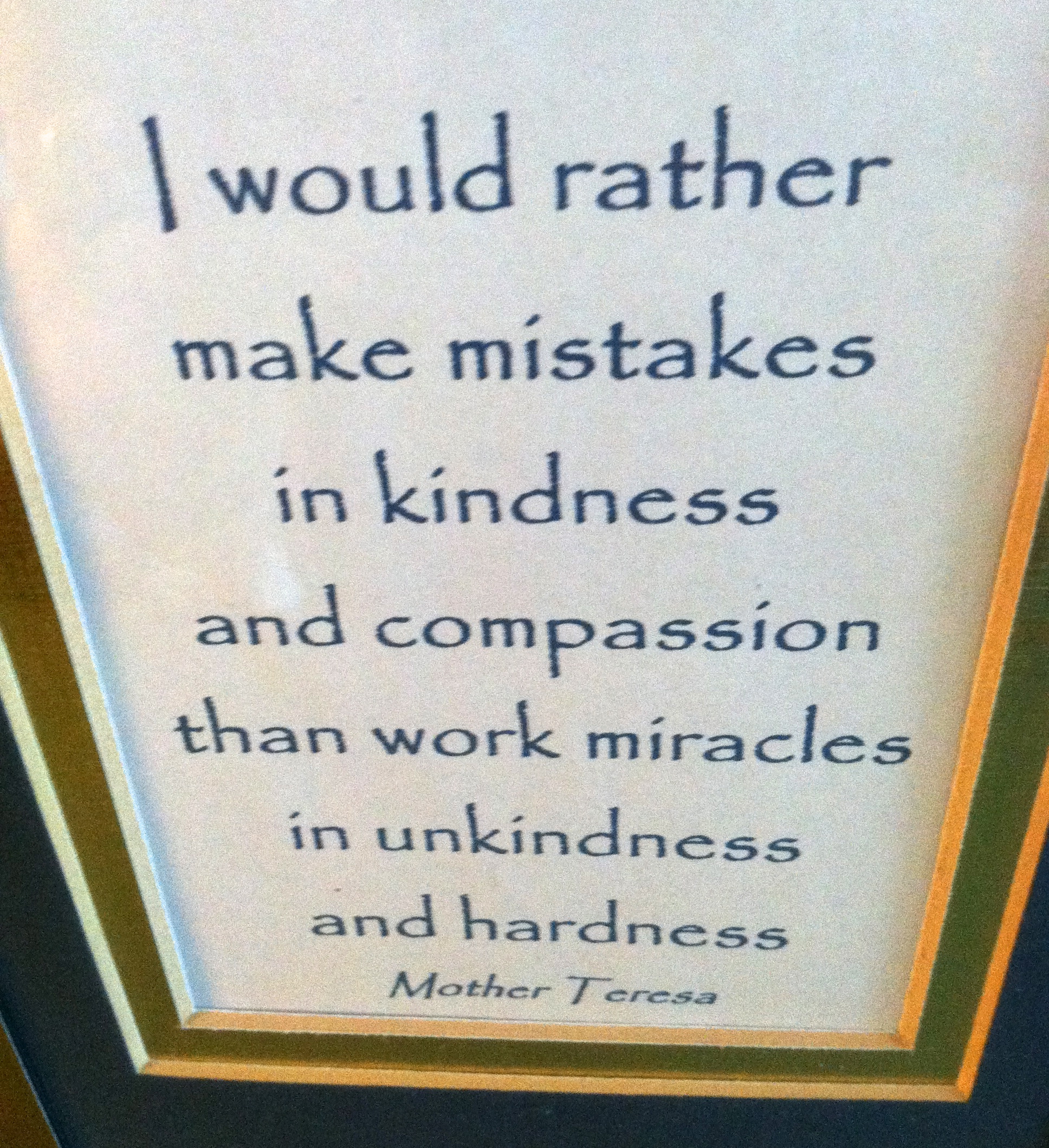
Say what you will, I love Mother Teresa. She was a saint—or will be soon enough. Two of her quotations guide my thinking. Friend Michelle had the first printed and framed for me as a gift: “I would rather make mistakes in kindness and compassion than work miracles in unkindness and hardness.” I keep these words on the wall in front of my desk. The second quote is just as powerful: “There should be less talk; a preaching point is not a meeting point. What do you do then? Take a broom and clean someone’s house. That says enough.”

IMG_1172

Amen

Underneath all of Pastor John’s patience and compassion is selfishness. I don’t like to sweep floors, not even my own, and I covet time. Andrew Marvell’s lines often haunt me: “But at my back I always hear, / Time’s winged chariot hurrying near.”

For reasons I don’t understand, Mother Teresa’s words have visited me lately to remind me that her broom is a metaphor and many days my most useful, loving action is invisible, inconspicuous, known only to a person or two and a gray sky or a lonely afternoon.

A couple days ago a friend—let’s call him Gene—asked if I’d take him to buy a new pair of winter boots. He laughed as he told me about one sole of his old pair flopping around like a drunk’s tongue as he walked home. Finally he gave up, took off the wounded boot, and hobbled up his gravel driveway, one socked foot wet and tender.

IMG_1162

Some glue might have fixed Gene’s boot, but oh well.

So I picked Gene up, and within fifteen minutes he was trying on boots. One problem: health issues render him listless sometimes; tying his shoes or buckling a seatbelt can be exhausting. Though it was a bad day, Gene, as always, was aware of my time. He tried to hurry, but our footwear errand had him sagging to the Walmart floor. Every movement was a labor: tugging the wad of tissue paper from the toe of the boot; unraveling the laces and flipping down the tongue; and—my Lord—pulling on the boot.

After watching for a minute, I said, “I got you, Gene.” So I helped him find the right size, get the boots out of the box and onto his feet, each time pulling up his weary white socks, and watched silently as he did test runs. He tried on four pairs, finally settling on ones without laces, like cowboy boots with chunky treads and generous toes.

The second pair into this process it occurred to me—breathing, shamatha—that helping Gene in, ugh, Walmart, was sacred. He droops from the effort of taking money out of his wallet, and all he needs to make his life significantly easier is somebody to take forty-five minutes and spot him as he buys boots that won’t rub a sore on his ankle.

I also knew that Gene needed more than new boots. He needed to know that I wasn’t impatient or annoyed. So I put my hand his arm and said, “How about I help you get that on?” And, “Don’t worry, Gene. I’m not in a hurry.” And, in the case of a pair with a dozen eyelets, “Hmm. You’ll be an hour getting into these. By the time you get them tied, you’ll be too tired to go anywhere.” Like I said, Gene and I are friends. We had a good laugh.

© Copyright 2011 CorbisCorporation

Prescription for joy. (Credit: corbisimages.com)

A couple minutes after I dropped him back off at home, my cell phone’s Sherwood Forest ringtone sounded. It was Gene, but since I was driving, his call went to voicemail. The message: “I just wanted to say thanks again for helping me, John. See you.”

Mother Teresa also said, “We cannot do great things on this earth, only small things with great love.” I’m not sharing Gene’s and my excursion because I’m a great guy. I’m a normal guy with the usual human portion of self-absorption, a guy with an aversion to brooms, but I got lucky. In a moment of potential frustration I was blessed with a visitation of the Spirit.

© Copyright 2010 CorbisCorporation

You’re holding gladness in your hands, little sister. (Credit: corbisimages.com)

A friend’s boots broke down. We got him a new pair. We did it together with love. I close my eyes, breathe, and days later the sacrament of trying on boots still cradles my soul. This is gladness.

The Healing Properties of Sleep and “Tuxedo Junction”

4409349002_09c1d34092

A crested duck, which I first encountered in Camden, Maine, where a flock of these darlings outside our hotel room kept wife Kathy and me up at night with their gossiping. (Credit: Anna Barberis)

Yesterday I felt like I was—as wise colleague Roy once put it—being pecked to death by ducks. The roads were populated by drivers who had cold lard for blood and cud for brains. Or they were staring at cell phones with that dazed, dunderheaded expression people wear when texting. Or they were fussing with the bag of frozen haddock or whatever in their backseat and assuming that the 153 cars behind them would gladly wait until all was situated.

I have a patience surplus everywhere except in the car, where I growl, grunt, sigh, squeal, sputter, and in moments of high upset, speak in Technicolor. You don’t have to count five 1000’s before reacting to the turning arrow. The %$&!# accelerator’s on the right! If you press your foot against it, your delightful Nissan Cube will get out of my crappy 1998 Mazda 626’s way. You’ll reach your destination. My sophomoric, un-centered spirit will unclench. It’s a win-win. Please. (Philosophical question: If you curse in your car and nobody hears, does it count against you?)

I’m ashamed of my traffic-temper, but take comfort that my ranting occurs in a contained space. And I don’t give people the finger or the skunk eye, either. But, boy, auto-John doesn’t gaze at humanity with compassionate eyes.

Of course, I can’t control the ducks behind other cars’ wheels, but I can silence the quacking from my radio—and did so this morning for sanity’s sake. On November 6th, as usual, Micah and I listened to National Public Radio for the ten minutes it took to get him to the day’s painting job, and the half-hour home, including a stop or two. The stories were newsworthy, but they struck me as crazy layered on crazy.

Story One

Woman holding her forehead

So tired! (Credit: corbisimages.com)

“During the last few decades the average American has lost an hour and a half of sleep per night,” Marketplace’s Ashley Milne Tyte reports. “Sleep researchers at Harvard say the workplace is suffering to the tune of $63 billion a year as a result of insomnia, and all the health and productivity problems that go with it.” Gail DeBoer, a credit union president in Omaha, has felt the pain. “Her restless nights began when she got her first smartphone a few years ago. She’d look at email just before she went to bed. But it didn’t end there. ‘I’d wake up at two or three in the morning thinking about work situations,’ says DeBoer. ‘I’d start sending emails because it was on my mind.’ After that, she never really got back to sleep. She began having regular headaches. Still, she told herself she was fine on about five hours a night.” Eventually, she wised up, quit checking e-mail before bed, got eight hours of sleep, and—go figure—the headaches stopped.

We are such suckers! Notice I say we, as in me, too. Where did we ambitious Americans get the idea that we ought to be checking in with the office at 11:00 p.m.? And what denial are we in that e-mailing or texting at 2:00 a.m. on a regular basis seems healthy? Most of all, what makes us think our minds and bodies are going to comply with a 20% reduction in sleep? Huh?

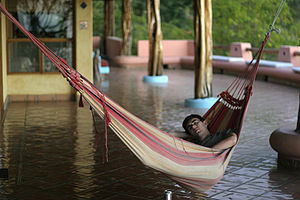
300px-Hammock_nap_on_patio

Napping in Costa Rica. (Credit: Wikipedia)

The news crackles lately with revelations not only of sleep’s necessity, but also its healing, restorative power. When I hear such reports, plump with research, I think to myself, “Yeah, no kidding.” It’s like hearing scientific evidence that your head’s going to hurt if you smack it against a cinder block. I’m glad that sleeping—and, therefore, napping—is slowly becoming smart and hip, but is our task-oriented tunnel vision so severe that we need to be convinced to get some sleep? I guess so.

Story Two

Investigating payday lenders, who do $49,000,000,000 in business each year, Planet Money’s Pam Fessler decided she’d go online, type in mostly fake personal information, and ask for $500. She didn’t really want a loan, only to see what the application process was like. Within a minute of clicking send, she got an offer of a loan up to $750. She’d have to pay it back within a week and the charge would be $224. That would be an annual rate of 1300%. No thanks. She logged off, but was hounded with phone calls from various lenders for months.

Fessler notes that if you take out such a loan, lenders require your bank account number, and whether you like it or not, you’re paying on time. They simply suck the dollars right out of your checkbook, ahead of your rent if necessary. They don’t care.

One comment/question: A 1300% yearly interest rate! Why is this practice legal?

Story Three

IMG_1151

From the Coleman family pantry. Don’t remember when we got them, but I guarantee they’re crispy.

According to Audie Cornish of All Things Considered, the Food and Drug Administration proposes that we do away with trans fats, also known as partially hydrogenated vegetable oil. The reason: people’s hearts are going bad. Adding “hydrogen atoms to a molecule of oil” keeps food from spoiling, but what’s more important, a box of Ritz Crackers that stays fresh for a decade or the cardiac health of the American public? The FDA says the latter.

I’m on the FDA’s side, but can’t help thinking that if we’re worried about the condition of people’s internal organs, we should take advantage of a two-for-one special and protect thousands of hearts and lungs by getting rid of cigarettes, which also harm bystanders. No innocent ever got heart disease from the second-hand partially hydrogenated vegetable oil of a Chips Ahoy.

Story Four

Another NPR report, which I’m not going to look up: an undocumented farm worker described through a translator how her boss made her go with him to an isolated field to get her paycheck. Before handing it over, he demanded her panties and oral sex. Such workers are reluctant to go to the police for fear of being deported or blackballed. What the hell?

Story Five

“Washington State Says ‘No’ to GMO Labels.” This report on whether we should be informed if our food has been genetically modified upsets me not because I care a great deal about the issue, but because of who’s in the fight. “Out of state companies such as Monsanto, Coca-Cola, PepsiCo and Nestle poured millions of dollars into the campaign against labeling, which argued that adding GMO designations would make food more expensive and confuse customers.” Ah yes, consumers need to be protected against their own stupidity. “In ads, they said that the labels would increase the price of food for a three-person household by $350 to $400 per year.”

42-34267055

Soybeans: Bet you cash dollars they’re Monsanto’s. (Credit: corbisimages.com)

I first heard of Monsanto in the 2008 documentary Food, Inc., which you should watch only if you never want to look at your dinner plate the same way again. I seldom subscribe to guilt by association, but if Monsanto is on one side, I’m probably on the other. This agricultural giant was in the news recently because, according to techdirt.com, the Supreme Court decided in its favor that farmers “planting their own legally purchased and harvested seeds can be infringing” on Monsanto’s patent. Don’t believe me? Check it out. I honestly believe the company is evil.

There were other stories, but you get the point. I’ve mentioned in at least one previous post that I’ve cut back some on news consumption. What’s different about this particular day of underwear as ransom for a paycheck and our poor, sleep-deprived country was the physical effects listening had on me. My neck was tight, my throat made guttural comments, and the spot beneath my sternum that wants to push out a holler when I get mad was about to let loose.

220px-Millposter1

The single-engine plane Glenn Miller was flying in was lost over the English Channel in 1944. (Credit: Wikipedia)

I want to be an informed, responsible citizen, but Thich Nhat Hanh is right in observing that the media we ingest have as much of an impact on us as the food we eat. So I’m counting news calories today. The definition of the term is arbitrarily slanted toward the negative, as if it’s more urgent for us to know what’s tortured in the world than what’s redeeming. Until the pendulum swings the other way, I’m planning to preserve my mind and body and listen to the Glenn Miller station on Pandora.

After my nap, which is just ahead, I have to go pick up Micah. “Tuxedo Junction” will wake me up without bringing me down.