Oniontown Pastoral: Godspeed, Sherlock Holmes

He was restless and quivering on the 20th. The next morning Kathy and son Micah got him to the veterinarian in time for his last breath. Our buddy possessed a finicky digestive system, sensitive skin and his breed’s lust for the chase. He hooped endlessly. He was a lanky galoot. His forehead was glorious to kiss. Continue reading

Oniontown Pastoral: Holy Trifles

Oniontown Pastoral: Holy Trifles

This post is dedicated to my colleagues in ministry.

Just now, I finally got it. I understand why those of us long in the tooth are loath to part with our treasures. The matter is clouded by television programs about hoarders who clutch last week’s pizza box to their chest because the cardboard might come in handy. Also fogging up the conversation are youngsters with hearts of flint who categorize objects without a practical purpose as “all that junk.” Well, I keep trifles, and the reason has become clear.

I feel low this Friday, which promises rain later on. Its wispy sound will be welcome, as I have work to do and will be sitting where I am now when it falls—this report has to get written along with a sermon. The tasks are agreeable, though melancholy leans against my chest, in the hollow where tears come from.

St. John’s Lutheran Church in Oniontown, Pennsylvania, is like many mainline Christian congregations. We’re aging quickly, and the faithful whose sturdy souls and frames gave richly to the church are disappearing one by one, over the horizon and into glory. Neal’s funeral was this past Wednesday. Bill’s was in late January.

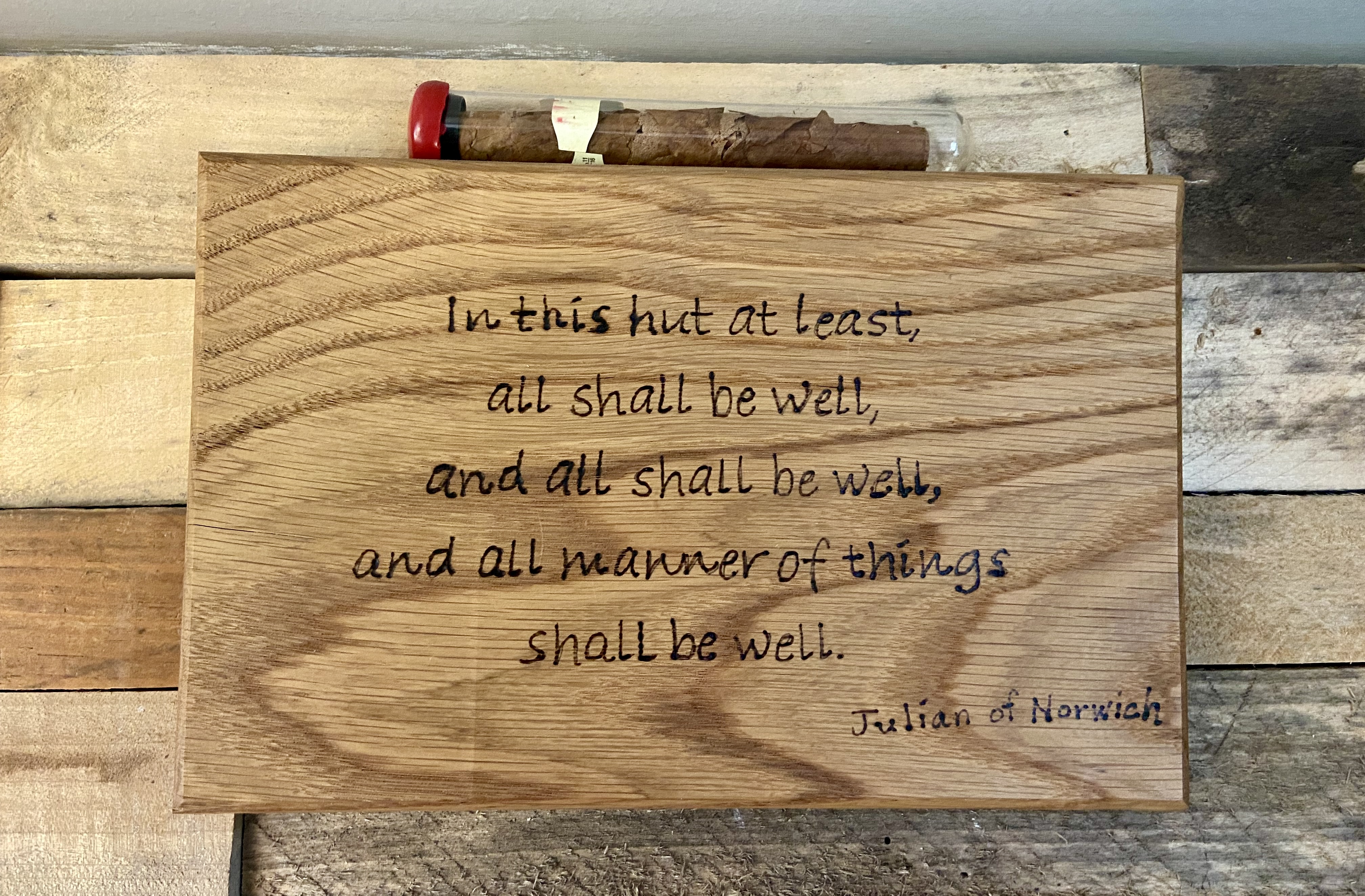
Friend Ray’s cigar resting on wise words

Please know, I’m neither crying in my morning tea nor looking for sympathy. A pastor’s call involves baptizing, marrying and burying. Like my colleagues, I put shoulder to wheel. Pastors do love their folks, however, not theoretically or by obligation, but with plain old human love. This reality makes the vocation by turns buoyant and weighty. Downstream from baptismal waters are ashes and dust. This is life, right?

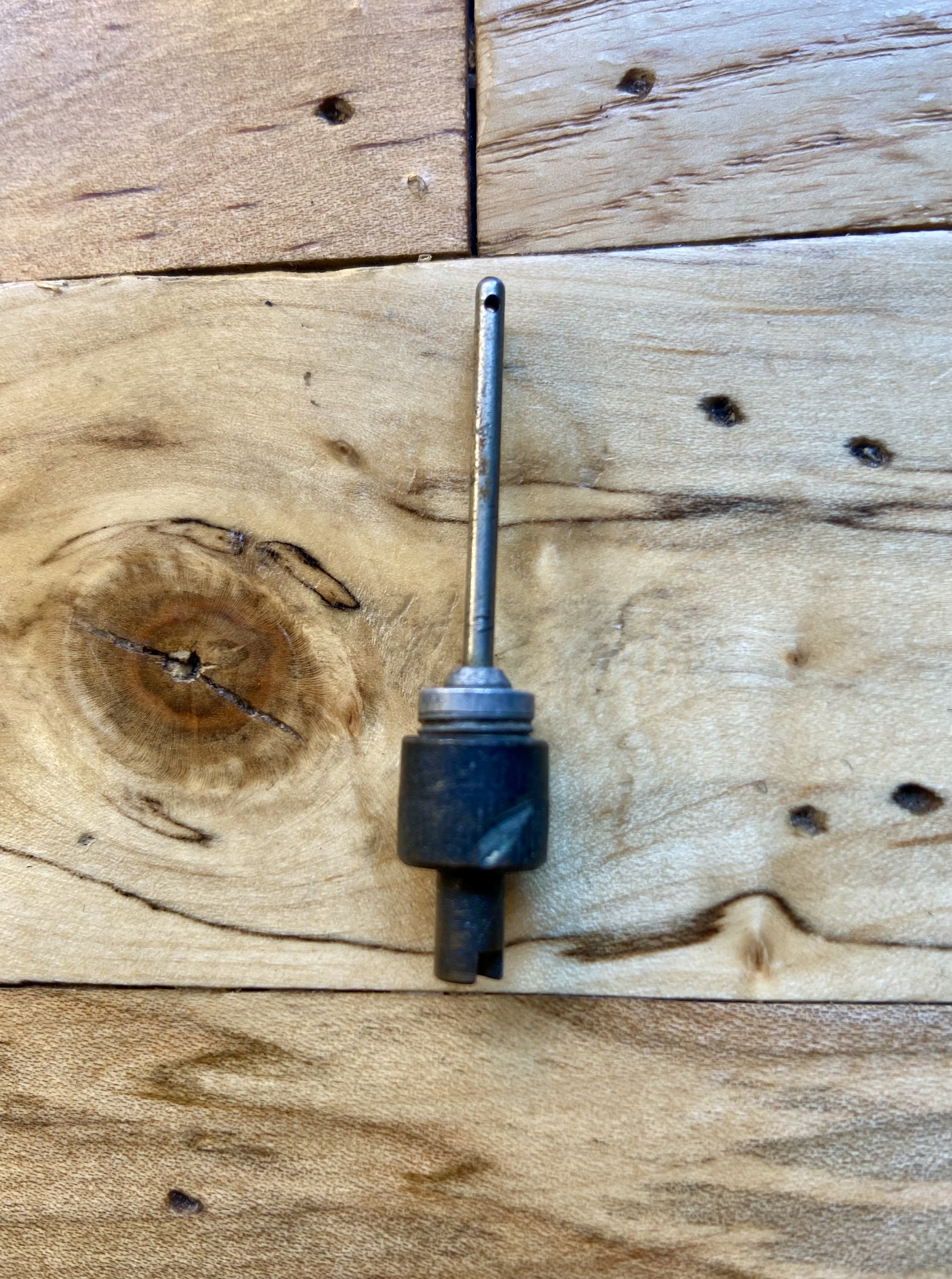
But just now, sighing and imagining light perpetual, I looked at the bicycle pump needle on my windowsill. Fred, who died two years ago come June, gave it to me. One afternoon I tried to inflate his car tire with some electronic device. It should have been cake, but I floundered. My next visit he handed me the needle and went on a laughing jag. I pick it up, close my eyes and listen to Fred’s joy. He had the greatest laugh. I see him there across from me, and in my mind, dry bones rise and dance.

Fred’s needle

The needle helps me keep Fred close by. It occurs to me that both here in my writing hut in Erie and in the pastor’s study in Oniontown, I’ve surrounded myself with relics of a sort.

The tin my mother packed full of sewing machine bobbins now contains quarters, dimes and nickels. I run my fingers over the lid faded by decades and hear her mighty Singer hum again downstairs as I fall asleep.

Mom’s bobbin tin

Dad’s Hall’s Excelsior Bank—a small iron piece—holds pennies, which my grandsons shake out on the floor now and then. His father’s pocket watch resides to my left and can be coaxed briefly to life with tender winding. The cigar friend Ray gave me sheds its leaf, kept together only by a glass tube. As before, he and his sagging jeans flop into my passenger seat for an afternoon of errands. “Ah shucks, Pastor,” he says, “I’m tired.”

Dad’s bank

Me, too, Ray. In my case, I’m tired of goodbyes. When at St. John’s I scan the study’s landscape. Deanie’s cardboard Vacation Bible School giraffe peaks out from behind the filing cabinet. In my top desk drawer reclines a pack of matches that says, “If there’s an umbrella in my drink, it better be raining.” My hunch is this was left behind by a pastor or two ago, and I’d like nothing more than to clink mugs with that guy. And Sadie’s portrait from early in the past century suns itself near the window. For a time, she will remind me of Bill, whom I mentioned earlier. They were related. Bill was the purveyor of much St. John’s mischief. His passing is still fresh, as is his memory. I’ll work my way to laughing soon enough, but for now, I just miss him.

Are the holy trifles I keep at hand my way of coping? Ah well, so be it. My mother’s red Paper Mate pen rides in my shirt pocket. Putting down a signature, I say something like, “You’re dead, Mom, but not entirely. Not to me.” Her cursive was lovely.

Mom’s Paper Mate and John’s pencil

Behold, I’ve taken my appreciation of objects with a negligible purpose to a new level. Last week I received a shipment of 100 mechanical pencils from a retired man who tells me he has a couple hundred more to sell, along with a handful of fountain pens.

Beside Mom’s Paper Mate I carry a pencil from John K. Denlinger Service Station in Lancaster, Pa. The proprietor may well have been looking over my shoulder as I wrote down today’s duties. I never met John, but I hereby take the liberty of calling him my brother.

One More for the Road, Raymond

One More for the Road, Raymond

Note: My friend Ray died suddenly on January 16, 2021. As you may remember, Ray showed up here at A Napper’s Companion from time to time. Odds are, this will be his last appearance.

Dear Ray:

I never did ask why your phone messages always started with, “Hi, Pastor, this is Raymond.” I couldn’t have mistaken you for anyone else. Over the last 10 years, I talked to you or listened to voicemail or chose not to answer more times than I yawned and sneezed put together. No doubt about it.

A confession, old friend: I’ve come close to tears about your passing only once. I mentioned in a sermon that you couldn’t believe in a gracious God. Then, “But I think Ray knows about grace now.” After the hell you lived, the idea that you might finally be at peace moves me. No more damnation, condemnation and temptation. No more depression, anxiety and paranoia.

Today you will be with me in paradise. May it be so, Raymond. (Credit: Christ on the Cross Between the Two Thieves by Peter Paul Rubens on Wikimedia Commons)

Now your burden is lifted, but I’ve got a problem. You died without warning, and I’m left with thoughts that you ought to hear. On the off chance you’re listening, let’s close out the account of our earthly friendship like this. 

There’s hardly an errand in Erie that doesn’t remind me of you. Each Smoker Friendly or Dollar General I pass says, “Oh, yeah, Ray,” as do the Holiness Church on Liberty and Safe Harbor on West 26th. Lately your Longhorn wintergreen snuff has been on sale at Country Fair—you’d be stocking up. On the bookcase here in my writing hut, the bargain cigar you passed along keeps me company. The family cat gnawed little holes in the pure leaf wrapper, but flawed keepsakes are treasures just the same. 

That’s true of people, too, I guess. More than anybody I’ve ever known, you were up front about your mental illness. My own battles were nothing compared to yours, but you taught me a lot about candor. “It’s hell being nuts,” you once said. “I never know who I’m going to wake up to.” And, “Remember, Pastor, I’m not playing with a full deck.” Thanks for giving me permission to share your story. “If it can help somebody, tell them everything,” you also said. Well, you’ve helped. Take my word for it.

Of course, no obituary would begin, “Raymond was nuts, but gave of himself generously.” When I heard that you died, I was afraid nobody would take notice. Fortunately, a relative of yours put a little write up in the newspaper. “Ray was an avid antique hunter,” it said, “and very knowledgeable about cigars, tobacco products and humidors, but above all, Ray was a very godly man.”

That last part says a lot, but a couple of paragraphs can’t cover everything. You didn’t get a funeral. The COVID pandemic saw to that. My eulogy would have dressed you in the tuxedo you deserve. I would have told folks how you made me proud. Sober for over 20 years. Beat gambling and some other addictions. Found ways to keep living, though every hour for days on end might bring fresh misery. Within your storm of turmoil and psychotropic medication, you managed to think of others. I would have said all this and more.

I would have skipped what you normally said as you slid into my passenger seat. “Oh, shit, Pastor, “I’m so tired.”

“I know, old buddy,” was my only reply in the moment.

But now I have more to say. Look, you were an inspiration. In the middle of a case of the blues, I’d picture you in that busted recliner of yours, either pooped out or afraid a thug would break into your house or terrified of being a sinner in the hands of an angry God. “If Ray can keep plugging away,” I’d think. “I can, too.” Honest, you were a hero.

Bottom line, Ray: I love you. Our friendship wasn’t very emotive. Still, when I said, “You old codger, you,” or “You’re a real piece of work, you are,” love was what I was trying to get across. But you probably knew that.

I miss our salty laughter.

OK, amigo, you can get back to your bliss now. Please put in a good word for me. All of us on this side of glory are at least a little afraid.

Your friend and partner in neurosis,

Pastor

P. S. I suppose God calls you Raymond.

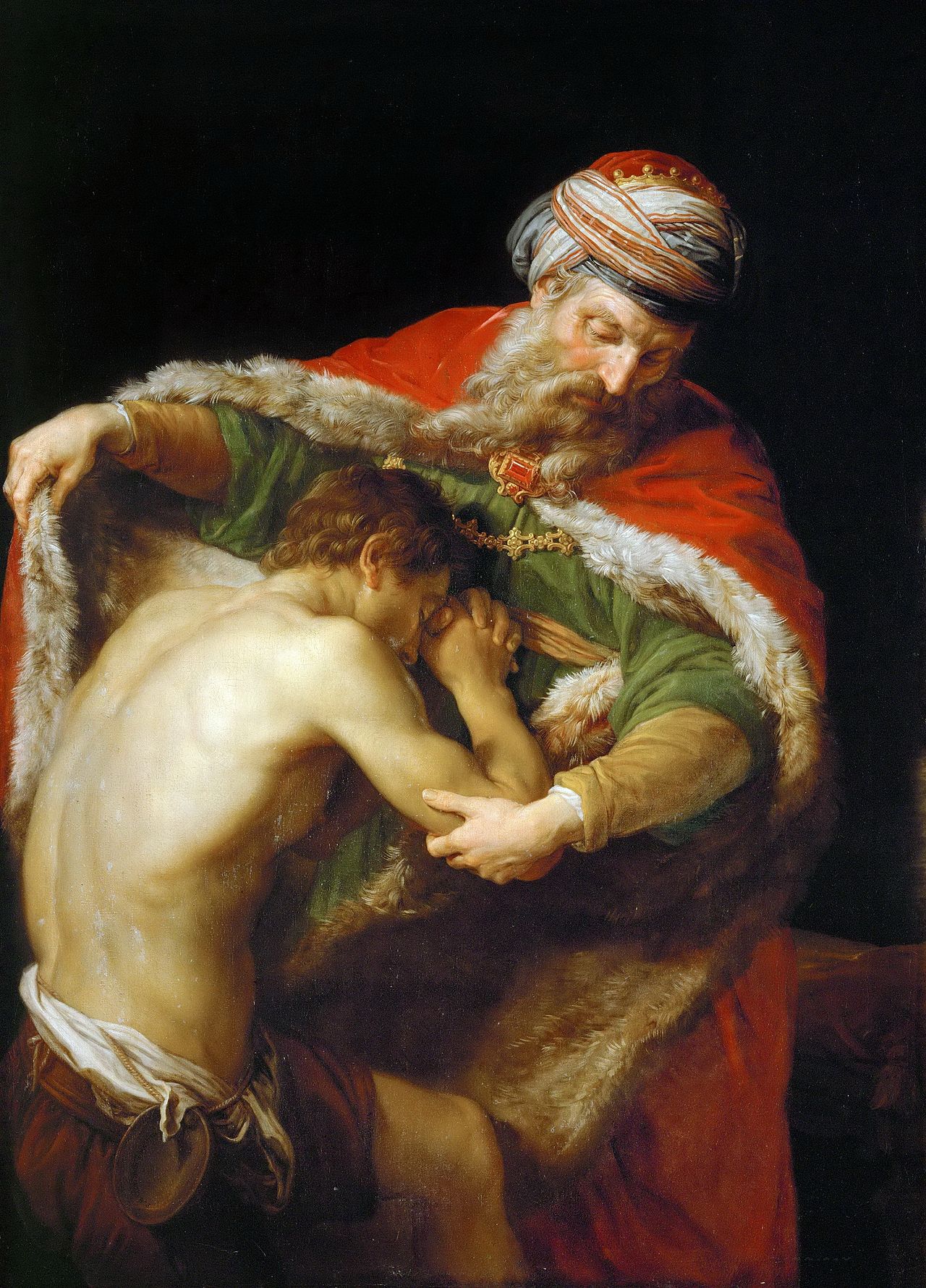
Welcome back home, Raymond. (Credit: The Return of the Prodigal Son by Pompeo Batoni on Wikipedia)

Oniontown Pastoral: I Mean to be Like Bill

Oniontown Pastoral: I Mean to be Like Bill

A dining room I left behind

Have you ever moved out of a home you loved? Before closing the door, you walked through the empty rooms. Your footsteps echoed. You could hear yourself breathe. Floating from space to space, you knew that you would never leave. Part of you must abide under the ceiling you stared at before getting up each morning and beside the wall you slid down to sit on the floor, crying over terrible news.

You finally drove away, though the weeks were off kilter until new walls became home again.

I find myself on such a road right now. In fact, I’m not going anywhere. St. John’s in Oniontown will be my pastoral perch for years to come—God willing and the creek don’t rise. A small house in Erie will remain the Coleman’s nest.

No, I’m talking about change. Hemispheres of my world are like the hollow home I once stood in, letting all it held and witnessed work joy and sorrow in me by turns.

It’s impossible to explain why certain passings bring on tears while others drift by like wispy clouds. Maybe the best we can do is acknowledge this reality and listen to each other.

Godspeed, Onslow.

What I want to tell you first is trivial to the universe. The blonde horse I named Onslow is missing in action. For a few years he occupied a yard along Route 19 all by his lonesome. He shared space with a comrade named Sandy for a while, then suddenly was gone, along with eight or ten other horses in an adjoining pasture. Two horses still roam the field, but Onslow and the others belonged to a person who took them to another location.

The fenced-in half acre or so my friend haunted is forlorn, especially in March, when the landscape sleeps. I visited him once and couldn’t get him to come close. Will I ever run my hand between his eyes and down his nose? Probably not.

At the same time Onslow departed, a parishioner died, leaving a deserted room in many Oniontown hearts. His name was Bill, and he was my buddy. I’ve never met a man who had such a huge presence and yet expected so little attention or recognition. He liked my “Report from Oniontown” and even watched for Onslow when his travels took him down Route 19. He said Onslow out of the corner of his mouth, then busted out that great smile. His belly laugh, it was the best sauce ever.

But the last thing Bill would want me to do is pace the bare floors, my footfall a sad tick tock. He was about moving on in good time and taking hold of each day’s possibilities.

Bill’s wife Connie passed in 2017 after a long illness. He grieved as his St. John’s family expected, but kept active. “The evenings are tough,” he told me.

“Well, sure, Bill,” I said. The house was quiet.

Then one afternoon he showed up at church and told me that he had a lady friend. I was overjoyed. As anybody who has lost a beloved and found another knows, it wasn’t that Bill was forgetting about Connie. He just had more living to do.

“Her name is Tye,” he said, “and she’s a great lady.”

What a joy it was to watch St. John’s and Bill’s family welcome Tye into the fold.

Those two did everything together, but as I learned after Bill’s death, they were cleared eyed. He was 80 and had all kinds of systems breaking down.

“I was hoping for a year, but we got a year and a half,” Tye said with a smile. It wasn’t enough, though. It never is.

Early on, Bill told her, “I don’t know how long we have, but we’re gonna give ‘er hell.”

I trust God knew what he meant. What they got was 18 months of heaven.

May God rest you, Bill. (Credit: Sherry Lesnett)

When I go by Bill’s house on Mercer Road, I remember that he’ll never again show up at my office for some chin wagging.

He would tell me not to fuss, so I’ll move on. None of us knows what will happen tomorrow, especially given how the world is spinning today. Onslow sure didn’t receive notice of his relocation.

So I mean to be like Bill, to give ‘er hell until the last moment, to close the door of the empty house behind me and light out for a new one, my spirit of good cheer and heart ready for more portions of love.

Oniontown Pastoral: Old Floyd and New Floyd

Oniontown Pastoral: Old Floyd and New Floyd

In Memory of Warren Redfoot

Three of us sat around the hospital bed in Warren’s living room: his wife Nancy, daughter Barb, and me. Under the covers was Warren, all 90 pounds of him. Sticking out were his head, shoulders and left arm, which rose and fell throughout our conversation, as if carried on a breeze.

Miracles were coming out of the man’s mouth. Not that all his words made sense, but never mind sense. Warren was speaking in poetry, which takes inscrutable turns and isn’t obliged to be linear.
“I wish I could make myself understood,” he said somewhere in the midst of the quirky grace he was bestowing on us. We assured him that he was doing fine.

What got Warren rolling was this. Barb said, “Dad, do you want to tell Pastor John about Old Floyd and New Floyd?”

He was game. The story, which had been birthed in his imagination the night before, evades transcription, but the gist is simple. The Floyds are either tractors or men, depending on Warren’s memory at the moment. Old Floyd is doing farm work, but eventually breaks down. Then New Floyd shows up and takes over.

As in the mysterious possibilities of dreams, however, the Old Floyd is, in fact, the New Floyd. “Not the same body,” Warren explained, “but the same.”

He was talking—for the love of God!—about resurrection.

Closing his parable with a flourish, Warren pushed aside imaginary clouds and said, “Then the sun came out.”

Then the sun came out.

“Boy,” I managed through a tight throat, “you could add another chapter to that story if you wanted.”

“Another chapter?” he replied, almost incredulous. “Another paragraph. Another sentence!”

I caught his meaning. This fragile man was schooling his pastor about life, death and everlasting hope. Sooner or later, life boils down to finding a good word, taking a single breath, or touching the cheek of your beloved, as Warren did to Nancy. All that this husband knew of tenderness shone forth as he reached for his wife, to ease her sorrow.

Old Floyd—Warren’s father’s name, incidentally—can see New Floyd coming. Time grows short. One more sentence means everything. One more hour. Another kiss.

These thoughts swept me away. My left hand held Warren’s while the right clamped over my mouth. Barb touched my shoulder. For the first time I was nearly undone at a bedside and thought I might have to excuse myself.

Can you understand? If God leads us to each other to give or receive what we need most, then God, indeed, sent me to Warren and Nancy’s house to receive the assurance of things hoped for, the conviction of things not seen.

Once I regained myself, we shared Holy Communion. Warren’s eyes locked on mine as I held up the bread and cup. No bashful glancing away for either of us, not with eternity so near.

Afterwards Warren asked for a decent swallow of wine to supplement the sliver of bread I had dipped in the chalice and rested on his tongue.

Even though his throat was constricted, I poured him a tiny portion. Never have I seen a believer drink more eagerly. He held the thimble-sized glass above his mouth, the last drop falling on his tongue.

Then Warren said, “I have an urge.”

“An urge?” Barb asked. “An urge for what, Dad?”

“For another Communion,” he said. “Not this one. Another Communion. The next one.”

And then he went on and on about how delicious that wine was. I couldn’t argue.

When Warren seemed to be flagging, I said my goodbyes, but as I reached the door, he called my name. Not “Pastor John” or “Pastor,” only “John,” the name I pray one day to hear God whisper into my ear.

I turned around to face Warren reaching skyward, like Atlas holding up the planet.

I did the same. We kept the silence together.

“Peace?” I finally asked.

He nodded, mighty under the weight of the world: “Peace.”

Driving home, I sighed to hold off tears. “The Spirit helps us in our weakness,” I remembered, “for we do not know how to pray as we ought, but that very Spirit intercedes for us with sighs too deep for words.”

Old and new.

Warren was every bit the Spirit to me. Maybe for a moment, like those Floyds, they were the same. I don’t know. But what I can say for sure is this: When my skinny old friend gave me a foretaste of the feast to come, the beauty almost made me go to pieces.
Oniontown Pastoral: The Darkness Comprehended It Not

Oniontown Pastoral: The Darkness Comprehended It Not

If I had to pick a favorite Scripture verse, John 1:5 might be it: “The light shines in the darkness, and the darkness did not overcome it.” As a rookie pastor, I printed these words and handed them out to folks on a Sunday morning. I can’t remember why, but did keep a copy for myself. For a decade it lived on the Coleman’s refrigerator, growing smoky blonde from taking in the mist of Thanksgiving turkeys, stir-fried chicken and vegetables and summers of boiled corn on the cob.

Actually, the King James Version puts it better: “The light shineth in the darkness, and the darkness comprehended it not.” “Overcome” is fine, but “comprehend” goes further. I speak poetically here. What is dark in the world can’t snuff out what is light. What’s more, the painful and unjust and sinister so wretchedly obvious to us all can’t understand—let alone suffocate—the compassionate, loving and hopeful. My peace depends on John 1:5.

I hadn’t given any thought of where our slip of paper had gone after we moved four years ago. Then, last week wife Kathy walked into the living room with a smile and handed me those beloved old words, stained and torn as I had remembered them—asleep in the attic, they were. Now they’re in a frame, which hangs above a chest of drawers by my writing table. I’m looking right at them.

Close to my writing table: holy words, light, refreshment.

On Tuesday evening I found myself thinking about light and darkness and believing against all odds that the first prevails over the second.

What happened was just this. After a day at St. John’s I was nearly back home to Erie when the phone rang. My fancy car does hands-free calling, so I answered. A kind sister from church told me that one of our members wasn’t doing well and wanted to see me.

There was never a question about turning around. In 2015, when I signed on for a thrice-weekly, 70 mile commute, the first rule was that when anybody needed me, distance wouldn’t stand in the way.

License plate, courtesy of friend Bill

By 6:oo p.m. my hybrid was back on Route 19 and heading for District Road. You might suppose the journey was depressing, but I’ve held many frightened hands, asked God for many favors and said “given for you” and “shed for you” so many times that pilgrims whose eyes are fixed on the Great Mystery and praying to find grace there don’t come close to filling me with gloom.

But there is darkness longing for light in a person’s final hours. In the most blessed cases it’s the denouement of a bright day—those thin moments between sunset and nightfall. There is love at the bedside, laughter and crying, gratitude for what has been and, of course, a clutching in the throat. Goodbyes are hard. Endings hurt.

As I passed through Sheakleyville and waved at Wagler’s Camp Perry, I invited the light and darkness in my chest to lean into each other. One suffers when you deny the other.

The sign was there, but I don’t remember seeing it in darkness.

And you better believe that pitch-black can set the noonday sun back on its heals. Kathy loves District Road as much as I do, and the recent passing of a 14-year-old boy who lived along those lovely miles haunts us. Dear God, 70 pounds, tortured, blasted by his father with a hose and dropped on the floor. Death came, merciful death, it sounds like.

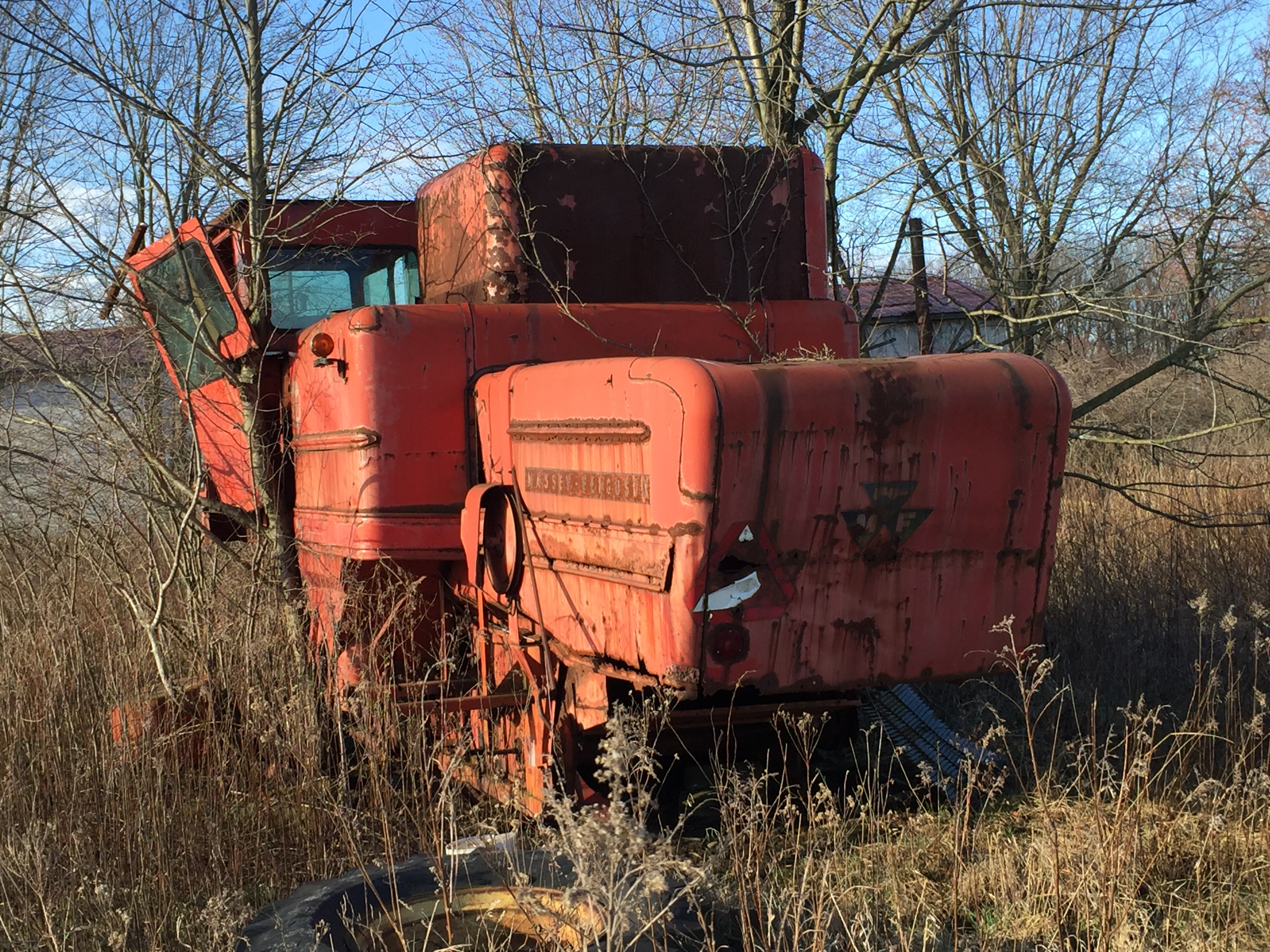
Old farm machinery along my dear District Road

The roads around Oniontown get dark at night for this Erie boy, and I was glad not to be able to peer into the woods and spot the mobile home where this boy met his end.

“Pastor John,” you might be thinking, “why did you go and bring up that terrible story?”

Because if I hold this boy’s truth back, keep this reflection tidy, then it’s not worth a tinker’s damn. It would be a lie.

Depend on me to tell you the truth. The woman who wanted to see me and the family enfolding her with gentleness were shining as we surrounded her bed, rested our hands on her and talked to God.

You can believe that I cried afterwards—some tears of sorrow, but mostly joy. Now, does that make sense? Maybe not, but that’s how the light I’m talking about works. It can’t be comprehended.

Nor can a possibility that occurs to me now. When my faithful St. John’s friend closes her eyes, maybe a boy who once lived on District Road will be one of those souls singing her into glory.

Oniontown Pastoral: Riding a Pony on a Boat

Oniontown Pastoral: Riding a Pony on a Boat

(May 30, 2019)

And if I had a boat
I’d go out on the ocean
And if I had a pony
I’d ride him on my boat
And we could all together
Go out on the ocean
I said me upon my pony on my boat.

(Lyle Lovett)

Lyle Lovett, whose frizzy pompadour was once a natural wonder, wrote “If I Had a Boat” while skipping a college class. Unable to figure out what he wanted to be when he grew up, he said, “It’s a song about possibility . . . a song about being a cowboy out west and the captain of a great ship.”

Lyle Lovett, whose pompadour used to be twice this high. (Credit: Forest L. Smith, III, on Wikimedia Commons)

Well, it’s Lovett’s song to explain, but I hear in its whimsy an impulse to leave behind the stifling and disappointing. In one verse, the country crooner has Tonto, who does the Lone Ranger’s “dirty work for free,” saying, “Kemo Sabe, kiss my ass, I bought a boat, I’m going out to sea.” The delicious hutzpah elicits whoops and applause.

Lately the song has become a hymn to me, in part because of the legendary sidekick’s impertinence. From time to time—and I ask this in a sincere pastoral tone—don’t you want to bare your bum to civilization and “go out on the ocean”? To ride a pony toward a horizon of possibilities? I sure do, and saying so constitutes a confession that the good Lord would probably understand.

I’m not indulging in a rant or snivel here. The truth is, we’ve all had weeks that deserve to be hauled out into open air and shared, for the sake of commiseration if nothing else. The truth also is, a village preacher can either succumb to despair or maintain a cargo hold stocked with hope. The latter has stood me in good stead, and I’m not about to change course now.

So, about this past week.

For starters, I visited an old friend who has been in declining health. He couldn’t rouse himself from an awful dream, the highlights of which he narrated between groans and shouts. “I want to get the hell out of here.” “I need a place.” “There’s nothing I can do.” “Help me.” His manner was delirious, but, in fact, he captured the plot perfectly.

A woman in the next wheelchair patted my friend’s arm, mouthed a prayer, then pulled her fleece sweater up over her head in turtle fashion.

So I prayed them both a boat out on the ocean. This was their fervent wish. Why should they be moored for one minute longer in such troubled waters?

This painful visit was followed by news that hit like a rogue wave. Wife Kathy and I were settling into bed for a bout of reading when she learned that a dear friend’s ex-husband had died in a tragic accident.

I first heard Lyle Lovett’s playful song on a recording this friend had made for Kathy and me. I wish we lived on the same continent so that we could shoot misery the moon and sing a hymn about riding a pony on deck.

A sail boat just big enough for a pony ride. (Credit: Serge Melki on Wikimedia Commons)

I never met our friend’s ex, but did get to know recently one of their adult children. And, of course, a divorce doesn’t sever all ties of affection. There’s plenty of pain to go around. In this moment, the hope in my cargo hold looks meager next to unexpected death. I have little to offer. But what else is there besides hope that a capsized vessel–or a life overturned–will right itself and remain seaworthy?

In the week’s final glancing blow, The New York Times notes this morning the death of Leon Redbone at age 69. According to his death announcement, the quirky, secretive troubadour “crossed the delta for that beautiful shore at age 127.”

Leon Redbone in 2010. (Credit: Wikipedia)

“Oh behave yourselves,” he said in a prepared sign off. “Thank you . . . and good evening everybody.”

No doubt Redbone wanted fans like me to keep our chins up, which is wise counsel. (Of course, when death has stolen a loved one, your chin and all the rest of you can certainly droop for a while.)

I still haven’t grown up yet, but as my collection of bad weeks becomes a flotilla, singing helps me to gaze across the delta at that beautiful shore.

One day we will “all together go out on the ocean,” not to give Kemo Sabe what for, but to point our pony’s face into the spray and gallop for joy.

Letter to My Grandson, Who Is Afraid to Die

Letter to My Grandson, Who Is Afraid to Die

Dear Cole:

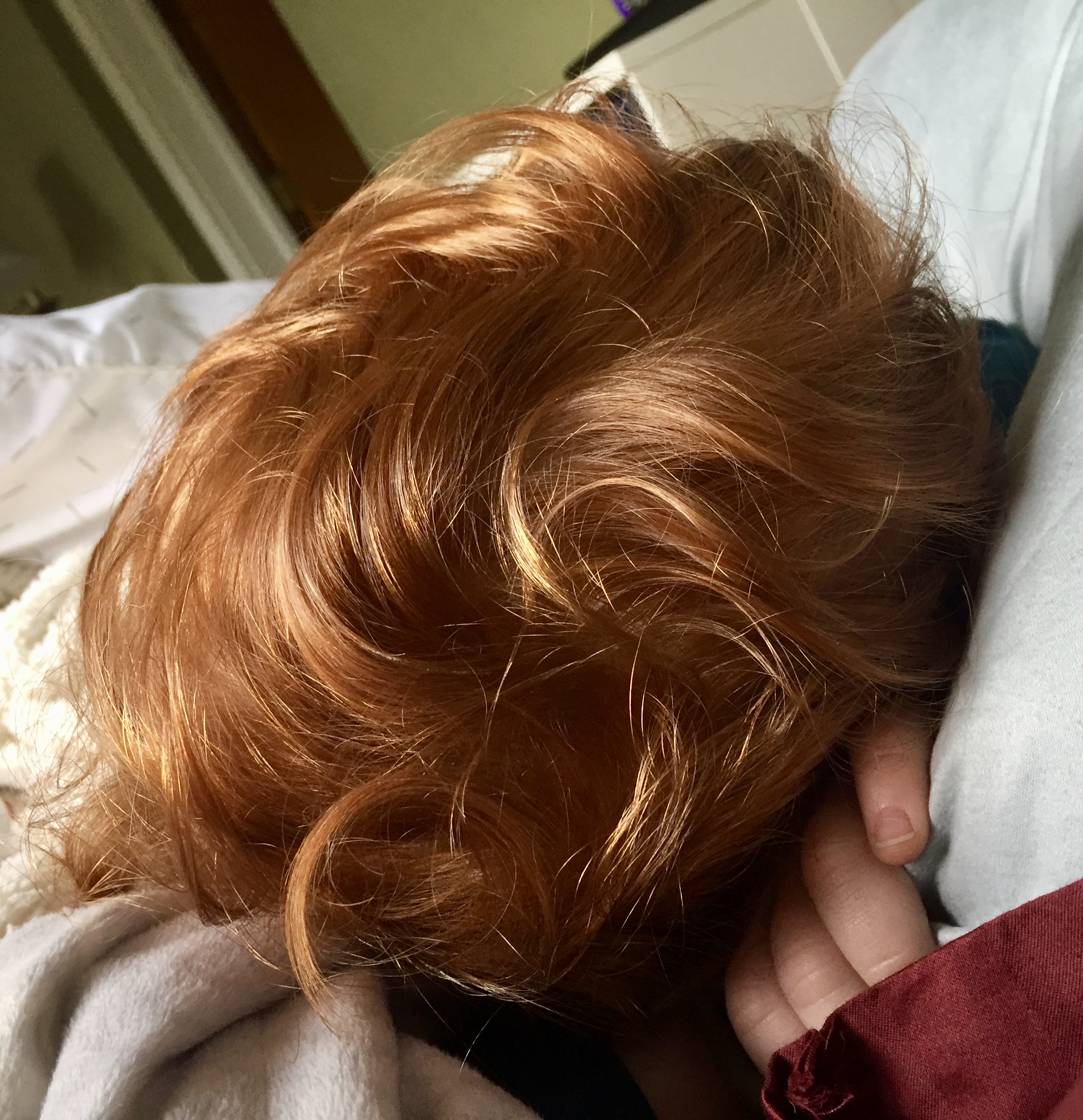
Your wild red hair before waking on Sunday morning and heading to St. John’s in Oniontown

You’re only four and a half years old now, but I’m writing to preserve the thoughts under your wild red hair until the day comes for you to retrieve them. Of course, nobody really knows what another person thinks. Let’s call this letter a gift of love, then, flawed like everything else in the world.

A few months ago you said something curious to your Grandma Kathy: “I don’t want to grow up. I’ll miss my beautiful voice.” She and I tell our friends about your words, which we find funny, but also haunting and sad. Kids like you say things so fresh and insightful that adults laugh through their tears.

Saint John’s Lutheran Church, where you are loved

Your voice is beautiful, Cole. In fact, everything about you is so beautiful that, truth be told, your parents, grandparents, relatives and dozens of other folks, like your church family at St. John’s in Oniontown, wish time would stop here and now. How could you ever be more beautiful than you are today?

Clocks break, though, and watches stop, but the present hour leads to the next, and no prayer can change this fact. It’s incredible to us—the grown ups who love you—that you have reckoned so young the relentless passing of life. Good Lord, pal, I wish you wouldn’t rush that pretty head of yours into eternal mysteries.

But here you are, telling your mom and dad that you don’t want to grow up because if you grow up you’re going to die. You’re asking if dinner is healthy because food that’s good for you will make you grow up. You want junk food instead, which won’t make your body big and strong. Your parents have explained that eating crap will only make you a sickly adult, but this logic hasn’t helped.

“What happens when I die?” you’ve been asking. We ache with longing to ease your mind. Your mom said, “We believe you go to be with Jesus,” and she was speaking our truth.

The trouble is, Cole, we say “believe” for good reasons. We also say “faith” and “hope” a lot, too. The word we shouldn’t say is “know,” and even though I’m a Lutheran pastor, you should ignore anybody who presumes to understand the mind of God and the terms and conditions of eternity.

The last time we had family dinner, your fear and suffering was overwhelming. You had already cried a couple of times that day and picked at your food, though we had a couple of unhealthy options for you. After clearing the table, we sat in the living room.

A cute little cry before you grew hair, Cole.

I’ll never forget what happened next. You stood in front of your father, your hands on his knees, and suddenly sobbed. These weren’t normal little boy tears, like the ones that fall when you don’t get your way or you smash your toe. These were “save me” tears, “I can’t breathe” tears. I recognized the terror washing over you. It happened to your Pop when he was about twice your age.

This fear has a couple of fancy names, “ontological shock” and “mortal dread” among them. They all mean the same thing: You understand the possibility that long ago you didn’t exist and someday you might not exist anymore. Notice I used another flimsy word, “possibility.” I’m sorry. We just don’t know.

You probably won’t remember that on a Sunday evening years ago when you were terrified, your mom and dad comforted you. Nobody denied the abyss you were staring into or dismissed your fear or told you to hush.

“Cole,” I said, “I believe that when we die we’ll all be together and safe.” That’s my sustaining truth, but much as I would like to plant certainty into your soul, you’ve started the spiritual work of a lifetime early. Nobody can do this job for you or say anything to make it easy.

I’m still doing my work and remember well waking up in the dark in a panic about what must happen to you, me and everyone else. We all die, and I no longer wish to be an exception to this rule. I’m less afraid than I used to be.

When you read this letter, please think back. If your Pop ever saw you crying “save me” tears, I hope you remember me saying, “I’m scared, too, Cole. We all are. Let’s hold each other and imagine this is what it feels like to rest in God’s arms. ”

Love,

Pop