Humility Needed as the New Millennium Clears Its Throat

800px-Chili_con_carne_1234

It’s chili. You eat it. (Credit: Wikimedia Commons)

Last week while eating lunch at Coffee Culture courtesy of a parishioner’s gift card, I felt them: the twitches of meaningless impulse. Open up the MacBook. Check the iPhone. Write a few notes. Skim the newspaper. These twitches were both mental and physical: adrenaline-fueled, microbursts of habit energy. I saw Ronald Reagan smiling and delivering his famous 1980 debate line to me: “There you go again.”

This is Mindfulness 101! When you eat, eat. When you read, read. As Thich Nhat Hanh writes, “Don’t just do something. Sit there.” I know all this stuff, but even with pray-meditating twenty minutes twice or thrice daily, I constantly forget. Early into my huge Caesar salad and spicy ambush chili, I remembered, “John, you’re allowed to just eat. You don’t have to be doing something else.” As I replay that moment, the image of my late dad pops up, his fussy dementia hands going: fidget, fix, reach, button, smooth, worry. Madness.

IMG_2704

Ahhh. In the chapel at Mount Saint Benedict Monastery.

Don’t be afraid. This is not a rant, kvetch, or lament. Like everybody else, I’m responsible for the state of my own interior, which is getting some special attention these days. This morning I sip coffee and release my old inventory of anxiety, breath by breath. I’m good—well, getting better, let’s say. By 10:00 a.m. I’ll be at Mount Saint Benedict Monastery, trying to stay ahead of worries in progress.

In the words of the recently departed Joan Rivers, “Can we talk?” Is it just me, or is it quite a chore to remain centered as this new millennium clears its throat? Assemble the following ingredients: middle-class income, spiffy technology, and submission to contemporary attitudes toward time and labor; then, bam, like Emeril Lagasse, add pinches of garden-variety stress and a personal crisis or two. What do you get? You get a guy with an expanding torso, irritated tongue, jerking brain and muscles, and pleading spirit: For God’s sake, relax, will you.

The first thirty or so years of my life weren’t jerky. When I think about growing up and even college and graduate studies, 2014’s brisk march of time and frenzy of labor comes into clear view. For years I’ve had Han Solo’s bad feeling about this. Recently I happened upon an article by Dr. Peter Gray, who put some good words to my concerns. He graduated from high school in 1962, a year after I was born, but his description of childhood sounds a lot like mine:

In the 1950s, when I was a child, we had ample opportunity to play. We had school, but school was not the big deal that it is today. Some people might not remember, but the school year then was five weeks shorter than it is today. The school day was six hours long, but at least in elementary school, two of those hours were outdoors playing. We had half-hour recess in the morning, half-hour recess in the afternoon, a full hour lunch. We could go wherever we wanted during that period. We were never in the classroom more than an hour at a time or for four hours a day. It just wasn’t the big deal, and homework for elementary school children was essentially unheard of. There was some homework for high school students, but much, much less than today. Out of school, we had chores. Some of us had part-time jobs, but for the most part, we were free to play for hours a day after school, all day on weekends, all summer long.

IMG_2722

Beloved wife Kathy is still in touch with the power of play. This is our front yard on Halloween. The trick-or-treaters were slack-jawed with wonder.

I don’t know about the shorter school year, but Gray nails it for the 60s and 70s. I neither noticed nor appreciated the wide fields of time that opened up after school and in the summer. My single academic stress was trigonometry. Bless his heart, teacher Chet—an old anomaly who went by his first name—gave me a passing D one quarter to save my National Honor Society hide. Beyond that, my turmoil had to do with divorced parents and withering nerves with the ladies. But when my twenty-two-year-old Micah was in school, the whole family was constantly stressed. The homework was oppressive, especially for a kid who didn’t engage well with books and worksheets. I’m out of the loop now, but can’t imagine the expectations have eased much, if at all.

One of my favorite memories is of Micah’s fourth-grade teacher talking to wife Kathy and me about our son’s messy daily planner. “Daily planner?” I thought, “Micah’s follow through with toilet paper is sketchy, and you want him to keep a to do list? You’ve got to be &^%$# kidding me!” Of course, we nodded politely. Twenty-six-year-old daughter Elena faired much better academically, knocking off homework in study hall and devoting her teenage suffering to bi-polar disorder—at least we think that’s what it was. For me, 1988 through 2012 was a long stretch of parental confusion and convulsion peppered generously with joy.

IMG_2787

Micah in, what, kindergarten? His first grade teacher didn’t have much use for him, with his silly heart.

It would be whiney of me to blame academics for Micah’s troubles growing up, but I saw in his school experience seeds that have grown into the view of life that had me jangled over my lunch last week. I should first say that my son had many wonderful, skillful, appropriately affectionate teachers. My only gripe is with a few along the way who seemed to dislike children.

I get the impression that lots of teachers are frustrated by the Weltanschauung that stresses kids out and has adults multi-tasking themselves into hemorrhages. (Check out the excellent reflections of my blogging friend Beachmum for some insights on how some teachers feel.) We’re caught in a powerful current, a way of being that constantly vexes gladness. This way, the delight of pharmaceuticals, is driven by hubris and faulty assumptions.

We humans are overconfident in our knowledge. It’s an attitude thing. How many of us got pudgy twenty years ago because we watched our fat intake and gorged at the carbohydrate trough? One at least. Today, we’re assured that the sophistication and competence of the United States health care system make an Ebola outbreak here highly unlikely. Forgive my dis-ease. This has nothing to do with researchers, doctors, and nurses, who no doubt take their work seriously and have good intentions. But what seem to me to be preliminary findings are regarded as conclusive.

I may be in the minority, but the precaution of requiring people who have worked closely with Ebola patients to lay low for three weeks seems reasonable to me. Zipping Kaci Hickox into a tent was perhaps unwarranted—even though the tent was inside a hospital building, not outside as I foolishly first thought—but asking her to avoid contact with folks for a while is prudent. Given the ferocity of Ebola, the fuss over a twenty-one-day quarantine is surprising. Is that really a burdensome sentence, even if all the evidence suggests that a health care professional isn’t contagious? I suppose if you’re absolutely positive that we know all there is to know about Ebola, then ¾ of a month feels like a year. (More on time later.)

200px-Harland_Sanders

How sad: a “really inhumane” recipe. (Credit: Wikipedia)

Kaci Hickox could probably use a port-a-potty, not wash her hands, and stick her fingers in thousands of Maine residences’ mouths and not pass along a single case of Ebola. In fact, I’m not worried, but I do harrumph at the prevailing lack of humility, any sense that our knowledge might be incomplete, indignation toward those who maintain skepticism, and willingness to sling lawsuits so quickly. And Hickox’s comment that her treatment was “really inhumane” may be a stretch. Newark’s University Hospital didn’t shove her adrift on an ice flow; they put her in an indoor tent and brought her Kentucky Fried Chicken.

My point with the examples of carbohydrates and Ebola is that once we’ve decided we know something about science, we dig in our heels. According to Peter Gray, what we know about education and child psychology might also be mucking up future adults. In his aforementioned article, he identifies . . .

a “school-ish view of child development” – the view that children learn best everything from adults; that children’s own, self-directed activities with other children are wastes of time. We don’t often say it that way, but that’s the implicit understanding that underlies so much of our policy with regard to children, so childhood has turned from a time of freedom to a time of resume-building. 

Gray presents convincing evidence that our adult impulse to micro-manage childhood learning and development (i.e. not letting kids play, make up their own rules, work out their own conflicts, and generally not getting the hell out of the way and leave them be) is burdening a generation. Depression, anxiety, and suicide have been on the rise in recent decades. (Here’s a link to his article, “Kids Today Are More Depressed Than They Were During the Great Depression. Here’s Why” if you want his numbers.) My concern: like Gray, I remember when my habit energy wasn’t jangled and so have a shot at making changes to restore my peace. But what if all you’ve ever known is a relentless impulse to accomplish something and a haunting sense that if you’re playing or resting, then you’re wasting time? Gray argues that there is a crucial, “evolutionary function of play.” Again, follow that link if you want to explore his reasoning.

Our experience of time is irrationally rushed and troubled. Isn’t this really the impulse that drives multi-tasking, texting while driving perhaps being the most hazardous example? On his television show Phil Donahue used to hold the microphone in audience members’ faces and say, “So little time.” Those words knuckle our heads and slap our asses. You need to perform several actions at once because you don’t feel like you have enough time.

I offer one flimsy piece of evidence, a phrase that is regularly spoken by my adult children: real quick. Catch the urgency? “Dad, can I see your laptop real quick?” “Dad, can you hold [grandson] Cole real quick?” My thought is generally, “No.” I want you to use my laptop for as long as you need it. And, damn it, you hand me that baby, it ain’t going to be real quick.

IMG_0846

A painting by the late, self-educated Milton Sontheimer, whose work helps me to center myself

As proof that we can safely slow down, I present Milton Sontheimer of blessed memory. Toward the end of his life, which came about a month ago, congestive heart failure had reduced his pace to a crawl, but Milton always moved as if he had more time than he needed. The walls of his home with now-widowed Mary are crowded with his paintings. For years, he baked Communion bread for our church and wrapped it in foil, using and reusing the same piece until wrinkles rendered it flimsy. Wise Milton: no rush—and no waste.

We assume that because technology exists, we should make full use of it. Many thoughtful people are aware of this observation, but I want to credit the last two sages who have brought it to my attention: Beachmum, whom I’ve already referenced (I read back some ways, Mum, and couldn’t find the citation; I know you wrote it, though), and Dr. Brad Binau, a professor from my days at Trinity Lutheran Seminary, whom I mentioned in a recent post. Smart phones, tablets, notebooks, and laptops exercise centripetal force—literally, almost, considering how often my ear and nose are smashed up against my iPhone.

Birnau_Uhr_Sonnenzeituhr

Our opulent enemy? Why? (Credit: Saberhagen on Wikimedia Commons)

We peer over our reading glasses at people who are apparently lost, confused, or just making up their minds. I’ve learned to be watchful for what I call periods of discernment both in myself and others. In thirteen years as a parish pastor I’ve sat with scores of pilgrims on their way to new lands of the spirit. They wonder what to tell loved ones who want to know what’s up. I suggest, “Tell them you’re taking some time to figure things out.” These are stretches of months, even years, to honor, not stampede through. A couple days ago I heard the following what-I’m-saying story on The Writer’s Almanac about the poet C. K. Williams:

His two greatest passions in high school were girls and basketball. He was a good basketball player, 6 feet 5 inches, and he was recruited to play in college. But then he wrote a poem for a girl he was trying to impress, and she was actually impressed, and so he decided he should be a poet instead. He dropped out of college to move to Paris because that’s where he thought a poet ought to live. He didn’t write at all while he was there, but he did realize that he didn’t know anything and should probably go back to college. He said: “It was an incredibly important time. Not much happened and yet my life began then. I discovered the limits of loneliness.”

My point, I guess: if I’m not willing to be lost, I might not ever be found.

IMG_2699

A three-hour nap in a monastery guest room–a remarkable blessing

Endnote: I did make it to Mount Saint Benedict Monastery. (Obviously I wrote much of this post after my retreat.) I won’t bore you with the whole day, other than to pass along two details. 1.) I took a three-hour nap in the afternoon; the twitches of habit energy wear a guy out. And 2.) I noticed while reciting psalms with the sisters that they spoke more quickly than in the past. Their recitation is still spacious, but the gentle silence between verses is now thin. I don’t know why.

Lord, spare the sisters and us all from contemporary adrenaline and grant us mindful, humble impulses.

Coming to Myself from a Distant Country

Then Jesus said, “There was a man who had two sons. The younger of them said to his father, ‘Father, give me the share of the property that will belong to me.’ So he divided his property between them. A few days later the younger son gathered all he had and traveled to a distant country, and there he squandered his property in dissolute living. When he had spent everything, a severe famine took place throughout that country, and he began to be in need. So he went and hired himself out to one of the citizens of that country, who sent him to his fields to feed the pigs. He would gladly have filled himself with the pods that the pigs were eating; and no one gave him anything. But when he came to himself he said, ‘How many of my father’s hired hands have bread enough and to spare, but here I am dying of hunger! I will get up and go to my father, and I will say to him, “Father, I have sinned against heaven and before you; I am no longer worthy to be called your son; treat me like one of your hired hands.”’ So he set off and went to his father. But while he was still far off, his father saw him and was filled with compassion; he ran and put his arms around him and kissed him. Then the son said to him, ‘Father, I have sinned against heaven and before you; I am no longer worthy to be called your son.’ But the father said to his slaves, ‘Quickly, bring out a robe—the best one—and put it on him; put a ring on his finger and sandals on his feet. And get the fatted calf and kill it, and let us eat and celebrate; for this son of mine was dead and is alive again; he was lost and is found!’ And they began to celebrate. (The Gospel of Luke 15:11-24)

220px-Pompeo_Batoni_003

The Return of the Prodigal Son (1773) by Pompeo Batoni (Credit: Wikipedia)

Most Christians I know read this Parable of the Prodigal Son from the perspective of the faithful son, whose verses I didn’t include. He worked hard for his father “all these years” and stomps off, resentful that his narcissistic punk brother is about to enjoy some “fatted calf.”

I understand the faithful son, but more often I feel sympathy for the Prodigal son. Now let’s be clear: for the first part of the parable, he is—to employ a theological term—an asshole. Imagine proposing to your folks that they hand over your inheritance before they die. It’s amazing that the father doesn’t simply have his son flogged or thrown off a cliff. But he doesn’t, and off the kid goes to get sozzled and satisfied.

800px-Johann_Wolfgang_Baumgartner_-_The_Prodigal_Son_Living_with_Harlots_-_Google_Art_Project

The Prodigal Son Living with Harlots by Johann Wolfgang Baumgartner (1712-1761) (Credit: Wikimedia Commons)

Having missed any early-adult period of drunkenness, debauchery, and licentiousness, I don’t relate to that side of the Prodigal son. Instead, I find myself standing with the hungry kid and the pigs at that moment “when he came to himself.” What gorgeous phrasing! The New International Version of the Bible says, “when he came to his senses,” but “came to himself” more accurately describes a universal human experience. At least it resonates with me.

Here’s my prodigal process. In the parable, the son, wanting to party and get horizontal, leaves behind his best self, the self he comes to recognize only by getting his face rubbed in pig sludge. He also happens to travel to a different country. My story works differently, but ends the same. I stay right where I am and come to understanding not dallying with prostitutes—I do drink some wine—but frittering away my inheritance by succumbing to stressors that seem perfectly matched to my weaknesses.

Anxiety

If I looked this good anxious, I might not complain. (Credit: Wikimedia Commons)

I don’t know what the Prodigal’s household was like. (Yes, it’s a parable, so there’s no real background, but work with me here.) Maybe he was pampered. Maybe he got away with everything. His big brother probably hated him from the start. And since nothing was ever good enough for the Prodigal, the second he passed puberty a hedonistic frenzy was inevitable.

The Coleman household for me, the youngest of four children, was full of love, but like so many families of my generation, we panicked at any rocking of the boat. Many people my age know exactly what I’m talking about, and whole disciplines and vocabularies have evolved to explicate and heal family systems and all the frazzled, wounded boomers they’ve produced.

Don’t rock the boat: the colloquial mantra of 2225 Wagner Avenue. Of course, I didn’t have the maturity to realize it at the time, but being outwardly upset or angry was not acceptable. When it happened, everyone’s guts turned to water. A top priority, then, wasn’t to be happy and well-adjusted (who knew what that meant back then?). Just let the waters be calm! As long as we were acting okay, then everything was okay. Yeah, sure.

2011-03-03-pano

Ah, still waters! Might be Three Mile Island, Love Canal, and Vesuvius underneath, but as long as there aren’t any whitecaps, we’re solid. (Credit: Thomas Bresson on Wikimedia Commons)

I can’t speak for my siblings, but this fallacy has followed me into adulthood and climbed the walls of my psyche like ivy. Over the last thirty years, this plant has been ferocious. Whereas the Prodigal got lost in harlots, booze, and hunger, I’ve found myself lost dozens of times over the years when people don’t act okay. Nothing different than back home. When someone isn’t being normal, then do something to get ‘em normal again! Don’t fix the problem, mind you, but get ‘em normal. (Let me state, again, my home when I was growing up had much to praise. Everyday wasn’t a dysentery epidemic. And on a different subject, I’ll also toss out, if you’re going to get lost in something bad, reckless sex and drunkenness might be more fun than crippling anxiety and paralysis, but I can only speculate here.)

Live_in_an_ivy_tower_(8059746783)_(2)

Sometimes ivy takes over so it seems like there’s more plant than stone. (Credit: Psyberartist on Wikimedia Commons)

So the Prodigal “comes to himself” standing in a field with pigs and staring longingly at what one blogger says are carob pods. Hunger has granted him an epiphany: “What in God’s name are you doing? Go back to yourself. Whatever is good and wise within you, return to that. Now!” I envision him taking those first steps back toward himself. The parable teaches that the young man is going back to his father (God), but I choose to hang onto those words, “when he came to himself,” and let God and the son marry. The long walk toward God is the walk toward himself.

800px-Ceratonia_siliqua_MHNT.BOT.2011.3.89

Mmm! An overripe, dehydrated banana? A used, sunbaked . . . ? Oh, never mind? Carob pods. (Credit: Roger Culos on Wikimedia Commons)

A few twilights ago at 4:10 a.m., my walk began, not away from squandering inherited wealth, but from squandering myself. I awoke content. For the most part, this isn’t how things have been going over the last couple of years. I’ve been feeling the crack, sting, and ache of ivy digging into my brick and mortar. So what do you do when you’ve been hurting lately, and contentment shows up a couple hours before the alarm goes off?

Pee. That was my first decision. My second was to prop myself up in bed next to sleeping Kathy and pray. And breathe. And enjoy. Then, like the Prodigal, I came to myself. I have no clue why. All I know is that I somehow saw clearly the fallacy I’ve been living under for far too long. Weakened by the pull and weight of my personal ivy, I’ve gotten lost. Prayer, running, and dietary sanity—outward signs of the inner John—have shrunk or ceased altogether. I used to get up before dawn to pray and write, then jump into company time. Most days included four or five miles on the track. Meals weren’t perfect, but they were generally mindful.

Well, in recent months you can forget all that shit. So why, as I sat straight up with the cool, dark air touching my arms, did I come to myself? “What in God’s name are you doing? Go back to yourself. Whatever is good and wise within you, return to that. Now!”

IMG_2610

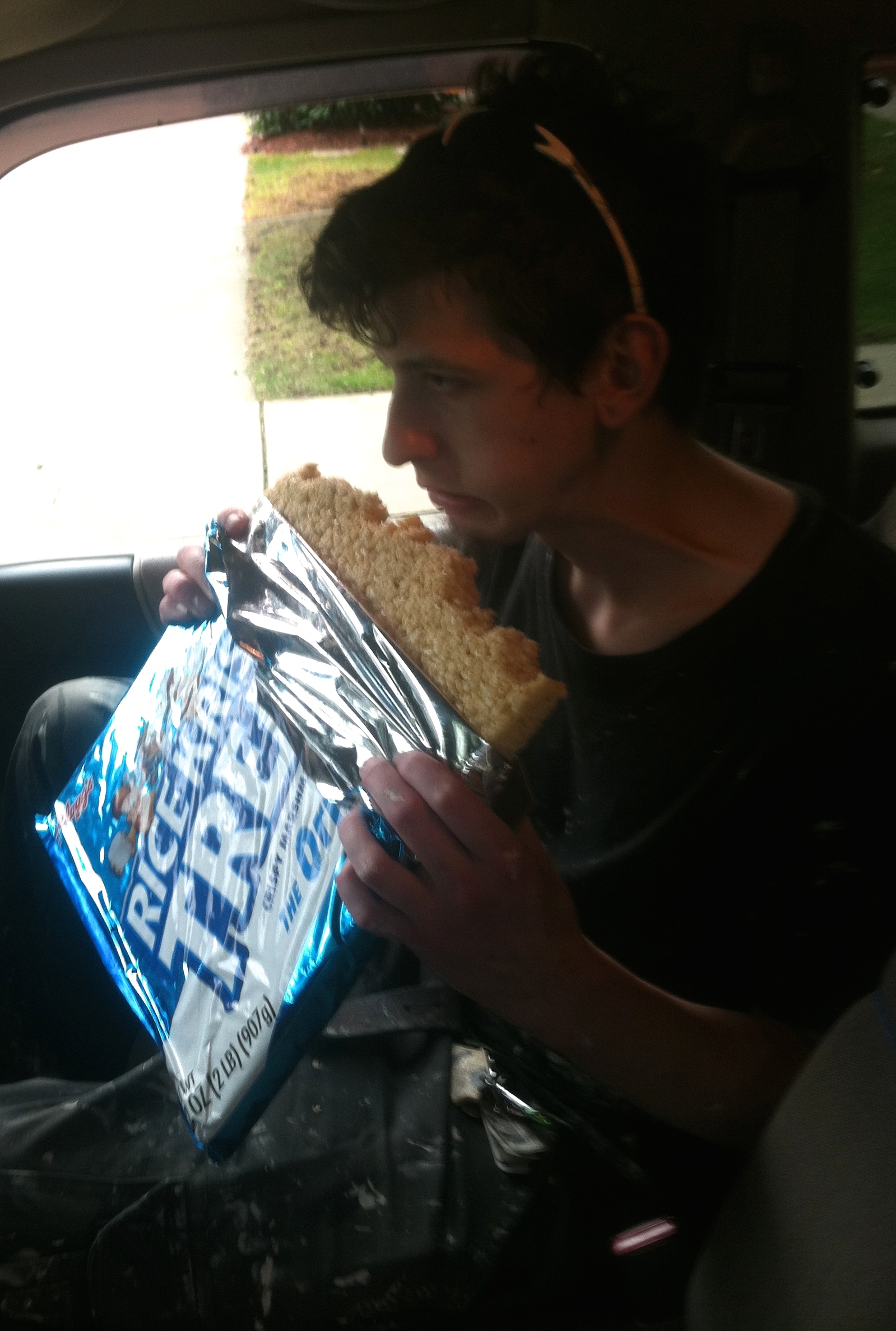
Son Micah working on a two-pound Rice Crispy Treat after a hard day of painting. Laughter comes more easily after I find myself

I guess the timing of my Prodigal moment doesn’t matter. Nor do I need a reason that I felt welcomed and embraced, as if I had left myself for a distant country and returned. An embrace. My body received it, as when your chest meets another chest and you rest your cheek on a beloved shoulder and know you’re not lost anymore.

In the parable, the father sees his son in the distance and runs out to hug and kiss him. Then they finish the walk home. I got hugged and kissed, too. Maybe it didn’t come from God, but it sure seemed like a greater “Welcome home, son!” than I could have given myself.

This home isn’t on Wagner Avenue or Shenley Drive. It’s the home I believe we all have to find for ourselves over and over again. For me, it’s about “coming to myself”: held close by One who rejoices that I’m found, sitting next to my sleeping wife, putting my soul’s arms around all those I love, and believing that Mystery has ways of making weak brick and mortar strong again.

IMG_2564

My soul’s arms hold Cole when I come to myself

My Parental Gland

One morning in mid March, my parental gland sounded its mysterious longing in my chest. Of course, there’s no evidence such a gland exists, but I’ve got one. Made visible it would resemble a translucent almond situated behind my sternum, right where you get the wind knocked out of you.

I was pray-meditating at 7:30 a.m., propped up in bed, wife Kathy sleeping next to me. The only sound in the house was twenty-two-year-old son Micah whirling around downstairs like Looney Tunes’ Tasmanian Devil. (He could slow down his routine and still get to his painting job on time, but he makes coffee, finds clothes, throws a nutritionally hollow lunch into his knapsack, and puts on his coat in a barely-managed frenzy.) I listened and breathed. The front door creaked open and banged shut, and thud thud thud he went down the front steps; car door; engine; drove away, at a reasonable pace, thank God.

IMG_1234

Micah smoking his e-cig after a hard day’s work. How can you not love a twenty-two year-old who lounges in onesie jam-jams and tiger slippers?

That’s when my parental gland fired, as the car’s whir became a sigh that became silence. Kathy slept. The neighborhood was reverent. Deep breaths embraced the longing in my chest. Longing. Or call it whatever. That contradiction, that lush tundra parents inhabit as we watch our children move into the distance. Pride blossoms against apprehension’s frost.

42-21914121

Frost on an orange flower–a father’s spirit watching his child drive away. (Credit: Image Source / Corbis)

Daughter walks from the car to the school building. Please. After you kiss your son’s forehead, he gets wheeled away for an appendectomy. Please. Daughter and son speed off with friends for some destination you’ll never find out about. Please. Each departure turns me, at least, into a beggar: God on high, hear my prayer.

Lesmiserables_1900_valjean_rescues_Marius

“God on high, hear my prayer.” Jean Valjean rescues Marius–“like the son he might have known.” (Les Miserables, Credit: Mead Schaeffer / Wikimedia Commons)

If only my parental gland had dissolved once daughter Elena and Micah reached legal drinking age. When they were teenagers I peeked between my fingers like a child as they stumbled out of sight into their respective barbed wire and razor blades: flirting with death, dancing with heroin. I’d figured on landing in a deep blue expanse of peace if they grew up and straightened out.

Both of my children are healthy and sane at the moment, but sadly, no blue expanse. Turns out my heart worries even when my head can’t name the threat. It’s that shimmering parental gland. Mine is more active than ever, gaining potency as the years call me to honesty. I love Elena and Micah so much it hurts sometimes, especially when they’re traveling alone, fading from view.

42-25270219

Someone’s daughter disappears. Someone’s parental gland sounds. (Credit: Hans Berggren / Johner Images / Corbis)

My conclusion: a father’s and a mother’s hurt and sorrow reside in the same dwelling with a love that makes us want to take off after our adult children, pick them up in our arms, and rock them to sleep. That’s what my gland does, anyway. I’m not kidding. I would gladly put Elena or Micah in my lap, rest their head against my shoulder, and listen for sleep’s slow, even breathing. Ah well. Pain and longing are in love’s fine print. Deal accepted.

Now Elena is married to Matt, and they’ve given us all Cole. Judging from what a mush bucket I am already, I’m thinking the parental gland working so abundantly these days will be promoted and given grandparental duties as well. The raise in compensation so far has more than covered the increased workload. Each time my grandson cries, I’m in that lush tundra. Please.

800px-Tundra_wetland_with_plants_reflected_in_water

I pray from this place each time my children leave. (Credit: John and Karen Hollingsworth / Wikimedia Commons)

That’s what happened today when Elena, Cole, and I met at Presque Isle for a walk. The wind was chilled by snow and icy Lake Erie, and Cole was plenty warm, but in no mood for the stroller. Half a mile in, we pulled off the path for a drink. The kid’s amazing. He managed to nurse and make those calming-down snivels infants do after a crying jag. His tank full, we headed back to the car, taking turns carrying him. For a couple minutes, as I faced him forward and held him close, I whispered Grandpa foolishness against his bald head and listed in a chant everybody who loves him. But then he started blubbering again, which told me that his appetite for affection is bottomless. No problem. My grandparental gland, unlike my pancreas, is invincible.

IMG_1435

“Take me out of this stroller and tell me you love me! Right now!

When we got back to the parking lot, Elena changed Cole’s diaper, got him in his car seat, and we all kissed goodbye. I started my truck, but waited as they drove off. Please.

I thought about my favorite passage from Hermann Hesse’s novel Siddhartha. The main character is in anguish as his son walks away into the bliss and suffering life holds for him. A sage speaks to the father:

Do you then really think that you have committed your follies in order to spare your son them? Can you then protect your son from Samsara? How? Through instruction, through prayers, through exhortation? My dear friend, have you forgotten that instructive story about Siddhartha, the Brahmin’s son, which you once told me here? Who protected Siddhartha the Samana from Samsara, from sin, greed and folly? Could his father’s piety, his teacher’s exhortations, his own knowledge, his own seeking, protect him? Which father, which teacher, could prevent him from living his own life, from soiling himself with life, from loading himself with sin, from swallowing the bitter drink himself, from finding his own path? Do you think, my dear friend, that anybody is spared this path? Perhaps your little son, because you would like to see him spared sorrow and pain and disillusionment? But if you were to die ten times for him, you would not alter his destiny in the slightest.

This is the hardest part of possessing my peculiar gland: as Elena, Micah, and Cole walk away from me, “finding their own path,” I wonder when my chest will finally crack open from wanting to spare them. But there is no sparing them—or forcing them.

IMG_1319

They could toddle, sprint, or “walker” away from me. No matter. Joy and longing kiss.

Now, in my fifty-third year, I understand the covenant: a father’s and grandfather’s love breathes, honors the silence when the beloved is out of sight, and prays from a lush tundra.

Note: “My Parental Gland” originally appeared as a guest post this past March on a great blog, Kerry’s Winding Road.

Talking to God about Jim Foley and the World

Dear Love:

He’s Jim, not James, not Foley. Jim because that’s what his mom calls him. I’m not a journalist, just a schmo who never heard of the man before yesterday. To me, he’s a terrified guy reading a coerced last statement with remarkable grace. To me, just a dude, a human being, a fellow pilgrim with a handsome head, which, kneeling in his orange get-up, he’s about to lose.

Are you suffering over his end? I’m not even sure an answer would help. I’m doing my morning thing, sipping away at Starbucks, scanning the horizon of another day, already feeling a bit low, trying to get a few words down before heading to the church. I’d planned to write about baking and nursing—happy thoughts—but I can’t breathe right.

“I wish I had more time,” Jim said. “I wish I could have the hope of freedom and seeing my family once again, but that ship has sailed. I guess all in all, I wish I wasn’t American.”

Then a man in a black mask killed him, not with a sympathetic bullet, but with a knife. A six-inch blade? Eight-inch? I can’t tell. Sharp, hopefully. I guess compassion is relative. The ISIS militant could have used a soupspoon or vegetable peeler.

“I wish I wasn’t American.” Jim’s last words. What did the militants do to get the man they had held captive since Thanksgiving Day of 2012 to say that? “Read this statement, or I’ll start with your toes, work up to your balls, and then really hurt you”? Or “Say this, or as soon as I’m finished with you, I’ll bring out your colleague and send him to hell right behind you”? Whatever. An answer here wouldn’t help, either. I don’t care whether he was forced or, after all those months, had Stockholm syndrome.

By don’t care I mean when your children are about to die an extremely shitty death, they get a pass. I think of Dietrich Bonhoeffer climbing the gallows naked, having said his last words: “This is the end—for me, the beginning of life.” He was thirty-nine.

Forty-year-old Jim didn’t get to pick his last words, which pisses me off. It’s one thing to get your head whittled off, another not to get your final say. Such a complete murder! Before losing your life, you must hand over your self.

Breathtaking evil—literally. Like I said, God, I can’t breathe right. Cleansing breaths aren’t working. I won’t go through all the ways your children here are being absolute craps to each other. You know, Lord. So much of your loving touch all around, but the world over, we’re having small-group riots with brass knuckles, switchblades, tear gas, missiles, and fury. We’re killing in the same way we munch potato chips at midnight: we can’t stop.

Folks are putting their hands in air lately: Don’t shoot! Others are pleading: Don’t loot! I’ve got my hands in the air, too, but they’re raised to you. I don’t expect you to do anything. I’m just reaching out for you because, well, I want you to hold me. Your creation hurts in me today.

In a movie I love, a priest says, “If might is right, then love has no place in the world. It may be so, it may be so. But I don’t have the strength to live in a world like that.” The might of a bomb, the might of one blade. Don’t worry, Lord, I’m not suicidal. I’ll have a couple glasses of wine tonight; that’s as bad as it will get.

It’s just that I can’t breathe because I keep seeing Jim’s set jaw and pursed lips, steadying himself for when the militant ends his statement. And Jim’s family, so proud of him. Good Lord!

Please tell Jim we all understand. If he needs his head, put it back on for him. And sit with everybody who loves Jim and kiss their despair with what looks at the moment like absurdity: your peace.

Love, John

An Incidental Monastery and Other Siblings from the Community of Mystery

Blogger’s Note: This post is nearly 2000 words long. I’ll understand if you can’t spare the time. Peace and love, John

I try to nap an hour each afternoon and pray so often lots of people would consider me lazy. Breathe in, breathe out. Be mindful. Let go, John. Let go. I’m coming up on twenty-five years of practicing contemplative prayer. When I started I was in terrible shape: depression, panic attacks, and a constant buzz of anxiety in my body. In contemplative prayer, I sit in the quiet dark with the Loving Mystery, who saves me. Not saves as in are you saved? I mean saves me from despair and gives me hope and just enough sanity to get by. Just.

Axentowicz_The_Anchorite

Axentowicz the Anchorite. I look nothing like him when I pray, except maybe in heart and spirit. (Artist: Teodor Axentowicz. Source: Wikimedia Commons)

Contemplative prayer has also birthed in me a paradoxical spirit, which songwriter Don Henley describes pretty well in “Heart of the Matter”:

The more I know, the less I understand.

All the things I thought I figured out, I have to learn again.

The truth is, I don’t know or understand much, nor have I figured out much. The wonderful Lutheran folks I serve as pastor might find this confession troubling. Sorry about that. Each day begins with a foundational proposal: Okay, let’s try this again. This, of course, is life. I often feel embarrassingly inadequate to its great gift. I’m driftwood in the presence of Gracious Light. What little I have figured out, I have to keep learning again. I say a constant, wordless prayer: Have mercy. Teach me one more time.

Last Wednesday was a case study in all that I’m haltingly articulating here. The day proper began at Starbucks with me sipping my summer usual, an iced decaf coffee with a decaf shot of espresso (a.k.a. a redeye or a tall iced what’s the point?). The agenda was light, no troubles on the horizon, no stressful deadlines lurking, but I had a surplus of nervous energy. I was either going to blow soothing kisses to my adrenal glands or spend the hours ahead rushing toward no place in particular.

379px-Eustachi_nervous_system

Hope for the day: identify the sparking nerves and make them behave. (Artist: Bartolomeo Eustachi. Source: Wikimedia Commons)

A chance chat with Starbucks regulars Rick and Noreen helped. They had just returned from a cruise—their destination escapes me at the moment—still tan and fresh. Noreen wore a fedora, a stylish cancer accessory. She looked great, but was in the midst of treatments, sixteen or eighteen more to go. “But who’s counting?” they said. I told them Abiding Hope, the congregation I serve as pastor, would pray for them. (After thirteen years in a collar, you’d think I would have some understanding of how prayer works, but I’m as clueless as a toddler trying to figure out a good reason for kale. If nothing else, I think it must please God to hear “touch Noreen with your healing hand” rather than “grant me a true aim as I launch a missile at that 777.”) Be welcome to join me in a loving word to the Creator for Noreen and Rick.

The determined, vulnerable eyes of people looking into the mortal abyss made me slow down. I can think of no better way to honor what fellow human beings are going through than to sit still with them, receive as much of their reality as possible, walk mindfully across the parking lot to my crappy truck—watching along the way for traffic and appreciating the pilgrimage of clouds—and dance and bicker with my path and what lines it.

IMG_2250

A gaggle of geese was on my path. They took over five minutes to cross from their morning bath to the sunning yard. They taught me patience on my way to run clean socks to painter son Micah, who had spilled bleach on his shoe, sock, and athlete’s foot. Ouch!

At the church, before settling in at the standing desk, I made a trip to the mailbox, and that’s when I really began learning again what I had already figured out. The lesson, of course, was (and is) to live in the moment. The cliché is “stop and smell the roses.” The blessings as morning turned to afternoon and to evening reminded me of such wisdom, but also granted me joyful humility. Each time I encountered another wonder, I was convinced anew that I have no idea where I’m going in this life and why. I’m vertical, ambulatory, taking nourishment, blah-blah-blahing, and gaining weight, but somehow or other I don’t feel in charge of my travels. It’s as if a great community of mystery appears one lovely sister or brother at a time to greet me: “You thought you were going to the mailbox, but you were also sent out to meet me, to hear my teaching, to receive my anointing.”

On the way to the mailbox and back:

IMG_2200

Delicate, almost the size of a Canadian dime

IMG_2196

Right by the church door: I don’t know their name, but they seemed to know mine

After work I went to Radio Shack.


IMG_2201

Okay, John, go ahead and think you were after a power cable. You came to see me, a nest above a beauty shop sign. I’m glad my birds sang to you.

On the way home from Sally’s nest, an old powder blue Mustang was riding my tail, and annoyance almost blinded me. When I pulled over to let the guy pass, a sibling greeted me.

IMG_2214

Thank you, brother from the community of mystery, for walking a block with me! Live well and long.

Late in the afternoon I went for a run on the sidewalk trail at Presque Isle, northwestern Pennsylvania’s treasure which juts out into Lake Erie.

800px-Agelaius_phoeniceus_-standing_on_wood-8

Was I exercising, or did I put my running shoes on to go see a red-winged blackbird swoop across my path? (Credit: Bob Jagendorf. Source: Wikimedia Commons)

Wednesday’s spirit has continued to give me blessings beyond its allotted hours. On Friday I went to the bank to pour what turned out to be $138 into a coin counter. At least that’s what I thought. Turns out my mission wasn’t about turning change into bills, but something else.

IMG_2226

I had forgotten how to wash my hands. Thank goodness for PNC’s foresight. (Heavens, what have we come to?)

On Saturday wife Kathy and I had a yard sale presumably to get rid of some excess and make a few bucks. As a steady rain splashed our event, two surprises taught me again what I thought I had learned:

IMG_2239

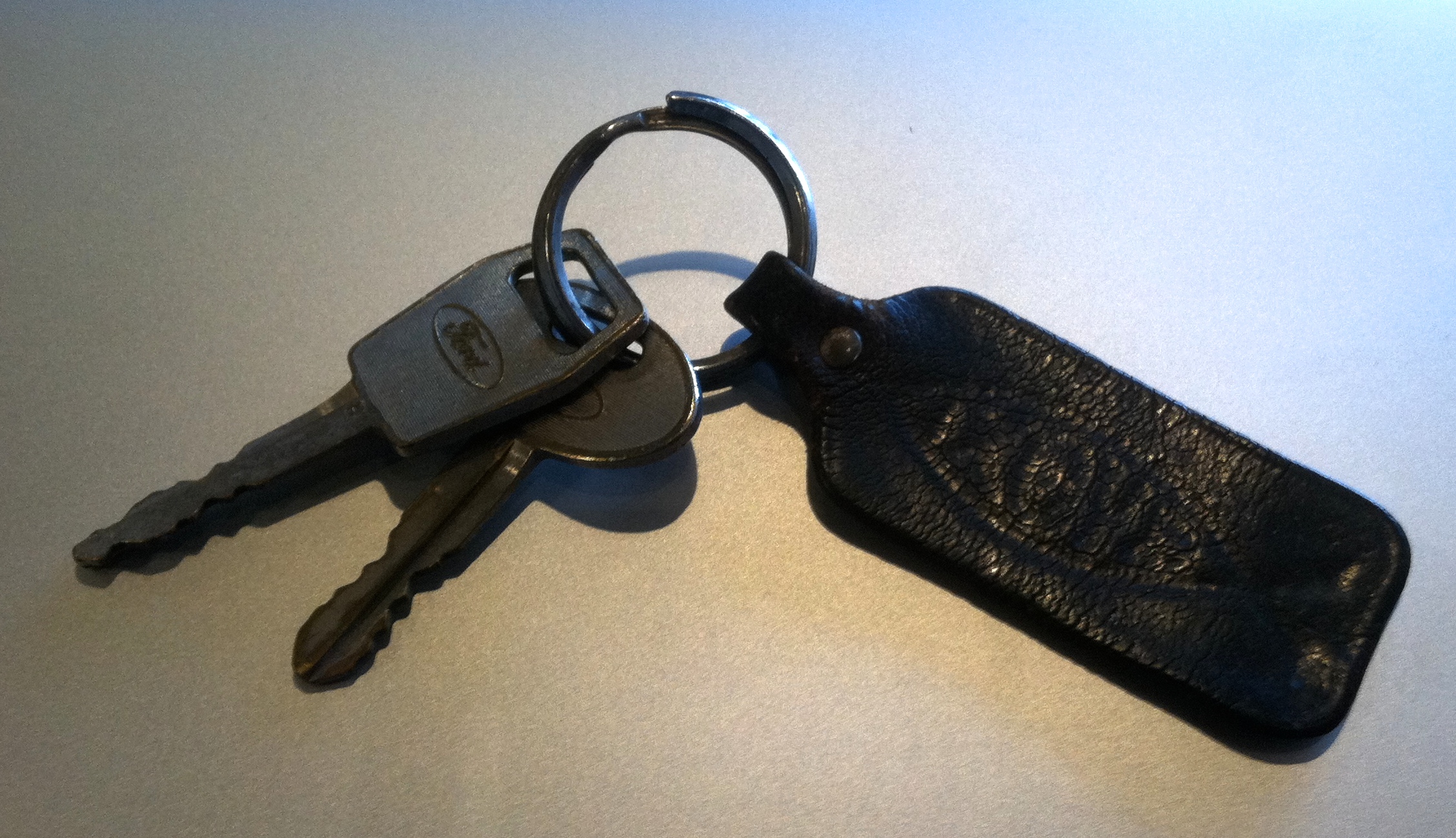
Kathy found in a dark closet corner the keys to my late mother’s Mercury Lynx on the leather Jesus fish keychain I made as a kid at summer camp. I drove the Lynx after Mom died and used that keychain into my thirties. “Hi, Mom!” “Hi, Camp Lutherlyn!”

IMG_2227

I met a woman–the only person I’ve seen–who wears my round John Lennon glasses. “Blessings, sister!”

Actually, I confess that literal brothers prepared my heart a couple weeks ago to receive Wednesday’s wisdom. I had driven two hours to Saxonburg, Pennsylvania, to officiate at Caity and Ian’s wedding, and lovely Kathy was kind enough to come along. A few hours before the nuptials we saw a small sign along Route 8: Holy Trinity Byzantine Monastery. I drove past the turn off, but Kathy said, “John, you know you want to go see it.” So we did a u-ey, wound through four or five rolling miles of corn fields, saw that the monastery had a book and icon store, and decided to ring the bell.

Father Leo and sweet incense greeted us. I asked about the store hours. “Oh, we don’t have any hours,” Father Leo said. “Whenever anybody rings, we open up.”

We followed him down a hall to a 15′ x 20′ room which looked like it hadn’t seen business for some time. He turned on the lights and said, “Father Michael will be here in a minute. He’s just finishing lunch.”

Father Michael showed up immediately–he must have run. Gentle voice, gentle man–lonely man. After ten minutes of back and forth, he laughed: “I love to talk. We don’t get many visitors.”

Showing us shelves of icons, he wiped the dust off of one with a fingertip: “Father James took care of the store. He worked on this almost full time. He died in . . . ,” Michael said, looking somewhere past us for the year, “. . . in 2012. Abbot Leo and I are the last ones left.”

IMG_2218

Kathy and I brought this icon home. It will hang in my little chapel to remind me of my brothers near Butler, Pennsylvania, and of the joyful humility in never being sure where I’m going.

I knew at once that Kathy and I had driven nearly to Pittsburgh for two reasons: to join a hundred people at a wedding and to bear witness to Father Leo and Father Michael. If you’ve never visited a monastery, you might not be able to imagine the love, kindness, wholeness, and warmth of a place where silence and patience are profound.

Untitled

I wish I had met you, Father James. I’m told you loved animals. So do I. (Credit: The Byzantine Catholic World)

“I don’t know if your abbot would permit it,” I said to Michael, “but could I take a picture of the two of you?”

After another twenty minutes of talk, Leo and Michael lead Kathy and me to their chapel and, in a gesture of hospitality that nearly moved me to tears, Leo opened the gate to the Holy of Holies. And, of course, we talked some more: about the celebrant facing away from the congregation not to disregard them, but to lead them to heaven; about the hand-carved wooden tabernacle that took seven years to make. Eventually, Leo closed the gates, and I took their picture.

IMG_2131

The last two monks of Holy Trinity Byzantine Monastery: Father Leo (Abbot) and Father Michael.

I plan to write Michael soon. He told me earlier in the store that he is beyond ecumenical. “We’re all one,” he said. I bet he and Abbot Leo would welcome me to enter their quiet sometime soon, for a couple of days. In my letter I’ll ask. And I have a feeling my friend Mark would like to join me and meet these two monks with long beards and agape hearts.

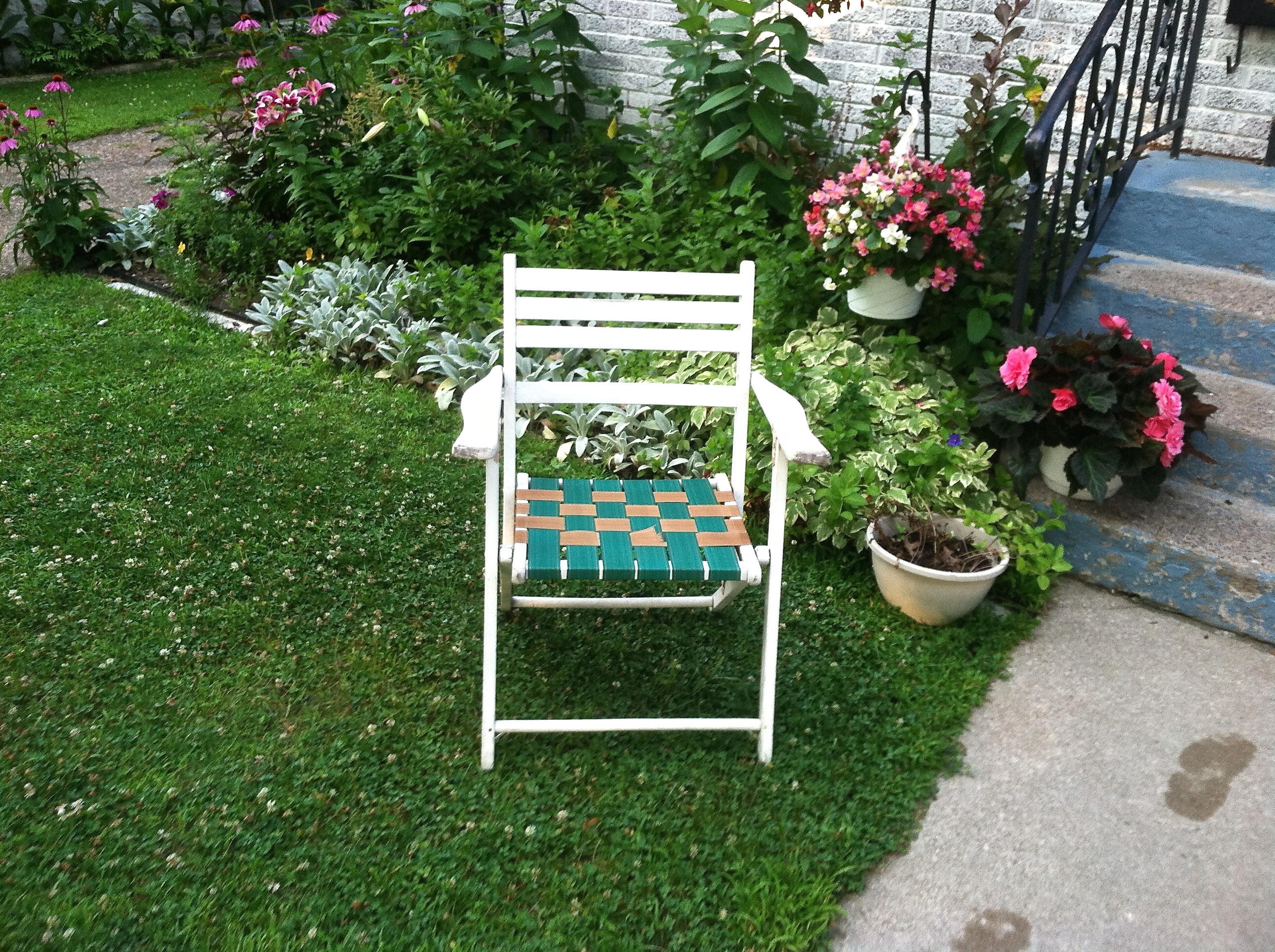
Two nights ago I sat in the Coleman front yard in my favorite lawn chair, stared at the sky, and thought of Michael, seventy-six years old, and Leo, six years his senior. I toasted them, thought of them alone in the corn fields, wondered how much longer quiet and sacrificial welcome will call this planet home, and asked God to remind Michael and Leo that they’re not forgotten.

IMG_2238

My observatory, from which I saw one speck of light. That was plenty.

Dead overhead I saw a single star. The glow of Erie, Pennsylvania, dimmed all but one. How many lifetimes would it take to get there? And was it even a star? Maybe it was a planet. No matter. As it happened, I hadn’t sipped wine in the darkness only to sing the day’s fuss to sleep. I had sat still and looked heavenward to receive a slight kiss of light and an invitation: Let go, John. Let go. The community of mystery will save you. Amen

A Letter to Noah, Gone on to Glory

Dear Noah:

On December 6, 2007, you passed from your mother to the womb of glory, forgoing planetary existence entirely. On April 2, 2008, which would have been your birthday, your mom, dad, and I prayed, reminded the universe that you were, and stood in a cemetery. We needed to let grief have its way with us—your mom, Liz, especially—out in the open air, before heaven and earth.

Only this morning did her sadness settle upon me, the breadth and depth of it. She and I talked for a few minutes last night after a meeting, and what she said woke me up at 5:30 this morning. Right away I felt the need to thank you. Because your life kissed Liz’s en route to mercy, I’ve been granted a truth. This isn’t a maxim, like “a penny saved is a penny earned,” but a truth that’s part of eternity’s cosmic dance.

Milky_Way_Galaxy

Your truth is as big as the Milky Way, Noah. (Credit: Rick Risinger. Source: Wikimedia Commons)

So . . . the truth your mother spoke, not with words but with her eyes: we are loved into the world. Why did it take me fifty-two years to realize this? Even a dullard can detect pregnancy: swelly belly; the third-trimester waddle; puffy feet; pink cheeks. And women generally know not to smoke, drink, and do drugs while carrying a baby. During labor, breathing through contractions is common knowledge, so much so that it’s become a joke: Whew! Whew! Whew! Whew! Whew!

But what you and your mother have taught me, Noah, isn’t a lesson of body, but spirit. Mothers and fathers, grandmothers and grandfathers, and aunts and uncles don’t just get excited about a new arrival; they fall in love. While your digits were still forming, you were loved. Hundreds of times while you were kicking and shadow boxing in your mother’s womb, she held you in her soul, rested her lips against your sweet face, breathed in your newborn scent, still carrying whispers from God. And her love—so you and she have shown me—collaborated with biology to nurse you toward life.

Stomach of Pregnant Woman

Your earthly home looked something like this, Noah, and though you were hidden, many people loved you ahead of time. (Credit: Turbo / Corbis)

Now you would be six years old. This morning as I lay awake before dawn, I dreamed you. You would have the full face of your brothers Mitch and Gabriel and fine, blonde hair. Pretty soon, I would pull a chair up to the altar, and you would help me set the Communion table. You would raise your hands with the other Abiding Hope kids to bless the people. Your father, Shawn, would chase you around the church, maybe telling you to slow down. In this dream, love for you catches in my throat.

But my dream can’t compare to your mother’s. She dreams you all the time, and while I imagine clowning around and making you laugh, she dreams you with her body. Biology failed you, but your mom still feels the space in her arms where you should now find comfort. I’ll also bet the love that willed you toward birth still dwells in her womb. “Push,” it pleads, “push!” The longing is so profound it doesn’t stop, even though you are gone.

The_Thinker_(Le_Penseur)_copy_at_Kyoto_National_Museum_(side_view)

Would you have been a “thinker” or a “stinker”? Probably some of both. It would have been a joy to find out. (Credit: Franks Valli. Source: Wikimedia Commons)

Oh, Noah! Do you understand from the lap of glory how you are loved? Still, I have to tell you, your beauty comes at a price. When you died, your mom, dad, and others who counted on your arrival could hardly bear it. “God,” they cried, “why would you take Noah from us?” Sometimes they shook their fists and swore at God, which I believe is the best possible prayer when that’s all you’ve got. Maybe you could check on this for me: God loves us beyond our doubts and rage, right? You could also ask if I’m right that God didn’t take you as part of a divine plan and doesn’t constantly make folks climb through barbed wire to test them.

But I shouldn’t be greedy. You and your mother have already blessed me with one answer: We are loved into life. Gracias, little senor! I’m also grateful that you have opened me up to other lessons about love that grow from the soil of your teaching. That’s how my mind works: I dig for truth and find species of it gathered in one small garden.

 —

We live on love. Friends of mine are serving as foster parents to a toddler they plan to adopt. Also parents to an infant son, they are Mommy and Daddy, enfolding both boys with the blessings of home and family. By chance, the biological father learned that he had a son and hopes to be awarded custody. For now, he has visitation rights. The boy returns from each visit shaken and upset and cries in the night: “Mommy, Mommy, Mommy!”

Just as Liz and Shawn loved you toward life, Noah, my friends’ love for their sons—no distinction in their hearts between biological and adopted—has left fingerprints on their souls. The four of them belong to each other, and they survive not only on food and water, but on the wholeness they find in each other’s arms. Even the possibility of being separated is shattering. The parents imagine the boy who is now part of them afraid and confused, calling out for them from a strange bed in a strange house. They pray, “Why would your plan demand a toddler’s despair?”

IMG_2157

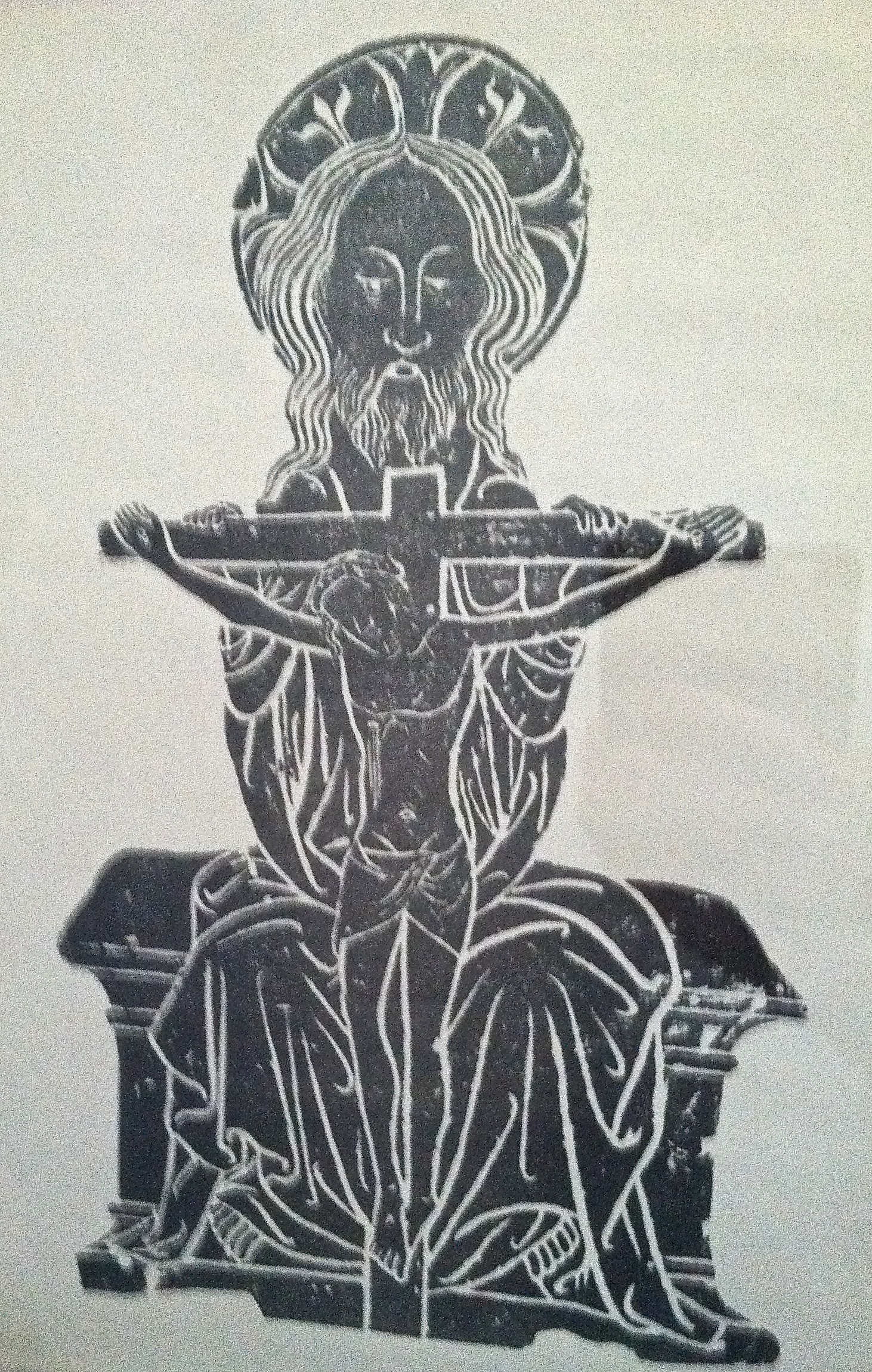
My friend Diana gave me this rubbing a long time ago. Looking at it makes me wonder about the face of God. Please ask God to smile upon us and be merciful.

Some lessons are necessary, but damned difficult. You’ve taught me that I would rather have my loved ones safe beside me and suffer all other scarcity than know material abundance and empty arms. Love is as necessary as clothing and shelter. Intercede for all of us, Noah. Hold God’s hand as we—our boy’s parents and all who love him—throw haymakers at heaven and demand answers.

Love longs to be spent. I think lots of us are formed and fired to be vessels for love. If enough of it builds up without finding a good recipient, we show cracks. In recent years I’ve spoken with a couple of women who wanted to bear children. One told me after drinking an iced-bourbon truth serum that she regrets not having children. “I think I could have been a good mother,” she said through tears. And she would have been—nervous, worried, but as attentive and understanding as any mother in circulation. In her sixties now, she looks across the expanse of years and holds open hands that would have always touched daughters and sons with gentleness. Another friend tried for years to get pregnant, without success. She heard stories of unwanted babies cruelly discarded and thought, “I’m right here! I’ll love your baby. Just bring him here and leave. Nobody has to know.” For both these women dear to me, adoption wasn’t an option.

Potter Crafting Pot

Did the Potter of Eternity shape us to carry love, to pour it out generously? That’s what I believe. (Credit: Richard Gross / Corbis)

Noah, you’ve never known the weary joy of comforting a crying baby, but your passing through my life has helped me to recognize that many of us feel starved for the love that completely and recklessly embraces another life, a fragile life that can’t survive without us. A baby falls asleep because you have surrounded her with your tender presence. The unfulfilled longing for such a connection chants a mantra: “Push!”

 —

Love lands where it pleases. An old friend of mine is selling his house and moving into a senior apartment complex that doesn’t allow pets. He gave his dog to a kind friend, and on the first night in her new home she dug a hole under the fence and escaped. Sleepless hours passed until the next morning, when my friend stopped by my office with good news. The dog returned and was sleeping in the laundry room of her new home at daybreak.

“Last night I did something I haven’t done in a long time,” he reported. “I got on my knees and prayed.” The thought of his beloved dog confused and afraid in woods and fields was torture. I bet for a while my friend will go to pet his dog and feel grief when he remembers she lives with someone else now.

We love what we love, I guess: dogs, meadows, goldfish, blue heron, homes, clematis vines, neighborhoods. Noah, you might ask me, “How can you love me, John? You never even met me.” Because that’s how love works, buddy. It writes its own rules, in its own time and at its own pleasure. And it’s under no obligation to make sense.

800px-Great_Blue_Heron_0887

Can you love a blue heron, Noah? That’s for love to decide. (Credit: Dori. Source: Wikimedia Commons)

 —

“I got on my knees and prayed.” That’s it! Love brings us to our knees. That’s what you and your mother taught me, along with leaving me a question. I wonder if great minds over the centuries have uncovered only the scientific truth about the origin of universe. Maybe there’s a second truth. What do you think, Noah? Were the suns and planets and beating hearts of each galaxy loved into space? And is that love still sending us out for billions of years until it calls all that exists together again to be embraced—blood, bones, fire, and stardust?

You’ve got me wondering, kid, wondering and believing. Who could have imagined that a boy who never held his parents’ hands and walked barefoot on wet grass or woke up in the middle of the night afraid would be wise enough to grant a grateful man truths to live on.

Thanks, Noah. Give God a kiss for us.

Love,

John

Diddy Wa Diddie and a Lovely Daughter: A Summer Rerun

IMG_0538

The key in question–honest!

(Note: the following post originally appeared in slightly different form on May 17, 2013, back when A Napper’s Companion had a dozen readers–give or take six. If you’ve already read this, forgive the clutter. If not, enjoy. Peace, John)

Yesterday. Weird. Wonderful. I had just finished praying, propped up in bed, when daughter Elena’s dog ringtone barked. 8:01 a.m. I had intended to set my Zen bell app for another fifteen minutes, but duty called. Elena (almost twenty-five) locked her keys in her house. Could I zip up and let her in with my key? Of course. I would be there in ten minutes.

“Don’t rush, Daddy,” she said. “My boss knows I’ll be a little late. I’ll be at [mother-in-law] Janine’s,” which is two-minute walk up the street. (As it happened, Janine couldn’t find Elena’s key either.)

7417277946_9241b1443a

Photo Credit: waferboard

So I dressed, fed the animals and, well, rushed, but it still took me twenty minutes to get there. I figured Elena would be on the porch pacing and drumming her fingers on the railing. Nope. She was inside sipping coffee, talking with Janine and cute-as-an-acre-of-daisies niece Shaylee, and so disgustingly not in a hurry that she immediately brought me to myself.

Shamatha—calm abiding. Habit energy’s anxious gravity eased up. I breathed in, breathed out.

“I walked up here, Daddy,” Elena said when we got into the car, “and said, ‘I’m going to have myself a cup of coffee.’”

IMG_0014

Elena with Her Handmade Cupcake Piñata

I waited in the car as she let herself into the house, brought back the key, and headed to her car. In the three seconds it took her to get from my jalopy to her (and princely son-in-law Matt’s) Subaru wagon, joy settled inside me. Her ponytail bobbed and bounced; her flowing dress swayed. What a lovely daughter! She seemed in that instant like a five-year-old again—sweetness and light, giddy in the sunshine and wind.

I drove back home to pick up son Micah (twenty-one) and get him to a couple hour’s of community service yanking weeds and slinging peat moss. Along the way I pulled over on South Shore Drive to witness the sun coming through the spring trees on the boulevard.

IMG_0532

Micah’s body clock has goofed itself into third-shift mode, so I woke him three hours after he’d gone to bed. In year’s past when he was in the midst of mighty struggles, he would have been a winey little witch, but he got up, ate a bowl of Raisin Bran, hopped in the car, lit a cigarette, and joked with me till I dropped him off. “Wonder of wonders, miracle of miracles!” Boy is becoming a man.

Before driving off, I texted chemo-nurse-wife Kathy, who had told me she expected a crazy day at work. Every now and then I send her what we call a Pocket Note, a taste of gladness she can read over lunch. “Kathy Coleman gets tired and is very busy,” I wrote, “but she genuinely cares about her patients. And that’s wonderful.” As I hit send, I heard the voice of Jack Nicholson in my head: “Well, aren’t you the little ray of sunshine.”

364px-JackNicholsonMar10

Jack Nicholson (Photo Credit: Wikimedia Commons)

On my way to the church, I plugged my snotty iPhone into the car speakers and listened to Leon Redbone’s rousing version of “Diddy Wa Diddie” on You Tube. (Yes, I know about the song’s double entendre, but don’t care. Want a song that’ll make you want to laugh and dance? Have a go.) It was so good I listened to it twice.

And the day went on like this, blessings lining up on the road before me. Micah’s last-minute therapy appointment forced me to abbreviate my siesta, but even this alteration to my plans didn’t take the shine off the afternoon.

While my son unpacked the meaning of life, I perched two minutes east on West 26th Street on Brick House Coffee Bar’s porch, nursed an iced latte, and did some church work—what a gift to have a flexible schedule and technology that lets me get work done literally anywhere!

I could go on, but you get the idea. “Life is what happens to you when you’re busy making other plans.” That’s how John Lennon would have described yesterday. If Elena hadn’t locked herself out, the day might not have glowed as it did.

Thanks, my dear, for inspiring Thursday, May 16, 2013, to be full of gentle, mindful sanity!

IMG_0509

By the driveway

The Dandelion Doesn’t Command the Sun

IMG_1930

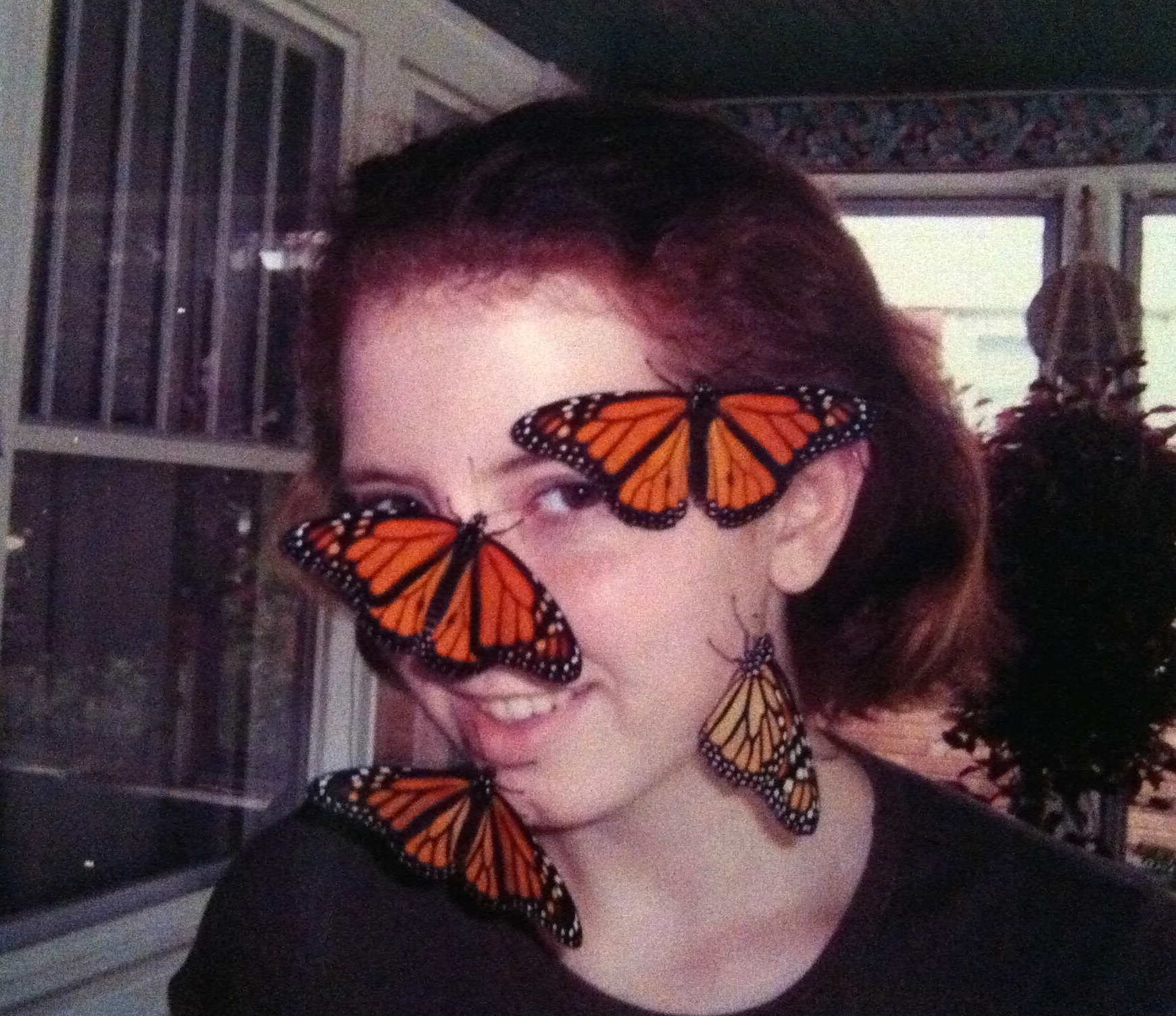
God spoke through my daughter Elena in 2006, wearing monarchs about to take off for Mexico.

Over twenty years ago I attended a class taught by Sister Rita Pancera on centering prayer: silence, abide with the Loving Mystery. I told Sr. Rita that sometimes in prayer I feel like God is telling me something, but I hear the message in my own voice. The point of centering prayer isn’t to latch on to thoughts or images—anything—but who wants to turn down Divine Assistance? I asked her, “How can I be sure that the words come from God and not just from myself?” Her answer continues to shape my spirit: “What makes you think God wouldn’t use your own voice to tell you something?”

That was the wisdom of a woman who had spent years in prayer, and I’ve not only shared it with others, but also let myself be liberated and humbled by its implications. In every place and at all times, God might have something to say. And I’m in no position to put limits on how God speaks and through whom. (The dandelion doesn’t command the sun.)

640px-DandelionFlower2

So . . . I suppose I shouldn’t insist that God speak to me in voices of my choosing. (Credit: Wikimedia Commons)

I heard God on blogging friend Melanie Lynn Griffin’s post about her past career, in which she and a group of colleagues met with a Navajo group to teach them about persuasion. Turns out they have no such word in their language. The young listen to their elders and don’t argue with them. After a moment of beautiful laughter and understanding, one of the elders said, “This persuasion must be a job for our young people. It is new to learn and they must lead us.” God speaks through a Navajo man. (Thanks, Melanie.)

I heard God on Winding Road when blogging friend Kerry, whose family recently lost nearly everything in a flood, charted her grieving and recovering with a moving insight: “Reclaiming order sometimes means deconstructing first and one cannot build back up until walls have been torn down.” God speaks through a young mother who got knocked down and is trying to get back up. (Thanks, Kerry.)

I heard God yesterday while reading this: “The weak can never forgive. Forgiveness is the attribute of the strong.” God speaks through Mahatma Gandhi.

Gandhi_writing_1942

Mahatma Gandhi in 1942. (Credit: Wikimedia Commons)

And during morning prayer, I heard God use my voice. It was a mind-whisper: Enjoy. It seems I’ve been turning damned near everything in my life into a program, something to be worked at, a goal to be pursued with one eye on the clock. I haven’t been enjoying my present embarrassment of blessings in my blood and in the cavern of my chest where anxiety has been an intractable squatter.

“Enjoy,” my spirit says. I’ve come to believe in a peculiar miracle: I don’t think God speaks to me directly, though that would be something. Rather, God helps me to hear myself—but only if I sit still. And what I heard in merciful silence was a cardinal calling out to his mate. “Listen,” I said. “Receive this song, this beauty.” In an instant I understood what God longed for me to hear.

800px-Cardinal_Backyard_Birds_Cary-1

If you sing, I’ll try to enjoy.

The people I love and the gorgeous world exist for their own sake, but they also exist for me. “Enjoy,” God said in my throat. “All of this is for you.” And so, sitting propped up in bed before sunrise, my spirit flew open like a door caught by the wind. As if on cue, I began enjoying.

Micah’s alarm went off. Because I could sleep, I didn’t go through the routine: stopping at his door at about 7:15 and making sure he is awake. “You up, Scooter?” I sometimes say. Or “Cupcake.” Or “Your Royal Dudeness.” Or “Fart-breath.” I go with whatever pops into my head. He always answers, “Yup.” But praying, I listened to him clomp around downstairs like a camel in wooden shoes. I didn’t mind. He was off to work, being a man, propelling his own ass out of bed. My son is well.

Because Kathy didn’t have to be to work until 9:30, we went out for breakfast. She savored sleeping in, and I savored our kiss when I dropped her off.

I took lunch to daughter Elena and got to hang out with her and grandson Cole. “Enjoy,” echoed in my chest, and darned if I didn’t. Vegetarian hippie food. We talked. I got to hold Cole, place my lips on his bald head, breathe in the perfume that still lingers from when God kissed him in the womb. And I snuffled his neck like a dog, which made him laugh. The whole time, I watched my daughter be a stunningly good mother. I’m so proud my eyeballs want to go flying out of their baggy sockets.

IMG_1949

God never has to help me enjoy this guy.

The afternoon offered itself to me. I napped, prayed for forty minutes, cleaned up the kitchen, and made the dining room presentable.

Micah got home from work. My God! My son, just two years ago a heroin asshole, blesses me every day with his goodness. On Mother’s Day, he came home with a bright bouquet and card for Kathy. A quote: “To the Mom who invented fun, creativity, and a wonderful imagination in me. And taught me 50% of what I know about love and compassion.”

IMG_1962

Happy Mother’s Day from Micah

A couple weeks ago I raged at God about some grievous assaults on children. I didn’t enjoy my rant, but as I sit here now I give thanks for the sense that prayer is about offering to God whatever I am. So glad or furious or quietly depressed, I fall backward into God. It’s the trust game kids play: fall and I promise to catch you. My game is a little different, like letting go into forever. If God’s catch isn’t unconditional, my soul will shatter. I don’t have much choice here. I don’t know any other way to be with God, so I fall and try to trust. Enjoy isn’t a sacred enough word for the safe landing.

Of course, even if my soul doesn’t shatter, other things will: sickness, disappointment, floods. So for now, I receive the cardinal’s call, my wife’s kiss, the sweet breath of God on Cole’s head, and every other way God shines on this fifty-two-year-old flowering weed named John.

IMG_1958

Micah’s Mother’s Day bouquet still hanging in there with Baby Crash

A Letter for My Grandson’s Memory Book

Dear Cole:

Three times today, tears have caught in my throat. They came in bed this morning while your grandmother was still asleep. A cry sat in my chest—the ghost of old grief? I remembered Kahlil Gibran’s words: “Joy and sorrow are inseparable . . . together they come and when one sits alone with you . . . remember that the other is asleep upon your bed.”

Photo on 3-1-14 at 1.59 PM

Some days are just this way, Cole, but they pass.

Tears came again in the truck as I listened to Paul Simon‘s “Father and Daughter.” When your mom and dad got married, your mom and I danced to this song. Before that day, October 2, 2010, I worried that the father/daughter wedding reception dance would be awkward, but those were three of the happiest minutes of my life. Everybody else in the hall disappeared; it was just me and Elena. We talked, I don’t remember about what. I rested my lips on her head. At the bridge, we sasheyed. We worked our big old hips, kiddo. Anyway, as I drove along, Simon sang and strummed, and I remembered and blinked back water.

IMG_0856

A picture of flowers? Actually, my soul while dancing with your mother.

And a few minutes ago tears accompanied my Starbucks coffee. I was listening to another Paul Simon tune, “You’re the One” and thought of you:

May twelve angels guard you

While you sleep.

Maybe that’s a waste of angels, I don’t know

I’d do anything to keep you safe

From the danger that surrounds us

There’s no particular danger surrounding either of us, but your face came to mind, and that’s generally enough to get me verklempt.

You cry a lot these days, Master Trouble Trunks. People who love you are always trying to figure out why. Hungry? Tired? Where’s Mommy? Irritated bum? A stubborn little rectum rocket? Sometimes I bet you just miss being inside your mom, where the gentle universe was shaped like your body.

photo

When the gentle universe was shaped like your body.

But I don’t know. Something’s going on inside me; past tears I neglected could be offering me another chance to honor them. You’ll have days like this, too, when you’re either over the moon or in the lonesome valley (or both!) and haven’t a clue why. Maybe there are human equivalents to earthquakes, tsunamis, and hurricanes. Anyway, since I can’t understand myself, don’t plan on me ever explaining the wonderful, goofy person you’re sure to become. I say that in love.

You can bet your life on this, though: for as long as I can, I’ll keep doing what I’m doing right now: loving you with a love that roars silently, that looks into your eyes and sees what blessings are swirling around in your presently gaseous self, that hopes you’ll see in my baggy eyes your birthright: every soul deserves to be held in a grandfather’s agape. Not every soul is so fortunate, and if I’m right about your other grandfather, boy-oh-boy, are you ever in for it.

IMG_1319

Look at your mother’s and uncle’s dreamy faces. That’s because of you, you know.

Someday you’ll wonder what your first months of life were like. On one of those crappy-for-no-good-reason days of adulthood, you’ll think, “What the hell’s up with me? Did someone do me wrong? Did one of my relatives keep pinching me? Did a mystery person holding me whisper, “Everybody fusses over you, how cute you are, but listen here: you’re a hideous little dope”? No, no, and no. You’ve had more love directed at you in three months than lots of people get in a lifetime. No kidding!

IMG_1373

I actually took this one when you, your mom, and I had lunch one day. You were a happy little man.

Every single day, your mother sits you somewhere comfy, says something like, “Who’s Mommy’s lil bootie bootie boo? Is he going to smile for Mommy today?” then snaps five or six hundred pictures. At mid-morning, a few of the best ones hit the inboxes of people who love you. When your dad gets home, he makes you laugh and squeal. Both of your parents are beyond thoughtful and patient. And pretty much wherever you go, people crowd around you and get remarkably weird. Example: yesterday after lunch your mother and I sang “I Been Working on the Railroad” to you, even harmonizing on “strumming on the old banjo.” The last stanza’s a bummer, so we skipped it.

When you read this for yourself, hear a message from before your memory got started: Your grandpa prays on March 1, 2014, that the crazy, silly love surrounding you now will reside in you after your hair has come and gone, and that it will rise on those days when you are a stranger to yourself and remind you of my eyes, always finding the sacred Cole.

Photo on 3-1-14 at 2.09 PM

Someday you’ll want to hide your goodness from me. Go ahead and try. I’ll see it anyway.

Love,

Grandpa John

A Letter to My Elderly Dog

Hi, Watson,

Of course you can’t read, but I’m writing this letter for myself. So please sit still and pretend to listen.

IMG_1393

Time to get up. Ugh! I’ll cover your eyes, pal. We’ll rest for another minute.

When you stood at my side of the bed this morning and sighed, I knew what you were saying: “It hurts for me to hop up on the bed.” That’s why I hold open the blankets and wait. When you’re ready to try, it means curling up beside me is worth the extra ache in those bum legs of yours. And I know, even if you don’t, that you won’t be able to jump much longer. I thought about getting a futon but figured the longer you have to work, the longer you’ll be around.

I sure do love you, old buddy. I love that every time I climb the steps and lie down for a nap, you hobble up with me. Your nails clicking as you scrape them across each step reminds me that eventually you won’t be able to make it to the second floor. Your mother doesn’t know this yet, but when you’re grounded, I’ll lobby for moving our room to the first floor and getting a bed that’s Watson friendly. You’ve had a place in our sleep for around ten years; I won’t abandon you to the cold floor as you near the end.

42-21637446

You were even cuter than this pup when you landed on our stoop. We thought maybe you were pure black lab until the scruff sprouted on your chin. (Credit: Michael Kloth / Corbis)

Actually, you’ve had a place in our sleep from your first night in the Coleman house. Downstairs in the puppy crate, you yipped and howled, so I did something ridiculous. Knowing you weren’t house broken, I still picked you up, brought you upstairs, and settled you in bed between your mother and me. Guess what? It was as if the winter world you were rescued from had disappeared, and you were at peace. I kept expecting to wake up soaked in pee, but all night you slept between us, a black fur ball of relief. Dry. Safe. Home. Love.

You’ve been a gift to me, Watson. Sure, you have some annoying habits. If a squirrel squeaks on the boulevard, your alarm bark is like a funhouse scare–way out of proportion to the threat! For reasons I’ve never figured out, you take five seconds to decide if you want a treat from the table. I hold out a chunk of steak gristle, and you sniff and stare with suspicion. This is in violation of the Code of Dog Behavior, but you are gentle, which is good. You are the only dog I’ve ever seen who wanders when he craps. Cleaning up the backyard means sleuthing down a couple dozen micro-turds rather than spotting five or six robust piles from yards away. (Since your mom covers scooping detail, catching sight of you doing a pooping pirouette is more funny than upsetting.)

IMG_0597

Always a place for you on the bed, old friend. I promise.

Finally, and increasingly, when we’re napping you point your bum toward my face and crack nasties. You know, the barber no longer needs to trim my eyebrows. They’re all gone. Damn, Watty. But you’re around eighty, so I can make allowances. Besides, farts in the animal kingdom aren’t frowned upon. Neither is indiscriminate humping, though you are rarely so inclined. Thanks, pal.

IMG_0643

Breakfast soon, Watty. Thanks for waiting.

You probably have a couple years left, but who knows? I suspect you understand in your wordless spirit how grateful I am for you: how you lick my hand and face in the morning; how you wait for me to finish praying before going down for breakfast; how you used to love running with me so much you’d press on even when your nails bled from dragging across the pavement; how you lay down beside me when I’m writing at the dining room table–just to be close, I guess.

Silly people argue about whether dogs have souls. Walt Whitman once wrote about your kind:

I think I could turn and live with the animals, they are so placid and self contained;

I stand and look at them long and long.

They do not sweat and whine about their condition;

They do not lie awake in the dark and weep for their sins;

They do not make me sick discussing their duty to God;

Not one is dissatisfied-not one is demented with the mania of owning things;

Not one kneels to another, nor his kind that lived thousands of years ago;

Not one is responsible or industrious over the whole earth.

As far as I know, Watson, you don’t commit my sins: take too much to heart, nurse grudges, insult others, and fall short of love in a thousand other ways. You, on the other hand, seem motivated entirely by love–when you’re not scheming to get extra Milk Bones. But I’m in no position to call you a glutton.

IMG_1392

I love you, Watson.

Between the two of us, my old napping partner, I bet you have the bigger soul. None of us knows what eternity looks like, and as I said, you probably have some good time left. But hear this in your dog heart: I pray that we both have a place at the Final Table, that we can look into the face of Perfect Love and eat our share, and when the meal is over, we can climb stairs to the bedroom on strong legs. I pray there’s space in Forever for me to rest my face against your gentle head, put a hand on your paw, and nap away an endless afternoon.

Love,

Papa