Humility Needed as the New Millennium Clears Its Throat

800px-Chili_con_carne_1234

It’s chili. You eat it. (Credit: Wikimedia Commons)

Last week while eating lunch at Coffee Culture courtesy of a parishioner’s gift card, I felt them: the twitches of meaningless impulse. Open up the MacBook. Check the iPhone. Write a few notes. Skim the newspaper. These twitches were both mental and physical: adrenaline-fueled, microbursts of habit energy. I saw Ronald Reagan smiling and delivering his famous 1980 debate line to me: “There you go again.”

This is Mindfulness 101! When you eat, eat. When you read, read. As Thich Nhat Hanh writes, “Don’t just do something. Sit there.” I know all this stuff, but even with pray-meditating twenty minutes twice or thrice daily, I constantly forget. Early into my huge Caesar salad and spicy ambush chili, I remembered, “John, you’re allowed to just eat. You don’t have to be doing something else.” As I replay that moment, the image of my late dad pops up, his fussy dementia hands going: fidget, fix, reach, button, smooth, worry. Madness.

IMG_2704

Ahhh. In the chapel at Mount Saint Benedict Monastery.

Don’t be afraid. This is not a rant, kvetch, or lament. Like everybody else, I’m responsible for the state of my own interior, which is getting some special attention these days. This morning I sip coffee and release my old inventory of anxiety, breath by breath. I’m good—well, getting better, let’s say. By 10:00 a.m. I’ll be at Mount Saint Benedict Monastery, trying to stay ahead of worries in progress.

In the words of the recently departed Joan Rivers, “Can we talk?” Is it just me, or is it quite a chore to remain centered as this new millennium clears its throat? Assemble the following ingredients: middle-class income, spiffy technology, and submission to contemporary attitudes toward time and labor; then, bam, like Emeril Lagasse, add pinches of garden-variety stress and a personal crisis or two. What do you get? You get a guy with an expanding torso, irritated tongue, jerking brain and muscles, and pleading spirit: For God’s sake, relax, will you.

The first thirty or so years of my life weren’t jerky. When I think about growing up and even college and graduate studies, 2014’s brisk march of time and frenzy of labor comes into clear view. For years I’ve had Han Solo’s bad feeling about this. Recently I happened upon an article by Dr. Peter Gray, who put some good words to my concerns. He graduated from high school in 1962, a year after I was born, but his description of childhood sounds a lot like mine:

In the 1950s, when I was a child, we had ample opportunity to play. We had school, but school was not the big deal that it is today. Some people might not remember, but the school year then was five weeks shorter than it is today. The school day was six hours long, but at least in elementary school, two of those hours were outdoors playing. We had half-hour recess in the morning, half-hour recess in the afternoon, a full hour lunch. We could go wherever we wanted during that period. We were never in the classroom more than an hour at a time or for four hours a day. It just wasn’t the big deal, and homework for elementary school children was essentially unheard of. There was some homework for high school students, but much, much less than today. Out of school, we had chores. Some of us had part-time jobs, but for the most part, we were free to play for hours a day after school, all day on weekends, all summer long.

IMG_2722

Beloved wife Kathy is still in touch with the power of play. This is our front yard on Halloween. The trick-or-treaters were slack-jawed with wonder.

I don’t know about the shorter school year, but Gray nails it for the 60s and 70s. I neither noticed nor appreciated the wide fields of time that opened up after school and in the summer. My single academic stress was trigonometry. Bless his heart, teacher Chet—an old anomaly who went by his first name—gave me a passing D one quarter to save my National Honor Society hide. Beyond that, my turmoil had to do with divorced parents and withering nerves with the ladies. But when my twenty-two-year-old Micah was in school, the whole family was constantly stressed. The homework was oppressive, especially for a kid who didn’t engage well with books and worksheets. I’m out of the loop now, but can’t imagine the expectations have eased much, if at all.

One of my favorite memories is of Micah’s fourth-grade teacher talking to wife Kathy and me about our son’s messy daily planner. “Daily planner?” I thought, “Micah’s follow through with toilet paper is sketchy, and you want him to keep a to do list? You’ve got to be &^%$# kidding me!” Of course, we nodded politely. Twenty-six-year-old daughter Elena faired much better academically, knocking off homework in study hall and devoting her teenage suffering to bi-polar disorder—at least we think that’s what it was. For me, 1988 through 2012 was a long stretch of parental confusion and convulsion peppered generously with joy.

IMG_2787

Micah in, what, kindergarten? His first grade teacher didn’t have much use for him, with his silly heart.

It would be whiney of me to blame academics for Micah’s troubles growing up, but I saw in his school experience seeds that have grown into the view of life that had me jangled over my lunch last week. I should first say that my son had many wonderful, skillful, appropriately affectionate teachers. My only gripe is with a few along the way who seemed to dislike children.

I get the impression that lots of teachers are frustrated by the Weltanschauung that stresses kids out and has adults multi-tasking themselves into hemorrhages. (Check out the excellent reflections of my blogging friend Beachmum for some insights on how some teachers feel.) We’re caught in a powerful current, a way of being that constantly vexes gladness. This way, the delight of pharmaceuticals, is driven by hubris and faulty assumptions.

We humans are overconfident in our knowledge. It’s an attitude thing. How many of us got pudgy twenty years ago because we watched our fat intake and gorged at the carbohydrate trough? One at least. Today, we’re assured that the sophistication and competence of the United States health care system make an Ebola outbreak here highly unlikely. Forgive my dis-ease. This has nothing to do with researchers, doctors, and nurses, who no doubt take their work seriously and have good intentions. But what seem to me to be preliminary findings are regarded as conclusive.

I may be in the minority, but the precaution of requiring people who have worked closely with Ebola patients to lay low for three weeks seems reasonable to me. Zipping Kaci Hickox into a tent was perhaps unwarranted—even though the tent was inside a hospital building, not outside as I foolishly first thought—but asking her to avoid contact with folks for a while is prudent. Given the ferocity of Ebola, the fuss over a twenty-one-day quarantine is surprising. Is that really a burdensome sentence, even if all the evidence suggests that a health care professional isn’t contagious? I suppose if you’re absolutely positive that we know all there is to know about Ebola, then ¾ of a month feels like a year. (More on time later.)

200px-Harland_Sanders

How sad: a “really inhumane” recipe. (Credit: Wikipedia)

Kaci Hickox could probably use a port-a-potty, not wash her hands, and stick her fingers in thousands of Maine residences’ mouths and not pass along a single case of Ebola. In fact, I’m not worried, but I do harrumph at the prevailing lack of humility, any sense that our knowledge might be incomplete, indignation toward those who maintain skepticism, and willingness to sling lawsuits so quickly. And Hickox’s comment that her treatment was “really inhumane” may be a stretch. Newark’s University Hospital didn’t shove her adrift on an ice flow; they put her in an indoor tent and brought her Kentucky Fried Chicken.

My point with the examples of carbohydrates and Ebola is that once we’ve decided we know something about science, we dig in our heels. According to Peter Gray, what we know about education and child psychology might also be mucking up future adults. In his aforementioned article, he identifies . . .

a “school-ish view of child development” – the view that children learn best everything from adults; that children’s own, self-directed activities with other children are wastes of time. We don’t often say it that way, but that’s the implicit understanding that underlies so much of our policy with regard to children, so childhood has turned from a time of freedom to a time of resume-building. 

Gray presents convincing evidence that our adult impulse to micro-manage childhood learning and development (i.e. not letting kids play, make up their own rules, work out their own conflicts, and generally not getting the hell out of the way and leave them be) is burdening a generation. Depression, anxiety, and suicide have been on the rise in recent decades. (Here’s a link to his article, “Kids Today Are More Depressed Than They Were During the Great Depression. Here’s Why” if you want his numbers.) My concern: like Gray, I remember when my habit energy wasn’t jangled and so have a shot at making changes to restore my peace. But what if all you’ve ever known is a relentless impulse to accomplish something and a haunting sense that if you’re playing or resting, then you’re wasting time? Gray argues that there is a crucial, “evolutionary function of play.” Again, follow that link if you want to explore his reasoning.

Our experience of time is irrationally rushed and troubled. Isn’t this really the impulse that drives multi-tasking, texting while driving perhaps being the most hazardous example? On his television show Phil Donahue used to hold the microphone in audience members’ faces and say, “So little time.” Those words knuckle our heads and slap our asses. You need to perform several actions at once because you don’t feel like you have enough time.

I offer one flimsy piece of evidence, a phrase that is regularly spoken by my adult children: real quick. Catch the urgency? “Dad, can I see your laptop real quick?” “Dad, can you hold [grandson] Cole real quick?” My thought is generally, “No.” I want you to use my laptop for as long as you need it. And, damn it, you hand me that baby, it ain’t going to be real quick.

IMG_0846

A painting by the late, self-educated Milton Sontheimer, whose work helps me to center myself

As proof that we can safely slow down, I present Milton Sontheimer of blessed memory. Toward the end of his life, which came about a month ago, congestive heart failure had reduced his pace to a crawl, but Milton always moved as if he had more time than he needed. The walls of his home with now-widowed Mary are crowded with his paintings. For years, he baked Communion bread for our church and wrapped it in foil, using and reusing the same piece until wrinkles rendered it flimsy. Wise Milton: no rush—and no waste.

We assume that because technology exists, we should make full use of it. Many thoughtful people are aware of this observation, but I want to credit the last two sages who have brought it to my attention: Beachmum, whom I’ve already referenced (I read back some ways, Mum, and couldn’t find the citation; I know you wrote it, though), and Dr. Brad Binau, a professor from my days at Trinity Lutheran Seminary, whom I mentioned in a recent post. Smart phones, tablets, notebooks, and laptops exercise centripetal force—literally, almost, considering how often my ear and nose are smashed up against my iPhone.

Birnau_Uhr_Sonnenzeituhr

Our opulent enemy? Why? (Credit: Saberhagen on Wikimedia Commons)

We peer over our reading glasses at people who are apparently lost, confused, or just making up their minds. I’ve learned to be watchful for what I call periods of discernment both in myself and others. In thirteen years as a parish pastor I’ve sat with scores of pilgrims on their way to new lands of the spirit. They wonder what to tell loved ones who want to know what’s up. I suggest, “Tell them you’re taking some time to figure things out.” These are stretches of months, even years, to honor, not stampede through. A couple days ago I heard the following what-I’m-saying story on The Writer’s Almanac about the poet C. K. Williams:

His two greatest passions in high school were girls and basketball. He was a good basketball player, 6 feet 5 inches, and he was recruited to play in college. But then he wrote a poem for a girl he was trying to impress, and she was actually impressed, and so he decided he should be a poet instead. He dropped out of college to move to Paris because that’s where he thought a poet ought to live. He didn’t write at all while he was there, but he did realize that he didn’t know anything and should probably go back to college. He said: “It was an incredibly important time. Not much happened and yet my life began then. I discovered the limits of loneliness.”

My point, I guess: if I’m not willing to be lost, I might not ever be found.

IMG_2699

A three-hour nap in a monastery guest room–a remarkable blessing

Endnote: I did make it to Mount Saint Benedict Monastery. (Obviously I wrote much of this post after my retreat.) I won’t bore you with the whole day, other than to pass along two details. 1.) I took a three-hour nap in the afternoon; the twitches of habit energy wear a guy out. And 2.) I noticed while reciting psalms with the sisters that they spoke more quickly than in the past. Their recitation is still spacious, but the gentle silence between verses is now thin. I don’t know why.

Lord, spare the sisters and us all from contemporary adrenaline and grant us mindful, humble impulses.

To My Grandson, Who “Settles in My Low Places”

Blogger’s warning: yes, this is another schmaltzy letter to my grandson. If you’ve had enough of the sentimental grandpa schtick, get away from here, quickly.

1911787_747463488657175_963611319142870065_n

Cole and Layla: nappers’ companions!

Dear Cole:

In the first chapter of the book I wrote for you I included a quote by Kahlil Gibran: “Joy and sorrow are inseparable. Together they come and when one sits alone with you, remember that the other is asleep on your bed.” Well, joyful boy, you have come to sit alone with me this morning.

Sister Joan Chittister shares the right words from the Tao to describe what your ten-month-old self has done for me:

The best people are like water

They benefit all things,

And do not compete with them.

They settle in low places,

One with nature, one with Tao.

That’s it, Cole. You “settle in [my] low places.” You’re way too young to live out the fullness of the Tao, but you’re off to a good start. Months before pronunciation fully descends upon your lips, you find your Gramps’ dry river beds and parched earth and make them live again.

10698488_750392131697644_123312992581475485_n

Cole, you don’t have to smile or get a gold medal in the Cute Olympics. Just stand there and be yourself. That’s more than enough for me.

Blame your mother for this observation and sentimental letter, which I trust her to print and slip into your memory book. (Copy that, Elena?) She sends your photographs out to family and friends, and the world gushes. This morning your face caught me at a vulnerable moment and ran into a place in my soul that must have gone cracked and sunbaked. At once, leaves and blossoms spread wide and tall.

10409001_750392061697651_386142547316354957_n

Hey, Cole, thanks for showing up this morning.

The thought that came to me after I swallowed back tears was how much I’m looking forward to talking with you. These days I’m mostly talking to you. I love saying pretty much what’s on my mind in the moment. But, little paisano, when you get a bit older, you and I are going to do some talking together. When I was writing your book I got into the habit of saving things up to chat with you about–that’s what the whole thing was about. Now that you’ve shown up and we’re having lots of preliminary, mostly one-sided, conversations, I find myself stumbling on things we’ll have to chew on in the future. (Just a note: you and I growling at each other is a hoot for now, but there’s room for growth.) Here are a couple of thoughts we can fuss with:

unnamed

Dear Reader, pick the caption: “Dag nabbit, they forgot my extra side of chipotle mayo.” “What you talkin bout, Willis?” Or “I’m going to audition for the role of Wilford Brimley’s Mini Me, and I’d like to talk to you about diabeetus. Wait, where did I put my walrus mustache?”

1. This first one is more a find than a discussion topic, but I have to share. Preface: I make it a habit not to use my smart phone while in the bathroom, but there are exceptions to every rule. A few days ago I attended a clergy meeting at the Riverside Inn in Cambridge Springs, Pennsylvania. It’s a charming, rambling old place, so I shouldn’t have been surprised at the sophistication of the scribblings on the bathroom stall. Be prepared, Cole, most of the time men’s room literature begins with “Here I sit, brokenhearted . . . ” or “For a good time call . . . .” Riverside Inn patrons are a thoughtful lot–evidence provided below as captured by my iPhone:

IMG_2627

Lousy quality photograph: “Today is another day where [sic] we can sit back and reflect on what happens in life.” I presume the sitting doesn’t refer to the throne at hand.

IMG_2631

No clue what these shapes are about, but below them is a riddle: “Everyone has it. What does everyone have but nobody can lose it?” Read to the end, Cole, and I’ll tell you.

2. After washing my hands, I headed back to that meeting and enjoyed a lecture by one of my old seminary professors, Dr. Brad Binau. He mentioned that he resists the assumption that multitasking is good. I’m really looking forward to thinking this one over with you because in a dozen years tending to multiple tasks simultaneously will not only be normal, but expected. I agree with Dr. Binau, but this is probably just me being an old fart. You might have the chance to teach me and open my mind. Can’t wait.

10437516_750392531697604_5156946027900629272_n

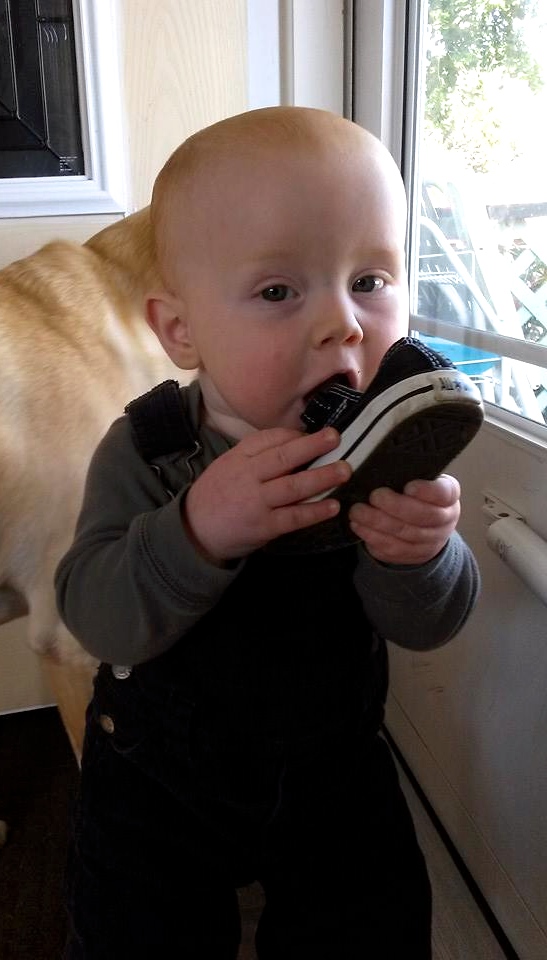
You know what grown ups have forgotten: sweaty, little boy sneakers are yummy! Help me to be young again, buster.

3. Some smart adults are saying that school children should no longer be taught cursive handwriting. By the time you read this, you might not even know what I’m talking about. Old fart thinking out loud again: lots of times I don’t really know what I’ve learned until years after somebody teaches me the lesson.

1469790_612795465444792_387385091_n

Learning to write cursive taught me how to practice, slow down, and be patient. If you want, we could work on cursive together. Mine is rusty. (Photograph courtesy of Mark Fischer’s Facebook page)

4. I’m busy today. I have to drive to Columbiana, Ohio, about two hours away, for a wedding rehearsal, then turn around and drive two hours back home. Tomorrow I have to officiate at the wedding, so I’ll do the same thing. Why not stay over night? The road time makes sense, but it’s a long story. Trust me. Anyway, as I was walking into Starbucks this morning, I said, “Hey, how’s it going?” to the guy emptying the trash. (The least we human beings can do is lay a smile and a “hello” on each other.) The trash guy–I should know his name–took my question seriously and told me about almost throwing up this morning and being late for work. His description went on for a while, and the gravity of coffee and writing pulled me away from him. That’s when I caught myself. This guy has bosses and co-workers chomping on his ass, and his job is emptying trash cans and picking up litter and slop. No dishonor in this work whatsoever, but I imagine his childhood dreams didn’t involve him wearing a rain suit and tending garbage. So, could I quit stepping away from him as if to say, “I don’t have time for you”? Could I face him for five minutes, give him my full attention as he has his say with the world, and witness this life? He’s one of God’s beloved, after all. So, I stood there and listened until he turned away from me to get back to work.

IMG_1436

One of the few photographs of you crying, Cole. Some people do lots of this for their whole lives. If you look at them and smile, they might feel a little bit better.

Please listen, Cole, because this is very important. I didn’t share this story so you would think Gramps is a swell guy. The thing is, some people walk through this life without a grandchild who will “settle in their low places” or without anybody at all. I don’t know that this is true of the trash guy, but since it could be, maybe for a couple of pitiful minutes I could offer a little rain for his cracked earth. I hope we get the chance to talk about this. Better yet, when you get a little older, we’ll go “out and about,” as your Grandma Kathy says, and “settle in low places” wherever we find them.

5. A couple days ago I stopped at your house for lunch. We talked as we always do. Layla looked so longingly at my sandwich she may have been trying to hypnotize it. I fed you bite after tiny bite of noodles in an Alfredo sauce.

IMG_2665

“Sandwich, you are getting very sleepy. Come to Layla.”

Hugging you goodbye, I thought of how your mother used to fall asleep in my lap and how, on rare occasion, I managed to carry her gently to bed without her waking up and lie down next to her for a nap. She fit into a low place of sorts, the hollow of my body curled around her. Oh, best buddy, I hope once or twice to know again with you that joy of a siesta. I wouldn’t even have to fall asleep. Listening to you breath and watching your assertive little nostrils and fine eyelashes would grow hyacinths and sunflowers in the thirsty places of your Gramps’ soul.

IMG_2652

No low places here, Cole, only mountaintops.

I have more ideas but no more time today. Should I write you another book?

Love,

Gramps

P. S. The answer to the riddle is supposedly “your shadow.” I thought of this but disregarded it because in the dark or on a cloudy day, you might not have a shadow. Reminder: some riddles are lousy.

Micro-Post: Inconspicuous Blessings

I

Two hours ago I brought lunch to daughter Elena and grandson Cole. Teething is knocking steam out of the little man’s groove. Elena has him chewing white socks dipped in water and frozen stiff. Seems to work.

IMG_1512

I don’t know what you’re saying, Gramps, but I dig it!

As I ate a hippie pizza with feta and Greek olives, Elena had a vegan sandwich. Cole lay on his blanket, and I went on and on: “I’ll be bringing Grandma by when she gets out of work so you can see her. Actually, I’m bringing her here so she can see you.” “Do you have any idea how happy you make me?” “I’m leaving two pieces of pizza for your daddy so he’ll have a snack when he gets home.” Cole had no clue what I was saying, but he was smiling huge.

It occurred to me that this kid enjoys a continuous loop of kind, affirming, happy talk. I don’t think he’s ever in the presence of angry voices. No   tone or gesture communicates anything other than extravagant love. I don’t take any of this for granite, as one of my college English students once wrote. Nor do I take credit. This is good fortune, baby! For my part, I’ve done as much to mess up my loved ones’ lives as I’ve done to bless them.

unnamed-3

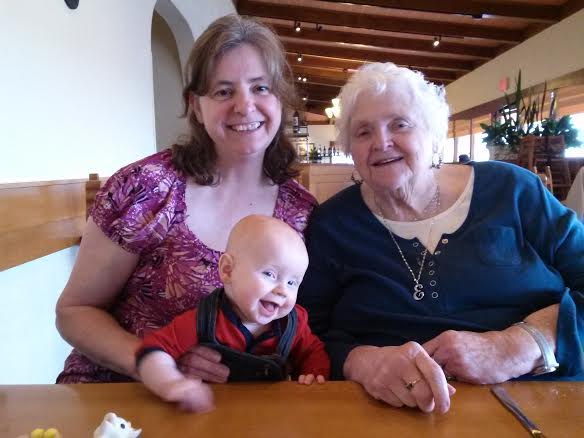
Cole with Grandma Kathy and Great-Grandma Edna–a smile fashioned by gentleness.

After kisses on the head and piggies, I took joy out into the rain, into my truck . . .

II

. . . and into the grocery store, where I bought salmon, asparagus, and avocados for this evening’s supper. After Kathy (Grandma!) and I visit Cole–oh yeah and by the way Elena and son-in-law Matt–we’ll go to Starbucks and make plans for our vacation in Maine in late July. Then, home for some easy cooking. Home–shelter, warmth, love, forgiveness, understanding.

IMG_0904

Not home, but the house my home fills.

III

In ten minutes I’ll pick up a bottle of chardonnay, then stop at home long enough for a siesta and a couple chores. I’ll give the pets treats, which they always expect when I walk through the door. When I go upstairs for a delicious hour of sleep, I’ll stop on the landing, where Kathy has a plant that is flowering, longing to reach through the window and touch pure light.

IMG_1500

Before my nap, stop for a couple of seconds. Look.

IV

When Kathy gets into the truck, I’ll kiss her, rest my cheek against her hair. She knows my weaknesses, but still loves me.

V

Just this: I’m grateful for these inconspicuous blessings, arriving quietly, humming a song that sounds like grace and mercy.

Confessional Prayer of a Napping Pastor

Dear God:

Naps lately haven’t been as long and lovely as in the past, which is a good thing, I suppose. For years one worry after another choked my spirit, but now I’ve caught my breath. Kathy is in a good space, even though I constantly test her patience. Our children seem to have outgrown their respective insanities. Former Goth girl Elena married wise, gentle Matt, and they’ve come up with our grandson Cole. And Micah hasn’t shot up for over eighteen months. When I lie down these days, siestas aren’t for escape, but refreshment.

42-49497982

6:00 p.m. Fewer pancakes, same amount of syrup. Forgive me, Lord. (Credit: Dieter  Heinemann / Westend61 / Corbis)

Tonight all of us will meet at the church for Shrove Tuesday pancakes and sausage. I’m having real syrup, but promise to take extra insulin. The food will be delicious, but all of us together fussing over Cole will be the main course. Then, back at home, I’ll enjoy the fruit of the vine—for medicinal purposes.

42-50572362

Just a splash, Lord. (Credit: Walter Zerla / Blend Images / Corbis)

At the moment I’m sipping strong, sweet coffee at Starbucks with the regulars. Alan showed up a few minutes ago. As always, my hands said namaste, and he bowed. Breathing in. Breathing out. I’m not suffering.

God, you probably already know what’s on my mind, but just in case, I have a confession:

I’m grateful for this day: for the stubborn solo digit Fahrenheit air, for my 6:45 silence with you, for this coffee, for hours ahead that don’t threaten me, for more love and mercy than I deserve. But I still look over my shoulder, still twitch when the undergrowth rustles with one more emotional ambush. A Paul Simon song states the truth:

When something goes right

Well it’s likely to lose me

It’s apt to confuse me

It’s such an unusual sight

Oh, I swear, I can’t get used to something so right

Something so right.

The deal is, Lord, I’m trying to get used to not constantly feeling anxious and shitty. When we sit together, I think you whisper into the ear of my heart: “Relax, John, and live. Relax and live.”

Benedict_of_Nursia_(painting)

I hear your Saint Benedict’s instruction, Lord: “Listen with the ear of your heart.” (Credit: icon by Clarisse Jaegar; photograph by Eugenio Hansen, OFS; on Wikimedia Commons)

If I started saying thank you right now and gave the rest of my days to repeating it, I couldn’t pile up enough thank you’s to cover my present gratitude. At the same time, I have to pray the truth. I don’t believe you dispense today’s blessings any more than you orchestrated yesterday’s despair. I might be wrong on this, but these assumptions aren’t behind my thank you’s.

Some of my brothers and sisters talk about having a personal relationship with you, but I can’t make us work that way. You know! I don’t ask for favors. I roll around in you. Your wind-song moves over my skin. You don’t “maketh me to lie down in green pastures” and “leadeth me beside the still waters.” You are my green pastures and still waters. I breathe you in. I breathe you out. And when I do pray that you grant me something concrete, it’s a desperate beggar talking. Oh, Lord, you know.

42-32943067

Hi, Lord. (Credit: Yi  Lu / Viewstock / Corbis)

Why am I telling you all this? I don’t understand myself. Maybe a crevasse in my soul finds warmth in being honest with you. When Micah was a junkie, I never blamed you. I did wonder—within the cosmic economy—why such a demanding son ended up with such a fragile father, but not once did I say, “God, why did you do this to me?” And as I sit here today, my gratitude for how well that man-boy is doing doesn’t mean that I think you said, “Okay, John’s suffered enough. I’ll make his son clean.”

I say thank you not because you guide me to lost keys and make my diabetes go away, though I’m fine with any help in such arenas. I say thank you because I feel you near. When I close my eyes, as I do now, and calm myself, a wordless voice speaks–yours, I suspect: “John, John. I’m here. Don’t look up. My hands hold the stone of grief in your chest. My lips kiss your face, creased with joy.”

42-40693152

Is that you, God, breathing? (Credit: Gary Weathers / Tetra Images / Corbis)

Another truth: moments pass now and then when I’m afraid I’ve made you up, and the Milky Way’s swirl is nothing but dust and light. So I’ve got no choice, God, but to give myself and all I love to you, even my belief. I’m your grateful, confused son, liking this coffee, planning on a light nap at 2:00, looking forward to cradling our grandson over pancakes tonight, and doing my best to let you be my close Mystery, my green pasture in tears and gladness.

Amen

A Letter to My Elderly Dog

Hi, Watson,

Of course you can’t read, but I’m writing this letter for myself. So please sit still and pretend to listen.

IMG_1393

Time to get up. Ugh! I’ll cover your eyes, pal. We’ll rest for another minute.

When you stood at my side of the bed this morning and sighed, I knew what you were saying: “It hurts for me to hop up on the bed.” That’s why I hold open the blankets and wait. When you’re ready to try, it means curling up beside me is worth the extra ache in those bum legs of yours. And I know, even if you don’t, that you won’t be able to jump much longer. I thought about getting a futon but figured the longer you have to work, the longer you’ll be around.

I sure do love you, old buddy. I love that every time I climb the steps and lie down for a nap, you hobble up with me. Your nails clicking as you scrape them across each step reminds me that eventually you won’t be able to make it to the second floor. Your mother doesn’t know this yet, but when you’re grounded, I’ll lobby for moving our room to the first floor and getting a bed that’s Watson friendly. You’ve had a place in our sleep for around ten years; I won’t abandon you to the cold floor as you near the end.

42-21637446

You were even cuter than this pup when you landed on our stoop. We thought maybe you were pure black lab until the scruff sprouted on your chin. (Credit: Michael Kloth / Corbis)

Actually, you’ve had a place in our sleep from your first night in the Coleman house. Downstairs in the puppy crate, you yipped and howled, so I did something ridiculous. Knowing you weren’t house broken, I still picked you up, brought you upstairs, and settled you in bed between your mother and me. Guess what? It was as if the winter world you were rescued from had disappeared, and you were at peace. I kept expecting to wake up soaked in pee, but all night you slept between us, a black fur ball of relief. Dry. Safe. Home. Love.

You’ve been a gift to me, Watson. Sure, you have some annoying habits. If a squirrel squeaks on the boulevard, your alarm bark is like a funhouse scare–way out of proportion to the threat! For reasons I’ve never figured out, you take five seconds to decide if you want a treat from the table. I hold out a chunk of steak gristle, and you sniff and stare with suspicion. This is in violation of the Code of Dog Behavior, but you are gentle, which is good. You are the only dog I’ve ever seen who wanders when he craps. Cleaning up the backyard means sleuthing down a couple dozen micro-turds rather than spotting five or six robust piles from yards away. (Since your mom covers scooping detail, catching sight of you doing a pooping pirouette is more funny than upsetting.)

IMG_0597

Always a place for you on the bed, old friend. I promise.

Finally, and increasingly, when we’re napping you point your bum toward my face and crack nasties. You know, the barber no longer needs to trim my eyebrows. They’re all gone. Damn, Watty. But you’re around eighty, so I can make allowances. Besides, farts in the animal kingdom aren’t frowned upon. Neither is indiscriminate humping, though you are rarely so inclined. Thanks, pal.

IMG_0643

Breakfast soon, Watty. Thanks for waiting.

You probably have a couple years left, but who knows? I suspect you understand in your wordless spirit how grateful I am for you: how you lick my hand and face in the morning; how you wait for me to finish praying before going down for breakfast; how you used to love running with me so much you’d press on even when your nails bled from dragging across the pavement; how you lay down beside me when I’m writing at the dining room table–just to be close, I guess.

Silly people argue about whether dogs have souls. Walt Whitman once wrote about your kind:

I think I could turn and live with the animals, they are so placid and self contained;

I stand and look at them long and long.

They do not sweat and whine about their condition;

They do not lie awake in the dark and weep for their sins;

They do not make me sick discussing their duty to God;

Not one is dissatisfied-not one is demented with the mania of owning things;

Not one kneels to another, nor his kind that lived thousands of years ago;

Not one is responsible or industrious over the whole earth.

As far as I know, Watson, you don’t commit my sins: take too much to heart, nurse grudges, insult others, and fall short of love in a thousand other ways. You, on the other hand, seem motivated entirely by love–when you’re not scheming to get extra Milk Bones. But I’m in no position to call you a glutton.

IMG_1392

I love you, Watson.

Between the two of us, my old napping partner, I bet you have the bigger soul. None of us knows what eternity looks like, and as I said, you probably have some good time left. But hear this in your dog heart: I pray that we both have a place at the Final Table, that we can look into the face of Perfect Love and eat our share, and when the meal is over, we can climb stairs to the bedroom on strong legs. I pray there’s space in Forever for me to rest my face against your gentle head, put a hand on your paw, and nap away an endless afternoon.

Love,

Papa

Micro-Post: 7:00 a.m. A Renegade Smile at My Non-Toothache

42-18561487

A photograph of something not wrong. I smile at the avocado. (Credit: Pulp Photography / Corbis)

When we have a toothache, we know that not having a toothache is a wonderful thing. “Breathing in, I am aware of my non-toothache. Breathing out, I smile at my non-toothache.” We can touch our non-toothache with our mindfulness, and even with our hands. When we have asthma and can hardly breathe, we realize that breathing freely is a wonderful thing. Even when we have just a stuffed nose, we know that breathing freely is a wonderful thing (From Thich Nhat Hanh’s “Life Is a Miracle” in Essential Writings, Orbis Books, 2001).

42-23071128

Nice lotus position! Yeah, this is not me because: I weighed more than this guy when I was born; I avoid neckties; what he’s doing with his legs would put me in the hospital with a fractured pelvis and a concussion from falling off that filing cabinet. (Credit: Plush Studios / Blended Images / Corbis)

I sit up straight against my husband (that would be a sit-up-in-bed pillow), put the soles of my feet together, and draw both heels in—a pudgy guy’s lotus position. A couple minutes ago, Kathy pulled back the covers: “I really have to get up. Got to shower.” She loves me, understands I’m trying to bounce back from a tough emotional stretch. But it’s one thing to love someone, another to grant marital patience to a neurotic spouse since 1983.

IMG_0515

A husband pillow–mine, in fact.

That’s where today’s renegade prayer begins. The idea is to breathe and abide in Divine Love, not to glom onto thoughts, but gratefulness takes over. I smile at my wife.

My right knee rests against nap and prayer partner Watson’s back. I smile at my dog.

Micah’s turbo alarm goes off. Soon I’ll drive him to work. I smile at my son, at his sobriety, at his zealous work ethic. I knew it! I knew he had it in him! Proud.

IMG_0767

You show that wall who’s boss, son! I smile at you.

Yesterday daughter Elena, son-in-law Matt, and grandson Cole came over for Matt’s birthday: California melts and chicken noodle soup. I smile at food, shelter, and love that pours out more than my cup can hold.

The church I serve is full of compassion. I smile at my sisters and brothers, all of us trying to love our way through this crazy world.

And my teeth are okay these days. No throbbing, no cracked incisors. I smile at my non-toothache.

IMG_0850

The kindest depiction of my teeth ever, courtesy of Meghan, hangs on my office door.

A few years ago: I had bronchitis and cracked a rib coughing; my dad was sobbing and howling his way through dementia; my naps were delicious only because they were an escape. I smile at my clear lungs. I smile at you, Dad, resting in the lap of mercy. I smile at 3:00 p.m., the gentle rest that’s no longer about survival.

And I have you, sisters and brothers visiting A Napper’s Companion. I smile at you, and in this final moment before Amen pray you are whole and at peace.

IMG_0023

Wholeness and peace. A view from the deck of Scholastica, a hermitage on stilts at Mount Saint Benedict Monastery, Erie, Pennsylvania.

Micro-Post: The Gentle Death of Anton Chekhov

(Note: This is the first in an ongoing series of short pieces–micro-posts–on stories/information of interest to nappers. I hope to offer a quick, entertaining read.)

Anton_Chekhov_with_bow-tie_sepia_image

Anton Chekhov (Credit: Wikipedia)

Listening to Garrison Keillor’s The Writer’s Almanac this morning, I learned a few things about playwright and short story writer Anton Chekhov. If I’d have paid better attention in college, I’d have already known that . . .

  • Chekhov was a doctor, treating patients and writing on the side for eight years until he bought an estate forty miles outside of Moscow. There he wrote full-time while also giving free medical care to peasants in the area.
  • Chekhov wrote his most famous play, The Cherry Orchard, as a comedy, but Stanislavski intended to present it as a tragedy, with the actors “sobbing openly and dramatically.” “Chekhov was livid, and although he was seriously ill with tuberculosis by this time, he took an active part in the production to try to salvage the play. He traveled to Moscow against his doctor’s orders and worked furiously to revise and edit the play and supervise rehearsals.” The Cherry Orchard was a hit and placed Chekhov on the same pedestal with Tolstoy.
220px-Tolstoy_and_chekhov

Chekhov and Tolstoy at Yalta in 1900 (Credit: Wikipedia)

I suppose it’s hard to argue with success—to be celebrated for a work that you didn’t mean . . . that way . . . exactly. Shortly after the play’s premier in January of 1904 Chekhov listened to his doctor and went to a spa in Germany. I’ll let Garrison Keillor deliver the punchline:

“While in Badenweiler, [Chekhov] suffered a series of heart attacks. The doctor offered him sips of champagne, which was supposed to be beneficial to people with heart conditions. Chekhov remarked that he hadn’t had champagne for ages. He then turned on his side, closed his eyes as if to take a nap, and died.”

42-26412657

In Your mercy, give us safe lodging, a holy rest and champagne at the last. (Credit: corbisimages.com)

Anton Chekhov was only forty-four, but what a way to go: champagne on his tongue, a nap in his heart, and a gentle exit.

P.S. My book, Oh! Be Joyful: Notes to My Future Grandchildren, is nearly ready for release. Stay tuned in the weeks ahead for details.

A Letter to My Grandson

Dear Cole:

Thanks for yesterday. Lunch with you and your mom was fun. Getting your diaper changed with that irritated tookus was a drag, but you were a good sport. And holding you after nursing time was great. You were, as your mom put it, boob drunk. Congratulations and enjoy it while it lasts because the intoxication options of adulthood are a dead-end and won’t do your immune system any good.

IMG_1344

Work that smile, boy. Work it.

You’re starting to track the people around you, which is a blessing you’ll understand decades from now, if you’re lucky. Today, January 9, 2014, is your fortieth day on earth. Your pastor grandfather can’t help thinking of the wilderness and Noah’s Ark.

Last night, when your grandmother and I stopped to see you, I believe you finished leaving the agape-nave of your mother’s womb. You awoke from the long om nap that gives life. You seemed to me for the first time genuinely, authentically awake, aware as I understand awareness.

And you looked at me for at least ten seconds—in infant time, this probably equals a week. I mean, you laid one on me. It was luscious. It was a twice- or thrice-in-a-chunky-man’s-life look. It was a Joe’s-Cheese-House-in-Marinette, Wisconsin-15-year-old-sharp-cheddar look. It was a four-days-on-the-schooner-Victory-Chimes look. It was a week-of-solitude-in-a-hermitage look. It was an everybody-in-the-family-is-doing-fine look. You get what I’m saying, Cole? You looked the wind out of Grandpa. That look could’ve raised the Titanic from the ocean floor. Powerful look. Amen! Hallelujah!

300px-RMS_Titanic_3

Titanic. Should I inform National Geographic of your powers? (Credit: Wikipedia)

IMG_1261

In your carseat, dreaming you’re Yoda. “RMS Titanic, you will surface.”

Or you may have been negotiating with a gas bubble or savoring Mom’s milk on the back of your tongue. If so, I’m glad to have been the object of your gaze, a visual mantra. But I don’t think so. I think you saw me and heard me. At this point, I suppose your mom, dad, grandparents, aunts, and uncle are all big-screen faces drifting in and out of focus and cartoon voices trying to tell you something.

This morning, little buddy, I figured out what we long for you to know. I had so much trouble getting out of bed that I prayed lying on my side. So tired, Lord. Some parts of life lately have been disappointing, persistently sad. So I opened myself to the Sacred Presence as best I could. A song from church when I was a teenager came into my head, so I let it play:

IMG_1346

From Psalm 51

Restore unto me thy joy, thy free spirit. That was the prayer. Joy and freedom! Then I thought of you, thought of how many people are picking you up and staring at your eyelashes and speaking strange words and singing my-grown-up-heart-is-bursting-nonsense songs. And whispers. And kisses on your head—such a scent. And fingertips brushing your cheeks.

IMG_1308

Nice lid, pal. Just don’t wear one like it in high school.

I’ll ask your mom and dad to save this letter for when you’re a teenager having a terrible day. You’ll feel like nobody understands you and the world is harsh. On that day, read this and hear what we’ve all been telling you. Hear these words that are so merciful and urgent that they get caught in our throats. We want to write them on your spirit before loveless authors line up to inform you that you’re a loser and your mother goes moo.

IMG_1272

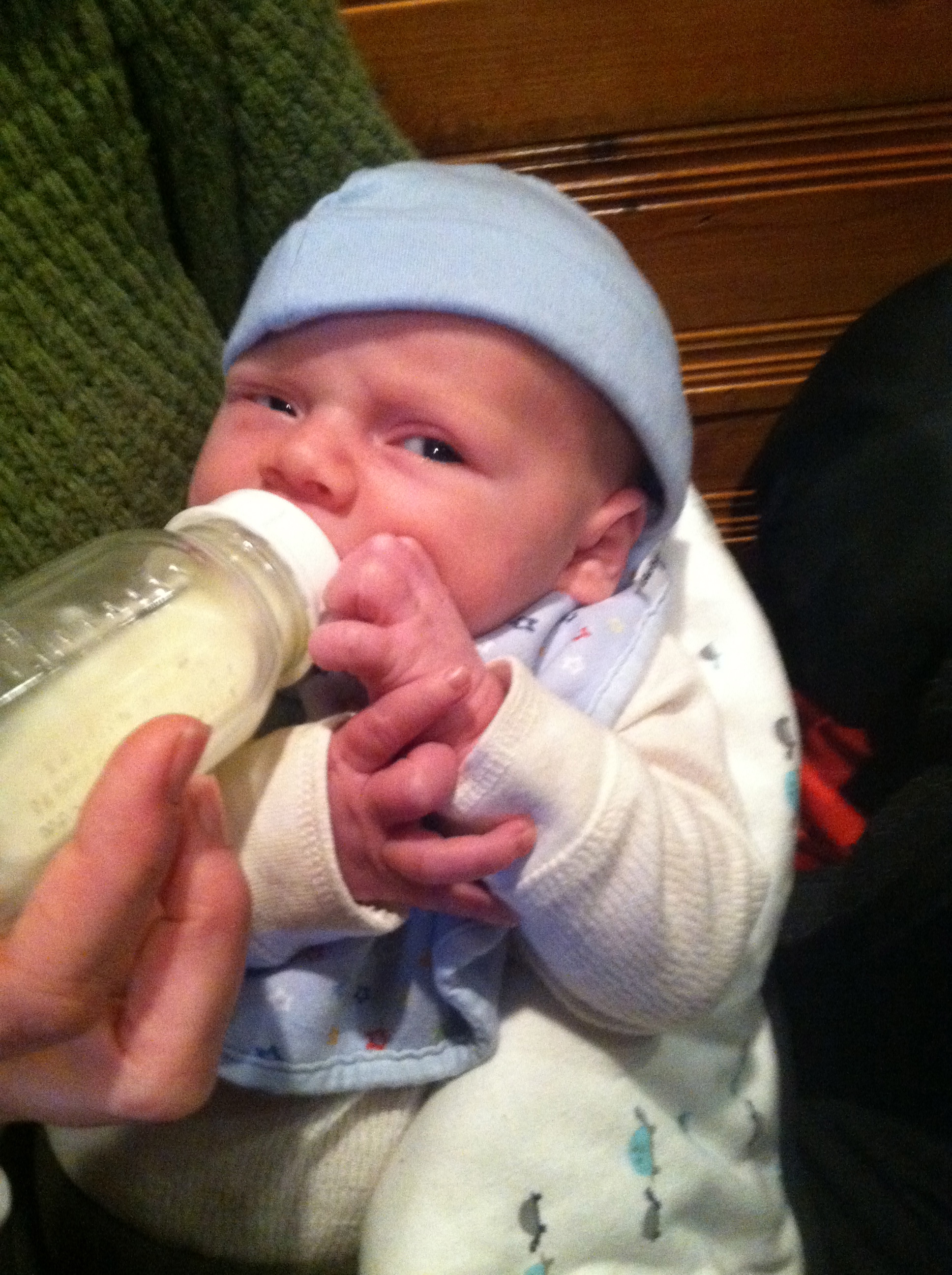
You don’t always drink from a bottle, but when you do, you prefer expressed.

Hear these words today, Cole, that we mimed and rocked into you before you could hold up your own head: You are beloved! Sure, you’ll fail others, and they’ll return the favor. If you end up like me, pain and worry will sometimes make you want to find a remote cabin and disappear.

220px-Proenneke_Cabin_NPS

Dick Proenneke’s cabin in Alaska, forty miles by air from the nearest town. No roads. Visiting it is on my bucket list. Want to join me? (Credit: Wikipedia)

Close your eyes, buddy. Breathe. And trust me: our lips kissed you are beloved into your sweet head; our eyes stared you are beloved into your face as you slept; our hands anointed you are beloved on your pink bum with Desitin and on your neck with an old cloth diaper after a good burping; our hearts made you-are-beloved drum beats against your chest as we napped together.

IMG_1316

Your Uncle Micah is trying to tell you something, Cole.

Understand? When you blessed me with a long look last night, I blessed you back with the first and eternal truth of Cole Martin Thompson: You are beloved! Remember.

Love,

Grandpa John

A Guitar in the Sky Brings Me Back to Myself

I’m not sure how to describe the last month. An awakening? A healing? Whatever. All I know is my spirit feels like my eyes do in the morning, after I rub them and the world comes into focus. What little truth I know has been closer to me than it has in years. The clarity hasn’t given itself all at once, but in instants of inconspicuous awareness.

IMG_1121

Amiable English professor Kirk and his pup Ryan.

One month ago today—September 19, 2013—while perched at Starbucks, I read a short piece in the Erie Times-News: “Coffee? Leave your gun at home.” “Starbucks,” the report begins, “says guns are no longer welcome in its cafes, though it is stopping short of an outright ban on firearms.” Whew. Glad I hadn’t brought my glock with me. My immediate thought: What’s the big deal? I understand the need for Starbucks to issue a press release to announce this—what?—friendly request, but what have we come to when a coffee shop has to ask patrons not to show up packing? A confederacy of dunces? I tore the article out and slipped it into my bag. A truth was being lifted up to me, something obvious when seen under a certain light. (Note: I happen to be writing this at Starbucks, where Kirk Nesset happily works away with Pomeranian pup Ryan on his lap. I suggest Starbucks put out word that well-behaved dogs are welcome.)

Mike_Webster

“Iron Mike” Webster, who died at 50. His autopsy revealed chronic traumatic encephalopathy. Some doctors estimate that his brain had suffered the equivalent of 25,000 car crashes. (Credit: Wikipedia)

Then I watched “A League of Denial: The NFL’s Concussion Crisis” on PBS’s Frontline, my jaw growing more slack by the moment. Everybody’s affronted by clear evidence that the National Football League has been playing dumb for years and covering up what it knew about how unhealthy it can be for a man to have his clock cleaned every Sunday. Seriously? The NFL deserves to get its knuckles cracked—more than 765,000,000 times—for letting its lucrative human demolition derby go on and on, but we’re not dealing with a league of denial here. We live on a planet of denial. What sane player or fan would suppose that you could repeatedly slam your head against other heads, bodies, and the ground and not spend your retirement dazed or worse? And don’t say, “Oh, but they wear helmets.” Um, okay, but no protection is going to prevent your brain from smashing about your skull if your head smacks into a hard surface. My point: this Frontline program holds a truth, but it’s not about football. It’s about a society’s capacity for reason. I love to watch football, but how compassionate is it to watch men risk destroying themselves? Time to give it up.

Rolodex.agr

A Rolodex like Mom’s, except hers was an ugly orange. (Credit: Wikipedia)

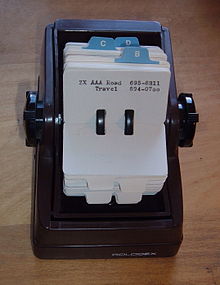
Next: on October 10, 2013, the Erie Times-News carried a short article by Patrick May of the San Jose Mercury News: “Tech stress: With proliferation of digital devices, we’re freaking out.” (Side note: Nobody forwarded me the memorandum announcing the change in practice of capitalizing first letters of words in a title. I’m not against it, but it looks wrong.) Mike Kushner, co-owner of Palo Alto, California’s Bay Area Computer Solutions, describes the rabid stress techno-junkies live with: “We see people crying; we see people angry; we have people lash out at us because we can’t recover what they lost . . . . People are under incredible pressure these days because of how dependent everybody is on their computers and especially their smart phones.” Boy, I’ll tell you, all this iTechnology is, in the words of Rick Postma of Holland, Michigan, “slicker than a harpooned hippo in a banana tree.” My mother of blessed memory kept a $1.99 K-Mart Rolodex on her end table and never once cried or lashed out over lost contacts. Meanwhile, I and thousands of others suffer from, as May puts it, “’phantom vibration syndrome,’ that creepy sensation that your smart phone is buzzing in your purse or pocket when in fact it isn’t.” As an iPhone owner, I ask members of the tribe, “Have we lost all good sense?” Suspected truth: We have.

Aime-Morot-Le-bon-Samaritain

“”The Good Samaritan” by Amie Morot.

Next: A few days ago fellow Starbucks barfly Alan stepped out outside on the porch where I was sitting, raised his closed eyes to the clouds, and took in a cosmic breath. “Yeah,” I said, “things could be a lot worse, huh?” Alan is Zen2 (tall, lanky, constant half-smile, slightly wild gray hair). He told me about a twenty-year-old guy he met at the Regional Cancer Center: “My throat cancer was nothing compared to what that guy had.” We breathed together a few times, then he bowed slightly and walked to his car, chewing his scone on the way. Truth: at every possible opportunity, close my eyes, breathe, and bow to my neighbor. (“And who is my neighbor?”)

© Copyright 2010 CorbisCorporation

“I want a human being.” (Credit: Wisson/Jordan)

Next: I was standing in line at the bank. An old guy sat in an armchair and voiced a single desire into his cell phone:  “No, I want to talk to a human being. No, I want a human being. Any human being who’s there. No, I want a human being.” Of course, he was speaking to an automaton, but speaking a sane truth all the same. Is it too much to ask for a human being? On the phone? At the grocery store check out? On the front porch? I’d like to invent a social media just for this man. I wouldn’t (and couldn’t) name it Facebook. I’d just call it Face.

IMG_1117

A guitar in the sky brings me back to myself.

Finally: Micah needed a drum pad, so we stopped at Erie’s World of Music. As he walked to the door, I stayed in the car and reached for my iPhone—a habit, impulse. For no particular reason, as I thumbed my phone’s snotty leather cover, I looked out my window at the sky and saw a guitar. I used to park in that lot once a week for Micah’s drum lessons and never noticed that guitar next to the World of Music sign. A wordless question brought me to myself: John, aren’t there better things to look at than text messages, e-mails, and ABC’s news stories? Check out the guitar in the sky and while you’re at it, receive the sky.

I’ve don’t think objectivity exists, but I do believe in truths. Though I’m not smart enough to define them, I now have sightings. Truths rest at my feet or hover in the sky when I’m aware, when I breathe. I see them and give thanks. I feel like myself. I feel at home.

A Zen-Christian Night Teaching

Running into Thich Nhat Hanh is always cause for celebration. I’ve never visited Plum Village, his community in France, never heard him speak in person. Still, like millions of his mindful followers, I consider him family.

Thich_Nhat_Hanh_12_(cropped)-1

Thich Nhat Hanh in Paris in 2006. (Credit: Wikipedia)

Last night he showed up in a short dream. Thay, as he’s known to his students, and I stood in the Coleman family kitchen. I can’t remember his exact words, but he said that in his family they drink tea from small cups. He smiled, gently rested his hand on my forearm, then placed a tea pot and a cup on the counter. He smiled again. That was it.

42-38174673

Credit: Michele Constantini

In this moment, I breathe in and out and savor Thay’s night teaching. Most of my dreams are anxious, like I’m enrolled in a college calculus class and forget to attend all semester. But I receive Thay’s visitation as a blessing from my Judeo-Christian God. “Drink slowly from the little cup,” both say. “Why are you always rushing?” Thank you, Thay. Thank you, Lord. Your spiritual hybrid gratefully accepts the healing lesson.

IMG_1055

Stop to notice the spider plant blossoms reaching to the sink in the church bathroom.

A week ago Thich Nhat Hanh showed up in the form of words: “To be is to inter-be,” he writes. “We cannot just be by ourselves alone. We have to inter-be with every other thing.” For Thay, garbage and flowers inter-are. “The affluent society and the deprived society inter-are. The wealth of one society is made of the poverty of the other.” The same goes for people. Reflecting on the suffering of a young prostitute in Manila, Thay observes, “Looking deeply into ourselves, we see her, and we will share her pain and the pain of the whole world. Then we can begin to be of real help.”

IMG_0982

Neighborhood sage Patrick with well-loved Tin Man. This Down’s syndrome kid’s a master at inter-being.

Half an hour ago, sipping a Starbucks redeye, I was inter-are with a tall, skinny guy standing in the long line: shaved head, felt newsboy cap, great puff of a graying beard, black long-john shirt, corduroy pants. For all I know he may have been the most neurotic soul in the coffee shop, but he appeared so overwhelmingly corduroy that I thought to myself, “That dude. I want to be like that dude.” And now, darned if I’m not relaxed—chunky, tight-bearded, balding, but relaxed. I’ll take it, thankful that inter-being is concrete, tangible.

Hund-hut

A dog channels my corduroy brother. I want to be like this dog. (Credit: Wikimedia Commons)

Five minutes more and I’m off to the church for office time. In prayer this morning, I leaned everything I had into the loving bosom of I Am. In the night, Thay touched my arm. I can still feel I Am and Thay. I’ll take them both with me, along with the corduroy man who blessed me with his peace.