If You Were My Daughter

By the time you took your first sip of coffee, a cop had already shown up, taken information from barista Tony, and loaded two pet carriers and bag of cat food into his cruiser. I didn’t see the woman pacing in the parking lot, trying to stay calm through a frantic phone call. I didn’t see her throw her arms up in the air, hop into her car, and speed off. Somebody else did, though, and got her license plate number. Now she is in trouble. You don’t leave a cat, dog, and Meow Mix in Starbucks’ parking lot and hope for the best.

If you were my daughter, I would have told you the whole story as soon as you sat down, ending with how sorry I felt not only for the pets, but also the woman. As if thinking out loud, I would ask what crisis led her to that moment and say as an aside, “Ah, hell, I guess we all do things we can’t take back.”

If you were my daughter, you would already know that I always want love and understanding to have the last word, which often makes my heart like a mutt the neighbors let bark outside hour after hour, the temperature sinking on a December night.

But you’re not my daughter. You spoke on your phone so quietly I could tell only that the language wasn’t English. The likelihood of my offspring randomly sitting down next to me and having a conversation in, say, French, is remote. And, of course, I wouldn’t have been stopped short at first by your beauty. I would know your birthday, where you are in your twenties.

You didn’t stay long, ten minutes and out the door. I watched and wondered. What car is yours? Where are you off to? But you walked so aimlessly, taking pictures of God-knows-what, I figured maybe you weren’t headed anywhere. Not to the bulky old Buick or maroon minivan, not to the Fox and Hound English Pub and Grille or Shoe Carnival or Ollie’s Bargain Outlet.

I stood to see you off. Your leather knapsack—almost empty?—was finally a black dot against your jean jacket. Then you were gone, and I couldn’t decide whether to be happy or worry. Going no place in particular can feel like grace if you know how to be alone and you’re not shouldering much weight.

If you were my daughter, I would be glad we didn’t talk about what you missed: the woman now rushing from suffering to punishment; the long-haired cat with eyes wide and still, waiting to slip from a carrier to the warm, bright sleeping spot on the back of the couch; the cop transporting animals, both trying not to be thrown by sharp turns, both able to remember and love.

If you were my daughter, you would probably say, “Damn, Daddy, lighten up.”

“Yeah,” I would say, “you’re right.”

But I might not be clueless about your next stop. Hopeful? Desolate? Either way, we could meet for lunch, and I would say, as if thinking out loud, “When a father loves his daughter, she always has at least one good place to be.”

A Letter to Parents from a Middle-Aged Pop

A Letter to Parents from a Middle-Aged Pop

Dear Parents (Especially New Ones):

I’m a Christian-Buddhist-pastor mutt in my mid-fifties, married to Kathy for thirty-two years. Daughter Elena and son Micah are grown, the former and her husband Matt having given us grandson Cole and promising us another grand-someone in the spring.

Yesterday Elena, Cole, and I (Pop) went to a nature center for a toddle in the woods. Nearly two, the boy is steady, but the path was strewn with branches and limbs from a recent windstorm. I kept close, spotting his steps, saying in my head, “Don’t fall! Don’t fall! Don’t fall!” My mother did this with me, too, so the anxious parent-grandparent impulse has genetic force behind it.

IMG_3966

Watch out! Don’t get poked in the eye.

Or is the force my childhood home, which was loving and attentive but nerved up? I’m certainly not the first to observe that children take family vibes along when they grow up and move out. I’ve spent much of my adult life trying to love in healthy ways and navigate through anxiety. In my late twenties it was full-blown panic attacks. In middle-age, it’s mostly trying to distinguish love from appeasement and not to turn every emotional speck of stardust into a blackhole. I pray-meditate a lot.

Lately my spiritual practice has drawn me to Tibetan-Buddhist Pema Chodron, whose teachings are weaving themselves into my thoughts and actions. In a recent post, Writing and the Narrative of Suffering, I offer a brief summary of my novice understanding of some key concepts Ani Pema works with. If what follows is interesting, I invite you to have a look.

I was watching one of Pema’s videos this morning when I was grabbed by her flawless diagnosis of my parenting experience:

Trungpa Rimpoche coined the phrase idiot compassion, or you could say idiot loving-kindness. Some of you may have tried raising your children this way and you’re wishing you hadn’t. You can’t bear to see them in any kind of pain, so you give them whatever they want. [Doing this] is like trying to assuage someone’s thirst by giving them saltwater.

I’m overjoyed to report that Elena (27) and Micah (23) are doing well these days, but my unintended lesson about suffering sometimes made their journey a walk on glowing coals. By regularly showing them idiot compassion, I taught them that pain can be eliminated.

Let’s be clear about my motivation. I could claim that I wanted to spare them disappointment, sadness, frustration, whatever, but that was only 25% true. More pressing, say 75% true, was my need to overcome a father’s discomfort. This is idiot compassion, idiot loving-kindness. It could also be called selfish compassion or artificial loving-kindness. I try to make myself better by denying my child the reality every human being has to confront sooner or later: Life is sweet, but it also slaps your heart and punches your spirit.

Years ago in seminary, my Enneagram results indicated that conflict in close proximity could be crippling. Conflict, pissing and moaning kids, discipline and tough calls: It was all crippling, so much so that to find relief I undercut wife Kathy’s strength, wisdom, and wishes.

So Elena wore black makeup, dated guys I should have shown the door, and watched and listened to what she damn-well pleased. And Micah bought weed with money I gave him, dropped out of high school, and put less effort into my feeble attempt at home schooling than I did.

There’s more, some of it worse, but you get the idea. All my reasoning sounded convincing at the time, but now I look back at myself. That younger man was doubled over, rendered frantic and sick by the need to steady the ship, to calm the waters. If you think I was stupid, you’re right.

Given this scathing review of my parenting skills, you might imagine me constantly ripping myself a new one. Other than sighing, I don’t do much self-reproach. What compassion I possess also extends to myself. I mistook indulgence for insight. The glasses I saw through were, in fact, blinders.

So I put down these ideas. I’m not telling you what to do, but mistakes are great teachers. What I believe now is this: Allowing children to experience necessary suffering may well be the highest form of love.

And I’m glad that it’s not too late for me to learn. Cole fell three times on one patch of slick leaves–two near-splits and one averted face plant. I stayed back. He was fine, of course. Someday he’ll get a fat lip or a bruised soul. When he does, I’ll pick him up and tell him the truth: “I know you’re hurt. Sorry I couldn’t stop it. The best Pop can do is stay close and hurt with you.”

IMG_3975

Elena and Cole–three spills later and belly laughing

Peace and love,

John Coleman

Well It’s All Right: An Open Letter

Dear Everyone,

I woke up singing this morning, a losing-weight-but-still-fluffy guy sliding into jeans and the Baja hoodie Kathy lovingly de-hooded for me years ago. Gimpy Watson had to pee, so out we went, the song coming along:

Somewhere beyond the sea

Somewhere waiting for me . . .

IMG_3911

Out back, where Watson kills the grass with his pee, where I hum Bobby Darin.

The trouble with this swaggery Bobby Darin thing, which I both love and hate, is I don’t know all the words. Back inside, I finished putting myself together and noodled around with the signature lines:

I know beyond a doubt (HA!)

My heart will lead me there soon

HA! is the best part—so dated, so got-the-world-by-the-stones, so satisfying. Darin could walk on stage, say, “HA!” and I would cheer. Forget the lover on golden sands and birds flying on high. HA! and a smirk are plenty.

I crooned these juicy lines a few times, each HA! rattling the windows.

“Somebody’s peppy this morning,” Kathy called from the bathroom.

“That’s right,” I said, praying another song would break into my head. Yelping out HA! eventually triggers the gag reflex and makes you light-headed.

If your home has its standard measure of weirdness, a family member turning twelve lyrical words into a mantra might not be noteworthy, but in the midst of my heart dragging my smarm around the house, I noticed: I was singing. This hasn’t happened much recently, and certainly not upon waking, which generally amounts to a twenty-minute game of drag-ass.

About this singing, I’ll observe only that it’s not because I’m leaving one pastoral call and moving to another. Nothing is ever simple, is it? It’s possible to be both excited about a destination and bone-sad over a departure. My heart doesn’t know how to beat right now.

Which is why I appreciate the present singing. Before morning coffee, “Beyond the Sea” was relieved of duty by “End of the Line” by the Traveling Wilburys. Ah, Roy Orbison’s sweet warble, Tom Petty’s blessed assurance kissing me in my plump Chevy HHR:

Don’t have to be ashamed of the car I drive

I’m happy to be here, happy to be alive

“This is most certainly true,” my Lutheran-Zen brain answered. Ashamed of the car I drive? Ha! I have better shames than transportation. Happy to be alive? Why, yes, don’t mind if I am. Happy to be here and receive all kinds of music.

In the last couple of weeks I’ve realized a beauty that has always been offering itself to me. When I walk from the house to the car, at least one bird is in the sky or on a wire or atop a tree. Friend Mary could tell me all their names, just as Kathy can identify nearly every flower. My memory is Teflon with such details, but I can witness and give thanks.

220px-Cardinalis_cardinalis_-Columbus,_Ohio,_USA-male-8_(1)

A bird that friend Mary can certainly identify (Credit: Wikipedia)

I make that forty-foot trip from house to car and back again multiple times a day, and only once has a bird not accompanied me. Sometimes it’s a tiny, lone eye-song flying on high. Why have these companions been invisible for so long? A hardened heart and blinded eyes, maybe, projects of my own doing?

But gladness improves vision. As peace increases, the commonplace comes alive. Right before Kathy and I headed out the door a few hours ago, the kitchen windowsill said hosanna.

IMG_3910

Tomatoes from Kathy’s garden ripen, only after I had given up and decided to make cream of green tomato soup out of them.

IMG_3909

Rosemary from friend Denise, basil in water experiment, a ripening peach–each one a “hosanna.”

And yesterday Elena, Cole, and I had homemade vegetable soup and bread for lunch. As my wonder-of-a daughter poached eggs, my savior-grandson walked toward his bedroom and said, “Pop, come. Pop, come.” The message was of burning-bush proportions. I followed.

Cole is into hammering these days, so we went at rubber balls and his miniature electronic drum set, which said “Let’s jam again soon” each of the hundred times he turned it off. After lunch Elena got out his new piggy bank, and we all counted as he slipped in coins.

IMG_3908

Each time Cole says “Pop,” I stand on holy ground.

When I said, “Pop has to leave now,” Cole said, “Cole leave.” Referring to yourself in the third person is not only charming when you’re almost two, but also infectious.

“Oh, you want to go with Pop?” Elena said. “No, Cole has to stay here.”

My little buddy sagged at the screen door, his face widening into a pitiful toddler cry as I waved goodbye. By the time I reached the Chevy, I could see he was on to the next attraction, tears already drying.

“Pop, come.” Cole is calling me. Birds and songs are, too, as is the Lover of Souls: “Wake up, child,” Love whispers to me, “greet your sky-neighbors and sing. Two lines are enough. Even a HA! of joy will do.”

Love,

John

I’ll Find You, Art, in the Sunset Dance

Art and I had a routine. He poked his head into my office doorway, checking to see if the coast was clear—a few times a week since Doris passed nine years ago.

“Thought I’d come in and bug you for a few minutes,” he said, then had a seat.

Image-20079_20150727

Friend Art

Half-hour by half-hour we picked through his life and pulled out stories as if from attic boxes: Korea, close enough to the action to hear the shells whistle; a garage-building crew in the old neighborhood and the keg they were bound to finish and the world spinning; Doris dying alone in the afternoon while he ran errands—he never quite forgave himself.

“Well,” Art said, standing up, “I’ll let you get back to work.”

“But, Art,” I always answered, “I have been working.”

He had to stop on the way home for something, maybe boloney. Samwiches every day for lunch get boring. After a while you forget to eat.

Art got to church first on Sunday mornings, unlocked the doors and set the bulletins out. But arthritis clamped down on his shoulders so badly that he gave in and got a crew cut. Combs and spoons weren’t his friends anymore. If I had a nickel for every time I fixed his collar or untwisted his suspenders . . . . Getting to worship became a project, weary and burdensome.

This past winter Erie, Pennsylvania, was cruel. Art’s car and many others at Niagara Village were snowbound, but the wind chills would have kept him inside anyway. He had time to dwell on the indignities of age: obstinate hearts, lungs, and bowels. And loneliness. He looked at Doris’ picture on the wall and told her, “Send me my ticket. I’m ready.” He lay in bed before dawn, anxious and hazy, and wondered if what he was feeling was death.

Kidney failure pushed him over the edge. I was there when a kind doctor leaned in close and with his manner as much as his words let Art know that forgoing dialysis was just fine. We prayed.

Oh, his poor arms, torn and purple.

Loved ones and nurses took in what was happening. Muffled tears. Compression devices off of his calves, the Velcro cackling. A tube or two removed. I don’t remember, exactly.

Art’s faithful son Mark went to make calls. Suddenly, Art and I were alone.

“What do you think Doris will say when you get there?” I said.

“Probably ‘What took you so long?’”

“Can I tell the [church] people what’s going on with you?”

“Yep, tell them I’m going home.”

I held his hand as he looked far off. Death wouldn’t arrive for a week or so, but he seemed to be peeking into another doorway, one where the coast is always clear—so I believe.

“Are you okay with this, Art?” I said. “Are you at peace?”

He was already on his way: “Yep, just help me through the door.”

Still holding his hand, I cried without him seeing.

IMG_0718

Church was home for Art. He always kept a prayer candle lit for Doris.

The sanctuary filled up for Art. We gave him a good send off—big choir, his boys sharp in uniform, loving words and a salute from his eldest, “How Great Thou Art” sung by one of his beloved church-grandchildren. We ended with our beautiful old prayer poem: “Into your hands, O merciful Savior, we commend your servant, Art. Acknowledge, we humbly beseech you, a sheep of your own fold, a lamb of your own flock, a sinner of your own redeeming. Receive him into the arms of your mercy, into the blessed rest of everlasting peace, and into the glorious company of the saints in light.”

The next morning I gathered with family at the cemetery. We said more words—“earth to earth, ashes to ashes, dust to dust”—and slid Art’s urn in next to Doris’. Some hugs later, I drove away through the deep, winding green of summer. I can’t recall what I did the rest of that day.

I sit now with coffee, keeping company with a few more tears that are still floating in my reservoir.

And I sit with an understanding: nothing can rush sadness through the door after a friend dies, especially one you’ve said to many times, “Here, let me fix your suspenders.” It was my privilege.

IMG_3583Last evening, knowing the best I can do is keep my own door open wide enough for grief to go in and out freely, I drove with wife Kathy to Presque Isle, to beaches that feel like home.

The Lake Erie sunset was on. Yes, a sunset, stunning cliché of the western sky, light everybody sails into eventually. Wind kept the landscape in motion, waves and light playing in the last few minutes of day.

Kathy and I stood at the water’s edge and held each other. The air moved over us—I want to say blew through us. As I breathed in and out, we seemed to be welcomed in by the sinking sun, the clouds mysteriously still, restless Lake Erie, and all the quick and the dead. We embraced each other, and creation embraced us.

It would be satisfying to say that I sensed Art’s presence, but that would be a slanted truth. Rather, resting my cheek against Kathy’s hair, receiving her cheek against my chest, my soul knew the hope of a gathering, a cosmic dance of sun, water, wind, sand, grass, and hearts. The song is of mercy.

IMG_3602

A pale vault opening

Just after the sun set, a pale vault opened in its place, glowing in the memory of the great light. I felt as though I was looking into the dance, moving with it as much as anyone can without joining it entirely.

What does death feel like? Art wondered, and so do I. Now he knows. I pray that it’s like losing yourself in a dance, completely embraced, yet free, too amazed by color, light, and love to straighten your collar or imagine that anybody has ever died alone.

Micro-Post: Inconspicuous Blessings

I

Two hours ago I brought lunch to daughter Elena and grandson Cole. Teething is knocking steam out of the little man’s groove. Elena has him chewing white socks dipped in water and frozen stiff. Seems to work.

IMG_1512

I don’t know what you’re saying, Gramps, but I dig it!

As I ate a hippie pizza with feta and Greek olives, Elena had a vegan sandwich. Cole lay on his blanket, and I went on and on: “I’ll be bringing Grandma by when she gets out of work so you can see her. Actually, I’m bringing her here so she can see you.” “Do you have any idea how happy you make me?” “I’m leaving two pieces of pizza for your daddy so he’ll have a snack when he gets home.” Cole had no clue what I was saying, but he was smiling huge.

It occurred to me that this kid enjoys a continuous loop of kind, affirming, happy talk. I don’t think he’s ever in the presence of angry voices. No   tone or gesture communicates anything other than extravagant love. I don’t take any of this for granite, as one of my college English students once wrote. Nor do I take credit. This is good fortune, baby! For my part, I’ve done as much to mess up my loved ones’ lives as I’ve done to bless them.

unnamed-3

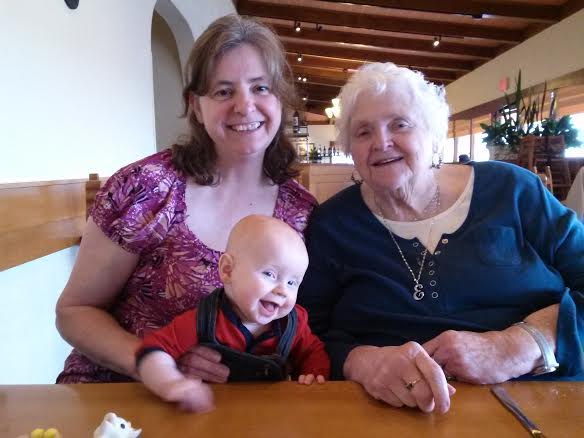
Cole with Grandma Kathy and Great-Grandma Edna–a smile fashioned by gentleness.

After kisses on the head and piggies, I took joy out into the rain, into my truck . . .

II

. . . and into the grocery store, where I bought salmon, asparagus, and avocados for this evening’s supper. After Kathy (Grandma!) and I visit Cole–oh yeah and by the way Elena and son-in-law Matt–we’ll go to Starbucks and make plans for our vacation in Maine in late July. Then, home for some easy cooking. Home–shelter, warmth, love, forgiveness, understanding.

IMG_0904

Not home, but the house my home fills.

III

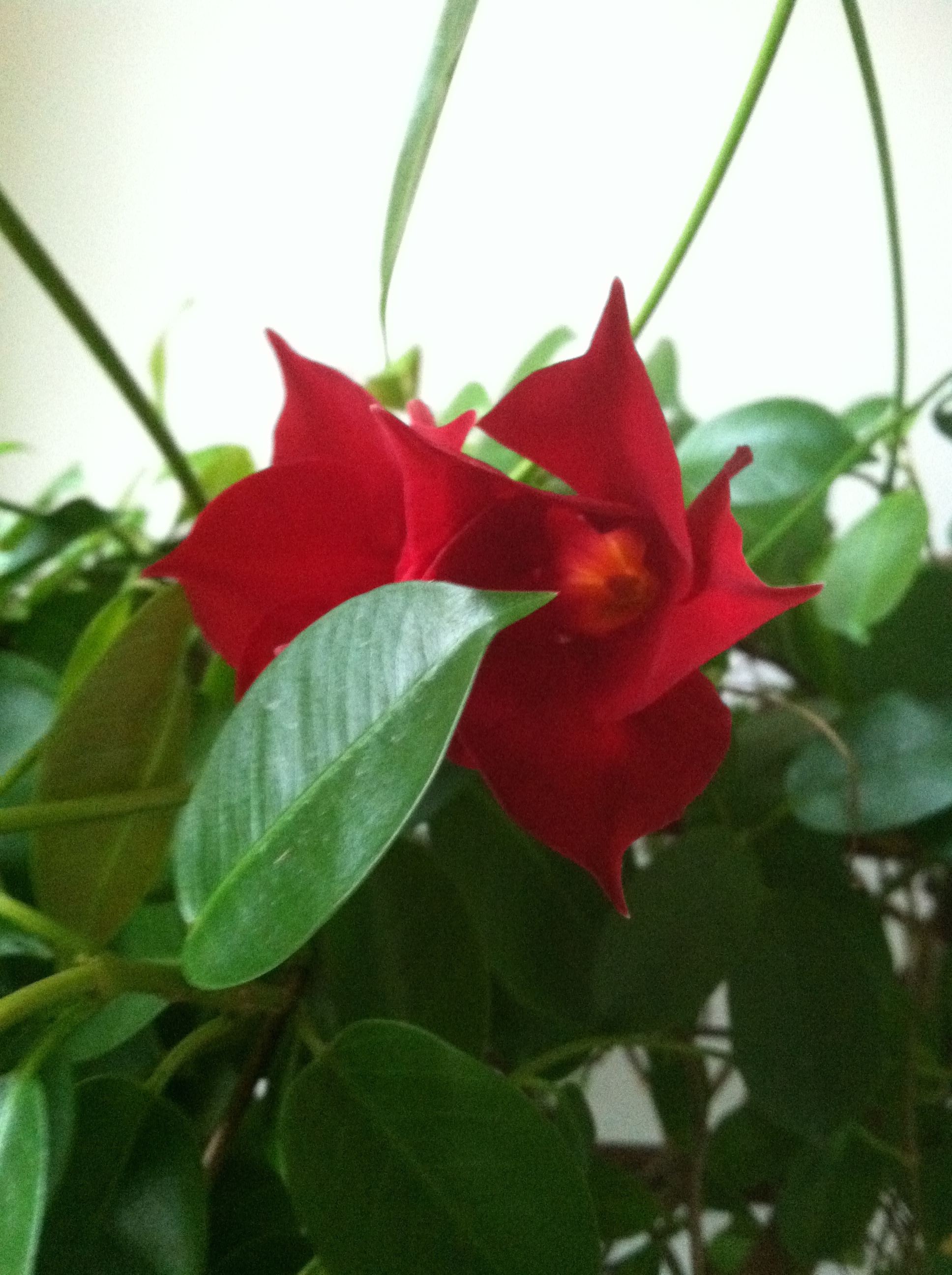
In ten minutes I’ll pick up a bottle of chardonnay, then stop at home long enough for a siesta and a couple chores. I’ll give the pets treats, which they always expect when I walk through the door. When I go upstairs for a delicious hour of sleep, I’ll stop on the landing, where Kathy has a plant that is flowering, longing to reach through the window and touch pure light.

IMG_1500

Before my nap, stop for a couple of seconds. Look.

IV

When Kathy gets into the truck, I’ll kiss her, rest my cheek against her hair. She knows my weaknesses, but still loves me.

V

Just this: I’m grateful for these inconspicuous blessings, arriving quietly, humming a song that sounds like grace and mercy.

Micro-Post: The Hug

6:35 p.m.: Kathy and I are in the kitchen, listening to Scott Pelley tell us that terrorists may smuggle ingredients for explosives onto planes in toothpaste tubes. If airlines forbid passengers from bringing toiletries to the Sochi Olympic Games, lots of athletes and fans are going to get funky. But maybe they won’t get blown up. Who knows?

800px-Toothpaste

Ultra-Bright gives your mouth . . . KA BOOM! (Credit: Scott Ehardt)

Kathy nursed ten patients today. Tired, boss. Dog tired. While I stare at the anchor’s face, she has the obituaries spread out on the counter. “Oh,” she says. Silence, then again, “Oh.” She’s cared for them, heard their stories. Compassion and science haven’t yet eliminated cancer’s mad attrition rate. Damn it!

What to do? Mercy’s gravity draws Kathy and me into a hug, a long one. We sway, almost dance. Breathe in, breathe out. I rest my lips on her hair, receive thirty-three years of home.

IMG_1355

On the kitchen sill, light draws life into an embrace.

That’s what this hug is: home. Shenley Drive and Erie are great, but they’re not my earthly residence. I’m at rest here, in Kathy’s arms, her graying hair against my cheek. Explosions and funeral arrangements are white noise. Where two or three are gathered . . . yes, the Holy Mystery shares our breathing. Hosanna! Save us! Shamatha. Abide in calm.

42-17217401

Probably what Kathy and I look like: a couple of Japanese macaques hanging on to each other. Home sweet home! (Credit: DLILLC / Corbis.)

A minute isn’t enough, but it’ll do. “You should go sit in bed,” I say. “Rest. I’ll get dinner.”

So Kathy goes upstairs, and I make meatloaf and sweet potato fries and listen to Leon Redbone: “Ain’t Misbehavin’”; “Mr. Jelly Roll Baker”; “My Melancholy Baby.” Come to me, my melancholy baby. Cuddle up and don’t be blue.

IMG_1364

Kathy with the best medicine for melancholy: grandson Cole! She loves me but doesn’t giggle like this when we hug.

We eat in bed and fall asleep early, blessed to have house and home. We wish the gorgeous, dynamite world around us grace and peace.

IMG_1359

Gorgeous: winter trees on Shenley Drive

Third Report from the Ark: The Grace of a Child’s Fine Hair

Day Five

Friday, June 20, 2013, 6:34 p.m., at the dining room table in the Ark. In my head Dandy Don Meredith is singing “Turn Out the Lights, the Party’s Over” from Monday Night Football back in the old days. When the game was decided—generally before the clock ran out—Howard Cosell would clam up long enough for Meredith to serenade the outcome.

IMG_0804

Pastor Jeff, reading in the shade before Friday worship.

The party’s almost over at Camp Lutherlyn. The teaching’s finished, and in two hours we’ll have the final worship service of the week. Pastor Jeff will lead, and I’ll preach. May God preserve us! Tomorrow morning parents will pick up their kids, load trunks with sleeping bags and suitcases jammed with smelly, dusty shorts and t-shirts, and drive away. Some of our middle schoolers didn’t want to come in the first place. Most end up sad to leave. I know the scene already. They’ll exchange cell phone numbers, hug, and hassle parents for a gift shop hoodie or baseball cap. A few will cry. And a couple may even dread going home, where honor thy father and thy mother is a complicated commandment.

IMG_0806

What awaits pastors at the end of the day’s rainbow? A beaujolais nouveau courtesy of Bill.

But before the teary goodbyes, before we really do turn out the lights, the counselors will take the kids straight from worship to campfire, and we pastors will have our last daily postmortem. Georges Duboeuf will provide beaujolais nouveau, which Pastor Bill tells me is a touch sweeter than pinot noir. If I’m not mistaken, a Riesling is also hiding in the refrigerator. Sweetness will be the theme tonight, as Pastor Kim picked up a pack of Oreos as well as vanilla ice cream, Hershey syrup, and hot fudge; meanwhile, Pastor Bill grabbed peanut butter and mint Oreos. After this week, our pancreases and livers should be due for a breather. The only sugar missing this week is those big, orange, marshmallow peanuts, which Pastor Brian constantly tossed into his mouth in years past.

Every year at Lutherlyn has a different feel for me. Despite the nerves or adrenal fatigue or hypochondria going on or not really going on inside me, the week has actually been peaceful. No serious fights among the kids, no drama-trauma that I could detect. Yesterday I had to drive to Erie for a pastoral emergency and, ironically, had the most beautiful experience of these Camp Lutherlyn days. I stopped by the church to take care of a few things as long as I was in town, and parishioner Julie showed up with daughter Lena. Julie shared with me the story of her ninety-year-old grandmother wandering away from her nursing home. With a walker and determination, she shuffled ¾ of a mile before the staff caught up with her. The poor woman has dementia and delirium, the latter possibly from a stroke.

After a couple tense days between hospital and nursing home, Grandma got situated once again. I headed off for that emergency, thinking of the hell people with dementia and Alzheimer’s stumble around in. Of course, I thought of my dad and his few years of misery, knowing his brain had betrayed him. Julie and Lena went to check on Grandma. The beauty of camp week came to me hours later in the form of a text message and photograph from Julie. The words: “Snuggling up to watch Curious George may be the best medicine.” The photograph:

IMG_0801

Cora, Lena, and Great-Grandma, watching Curious George. Older sister Zoe and father Steve let the young ones handle cuddling duty. (Credit: Julie)

Curious_George_Coverart-1

Credit: Wikipedia

I wonder how many tormented minds could be brought to peace if only they could sit propped up in bed with a couple kids and watch a cartoon about the adventures of a mischievous monkey. The world’s agony and absurdity can’t overcome the grace of a child’s fine hair against your cheek. Look at Lena, Cora, and Zoe’s great-grandma smile. In that moment she seemed to have the delirious world figured out. Maybe she had. I’m going to keep that picture handy for when despair hits.

Signing off now from the Ark. Tomorrow I’ll bring back home in my spirit the silly hearts of the teenagers I taught, the evenings laughing with fellow pastors, that emergency one lovely family will be mired in for years to come, and the smile of an elderly woman whose confusion cleared for a minute when great-grandchildren leaned into her, saying nothing, just watching a monkey get into trouble.

IMG_0800

Until next summer, Ark.