Weak Beer Out of a Wine Glass

I’m sitting in the breakfast nook, looking out as day turns dusk and watching micro-bubbles rise to the top of my Labatt 52, which hardly qualifies as beer.

IMG_0260

Wife Kathy is in the dining room, making new pillow covers for her econo-redecorated study she now calls the lounge.

IMG_0262

Son Micah downs a bottle of Bolthouse Farms Green Goodness, which looks like pureed spinach. It tastes good, though, and he deserves it after power washing his grandmother’s basement.
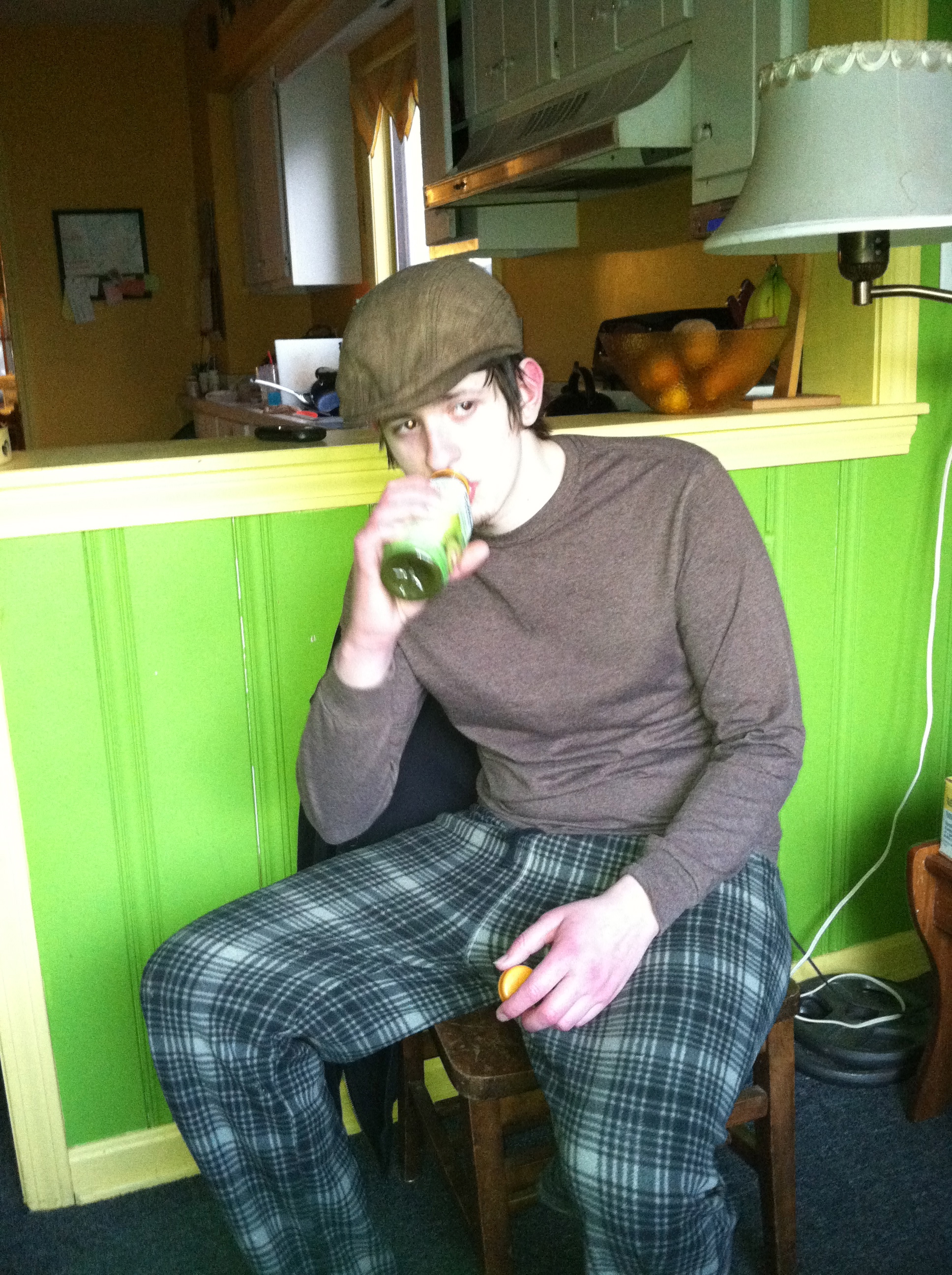
IMG_0266

Dog Watson is flopped by Kathy. Cats Baby and Shadow are hiding somewhere. On the radio, Sheryl Crow sings, “If it makes you happy, it can’t be that bad.”
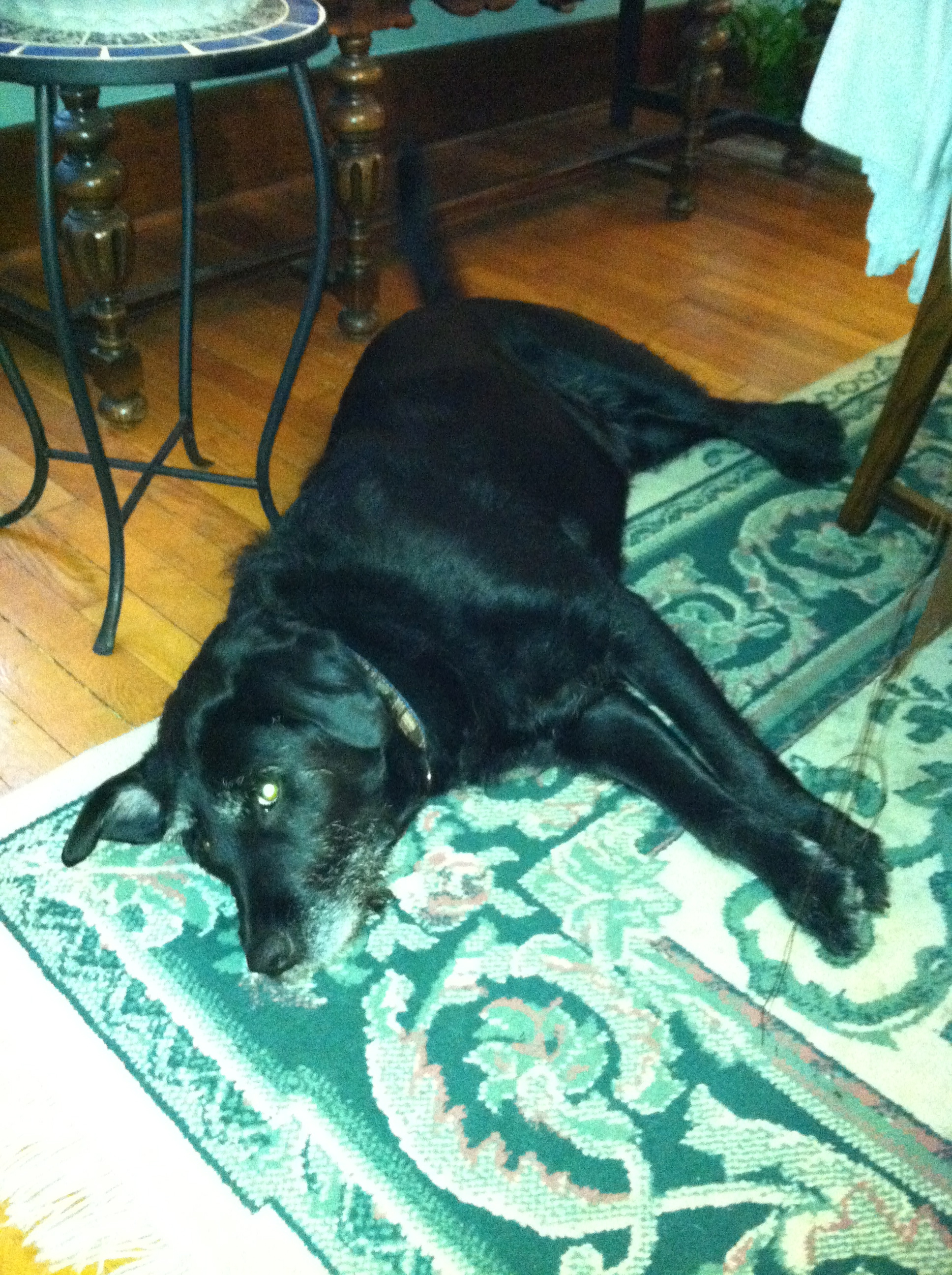
IMG_0263

Why are you taking my picture?

In another song, from the year I got my driver’s license, Lionel Richie said he was easy, “easy like a Sunday morning.” Sunday mornings aren’t easy for me; they’re the 100-yard dash of my week; Sunday afternoons lately have been consumed by a nap that—as Will Ferrell said in a George W. Bush spoof—deserves a commemorative plaque. Today’s edition came in two volumes: 2:15-3:30 and 3:45-5:20. Wacky? Or sane as it gets? The latter, I’m pretty sure. After a morning of trying to say something authentic and useful to a bunch a wonderful Lutherans, baptizing a cool kid, and putting too many peanut butter cookies and fudgy no-bakes into my diabetic body (at the kid’s reception), the sanest thing to do was sit propped up in bed eating a lunch of whole wheat pasta with homemade marinara sauce, skimming Parade Magazine, and falling asleep.

It’s 7:59 right now, and I might still be asleep if Kathy hadn’t sat on the bed beside me at 5:20 and asked, “You know what time it is?” I’d been out for two hours and fifty minutes, but I bet I’ll still go to bed at 11:00 without any problem. While I snored, Kathy, who naps only when staggering with fatigue, tamed and contained a winter’s worth of compost. I do a lot of cooking and hope an avocado tree someday springs out of the mix.
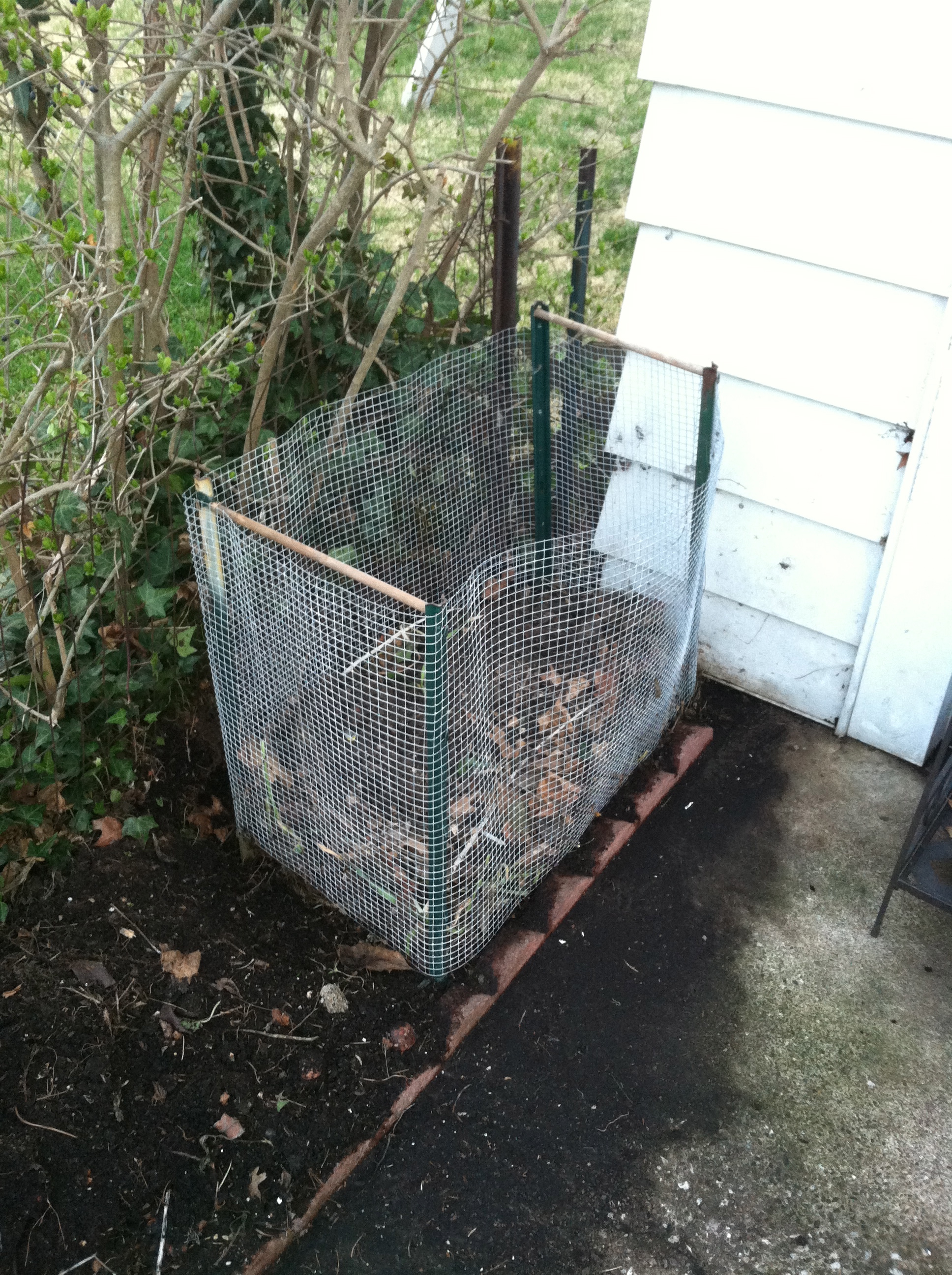
IMG_0269

Doesn’t look like much compost. Don’t be fooled.

Just now Kathy and Micah headed out on a quick errand. She left the radio on and Stevie Nicks is singing a hard-driving song with words I’m not catching—all I’m getting is “stand back” and “it’s all right, it’s all right.”

It is all right. Easy like a Sunday evening. I love my family. Leftover soup—chicken vegetable in a cardamom and lime broth—awaits when I’m hungry. Truth be told, a couple more beers are in my future. I’m more refreshed than any person deserves to be, thanks to that ridiculous nap. I breathe in, breathe out. Everything around me is common, nothing remarkable, but it all seems crazy good—weak beer out of a wine glass.

Profiles in Napping: Winston Churchill: Part I

English: Sir Winston Churchill.

English: Sir Winston Churchill. (Photo credit: Wikipedia)

Winston Churchill was probably slow of body. His favorite cigars were Cubans, Romeo y Julieta and La Aroma de Cuba, so reports Cigar Aficionado. He kept 3000 – 4000 on hand in carefully labeled boxes and smoked up in two days the equivalent of his valet’s weekly salary.  The Prime Minister’s alcohol consumption also must have held him to a sluggish pace. Science writer Chris Woodford reports that Churchill’s drinking started in 1899 when he was sent by the Morning Post to cover the Boer War. Out on the front his stash included “36 bottles of wine, 18 bottles of ten-year old scotch, and 6 bottles of vintage brandy (a drink he believed was essential to a stable diet). Clearly Churchill had better access to alcohol than most people on the South African front: his stores were also said to contain ‘many bottles of whisky, claret, and port.’” Churchill’s consumption continued briskly until retirement, when he apparently set out to finish off his liver: “One visitor from the period noted: ‘There is always some alcohol in his blood, and it reaches its peak late in the evening after he has had two or three scotches, several glasses of champagne, at least two brandies, and a highball … but his family never sees him the worst for drink.’”  Multiple sources attest that Churchill held his liquor exceptionally well.

Six to ten 8 -10 inch cigars a day, gallons of drink, and a portly body: slow of body certainly, but quick-witted. Two of his best-known exchanges with Lady Nancy Astor are wicked—if they’re true:

Astor: “If you were my husband, Winston, I should flavour your coffee with poison.”

Churchill: “If I were your husband, madam, I should drink it.”

And . . .

Astor: “You, Mr. Churchill, are drunk.”

Churchill: “And you, Lady Astor, are ugly. But I shall be sober in the morning.”

Churchill 2, Astor 0. If you could have taken getting stung with repartee and didn’t mind constantly being tempted to binge drink, Churchill would have been a lively companion—except for a couple of hours in the afternoon, when he would have been unavailable.

Churchill was a steadfast napper. He undressed, put on pajamas, and got between the sheets, not for twenty or sixty minutes, but for an hour and a half to two hours. He insisted that this habit helped him “get two days in one—well, at least one and a half, I’m sure.” World War II was obviously taxing, and, writes Joseph Cardieri, the siesta enabled Churchill “to carry out—until the wee hours of the morning—the business of defeating the Axis powers.” The alcohol’s numbing effect must have been therapeutic without extinguishing all of the Prime Minister’s brain cells, for he knew in the 1940’s what science would prove today. “Nature had not intended mankind to work from 8 in the morning until midnight,” Churchill wrote in The Gathering Storm, the first in his six-volume memoir The Second World War, “without the refreshment of blessed oblivion which, even if it only lasts 20 minutes, is sufficient to renew all the vital forces.”

Stay tuned for Part II of Churchill’s profile and learn about his Black Dog and love of pink silk.

Rest in Peace, Martin Richard

Some days I nap because the world is too much to tolerate. The count now from Boston is 3 dead, at least 144 injured. Eight-year-old Martin Richard was waiting with his mother and two siblings to give his old man a hug when he crossed the finish line. Problem was, the shrapnel went out close to the ground, so adults lost legs. I don’t know the specifics with Martin, but he got killed. His mother and one sister were seriously injured.

8655592161_2e2b66aa96

Martin Richard (Photo Credit: bostonpeter7)

One of television’s talking heads mentioned yesterday that you can go online and watch videos on how to make bombs. And this is okay? America continues to reduce the First Amendment to an absurdity.

John Coffee in the film The Green Mile speaks for me this morning: “I’m tired of people being ugly to each other. I’m tired of all the pain I feel and hear in the world everyday. There’s too much of it. It’s like pieces of glass in my head all the time. Can you understand?” I don’t feel stabbed in the head, just tired. “Awful tired now, boss. Dog tired.”

Bombing at the Boston Marathon

3:30 p.m. was siesta time, but for a while I sat on the bed and watched the relentless loop of footage ABC News was showing of the bombing of the Boston Marathon: the pavement covered in blood, barricade fencing twisted atop injured splayed on the ground, workers in yellow vests sprinting in and out of camera shots, weary runners weeping. Again?

Of course again. This year’s race, held on Patriots’ Day, was dedicated to the Sandy Hook dead. As I postponed sleep and took in the spectacle, Zoloft kept the lump in my throat from turning to tears. After half-an-hour, I realized Diane Sawyer and George Stephanopoulos wouldn’t be able to tell me anything new for a while, so I set my alarm for 5:05, turned the volume down so I could pretend to listen, and closed my eyes. I fell asleep—for a little bit, I think. Lovely day in Erie, Pennsylvania. Windows open, breeze coming in. At 4:50, neighbor Joy hollered up: “Get down here, Flanders.” (She’s nicknamed me after the dork on The Simpsons.) Her kids were playing outside, and she was summoning me for happy hour.

Of course I went out. She, her husband Kevin, and I sat on the porch and had a couple beers as her meatloaf finished baking. Kevin, one of the smartest guys I know, thinks those bombs were planted by some domestic crazy. The reason: seasoned terrorists time a second bomb to coincide with the arrival of first responders. Joy’s adding random bombs to her worries about North Korea. So we sat, tried to enjoy the clouds passing across the deep blue sky, and sipped.

When wife Kathy got home from work, we took dog Watson for a walk around the block, then drove here to Starbucks for an Americano. After I glanced at the newspaper, I checked msn.com. Mistake. So far two innocents were killed in Boston. One of them was eight years old. At least a hundred were injured; some went to hospitals without their legs.

We’ve got enough violently ill souls in this country that it feels like we’re tearing ourselves apart. I’m afraid there’s no decent answer. For now, my personal choice is to breathe, step outside the insanity for an hour each day to rest my body and heal my mind, and in prayer invite compassion to keep me gentle and steady.

Napping Pods for $12,985: A Commentary

8200401567_dae95fd29f

Ovei-pod (Photo Credit: Sean Fry)

Leave it to capitalism to profit from a simple afternoon nap. I’ve stumbled upon an array of Google photographs of napping pods. Imagine a comfortable dentist’s chair with some portion of an eggshell providing shelter and privacy. The good news about the advent of the napping pod is the progress it demonstrates; the business world is slowly figuring out that employees work better if they’re not tired. I don’t think for a moment that businesses generally place a high priority on comfort, but the science is clear: if you let people sleep for twenty minutes in the afternoon, not only are they more productive, but you can also squeeze an additional hour’s work out of them at the end of the day. Still, whatever’s behind the napping pod, I’m grateful at least for the imagery: a siesta is sleek, profitable, smart, and hip. If people peek through my office door and see me curled up on my old daycare mats, maybe they’ll think their savvy pastor is taking his lead from techies at Google and financial wizards at Kodiak Capital Group. Both companies, along with AOL Huffington Post Media Group, Cisco, and plenty of others, are setting up napping areas for employees.

IMG_0249

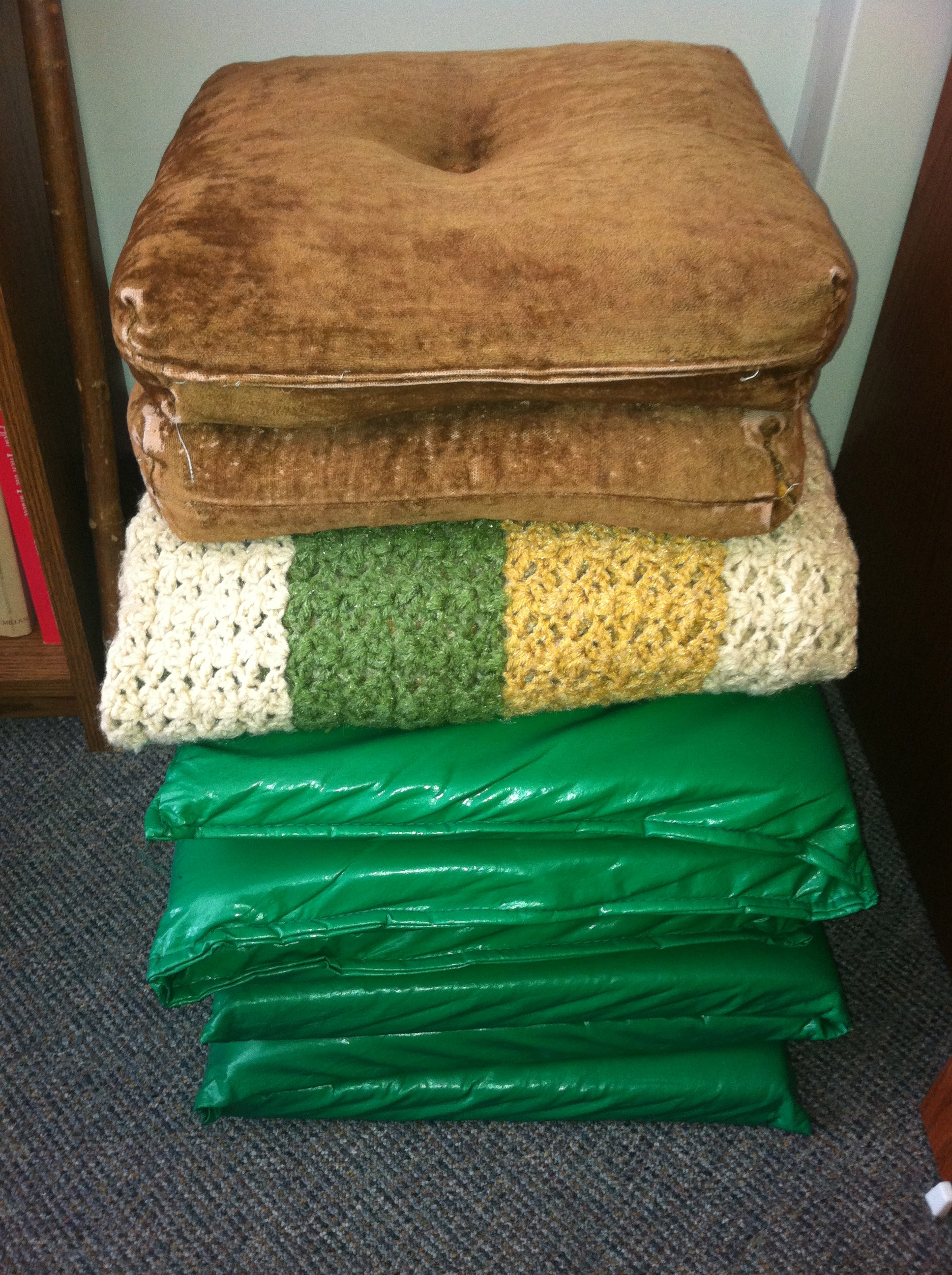
A Lutheran Pastor’s Napping Gear

2197732963_a301c64698

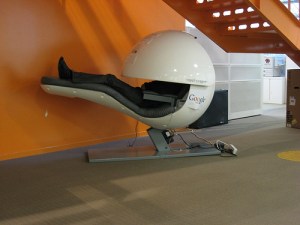
Googlenappod (Photo Credit: Joe Loong)

Google especially isn’t messing around. Management.fortune.cnn.com says, “Google’s Mountain View campus has received quite a bit of attention for its “Energy Pods”—futuristic-looking white capsules that rent for $795 a month or sell for $12,985 where nappers can recline out of other people’s sight and set timers to wake themselves up with vibrations and lights.” AOL Huffington’s “NapQuest” rooms also have Energy Pods. The article quotes napping authority Bill Anthony of Boston University, who thinks napping’s growing acceptance is related to improving economic conditions. If companies have to compete for the brightest and best, a workout room and glossy napping eggs might sweeten the pot.

But, seriously, $12,985 apiece? They’re made by MetroNaps, which spells them EnergyPods. (Is English heading in the direction of ancient Hebrew? The spaces between words are disappearing.) The company website’s homepage doesn’t quote the price, but they want you to know a lot of thought and science went into the design:

  • “The contour of the EnergyPod takes pressure off the cardiac system with the elevation of the feet and relaxes the muscles of the lower back with a slight bend in the knees.”
  • “The EnergyPod’s sphere provides semi-privacy without overly enclosing. Rotate the privacy visor for additional seclusion.”
  • “Specially devised rhythms play to facilitate relaxation and eliminate surrounding distractions.”
  • “Wakes gently but effectively as the EnergyPod executes a programmed combination of lights and vibration.”
Podtime-Sleeping-Pods

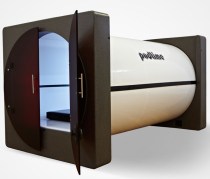
Podtime Sleeping Pod (Photo Credit: geekalerts.com)

I suppose the EnergyPod is the Mercedes Benz of corporate napping. For $2,112.00 plus shipping and handling firebox.com will send you a “shippable, stackable, sleeping sanctuary” manufactured by Podtime Sleeping Pods. “Never again,” the website promises, “will you think to yourself ‘Curses! If only I had a comfortable, stylish and secure sleeping compartment right now’. Because that’s precisely what the Podtime Sleeping Pod is. A practically indestructible polycarbonate tube, with heavy-duty frosted doors, a luxurious fitted mattress and outstanding air circulation; meaning you can relax in comfort and privacy.” The white (of course) pod looks like it would work great, but it’s a little too private. Innovative employees could meet for alternate forms of horizontal refreshment in the Podtime Sleeping Pod.

Also available from firebox.com are pup tents that look like a slice of watermelon, sheep in a pasture, a turquois book entitled The Natural World, and a man and woman on their knees, leaning into each other for a kiss–$600 to $800, which is as high as I’d go as an employer providing private napping spots. Employees can bring their own pillows, mats, and blankets.

8131394054_13dfe796b9

G-1 Glass Pool Table (Photo Credit: shoepecia.com)

Lingering on this playful website is much better for the spirit than obsessing over my usual worries. The black and white Retro Invader Couch for $8,722 looks slick and comfortable as a steel floor. The G-1 Glass Pool Table would be fun, but not for $61,846. Best of all is the Hoverwing Flying Hovercraft: “It’s a boat, it’s a plane.” More specifically, it’s “a floating speed-machine, made from a super strong fibreglass/PVC composite, that can carry 4 people over pretty much any terrain you can think of. Then they added wings. The increased elevation means that you can glide for long distances and achieve clearance heights of up to 6 feet, making even choppy seas and small inclines a breeze. Eat your heart out James Bond.”

CreditBradSmith2007

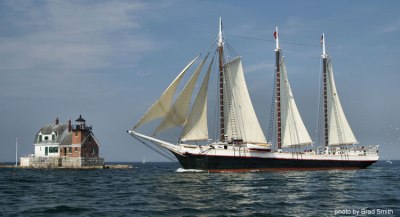
The Victory Chimes (Photo Credit: Brad Smith)

$237,870, with free shipping in the UK. Is this for real? I must be boring. If I had $237,870, I’d be debt free. My splurge would be a great bottle of Pinot Noir and a few days on the Victory Chimes, a three-masted schooner sailing out of Rockland, Maine. The sailing is calm, and napping in the cabin to the gentle rocking of waves is unbelievable.

Guilty for Napping? Take a Siesta!

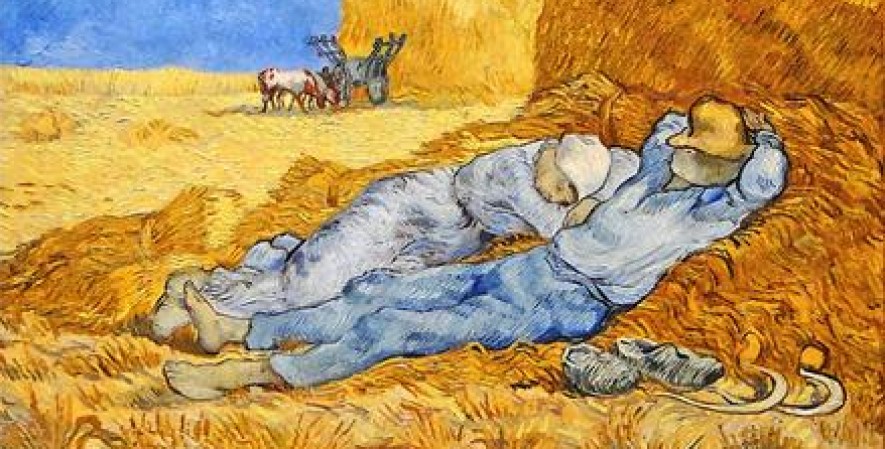
the-siesta_med

The Siesta, Vincent Van Gogh

About the only thing I don’t love about napping is that word: napping. Nap makes people think of being caught napping or squeezing in a napSiesta is a much better word, but you don’t hear many people say, “I’m going to take a siesta.” The monks of the Abbey of the Genesee in New York State include an optional siesta in their daily schedule. At 11:15 they gather for one of the monastic hours called Sext, which shares its etymology with siesta. The Latin sexta means sixth, which refers to the sixth hour after sunrise—noon.  After a short period of chanting psalms at 11:15, the monks eat their main meal of the day, then are free to rest until 1:05 p.m., when they gather for None and return to manual labor.  So it is at about noon, the sixth hour after sunrise and the tenth hour after their day begins, that the brothers do what I most often do at 2:00 or 3:00, the eighth or ninth hour after I rise: they (and I) take a siesta.

Nap’s etymology is anemic by comparison.  It comes from the Old English hnappian, which is “to doze, sleep lightly.” Its origin is unknown, though nap made its first appearance as a noun circa 1300. Since then, Yogi Berra said, “I usually take a two hour nap from one to four.” Robert Fulghum wrote, “Think what a better world it would be if we all-the whole world-had cookies and milk about three o’clock every afternoon and then lay down with our blankies for a nap.” Ovid said, “There is more refreshment and stimulation in a nap, even of the briefest, than in all the alcohol ever distilled.” Still, folks seem to feel guilty for napping, as Martha Stewart does: “I catnap now and then, but I think while I nap, so it’s not a waste of time.” So people who rest at midday without accomplishing something are wasting time? That’s napping for you.

Siesta has been troubled by no such cloud. Especially in places where noon to 3 p.m. is sweltering, the smart thing to do is eat a nice meal, then sleep. Multiple sources pin this wisdom down as the original rationale for a siesta. Damian Corrigan of about.com writes, “Spain is a hot country, especially mid-afternoon, and the traditional reason for the siesta is for the workers in the fields to shelter from the heat. They would then feel refreshed after their sleep and would work until quite late in the evening, longer than they would have been able to without the siesta.”

For many glad centuries Spain and countries with similar climates have taken the siesta for granted, just as I never questioned stores being closed on Sundays when I was a kid. Would that Spain’s custom span the ocean to multi-tasking North America! Unfortunately, according to Katya Adler of BBC News, the tide’s moving in the opposite direction: Spain’s “corporate culture now spurns the idea of daytime dozing as being unproductive, and the siesta is fast becoming an endangered institution. Spain is fast becoming a nation of sleep deprivation. Globalisation in the workplace and the rising number of multinational companies in Spain means businessmen cannot afford to disappear from their desk for hours.”

Penny wise and pound foolish. I’ll continue to take a siesta not only because I like it and find health in it, but also because the stampede toward profit and productivity irks me.  At around 2:00 p.m. today, I know what I’ll be doing.

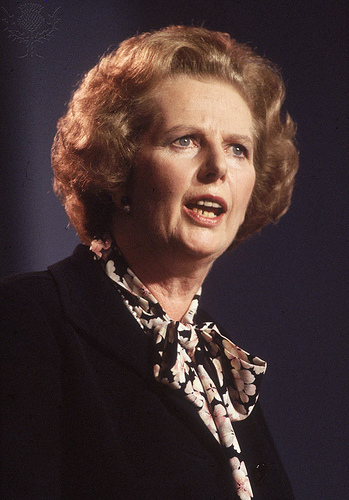
Rest in Peace, Margaret Thatcher

Margaret Thatcher

Godspeed, Lady Thatcher (Photo Credit: Encyclopaedia Britannica)

Margaret Thatcher, who passed yesterday, claimed in her prime to function well on four hours sleep per night. Maybe so, but in her late fifties, she discovered the power of napping. According to a 2009 dailymail.co.uk report, Cynthia “Crawfie” Crawford, Thatcher’s former personal assistant, says she helped her boss through Britain’s Falkland Islands War by teaching “her to catnap for 20 minutes—we called that a zizz.” From April 2nd through June 15th of 1982, the Prime Minister “never changed into her bedclothes. She sat fully dressed, huddled round a two-bar electric fire, nervously listening to the radio for news of the conflict, nursing a glass of whisky while husband Denis slept in the spare room.” Crawfie, who preferred gin and tonics but deferred to her boss’s insistence that “whiskey was much better for energy,” also mentions that in addition to a few zizzies during the night and one in the afternoon, “Thatcher relied on vitamin B 12 injections to maintain her energy levels throughout the day.”

In 2011, Great Britain’s second-most-noteworthy napper (Winston Churchill was first) even had a gene named after her. “Scientists at Germany’s Ludwig Maximalians University of Munich . . . found that one gene, called ABCC9, influences sleep duration and could explain why certain people seem able to operate on limited amounts of shut eye” (dailymail.co.uk). They called ABCC9 the Thatcher gene. In a study of 4000 subjects, the Munich researchers “discovered that people who had two copies of one common variant of ABCC9 slept for ‘significantly shorter’ periods than people with two copies of another version.” For good measure, the team fussed with the ABCC9 gene in fruit flies and had them sleeping less than before.

I’m glad there’s a gene that explains why some lucky sorts don’t need much sleep, but I’m more glad to know that the energy valley I enter around 2:00 p.m. has nothing to do with laziness. It’s my Thatcher gene telling me to take a zizz. Crawfie reports that when the Falklands War ended, Lady Thatcher “kept to the habit [of afternoon zizzies] for ever afterwards.” May her final nap be peaceful and healing.