A Coffee Shop Epiphany
I once studied to be a doctor, not an M.D., but a Ph.D. in literature. I spent 1989-1990 puzzling over such obscure classics as Sir Thomas Browne’s “Urn Burial” and discovering that I’d rather write about the texts of life and love than analyze the works of others.
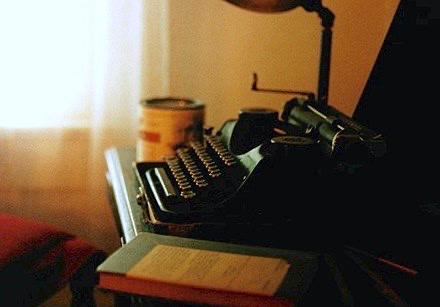
Poetry was my medium back then. As a distinctly third-drawer poet, I placed a respectable stack in literary magazines and would have published a collection eventually with a small press. This is no claim to fame, but my poems were accomplished enough to join the sea of verse in print that hardly anybody reads. I wouldn’t have cared, though. I lived poetry. I started writing it in earnest in the freezing bedroom of an old farmhouse, first on a yellow legal pad, then on a rickety manual typewriter a couple of drafts in.
I devoured poems, too. I went to readings given by noteworthy masters of the last half-century. You probably wouldn’t recognize the names, but why should you? Literature’s pond is smaller than Walden. I also gave more than a few readings myself, a heady experience in a setting often as reverent as any sanctuary.
My hiatus from poetry was born of necessity, I guess. In 1997 I began seminary studies, and the calling to compose creative work fell to a murmur. Meanwhile, the love of lingering over lines that folded one over another and demanded patience and devotion became distant. The sad truth: poetry became part of my past. Nothing against it, but more important matters required my attention.

Then, the other day in a coffee shop, an epiphany descended. I speak here not of Epiphany as a Christian observance (the Magi’s journey to pay homage to Jesus in the manger), but as an instant of transformation and insight. Epiphanies strike suddenly, but mine took seasons to come out of hiding. The last decade or so has been—how shall we say this?—overstimulating. Print and evening news are relentlessly jarring, and for those foolish enough to consume social media, vexation abides at the elbow. Americans are being fed the message on a digital spoon that every one of us knows the unassailable truth on all matters under the sun. Our headlines and facts are pristine. Our preferred talking heads are infallible.
One prolific purveyor of information is Facebook, and I’m a frequent customer. Although a cautious reader, I’m regularly anesthetized by the poison darts that Mark Zuckerberg’s army blows into my cyber-world. As minutes tick by, this beloved platform churns my stomach. Seriously. After an indeterminant period, I feel as though I’ve eaten something that hasn’t agreed with me. An hour may waste away in an instant. The nausea is discernible only if I pause to take notice. Otherwise, worthy content that helps me catch up with friends blends with the politics of rage, stories contrived to exploit my prejudices and images that wink at my libido.
Ah, but the Tipsy Bean in Erie, Pennsylvania, intervened. Thank God for Gisele, the owner, and the grace of poetry. For sundry reasons I sat with a quirky, iced herbal tea after dropping off wife Kathy at work. I’ve known for weeks now that undisciplined Facebook consumption was not only sapping my time for writing, but also sickening my spirit.
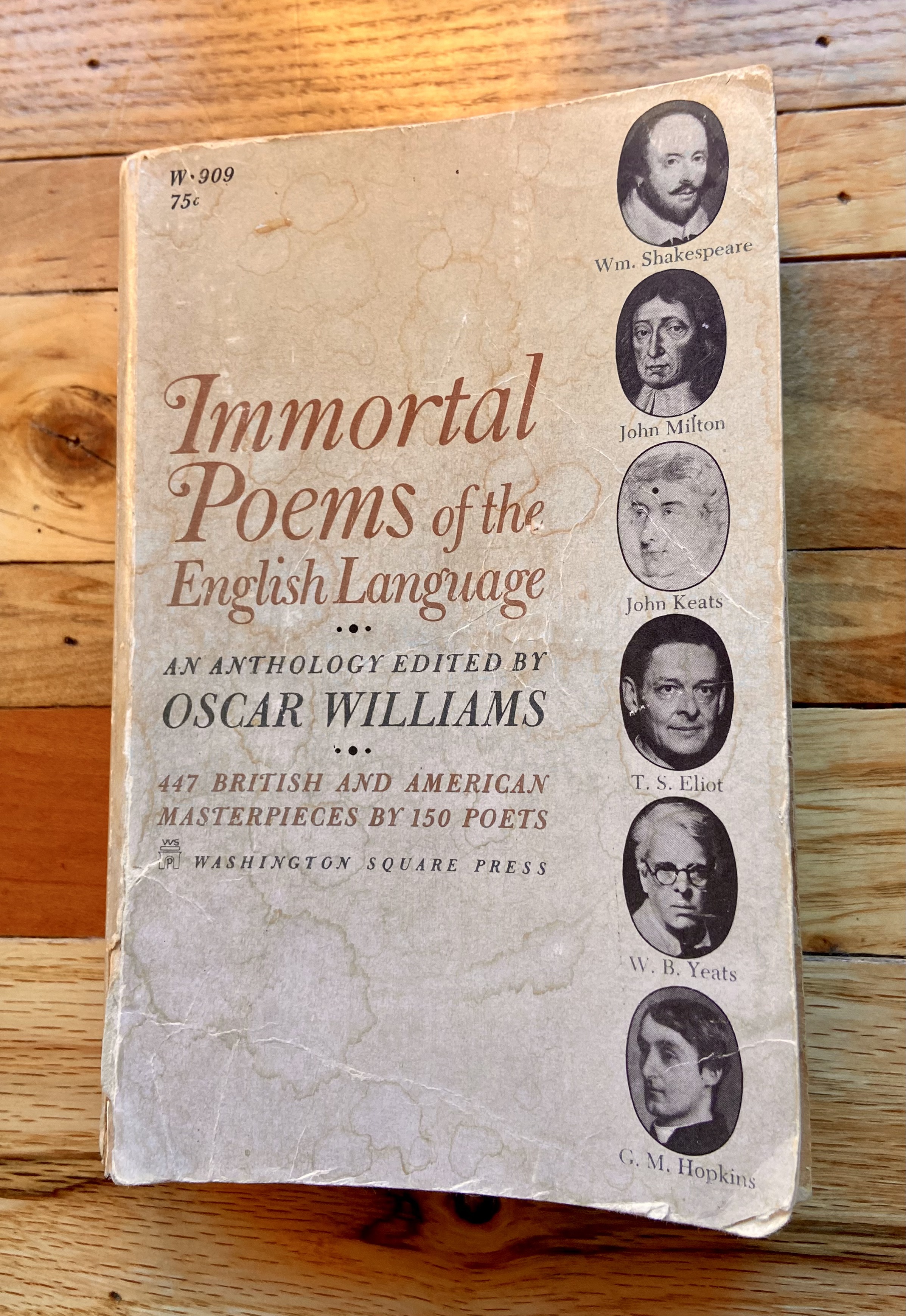
A tea informed by anise, how odd and pleasing. And a paperback anthology of Immortal Poems of the English Language—the copyright nine years my senior—called me back to a self I’d left behind. The fragile pages smelling of an attic cost a quarter, I’m sure, in a junk store. The scent of heaven.
“Death be not proud,” John Donne tells me all over again.
“They also serve who only stand and wait,” a blind John Milton writes.
“Do I contradict myself?” Walt Whitman asks. “Very well then, I contradict myself, (I am large, I contain multitudes.)”
“Success is counted sweetest by those who ne’er succeed,” Emily Dickinson says to me, “To comprehend a nectar requires sorest need.”
Leaning on cushions in a corner at the Bean, I knew at once my epiphany’s question: “So what have you been doing, stupefied for hours, transfixed by nonsense?”
Poetry has never upset my stomach.
Dazzling screens have become a siren’s song.
I know now. Give me tea, a book and stillness, and you can have every device kissing me, then whispering scurvy promises and exposing hypnotic colors. Give me rhyme and meter, pale to the eye but healing to the soul. Give me musty pages, faded and wise, long in repose, now resurrected to save me.

 A Napper's Companion
What a joy to hear from you. Always a pleasure, John.
Such a joy to be in touch.
You were such a good friend at the Hurst. I hope you and Brad are doing well. Where in California are you living?
I still have my ancient copy of “Immortal Poems,” left from my Allegheny years. I feel empathy for you as I read your words.
We are all consumed by this screen today. How very sad as it has contained nothing good and contaminated our children’s minds. I have gone back to the written pages of the books I have missed and my mind and body are healthier. Thanks for this reminder. God bless.
What Anonymous said!
So it’s around 70 years old give or take? I’d love to have you take a glance at the T of C and tell me how many women poets are in there—you know, besides Marianne Moore and Elizabeth Bishop and Barrett Browning.
Ah, Urn Burial! Yes!
Lamentably few–as usual. I emailed you.