“Talking to God about Jim Foley and the World” on YouTube

Hello, Friends:

Here’s another installment on my very slowly developing vlog (video blog). It’s kind of a bummer, so pass on this if you want to focus on sunny thoughts today. And faithful blogging friends, chances are you’ve already read this, so don’t feel obligated.

Peace and love,

John


Mindfulness: A Christian’s Understanding

42-28072744

Not as blissful as woman on the cover of Time, but definitely in the zone. (Credit: Ernst Mutchnick / Funk Zone Studios / Corbis)

I should be grateful. The cover of a recent edition of Time Magazine carries the photograph of a lovely woman with closed eyes and a Zen half smile along with this title starting below her throat: “The Mindful Revolution: the science of finding focus in a stressed-out, multitasking culture.” Author Kate Pickert offers an engaging account of Mindfulness Based Stressed Reduction (MSBR) and its slow progression into the mental health field’s go-to arsenal of methods for getting or staying sane. MIT-educated scientist Jon Kabat-Zinn developed MBSR in 1979, and today, Pickert writes, “There are nearly 1,000 certified MBSR instructors teaching mindfulness techniques (including meditation), and they are in nearly every state and more than 30 countries.”

Mindfulness is even “gaining acceptance with those who might otherwise dismiss mental training techniques closely tied to meditation—Silicon Valley entrepreneurs, FORTUNE 500 titans, Pentagon chiefs and more.” Fantastic! Some wealthy and powerful people are in favor of stopping, dwelling in the present moment, paying attention, and reflecting. This is a good thing. But my soul is uncomfortable—my skeptical soul. Why?

Pickert’s take on our society’s need for mindfulness is insightful and accurate. She admits her own struggle: “I am hyper-connected. I have a personal iPhone and a BlackBerry for work, along with a desktop computer at the office and a laptop and iPad at home. It’s rare that I let an hour go by without looking at a screen.” I’m writing from Starbucks on a Monday morning, and seven of the fifteen patrons are screen-fixed. A couple are simultaneously conversing and texting. The Time author is on the right track.

42-52934599

Multitasking (Credit: Arman Zhenikeyev / Corbis)

Imagine Jeopardy, “Modern Words for $1000″: “Attempting to perform two or three or eight tasks at the same time.” Beep. “What is multitasking?” Attempting is the key word. As Pickert points out, “Researchers have found that multitasking leads to lower overall productivity.” Elders have known this for years and have been shaking their heads.

So mindful folks everywhere should Buddha-laugh and embrace MBSR, mindfulness, or any practice that helps us to slow down and be where we are. There’s evidence as well that “meditation and rigorous mindfulness training can lower cortisol levels and blood pressure, increase immune response and possibly even affect gene expression.” So much promise!

American_soldier_in_Vietnam

Private First Class Russell R. Widdifield in Vietnam, 1969. (Credit: Wikimedia Commons)

As I thought my way through this fair and balanced Time article, I bickered in my head. I had questions and suspicions. Finally, Pickert’s explanation of a particular use of mindfulness training forced me to confront my bias. Elizabeth Stanley, an associate professor at Georgetown, collaborated with Amishi Jha, a neuroscientist at the University of Miami, to launch “a pilot study with private funding that investigated whether a mindfulness program could make Marines more resilient in stressful combat situations.” Stanley went on to develop an MBSR-based curriculum called “Mindfulness-Based Mind Fitness Training.”

When those words punched my face, I put words to my discomfort. An hour ago I asked Zen-dude Alan the question: “Is it possible to kill another human being mindfully?” He didn’t think long before answering, “Yes.” I wasn’t talking about euthanasia or any other taking of life motivated by compassion, and I think he knew that. He brought up other good qualifications. Somebody’s going to shoot you; you shoot first. For Alan, mindfulness is simply being fully present to what you are and what you are doing and accepting the consequences. Shooting in self-defense, he admits, means killing part of himself. Alan is a good, thoughtful guy, but I want to push him on the nature of mindfulness. Next time he bows to me at Starbucks I might ask him if he thinks you could mindfully strangle a healthy black lab puppy for no reason. He’d probably draw the line there.

42-22746321

Statue of Christ of the Abyss. Loving the world, longing for the Creator?  (Credit: Image Source / Corbis)

I draw the line somewhere else. For good or ill, my understanding of mindfulness is informed by Christianity. Any of my friends will tell you I’m about the weirdest, most open-minded Jesus follower on the block, but some actions strike me as so troubling and hurtful that I regard them as morally insane; that is to say, the opposite of mindful.

Mindless? Mindful? Any distinctions are riddled with semantics, but I’m fond of mindfulness and object to the word being deployed to certain theaters. Here’s where I imagine I’ll get myself into trouble:

  • Pickert mentions “Silicon Valley entrepreneurs, FORTUNE 500 titans, Pentagon chiefs and more” embracing mindfulness. A mindful titan? Sounds like an oxymoron. I don’t believe you can mindfully enjoy extravagant wealth, be content with earning 400 times the wage of anybody who works for you, or profit from the exploitation of fellow human beings.
  • Now my skepticism appears. Given the way the financial world operates, I don’t believe corporations provide mindfulness training and/or MBSR to ease anybody’s stress. The motivation is profit, with healthier, saner employees being a glad byproduct. If businesses didn’t see a return on nurturing a peaceful, happy workforce, they wouldn’t spend the money. Are there numerous exceptions? Sure.
  • One Sunday afternoon before a nap, I lay in bed head-wrestling with the idea of a mindful military. Son Micah came up to kibitz as he sometimes does. I explained Pickert’s article and asked what mindfulness would tell him if he had another man in his crosshairs. “Don’t shoot that guy,” he answered. Even though Micah is an atheist, he’s been contaminated by his Jesus-loving father. He perfectly summarizes my conclusion about mindfulness and war. Mindfulness as I try to practice it can’t be applied to any action not grounded in compassion.

Some distinctions are important here. I’m not arguing that military force is immoral; that’s a separate discussion. I’m not saying that Silicon Valley shouldn’t be a land of focused, driven world-beaters who lick the multitasking addiction. And I’m not against using mindful strategies to help soldiers endure combat and heal when they come back home. I vote for all these.

RESTORE HOPE

What would mindfulness have me do? (Credit: Wikimedia Commons)

What I confess to is a highly subjective understanding of mindfulness. It’s not a method, but a way that leads to kindness, mercy, and justice. In the end my point is embarrassingly minor: if you’re using mindfulness to increase profits or take life without reckoning the personal soul-strangling consequences, then you’re not grasping mindfulness. You don’t use mindfulness; mindfulness helps you to discover how to use yourself.

As far as I’m concerned objectivity doesn’t exist, so I feel free to paint mindfulness with Jesus colors. Nobody owns exclusive rights to a word. Still, I can speak my truth: mindfulness leads nowhere other than love.


Smoke in the Shape of Open Arms

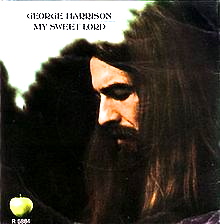
Thursday, August 1st, 4:43 – 5:13 a.m.:  prayer propped up in bed next to sleeping Kathy. While I did my usual Zen-Christian thing—trying to let the thought-monkeys swing around my mind-tree without paying attention to them—rain breathed against the boulevard leaves as thunder made its ironically comforting groan somewhere miles away. Ah, the wind through the open windows on my chest and knees. George Harrison sat on a branch and sang “My Sweet Lord” until I surrendered and let his mantra take over. “Really want to know you, Lord. Really want to see you.”

400px-Mandril

Okay, not technically a monkey, but a mandril. This is what my mind monkeys look like–striking, sometimes menacing. (Credit: Wikimedia Commons)

Don’t go online and read what people say about this trippy oldie. Such moronic fuss! I’m fine with the blending of hallelujah and Hare Krishna and accept Harrison’s explanation that the two mean “quite the same thing.” For that matter, people should wear ponytails and dance if that’s what centers them. Who am I to criticize? Anyway, by the time Harrison goes off on his Gurur Brahmā, gurur Viṣṇur deal, I’m on my own, wanting to know my sweet Lord. Eventually, words are immaterial.

After a couple decades of practicing silence, I’ve arrived at a liberating heresy, at least where Christianity is concerned: I don’t care what others believe. I’ll rephrase that: I couldn’t care less what others believe. As a spiritual person, I’m more than I can manage. I’m in no position to insist that you come at the Great Mystery the same way I do. Two caveats: I vote against worshipping evil whatever and carving insignias on human flesh and get keyed up when folks who call themselves Christian pretend it’s okay to smack children around, belittle their spouses, or let poor innocents go hungry in this country of unconscionable plenty. Beyond such glaring sludge, I’m flexible.

800px-Chaitanya_sankirtan

This work for you? I say, “Have a go.” (Credit: Wikimedia Commons)

Some would say too flexible—but I’m not finished yet. I’ve listened to plenty of atheists who embrace George Harrison’s mantra in their own way. Most of them reject any God language or imagery and say, “I don’t believe in anything. No creator. No conscious force. Nothing!” As they’ve spoken, I’ve tried to be completely present to them, letting go of any personal agenda. And you know what? Most atheists I know are beautiful, authentic and brave in their search for what’s real. They wouldn’t sing, “Really want to know you, Lord,” but they might sing, “Really want to know what’s real” or “My sweet truth, hmm my truth.” I know, these don’t have the same lilt; they’re genuine anyway.

220px-Mysweetlord1971single

No, this isn’t Jesus. (Credit: Wikipedia)

My point: as long as “really want to know you, (state your name)” is the prayer or song or mantra, I embrace it as sacred. Well, a caveat again: I’m not down with the name being Beelzebub or Nosferatu.

Schreck

Max Schreck as Nosferatu. (Credit: Wikipedia)

Why am I dangerously loosey-goosey? A couple of reasons:

  • My son Micah is an atheist. At least I think he is. Today. He’s my only begotten son, and he’s put himself through a lot in twenty-one years. For the first time in his life I can say, “He’s doing well.” He is beloved of all that is, worthy of grace and mercy. If I’m wrong, if the punishment paradigm reigns, then I pick the eternal snuff-me-out option. (No, of course I’m not referring to suicide.)
IMG_0670

Micah, my favorite heathen.

  • My beliefs and behaviors slam into each other so often that I’ve no worthy, autonomous ground to stand on. All I have is the conviction that my God understands that this life is damned difficult—my twist on M. Scott Peck’s simple observation—and that reckless love is the cosmic modus operandi. And, no, I can’t defend this belief . . . at all . . . and certainly not scripturally.
  • I recently held the hand of a person who had to decide whether to die sooner rather than later, never mind the details. When to jump? This person looked straight ahead as if trying to see open arms on the horizon. If the arms of eternity won’t welcome us or at least let us sleep in peace, then I simply can’t reconcile myself to this life. This is a selfish, fearful belief, but it’s honest.
  • I’m going to be bummed if Stephen Crane is right. He wrote a poem called “A Man Said to the Universe,” which I take to be his existential confession. I’m not in favor of the following: “A man said to the universe, / ‘Sir, I exist!’ / ‘However,’ the universe replied, / ‘The fact has not created in me / A sense of obligation.'”
StephenCrane1899-1

Stephen Crane, author of The Red Badge of Courage–the face of man who believed the universe is a Gloomy Gus. (Credit: Wikipedia)

  • Often when I pray, I’m given laughter. There’s no other way to say it. I’ll be praying my own business, sitting still and breathing, and a laugh rises from inside. The skin beside my eyes wrinkles. When I’m in public, I have to shush myself or be identified as the weirdo I really am. I receive these prayer-laughs as communion with God, as God-Buddha belly-joy laughs at the Great Mystery’s outrageous love for everything from people to Irish wolfhounds (I want one someday) to the Coleman family’s compost pile. (Yes, I realize this phenomenon might be physiological, like a twitch in my bowels. I’m hopeful, not stupid.)
800px-HK_Sheung_Wan_Hollywood_Road_大肚彌勒佛_Buddhist_statues

My Buddha belly too if the present trend continues. (Credit: Wikimedia Commons)

If you crushed everything I’ve said here into incense, it would burn with longing—my sweet Lord! It would smell like the 4:43-in-the-morning breeze that touches my chest. It would sound like a gentle old song, accompanied by rain against leaves. And the smoke would rise and take the shape of open arms.

IMG_0276

Letter to Myself After Morning Coffee at Starbucks

Dear John:

Stop, breathe, and pay attention to the man who’s cleaning up the parking lot. Receive into your spirit his stooped back, pinched shoulders, and twitching left hand. Take note lovingly, “This guy did not win the genetic sweepstakes!” He didn’t create his body small and flawed, like millions of his misshapen brothers and sisters who endure their days, trying to make something of a life that never forgets its vessel urges strangers to look away.

IMG_0727Remember, as you stand by your car in the holy space of shamatha (calm abiding) and watch this brother walk to his next scattering of crushed cups and cigarette butts stuck in sunbaked butter pecan ice cream, that he’s important, no less a child of creation than you because you have a title and he bends his face to our leavings for money. You’re an ass if you suppose, even fleetingly, that the trashy, puke smell he takes home in his nostrils makes him less beloved than you.

His life may be glad, happier than yours, in fact. Maybe he goes home to an embrace—maybe not. Whatever the case, stand a few extra seconds at your car, breathe again, wait until he’s a far-off dot in a fluorescent-orange vest, and imagine. His days are difficult. The brain under his bristle of red hair may stay wakeful at 2:00 a.m. and pray that a companion would hold his trembling hand and know that it would never fail or betray. The hands that pick up the occasional sopping diaper are probably as faithful as your hands, John, which lift the bread and cup and presume to bless.

Watch. Witness. This is the purpose of your siestas and prayers: not that you’ll be centered and refreshed for your own sake, but that you’ll honor—shamatha!—your stooped brother’s residency in this spiritual city. Honor him? Yes, because he’s blessed you. He’s helped you to understand yourself. You’re thirty pounds overweight? Poor boy!

Finally driving off, you see his brother one parking lot away, wearing Dickey work clothes and peddling a crappy ten-speed: a skinny scalped man with jaw thrust forward like Billy Bob’s Karl in Sling Blade. Around the next curve, another towering lumpy brother stabs litter. Don’t forget, these men’s homes may be content. Or they might stare at the ceiling in the longing twilight, clenched and miserable.

Let them all be beneficiaries of your silence, John, recipients of your long Sunday naps and hours of prayer. Don’t assume to know their suffering, but always make room for it as you sip your privileged pinot noir on the front porch. Take compassionate shamatha into lonely places. Acknowledge with tenderness the forsaken. Hold their troubled flesh in your awareness.

Photo on 8-28-12 at 11.49 AM #2

Jowls Hidden by Beard, Baggy Eyes Behind Black Glasses

You can’t and shouldn’t get up in their business and suppose you can fix their lives. You don’t even handle your own life very well. Still, no matter whose face you look into, you can recall that God, too, beholds that face. You can say hi. Of course, you’ve now got bags under your eyes as well as the start of your grandfather’s jowls, but if you smile—not sanguine and flakey, but real—and pray, “Let my eyes say, ‘I wish you gladness,’” maybe the soul behind that face you pass by will wonder in the wordless way souls do, “Could I be loved? Might gentle grace mysteriously abide under all the sloshing garbage bags and behind the furrowed glances of indifference? So, maybe I’m not alone?”

Somehow or other, if your worn eyes can say any of this, especially to the unlovely, then celebrate. And if all you can do is notice a man with a twitching hand moving on to his next mess, then you’ve done one invisible piece of work in the stewardship of the universe.

Thanks for trying,

John